
Social Ventures | Strategy
For social ventures rooted in marginalized communities, sharing their origin story can deter mainstream customers due to fear of stigma transfer.
Disgust can be a powerful self-protective force—but can lead to unethical behavior.


Based on research by Vikas Mittal, Andrea Morales and Karen Page Winterich
Just Feeling Disgust Can Prompt Unethical Behavior
Humans are hardwired to feel disgust, and it doesn’t take much to trigger it. Just watching a gory movie scene or taking a bite from a wormy plum can do it. And in general, this is a good thing: Researchers think of disgust as nature’s police tape, designed to keep us from eating tainted, possibly dangerous food. But disgust can also be influenced by culture. Foods that are considered disgusting in some cultures — think locusts and haggis — are delicacies in others.
Because disgust inspires such powerful self-protective reactions — twisted faces, spitting, physical recoiling — it’s great at preventing us from taking that second gulp of expired milk. The problem is that this ancient reflex can also trigger completely unrelated behaviors that are, in and of themselves, rotten.
Vikas Mittal, a professor at Rice Business, wanted to understand how the feeling of disgust might influence unjust behavior. In previous research, with co-authors from Penn State and Arizona State, Mittal had shown that subjects who feel disgusted were more prone to harshly judge others’ unethical behaviors.
Now the researchers wanted to take their questions about disgust further. How exactly did this visceral reaction to organic triggers influence just or unjust behavior in the disgusted person herself? And how could the ethical effects of this physical sensation be neutralized?
The professors hypothesized that if disgust creates a self-protective response — making people act to their own benefit, even at the expense of others — then just triggering the disgust experience could make them act unethically; that is, in a way that could harm other people. To test their hypothesis, the team conducted three randomized experiments. Each one compared participants who had been made to feel disgust with a control group of participants who had not.
The first experimental group evaluated such queasy-making products as anti-diarrheal medicine, diapers, and adult incontinence aids. In the second experiment, subjects wrote about their most disgusting memory. In the third, participants watched the notorious toilet scene from the movie Trainspotting. All the participants then took part in experiments measuring their willingness to lie and cheat.
The researchers’ predictions came true: The subjects who felt seized with revulsion indulged in self-interested behaviors at a significantly higher rate than their less disgusted counterparts. Offered a monetary incentive, the disgusted participants lied about the results of a coin toss, fibbed about solving an unsolvable puzzle, and cheated their fellow participants.
Now the team wanted to see if this morally tainting effect could be undone. Researchers have already demonstrated that physical cleaning can improve interpersonal behavior. Studies have shown that just thinking about cleansing activities or inhaling smells like citrus-scented Windex can foster pro-social behaviors. A whiff of lemony glass cleaner, it turns out, can make a subject gentler in condemning someone else’s unethical behavior. Maybe, Mittal and his colleagues theorized, cleansing behaviors could ameliorate the self-serving effects of disgust.
To find out, the researchers conducted another set of experiments, asking their subjects to evaluate a range of cleansing products, including disinfectants, household cleaners and body wash. Then they studied the subjects’ willingness to take part in deceptive interactions. Voila: The once-disgusted subjects who evaluated the cleansing products seemed literally morally cleansed. In the second part of the experiment, they behaved no more deceptively than the members of the neutral control group who had been spared any disgusting experience.
It’s evocative research, with profound implications for further study. Can research about these findings be applied to societal problems such as bullying, the marginalization of out-groups, or irrational public policy? Already, the disgust experiments suggest clear application for business. Managers need to know that important ethical and practical decisions can be contaminated by cultural and even physical sensations of disgust. More optimistically, clean living — at least in the form of cleansing mental images and clean-smelling aromas — actually can make for clean business.
Vikas Mittal is the J. Hugh Liedtke Professor of Marketing and Management at Jones Graduate School of Business at Rice University.
To learn more, please see: Mittal, V., Morales, A. & Winterich, K. P. (2014). Protect thyself: how affective self-protection increases self-interested behavior. Organizational Behavior and Human Decision Processes, 125(2), 151-161.


Entrepreneur helps fellow professionals keep their houses in order.


After Years On The Road, An Entrepreneur Helps Fellow Professionals Keep Their Houses In Order
Patra Brannon Isaac ’11 started her business in 2008 after a career as a corporate auditor that required her to travel up to 75 percent of the time throughout Europe and Australia. While great to work in new and exciting places, it was hard to manage the demands of life at home in Houston being so far away. Many friends and acquaintances complained about the same thing.
When she transitioned into a new career in HR with much less travel, she wanted to help other professionals who faced similar stresses. And her concierge business was born.
My-Handler is a boutique concierge business helping people handle work and life. It’s focused on providing convenient and affordable services that meet the demands of busy professionals, primarily in the Houston area. It is a trusted resource for small business owners, consultants, attorneys, project managers and many others.
The company continues to build new client relationships and help solve the demands of busy Houstonians. My-Handler was named a Houston Super Bowl LI diverse supplier, providing ad hoc services to assist with special projects organized by the Super Bowl Host Committee’s Business Connect program.
“We felt blessed to play a small role in the success of the Super Bowl LI programming, landing a few contracts and an ongoing client relationship with an NFL representative," said Patra Brannon Isaac. "We have already received a call for a new project requesting virtual assistant support post-Super Bowl and can’t wait to help handle it!”
Patra works full-time as regional director, Harris County, Leadership ISD.


Why selling a team can break hearts across a whole city.


By Claudia Feldman
Houston Rockets Owner Les Alexander May Think He's Selling His Team. But Fans Feel It Really Belongs To Them
At first glance, businessmen Les Alexander and Drayton McLane don't have much in common.
Alexander, 73, is a former bond trader from New Jersey, Jewish, a liberal, a vegetarian, an animal rights advocate. Fellow billionaire McLane, 80, is a Southern Baptist, a lifelong Texan, a conservative, a steak lover.
And yet the two men are old friends, and McLane is watching with empathy as Alexander begins the process of selling his Houston Rockets.
McLane sold his professional sports team, the Houston Astros, when he, too, was in his mid-70s. "I just felt it was time," said McLane in a telephone call phone from Amsterdam, recalling his own decision to sell.
"I'd had a lot of fun — we went to the World Series and built a new stadium. But it's kind of like getting out of college. I thoroughly enjoyed it but you can't go to college forever."
McLane summed up his best advice for Alexander: "I'd tell Les to make sure it's the right time for him and his family — and to move forward."
Tom Stallings, a professor of sports management at Rice University, predicts Alexander will be just fine, in fact, relieved when he finds a buyer. "Owners say a team is just like owning a boat," he said. "You'll be happiest the day you buy the boat — and the day you sell it."
Stallings, who worked for both the Astros and the Houston Aeros early in his career, has been a close observer of Houston's professional sports team owners for decades.
They spend millions, even billions for a team, Stallings said, and assume a huge financial risk. But in the eyes of the fans, owners are only "caretakers. It's not the owner's team, but the city's team."
McLane would have to agree, though he described his old job a little bit differently. "It's like being a mayor or a senator who is responsible to the fans," he said. "You can't just look at a sports team as if you bought a piece of real estate that is yours and you can do what you want with it. The fans, the citizens are totally involved, and owners have to be concerned about the things that are important to them."
Stallings said both Alexander and McLane more than met those obligations. They supported dozens of good causes around the city during their tenures, they spent generously to improve their teams and they relished contact with the players and the fans.
The diplomatic Stallings points to Bud Adams, who died in 2013, as an example of an owner less sensitive to the public's wants and desires. When his financial demands were not met, he moved his professional football team, then the Houston Oilers, to Nashville.
The move was actually a sound business decision, Stallings said, but locals considered Adams a traitor. "Fans reacted as though their hearts had been ripped out. Instead of being beloved, he was reviled."
Stallings acknowledges a steep learning curve for nearly all businessmen turned sports team owners and says they probably wonder, at their lowest moments, why they took on the headaches. "These owners have been successful all their lives," Stallings said. "After a while they assume that if they work hard enough, they can be successful at anything."
But in sports and in life, that calculation doesn't always work. "Every year, half these teams are going to have losing records," Stallings said. "For owners, that's hard to understand. All those things — desire, hard work and financial investment — don't necessarily translate to championships."
Maybe it's every sports fan's dream to own a professional team. Certainly the instant notoriety holds appeal, at least at first. "Then the novelty wears off," Stallings said. "Maybe it is no different from elected office. Eventually you say, 'OK, I had enough.'"
"Drayton is right," the college professor added. "Eventually it is time to graduate."
Alexander's decision to sell took most sports fans by surprise. He's said little publicly except that he wants to devote more time to his family and philanthropy.
Psychologist Mary Burnside would say to Alexander what she says to all clients — and friends — considering a move away from the limelight. "Have a plan in place. Have something to look forward to. You might think that you're able to step away, but you might find out a little bit differently later."
Then Burnside paused to consider the money involved.
The man whose name is synonymous with the Rockets bought the team for $85 million. The sales price is anybody's guess, but expected to hover around $2 billion.
"It sounds," Burnside said, "like a very fortuitous time to sell."
Claudia Feldman is a freelance writer living in Houston and editor of the Last Word, a service that helps people tell their own stories.
This article originally appeared online in Gray Matters.


No TVs. No cell phones. No gadgets. Just good old-fashioned quality time.


A Subscription To Quality Time — Away From Screens
Iman Farrior ’17, a mother of three daughters under the age of 4, realized that the cool Pinterest projects she regularly came across online were often too complicated to plan while she was attending business school. Enter Funplugit: a new monthly subscription box with creative projects to help busy parents spend quality time with their children — unplugged from technology.
Co-founded by Farrior and her Rice MBA classmate Corey Grodner ’17, Funplugit aims for simplicity and family fun through art, games and science projects. After receiving their first box, each family signs the Funplugit Family Pledge, rings the Funplugit cowbell, reads the simple one-page activity instructions and pulls out the materials needed for that month’s activity. Funplugit’s ultimate goal is to encourage people to explore unplugged fun with loved ones. No TVs. No cell phones. No gadgets. Just good old-fashioned quality time.
The unique kid-tested and kid-approved DIY creations come in all shapes and sizes: homemade soap, Mardi Gras masks, bird feeders, game boards, homemade lamps, musical instruments, magnetic slime, pen holders, piggy banks, kaleidoscopes and dreamcatchers, to name a few. Subscriptions begin at $20 monthly and $10 for bulk orders.
“In addition to every other parenting duty and finding time to keep yourself together, it can feel almost impossible to make any kind of quality time like that happen regularly," Farrior said. "It is important to my husband and me to spend time with our children laughing, learning and creating.”
Ethical expertise is a teachable skill.


Based on research by Erik Dane and Scott Sonenshein
Ethical Behavior Is A Teachable Skill
CEO Ray Anderson successfully reinvented his billion-dollar carpet company, Interface, to reconcile two seemingly opposed values: profit and environmentalism. The outcome not only pleased his shareholders. It also made the word “sustainability” common parlance in the carpet business, an industry that depends on petroleum products and disposes of massive quantities of unrecyclable waste.
What possessed Anderson to do this? And what made him think it could work? He learned that it was possible.
According to a recent paper by Rice Business management professor Scott Sonenshein and former professor Erik Dane, Anderson built his eco-friendly empire after reading "The Ecology of Commerce" by Paul Hawken, which argues that only business leaders can keep industry from destroying the planet. The book spurred Anderson to develop new technologies, redesign his products and transform manufacturing to cut waste and harmful emissions.
While a string of corporate scandals has fueled research about why business leaders make unethical decisions, Dane and Sonenshein argue that it's equally important to know what makes leaders like Anderson act ethically. Can ethical skill be learned?
The answer is yes, the researchers say. Just as workers can learn computer and management techniques and then practice them, they can learn how to apply moral values in the workplace.
These conclusions back up arguments made since — antiquity, when Aristotle contended that ethics can be honed by practice. Despite several thousand years of anecdotal evidence, though, research has yielded little consensus on the relationship between ethical decision-making and experience.
In making the claim that moral judgment can be cultivated, Dane and Sonenshein divided ethical expertise into two types of skills. The first, called convergent expertise, is the ability to perform tasks reliably and repeatedly. It’s rooted in patterns of recognition and categorization. An artist with convergent skills, for instance, might be able to mimic the style of the Old Masters down to the last brushstroke.
The second type of skill, divergent expertise, is the ability to rearrange old patterns into something new, as Anderson did when he redesigned his carpet business. Employees with convergent ethical expertise are able put the values of their organization into action. Employees with divergent ethical expertise can face new moral challenges and craft imaginative solutions from scratch.
Either way, the researchers write, applying moral values to real life business is no mean feat. While it's easy enough to articulate ethics, it's another thing to apply those values when making choices that will affect productivity, profits, and shareholders. The lesson? Companies should resist the impulse to rattle off institutional standards in a few easy training sessions. Otherwise, they run the risk of trivializing complex conundrums and encouraging reliance on overly simple rules. Universal moral principles tend to be simple and abstract. CEO decisions are complex and have real-life consequences.
The idea that experience creates ethical expertise should be handled with care, Dane and Sonenshein note. The breadth of that experience, including knowledge of different industries, plays a role. So does workplace culture. Thus two employees, with the same age and job tenure, may show very different expertise levels when a moral quandary arises.
And like chess masters, employees who are highly skilled at making ethical decisions can vastly outperform their peers. In fact, research suggests, the same factors linked to excellence in chess, sports and medicine may foster ethical excellence too. The difference is that in business ethics, the feedback critical to mastery comes not from professors or coaches but from a vast range of day-to-day experiences within and outside of work.
After he read Hawken's book, the authors write, Anderson completely rethought his company’s structure. Calling his goal “Mission Zero,” he vowed to make the firm fully sustainable by 2020 by using recycled materials and renewable energy sources. Employee bonuses were linked to waste reduction. And in speech after speech, Anderson told audiences how running an environmentally ethical company had not lost money, but saved it millions. All it took was education, resolve and a highly skilled worker: a founder with ethical expertise.
There will always be some in business who take the unethical path if it looks fast or rewarding. That's also true in sports, medicine, and private and public life. Dane and Sonenshein's study, however, brings encouraging support to what Aristotle argued and Anderson enacted. At least some of the time, people choose unethical options because they don't know better. And ethical skills can be taught.
Erik Dane is a former professor and was the Jones School Distinguished Associate Professor of Management (organizational behavior) at Jesse H. Jones Graduate School of Business at Rice University.
Scott Sonenshein is the Henry Gardiner Symonds Professor of Management Jesse H. Jones Graduate School of Business at Rice University.
To learn more, see: Dane, E. & Sonenshein, S. (2015). On the Role of Experience in Ethical Decision Making at Work: An Ethical Expertise Perspective. Organizational Psychology Review, 5(3), 74-96.


Will home delivery be the future of food shopping?
By Jennifer (Jennie) Latson
How We Get Our Groceries Is In Flux. Will Home Delivery Be The Future Of Food Shopping, Or A Flash In The Pan?
The future of grocery shopping could look something like what Cherise Osmon does every day.
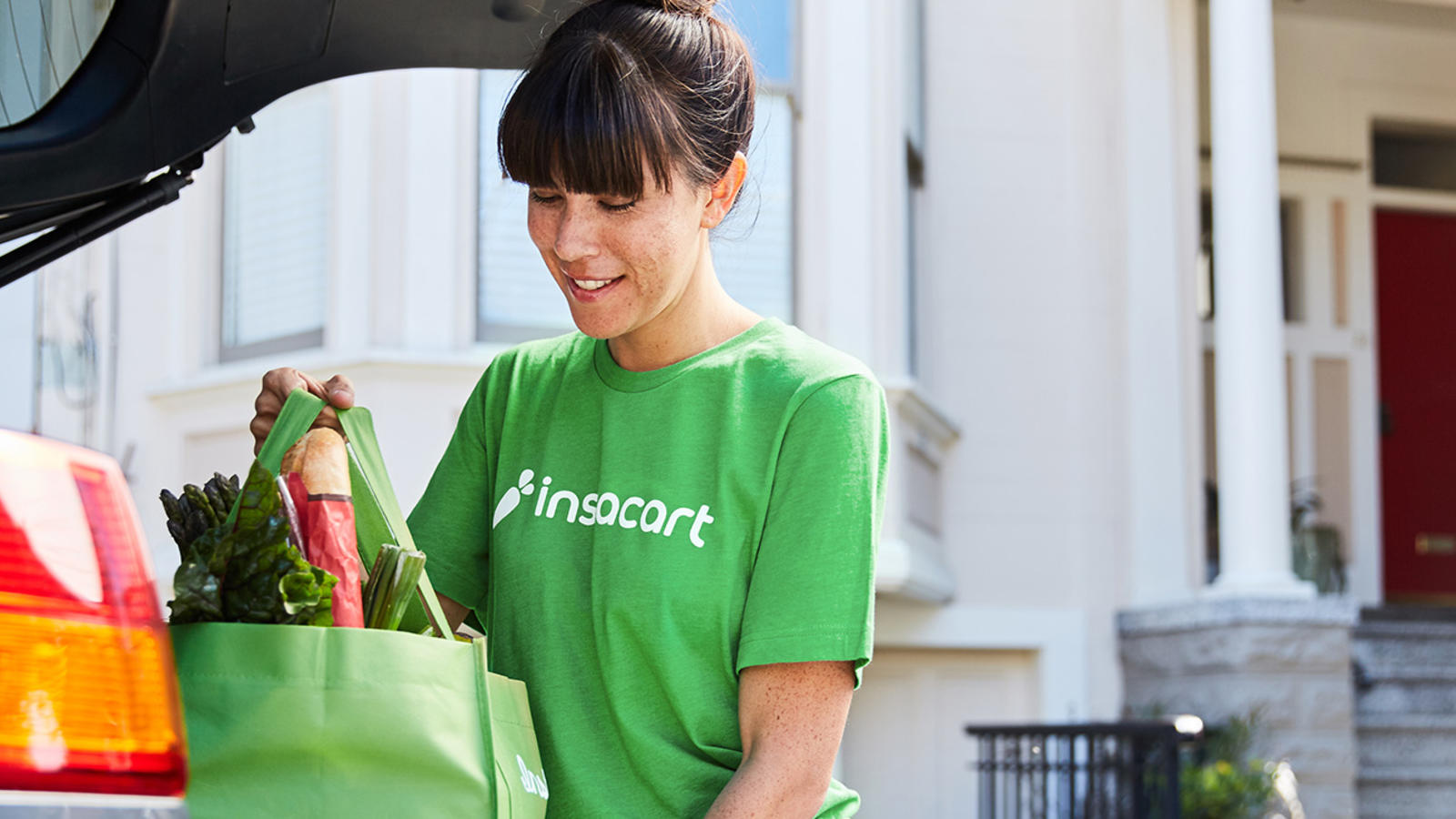
On a recent Friday morning, in the produce section of the Montrose Whole Foods Market, Osmon opened the Instacart app on her iPhone and clicked “start shopping.” A countdown timer started and she was off, leaving amateur shoppers in her dust.
She picked up a pint of raspberries, inspected it, and set it in her cart. She weighed two organic apples and set them next to the raspberries. Then she made a beeline for the jam aisle, with a purposeful stride powered by an internal GPS for groceries. She knew this Whole Foods well; she’d already mapped her route in her head.
In the dairy section, she hit a roadblock. The 2 percent organic milk on her list wasn’t in stock. She paused to text the customer a question: Should she substitute 2 percent organic milk fortified with DHA Omega-3?
Her last stop was the freezer aisle, where she grabbed a bag of frozen berries and a loaf of gluten-free bread, and then she zipped to the cash register. This Whole Foods has a lane dedicated to Instacart shoppers, where a green-shirted “in-store” employee was already bagging groceries. There are enough orders at this Whole Foods alone to warrant a dedicated Instacart employee who does the shopping, the buying and the bagging for contract workers who will simply pick the groceries up and deliver them.
Instacart already employs about 650 shoppers in the Houston area (all but the in-store shoppers work as independent contractors). The online grocery business is good here — and some analysts say it’s likely to get better. Amazon’s recent acquisition of Whole Foods signaled the online retail behemoth’s commitment to a delivery-based model of grocery shopping. And Amazon isn’t the only one banking on this model. A report released earlier this year by Nielsen and the Food Marketing Institute predicts that by 2025, online spending could account for 20 percent of total U.S. grocery sales, representing $100 billion annually. That’s roughly five times its current share of 4.3 percent.
Younger people, especially, are gravitating toward options like Instacart, Amazon Fresh, Peapod and Shipt, Nielsen found. According to one survey, 30 percent of Millennials said they were already ordering groceries online for home delivery, compared to 22 percent of Gen X-ers and 17 percent of Baby Boomers. Analysts expect the number of younger shoppers who buy groceries online to increase in coming years.
As Nielsen points out, grocery delivery is not a new invention — the milkman was the Instacart of the 1950s, at least in a limited way. Today, however, the options are broader and the convenience greater. Osmon has lugged massive bags of dog food and buckets of kitty litter up several flights of stairs — not to mention cases of water and other family-size bundles from Costco. Instacart can also bring you beer, wine and liquor.
But some Rice Business professors believe the online future of grocery shopping may be overhyped. The dominant model of online grocery delivery, as it exists now, is far from efficient, says Scott Sonenshein, the Henry Gardiner Symonds Professor of Management at Rice.
Companies like Instacart and Shipt are sending employees into stores owned by other companies, and paying full retail price for goods — then adding a service charge and a delivery charge on top of that retail price. It’s a narrow profit margin for the delivery companies themselves, and a lot to ask of customers.
“My sense is that the Instacart model is really an intermediate step in this process,” Sonenshein said. “One challenge is that Instacart doesn’t know what the price will be in the stores they shop; there could be fluctuation, which could be a cause of concern for customers.”
AmazonFresh, meanwhile, could prove to be a more stable model. “They’re shopping from the Amazon warehouse, where they can control the supply chain, they can control things like the price. They’re not shopping retail in other people’s stores,” he said. “That looks a lot more like the future to me.”
Instacart does have partnerships with some retailers, including Whole Foods. But now that Amazon has acquired Whole Foods, Sonenshein points out, that partnership may be short-lived.
“I think it’ll take time to reach a point where more grocery shopping happens online than not,” Sonenshein says. “It’s still a rather small portion of the market, and grocery creates a lot more challenges than retail. For one thing, you have perishable goods; you also have a lot more variety of goods. At the grocery store, you like tomatoes to look and feel a certain way, and that’s going to create concerns for some customers. Eventually, as the cost comes down, the convenience can come to outweigh those concerns — it’s just going to have some challenges and take some more time.”
---
The challenges, for shoppers like Osmon, include balancing careful selection — getting tomatoes that look and feel right — with staggering speed.
Osmon tries to pick fruits and vegetables that are ripe and ready to be used that day, but not so ripe that they won’t last a few more days. If, say, a customer asks for avocados, but all the avocados on display are green and hard, Osmon will text to see whether the customer still wants them. She is especially careful with eggs — she picks up each egg in a carton to be sure none are cracked.
But she can’t dawdle. Instacart tracks employee speed metrics, and efficiency is at a premium. Osmon averages about 50 seconds per item, which puts her at the fast end of the employee spectrum. She acknowledges that the speed per item index lends itself to a spirit of competition; she doesn’t mind.
“It’s like a scavenger hunt for me,” she says.
There are inevitably speed bumps, especially on the busiest shopping days: Sunday and Monday. Even the best-planned trips can be derailed by an unfamiliar item, like the riced cauliflower she once scoured an entire store for.
Unfamiliar items also pose a challenge when it comes to acting as a customer’s surrogate. How do you pick the perfect jackfruit, for example, when you’ve never had a jackfruit? Instacart shopper Renee Smith solved the problem simply enough: She chatted up a produce associate and tried a sample.
“They taste good — a little like Juicy Fruit, the gum,” Smith says. “And I found out that the browner they are on the outside, the sweeter they are on the inside.”
Instacart shoppers are responsible for the care and safety of groceries from the time they add them to the shopping cart to the moment they’re delivered. This poses its own set of challenges, especially in Houston, where if it’s not the heat, it’s the crater-sized potholes.
“I run into the ice cream issue, especially if I’m doing multiple deliveries with ice cream in each one. In the Houston heat, that can be a problem,” Osmon said. She’s outfitted her trunk with specialized freezer canisters just for ice cream, separate from the larger cooler she uses for meat, dairy and other refrigerated items.
The potholes are another problem. “Eggs and bread always go in the front [passenger] seat, with me,” Osmon said. “And I always double-check my trunk to make sure nothing’s escaped from a bag. Sometimes there’s an onion on the loose.”
While shoppers like Osmon are undoubtedly fastidious, however, even the most efficient grocery delivery model won’t overcome one fundamental hurdle: many people prefer to shop for their own food. In predicting the future of grocery shopping, some analysts fail to factor in consumer psychology, according to Utpal M. Dholakia, a marketing professor at Rice Business.
“It seems to me that a large number of people — maybe a majority — are not ever going to shop for groceries online,” Dholakia said. “Shopping for groceries is fundamentally different from shopping for shoes or clothes or lightbulbs. There are many differences, but one is that people want to have that sensory connection with the product. This is fresh food, fresh produce; relying on someone to deliver bananas or tomatoes is not the same as getting them yourself.”
The way we shop for groceries is habitually ingrained, much more than buying books or clothes, Dholakia explained. How we buy food isn’t just a matter of cost and efficiency — it’s part of our lifestyle.
“If I enjoy going to the store and looking for deals, and think it’s an interesting and fun thing to do, there’s no amount of efficiency that’s going to change that,” he said. “I might try different products because they’re on sale, or see something that looks interesting in the store. And there’s the sampling that’s part of the grocery store experience. You can’t get any of that online.”
---
What you do get online is the convenience and ease of having someone else do your shopping. And that person is a pro, if Osmon and Smith are a fair representation. Of course, the drawback to being a pro shopper: If you look like you know what you’re doing, people are bound to ask you for help. At Whole Foods, an older man spotted Smith’s green Instacart shirt and mistook her for a store employee.
“Ma’am, you work here?” he asked.
“I don’t, but I might be able to help you,” she offered.
“Y’all moved the butters! I’m looking for the sunflower butter,” he said.
“I know where that is! Aisle 1,” she said, and led him there.
“I want the no-sugar, no-salt kind,” he said, and waited while she crouched to get him the right one from the bottom shelf.
“We get that a lot,” Smith said. One of the rewards of the job, she added, is bringing groceries to people who are elderly or disabled and for whom grocery shopping is either difficult or impossible.
Of course, they don’t mind if you use their services just because you don’t feel like shopping.
“What we offer is time,” Smith explained. “We give you that time back.”
Jennifer Latson is an editor at Rice Business Wisdom and the author of The Boy Who Loved Too Much, a nonfiction book about a rare disorder called Williams syndrome.

Whole Foods and Amazon: Can their corporate cultures coexist?


By Claudia Feldman
Whole Foods and Amazon: Can Their Corporate Cultures Coexist?
A non-Trumpian tweet widely shared on the internet on Friday:
Bezos: "Alexa, buy me something from Whole Foods."
Alexa: "Buying Whole Foods."
Bezos: [expletive deleted]
Bezos, of course, is Jeff Bezos, CEO of Amazon, and Alexa is Amazon's virtual personal assistant.
The joke was about the day's biggest business news: Amazon, one of the world's largest online shopping websites just acquired its seeming opposite in Whole Foods Market, a pricey brick-and-mortar grocery-store chain known for its organic products and fancy-pants customers.
Will this new relationship go the way of United and Continental? Or prove to be a blissful match? Rice Business professor Scott Sonenshein offered his spin on the $13.7 billion deal that threatens to upend the highly competitive grocery industry.
Q: Why the big headlines today? Is this just another acquisitions story?
A: No. A predominantly online retailer is making further inroads into brick-and-mortar retail and continuing to change the way we shop and how we consume.
Q: Explain the differences between these two corporate giants.
A: Amazon is known as very cost-focused, very innovative, very high-tech, very frugal. Whole Foods, of course, offers premium products at premium prices and is sometimes called "Whole Paycheck."
Q: Can these two cultures coexist?
A: Time will tell. At the start, at least, Whole Foods will be run as a separate subsidiary and the CEO, John Mackey, is staying on. The grocery chain has a strong brand, the customer base tends to be affluent, and Amazon wants to learn.
Q: What makes for a successful acquisition?
A: You need an overarching vision. Amazon has been very clear that this is not about cutting jobs but helping to find new markets and new ways of connecting with customers. That should help to assuage the concerns of Whole Foods employees. I also think it's important to have transparent leadership and clarity about metrics and goals.
Q: Let's talk about some corporate match-ups that haven't fared so well.
A: What looks like a successful merger on paper can be a disaster in reality. Take United and Continental. There were two very different customer service orientations — one with a customer-centered culture that was almost sacred. At United, not so much.
I think we tend to underestimate the complexity involved in acquisitions. Maybe the Whole Foods employees don't have such a good impression of Amazon. Maybe they think Amazon employees don't share the same values. But look how Amazon acquired Zappos.com, the online shoe and clothing shop. Bezos let them run independently.
Q: What else can go wrong in these multi-billion dollar deals?
A: Focusing on the financials of the acquisition and not accounting for the cultures, the people and how their work will be transformed. And some problems are just hard to anticipate. At the end of the day, you're not just buying real estate but skilled workers. It's important to build trust. It's important to be transparent.
Q: How does this move reflect bigger industry changes? What is the elephant in the room?
A: We've seen a dramatic transformation in shopping and retail in the past couple of years — a whole host of bankruptcies, the closing of hundreds of stores and a large increase in the number of online transactions. One day we will reach the tipping point where the majority of shopping is done online.
I think the insight, the takeaway, is that traditional brick-and-mortar retailers are stuck with an outdated store footprint and have designed stores that increasingly don't make sense for the type of shopping that happens today.
And Amazon has a head start. They relentlessly study how people shop.
This country has more retail space per capita than any other country by far. But retail is increasingly dependent on technological innovation too, not just product.
Scott Sonenshein is a professor of management at Rice Business and the author of Stretch: Unlock The Power Of Less And Achieve More Than You Ever Imagined.
Claudia Feldman is a freelance writer living in Houston and editor of the Last Word, a service that helps people tell their own stories.
This article originally appeared online in Gray Matters.
Rice University’s Jones Graduate School of Business today announced plans to launch a new online Master of Business Administration program, subject to Rice Faculty Senate and accreditor approval.* MBA@Rice is designed to prepare the next generation of global leaders to excel in the ever-changing business landscape.
Rice University’s Jones Graduate School of Business today announced plans to launch a new online Master of Business Administration program, subject to Rice Faculty Senate and accreditor approval.* MBA@Rice is designed to prepare the next generation of global leaders to excel in the ever-changing business landscape.
The Jones School is partnering with 2U Inc., a leading provider of high-quality education online, to deliver the program.
“Our top priority is to deliver distinctive degree programs and groundbreaking research to impact businesses worldwide,” said Peter Rodriguez, dean of the Jones School. “Through an extensive consultative process and formal vote, the Jones School faculty strongly endorsed this new program. We look forward to working with the Rice Faculty Senate and our accrediting body in the next developmental steps.”
“Offering these degree programs will increasingly involve leveraging digital education. Students across the country will have the opportunity to experience the Rice MBA program without the need to relocate,” Rodriguez added.
The Jones Graduate School of Business ranks among the nation’s top business schools by Bloomberg Businessweek and the Financial Times. MBA@Rice courses will be taught by nationally recognized faculty who integrate insights from their own research to teach in a compelling, engaging learning environment, Rodriguez said. Students and faculty will meet weekly in live, small-group online sessions. Students will study prerecorded, interactive course content between sessions. The program will include required on-campus immersive experiences and global offsite experiences, where students will collaborate in person to further develop leadership skills in a global context.
“The Jones School has a well-earned reputation for innovation, rigor and creativity in its educational programs,” said Rice Provost Marie Lynn Miranda. “This new approach is yet another example of the school’s agility and inventiveness in leveraging new technologies to reach a broader audience.”
“We’re excited that the Jones School plans to offer Rice University’s first blended degree program,” said Rice President David Leebron. “The Jones School faculty rightly insisted the highest standards be applied to this program, and we believe it will make an outstanding business education available to a larger number of talented students around the world.”
MBA@Rice will be designed to serve working professionals with extensive experience who may not have the option to study on campus. The program, targeting career accelerators, will join the on-campus full-time, professional and executive programs as avenues to earn the Rice MBA.
The Jones School seeks to launch the new program in 2018.
*Rice’s regional accrediting agency is the Southern Association of Colleges and Schools Commission on Colleges.
How the company you work for guides your idea of self-improvement.


Based on research by Scott Sonenshein, Jane E. Cutton, Adam M. Grant, Gretchen M. Spreitzer and Kathleen M. Sutcliffe
How The Company You Work For Guides Your Idea Of Self-Improvement
We Americans like to think of ourselves as self-starting individualists. For entrepreneurs, the need for self-improvement is obvious: You’re either getting better at what you do or you’re being overtaken by someone else. But what about the vast majority of other workers: Those who draw a paycheck from an employer? Research shows that, for their own satisfaction, these workers, too, crave self-improvement. But who frames what that improvement looks like — and how it’s guided?
Scott Sonenshein, a professor at Rice University's Jones Graduate School of Business, joined colleagues Jane E. Dutton, Gretchen M. Spreitzer and Kathleen M. Sutcliffe of the University of Michigan and Adam M. Grant of the University of Pennsylvania to gauge the approach to employee growth — and the way workers understood and responded to those approaches — at three widely varying Midwestern organizations. For confidentiality, the researchers gave nicknames to each company.
They discovered that each business offered workers a different path to self-improvement, which the researchers labeled achieving, learning and helping. For example, at a for-profit financial services business, which they labeled FinCo, employees had to either achieve or leave. Interviews with FinCo employees revealed a go-go corporate culture complete with team chants, company-created mottos (“You’ll see it when you believe it”) and personal telephone affirmations from the CEO. When an employee didn’t meet company goals, supervisors delivered personal, highly challenging and sometimes job-threatening messages to light the necessary fire.
Workers at this kind of company really get only one kind of choice, the researchers found: They can get with the program and stay, or reject the company’s requirements and walk away.
Another for-profit company, labeled ChemCo, offered a much lower-pressure atmosphere. Unlike the FinCo managers, a ChemCo manager responded to an employee’s misstep with sympathy. “Don’t look at it as a mistake, take it as a learning process,” the manager advised. It’s no surprise, then, that ChemCo employees equated on-the-job growth with learning. In fact, the company insisted its employees learn their jobs through their own initiative. As one ChemCo employee reflected, “With this company you need to show initiative, you need to be a self-starter…. Those that have the need to be told and directed … tend not to thrive.” At FinCo, by contrast, employees are “told and directed.”
The researchers also looked at a non-profit organization they dubbed SocialOrg. A consortium of social services agencies, SocialOrg employed workers who seemed to split the difference between the company-directed growth required at FinCo and the self-driven growth at ChemCo. The non-profit’s employees responded to a wide range of influences, while the employer’s demands were somewhat less specific. As a result, workers often found themselves serving clients in ways that fell outside their expected job descriptions. For these employees, growth at work wasn’t measured in terms of hitting projections. It was judged by how successful they were at helping others.
The outcome: Whether caseworker, custodian or receptionist, everyone at SocialOrg was a part-time social worker. When a client needed help, supervisors encouraged employees to put down their day-to-day tasks and pitch in. With expectations riding on that kind of behavior, it’s no surprise that helping was an integral part of SocialOrg culture. In the words of a maintenance worker, “When I see that [my coworkers are helping], it makes me try to do it more.”
Curiously, while each of the three organizations encouraged its own variety of employee growth, the workers themselves tended to see their desire for each kind of growth as emanating from within — an example, perhaps, of our attachment to the idea of rugged individualism.
In a way, of course, they were right: the workers were largely self-selected, and likely to leave or be fired if they didn’t embrace the collective culture. The end result was three different organizations whose workers experienced distinct, specific personal-growth journeys. Though their missions focused on shareholders, customers or social service clients, the effect of each organization was like a school system, with its own way of teaching and grading.
Like it or not, Sonenshein and his team concluded, if you stay at your job long enough, your growth and productivity will start to follow organizational values, much as a grapevine follows a trellis.
Scott Sonenshein is the Henry Gardiner Symonds Professor of Management at Jones Graduate School of Business at Rice University.
To learn more, please see: Sonenshein, S., Dutton, J. E., Grant, A. M., Spreitzer, G. M., & Sutcliffe, K.M. (2013). Growing at work: Employees’ interpretations of progressive self-change in organizations. Organization Science, 24(2), 552–570.
To build long-term value, keep customers — and employees — satisfied.


Based on research by Vikas Mittal, Yan Anthea Zhang and Christopher Groening
To Build Value For The Long Term, Keep Customers — And Employees — Satisfied
Three prepared organic meals a day, personal-fitness classes, health clinics, on-site oil changes, haircuts, nap pods and a spa truck.
No, we’re not talking about a retirement community in Boca. If you work for Google, this is your workplace. In 2015, for the seventh time in a decade, Google placed first in Fortune’s “Best Companies to Work For.” If you are an employee, you want to work for a company like Google.
And if you are a customer? You might look to Amazon, which topped USA Today’s 2015 list for best customer service – its sixth consecutive year at number one.
“We’re not competitor obsessed, we’re customer obsessed,” Amazon founder and CEO Jeff Bezos has said. “We start with what the customer needs and we work backwards.”
So employees want to work for Google. Customers want to shop with Amazon. But what about investors?
Sure, investors crunch the numbers. They look at balance sheets and income statements. They even hire bright-eyed MBA graduates to dig deep into SEC filings and search the footnotes for any informational advantage.
However, in addition to the quantifiable data, investors also rely on a firm’s observable characteristics and activities as cues to filter and sort in terms of value. In other words, how firms treat their employees and customers can be used as “signals” by investors in their assessment of firm value.
For example, employee perks, such as a profit-sharing program, can make a firm more valuable in the eyes of investors. Customer-related benefits, like the development of a better product following a successful R&D effort, can provide a similar boost. In contrast, lapses with employees or customers can undermine investors’ valuations. Large-scale layoffs (which negatively affect employees) or product-safety recalls (which alienate customers) send negative signals to investors about a firm’s long-term competitive advantage.
But how do investors make sense of multiple or conflicting signals? Recent research coauthored by Rice University professors Vikas Mittal and Yan Anthea Zhang explores the way investors take in the big picture.
The results show that when a firm consistently pleases both employees and customers, its long-term value increases. But if firms are inconsistent, making their customers happy but not their employees, or vice versa, investors will discount the success. This “cross-validation” effect is even more pronounced for businesses with a narrow business scope. (For example, 1-800-FLOWERS as opposed to General Electric.)
What does the cross-validation effect mean for firms? It means that marketing and human resources executives shouldn’t work in isolation, but coordinate with each other. And it means investors notice and value consistency across multiple stakeholder groups.
So, for example, Amazon has recently been criticized for its strenuous work environment. Jeff Bezos might be obsessed with customers, but Amazon could benefit more if its employees were seen to be happy as well. If the corporate environment is viewed as "bruising," then investors aren’t going to value the customer-related achievements as highly.
It is said that a person cannot serve two masters. But can a business? Mittal and Zhang’s research suggests that they should try. Business organizations can’t ignore any of their many masters (or stakeholders). Because investors, themselves a stakeholder group, pay attention to them all.
Vikas Mittal is the J. Hugh Liedtke Professor of Marketing and Management at the Jesse H. Jones Graduate School of Business at Rice University
Yan Anthea Zhang is a Fayez Sarofim Vanguard Professor of Management in Strategic Management at the Jesse H. Jones Graduate School of Business at Rice University.
To learn more, please see: Groening, C., Mittal, V., & Zhang, Y. (2016). Cross-validation of customer and employee signals and firm valuation. Journal of Marketing Research, 53(1), 61-76.