Leadership | Organizational Behavior
Three organizational behavior scholars on outgrowing familiar strengths, managing from the middle and navigating the limits of control.
How governments shape the solar energy industry.


Based on research by Douglas A. Schuler and Usha C.V. Haley
How Governments Shape The Solar Energy Industry
In the Spanish region of Aragon, known for livestock, barley and rye, a vast tapestry of solar panels shimmers on the sun-drenched landscape. The panels angle toward the sky in much the same way that sunflowers shift position in nearby fields.
But none of these photovoltaic arrays (the technical term for solar panels) would be there without government intervention. As with many other countries, Spain encourages solar power with subsidies. Around the world, such efforts to push photovoltaic power are more successful in some countries than in others.
To understand how policy shapes the solar power market, Rice Business professor Douglas A. Schuler and colleague Usha C. V. Haley, now at West Virginia University, created a global map of these relationships. In the process, they found a market replete with unintended consequences.
Take Spain’s pell-mell dive into solar energy. In 2007, the Spanish government set such a high rate for feed-in tariffs — payments to households or businesses that generated their own electricity — that it sparked a solar gold rush. When the government restricted the policies the following year, the solar market crashed.
Around the world, the researchers found, policies to promote solar production derive from a maze of strategies and pressures, including subsidies, feed-in tariffs, tax credits and other formulas. The greater the number of elements, of course, the more unpredictable the outcome.
In general, unsuccessful policies fail for two major reasons, the researchers found. First, it’s chancy trying to predict how government policy will change from one year to the next. And second, it’s even harder to guess how those changes will affect the market.
Some countries offer more certainty than others. Germany, for example, finely tuned its feed-in tariff to dovetail with the European Union’s 2020 goal of 20 percent renewable energy in electricity. Yet uncertainty clouded the German market as well. In 2010, budget constraints and competing interests pushed the country’s solar subsidies down by 9 percent for roof installations and 11 percent for ground-mounted installations.
Elsewhere on the map, China’s ambition for solar power is epic. Government targets for non-fossil fuel use call for 15 percent solar and other renewables by 2020. China also opted against paying private citizens for generating excess electricity, instead promoting solar production on the state level by choosing the lowest bidder. The resulting bids were so low that they effectively priced foreign firms out of the market.
U.S. solar policy, meanwhile, is dogged by inconsistency. States including California, Texas and New Jersey even have their own energy policies. This regulatory confusion is a key reason that Germany, Japan and China have now overtaken America as global leaders in solar production and deployment.
In the United States, as Shell Oil’s former President and CEO John Hofmeister puts it, “energy is politicized.” Just as China bolsters its solar market with production subsidies, the U.S. requires the Defense Department only to buy American. As a result, even the most carefully conceived market strategies can turn into a train wreck if they run into political opposition and regulatory uncertainty.
No matter the country, though, dynamics governing solar policy are byzantine. Consider what happened in Spain, when it belatedly scaled back on feed-in-tariffs.
As it happened, the new policy occurred at the same time that China decided to support the price of polysilicon, a key component of solar panels. As a result, Spanish panel production using polysilicon shot sky high, while demand tanked. Suddenly, Spanish solar panel makers were left with warehouses full of excess inventory. The stock of one of China’s biggest solar firms, Suntech, plunged by 90 percent, and others followed.
So the next time you spy a solar array in Aragon or Amarillo, see it as the fruit of a regulatory ecosystem that’s as delicate as the interplay of soil, sun and water. Those panels are there because of government action, and their fate sways and bends like sunflowers on a summer day.
Douglas A. Schuler is an associate professor of business and public policy at Jones Graduate School of Business at Rice University.
To learn more, please see: Haley, U. C. V. & Schuler, D. A. (2011). Government policy and firm strategy in the solar photovoltaic industry. California Management Review, 54(1), 17-38.

What happens when a veteran academic edits a scholarly journal?


Based on research by Wagner Kamakura
What happens when a veteran academic edits a scholarly journal?
I was editor of Journal of Marketing Research (JMR) between 2000 and 2003, something I had never imagined even as a vague possibility. The first time the notion of editing this prestigious journal came to mind was in 1999, when I was contacted as one of the finalists for the job and asked to prepare a position statement describing my views of marketing as a discipline and the role of JMR in it.
Contrary to most marketing academics at that time, I did not (and still do not) view marketing as a “science.” (A scientist friend told me that you know you are a scientist from the journals you read; if these journals use a qualifier such as “Transportation,” “Political” or “Psychological” before the word “Science” in their titles, then you are not one. According to this friend, scientists read journals named, e.g., Cells, Nature or simply Science).
In the same way that engineering uses physics, math and so on to solve real and practical physical problems, I view marketing as a technology that relies on the social sciences to solve real and practical market and consumer-related problems. In other words, rather than viewing our discipline as a science, I consider it a scientific applied discipline, or “technology.”
This perspective seems to have prevailed among my predecessors in our field, but probably only among a minority in my generation of marketing PhDs. Many marketing Ph.D.s before my cohort were professionals who had a “real job” for a few years, attained an MBA when they realized they were morphing into managers and in the process fell in love with marketing, leading them to pursue a doctorate in the field. Some in my generation, including myself, also followed this path. I believe this evolution from professional to MBA and then marketing PhD (sometimes without the MBA in the middle) led to a bias in favor of “technology” rather than “science” and an emphasis on implementable solutions rather than elegant but sometimes impractical “theories.”
Soon after taking the position at JMR, in any case, I realized that editors are like traffic cops; at best, they can direct (and sometimes control) traffic flow, but drivers (authors) eventually will get to the destination (research topics) of their choice.
As a conscientious traffic controller, I was especially concerned with finding best reviewers for each submitted manuscript. After all, reviewers are the true experts in a manuscript’s subject and methods; they are in the best position to assess the rigor of the research and its contributions.
After working as editor at JMR and associate editor at other marketing journals I’ve come to see anonymous reviewers as the unsung heroes of any academic journal because they, along with authors, are the ones who really set the collective direction of the journal.
Many authors view the editor as the main barrier blocking their papers from publication when, in fact, reviewers are the ones who produce the expert opinions supporting the editor’s decision. Editors have a not-so-flexible quota of articles to publish in each issue. They want to make sure they select the best manuscripts to fill that quota because what gets published during their tenure becomes part of their legacy as editors. Many reviewers take a devil’s advocate view, seeking reasons to reject a manuscript; editors know that their job is to fill each and every issue of their journal with the best possible content.
This experience clarified my views on where I see our discipline heading — and what it needs to continue in the right direction. In my view, academic research in our field is becoming more closely linked to the basic disciplines it usually relies on and less concerned with real and practical marketing problems. My hunch (some might call it an untested “theory”) is that this has something to do with the way our scholars are educated and trained.
It is not uncommon nowadays for marketing doctoral students to come directly from an undergraduate program in psychology or economics without any prior education, training or experience in business or marketing. Another popular route is postdoctoral study immediately after earning a doctorate in the social sciences, also without any prior exposure to marketing.
Because this trend has been in place for more than a decade, authors now have a stronger “science” bias, centered on the basic disciplines they studied in their academic education. Consequently, reviewers and associate editors now tend to have more of a purist view of the basic disciplines. They are more familiar with elegant, stylized theories derived conceptually or mathematically and tested in a student lab; they tend to dislike the ugliness of the real marketplace and the ungainliness of real consumer/market data.
In light of this bias against what is derisively labeled as “empirical” and “applied” research, marketing academics unfortunately have fallen behind other, more pragmatic, disciplines such as computer science, data science and operations management, as well as industry practitioners on many important practical aspects of marketing, such as direct marketing, database marketing, supply chain management, search engine optimization, social network marketing and (shockingly!) marketing analytics, to name just a few.
My fear is that this trend will continue, with marketing scholars becoming more committed to the basic disciplines they come from and viewing marketing only as a field to apply and test theories developed elsewhere, leading to what one could call the “Balkanization of marketing.” The consequence of this Balkanization is that other fields, such as business analytics, are already taking over the more pragmatic (and profitable!) aspects of marketing while our “scientists” get distracted away from our discipline.
We must ensure that marketing does not break into isolated subfields of psychology, economics, statistics and so forth, the same way Yugoslavia broke into its many independent (and sometimes antagonistic) parts. To counter this possibility, I hope that JMR and similar publications will continue prioritizing articles that mix the rigor of academic research with true relevance to the realities of the marketplace.
Wagner A. Kamakura was the Jesse H. Jones Professor of Marketing at Jones Graduate School of Business at Rice University.
To learn more, please see: Kamakura, W. A. (2014). Reflections on my editorship of JMR and beyond. Journal of Marketing Research, 51(1), 131–132.
Can residents of Aransas Pass, TX, find new, resourceful ways of healing their community?


By Mary Lee Grant
In Aransas Pass, Texas, Two Recoveries Are Underway
At a small rural hospital in Aransas Pass, a shrimping and tourist town of about 7,000, some patients visited the emergency room twice a day, obtaining insulin and other medications they couldn’t afford to buy themselves. Nurses sometimes pooled their money to pay for patients’ cab fare home.
“It is that kind of place,” said Jen Deselms, a registered nurse who worked in the emergency room at Care Regional Hospital before Hurricane Harvey hit, forcing the facility to shut its doors indefinitely. “We look out for each other and for our community. Not having this hospital will be devastating for the entire area.”
All week, doctors and nurses labored to repair the hospital, which serves about 90,000 in three counties, mopping flooded floors and hammering two-by-fours to patch crumbling walls. In Aransas Pass and the neighboring beachfront towns decimated by Harvey’s first brutal landfall, a tale of two recoveries has emerged. Although these communities are often described as resort towns, tourism overlays a culture of rural poverty here. These are places where shrimpers who haven’t owned boats in years struggle to get by on disability checks. Folks who gave up on the cities cram into waterfront RV parks – many destroyed in the storm – venturing to the coast to flip hamburgers or wait tables in an effort to find their place in the sun and the sand.
According to Scott Sonenshein, a management professor at Rice Business who studies resilience and resourcefulness, Harvey could provide the chance for people and communities to remake themselves.
"It is a chance to start from scratch and do something new," said Sonenshein, author of Stretch: Unlock the Power of Less and Do More than You Ever Imagined. “Research shows that when people are faced with nearly insurmountable odds, they often find completely new and resourceful ways of approaching things and forge completely different paths. Communities can channel the sense of togetherness that comes out of disaster to build something better.”
But in the Coastal Bend, many schools have yet to open their doors and patients will now have to travel at least 20 miles across the Harbor Bridge to Corpus Christi to find medical care, difficult for many in an area with little public transportation.
In nearby Rockport, where retirees show their paintings of shrimp boats and pelicans in art galleries along picturesque Copano Bay and swish condos line the waterfront, virtually nothing remains unscathed. About 80 percent of the buildings in town were damaged, according to federal estimates.
But the path to recovery will vary, said Chuck Shamel, a retired counselor who serves on the executive board of the Good Samaritan, a non-profit that helps the needy with food, bills and transportation.
“The poor will stay and rebuild, because they have nowhere else to go and no way to get out,” he said. “The rich will be back in a few weeks, when the power goes on and the golf courses open.”
The 76 year old moved here to build his dream home with his wife, Betty, a 79-year-old retired teacher, on several wooded acres near the water. Although Harvey damaged their house, he expects insurance to pay most of the costs. He is more concerned with those who have less.
“We are a barbell community, with 20 percent on the upper end and 20 percent on the lower,” Shamel said.
Many moved to the coast hoping for a fresh start among the placid bays and sheltering oak trees, but the reality often is harsher. Jobs are scarce, salaries low and property is expensive.
Ida Jeter, 60, who works cleaning and cooking for nuns at a Catholic shrine, said she is living in her car. The shrine was damaged and many of the nuns are returning to their home base in Wisconsin, so Jeter doesn’t know if she will have a job.
“They kicked me out of my apartment because it was so damaged,” she said, bursting into tears. “I have nowhere to go.”
Unlike much of south and southeast Texas, the poverty here is concentrated in a largely white population. Rockport is about 67 percent white and 24 percent Hispanic, with a sprinkling of blacks and a small but thriving Vietnamese immigrant community originally drawn by the shrimping. Port Aransas is even whiter, with about 89 percent of the population white, 3 percent Hispanic and fewer than a half-percent black or Asian.
Unlike heavily Hispanic south Texas or the Houston area, with its large African-American and multi-hued immigrant population, this is Trump country. In Aransas County, about 74 percent of voters supported Trump. Boarded up windows at a business near Rockport marina are painted with the words, “Bet they blame Trump,” beside an American flag.
Dennis Finner, 50, said he wishes he had seen Trump when the president visited the area.
“I am glad Trump set his feet here,” Finner said. “I wish I had known so I could have seen him, because I like him. Is he doing a good job at helping? I have no idea. I don’t even have a TV anymore.”
For Finner, the self-reliance he so values is eluding him in the wake of Harvey. He doesn’t like depending on government or charity.
“There is nothing like working hard with your hands all your life only to have everything you worked for taken away in a few hours,” Finner said. “I ain’t never taken anything from the government – no handouts or nothing. And now there are people by the side of the road giving out free hamburgers and I’m eating them. It just hurts.”
For many residents, the devastation left in Harvey’s wake is testing a deeply held value of self-reliance. Bill Woods, who was almost killed in a motorcycle accident years ago, now lives with a painful limp, one eye permanently shut and a metal plate in his head. Yet Woods, 60, receives no disability payments.
“All the money I have, I make with my own hard work,” he said.
He mows lawns for a living, but wind blew apart the trailer he uses to haul his equipment. Harvey also tore apart the trailer where he lives, so he is staying with friends.
“At least the government is here,” he said. “I will have to wait and see if I can get a FEMA trailer to live in or some money to buy another trailer.”
Aransas County Sheriff Bill Mills said federal aid has been sufficient, but dealing with the multitude of agencies that have descended on the area to help in very specific ways has demanded great coordination.
“Each agency has one little area that they micromanage, which is good, because they have a lot of expertise in that area,” Mills said. “But we are overwhelmed. We have so much to deal with. The power isn’t even back on, almost every building has been damaged, people are homeless and we are arresting looters. Our schools have been closed indefinitely. Our teachers don’t have jobs. People are trying to clean up with this heat index and stress that is off the charts.”
In Port Aransas, a town of 4,000 that can swell to 70,000 on weekends, the city manager has estimated that every building in town was damaged. A group of friends sat in deck chairs in the parking lot of the Place Motel, whose manager had given them rooms for free after their lodgings were flooded. The men were shirtless in the hot muggy weather; the women wore shorts and, midriff tops with packs of cigarettes tucked into their bras. They were drinking tequila and Jack Daniels straight from bottles they found floating down the street when the liquor store flooded.
Timothy Yoke, 53, who lays tile for a living, rode the storm out, but his apartment was completely flooded. “Of course I will stay,” he said. “I love it here. I love the beach and the weather and the people. Where else would I go?”
In Port Aransas, about 11 percent of the population falls below the poverty line, but 17 percent of those under 18 live in poverty. About 80 percent of the island homes are owned by people from elsewhere, making the town a mix of prosperous out-of-towners and locals who largely depend on jobs serving tourists.
Many part-time residents also dock boats in Port Aransas. At Island Moorings Marina, crane operators worked to remove dozens of boats from the mud and sand.
Rochelle Rackham, 63, slept in her beached sailboat all night. The ocean-going catamaran had broken away from the docks as the storm surge hit and floated onto dry land.
“I have to sleep here because the boat is so valuable and I have thousands of dollars of electronic equipment on it,” said Rackham. “A man came around last night and tried to break in, but I pulled my .38 on him and he ran.”
Rackham, who has sailed solo as far as Turkey and Tunisia on her boat, said she is not sure she will stick with Port Aransas after the storm. “I think it would be simpler just to dock her in Cayman,” she said.
George Brown, a commercial real estate broker who owns an oceanfront RV park, said that even though he lives in San Antonio, Port Aransas is part of who he is. Most of the RVs in his park were destroyed, but he said he will rebuild.
“We used to come down here when I was a kid for the hurricanes,” he said. “Partly to check on our property, but also for the excitement. My parents would bring a generator and hook it up. And we would listen to the rain and wind. Hurricanes are part of living on the coast. I’m not leaving.”
Mary Lee Grant is a political scientist in Kingsville, Texas and a writer for Business Wisdom. A version of this story appeared in the Washington Post.


How well-placed reminders help consumers build sustainable habits.

“Social mandates” can make a company’s response seem more genuine.
Why marketers try to predict how long a customer will stay with their company.
Based on research by Sharad Borle, Siddharth S. Singh and Dipak C. Jain
How Long Will Customers Stay Wedded To Your Company?
Managers dream of keeping their customers faithful for years. Sooner or later, though, almost all consumers will go elsewhere. That’s why marketing experts scramble to predict how long a customer will stay with a company and how much money she’ll spend on it. In industry parlance, this variable is “customer lifetime value.”
The craving to know why customers stray has inspired a cottage industry in models calculating the “lifetime value” a customer brings to his or her partnership with a seller. Pinpointing when a customer starts doing business with a firm, each purchase she makes and when she quits buying all help marketers hone their efforts to keep her interested.
But customer devotion rarely runs smoothly. Higher spending, for one thing, does not necessarily correlate with longer customer relationship. Curiously, consumers who stay with a company briefly often spend more than those who stay loyal for years. So managers need to differentiate between the length of time a customer buys from them and her “lifetime value” — what she brings to that connection.
To improve companies’ predictive ability, Rice Business professor Sharad Borle and former Rice Business professor Siddharth S. Singh, along with colleague Dipak C. Jain, then of Northwestern University, created a model for predicting and testing customer lifetime value. They define this as the value a customer brings to a firm (generally measured as the revenues from her purchases), minus the firm’s costs to maintain the bond.
Past research on this topic has focused on two specific contexts: contractual and non-contractual. In a non-contractual situation, management doesn’t know exactly when customers quit buying a product, so the moment of a customer’s defection has to be inferred. Contractual situations, on the other hand, allow close monitoring of specific day-to-day factors. In contractual relationships such as automobile associations, membership-based retailers like Costco and membership-based buying relationships such as music and food clubs, managers know exactly when a relationship starts and ends, and every time a customer makes a purchase.
The researchers decided to look at elements of both contractual and non-contractual settings in their study, a scenario that had not been previously analyzed in any depth. First they looked at a membership-based direct marketing company that tracked the dates each customer joined and terminated membership. Then they examined how well different models worked in predicting customer lifetime value.
Their model predicted customers’ likelihood of ending the membership as well as their spending patterns. With this information in hand, the scholars could estimate the lifetime value of each customer every time she made a purchase.
The model proved better at predicting customer lifetime value and in targeting valuable customers than the other models to which they compared it. They also discovered that a customer’s purchase timing, purchase amount and risk of defecting are intertwined, which validated their joint-modeling approach.
To reach their conclusions, the researchers studied two random samples of data, both drawn from the population of all customers who joined a company in one particular year in the late 1990s. These data offered information about all purchases by these customers from the first day of membership to the time the consumers moved on to other pastures.
The first part of the data showed 1,000 past customers and 7,108 purchases. It traced the buying habits of these customers over their entire lifetime with the firm. The second part, consisting of another 500 past customers (a validation sample), was selected for predictive testing and to illustrate the model in action. It looked at the times between purchase, purchase amounts and the total membership lifetime of each customer.
How did loyalty correlate to spending? Not very strongly. A customer who waited longer between purchases was more likely to end her membership, yet a customer who waited longer between purchases also was likely to spend more. There was little difference between the amount of time men and women waited to buy – but when they did make a purchase, women spent less. Men and women were equally likely to end their membership with the firm.
Gauging customer value, clearly, is no simple thing. But good models that predict how and when customers spend remove some of the guesswork. It’s crucial data for any business that needs to know when customers are thinking of bolting — and how to woo them back.
Sharad Borle is an associate professor of marketing at Jones Graduate School of Business at Rice University.
To learn more, please see: Sing, S. S., Borle, S., & Jain, D. C. (2008). Customer lifetime value measurement. Management Science, 54(1), 100-112.
Tackling the biggest obstacle to HIV treatment: Compliance.


Based on research by Robert A. Westbrook, Bich N. Dang, William C. Black, Maria C. Rodriguez-Barradas and Thomas P. Giordano
Tackling The Biggest Obstacle To HIV Treatment: Compliance
Would you recommend your doctor to a friend? How do you feel about your medical care? The answers, it turns out, may predict how well you heal.
In 1987, six years after the first reported case of AIDS, the Federal Drug Administration approved a pioneering antiviral cocktail to treat the disease. Since then, medical advances have made it possible to keep HIV from becoming AIDS. Yet of the nearly 1 million people in the United States who are HIV positive, only a quarter actually achieve what clinicians call HIV “suppression,” that is, glancingly low levels of HIV in their systems.
For those who came of age during HIV’s darkest days, the issue is confounding. Now that there’s a way to manage this once-deadly disease, why do so few people use it?
In 2013, Robert A. Westbrook, a professor at the Rice Business school, joined Bich N. Dang and Thomas P. Giordano, clinicians and instructors at Baylor College of Medicine, to tackle two of the biggest challenges in HIV patient compliance. Current mainstream treatment, they knew, stresses keeping HIV-infected patients in a physician’s care and getting them to correctly follow highly active antiretroviral therapy, or HAART.
But both goals are surprisingly hard to achieve. Of those HIV-diagnosed patients who are linked to care, many don’t stay: Only 60 percent of HIV-positive patients seek routine clinical care. Getting patients to adhere to their antiretroviral therapy is also a conundrum: Just 55 percent of those with HAART actually take their meds as prescribed.
If clinicians and policymakers want to improve outcomes, Westbrook and his colleagues argued, caregivers will have to attack these two problem areas. Previous market research offers a clue about how to do it. In general, the studies show, patient satisfaction correlates to patient retention and medication adherence. Perhaps, the team hypothesized, patient satisfaction could influence HIV treatment as well.
To find out, the researchers analyzed survey data from almost 500 patients at two different clinics. The subjects were mostly minority and low-income patients — the population most affected by HIV, and most prone to adherence problems and worse outcomes. Their satisfaction as patients was measured by their willingness to recommend the clinic and their overall feelings about the care they got there in the 12 months before the survey.
The findings were striking. Patient satisfaction did indeed correlate with retention and adherence to HAART. This, in turn, improved HIV suppression. Based on these results, the scholars concluded that any treatment designed to improve HIV suppression also needs to factor in the patients’ experience. Caregivers can be trained in patient-centered communication. Providers can ask patients about their treatment goals and preferences — and they can ask, more frequently, if the patients have any questions. Clinics can arrange for patients to get their ongoing care with the same clinician.
Bolstered by this research, the researchers suggested that not only HIV clinics but all healthcare providers who care about better outcomes should work to promote patient satisfaction. Helping patients feel cared for, it turns out, actually helps them to heal.
Robert A. Westbrook is the William Alexander Kirkland Professor of Business at Jones Graduate School of Business at Rice University.
To learn more, please see: Dang, B. N., Westbrook, R. A., Black, W. C., Rodriguez-Barradas, M. C., & Giordano, T. P. (2013). Examining the link between patient satisfaction and adherence to HIV care: A structural equation model. PLOS ONE, 8(1).
For longtime homeowners, emotion has a price of its own.


Based on research by Utpal Dholakia, Katherine E. Loveland and Naomi Mandel
For Longtime Homeowners, Emotion Has A Price Of Its Own
Buying a house is the biggest investment most people make in their lives. Unlike other financial transactions, though, this investment becomes emotionally laden over time, gathering not only monetary but also much harder-to-measure personal value. Your perfect neighbor who drives your kids to soccer and yells over the fence that hamburgers are served may, to a new buyer, be a loudmouthed nuisance with an overgrown lawn.
Such variables inevitably skew buyer and seller perceptions. They also throw a wrench into theories on how investors can be expected to act. Long-time homeowners, it seems, are a separate breed of investor. Their quirks can have national ramifications.
From 2006 to 2011, falling home values throughout the United States affected millions of households, in some cases plummeting 40 percent from the peak. Yet even as prices declined, a 12-month supply of homes remained for sale, twice that of a healthy market. Many homeowners continued to set unreasonably high prices given current conditions, leading to a glut of 6.2 million homes.
Using these puzzling statistics as a launching point, Rice Business Professor Utpal M. Dholakia, Katherine E. Loveland of Xavier University and Naomi Mandel of Arizona State University studied how the experience and duration of homeownership affects sellers’ initial asking prices and their willingness to change them.
Using laboratory simulations and real-life case studies in four U.S. cities, the researchers reached identical outcomes. Longtime owners, they found, asked for higher prices when they stood to profit. Short-term owners asked for lower prices when they were in the so-called “gains domain,” and higher prices when they were in a losing position.
These results contradict Prospect Theory, a foundational tenet of behavioral economics. According to the theory, if an individual is presented with two equal choices, one a loss and the other a gain, the individual will always pick financial gain.
Dholakia and his colleagues took a different approach, linking loss or gain to the experience of ownership itself. By doing so, they acknowledged that people with a positive experience with an object, in this case a home, already feel they are in the “gain domain,” before they begin negotiating.
To reach their conclusions, the researchers trawled through house listings in Phoenix, Minneapolis, Philadelphia and Wilmington, excluding any that had been owned for less than a year as well as bank-owned homes and those in foreclosure or on short sale. Rather than comparing asking prices, they calculated the price premium for a home as a percentage of the home’s market value. In cases of longtime ownership, they found, homeowners in the gains domain asked for a significantly higher adjusted price premium than homeowners whose places had lost value and whose sale was going to bring a financial loss. It was a stark reversal of Prospect Theory.
For the longtime owners, the researchers reasoned, the home was no longer just a marketable commodity. It had become a physical vessel of their most cherished experiences. Prospective buyers saw square footage and comparable pricing. Prospective sellers saw more. “THIS house is special,” their asking prices announced.
Curiously, long-term homeowners in the gains domain asked for a higher premium-to-market value even when asking for a lower price would’ve still brought a profit. Was this greed? Likely not, the researchers showed. The long-time homeowners just valued their homes in ways that buyers couldn’t share.
Understanding how such emotional and financial reference points interact with length of homeownership can help real estate professionals and policymakers identify which homeowners are likely to price more aggressively than market conditions warrant. It could also lend some self-awareness to sellers themselves.
A financial gain is easy to measure. But how do you price 10 years of weekends on the couch savoring kids, dogs, and a glass of Malbec? No external reference point, Dholakia and his colleagues concluded, can put a price on those moments. It may be the true definition of home: the one place the invisible hand of the market does not touch.
Utpal M. Dholakia is the George R. Brown Professor of Marketing at the Jones Graduate School of Business at Rice University.
To learn more, please see: Loveland, K. E., Mandel, N., & Dholakia, U. M. (2014). Understanding homeowners’ pricing decisions: An investigation of the role of ownership duration and financial and emotional reference points. Customer Needs and Solutions, 1(3), 225-240.
Everything’s bigger in Texas — and that’s a huge selling point.


By Mike Snyder
Everything’s Bigger in Texas — And That’s a Huge Selling Point
Excerpted from “New Katy Buc-ee's has gas pumps as far as the eye can see,” originally published in the Houston Chronicle.
The familiar face towered over Interstate 10, but the beaver's goofy grin was obscured by a "Coming Soon" sign. A few days remained before the new Buc-ee's in Katy would throw open its doors to customers eager to buy gasoline and snacks after availing themselves of the famously clean, spacious bathrooms.
I drove out to the popular retailer's newest outpost over the weekend because I was intrigued by reports that it would have 100 gas pumps. The places where I buy gasoline have, at most, a dozen pumps, and I couldn't imagine what 100 gas pumps in one spot would look like (or why so many would be necessary; more on that later).
The entrances were barricaded with orange barrels, so I parked across the street and walked onto the vast property. From where I stood on the eastern edge of the parking lot, a long row of pumps stretched westward as far as I could see. It took 10 minutes to walk to the end and back.
As it turns out, the Katy Buc-ee's has 120 pumps, not counting a few devoted exclusively to diesel. I wondered if Buc-ee's executives had imagined that 120 motorists would decide to fill their tanks at the same time and place. The question revealed my ignorance of this particular niche in the realm of business strategy.
"It is clear that 'big' is their value proposition, and 120 fueling stations is a compelling way to convey it, turning the store into a shopping and stopping destination," said Utpal Dholakia, the George R. Brown Professor of Marketing at Rice University's graduate business school. "I think this sort of positioning works really well in Texas given their long history (since 1982) and beloved brand status."
Read the full story in the Houston Chronicle.
Not all self-control is created equal.
Based on research by Utpal Dholakia, Scott W. Davis and Kelly L. Haws
Not All Self-Control Is Created Equal
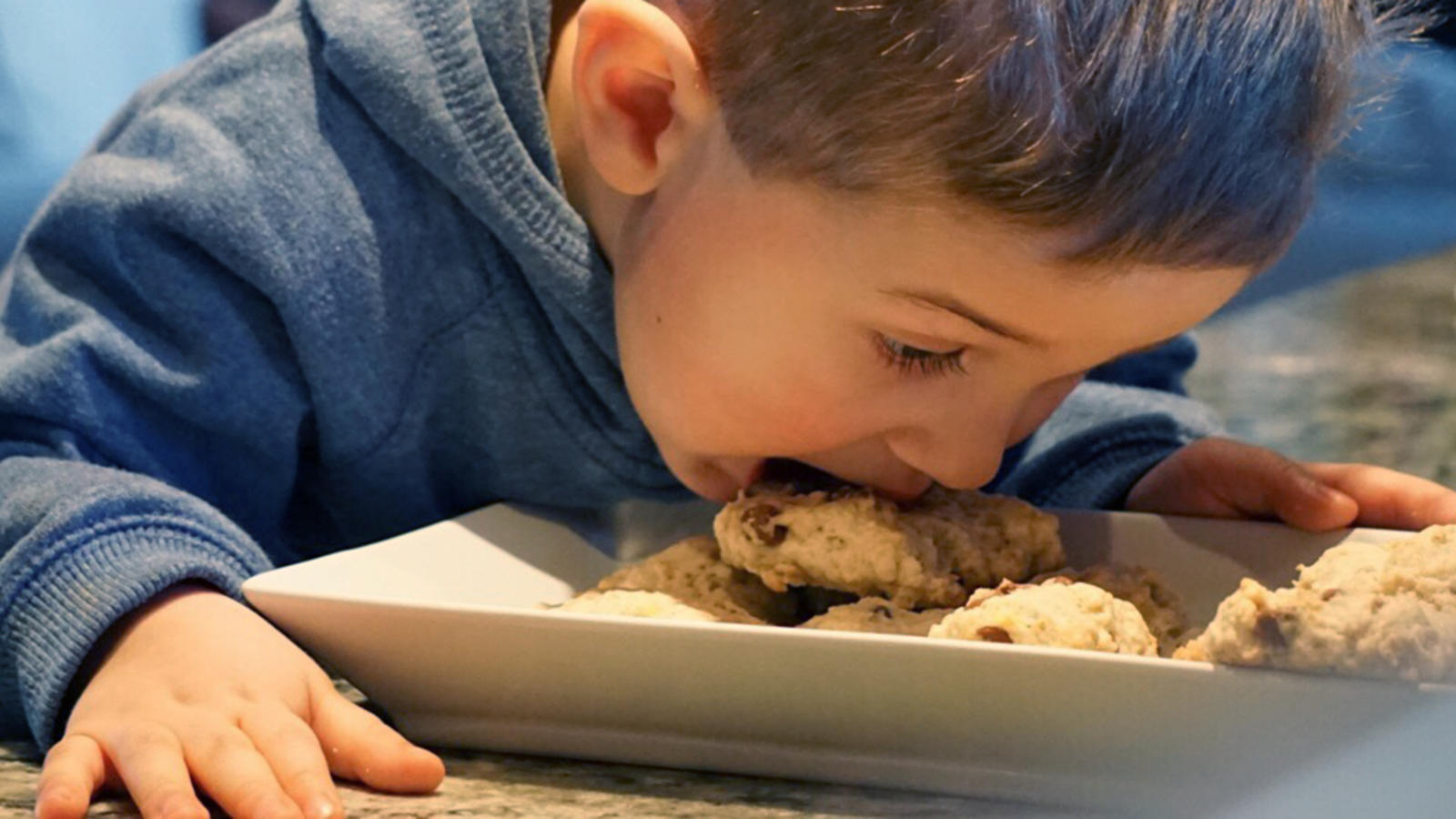
Is indulging in a lavish dessert you shouldn’t eat the same problem as buying an expensive bag you shouldn’t buy? Past research has tended to treat all forms of potentially harmful self-indulgent behavior, from smoking to procrastinating, as shades of the same overarching issue: a lack of self-control. Lumping these behaviors together leads to the conclusion that self-control is a universal trait — something you either have or you don’t. But recent Rice research suggests that not all overindulgences are alike. Some people are stoic in the face of a Kate Spade sale but unable to resist a tempting tiramisu, and vice versa.
Rice Business professor Utpal M. Dholakia and former postdoctoral fellow Scott W. Davis collaborated with Vanderbilt University associate professor of marketing Kelly L. Haws on a study that found no evidence that people fail — or succeed — equally in all aspects of self-control. An accurate measure of self-control in eating, the team found, might not apply equally to other domains such as spending and saving. Correctly understanding the nature of self-control is crucially important for researchers, since curbing social problems such as obesity and consumer debt are of vital concern for the people they affect and the societies they undermine.
A great deal of time and money has gone into studying self-control — and its absence. But in the past, researchers have taken a one-size-fits-all approach to measuring self-control. They’ve used something called the general self-control scale, which assumes that all forms of self-control tap into the same reservoir and that, therefore, low self-control in one domain will predict similarly low self-control in others. So, for example, a compulsive buyer should also be a bing eater.
Research using this broad concept of self-control has shaped public policy. But Davis, Dholakia and Haws argue that to get more accurate, and more useful, findings, researchers need to refine their measurement tools to apply specifically to the object of their study. To gauge the potential effectiveness of a tax on sugary drinks in lowering soda consumption, for example, researchers should measure self-control in the face of fizzy, bad-for-you beverages, and not extrapolate from unhealthy habits in other areas.
Dholakia and his colleagues based their conclusions on five studies that measured self-control in shopping and eating, comparing them to levels of general self-control. They concluded that “domain-specific” measures were better at predicting behavior than general measures. People who demonstrated low levels of self-control in eating, for example, could be expected to binge eat in the future, regardless of their general self-control level.
In one study, participants were told they were testing a new eating and exercise smartphone app. They were asked to add a Snickers bar to the list of foods they planned to eat that day. For some participants, the app produced a picture of a Snickers bar and its nutritional information; for others, the app produced a picture of feet walking and the comment, “You must walk 65 minutes to burn off that Snickers bar.” Then they were asked to rate the likelihood that they would actually eat the Snickers bar.
For people with high “eating self-control,” the likelihood of indulging in the candy bar stayed roughly the same across both scenarios. But for people with low eating self-control, the likelihood of eating the Snickers was significantly higher when they were given the nutritional information instead of the exercise equivalent. “Our findings … raise the possibility that providing nutritional information may actually enhance the appeal of the Snickers bar, leading to greater desire that those lower in self-control are less equipped to handle,” the authors wrote.
These findings could help design interventions to prevent people from overeating. Current policies designed to curb sugar consumption rarely have the intended effect — and that failure, the authors suggest, could stem from a lack of understanding about what causes people to choose short-term pleasure over long-term health. The research stopped short of investigating how to actually stop people from eating too much sugar (or spending too much, gambling too much, smoking too much, etc.), but Dholakia’s team concluded that asking more targeted questions was a fundamental step in the right direction. The takeaway? Call a Kate Spade bag a Kate Spade bag, not a cupcake. Overindulging in one doesn’t mean you’ll overindulge in the other.
Utpal M. Dholakia is the George R. Brown Professor of Marketing at Jones Graduate School of Business at Rice University.
To learn more, please see: Haws, K. L., Davis, S. W., & Dholakia, U. M. (2016). Control over what? Individual differences in general versus eating and spending self-control. Journal of Public Policy and Marketing, 35(1), 37-57.
I hope you’ve made it safely through the worst of the storm and its aftermath and have begun to feel the return towards normalcy. Over the last few weeks we have seen the best of our students, faculty, staff and alumni. I feel a swell of gratitude and comfort knowing that we were able to help each other during those first days by removing drywall, flooring, carpets and belongings that were damaged. Know just how much a difference you made for others simply by bringing them a meal, doing laundry and sharing a dry place to stay.

UPDATE: Wednesday, Sept. 15, 3:09 pm CDT:
Message from Dean Peter Rodriguez:
I hope you’ve made it safely through the worst of the storm and its aftermath and have begun to feel the return towards normalcy. Over the last few weeks we have seen the best of our students, faculty, staff and alumni. I feel a swell of gratitude and comfort knowing that we were able to help each other during those first days by removing drywall, flooring, carpets and belongings that were damaged. Know just how much a difference you made for others simply by bringing them a meal, doing laundry and sharing a dry place to stay. Your compassion is boundless. Thank you!
Now the hard work begins. The next phase of recovery is assessing the long term. We need to listen and engage to learn what we still can and should do for our community. What do you need next to recover? How do we help?
I want to reassure you that we’re addressing continuing needs, finding solutions and, as we do this, the Dean's ARK Fund grows. Your generosity towards the Rice Business family impresses and humbles me. In the coming months, as we begin to understand the acute needs, especially of those who have been displaced, we will let you know how you can help.
Until then, we need to keep each other informed. Please continue to connect with us. Together we’ll get through this and look ahead to better, brighter days for all.
Dean Peter Rodriguez
Monday, Sept. 4, 12:01 pm CDT:
Message from Dean Peter Rodriguez:
Today is Labor Day, in case you have lost track of the days during this crisis. I hope you are in good spirits and spending the day with family and friends. We look forward to beginning the return to normalcy.
Appropriately enough, the first letters of these three words form the word "ARK." So when we established a fund to help the Rice Business community, it seemed fitting to call it the Dean's ARK Fund.
We still have a great deal of recovering to do, but our community has shown remarkable resilience and support for those most affected. We will communicate our plan to make up missed classes soon, along with arrangements to accommodate those who may not be able to attend all of the rescheduled classes.
You have heard me talk many times about the three core principles by which I lead our school: being attentive, responsive and kind in all we do.
One-hundred percent of the fund proceeds will be used to support Rice Business employees, faculty, students and alumni who have been negatively impacted by Hurricane Harvey. If you are moved to do so, please donate online to this fund.
Thank you again for showing the strength and compassion emblematic of the Rice Business family during this challenging time.
See you all tomorrow,
Dean Peter Rodriguez
Friday, Sept. 1, 6:32 pm CDT:
Message from Dean Peter Rodriguez:
It’s been a privilege to hear from so many of you over the last few days. Your stories are uplifting, your efforts noble. As Labor Day approaches, the hard work continues and the recovery is ongoing.
When I arrived here at Rice Business just over a year ago, I outlined three basic principles: being attentive, responsive and kind in all we do, because with those goals in mind, good things always follow. See our video (below) about the core principles of Rice Business, filmed last fall.
Those tenets, and the acronym they form (appropriately enough for a flood: ARK), have inspired us to create the Dean's ARK Fund to help our community deal with the enormity of the aftermath of Hurricane Harvey.
One-hundred percent of the fund proceeds will be used to support Rice Business employees, faculty, students and alumni who have been negatively impacted by Hurricane Harvey.
Your donation can make a difference. Thank you.
Thursday, Aug. 31, 4:12 pm CDT:
Message from Dean Peter Rodriguez:
The clearer skies over Houston bring a welcome shift toward recovery and the Rice Business family is out in full force. We know that recovery takes hard work and that a return to normalcy is a slow process, especially for those hardest hit.
Know, too, that we are here to help — and will be for as long as it takes. I cannot fully express how inspired I am to see so many engage in selfless acts of support for strangers, neighbors and everyone in the Rice Business community. You are making all the difference for those in need and everyone in Houston.
Please email the Rice Business team at marcom@rice.edu with anything you need or can offer. Also, if you haven’t reported your status, please fill out the brief survey from Rice University at https://emergency.rice.edu/needs-assessment.
Stay strong and stay connected,
Dean Peter Rodriguez
Wednesday, Aug. 30, 4:25 pm CDT:
Message from Dean Peter Rodriguez for Students, Staff and Faculty:
With the weather clearing today, recovery begins. We are grateful to those who are staying in touch, volunteering to help others and keeping us informed about the needs of classmates and colleagues.
We are working with those affected and stand ready for offers of assistance. Please email marcom@rice.edu with anything you need or can offer. Also, if you haven’t reported your status, please fill out the brief survey from Rice University at https://emergency.rice.edu/needs-assessment.
Our community is rising to the challenge of helping in this difficult time. Thank you for making a difference.
Stay strong and stay connected,
Dean Peter Rodriguez
Tuesday, Aug. 29, 4:28 pm CDT:
Message from Dean Peter Rodriguez for Students, Staff and Faculty:
Rice University and Rice Business will remain closed through Monday, Sept. 4. All classes are cancelled, all assignments are postponed.
Your safety remains our primary concern. We want to know about everyone's status – even if your property was not impacted by the storm. If you haven't filled out the brief survey from Rice University, please go to https://emergency.rice.edu/needs-assessment.
If you have flooding or are in need of assistance, please email marcom@rice.edu. We are developing a plan to match those in need with those who can help. As of right now, all students are accounted for. You will be hearing from the student leads who have been designated for each program and are assessing and coordinating needs. We are assembling a faculty/staff/student recovery team that will work together to plan our response to longer-term issues.We’re also developing a plan for rescheduling missed classes. The schedule should be able to accommodate most students and will take care of those who cannot attend make-up classes. We will have the schedule ready by Sept. 6. Students, please also check Canvas to hear from your professor about what to prepare for next week’s classes.
Faculty, please also post in Canvas to let your students know what to prepare for next week’s classes.
As we gather more data, we are determining how our community can come together to help each other. We will recover together over the coming days, weeks and months and will have more updates about volunteer efforts soon. Thanks to so many of you for organizing outreach efforts and for offering comfort and assistance to our colleagues, classmates and others. These actions have been very helpful and can make all the difference in times of need.
Best wishes to you all and please, stay connected,
Dean Peter Rodriguez
Monday, Aug. 28, 4:59 pm CDT:
Message from Dean Peter Rodriguez:
Rice University and Rice Business will remain closed on Wednesday. All Wednesday classes are canceled and assignments are postponed. Know that as we plan to eventually resume normal operations, we will prioritize your safety, support your recovery and accommodate your situations resulting from the storms and flooding.
As the storms continue, I ask you to continue reaching out through email or text to me, George Andrews, Brooke Sabo and your peers to offer aid. Assistance in these situations is inherently local as most cannot safely go far from home. Knowing where you are and who is near you can make all the difference in helping someone in need.
If you need help, resources or a place to stay, please email marcom@rice.edu so that we can connect you with another community member. Thank you to all who have reached out to offer assistance, a bed or room in your home, meals and transportation by car, truck and canoe. We are seeing the best of our community as we endure the harshness of this event.
Recovery will take time, but Rice Business, your colleagues and classmates will be here to support you in any way we can. Be safe, reach out and stay connected.
Best,
Dean Peter Rodriguez
Sunday, Aug. 27, 6:53 am CDT:
Message from Dean Peter Rodriguez:
I am writing to let you know that classes and assignments for Tuesday are also cancelled. We will share an update on classes and assignments as soon as we are able to do so. More importantly, I am writing to let you know that our Rice family cares for each of you and stand ready to assist you. Please, respond to the email sent to you from George Andrews or Brooke Sabo to let us know your status and how we can help. Whether by email, phone, text or other means, reach out to us and to those who may be in need.
Stay safe, stay connected and let us know how to help.
Best,— Peter
Sunday, Aug. 27, 1:55 am CDT:
Message from Dean Peter Rodriguez:
In addition to the cancellation of classes, all assignments due on Monday are postponed. We will have more information on assignment deadlines tomorrow. For now, please make your safety and your family, friends and neighbors your top priority.
UPDATE: Sunday, Aug. 27, 9:30 am CDT:
Rice University and Rice Business will remain closed on Monday. All Monday classes are cancelled.
I know that last night's torrential rains have likely affected members of our community, both here on campus and across the Houston area. Our thoughts are with everyone who has been affected by this storm. Please reach out to your neighbors and help those around you.
Stay safe.
Saturday, Aug. 26, 11:44 am CDT:
Message from Dean Peter Rodriguez:
We continue to monitor Hurricane Harvey as it moves across Texas. The potential to cause damage remains high, so we urge you to stay safe and off the roads this weekend. We will notify you tomorrow afternoon about our plans for classes on Monday.
Please also watch for updates from Rice University.
Thank you.
Friday, Aug. 25, 12:13 pm CDT:
Message from Dean Peter Rodriguez:
We are continuing to monitor conditions in the face of severe weather this weekend and next week. Here is the latest update:
McNair Hall will be locked today (Friday) at 3 pm and will stay locked through Monday. If the outcome of Hurricane Harvey is better than expected and we are able to open the school on Monday, the building will be unlocked that morning. Please note that no one is allowed to stay in the building during this time.
In addition, Rice Univesity police will be patrolling the campus to maintain safety.
We will provide additional updates during the weekend. Please stay safe.
Friday, Aug. 25, 2017, 10:00 am CDT:
Message from Rice University:
Hurricane Harvey has reached Category 2 status and continues to strengthen. The storm has slowed and is now expected to make landfall early Saturday morning. Heavy rain and wind are expected in the Houston area this weekend. Although the city of Houston is not currently recommending evacuations, there are mandatory and voluntary evacuations happening in coastal counties, which could affect traffic in Houston.
Classes at 3 p.m. or later today are canceled. The campus will close at 3 p.m. and will remain closed through 11:59 p.m. Saturday. Nonessential staff may leave at 1 p.m. today. Employees who did not to come to work today will need to use benefit time. Essential staff and ride-out teams may be asked to remain on campus to provide services to students.
Guidance for students:
Off-campus undergraduate students are welcome to move onto campus today and stay with a friend if they want to. You can eat in the serveries for free.For graduate students, at this point we encourage you to remain in your off-campus residences. We will be monitoring weather and road conditions throughout the Houston area and will reassess this guidance as conditions change.
Guidance for faculty and staff:
If you work on the first floor or in the basement, do not leave laptops and other valuable equipment on the floor in case there is flooding in your building.Parking:
We are checking on parking options for students and employees on campus over the weekend and will report more on this later.The Crisis Management Team is meeting regularly to monitor weather updates and make decisions about the university's operating status for the remainder of the weekend and early next week. Updates will be communicated by email and posted on emergency.rice.edu. If an urgent communication is warranted, we will text it via Rice's emergency notification system, so please be sure your cellphone is listed correctly in your esther account.
If you have comments or questions, send an email to cmtcomment@rice.edu.
UPDATE: Thursday, Aug. 24, 2017, 6:44 pm CDT:
Message from Dean Peter Rodriguez:
Hurricane Harvey continues to intensify. We are following Rice University direction and will be closing the business school tomorrow afternoon at 1PM.
- All Friday morning classes and events will proceed as scheduled unless otherwise notified.
- All Friday afternoon and evening classes and all Saturday events and classes are cancelled.
- All Rice Business staff and faculty should plan to leave the campus at 1PM. See university message for full Human Resources detail.
- We will provide an update about Monday classes and events over the weekend.
- We are evaluating options for making up classes missed. We may make up cancelled classes next weekend. We will provide accommodations for those who cannot attend make-up classes.
- We will offer further updates on make-up classes as soon as we are able.
- Be safe.
Thursday, Aug. 24, 2017, 5:11 pm CDT:
Message from Dean Peter Rodriguez:
We have just been informed that the university will be sending out a message at 6pm tonight, and we will update you at that time.
Thursday, Aug. 24, 2017, 2:06 pm CDT:
Message from Dean Peter Rodriguez:
I’m sure you are watching the weather reports on Hurricane Harvey and wondering what the next few days have in store for Houston and the Rice campus.
We are committed to keeping you informed about decisions made by the university and the business school.
By 5:00 p.m. today, we will make the decision about Friday classes and will send an email to let you know.
We will also post notices on this page, CampusGroups, Facebook, Twitter and Instagram.
Decisions about Saturday classes will be made by noon Friday.
Be safe and stay tuned.
For anyone rocked by Harvey’s life-upending losses: Houston’s refugees and their experiences can be a monumental resource.

By Claudia Kolker
For Anyone Rocked By Harvey’s Losses, Houston-Based Refugees And Their Experiences Can Be A Monumental Resource
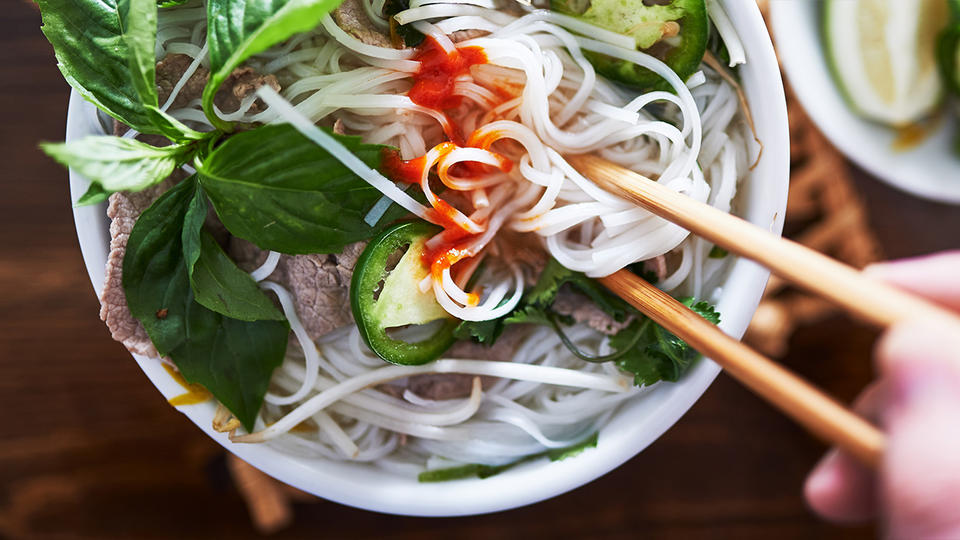
"Do you think we can get pho?” my daughter asked. Lucky to escape Harvey unscathed, we were venturing out for the first time since the deluge hit Texas. There in our favorite noodle shop, fragrant with fish sauce and basil, it was possible to imagine a Houston untouched by disaster.
But even before Hurricane Harvey, that would have been an illusion. Disaster is what brought thousands of Houstonians here in the first place. This is a city of survivors.
Houston is by now well known as the country’s most diverse city. But it is more than an immigrant hub; it’s America’s No. 1 magnet for refugees. And for anyone rocked by Harvey’s life-upending losses, those refugees and their experiences can be a monumental resource. Many are facing the flood’s ravages alongside their neighbors right now, but they are distinct because every refugee lost everything once before. And then they rebuilt.
After 20 years reporting and living in my adopted city, I've come to feel awe at its once-displaced population. Since the 1970s, more than 70,000 refugees from 78 countries have settled in Houston, all fleeing versions of the chaos unleashed by Harvey. Most lost status, work and community, along with the possessions, snapshots and love letters that tell our life stories.
They may not fit the profile you expect. In recent years, they’ve been arriving from Bhutan, Burma, Iraq, Afghanistan and Cuba. During the 1980s, they poured into the city to escape death squads and guerrilla war in El Salvador and Guatemala. And in the 1970s, in the biggest influx of displaced persons in its history, Houston became home to tens of thousands of Vietnamese.
What, I wondered over my Vietnamese coffee, might they tell their fellow Houstonians right now? Mechelle Tran, the pho restaurant's 37-year-old owner, had an immediate answer. “I came here when I was 5. I have trauma amnesia, but I grew up hearing the stories,” she said. After weeks at sea, in nights so dark that waves, sky and rain were one sheet of blackness, the family landed in refugee camps in Malaysia and the Philippines. “There were a lot of parallels to Houston right now,” Tran told me. “A bottle of fish sauce was like liquid gold, because all you had were processed packaged foods. Nothing real.” Living in chronic uncertainty, sleeping on cots, her parents had zero control of their future, not just for months, but for years, until a church linked them to a host family in Houston.
Damaging as it was, the displacement changed her for the better, Tran believes. For one thing, because Houston’s community helped them start over, she and her peers are almost fanatical about community service. In addition to a work phone, she totes a separate cell for constant charity work. Last week, when her restaurant had no more food to give, Tran orchestrated a T-shirt drive for drenched Houston Police Department officers.
Seeing her parents' struggle to protect her also forged an iron resolve to honor their efforts. “You had no choice, no options, no falling back,” Tran said. “It’s grit. The kids whose parents have lost everything in the flood will see their parents rebuilding. They will have that little bit in them that says, ‘I saw Mom and Dad do this.’”
Flood survivors may also find surprising strength in seeing themselves as one striving community. Benito Juarez, who oversees immigrant affairs for the city, told me that the Latino, South Asian, African, and other refugees who settled here make it a point to band together.
“A sense of solidarity is built into their situation,” Juarez said. In most cases, the first group to arrive guides later groups through their new way of life, and helps newcomers find work and housing.
For Harvey's flood survivors, that could translate to those recovering fastest sharing services and emotional help with the hardest hit.
Taking action, especially on behalf of someone else, is a lifeline, Yani Keo, a well-known Cambodian refugee leader, believes. Keo lost more than 60 family members to the genocidal rule of Pol Pot.
Doing, Keo told me a few years ago, means surviving. So she has pushed even the most dazed newcomers to volunteer, once prodding a reluctant Afghan refugee to the airport so he could welcome an even more recent arrival.
Pitching in for others, Keo said, gives an uprooted life meaning again. Research backs this up. Post-traumatic growth, the subject of a flourishing academic field, suggests that in some circumstances, trauma builds strength. It’s not always the case, but taking action, and seeing a model of someone else's resilience, make positive change more likely.
As I sipped the last of my Vietnamese coffee, Mechelle Tran added one more thing. No one chooses to be wrenched from home, she said. But flood survivors now overwhelmed by their future may have more power than they realize.
“The minute your foot touched that boat or canoe, you made a decision,” Tran said. “You made the decision to fight.”
Claudia Kolker is the editor of Rice Business Wisdom and author of "The Immigrant Advantage: What We Can Learn From Newcomers To America About Health, Happiness and Hope" Originally published in the LA Times.