
Leadership | Organizational Behavior
Three organizational behavior scholars on outgrowing familiar strengths, managing from the middle and navigating the limits of control.
Information technology has reshaped the way companies treat their customers.


Based on research by G. Anthony Gorry (1941-2018) and Robert A. Westbrook
How Has Information Technology Reshaped The Way Companies Treat Their Customers?
Information technology is reshaping relationships between companies and customers, bringing benefits to both. But unfettered use of this technology can erode customer care. For a company to care for clients effectively, both its managers and front line employees must listen empathetically to what they have to say. Unfortunately, a rash of "innovations" aimed primarily at reducing costs has made many companies opaque to their customers who are, as a consequence, inadequately served and increasingly frustrated.
A number of innovative companies have shown, however, that technology need not sour relations between businesses and those they serve. Indeed, it can enrich them if senior managers take the following steps. They need to affirm an empathetic involvement with customers; understand how current systems mediate interactions with customers; deploy technologies that help customers tell their stories; and, finally, enable workers and managers alike to hear and respond to these stories. When these steps enable employees to step “into the customers' shoes," their companies can genuinely claim, "We care for you."
A company’s claim to care for its customers ultimately rests on an empathetic connection with them. It is innate in each of us to respond to the joys and sorrows of others, to feel what they feel. Our empathetic responses are strongest in the presence of others where we can see how they act and hear what they say. Thus face-to-face interactions with customers are invariably more vivid and powerful than the abstractions of quantitative marketing and sales analyses.
Now, however, social networks coupled with our own highly developed imaginations, can place us in the situations of others who are not physically present.
Technology has played a central role in this ability, reshaping customer relationship management with intelligent call routing, interactive voice response, Internet protocol telephony, self-service web portals, and multi-channel integration. It has also given companies better knowledge of who their customers are and how they were acquired.
These deployments profoundly affect front line employees who deal directly with customers, answering questions, resolving problems, and generally supporting them. The attitudes and actions of these employees directly determine the nature of the company’s care for its customers. With appropriate technology and systems, businesses can make it easier for these workers to render not only sufficient but exemplary customer service as well.
One example: access to extensive real-time customer information enables service agents at USAA and American Express to respond almost instantly to customer inquiries and requests for assistance. Indeed, without properly functioning technology, it would be difficult for a large business to care even minimally for its customers.
In the best of circumstances, technology designed to support front line employees promotes not only the company's interest, but the interests of customers as well. It facilitates convenient access to information about products and services, expedited procurement, easier shipping and billing inquiries and faster reporting of emerging problems. FedEx customers, for instance, can dispatch and follow the course of shipments through the Internet. Amazon customers are able to buy a wide variety of products in an easily, quickly and enjoyably from their own homes or businesses.
The challenge is that in their quest for efficiency, companies too often deploy technology solely as a replacement for front-line personnel, and thereby diminish the role of empathy in customer care. Then uncaring robots or humans rigidly constrained in their responses are deaf to customer concerns and complaints.
Luckily, not all businesses have filled their front line ranks with robots. Many offer less rigidly structured portals where customers seeking a sympathetic hearing have the option of speaking with humans. Used properly, technology can enhance customer experience. Companies such as USAA and American Express have earned their reputations for outstanding customer service with integrated systems that make extensive knowledge about customers readily available to front line personnel. An agent who can pick up the thread of a previous conversation is better able to imagine the customer's situation, more likely to respond empathetically, and more likely to help.
But such companies seem exceptions. In too many others, economic reasons alone have driven increased reliance on technology in customer relations, causing even well intentioned companies to drift away from those for whom they profess to care so much.
Then, too, customer narratives, elicited by empathetic employees on the front line, can suggest ways a company can improve its performance. The story of IBM is a case in point. When Lou Gerstner took the company’s reins 1993, the company had lost its way. Many in the financial community doubted it could recover. But Gerstner sent each of his top 50 managers to meet with five large customers, not to sell any product but to listen closely to their suggestions and concerns. Gerstner opened every staff meeting with one question: “What are you learning from customers?” This dedication to a culture of listening and empathy is credited with turning the company around.
Good customer care, in other words, is not a luxury. Research shows that when customers feel a company cares, they value its products and services more highly. Greater customer satisfaction means deeper customer loyalty, which translates directly into higher repurchasing and more convincing recommendations to others. Just a 1% gain in customer satisfaction, the researchers point out, has been shown to boost net operating cash flows by an average of $1.01 per $1,000 in company assets. For the larger U.S. firms, that translates to an average gain of $55 million in future cash inflows.
The great companies also innovate with their customer service. Consider Apple’s groundbreaking “Genius Bar,” where customers meet with support personnel — the “geniuses” — to get face-to-face technical help. The booming demand for the geniuses’ time reflects customers’ desire to talk to Apple directly, to tell their stories to an empathetic listener, and to get their problems resolved in real time.
In recent years, the Genius Bar has been translated to cyberspace. Companies like IBM, Nortel, and Cisco are implementing elaborate virtual environments where customers can meet employees “face to face” and express themselves as they would in person. In the coming years, the Rice researchers expect countless new customers will join these virtual communities. The technologies that companies employ to serve the customer need to evolve too, because companies need to do more than only care about their customers. Above all else, they need to be able to treat customers as promised.
Tony Gorry was the Friedkin Professor Emeritus of Management at the Jones Graduate School of Business at Rice University.
Robert A. Westbrook is the William Alexander Kirkland Professor of Business in the Jesse H. Jones Graduate School of Business of Rice University.
To learn more, please read: Gorry, G. A. & Westbrook, R. A. (2011). Once more, with feeling: Empathy and technology in customer care. Business Horizons, 54(2), 125-134.

How do we make the best decisions when it comes to a flood-damaged home?
By James P. Weston and Erik Dane
How To Decide Whether To Stay And Rebuild Or Sell And Move Away If Flooding Has Damaged Your Home
Flooding in your home can be as psychologically traumatic as the death of a loved one or grave illness. Unfortunately, it’s also a demanding time when important financial decisions need to be made. Should you buy flood insurance? Should you stay and rebuild, renovate, or sell and move away? These are especially tough decisions because we are all prone to biased thought patterns, even without the added stress of a disaster. Fortunately, there are ways we can become aware of and overcome these patterns.
Rebuilding in a flood zone is risky, so it’s natural to consider whether and when Houston will flood again. Although we can’t predict when another catastrophe will happen, it’s important not to assume that because we flooded recently, flooding will happen again soon. Research shows that when people are planning for the future, they give too much weight to recent events. Sales of insurance policies soar after floods, but homeowners tend to cancel the policies after a year or two if their houses don’t flood again.
Considering these common reactions, try not to over-insure — but don’t be lulled into a false sense of safety, either. Houston has seen three “one-in-500-year” floods over the past three years. There’s a one-in-125-million chance of that happening, so the term “one-in-500-year” is clearly inaccurate. But if you’re not on the flood plain, and your house flooded for the first time in, say, 50 years, it might not be that far off.
We also tend to overestimate risks to our personal safety, but this danger is far more imagined than real. During a storm, if you don’t live where ocean surge is a risk, and you stay off the roads, it’s very unlikely that you’ll suffer critical injuries. Research shows that the more clearly we envision a life-threatening event, the more we believe it can occur. Hurricanes evoke threatening images, which may lead us to overestimate the personal risks that storms pose.
So how should we make level-headed decisions about what to do with a flooded house? Every house and homeowner is unique, but some general principles apply. It may help to consider all your options as a monthly expenditure, like a car payment. How much would you pay per month to avoid the risk of a flood? Are you anxious about flooding, or do you take it in stride? These factors can guide your decision.
One approach is to simply live in a house that floods frequently, but pay a large insurance premium and the costs of repair. The upside to this is lower mortgage payments and property taxes. The downside is the emotional toll of repeated flooding. For some, this might be too much to bear, but others seem to shrug it off. Many coastal residents repair staunchly after every hurricane, and are drywall magicians.
Raising the foundation can also be an option. Let’s say it would cost $100,000 to raise your foundation. If you borrowed $100,000 at 5 percent interest for 30 years, it would cost about $500 per month. This might be worth your while. Now, if you could move a mile away to a neighborhood that doesn’t flood for an extra $300 monthly mortgage payment, is it really worth it to keep your present house, with a raised foundation? You might think you would spend anything not to leave you neighborhood, or school, but comparing the monthly costs puts things in perspective. For example, could you tear down and rebuild on the same property with those same funds?
It might seem like these questions could be solved easily enough with a formula that could spit out a tidy answer. It’s not that simple — many of the factors in play are psychological and emotional. But to help you arrive at these decisions, the costs can be at least roughly monetized. You might not want to leave your neighborhood, but is it worth an extra $400 a month to stay? Thinking about decisions in this way can help us surmount biased patterns of thinking. One main takeaway from behavioral economics is that if we become aware of our cognitive biases, we can often mitigate their effects and make better decisions in times of uncertainty.
James Weston is the Harmon Whittington Professor of Finance at the Jones Graduate School of Business at Rice University
Erik Dane is a former professor and was the Jones School Distinguished Associate Professor of Management (organizational behavior) at the Jones Graduate School of Business at Rice University

U.S. consumers and businesses are now facing a future of more expensive borrowing.

How much is too much to spend on a piece of avocado toast?


By Utpal Dholakia
How Much Is Too Much To Spend?
This article originally appeared in Psychology Today.
In my last post, I wrote about the downsides of eating $19 avocado toast. The post stemmed from the rather critical comments made by the Australian real-estate millionaire millennial Tim Gurner about his fellow peers. The gist of his comments was that because millennials today eat $19 avocado toast, drink $4 coffees, and travel to Europe every year, they are not able to save enough money to put a down payment on a house. His conclusion was that millennials are spending money in an undisciplined way.
Gurner's quote generated a lot of debate in social and traditional media, both supporting and protesting such a view of undisciplined spending. Specifically, whether you agreed with Tim Gurner's views or not depended on whether you thought paying $19 for avocado toast constituted undisciplined spending behavior.
In this post, I want to define the concept of undisciplined spending carefully. This will make it easier for us to judge whether spending $19 for avocado toast or $4 for a coffee is undisciplined spending. Careful definition is warranted because concepts like undisciplined spending tend to be interpreted in different ways by different people.
The four properties of undisciplined spending
The Oxford English dictionary defines "undisciplined" as "uncontrolled in behavior and manner." For spending specifically, when we explore what this really means, it boils down to four properties of spending behavior.
1. Overspending relative to income.
Any discussion of financial concepts has to account for the fact that different people make and have different amounts of money. As a result, overspending, like many other financial behaviors, is not an absolute concept. It depends on how much money you make. If you make a lot, your threshold to reach overspending will be much higher. If you don't make much, you will reach the threshold very quickly. In essence, overspending occurs when the individual's spending is disproportionately high relative to his or her income.
Considering the $19 avocado toast purchase through this "relative spending" lens, it is a perfectly reasonable expense for someone who has a high income. But for the average millennial who makes $35,000 per year, it will count as overspending for just one meal (beverage not included). The price of the toast is too high to pay for what millennials make.
2. Spending without a proper plan or budget.
A second property that classifies spending as undisciplined is when the consumer doesn't keep track of how much money they have to spend, or how much they are spending at the moment. When a particular expenditure is budgeted for in advance, it can be high relative to the individual's income and still be part of a disciplined approach to personal finances.
For example, the typical American spends around 12.5% of their income on food. This means that someone earning $35,000 would be able to budget approximately $365 for food every month, or about $4 per meal (assuming three meals per day). Again, within this budget, $19 for just for one plate of food is high, and therefore seems like an undisciplined act. (The only exception is if the individual has been eating ramen at home for a few meals to save up for an avocado toast splurge).
3. Paying a price that is far outside a product's range of reasonable prices.
Consumers have a range of reasonable prices for what a product is supposed to cost. For example, my range of reasonable prices for lunch is $2 (for a food truck taco) to $15 (for a sit-down lunch in a nice restaurant). Similarly, my range of reasonable prices for a sandwich is $3 to $8. And so on. When a product is priced below this range, it will be judged as cheap. It will be deemed as expensive if it is above the range. But if a product is far above the range of reasonable prices, it is seen as exorbitant and spending on it is seen as extravagant.
This is the case with avocado toast that costs $19. Most of us can buy an avocado for one or two dollars (or even less; in Houston, you can buy two jumbo avocados for a dollar at the moment). In this context, spending $19 for bread and avocado that would cost a small, small fraction to make at home, or even purchase in a cheaper restaurant, simply appears unwise.
In some sense, this property of buying an exorbitantly priced product is the most prominent and visible property of undisciplined spending. Even high income levels are not immune. For example, when it was reported that high-income-earning mega-celebrities Kanye West and Kim Kardashian spend $500 to rent and watch new-release movies in their home theater, it generated widespread mockery.
4. Showing a repeated pattern of these three behaviors.
Each of the three behaviors, performed once in a blue moon by themselves, would still raise questions about whether the person's spending is really undisciplined. Like this coffee enthusiast who bought a $47 mug of coffee from Starbucks, I am sure we can all think of times when we spent money foolishly or made really bad spending decisions.
However, it is when the three behaviors, either individually or together, are performed repeatedly, and when they form a pattern or even a habit that we have a discipline issue. That is when the person's spending is truly undisciplined and it usually leads to adverse consequences for the individual.
There you have it: A road-map for what constitutes undisciplined spending. Undisciplined spending is a repeated, even habitual pattern of three negative spending behaviors: (1) overspending relative to one's income, (2) spending without prior planning or budgeting, and (3) paying far more for a product than is reasonable.
Utpal Dholakia is the George R. Brown Professor of Marketing at Jones Graduate School of Business at Rice University.
Why, weeks after Harvey receded, are Houstonians still feeling foggy?


By Claudia Kolker
The Rain Has Stopped. So Why Are So Many Harvey Survivors Feeling Foggy?
This article originally appeared in Houston Public Media.
Mary Ann Constantinou is a cool customer. Born in New Orleans, she prepped her never-flooded Houston house long before Hurricane Harvey swamped her neighborhood. When water seeped through the floorboards, she located a rescue boat and got her husband, teenaged son, elderly neighbor and basset hound to safety. Harvey may have deluged her with challenges, but she weathered them all.
So why, weeks later, can’t she recognize acquaintances or recall the day of the week?
All over Houston, people are complaining of an odd forgetfulness. Highways may be clear, deadlines met, and the city mostly back to business. But storm survivors and even residents all but untouched by the downpour now find themselves muddling dates, weeping at small frustrations or vexed by insomnia.
“It’s called Acute Stress Disorder, and it occurs two to four weeks after exposure to a trauma,” explains Rosalie Hyde, a social worker who works closely with trauma victims including Harvey survivors. Most people are familiar with Post Traumatic Stress Disorder, or PTSD, in which serious symptoms linger after eight weeks and often don’t go away. But in the immediate aftermath of stressful events such as Harvey and other global disasters this year, many others will feel some form of time distortion or emotional and physical unease.
“In the case of Harvey we were so connected with each other through the flooding and social media that the traumatic event was shared,” Hyde says.
Befuddlement over time is one of the most common complaints. “I call it flood brain damage,” Constantinou says. Like many post-Harvey Texans, she now wakes up laser-focused on mucking out and rebuilding her destroyed home. Yet at a recent PTA function, she kept reintroducing herself to people she already knew. At home, she insisted that a doctor’s appointment she scheduled for April was actually slated for this November.
Even Houstonians who didn’t personally suffer losses notice the distortions. “During Harvey, I went fully polychronic,” says Rice University engineering professor Matthew Wettergreen, who spent the storm immersed in relief work. In plain English, Wettergreen started seeing time as fluid, only meaningful as far as what needed to be done.
As an engineer, he is ordinarily fixated on dates, appointments, and measurements. But in the wake of the hurricane, when he ran software linking food providers to rescue groups, Wettergreen routinely called colleagues at midnight without apologizing. “I wasn’t sure what day it was. It didn’t matter,” he adds. “Things had to happen immediately.”
Losing track of time, experiencing the present as if it’s a dream: Both are ways the brain fends off overload under stress. “Dissociation happens because you can’t take it all in at once,” Hyde says. “In the first few weeks after a traumatic event, everyone feels a little removed, a little out of sorts. My own house didn’t flood, but I still felt confused at times.”
Punctuating that eerie remove, for many people, are jagged, intrusive memories. Some remember looking out the window and seeing a familiar street become a disaster site with boats, megaphones and sobbing neighbors. Others have sensory flashbacks, like the feel of oily, foul-smelling water as they swam or trudged to safety. And many feel a surge of panic during the regular rainfalls common in a wet city like Houston.
The flashbacks can be especially fierce for Houston’s sizeable population of refugees, combat veterans and survivors of earlier catastrophes. “Ninety-year-old Holocaust survivors are having flashbacks,” Hyde says. “Think about it. In Houston, you have so many people who were disaster survivors already. So many people already have had the experience of leaving their homes, and this brings that back.”
On occasion that can lead to full-fledged PTSD. But what more Houstonians will experience is the normal next phase of acute stress: irritability, melancholy, a general malaise. That’s what Matthew Turner, a soft-spoken English professor at Lone Star College, now is finding. He and his wife, Laura, thought the worst of Harvey was over when they escaped from their flooded house by canoe. Used to arduous adventures such as weeks hiking through Spain, they were startled to find themselves bickering over small things like paint chips.
“Laura wants to pick wall colors and I say, we don’t have walls,” Turner says. “Paint is the one thing in the future she has the power to make a decision about. And I keep worrying about controlling our money. I’m not happy with the way I’ve acted sometimes.” Thanks to a Chili’s gift card from a friend, the couple was able to sit down in a tranquil place and voice the emotions underlying their short tempers.
Resources like grief support, jobs – even monetary help such as gift cards – make a huge difference after an upheaval, says pyschotherapist Judy Nguyen. In her work as a domestic violence advocate, she often sees the damaging effect of losing power over one’s life. “When people lose control in one area, they will have the tendency to gain control over something or someone, to feel sane,” she says.
Houston’s mental health first responders have jumped into this breach with a kind of emotional triage. In the Fifth Ward, home to many low-income residents, life already could be overwhelming before the flooding, peer counselor Julia Walker says. So as soon as she saw that recovery groups were delivering water and food, she began one-on-one counseling amid the piles of debris crowding the streets.
Many storm survivors need professional, stage-by-stage mental health care, something already in short supply before Harvey. In its absence, ordinary Houstonians can help. If you know someone who was flooded, counselors say, listen to them. Friends and acquaintances can make a difference by inviting recent survivors to say as much as they want to about their experience.
“One of the most important things to know is that we are still hurting,” says Mary Ann Constantinou about Harvey’s survivors. “I know terrible things have happened in Florida and Puerto Rico. But it feels like we have been forgotten. Even a text helps: ‘Hey, I just want you to know I’m thinking of you.’ ”
At work, meanwhile, managers need to be aware that seemingly unscathed employees may be living in a new reality, and to calculate that into their expectations. According to former Rice Business professor Otilia Obodaru, even without a disaster most workers coexist with “alternative” identities -- the selves they might be if they’d made different choices
After a disaster, survivors live alongside those lost selves without having made any choice.
The transformation isn’t always for the worse. Before Harvey, Constantinou’s neighborhood was the placid place where she lived and attended church. Now it’s the place where she charged through neck-high water in a dark house to save a friend’s parrot. When the creature attacked her, piercing a vein, Constantinou swathed her arm in a towel, grabbed the angry bird and got them both to a rescue boat.
But a parrot bite will heal more quickly than other injuries from the disaster – some of which are still surfacing. At a recent visit to pick up contact lenses, Constantinou learned that her long-distance vision had worsened so much in just the few weeks since the flooding that she needed a new prescription. Hurricane Harvey, the eye doctor said, had played havoc with her ability to see far ahead.
Claudia Kolker is the editor of Rice Business Wisdom and author of "The Immigrant Advantage: What We Can Learn From Newcomers To America About Health, Happiness and Hope" Originally published in the LA Times.



What does gender have to do with generosity?


Based on research by Vikas Mittal
What Does Gender Have To Do With Generosity?
The images flood your family’s living room. Parents and toddlers jammed in a motorboat. An elderly man clutching a sodden dog. And, far across the ocean, flimsy huts reduced to smears of wood on the ground. Who turns the TV off? Who dials the relief hotline in the neighboring state? And who pulls out a credit card to help people on the other side of the globe?
It depends a lot on gender: Not just the visible, biological one nature imposes, but a range of behaviors that, if not always interchangeable, are associated with it.
Scholars have devoted considerable attention to why people donate to particular charities — partly because the information is so helpful to charities crafting appeals. The stakes are high: Individual Americans donated $281.86 billion to charities in 2016, according to Giving USA 2017: The Annual Report on Philanthropy for the Year 2016.
According to Rice Business professor Vikas Mittal and coauthors Karen Page Winterich of Pennsylvania State University’s Smeal College of Business and William T. Ross Jr., formerly of Pennsylvania State University’s Department of Marketing, one of the primary forces in these decisions is gender identity. Beyond that, the researchers found, much depends on how much importance a person places on being moral, and whether the potential beneficiaries belong to an in-group or out-group.
To reach their conclusions, Mittal and his colleagues conducted three experiments analyzing gender and moral identities and their impact on donor decisions. The study expanded on several decades of research showing that in-group members are in general more likely to benefit from donor largesse.
First, the researchers established their terms. Moral identity, they wrote, is the importance people place on being a moral person. Gender identity, which closely corresponds to biological sex, describes a set of attitudes, beliefs and learned behaviors traditionally identified as masculine or feminine.
Traditionally, men or people with a masculine gender identity show agentic behavior — that is, a focus on the self, risk seeking and personal achievement. People with a feminine gender identity, by contrast, show more communal behavior, prioritizing relationships, group welfare, risk mitigation and collective achievement.
These characteristics influence charity decisions because they affect how inclusive people are in choosing the beneficiaries of their help. The more willing you are to consider the needs and feelings of strangers, the wider is your “circle of moral regard.” Women already tend toward communal behavior; those who in addition have high levels of moral identity will have an even broader circle of moral regard, and thus are more willing to give to charities targeted to strangers.
To trace the impact of these characteristics, Mittal and his colleagues asked two groups of undergraduates at a U.S. university to make choices about donating to relief efforts for Hurricane Katrina, which struck New Orleans in 2005, and the devastating Indian Ocean tsunami of 2004. For American undergraduates, Katrina signifies an in-group with victims closer to home, while the Indian Ocean tsunami refers to an out-group.
The surveys were rooted in the fact that Americans donated $4.25 billion to Katrina relief — nearly three times what they donated to tsunami victims. The researchers theorized that the disparity may have reflected donors’ views of fellow Americans in New Orleans as an in-group, and of tsunami victims on the other side of the world as an out-group.
The surveys first assessed respondents’ gender and moral identities, then asked them to decide what portion of a specified sum of money they should keep for themselves and what portion allocate to Katrina or tsunami charities.
In another experiment, an online survey of 233 U.S. adults, respondents chose between hypothetical donations to a fund benefiting victims of terror attacks in London — the in-group — and in Iraq — the out-group. Participants’ responses were assessed according to their biological gender, which the researchers determined is a close proxy for gender identity. This in itself was an important practical finding, since charities can direct appeals to men or women, but have no way to conduct controlled tests for gender or moral identity.
Statistical analysis of all three studies showed consistent results. Donations to the out-groups were linked significantly to strong moral identity and strong feminine gender identity. Among respondents with strong moral identity and strong masculine gender identity, donations to the in-group rose, but out-group donations were weak.
What should charities make of these findings? Appeals to men, the researchers suggested, might try to position their organization as an in-group. Appeals to female donors, on the other hand, might do better if they characterize the initiative as reaching a broader set of beneficiaries.
In an era when gender identity and traditional behavior are become more and more fluid, a few laws of nature and behavior are still useful shorthand in charitable giving. The person with a strong moral sense and a feminine identity — most likely, a woman — is the likeliest to donate the most to the greatest variety of people.
Vikas Mittal is the J. Hugh Liedtke Professor of Marketing and Management at the Jones Graduate School of Business at Rice University.
To learn more, please see: Winterich, K. P., Mittal, V., & Ross, W. T. Jr. (2009). Donation behavior toward in-groups and out-groups: The role of gender and moral identity. Journal of Consumer Research, 36(2), 199-214.
Also please see: Mittal, V. (2017). 5 ways nonprofits can engage donors. Marketing News, American Marketing Association.
Why living in a foreign country is like a spa for the mind.


Based on research by Hajo Adam (former Rice Business professor), William W. Maddux and Adam D. Galinsky
Why Living In A Foreign Country Is Like A Spa For The Mind
Can eating good pizza and drinking copious amounts of red wine make you smarter? Likely not. You’ll probably just gain weight and end up hungover. But stick around Rome long enough to not only do as the Romans do, but understand why they do it, and you might end up with a real intellectual advantage.
Those are the findings of a former Rice Business professor Hajo Adam and his co-authors, William W. Maddux and Adam Galinsky. In a series of experiments, the researchers showed that moving abroad and learning a new culture is creatively broadening.
Moving to another country can be a shock. For some people, navigating different belief systems in a strange environment can be downright overwhelming, driving them to cling even more tightly to their own norms. But for those who adapt, the reward may not just be having more fun. It may also include the development of more multifaceted, complex thinking.
Indeed, the researchers note, adapting to a foreign culture demands the same psychological processes as creative thinking. Each time we learn our way around a new culture, we likely see our treasured assumptions challenged, integrate new ideas, make novel connections and glean new insights.
In China, for example, good manners require leaving a bit of food on your plate at the end of the meal; this indicates that the host has been generous. In the U.S., however, the same behavior may be considered rude, signaling that you didn’t like the meal enough to finish it. This nuanced frame of reference — understanding the various meanings possible in one scenario — creates an understanding that there’s more than one way to solve a given problem.
But it isn’t enough to book a hotel near the Trevi fountain and expect creative insights to ensue. Past neurological research shows that, for new knowledge to permanently imprint on the brain, we need to pay close attention and undergo repeated exposure to the new stimuli. Adam and his colleagues went a step further: Once multicultural learning experiences occur, they suggest, recreating these experiences should reactivate the cognitive map that led to creative breakthroughs.
To test those ideas, the researchers set up experiments designed to show that mentally recreating multicultural learning experiences enhanced difference types of creativity. Among these were the ability to solve the same problem in multiple ways, noticing underlying associations, and solving problems in a way that ignores typical frames — i.e. thinking outside the box.
In one experiment, all the participants had lived abroad, but only one set was asked to recall and write about something they learned from their contact with a foreign culture. Another set was asked to recall and write about something learned in their own culture. Afterwards, all participants completed a supposedly separate task, completing word fragment pairs. The conceptual challenge was to see whether the subjects could discover more than one match for the same word fragment.
As the researchers had predicted, the subjects who were primed by recalling multicultural experiences came up with more correct matches for the word fragments.
Adam and his colleagues then led experiments looking at the role of what is called “functional learning” in the equation of creativity and foreign experience. Functional learning is the process of learning about the underlying meaning of an observed or learned behavior.
In both studies, the researchers found that only when functional learning was combined with a multicultural context did it lead to more creativity in problem-solving.
In other words, it isn’t enough to fly to Rome, hop on a Vespa and nibble some gnocchi. The real cognitive leaps happen when you stick around long enough to learn what, when and how Romans do all the other things they do in daily life — and what it all means to them.
Hajo Adam is a former assistant professor of management at Jones Graduate School of Business at Rice University.
To learn more, please see: Maddux, W. W., Adam, H,. & Galinsky, A. D. (2010). When in Rome… Learn Why the Romans Do What They Do: How Multicultural Learning Experiences Facilitate Creativity. Personality and Social Psychology Bulletin, 36(6) 731-741.
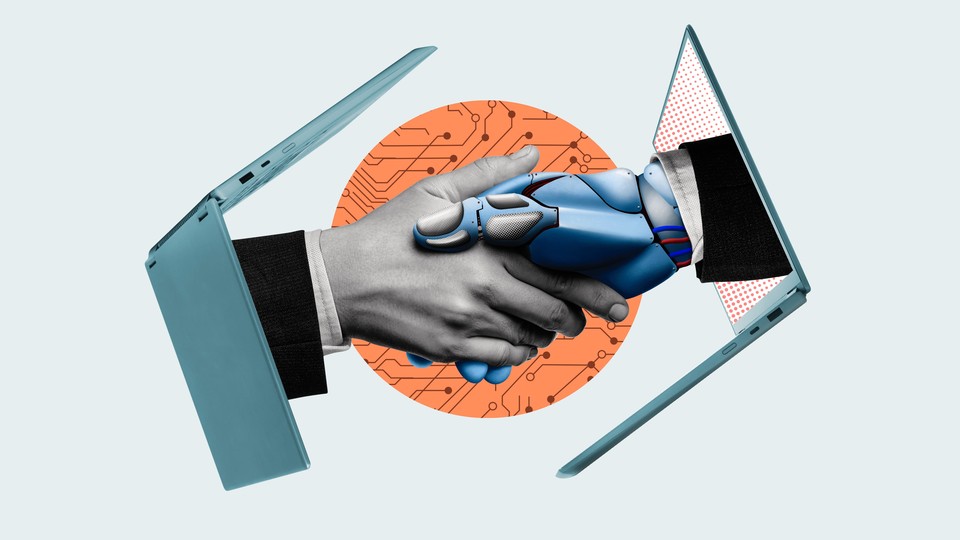


How do we ensure humans benefit from the AI revolution? For Jing Zhou, the answer lies in abandoning our discipline-focused silos and pursuing the problem-focused research that businesses desperately need.
How Rice Business is accelerating entrepreneurship.


How Rice Business Is Accelerating Entrepreneurship
This article originally appeared at the Houston Chronicle.
Craig Ceccanti probably owes his mom royalties. It was her insistence on a family outing - to a painting class where Ceccanti and his brother augmented their abilities with beer - that spurred a multistate franchise that grosses $35 million annually.
"I can't repay my mom enough for taking me to that stupid painting class," says Ceccanti, co-founder and CEO of Pinot's Palette, a wine and painting company that boasts 140 franchised locations.
Inspiration fermented for five years, however, before Ceccanti began his business masterpiece. Bringing it to fruition, he says, was his experience at Rice University's Jones Graduate School of Business, where he earned an MBA and learned how to turn ideas into reality.
He exemplifies the new generation of Rice Business grads, beneficiaries of a two-decade effort to build a nationally recognized department with a strong entrepreneurial focus. Forward-looking deans got the program accredited in 1998. They built a 167,000-square-foot building and increased enrollment, winning accolades and attracting faculty from other prominent schools.
Once an afterthought at a school better known for undergraduate liberal arts, Rice Business is now a regular on national best-of lists. Over the past decade its alumni have created 240 businesses, raised $4 billion in funding and hired 7,787 employees. More than four out of five of the companies are still open.
Not surprisingly, energy dominates the field, according to the school's recent survey of 400 alumni, with 33 companies raising $3 billion and creating jobs for 4,704 people. But there are also companies in health care, consulting, consumer goods, financial services and other sectors.
This entrepreneurial ecosystem "pleasantly surprised" Dean Peter Rodriguez when he joined the school 15 months ago as the university's first-ever Hispanic dean. One out of every six Rice Business graduates in the past 10 years went on to found a company.
In the coming years, Rodriguez says, a strong entrepreneurship program will be ever important as younger MBA students are less enchanted with the grueling Wall Street lifestyle or the anonymity of working for a global giant.
"What students want from business schools are the options to lead to a career that they will find gratifying," he said in a recent interview.
Launched in 1977
Rice launched its graduate business program in 1977, but it didn't begin to blossom until 1997. Under then-Dean Gil Whitaker's eight-year tenure, the number of graduating students doubled to roughly 240 each year. The school became accredited and established its Executive MBA, a weekend program for working execs.
Also during this time, the Rice Alliance for Technology and Entrepreneurship was founded. Since debuting the Rice Business Plan Competition in 2001, the annual student startup competition has grown to the richest and largest, hosting graduate students from around the world. Rice Alliance managing director Brad Burke credits it with bolstering the school's entrepreneurial bona fides.
Sean Self, an engineering undergrad in the early 1990s, recalled his friends in the business program saying their money would have been better spent elsewhere. Yet by the time he returned to Rice for his own MBA in 2004, the school had built new facilities and hired new faculty.
Self, who was working for a company that sells surgical products, ultimately used marketing tips taught in the program to help sell that company. A few years later, he opened Nimbic Systems, which makes a device that can protect hospital patients by blowing a gentle stream of air over an incision during surgery to prevent bacteria from entering.
The device has been used in more than 5,000 surgeries. Self expects sales this year of about $400,000.
Around the time Self graduated, Rice Business was in another expansion period. Former Dean Bill Glick, who led the school from 2005 to 2016, boosted the number of graduates to 300 a year.
Much of that growth resulted from the addition of a part-time Professional MBA program in 2006 for workers who want to earn a degree without giving up their job. It now attracts about 180 students a year, and its revenues helped Rice Business add additional faculty. Glick also built a Ph.D. program, which Rodriguez said signaled a stronger seriousness about research.
Among the newer faculty is Yael Hochberg, previously of Northwestern University, whose academic research includes entrepreneurial topics such as venture capital and accelerators.
"There was a long time when nobody at a business school was going to have a professor in entrepreneurship," Rodriguez said. "The view was, entrepreneurs are born not made. This is not an academic discipline. It's a temperament. It's a tolerance for risk. It's a sense of skills that's developed by actually doing this."
That began to change with professors Al Napier and Ed Williams, both recently retired, who were entrepreneurs and tenured faculty members in other fields and most of their teachings came from hands-on experience. Hochberg, in contrast, studies entrepreneurship in more of an academic setting, a further evolution in the faculty skillset.
State programs ranked
Rice Business snagged its first major national recognition in 2010, when it was included on Bloomberg Businessweek's list of best MBA programs.
More recently, Rice bested some notable local competitors on Bloomberg Businessweek's Best Business Schools 2016 ranking. Its full-time MBA ranked No. 8 compared with Texas A&M (No. 18), University of Texas (No. 21) and University of Houston (No. 75). The U.S. News Best Business Schools 2018 list shuffles that a bit, with UT ranked No. 17, Rice No. 29, A&M No. 38 and UH No. 93.
The growth continues. Rice's MBA programs have 676 students enrolled in the graduating classes of 2018 and 2019 despite other options that are now available locally. Texas A&M's Mays Business School, for instance, has about 95 students enrolled in its Professional MBA program in Houston and about 90 in its Executive MBA program here. About 125 more students are enrolled in a full-time program in College Station.
UH likewise offers MBA programs, with 480 students enrolled, and boasts a large, local campus.
"Our students are able to take advantage of a very large and dedicated business faculty more so than satellite programs that aren't based in Houston," said Dalia Pineda, director of graduate admissions and recruitment for the C.T. Bauer College of Business.
When looking specifically at graduate entrepreneurship programs, U.S. News ranked Rice at No. 11, not far behind No. 9 UT. Rice Business' MBA entrepreneurship program has remained in the list's top 15 since 2011. Princeton Review has placed it in the top 10 since 2010 and currently has it No. 3.
"I think the Jones School is attracting more entrepreneurial minded MBA students than it used to 10 years ago," said Burke, of the Rice Alliance for Technology and Entrepreneurship. "So more students come to the Jones School because of its reputation in entrepreneurship."
A core discipline
Not all students enroll with entrepreneurial dreams, but many discover an interest at Rice. Graduates like Jay Zeidman and Kevin Green praise the education they received, the fellow students who inspired them and the "amazing network" of business opportunities it provided after the degrees are handed out.
Entrepreneurship will be a pillar for the next decade at Rice Business. Dean Rodriguez would like to see twice as many students start companies immediately after graduating. He wants to make entrepreneurship a core discipline of the MBA program, similar to accounting or finance. Already, 70 percent of all MBA students take a course in entrepreneurship.
Rodriguez also wants to connect more closely with the local startup community, perhaps developing a national expertise in startup funding, venture capital or angel investment networks. Rice Business is planning a student venture fund.
"If they go out of here and they start a company, now they understand how the capital, the investment side, works," Burke said. "And they're better able to solicit and receive capital for their startup because now they understand the other side of the equation."
Ambitious goals
The school also is accumulating success stories. Pinot's Palette started in Montrose with about $15,000 provided by Ceccanti and co-founders Charles and Beth Willis. They painted the walls themselves and used home speakers to provide music. Marketing was trial and error.
"There were many nights, I remember, Charles and Beth would go and sit in class like a customer just so it didn't seem so empty," Ceccanti said.
Business started picking up after Pinot's Palette was mentioned in the online newsletter Tidbits. The founders secured a $100,000 line of credit to open a second location. A man in Katy began hounding them, weekly, to open a franchise store.
In addition to its current 140 franchise locations, 35 more are in the process of opening. It's experimenting with other crafting classes, including an ugly sweater workshop at its Memorial City location in November.
Ceccanti said his goal is for the company to gross $70 million within the next three years and $250 million in the next decade.
"Never in a million years would I have thought that I'd be in a business like this - or owning a business," said Ceccanti, also an adjunct professor at Rice Business and president of Rice Entrepreneurs Organization. "My dreams were to be an IT director of some sort. So it's a bit of a fairy tale for me."


Why big oil doesn't throw Hail Mary passes anymore.


By William M. Arnold
Why Big Oil Doesn't Throw Hail Mary Passes Anymore
This article first appeared in the Houston Chronicle.
With Michael Wirth named as the next CEO of Chevron a few days ago, four of the biggest integrated energy companies are headed by seasoned executives who spent the bulk of their careers in the so-called downstream part of the business. The companies include Exxon Mobil, Royal Dutch Shell and Total of France. Downstream usually includes refining and petrochemicals, but some of the executives also worked in pipeline divisions (midstream) or trading. This leadership trend has implications the industry and investors need to keep a close eye on, and understanding what got us here is key.
Over a long period, the focus of these companies was on replacing the reserves produced during the previous year. Wall Street focused on the reserve replacement ratio as a measure of the long-term viability of companies in the industry. It was a traditional but narrow measure of future performance, especially as international contracts shifted from legal ownership of resources to something more like service contracts in which companies were compensated by a formula based mostly on achieving production goals.
For decades, this reserve replacement ratio approach suited the companies because their greatest profit margins were usually earned by producing and selling crude oil. There were substantial technical risks in finding significant resources. Before the recent advances in seismic technology and the shale play, exploration was, in football terms, a passing game. Not every well or pass was successful, but when they were, the team advanced far down the field. Returns on investment for oil exploration could exceed 30 percent, so a few dry wells could be accepted when the fifth or sixth was often even more successful than expected. This motivated entrepreneurs in the industry since the 1860s. But even as the industry matured and consolidated, the "explorers" pretty consistently were risk takers. Their personal styles were usually optimistic - they had to be to get past the dry holes on the path to success. A dry hole meant you were that much closer to a success.
The engineers in refining and petrochemicals were expected to be conservative and risk averse. Things had to work consistently and for a long time, because the alternative was potential human and environmental disaster. They were like a football team grinding out a running game, gaining a few yards on each play.
Adding to the challenge, the downstream business could by cyclical, depending on the price of oil and natural gas, their feedstocks. Depending on the market, downstream returns could be feast or famine even with consistent operations.
The strategy at Royal Dutch Shell from 2004 to 2010 was simply "more upstream, more profitable downstream." More detailed metrics followed, but the drivers were to find "elephant" fields - often defined as more than 500 million barrels of oil - whether in Alaska, the Gulf of Mexico, Central Asia, Russia or Brazil.
The downstream businesses had the unglamorous job of focusing on cost, improving technology and minimizing downtime.
This strategy literally blew up for BP when its Texas City Refinery exploded in 2005, killing 15 and injuring 180. An independent commission lead by former Secretary of State James A. Baker III placed the blame squarely on BP management's decision to cut costs excessively and create unsound risks.
For years, most investors favored integrated oil companies that explored, produced, traded, refined, transported and sold products at retail gas stations. There was portfolio diversification inherent in each company to mitigate volatility. But by 2010, activist investors wanted to build portfolios according to their own risk tolerances, not rely on a company to do it for them. Under this pressure, large companies like ConocoPhillips and Marathon broke up into separate upstream and downstream companies. Many expected this to favor the exploration side of the business, but often the downstream companies turned in better returns.
When oil prices collapsed in late 2014, the industry was largely blindsided. The boom in previous years created a dynamic of finding oil at almost any cost, whether overseas, the Arctic or the relatively new "shale play" in North Dakota and in West and South Texas. Hail Mary passes became the norm. These were exciting times. The noise level at the Petroleum Club in downtown Houston was deafening. If it meant taking on unprecedented levels of debt, so be it. The big collapse of 1986 and the shorter-lived one in 2008-'09, associated with the nation's financial collapse were seen as the result of dynamics that no longer applied.
In any case, OPEC was expected to solve the problem. The member countries had skin in this game and they had used production cuts to sustain prices. They could deal internally with members who cheated. There was a nagging concern that OPEC might let prices collapse in order to weed out the bothersome but productive small players in the shale play. But that wasn't the prevailing view. Some companies even saw the initial collapse as an opportunity to pick up assets at bargain prices and staff up with professionals laid off by other companies.
But the knives kept dropping for more than two years. Over-indebted companies shed staff, leases and equipment and many took bankruptcy.
For the companies that survived, investors and boards demanded a more conservative approach to protect the balance sheet. This involved technical innovation at the field level, dramatic cost cutting (including what they paid service providers) and unyielding attention to cash flow.
As boards sought new leaders, they considered their track records, skill sets, operational experience and alignment with the new industry realities.
Several majors have shifted leadership to engineers who ran downstream operations. Shell had already made this shift following a grave challenge from the Securities and Exchange Commission in 2004 about its reported global reserves. An "explorer" was replaced by Jeroen van der Veer, who had run the company's petrochemical business. He was succeeded in 2014 by Ben van Beurden, also a downstream executive.
Something similar happened at Total, Exxon and now Chevron. To be sure, these career executives should not be pigeon-holed as technocrats. They have been groomed for years with a variety of assignments so they can build a strategy for their time of leadership. But don't expect too many Hail Mary passes in the next couple of years. Instead, we'll probably see a ground game with increasingly solid returns. Oil prices seem to have become reasonably balanced, in part because of word coming from OPEC about maintaining cuts, and there is a reasonable expectation that prices may rise to a new level in two or three years in response to the massive cuts in investment that took place during the worst of recent times.
As Al Pacino's Tony D'Amato in "Any Given Sunday" tells us, football, like life, is a game of inches. These new leaders are out to win by small inches.
Bill Arnold was a professor in the practice of energy management at the Jones Graduate School of Business at Rice University.
How to turn bad moods into good ideas.


Based on research by Jing Zhou
How To Turn Bad Moods Into Good Ideas
The top brass isn’t always the source for innovative business solutions — in fact, it’s more often the rank and file. But while organizations like to tout the importance of employee creativity in their mission statements, in reality they often ignore it. Sometimes they actively sabotage it.
Consider the department store clerk who knows her customers by name and is familiar with her merchandise. By pairing outfits from the junior and children’s departments for her petite customers, or suggesting staples from the men’s section for a teenager starting his first office job, she can help customers get the look they want — and cultivate repeat business.
On the other hand, if managers reprimand her for stepping outside corporate conventions, she may shut down. She’ll do the bare minimum to avoid criticism. Ultimately, the whole company suffers, not just the employee.
Workers need to see from a fresh perspective in order to meld unrelated products, processes and materials into something new and better, according to Rice Business Professor Jing Zhou. Importantly, workplace creativity doesn’t necessarily mean doing a job in a way it has never been done before. More often, it’s a matter of mixing previously unrelated products or adapting methods used in one kind of task to do another.
In most previous research, scholars have focused on the personal factors that determine imagination and originality. But the pivotal question of employee creativity in workplaces has only been taken seriously in the past decade or so. Researchers now are working to catch up, investigating how to encourage creativity among employees — and why that’s often so hard to do.
There’s a fundamental paradox in this kind of research. On the one hand, organizations depend on standardized practices and routines to ensure efficient operations. On the other, these hidebound systems have the unintended consequence of stunting innovation among workers. The employees become bored and restless.
In a recent paper, Zhou shows that this frustration can actually be tapped as a resource. Handled properly, disgruntled employees can become creative problem solvers. If an organization’s leader is attuned enough to her employee’s dark mood, she can actually help direct that dissatisfaction towards solutions for improving the workplace.
Past research has shown that an unhappy employee tends to respond in several ways. He can quit. He can be loyal, but miserable. Or he can keep his job, but do it badly. Zhou suggests that there is one more alternative: he can turn that dissatisfaction into innovation.
Analyzing a sample of helicopter manufacturing employees, Zhou discovered that employees who reported the strongest negative moods also demonstrated the highest levels of creativity. The workers who were most aware of their own emotions were best able to channel their bad moods into creativity.
If they find themselves in companies that don’t encourage creativity, however, these same employees often simply opt out, expressing their unhappiness through slacking at work. This is a teachable moment for many companies, where supervisors need to recognize and gain skill in reacting to such situations. Especially during tough times, such as financial or organizational crises, employees need the flexibility to respond creatively. Hard times like these, however, are exactly when employers are more likely to crack down and discourage creative thought.
That’s simply self-defeating, Zhou argues. To foster creativity, a leader should instead empower employees by offering developmental feedback and giving them the freedom to deal with hardships in their own way. In fact, managers sometimes manage best by going away. A lack of close supervision, Zhou found, is an important ingredient in worker creativity. Employees who feel they’re being watched and controlled may be afraid to explore new ideas.
Developmental feedback also makes a difference. Giving specific input about performance along with personalized encouragement, Zhou found, helps build a culture of creativity.
Business leaders can empower employees’ creative endeavors in several ways. Managers can express confidence in workers’ abilities, emphasize the importance of their work, and involve them in decision making. Finally, they can reduce or remove the bureaucratic constraints that limit their ability to innovate. Even employees who seem risk-averse often move towards more creative behaviors when they develop real trust in a supervisor.
Still, while employee creativity is a key part of business success, many supervisors actively discourage it. Others simply fail to promote innovative thinking. Often, managers view the disruption of standard operating procedures as a threat. To be fair, it’s not always in the firm’s best interest to let all employees channel their inner Isadora Duncans. No one wants a switch operator in a nuclear power plant to direct her creative vision towards altering safety procedures.
Overall, though, employees benefit a company most when they face few bureaucratic hurdles to finding creative solutions to real workplace problems — and when their supervisors understand and encourage that impulse. It takes a nuanced understanding of where innovation and improvisation can help and where it’s less useful, such as in a nuclear power plant. After that, Zhou suggests, managers need to overcome their own anxieties about innovation and learn the value of spotting and encouraging creativity in others.
Jing Zhou is the Mary Gibbs Jones Professor of Management and Psychology in Organizational Behavior at the Jones Graduate School of Business of Rice University.
To learn more see:
Anderson, N., Potocnik, K., & Zhou, J. (2014) Innovation and Creativity in Organizations: A State of the Science Review, Prospective Commentary and Guiding Framework. Journal of Management, 40(5), 1297-1333.
George, J. M., & Zhou, J. (2002). Understanding when bad moods foster creativity and good ones don’t: The role of context and clarity of feelings. Journal of Applied Psychology, 87(4), 687-697.
Gong, Y., Zhou, J., & Chang, S. (2013). Core Knowledge, Employee Creativity and Firm Performance: The Moderating Role of Riskiness Orientation, Firm Size and Realized Absorptive Capacity. Personnel Psychology, 66(2), 443–482.
Shin, S. J., & Zhou, J. (2003). Transformational Leadership, Conservation and Creativity: Evidence from Korea. Academy of Management Journal, 46(6), 703-714.
Shin, S. J., & Zhou, J. (2007). When is Educational Specialization Heterogeneity Related to Creativity Research and Development Teams? Transformational Leadership as a Moderator. Journal of Applied Psychology, 92(6), 1709-1721.
Zhou, J. (2003). When the Presence of Creative Co-Workers is Related to Creativity: The Role of Supervisor Close Monitoring, Developmental Feedback and Creative Personality. Journal of Applied Psychology, 88(3), 413-422.
Zhou, J., & George, J. (2003). Awakening Employee Creativity: The Role of Leader Emotional Intelligence. The Leadership Quarterly, 14, 545-568.
Zhou, J., & George, J. (2001). When Job Dissatisfaction Leads to Creativity: Encouraging the Expression of Voice. Academy of Management Journal, 44(4), 682-696.
How do we ensure humans benefit from the AI revolution? For Jing Zhou, the answer lies in abandoning our discipline-focused silos and pursuing the problem-focused research that businesses desperately need.
Rice Business Dean Peter Rodriguez reflects on the lessons and surprises brought by Hurricane Harvey.


By Peter Rodriguez
Dean Peter Rodriguez Reflects On A Storm-Tossed Season And A School's Resilient Spirit
The momentum of a fantastic year at Rice Business accelerated through the spring and set us on course for an even better fall. Record-busting cohorts of students arrived in the heat of summer alongside preparations for a hybrid-online MBA program and investments all around the school. With the wind at our backs, I couldn’t wait to kick-off a new academic year.
The old caution about life and uncertainty played over and over in my mind during the relentless rains that weekend, “Wanna make God laugh? Tell him about your plans.” All that we lived and witnessed during the storm and after will likely be the story of the year for our city, our university, our school and our communities. The story, however, isn’t that the waters rose, that thousands of lives were upended or that Houston was devastated. The story is the reaction to the storm from the people in it and all who came to help.
Across the region, a few hundred yards meant the difference between families that were high and dry or waist-deep in flood waters, stranded on rooftops and upper floors. Within urban and suburban neighborhoods a few inches of elevation made the difference between safety and upheaval. Those hit hardest face a long road to recovery. Everybody else knows, it could have been them.
The hurricane brought loss and pain to tens of thousands, if not more, and set back many family’s finances for years. There is nothing good at all about Hurricane Harvey. And yet, because of the storm we had the opportunity to recall what matters most to us, and to recall that these are the same things for all of us. Because in a flood aid is inherently local, we have the opportunity to witness what it means to be a good neighbor, friend, colleague, stranger, Houstonian. We have the opportunity to fulfill a noble purpose in service of many we know and more that we don’t. We felt the power in knowing our time and energy bring mercy to those in need and that even the small things we do for each other matter greatly. We have the opportunity to live our values, not simply debate them.
If Harvey succeeded in teaching us an unwanted lesson about humility and our vulnerability to the most basic forces, it also allowed us to genuinely connect with our city and replenish our faith in each other. The ache to find a silver lining in the aftermath of destruction should not eclipse our understanding of how much has been lost and the emotional toll still being felt. But let these lessons continue to drive our heightened compassion and endure far longer than the recovery from this awful storm.
Reading about the remarkable generosity of everyone around us I came upon a short post on social media that seemed to capture a truth made plain by the moment. It seemed a touch maudlin, but, if anything, it understated the prevailing sentiments. It started, "Now more than ever, people need you to give all that you can. Unfortunately, you simply cannot give away what people need most. You can give away food, you can give away clothes, you can give away shelter and you can give away money. But, you can never give love away. It just keeps coming back."
With sincere thanks to all who gave generously, led selflessly and continue to inspire, I’m pleased to write the final Harvey sign-off.
Stay Safe, Stay Connected.
Peter
Peter Rodriguez is a Professor of Strategic Management and the Dean of the Jones Graduate School of Business at Rice University.
This letter first appeared in the fall issue of Rice Business Magazine.