
Stocking Up
How Rescue And Relief Workers Are Drawing On The Lessons Learned From Hurricane Harvey To Prepare For The Next Big Disaster
General Management
General Management
General Management
Houston
More Business Wisdom
Disaster Preparation
How rescue and relief workers are drawing on the lessons learned from Hurricane Harvey to prepare for the next big disaster.


By Tracy L. Barnett
How Rescue And Relief Workers Are Drawing On The Lessons Learned From Hurricane Harvey To Prepare For The Next Big Disaster
It was the relief effort watched around the world. As big as Hurricane Harvey was, the human spirit of Houston was bigger: A Texas-sized show of solidarity came through in the aftermath of the hurricane. The number of neighbors helping neighbors — in kayaks, in motorboats, in pickup trucks, in human chains — seemed to break all past records.
And yet gaping holes in the social fabric still affect the daily lives of thousands of people. A year later, nonprofits and grassroots disaster-relief organizations are trying to patch these holes while they prepare for the next disaster — because at this point, Houston has accepted that it’s not “if,” it’s “when.”
Some grassroots groups coalesced spontaneously during Harvey, after Houston’s institutional response became bogged down by the storm’s magnitude. When the streets around the Houston Food Bank flooded, groups like the Midtown Kitchen Collective and the Giving Hub worked to fill the food-delivery vacuum. DIY rescue and relief groups including Recovery Houston and the Cajun Navy operated around the clock without pay, relying on social media networks, fast-paced innovation and pure grit. Meanwhile cash-strapped community organizations like Casa Juan Diego, Boat People SOS Houston and the Texas Environmental Justice Advocacy Services (TEJAS) depended on an influx of volunteers who helped pick up the slack during the storm.
Event planner Kat Creech, who started the Facebook group that became Recovery Houston, marveled at the number of hearts and hands working to help in the days after the storm. As the year wore on and relief efforts turned to rebuilding, however, the numbers dwindled. Creech blames compassion fatigue — and what she calls “survival fatigue.”
“These people are doing everything they can to keep putting one foot in front of another as the rest of the world has gone back to normal,” she says.
Dr. Betsy Escobar, who volunteers at Casa Juan Diego — a Catholic charity that serves immigrants, refugees and the poor — said the center was overrun after Harvey by immigrants who feared detention by Immigration and Customs Enforcement if they went to shelters or the convention center. “FEMA gave us a bunch of cookies, but we have a lot of people who are diabetic so that was not very helpful,” she recalls. Thankfully, the Houston Farmers Market came through with produce, rice and beans. Their next problem was the opposite: They suddenly started getting more help than they could handle. “We got a mountain of clothes, and that’s nice — but we were a little overwhelmed because it was too much,” Escobar says.
This feast-or-famine problem was not exclusive to Casa Juan Diego, according to Balaji Koka, associate professor of strategic management at the Rice Business. On the one hand, Koka witnessed a highly effective response by individuals and small organizations in his area. On the other hand, there were significant gaps in service, something that could be addressed by better coordination among city and county organizations, he said.
“Social media definitely enabled people to become a community with some amount of organization and coordination without any hierarchy,” Koka observed. “But sometimes the same lack of hierarchy would result in one house affected by the disaster being visited by three or four different volunteers, while another house would get lost in the shuffle.”
Rice Business Wisdom surveyed seven community leaders who were involved in Hurricane Harvey rescue, relief and recovery efforts. Here, we distill their collective wisdom about how to maximize our effectiveness in the next big storm.
BEFORE THE STORM
Should I buy a boat or a truck so I can escape or rescue people?
The consensus on this one is a definite NO. Unless you’re an experienced boater with training in navigating floodwaters, you can quickly become a liability, according to Captain Taylor Fontenot with the Cajun Navy.
Instead, find people in your neighborhood who do have boats and trucks and are willing to use them or volunteer them for the rescue efforts, recommended Jonathan Beitler, a volunteer with the ad hoc Midtown Kitchen Collective. In the desperate days after Harvey, the Midtown Kitchen Collective developed ihavefoodineedfood.com, a platform that helped coordinate many of the 300,000 meals distributed by the group, linking thousands of people eager to donate food with the volunteer chefs and service organizations who needed that food. A similar platform could easily be developed to coordinate and connect people who have boats and trucks with people who need them, Beitler said.
Should I stock up on extra canned goods and water so I can have them on hand when the storm hits?
By all means stock up, but be sure you are getting the right things when it comes to giving. The Houston Food Bank is already in preparation mode for this year’s hurricane season, assembling 25,000 disaster boxes of shelf-stable food to have on hand in the event of a mass emergency, said communications director Adele Brady. Lessons learned from last year’s disastrous flooding of the streets around the food bank: The organization is moving towards a hub-and-spokes delivery model, moving resources out to collaborating service centers throughout the city.
What else should I do to prepare?
Take care of yourself and your family first. That way you can be prepared to step in and help with others. Locate your closest shelter and get to know the evacuation route. Have your essentials packed just in case: all family members’ identification, medical records, prescriptions. Pack a “first-day kit” with all the water, food, medicine and anything else you need to survive for a couple of days. Fill your gas tank.
And don’t wait until a hurricane is on the horizon to offer your assistance. Thousands of people still lack adequate housing, furniture, trauma counseling, and other essential needs after Hurricane Harvey. Scores of local organizations are engaged in ongoing recovery efforts, and will be for some time — and they need help.
“After the disaster, everyone wants to help – but maybe think of helping at other times, not just one week after a disaster,” said Escobar. You can sign up with a group like Volunteer Houston, which matches people and their talents with relevant local nonprofits, and develop an ongoing relationship with one of them. You can also register with the group you want to commit to so that they will have your name, contact information and special skills on hand in case of an emergency.
WHEN DISASTER STRIKES
What if I don’t want to evacuate?
Mandatory evacuation is serious, says Fontenot with the Cajun Navy. He and his crew spent valuable hours going back every day to check on people who weren’t ready to leave — time that could have been spent rescuing others. Be aware of what’s going on around you and follow the protocols, he urges.
And be aware that others in your midst might not understand what’s going on — because of language and cultural barriers or disabilities — and that they may be in need of individual help, advised Jannette Diep of Boat People SOS Houston, which has been serving the Vietnamese community of Houston since 1999. An estimated 120,000 Vietnamese immigrants live in the greater Houston area, plus thousands more Southeast Asians of different ethnicities. “These people come from war-torn countries and they’ve already been displaced; they’re afraid of being displaced again,” Diep cautions.
Others aren’t aware of the massive chemical discharges that can and did occur in the industrial corridor of East Houston, said Bryan Parras, director of the Texas Sierra Club and organizer of the People’s Tribunal on Hurricane Harvey Recovery. Or in many cases, they are aware, but they have nowhere else to go. He, like many of his neighbors, suffers from skin rashes and respiratory problems, collateral damage from petrochemical spills.
What should I donate?
Most organizations, like the Houston Food Bank, Juan Diego House and Boat People SOS Houston, will be posting lists of what they need on Facebook or their websites. Check those first.
“When you hear the media talk about how people have lost everything … people inherently start literally bringing everything,” said Creech. “That is wrong in epic proportions — because then you need a warehouse to sort things and hundreds of volunteers to do the sorting. People in a shelter don’t want your dress slacks, they don’t want your stuffed animals, they don’t want your old ceiling fan.”
For those who are in shelters, provide the basics: dry goods, tuna, water, toothpaste and toothbrushes, comfortable clothes, clean socks and underwear. It’s helpful for clothes to be clearly labeled for gender and size for fast processing.
If you’d like to donate used goods to help families with long-term recovery needs, do it during the year, not during the disaster, and give to an establishment that has a warehouse and a staff set up to process and distribute it. Organizations like Helping Hands, the Houston Furniture Bank, and Star of Hope take donated items for distribution among the needy. The city of Houston’s Reuse Warehouse and the Habitat for Humanity ReStore accept reusable building materials and other items that can be used in reconstruction efforts. Some agencies even offer pickup services.
For the civilian rescue crews, bear in mind that they are risking their lives and in many cases their daily bread to save others. Rather than giving your money to big international nonprofits, give directly to the people you see doing the work on the front lines, says Fontenot. They’ll take cash anytime, as well as food, fuel and water during the disaster.
“If that stuff is handled, we can just stay in the water and keep working,” he says.
Tracy L. Barnett is an independent writer based in Guadalajara. She aspires to a zero-waste lifestyle but hasn't yet found a substitute for Rancheritos.
Rice Business Wisdom
Never Miss A Story
You May Also Like

Real Estate | More Business Wisdom
Why does a horde of housecats have their own tiny house?

After Harvey | More Business Wisdom
Raising the curtain when your artistic vision has been swept away.
Keep Exploring
Contains Video
No
Hide Date
Yes
Shelter From The Storm
Thirty-Three Trillion Gallons Of Water Had Just Fallen. How Did Angela Blanchard Organize A Shelter For Thousands In A Single Day?
Leadership
Leadership
Houston
Leadership
More Business Wisdom
Leadership
Thirty-three trillion gallons of water had just fallen. How did Angela Blanchard organize a shelter for thousands in a single day?
By Clifford Pugh
Thirty-Three Trillion Gallons Of Water Had Just Fallen. How Did Angela Blanchard Organize A Shelter For Thousands In A Single Day?
With only a few months until her planned departure, Angela Blanchard was looking forward to an informal “Thank You” tour, featuring long appreciation lunches with the colleagues and friends who supported her over 30 years in community development — most recently as CEO of the Houston-based nonprofit BakerRipley.
Then Hurricane Harvey changed her plans.
On the morning of August 29, 2017, Harris County Judge Ed Emmett called Blanchard with an urgent plea. The shelter at Houston’s George R. Brown Convention Center was filled past capacity with residents who’d been forced out of their homes by the hurricane. Another mass shelter needed to be opened immediately. Frustrated by the slow progress of FEMA and the Red Cross, Emmett turned to Blanchard and her staff to get a shelter open at NRG Center.
BakerRipley (formerly Neighborhood Centers) has a long history of helping people recover from disasters. It handled 27,000 new cases after Hurricane Katrina flooded New Orleans in 2005, when evacuees from that city sought safe haven in Houston. But the nonprofit had never managed a shelter of this magnitude — much less have one open and functioning in a few hours.
A friend warned Blanchard she’d be crazy to take on the task, because if things went badly, she would get the blame. But Blanchard, who had helped open George R. Brown to Hurricane Katrina evacuees — along with assisting in long term recovery after floods and fires devastated Australia and visiting shelters for Syrian refugees in Germany — was confident that her team could pull it off.
Still, as the first buses rolled up, just hours after her conversation with Emmett, who was standing by to welcome the evacuees, she thought to herself, “Please, God, let this work as well as we think it will.”
It did. The shelter took in 850 people within the first 60 minutes. For the next month, 8,500 people from 111 cities in southeast Texas and Louisiana called NRG their temporary home.
“They set up a shelter that I really believe is the model the world is going to use,” Emmett says.
---
How did they pull it off? Blanchard believes that having a strong staff with varied talents to draw upon, along with a willingness to improvise, was instrumental. So were the trusting relationships she’d built long before the storm. “A key ingredient was that I trusted Ed. I knew that he wasn’t going to hang me out to dry. I could throw everything I had at it, knowing that we had shared intentions,” she says.
Emmett’s wife, Gwen, is on the board of BakerRipley and is now its chair, so he was familiar with the nonprofit’s work, although he had only known Blanchard for two years. “Your job in the middle of a crisis is to get through the crisis,” Emmett says. “I was confident (Blanchard) was the right person and that organization was the right organization.”
Likewise, BakerRipley had resources Blanchard could rely on in a pinch. “We knew we could call on H-E-B, Chevron and Shell to help, and they did come, along with many others.” she says. “They had worked with us before and they knew what we were doing would be well run. That mutual understanding of capacity and strength was important.”
In a time of crisis, an effective leader is one who gets people to put the welfare of others over their own self-interest, says D. Brent Smith, senior associate dean for executive education and associate professor of management and behavior at the Jones Graduate School of Business at Rice University.
“Good crisis leaders, whether they’re in the military or a corporation or a community organization, are good at getting people to identify personally with them and have trust in the agenda that they’re promoting at the time,” Smith says. “They can get someone to set aside their self-interest for that moment.”
“Obviously, the other attribute that I’m sure assisted Angela is the network of resources and relationships that she has accumulated over time,” Smith adds. “Her social capital was absolutely immense. I guess that’s why Emmett called her.”
---
When Emmett called, Blanchard happened to be on another line with the BakerRipley executive team, assessing the condition of the nonprofit’s various centers. Everyone was working from home, since much of Houston remained underwater.
But when Emmett’s call came, they immediately sprang into action. Former Houston Mayor Annise Parker, an executive vice president of BakerRipley at the time, swung by to pick up Blanchard and they made their way to NRG, where they were joined by the other team members who were able to get there. Those who couldn’t make it worked the phones from their homes to get needed supplies.
“In every organization, you have your thinkers and your planners. You have people who are more deliberative and more reflective. They are vital to any organization. If you don’t have them, you’re rudderless,” Blanchard says. “But you also have those people who will run toward the fire or stay at the hurricane. You have to know who they are because you can drop them into any chaotic situation and they can figure out how to act and how to create some order and response out of it.”
Oriana Garcia, now Baker Ripley’s chief of staff, was a prime example, Blanchard says. “I knew Oriana had experience running really large community events for BakerRipley. She was indispensable when it came to laying out the shelter — all the elements of support. And she was willing.”
People came running toward the fire — or in this case, the flood — from multiple organizations. NRG staff helped Blanchard’s team sketch out a basic layout of the facility, arranging the space to include a welcome check-in area, dormitories (separate areas for single women, seniors, families and single men), a kitchen commissary, a lounge area, a dispensary for clothes and toiletries, and a medical care area, as well as a command center away from the main floor. The plan also included a children’s play site and a pet area, as residents are sometimes reluctant to leave a disaster unless they can bring their pets along. The City of Houston Bureau of Animal Control (BARC) set up cages and Barrio Dogs provided volunteers.
But when Emmett gave them an estimate of how many evacuees to expect, Blanchard realized she still needed more volunteers to get the shelter open.
“I walked into the room and said, ‘I need every single person that’s here to find three more people like you. Call anyone like you,’ ” she recalls. (This turned out not to be a problem. Before long, so many volunteers showed up that they had to be turned away because they outnumbered the residents of the shelter.)
By late afternoon, the shelter was ready to open — except for one major problem. There were no cots. FEMA had promised to supply them, but said they had no drivers to deliver them. So Blanchard and her team got on their phones and called everyone they knew who could possibly help. Aztec Rental came to the rescue, sending over an 18-wheeler full of cots. “They drove into the back bay of NRG, and by that time, we had enough volunteers to unload the cots,” Blanchard says.
---
The NRG shelter was no Ritz-Carlton, but Blanchard made it clear from the beginning that everyone who came to stay would be referred to as “guests” or “neighbors.” “I remember distinctly, painfully, after Katrina when people were mistakenly referred to as ‘refugees’ or ‘survivors,’ ” she says. “These are, in fact, our neighbors. Your neighbors. Mine. And for the time of the shelter, they were guests. I think that terminology matters. Words matter.”
Blanchard’s respectful tone permeated the entire operation, recalls Annise Parker. “The one thing that Angela said that resonated all the way through was that these are not your poor evacuees. They should be treated like guests, and that’s going to be our attitude. We’re not doing you a favor. We’re partners in this,” Parker says. “That makes a huge difference in how they feel coming into the shelter and it set the tone for the thousands of volunteers. That was 100 percent Angela. I was astounded by how much of a difference it makes.”
As the first buses began pulling up after 9 p.m., guests found the set-up much like a hotel. After going through security, arrivals were each met with a hug from a volunteer, who took information and then escorted them to a cot that became their “room” during their stay. More than a third of those who checked in had a medical concern, so they were escorted to the clinic and also to the dispensary for supplies.
By 2 a.m., things had settled down, but Blanchard and her team had another crisis: Where was the food to feed the arrivals when they woke up?
An initial supplier couldn’t make it because of high floodwaters, so the NRG employees pulled out all the food they had, like breakfast bars and packaged snacks. BakerRipley staff began sending out calls for help to companies via Facebook and Twitter.
“The next morning I was staggering around like a zombie and I see (H-E-B Houston president) Scott McClelland walking down this massive hallway. And I knew it was going to be alright,” Blanchard recalls. “I’m always glad to see Scott, but this time, I truly was.”
For the first 38 hours, Blanchard, Parker, and BakerRipley executive vice president Claudia Aguirre (who succeeded Blanchard as the nonprofit’s president and CEO) were constantly monitoring the shelter, with occasional naps. “Until we could get enough people organized into shifts, we didn’t want anything to go wrong,” Blanchard says.
Then, for the next 26 days, until the shelter closed on September 23, Parker and Aguirre co-managed the shelter, each working overlapping 18-hour shifts, with Parker as daytime manager and Aguirre as nighttime manager.
“We had lots and lots of agencies working with us, but decisions were made very quickly,” Parker says. “We had very clear lines of command and a lot of folks with a lot of operational experience on the ground from the beginning.”
The staff and volunteers all wore BakerRipley T-shirts, but Parker soon discovered that visiting police units had trouble figuring out who was in charge. So on the second day, she went home and pulled out one of the polo shirts emblazoned with her name from when she was mayor. She noticed that when she wore it, she commanded more respect.
“That little bit of authority made a huge difference,” Parker says. “In essence, for 30 days we had a small city set up. The only difference in running the city of Houston and (the shelter) is I didn’t have to provide three meals a day for the city of Houston. But you have the same issues, and the most important are safety and public health.”
---
Blanchard finally did retire from BakerRipley at the end of last year. But she’ll continue to make disaster assistance her life’s work because, she says, the disasters are only getting worse — and more frequent.
As the shelter population dwindled down after Hurricane Harvey, the nonprofit switched to long-term recovery efforts. Over the past 11 months, BakerRipley has worked with more than 5,500 households and distributed more than $5.2 million in financial assistance for furniture and appliance replacement, emergency and temporary housing, work-related expenses and medical bills. More than 16,000 households have been helped at the nonprofit’s six Neighborhood Restoration Centers through partnerships with the City of Houston and Harris County.
“We have people out here that are still coming in because they cannot make their way through the convoluted bureaucracies,” Blanchard says. Among them is Houston resident Chanel Caston. After the roof of her southwest Houston apartment caved in, soaking all her possessions, Caston made her way to the NRG shelter with her husband and two children, one of whom has autism. “We didn’t have nothing; only the clothes on our back,” she recalls.
They spent most weekdays at the shelter until it closed, leaving on weekends to be with Caston’s mother at a senior citizen’s facility. “Our condition [at the shelter] was A-1 to me,” Caston says. “It’s nothing like home, but due to the circumstances it was wonderful.”
Now she faces a new set of problems because her housing assistance ran out in July and she pays $975 in rent for a one-bedroom apartment to house her family of four. She travels to several food banks to feed the family and is working with a case manager at BakerRipley to secure other basic needs.
“(Harvey) left me in a predicament,” Caston says. “We’re still trying to get back on our feet.”
But Caston has hope for the future. So does Blanchard. Her experience during Harvey taught her that leaders are not always in front — and that moments of crisis tend to bring out the best in most people.
“There’s no joy in the devastation of a hurricane. It’s heartbreaking,” she says. “But there’s an extraordinary satisfaction that happens after disasters — the pure pleasure of working with people when the mission is compelling, the urgency is clear, and you do whatever it takes. And it’s encouraging to see everyone doing all they can to help one another. The generosity of the human spirit.”
Rice Business Wisdom Newsletter
Never Miss A Story
You May Also Like
Leadership | Organizational Behavior
Three organizational behavior scholars on outgrowing familiar strengths, managing from the middle and navigating the limits of control.
Corporate Reputation | Strategy
As corporate value has become more intangible, leaders have less control over how their organizations are perceived. Anastasiya Zavyalova explains what that means for reputation strategy.
Corporate Social Activism | Marketing
Research offers a new framework to help CEOs decide if, when and how to engage in politics.
Keep Exploring
Contains Video
No
Hide Date
Yes
Course Correction
How To Bring Strategic Thinking Back Into Corporate Marketing
Marketing
Faculty Research
Marketing
Customer Management
Marketing and Media
Marketing
Marketing Strategy
How to bring strategic thinking back into corporate marketing.


Based on research by Ajay Kalra and David Soberman
How To Bring Strategic Thinking Back Into Corporate Marketing
- Most firms emphasize speed over finesse. Both, though, are necessary for marketing success.
- Building a competitive corporate culture is great — unless it saps the company’s efficiency and profits.
- Corporate managers need to do a better job of asking critical questions, doing comprehensive research and synthesizing results.
You’re the regional brand manager for a light beer company based in Houston and you happily dominate the competition. You’ve got the best light beer in America and everybody knows it.
Then you learn that a rival beer company, which for years has sponsored the Dallas slow-pitch softball tournament, no longer has cash to support their signature event. True, it’s not clear that the tournament is the right fit for your brand. But the head of sales tells you he wants to get behind it. So you buy in.
Then reality hits. Those slow-pitch softball players don’t like light beer — and they won’t drink it. Your sales languish. You may be the tournament sponsor, but anyone can see the players are drinking something else. What to do?
If you’re like countless American firms, you declare the sponsorship a success year after year regardless of what is really going on.
Rice Business professor Ajay Kalra joined David Soberman of the University of Toronto to investigate just this kind of mishap. While prevailing wisdom blames marketing failures on CEOs and other senior management, such failures often begin at the bottom and work their way up. This triggers a chain of bad analysis, bad decisions and worse results.
Most brand managers, the researchers found, make decisions by setting market objectives, developing a strategy and implementing it. The results of that strategy are then used to evaluate the next set of decisions to be made.
The problem with this approach is that it leaves out a crucial set of prior questions. What, for example, are the consumer perceptions about the product that may affect their behavior over time? What analysis exists about the competition?
Once brand managers have asked key questions, they need to get the answers. In some cases that may entail a market study or other original research. Over the past half-century, some of the biggest advances in marketing management have to do with data collection and analysis techniques, including focus groups and attitude surveys. Once the research is complete, it needs to be synthesized, and usually presented to a cross-section of people within the firm.
Sounds simple enough. Why, then, do so few brand managers follow this rational sequence before launching a new campaign?
One answer is time. It takes roughly two-and-a-half months for a firm to launch a marketing campaign. Most brand managers, the researchers argue, want to shorten that time as much as possible to stay ahead of the competition. Strategic analysis typically gets short shrift.
When you’re short on time, the pressure mounts. Lacking serious strategic analysis, managers tend to look to their most experienced colleagues for advice. The result: The quality of decision-making depends almost entirely on the quality of advice the manager gets. Maybe she’ll get lucky and find a visionary to guide the team through a thicket of issues. Often, however, she won’t.
Short-circuiting the decision-making process, in fact, often becomes a part of the corporate culture. This happens in part because companies have developed such a culture of rivalry that they are willing to make what are essentially irrational decisions in order to be seen as “winners.”
In 2004, in Scotland for example, Ryanair and EasyJet were engaged in such a fierce competition that the airlines were literally giving away seats for free: great if you’re a customer, but not generally good for business.
All of this points to the need for a serious rethink around strategic planning, research and even corporate culture, Kalra and Soberman say. Speed is important to the planning process, but so too is finesse. Training needs to de-emphasize competition with the enemy in favor of strategies that maximize profits. Instead of relying on what is often half-baked, informal advice from colleagues, firms need to identify sources of expertise at each level of the organization.
To boost this expertise, managers who are too good to fire but not good enough to promote can be moved laterally, allowing them to accumulate meaningful expertise. After all, almost anyone is capable of learning. There is no reason why people — or firms — should commit to repeating their mistakes.
Ajay Kalra is the Herbert S. Autrey Professor of Marketing at Jones Graduate School of Business at Rice University.
To learn more, please see: Kalra, A., Soberman, D. The Forgotten Side of Marketing. Journal of Brand Management, (2010). 301-314.
Rice Business Wisdom Newsletter
Never Miss A Story
You May Also Like
Corporate Reputation | Strategy
As corporate value has become more intangible, leaders have less control over how their organizations are perceived. Anastasiya Zavyalova explains what that means for reputation strategy.
Corporate Social Activism | Marketing
Research offers a new framework to help CEOs decide if, when and how to engage in politics.
Safety and Compliance | Strategy
Many companies treat safety training as a compliance requirement. But new research shows that making safety a strategic priority can actually create value for employees, customers and shareholders.
Keep Exploring
Contains Video
No
Hide Date
Yes
The Last Straw
If Plastic Is Out, What's Next? A New Generation Of Innovators Rise To The Occasion.
Most Popular
Other
Innovation and Technology
Innovation and Technology
More Business Wisdom
Environment
If plastic is out, what’s next? A new generation of innovators rises to the occasion.
By Tracy L. Barnett
If Plastic Is Out, What's Next? A New Generation Of Innovators Rise To The Occasion.
For some, it was the baby albatross whose autopsy revealed a belly full of bottle caps and other plastic debris. For others, it was the video of the sea turtle with the plastic straw stuck in its nostril, a team of marine biologists trying to remove it with a pair of pliers as it struggled in anguish.
It’s hard to say what finally catapulted the global plastics crisis, generations in the making, into the mainstream. The environmentalist Annie Leonard addressed the issue over a decade ago in a short film, The Story of Stuff, which has become a movement in itself. But far from slowing, the plastic juggernaut is set to triple in the next decade. A million plastic bottles are being purchased around the globe every minute; in that same minute, the equivalent of a truckload of plastic hits the world’s oceans. Plastic waste was discovered recently in Antarctica, revealing that the substance has now become quite literally ubiquitous.
The problem appeared on our doorsteps when China — until recently the main importer of plastic waste from Europe and the U.S. — stopped accepting 24 types of waste in January, including PET and PVC plastics. The recycling market has gone into a tailspin, but the result has been a public awakening.
The list of cities, states, countries and businesses around the world that have adopted or are considering bans on single-use plastic items has exploded in recent months. California passed a statewide plastic bag ban in 2016, and now New York City and Hawaii stand poised to follow suit, with the cities of Malibu, Miami Beach and Seattle, among others, having already passed plastic straw bans or restrictions. In the private sector, Starbucks, Hyatt, Marriott, American and Alaska Airlines, Disney, SeaWorld and Royal Caribbean have banned single-use plastic drinking straws, while Swedish homeware giant IKEA announced it will remove all single-use plastics by 2020.
Plastic is out, and an army of innovators is at work designing its replacements.
Caoilin Krathaus and Lila Mankad, now sixth-graders at Houston’s Hogg Middle School, were already on the case more than two years ago. For them, the catalyst was seeing their beloved Woodland Park filled with plastic bags — dangling from tree branches, snagged on rocks, choking the Little White Oak Bayou that flows through it.
“Our Girl Scout troop cleans up the park, but after every flood, it just comes back,” said Lila. “So we realized the solution isn’t to keep on cleaning after it; it’s to stop it at its source and ban plastic bags altogether.”
The two consulted with the experts — their parents, their fourth-grade teacher and, of course, the internet — and came up with a plan: To ban the ubiquitous bags in the city of Houston, following the lead of Austin, Laredo and hundreds of other cities around the world.
They posted a petition on Change.org that garnered more than 4,000 signatures. They met with the mayor, testified before Congress, participated in press conferences and rallies. Then they waited, along with the rest of the state, to find out if the Texas Supreme Court would strike down the Laredo plastic ban and with it, the initiatives of nearly a dozen other Texas cities.
On June 22, that’s exactly what the Supreme Court did. But Lila and Caolin, and their allies throughout the state, vow that the battle is far from over. They realize that prohibition alone isn’t enough: there will have to be alternatives to plastic products for bans to work.
And there are. The recent wave of restrictions is seeing a corresponding surge in innovations: edible straws, bamboo toothbrushes, bioplastics made of everything from avocado pits to algae.
“These regulations are going to compel people to work within the constraints and find ways around it,” said Scott Sonenshein, a professor of management at Rice Business and the author of Stretch: Unlock the Power of Less – And Achieve More Than You Ever Imagined.
Some people freeze up when a constraint is placed on them, he says — they can’t imagine how they’ll cope. “But there’s a very different response, what I call ‘stretching,’ which is trying to not just work through it but to find a better way because of the constraint. For example, some restaurants have been experimenting with straws that are pasta: they are actually edible in themselves. So, one, you have the novelty of something that looks different; but two, you’ve turned what could have been a problem into an opportunity to make your drinks more interesting.”
Houston entrepreneur Christie Nugent saw the challenge of reducing plastic waste as an opportunity. Last year, she launched Plum Vegan Catering, Houston’s only catering service offering a “zero-waste” option. She gets her produce from local growers and provides reusable dishes for the events she caters. When the event is over, she swings by and picks them up — along with all organic waste, which goes back to the farm for compost.
More recently, former hairstylist Megan Dye saw a need for a community support group to take waste reduction to the next level.
“I started noticing the quantities of trash I was consuming while working as a hairstylist,” said Dye. She began researching waste reduction strategies and discovered that plastic cannot be recycled indefinitely — and some kinds of plastic can’t be recycled at all. After seeing the massive amounts of garbage generated in the aftermath of Hurricane Harvey, she decided to do something about it. Armed with information, Dye founded a Facebook group, Living Zero Waste Houston, to help streamline the process of waste reduction.
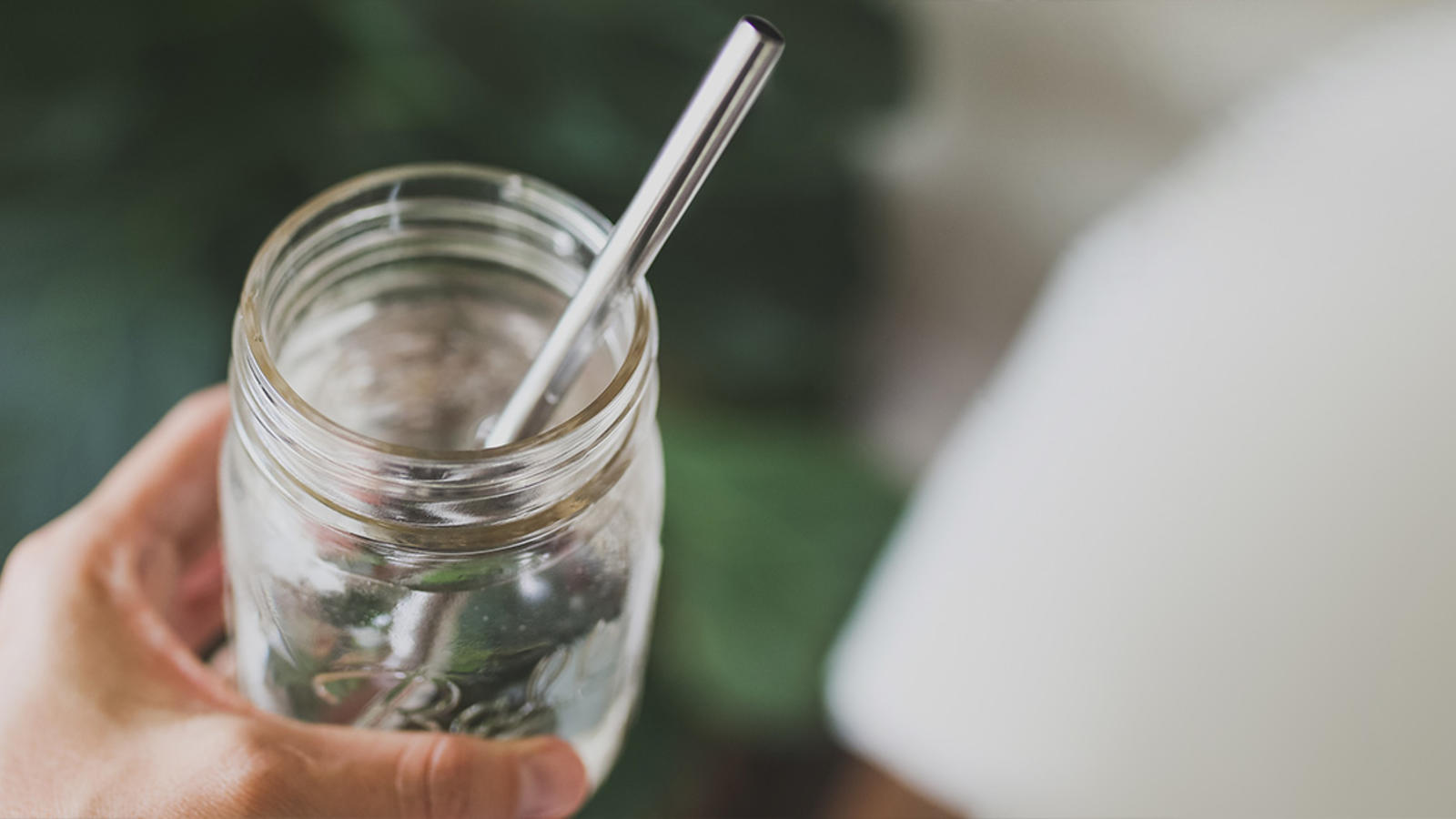
Farther from home, former Los Alamos Laboratories waste management engineer Emma Cohen was so fed up with the pollution caused by plastic straws that she quit her job to promote the foldable steel Final Straw, raising $1.8 million on Kickstarter.
“I think more and more information is coming out about the devastating effects of plastics on our environment,” she said. “When you throw something away, where is that mythical land of ‘away’?”
The answer to that question is becoming painfully evident — more so in developing countries that don’t have the infrastructure to contain the mountains of debris. In India, plastic bags choked Mumbai’s storm drains, causing disastrous flooding that led to the city’s initiative to charge a fee for plastic bags. Prime Minister Narendra Modi recently announced a plan to eliminate all single-use plastics throughout India.
Other countries have followed suit. In the span of a single week, the European Union moved to ban single-use plastic products with readily available alternatives and Chile became the first South American country to ban plastic bag use by retailers. In Mexico, Veracruz became the first state to ban of both plastic straws and bags.
To Manuel Maqueda, founder of the Plastic Kills campaign and the Plastic Pollution Coalition, a day of reckoning long in the making has finally arrived.
“The fact that humans have chosen a material that the planet cannot digest — that we’ve chosen to design things so that their sole purpose is to become garbage…struck me as such an invisible and large problem I decided to turn my eyes to it and I promised myself that I was going to do something about it,” he says.
Maqueda, author of the upcoming book The Meaning Economy: How Meaning is Transforming Our Economy and Our Future, teaches social entrepreneurship and innovation at the University of California, Berkeley. He says the decline of plastic is a powerful moment in many ways: It’s a unique opportunity for entrepreneurship, innovation and creativity. But it’s also indicative of a larger trend, he says.
“People are realizing we don’t need to make compromises; we can have an economy that brings abundance to people while nurturing life,” he says.
Studies have found that at least 60 percent of the public is willing to pay more for a product that is environmentally or socially sustainable, said Maqueda. “The best thing about this change is that it’s being supported in a 360-degree manner not just by entrepreneurs but by investors and citizens,” he says. “Everybody is getting behind this.”
That includes Houston middle-schoolers Lila and Caolin, who are finding new ways around the constraints placed on their activism. Faced with opponents who argued that banning plastics would cost jobs, Lila and Caolin teamed up with a former refugee Afghan artisan, Khatera Khorushan, through The Community Cloth to create a micro-enterprise selling reusable designer bags — all made with “upcycled” materials destined for the landfill.
Like Lila and Caolin, Megan Dye has found that many people are eager to cut back on their consumption. “I’ve found Zero Waste strategies that I could use every day that are easy and in a lot of ways an upgrade to our standard of living,” she said. “Houstonians lead very fast-paced lives so I want to create a supportive environment that makes waste reduction quick and easy. Each citizen has the power to make a difference; we just need to be given the tools to make good decisions.”
Tracy L. Barnett is an independent writer based in Guadalajara. She aspires to a zero-waste lifestyle but hasn't yet found a substitute for Rancheritos.
Rice Business Wisdom Newsletter
Never Miss A Story
You May Also Like
AI | More Business Wisdom
Rice Business faculty are exploring big questions about AI and how it’s reshaping business, technology and the classroom.

Innovation | Strategy
China now files more patents than any other nation. But a new measure of innovation shows that their technological catch-up is only happening in a few manufacturing sectors.
Innovation | Finance
A new study suggests regions trying to attract venture capital may need to start with commercializable university innovation.
Keep Exploring
Contains Video
No
Hide Date
Yes
Sentimental Journey
What Really Drives Stock Returns — Sentiment Or Economics?
Finance
Faculty Research
Finance
Finance and Investing
Finance
Investing
What really drives stock returns — sentiment or economics?
Based on research by Yuhang Xing, Steven E. Sibley, Yanchu Wang and Xiaoyan Zhang
What Really Drives Stock Returns — Sentiment Or Economics?
- New research builds on behavioral finance findings to explore the factors driving stock returns.
- Economic fundamentals, rather than sentiment, likely predict stock returns.
- Rational explanation, not behavior, can describe stock pricing.
How many wealth advisors and investors have stories about the disastrous “hot” tip picked up at a cocktail party? Who hasn’t listened to bar buddies crow about the winning stock that will make them rich?
Most traditional finance models ignore the exuberance or despair that often drive investors’ choices. But back in 2006, two professors interested in behavioral finance, Malcolm P. Baker of the Harvard Business School and Jeffrey Wurgler of the NYU Stern School of Business, created a model to capture those emotions. The result was the Sentiment Index, a proxy that convincingly showed that less-than-rational behavior can predict stock returns.
Now Rice Business professor Yuhang Xing and a team of colleagues have challenged this finding. Building on Baker and Wurgler’s research, Xing and her associates explored what gives the Sentiment Index its predictive power. Does it really come from investors’ feelings? Or do rational economic fundamentals predict returns?
To answer these questions, they first focused on the factors comprising the Sentiment Index. These include the unemployment rate, inflation, the interest rate, market volatility and liquidity and the Treasury Bill rate, as well as seven other macroeconomic factors. They then developed mathematical tests to look for what predicts future returns.
Now, why did they first look at the Sentiment Index’s factors?
Like a connoisseur at the bar, they wanted to know the growing conditions, the production methods and the history of the producer for the ingredients making their cocktail.
Xing’s team found that the Treasury Bill rate and market liquidity conditions alone provide a significant explanation of future returns. This gave them enough evidence to suggest that the power to predict returns actually lies with the economic fundamentals to which sentiment is related.
In other words, investor sentiment by itself does not cause capital to suddenly rush into a market or change hands.
This would not be the first time researchers found that a seemingly emotional behavior within economic markets is, in fact, rational. IPO waves and the NASDAQ “bubble” are two examples of irrational behavior that, with additional study, turned out to have rational explanations.
So the next time you hear a story about what happened when someone acted on a friend’s stock tip, think about what macroeconomic factors are at play. While investors are reacting to cocktail chatter, media reports or the flow of private capital, their feelings might not predict future returns. Instead, there is a strong chance that responding to macroeconomic trends will get you better returns on your investments.
Yuhang Xing is an associate professor of finance at Jones Graduate School of Business at Rice University.
To learn more, please see: Sibley, S. E., Wang, Y., Xing, Y., & Zhang, X. (2016). The information content of the Sentiment Index. Journal of Banking & Finance, 62, 164-179.
Rice Business Wisdom
Never Miss A Story
You May Also Like

Credit & Lending | More Business Wisdom
U.S. consumers and businesses are now facing a future of more expensive borrowing.

Policy | Accounting
A new SEC proposal would let companies report semiannually instead of quarterly. Four scholars make the case for letting companies choose their reporting cadence, and for protecting safeguards.
Innovation | Finance
A new study suggests regions trying to attract venture capital may need to start with commercializable university innovation.
Keep Exploring
Contains Video
No
Hide Date
Yes
Leap Of Faith
What Makes A Firefighter Plunge Into A Burning Building?
Organizational Behavior
Faculty Research
Organizational Behavior
Psychology
Organizational Behavior
Workplace Dynamics
What makes a firefighter plunge into a burning building?


Based on research by Erik Dane, Michael G. Pratt and Douglas A. Lepisto
What Makes A Firefighter Plunge Into A Burning Building?
- Trust grows either from concrete knowledge or leaps of faith.
- Firefighters develop — or bolster — leaps of faith by labeling coworkers as certain types such as “book smart” or “paycheck’’ and telling stories about how each type performs at work.
- Such leaps of faith are maintained by shutting out new information, leading to a closed-loop system.
In May 2018, fire broke out an industrial warehouse in Houston. The four-alarm blaze spun off a pyrocumulus cloud visible miles away, a Channel 13 meteorologist tweeted.
More than 150 firefighters from at least four different fire departments rushed to the scene before the fire was put out. Four suffered minor injuries. What gave the firefighters the confidence to enter and attack the life-threatening flames? Trust: in their own abilities and training and, perhaps in equal measure, in the coworkers who faced the same danger and uncertainty they did.
But forming trust by relying strictly on real-life observation is difficult in firefighting, where only 4 percent of calls firefighters respond to are actual fires. When they’re not responding to calls, the majority of firefighters’ time is spent prepping equipment, making meals, doing fire inspections or making routine medical runs.
So firefighters rely heavily on another basis for deciding whether to trust their coworkers: a leap of faith.
Former Rice Business Professor Erik Dane joined Michael G. Pratt of Boston College and Douglas A. Lepisto of Western Michigan University to learn how these leaps of faith start and survive. Their main data source was interviews with 63 firefighter conducted for the study. The scholars also observed firefighters at stations and on fire calls.
Leaps of faith, Dane and his team found, are fueled by supporting and sustaining dynamics that feed off each other. This interconnectedness “creates a type of closed loop that allows firefighters to continue to willfully accept the uncertainty that accompanies their job,” they write.
One of the most important of these dynamics is the widespread labeling of fellow firefighters as specific “types,’’ then telling stories or making assumptions about how each type will act. To further protect the faith that the firefighters place in these labels, firefighters then block out or avoid seeking new information that contradicts the initial belief. The “types” themselves are as recurrent as Jungian archetypes. In the interviews, firefighters cited four general types of colleagues and the narratives they routinely attach to them.
Paycheck: On the job for “not the right reasons” and seeking money, benefits or time off. They will be unprepared at a fire scene.
Book smart: Firefighters with college degrees. Viewed with suspicion and deemed to lack common sense. As one firefighter put it: “Many of those folks are the ones that can’t find their butt with both hands when they get to a scene.”
Worker: They do their jobs, emerging from a fire covered in water, sheet rock or plaster. Workers “earn” their dirt, and are communal and physical people. They won’t leave you trapped in a building.
Spark: Passionate firefighters, always looking to learn new information in firefighting and safety. Some sparks, however, seek fires to fight even when they are off the job, raising questions about self-discipline.
To apply these labels, firefighters use cues from both in and out of daily life at the fire station. Does someone help with cleaning and food shopping? Does someone party too much? If someone has a second job, what is it?
The labels are applied quickly, decisively and out in the open. “I can tell right away,” one firefighter said.
Once these label are applied, the researchers found, “new forms of data that could be relevant to assessing trust among firefighters are systematically ignored.’’ This closed-mindedness helps sustain the firefighters’ leaps of faith — even though actual evidence about their coworkers’ performance may be increasingly available as many local governments ask firefighters to take on EMT roles.
Self-fulfilling practices then kick in. Although fires were exceedingly rare, researchers found that when they did occur, “firefighters labeled in particular ways were assigned to corresponding roles.”
Because paychecks and book smarts are regarded as less effective at fighting fires, firefighters with these labels are put in less critical positions. If that isn’t possible, a chief might use extra men to back them up, leaving other areas short-handed.
“These actions made the labels self-fulfilling,” Dane and his team write, “because they helped to reinforce what firefighters already believed about their colleagues: that paychecks and book-smart firefighters could not be trusted at a fire.”
The researchers also found that firefighter dynamics are sustained by a love for tradition — another possible block against new technology, practices and mindsets. On the whole, though, mindsets that reinforce set labels “facilitate the acceptance of uncertainty,” the scholars say.
Dane’s findings may also apply to industries such as nuclear plant operation, where dangerous activity is a threat but rarely occurs. And the team’s insights may further shape our understanding of how trust is formed in other types of work and personal relations where actual knowledge is rare. Take marriage, for example: A spouse may go for decades without ever getting proof of his or her partner’s fidelity. Instead, the relationship must operate on a leap of faith.
Erik Dane is a former professor and was the Jones School Distinguished Associate Professor of Management (organizational behavior) at Jones Graduate School of Business at Rice University
To learn more please see: Pratt, M., Lepisto, D., & Dane, E. (2018). The hidden side of trust: Supporting and sustaining leaps of faith among firefighters. Administrative Science Quarterly, 1-37.
Rice Business Wisdom Newsletter
Never Miss A Story
You May Also Like
Safety and Compliance | Strategy
Many companies treat safety training as a compliance requirement. But new research shows that making safety a strategic priority can actually create value for employees, customers and shareholders.

AI | Organizational Behavior
Generative AI may give users an early boost in creativity, but lasting gains require effective augmented learning through a more active form of human-AI collaboration called “idea co-development.”

Interpersonal Dynamics | Marketing
When other people disclose a success or failure, we often respond in kind, or hold back, depending on what seems likely to protect their feelings.
Keep Exploring
Contains Video
No
Hide Date
Yes
Crossover
When Should Businesses Cross The Line From Selling Products To Speaking Out About Injustice?
Ethics
Ethics
Ethics and Society
More Business Wisdom
Corporate Advocacy
When should businesses cross the line from selling products to speaking out about injustice?


By Emily Pickrell
When Should Businesses Cross The Line From Selling Products To Speaking Out About Injustice?
When Ayah Bdeir, the 36-year-old founder of electronic toy company littleBits, heard about the plight of migrant children separated from their parents on the Texas border, her reaction was both as a businesswoman and as an immigrant from Lebanon.
“We are a company built with a mission to inspire kids and make them happy. The issue of migrants hit us hard,” said Bdeir, who wrote at length about her views in a company blog post. “There is always the fear that you are tapping into a polarizing issue and not wanting to have business risks as a result. We are a small company and it matters if we lose a big customer. But I figured that we feel very strongly about the issue.”
Speaking up on behalf of migrant children, Bdeir said, was an obvious choice, central to her company’s mission and to her and her employee’s personal experiences. LittleBits, which received the Parents’ Choice Gold Award in 2016 for its electronic toy kits, counts as many as 20 percent of its staff as foreign-born, representing 20 or so different languages and several religions.
LittleBits is one of hundreds of brands that have created an image around children’s products. How they react to the current immigration crisis — the federal government’s decision to split children up from parents who crossed into the U.S. without pre-arranged paperwork—is a defining moment for their brands. The administration has since announced the end of this policy and has reunited about 60 of the youngest children as of mid-July, while another 2,500 remain separated from their parents.
How and whether a child-oriented company should speak out on this issue is especially thorny, because the kids in question are most likely not direct customers.
And even for companies intent on speaking up, doing so effectively can be a challenge, said Rice Business professor Sonenshein, a specialist on organizational behavior. Businesses have started weighing in more on social issues, Sonenshein said, noting the increased participation of companies in issues such as the 2016 “bathroom bill” in North Carolina that attempted to limit options for transgender individuals.
“The larger question with this issue is going to be, what levers do business organizations have to pull?” Sonenshein said.
For some company executives, the lack of a direct business tie negates any need to speak up. Others have focused efforts on developing public awareness, such as Goop.com, the lifestyle titan founded by actress Gwyneth Paltrow, which came out swinging.
“These kids, some of whom are babies, have been put in camps that are essentially cages in a former Walmart,” Goop’s website reads. “It is beyond inhumane — it is vile, and indecent, and anathema to what it means to be American.”
Some have taken an even more muscular approach, drawing attention to the policy they find objectionable by publicly refusing to do business as usual. United and American Airlines, for example, both declined to provide planes for the U.S. government for deportation trips that separated parents from children.
“It has been interesting to see the breadth of business voices speaking out on the issue, from tech companies to Jamie Dimon at JP Morgan, to airlines and farmers,” said Timothy Smith, director of environmental, social and governance shareholder engagement for Walden Asset Management.
Such positions are especially risky for child-oriented companies to make. “There is very little economic incentive for these companies to get involved and very little economic power to exercise,” Sonenshein said.
But the impact can be great. Companies’ ability to speak up to a wide client base creates a bully pulpit distinct from that of other civic groups, said Danielle Silber, director of strategic partnerships development for the American Civil Liberties Union.
After Bdeir of littleBits used her business platform to detail her opposition to the Trump policy on her company blogsite, the reaction from her client base was mixed. About two-thirds of the responses to the post were negative, a level of pushback that the company had not expected.
“Twenty-seven percent of respondents explicitly indicated they would be less likely to purchase littleBits products as a result of us speaking out — either because they didn’t agree with our position, they don’t want political emails, or they simply mistrust our motives,” said Allison VanNext, the head of communications for littleBits.
“It doesn’t change my point of view,” Bdeir said. “We tend to be on the front lines a little bit. It is the luxury of being a start-up and a lone founder-based company.”
Meanwhile, organizations dedicated to helping separated families navigate the legal system say that the act of supporting the cause, in any way, speaks volumes.
“If companies are able to deploy resources that we in the non-profits desperately need – school supplies, toys, in-kind contributions – all of these contributions are extraordinarily important for these kids,” said Wendy Young, the president of Kids in Need of Defense, a legal aid organization.
It’s a good fit for companies like Roma Boots, which was started by Romanian-born philanthropist Samuel Bistrian, who has built his business around making large donations of rainboots to needy kids around the world. When Bistrian heard about the 2,000-plus migrant children separated from their parents at the U.S. border, he remembered his own poverty-stricken childhood in Romania in the final crumbling years of communism.
“When I saw this thing with the children in Texas, I thought, ‘Who knows how long they are going to be there?’” Bistrian said, explaining that rainboots protect against mud and rain, as well as dust and parasites. “A lot of them are poor and not as fortunate as I was, and I would like to offer them the same support I got.”
The question of what to do about the distressing picture of migrant kids in cages, wailing for their mothers, also troubles self-identified socially-minded investors.
Trillium Asset Management is one of the oldest investment advisor firms that has built its brand on “sustainable and responsible investment.” This focus has meant that it looks at the environmental, social, and governance factors in its investment process, according to Jonas Kron, director of shareholder advocacy for Trillium.
And while Trillium does not make investment decisions based on immigration issues specifically, it won’t invest in companies that run immigrant detention centers, Kron said.
“In a way, companies can’t remain neutral anymore,” Kron said. “Everything has become so politicized that by sitting it out, you are implicitly coming down on one side or the other.”
Rice Business Wisdom Newsletter
Never Miss A Story
You May Also Like
Corporate Social Activism | Marketing
Research offers a new framework to help CEOs decide if, when and how to engage in politics.
Safety and Compliance | Strategy
Many companies treat safety training as a compliance requirement. But new research shows that making safety a strategic priority can actually create value for employees, customers and shareholders.
Online Polarization | Strategy
New research shows how competition galvanizes identity and emotion to drive supporters and critics apart.
Keep Exploring
Contains Video
No
Hide Date
Yes
Taking The Edge Off
Redesigning Your Logo? Here's What To Do.
Marketing
Faculty Research
Marketing
Marketing and Media
Marketing
Branding
Redesigning your logo? Here's what to do.


Based on research by Vikas Mittal, Michael Walsh and Karen Winterich
Redesigning Your Logo? Here's What To Do.
- Companies that are household names create cognitive dissonance for their most committed consumers when they radically change their logos.
- Logo changes that are consistent with the core identity of customers cause less dissonance.
- Rounded logos can reduce the backlash from redesigns.
When Apple toyed with the idea of a logo change in 2003, thousands of users signed petitions attacking the idea. The company quickly realized that change was not necessarily good – and kept the iconic apple.
For most firms, a logo redesign is a way to refresh the brand, making it more alluring to new customers.
If a company does change its look, industry tradition advises, it should go round. Curvier lines and letters supposedly suggest a soothing, harmonious reality, while angles suggest just the opposite.
But research by Rice Business professor Vikas Mittal and colleagues Michael Walsh of West Virginia University and Karen Winterich of Pennsylvania State University shows that regardless of the angle, companies need to be careful about visual do-overs. In general, tolerance for new logos – angular or rounded – depends on the consumer profile. Diehard fans of a brand may find the break in their visual routine irritating. New customers, meanwhile, may or may not find the updated logo aesthetically pleasing.
To test the public’s reactions to logo changes, Mittal and his team conducted three different experiments with 215 people, 62 percent of them female and 38 percent male. First, participants were shown a range of logo designs for two leading bottled waters, Dasani and Aquafina. Then they were shown logos by a professional designer who rounded out the images’ lines.
Changing the logo design overall, the researchers found, created a sense of dissonance among the most highly committed consumers, who reacted negatively to the new visual information.
People who viewed themselves as more independent minded were less accepting of the rounded logos. Those who thought of themselves as more interdependent in terms of their relationship to family and friends were more likely to roll with the change.
The researchers studied their hypothesis further by recruiting 272 undergraduate students at a large university. To participants who identified as interdependent, the researchers offered the following ad copy: “Everybody’s Favorite! Give your family and friends the water that makes mouths water. Dasani. It’s been a family favorite for years.”
For participants with an independent self-identity, the researchers presented different wording. “Your Favorite!” this ad read. “Give yourself the water that makes mouths water. Dasani. It’s been a favorite for years. Today our classic water has been joined by a variety of flavored waters that are sure to please you.”
Committed consumers in both groups didn’t care much for the new logo. But when the design was rounded, those who identified as interdependent on family, friends and community were less resistant than those who saw themselves as more independent.
The takeaway for business: If your brand is well known, change that logo at your peril. You’re likely to irk your most devoted customers. If you must change it, however, make it rounder, especially if you are a global brand. It’ll take the edge off – both for consumers and for your company.
Vikas Mittal is the J. Hugh Liedtke Professor of Marketing and Managment at Jones Graduate School of Business at Rice University.
To learn more, please see: Walsh, M., Winterich, K., & Mittal, V. (2011). How re-designing angular logos to be rounded shapes brand attitude: consumer brand commitment and self-construal. Journal of Consumer Marketing, 28(6), 438–447.
Rice Business Wisdom Newsletter
Never Miss A Story
You May Also Like
Corporate Reputation | Strategy
As corporate value has become more intangible, leaders have less control over how their organizations are perceived. Anastasiya Zavyalova explains what that means for reputation strategy.
Corporate Social Activism | Marketing
Research offers a new framework to help CEOs decide if, when and how to engage in politics.
Safety and Compliance | Strategy
Many companies treat safety training as a compliance requirement. But new research shows that making safety a strategic priority can actually create value for employees, customers and shareholders.
Keep Exploring
Contains Video
No
Hide Date
Yes
Keep It Together
Where Do Urbanites Go To Celebrate, Grieve And Protest?
Culture
Other
Culture
More Business Wisdom
Public Spaces
Where do urbanites go to celebrate, grieve and protest?


By Clifford Pugh
This story was reported before COVID-19 required social distancing for each other's safety. We're looking forward to a time when these insights can be safely implemented in shared public spaces.
Where Do Urbanites Go To Celebrate, Grieve And Protest?
When the Houston Rockets won the NBA championship in 1994, revelers piled into their cars and drove back and forth past the bars and nightclubs on Richmond Avenue. It was an odd choice, but back then there were few spaces where Houstonians could come together to celebrate.
The city has grown up over the past couple of decades, though. Thanks to some visionary residents and a new mindset, public spaces where citizens can gather to honor, remember, exult, and protest are proliferating. Space City may once again be worthy of its name.
The launch of the new Glassell School of Art near the corner of Montrose Boulevard and Bissonnet Street in the Museum District is a most promising sign. Like the great museum designers around the world, the Glassell team figured out that it makes good sense to become a people magnet. At a press preview, in fact, officials from the Museum of Fine Arts, Houston seemed as tickled by their new public space as they were by the new building itself.
There’s the large open courtyard, with dancing fountains that welcome children who may be a hot mess. There’s the much-talked-about “Cloud Column” sculpture by Anish Kapoor, fast becoming a destination spot for photos. There’s an outdoor amphitheater for movies and other events, and a rooftop garden with breathtaking views in all directions.
“We can’t wait to see families climbing the roof to enjoy the view,” MFAH board chairman Rich Kinder said at an opening event for the space.
Kinder and his wife, Nancy, deserve much of the credit for the city’s new wealth of public-gathering spaces, including the Glassell’s. They spearheaded Discovery Green, the wildly popular 12-acre park downtown that opened in 2008. That too offers family-friendly fountains, plus playgrounds, a bandstand, and a performance stage.
The philanthropic couple also were the driving force behind the magnificent upgrade of Buffalo Bayou Park, with its elevated skylawn and pavilion, the Water Works. And they recently donated $70 million to fast-track crowd-friendly improvements to Memorial Park.
One Houstonian, reflecting on the struggle to renovate Jones Hall downtown, joked that “maybe they should put a green space on the roof” to attract the Kinders’ attention.
Why this particular cause? “We need places where people can gather and experience the outdoors,” Kinder told Houstonia. “We chose urban green space as an area of focus because we enjoy the outdoors, but we also felt a sense of urgency to preserve and develop our green spaces and civic-gathering places. People from all over are coming to Houston for work and lifestyle and, as a city, we will only become more densely populated. ... Houston has been good to us and we want to return the favor by making Houston a better place to live.”
The array of new spaces has added a level of sophistication and a touch of loveliness to a city long derided as ugly. When bidding for the 2012 Summer Olympics, Houston was the first of the final contenders to be dropped, largely because of the perception that the city was so unattractive.
“The lack of public spaces had a lot to do with it,” said Karlston Nasser, a lecturer in real estate at Rice Business. “Houston just didn’t have the punch that the other cities had.
Such events have spurred city officials and private citizens to come up with long-term plans to upgrade parks and create new gathering spots. But even before that, a growing number of local developers were snapping to the fact that linking projects to public spaces made business sense.
“Investors develop within the first three to five years and then look to sell the asset,” Nasser said. “You can’t build it and expect they will come. That’s why certain features and amenities for a site are important.”
Case in point: The Gerald D. Hines Waterwall Park adjoining Williams Tower near the Galleria. When developing what was then called Transco Tower in the early 1980s, Hines added a private 2.77-acre park featuring a 64-foot architectural fountain that became a prime Galleria attraction. Hines later donated it to the city as a public park.
More recent examples include Midtown Park and Bagby Park, both public-private partnerships designed to serve as community spaces near the apartments and mid-rises of Midtown.
And Discovery Green, carved from a swath of paved parking lots on the then-unfashionable eastern part of downtown, has spurred tremendous development in the past decade: apartment towers and restaurants and big hotels that tout the greenspace to lure out-of-towners.
“One thing builds onto another,” said Jefferson Duarte, a professor of real estate finance at Rice Business.
Regardless of their origins, the best spaces take on their own roles in city life. Hermann Square at City Hall, dominated by a sparkling reflecting pool, is a natural gathering spot for communal celebrations—and protests. The Astros drew upward of a million people last year for a celebration that culminated there, and the Houston Women’s March and the Houston Youth Walkout peacefully assembled in the same spot to call for equitable treatment of women and changes to gun laws.
The Rothko Chapel’s mission of spiritual reflection and advancing social justice, meanwhile, makes its outdoor plaza and Barnett Newman sculpture, “Broken Obelisk,” a natural destination on World AIDS Day and Martin Luther King’s birthday.
The new Glassell School, officials say, aims to play a role similar to the one filled by Discovery Green: as an old-fashioned civic space where all generations can enjoy themselves.
“We hope Houstonians will quickly grasp that our project intends to be a new destination for the city,” MFAH director Gary Tinterow said at the opening event for the Glassell.
“We want community entities coming here and performing, doing their magic, showing everyone that we are truly a place for all people, comfortable for everyone with parking, cafes, and shade and sun and fountains to splash in.”
Kinder wholeheartedly supports this vision. “Since the beginning of this project, the most revealing thing to Nancy and me about this whole campus redevelopment is that it’s not only transformative for the museum but also a tremendous asset for the city,” he told the assembled crowd. “When our whole campus development is complete in May 2020, I am confident it will be the best thing in Houston.”
Though such spaces are familiar in the humblest villages and grandest cities around the world, crafting a beloved gathering spot has not always been a slam dunk for Houston. Despite numerous costly attempts to lure people to Jones Plaza in Houston’s Theater District, the 1.5-acre space remains largely vacant.
A $6.5 million redo of the plaza, back in 2001, unveiled a large fountain, crushed granite walkways, concrete benches, space for a restaurant, and a performing space.
But the plaza has mainly drawn attention for its green tiles, which make it look like a bus station bathroom.
Now plans are in the works for another redo, this time costing $25 million. The new plan, from the Los Angeles design firm Rios Clementi Hale Studios, calls for an open lawn and shade trees, along with a two-story indoor-outdoor dining space. It is scheduled to open in 2020. Only time will tell whether it becomes another transformative Houston public space.
This article first appeared in Houstonia as "Is Houston Finally Making A Place For Its Public?"
Rice Business Wisdom Newsletter
Never Miss A Story
You May Also Like
Leadership | Organizational Behavior
Three organizational behavior scholars on outgrowing familiar strengths, managing from the middle and navigating the limits of control.
Corporate Social Activism | Marketing
Research offers a new framework to help CEOs decide if, when and how to engage in politics.
Online Polarization | Strategy
New research shows how competition galvanizes identity and emotion to drive supporters and critics apart.
Keep Exploring
Contains Video
No
Hide Date
Yes
Wide Open Spaces
A Texan Family Treks Through Scotland
Culture
Other
Other
Culture
More Business Wisdom
Global Experience
Rice Business Editor Claudia Kolker treks to Scotland to find the connections between wide open spaces there and in Texas.


By Claudia Kolker
A Texan Family Treks Through Scotland
This article first appeared in Houstonia as "A Texan Family Treks Through Scotland"
“It’s an easy walk to the village, even with rain. You’ll have the true Scottish experience,” the young woman at Highland Riding Centre said. Thousands of miles from my Houston home, I had to laugh. Something about an inconvenient local climate and the locals’ pragmatism about it felt very familiar.
My two preteen daughters and I had just arrived by train, traveling about 150 miles north from Edinburgh to the Central Highlands of Scotland, where we made the town of Inverness our home base as we explored the region. This part of the world had called all of us for separate reasons. The younger girl hankered to see kilts and Loch Ness, while the older one longed for wild, empty spaces. As for me, after covering Houston immigrant communities for years, I’d grown fascinated by the way Scottish culture, in particular, had left its stamp on Texas.
Once we’d swathed ourselves in shawls and zipped jackets, we found the young woman directing us to the village was right. Yes, it was drizzling. But striding the road past hazy hills and hollyhocked gardens, I started to feel robust and self-sufficient. By the time we got to tiny Drumnadrochit, a town of about 1,000 people on the western edge of Loch Ness, ducking into the warmth of Annie’s Apple tearoom seemed like a delicious reward.
As did all the homemade cakes, glowing in their glass domes. With a new enthusiasm gleaned from watching The Great British Bake Off, we chose the lemon drizzle cake, gathered our pots of Earl Grey, and settled at a rustic table with a deluxe Scrabble board. It started raining in earnest. A man blustered in with a gentle, damp Labrador. The cake was beautifully compact and fragrant, less sweet and less puffy than its U.S. counterpart.
“Would you like some help?” the gray-haired shop owner, Annie, asked politely. She didn’t mean more tea. It turned out that she was an internationally competitive Scrabble player, and within moments was helping the girls plop down words I’d never heard of: the same kind of sociability, I recognized, that had made me fall in love with Texas when I moved there 25 years ago.
Three hours later the rain was gone, and the girls and I set out again for the stables. We were intent on seeing Loch Ness 19th-century style: on horseback. Composed of 23 square miles of icy black water, the lake, which is more than 700 feet deep in some places, snakes through a crevice encased in black peat, which is what makes it famously murky. The girls looked at home on the calm horses.
Staring at the bright, obsidian waters, I thought of the story a man from Inverness had told us. Growing up, he and his friends automatically got beatings for the slightest infraction at school. One day, a boy who took a rowboat down the loch to school showed up late, pale as a sheet, with no apology. He’d seen something in the water, he said. “Describe it,” the teacher demanded. The boy gave a detailed account—the smell, the shape of the head, the neck, the way the water churned near his boat until he rowed to shore and ran the rest of the way to school. The teacher sent him to his seat. “You saw it,” he said. “I’ve seen it too.”
Our horses loved to visit the loch there, our young woman guide told us, and sure enough, without bidding they crossed the road, ambled through a forest, and dashed us over a meadow to the edge of the water. Its dark surface glittered. All three of us leaned closer, peering down to try to discern what might be lurking below.
The next morning we took a four-hour bus ride from Inverness to the town of John O’Groats, where our first order of business was finding something woolly. The ferry to Orkney, an archipelago of 70 small islands on Scotland’s northernmost tip, was leaving in 30 minutes. We needed more layers.
People have lived on the wind-whipped Orkney islands, 20 of which are currently inhabited, for at least 8,500 years. It lies so close to Norway that many of the islanders identify less with fellow Scots than with the Vikings who sailed here, built settlements and burial mounds, and hoisted longboats on their backs to portage between waterways. The prospect of touching down at this strange, ancient crossroads was irresistible.
Docking at Mainland, the largest island, we hopped onto another bus, emerging at Skara Brae, the remains of a 5,000-year-old village of eight houses tucked into the side of a cliff and surrounded by barking seagulls and booming waves.
The place was inhabited from about 3180 BC to about 2500 BC, when it was abandoned for reasons that remain unclear today, then hidden for centuries. In 1850 it was rediscovered after a giant storm tore the sand cover from the ancient dwellings, revealing the most complete Neolithic village found in Europe.
Today you can stop at a restored underground warren, built before the pyramids at Giza. Here Skara Brae’s people cooked in underground common kitchens, stocked earthen water tanks with live fish, and slept in snug, grass-filled hutches built into the walls. “I’d like a bed like that,” my older girl said.
Peering into the stark earthen apartments, I thought of the parched-mud pioneer huts near Texas’s Big Bend. Extreme as both environments are, I could see a common appeal. There will always be temperaments, I thought, willing to sacrifice nearly everything—comfort, ease, even safety—for the chance to build a snug place somewhere wild, with no one nearby to boss them.
Immigrant populations from Scotland have been coming to the United States since the 17th century, with many eventually opting to settle here in the Lone Star State. In fact, it can seem as if almost everyone who formed Texas, from Sam Houston to Cherokee leader Chief Bowles, had Scottish or Scots Irish blood in them.
Today the state is home to one of the greatest concentrations of Scottish and Scots Irish stock in the country. Immigrants from the Scots Irish borderlands, in particular, brought cultural traditions that shape Texas to this day, said Rice history professor John Boles, author of Jefferson: Architect of American Liberty. Cautioning against generalizing – the Scots Irish who came to America were diverse both ethnically and economically -- Boles said, “I do think there is a personalism and loyalty in politics that is influenced by Scots Irish tradition. White Southerners will often vote for a person, a persona, rather than a policy per se. There is also a value on kinship, property and religious identity that reflects Scots Irish influence. "My half-Scottish friend Helen Mann, who lives in Houston, says she sees the links between the two cultures clearly. “Long historical memory,” she declared in an email. “Loyalty. Resistance to automatic authority. And individuality and self-sufficiency: ‘I am as good as you are.’”
As a devoted Texan transplant, I thought she got it just right.
With just one day left in Scotland, we headed west, to the Isle of Skye. The largest of the Inner Hebrides islands, Skye embodies romantic Scotland for Americans—and Scots. “It’s my favorite place,” a young man told me, “because of the quality of the air.”
The island is a popular road-trip destination, thanks to a long bridge linking it to the mainland. At dawn we’d lined up outside of our Inverness hotel, where Raymond, a sturdy, bald-headed man in a kilt, ushered us onto a van and set off. Little by little, the lanes and shops of the town fell away. The air misted. Pearls of water beaded the windows. And suddenly there it was: a vista of green crags rising over the hills like crashing waves.
It was easy to see why Skye has served as the setting for so many novels and TV shows, including cult favorite Outlander. There’s something dreamy about these expanses, almost like gigantic stage sets. Yet the emptiness that makes the Highlands so ravishing is largely a relic of tragedy.
Three hundred years ago, these moors were strewn with farms whose tenants answered to clan chieftains, Raymond told us as we rolled past the dark green hills. Many Highlanders earned rights to their land as warriors, answering the chieftain’s command to fight other clans or British soldiers.
But after a brutal defeat at the Battle of Culloden in 1746, during which the British slaughtered more than 1,500 Highland soldiers in less than an hour, Highlands culture began to die, too. The clan armies were outlawed. Kilts, weapons, and bagpipes—classified as weapons of war—were forbidden on pain of execution, and some chieftains betrayed their own people, forcing them from the land to make space for sheep.
An entire culture was homeless. Many dispersed, ending up in Texas and elsewhere. “We have to move on from the past,” Raymond said as he led us down a path to the moor. “But we can’t forget it.”
The air exploded with fragrance: heather, its rough stalks and pink petals covering the ground for miles. Underneath our feet, the ground bounced. This was peat, Raymond explained, as the girls ran ahead toward a narrow trail on a crag.
While the sogginess kept the land green, he said, it made growing crops difficult. He pointed at a brown rectangle a few miles away, where locals were reviving the custom of peat-digging as a cheap source of fuel.
My urban Houston girls had now raced too far ahead for me to catch them. I could see them talking animatedly as they scrambled along the bluff, a stream and velvety hills below them. “Living on the edge!” one of them cackled. I held my breath and let them run.
Claudia Kolker is the associate director of intellectual capital at Rice Business and author of “The Immigrant Advantage: What We Can Learn From Newcomers To America About Health, Happiness, and Hope."
John B. Boles is the William P. Hobby Professor of the History department at Rice University.
Rice Business Wisdom Newsletter
Never Miss A Story
You May Also Like
Leadership | Organizational Behavior
Three organizational behavior scholars on outgrowing familiar strengths, managing from the middle and navigating the limits of control.
Corporate Social Activism | Marketing
Research offers a new framework to help CEOs decide if, when and how to engage in politics.
Online Polarization | Strategy
New research shows how competition galvanizes identity and emotion to drive supporters and critics apart.
Keep Exploring
Contains Video
No
Hide Date
Yes