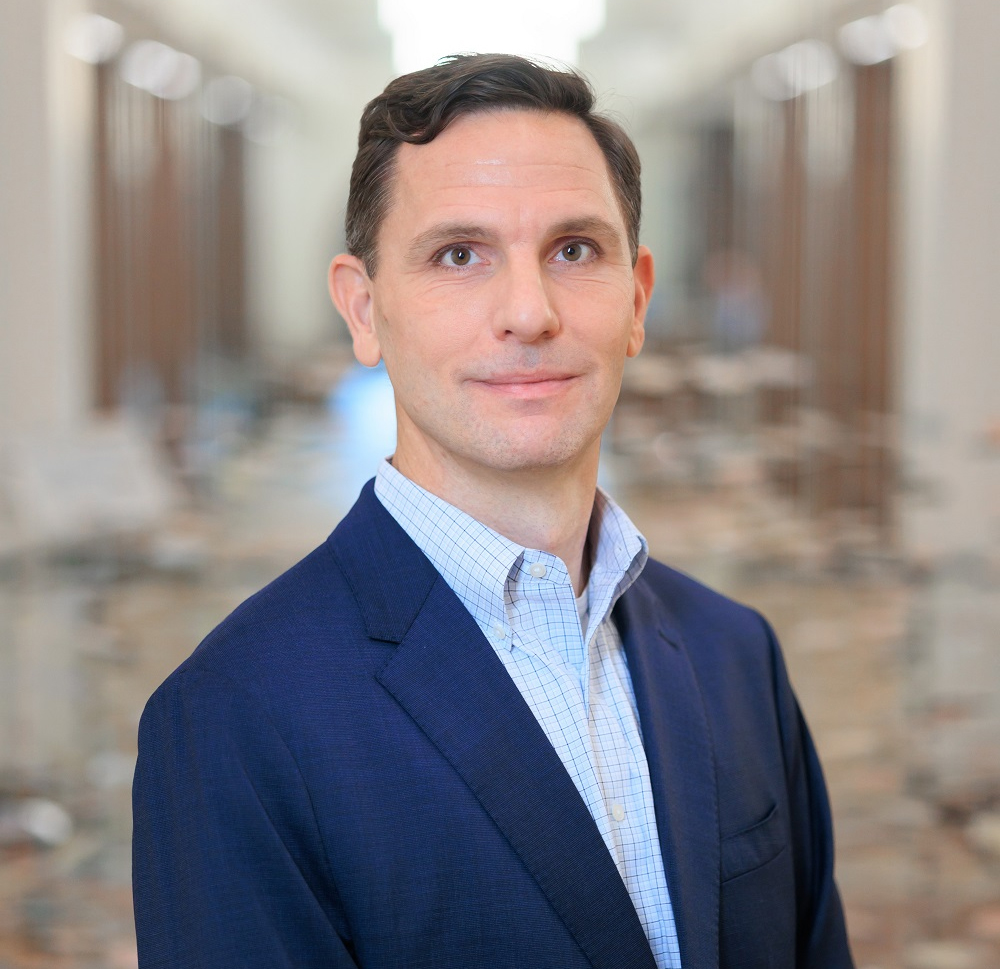
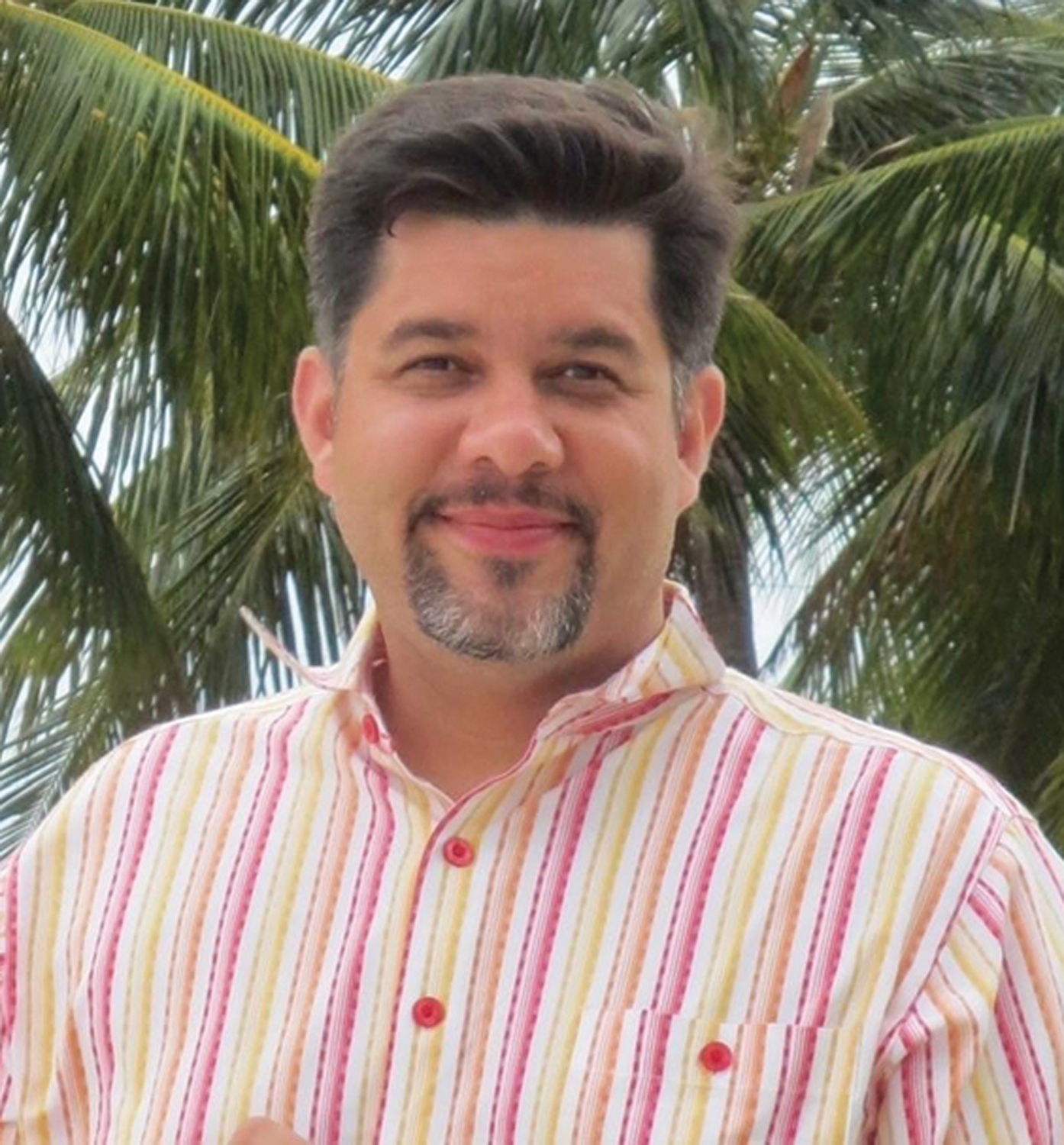
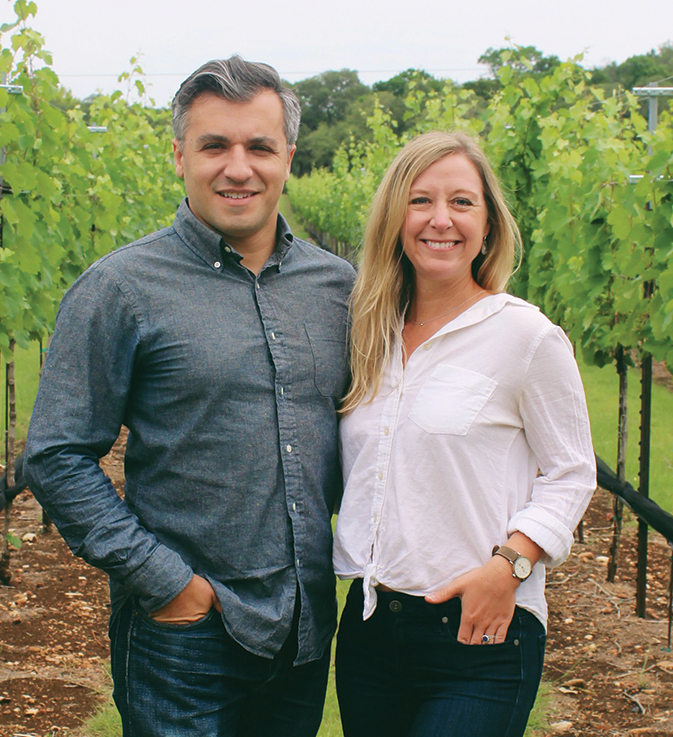
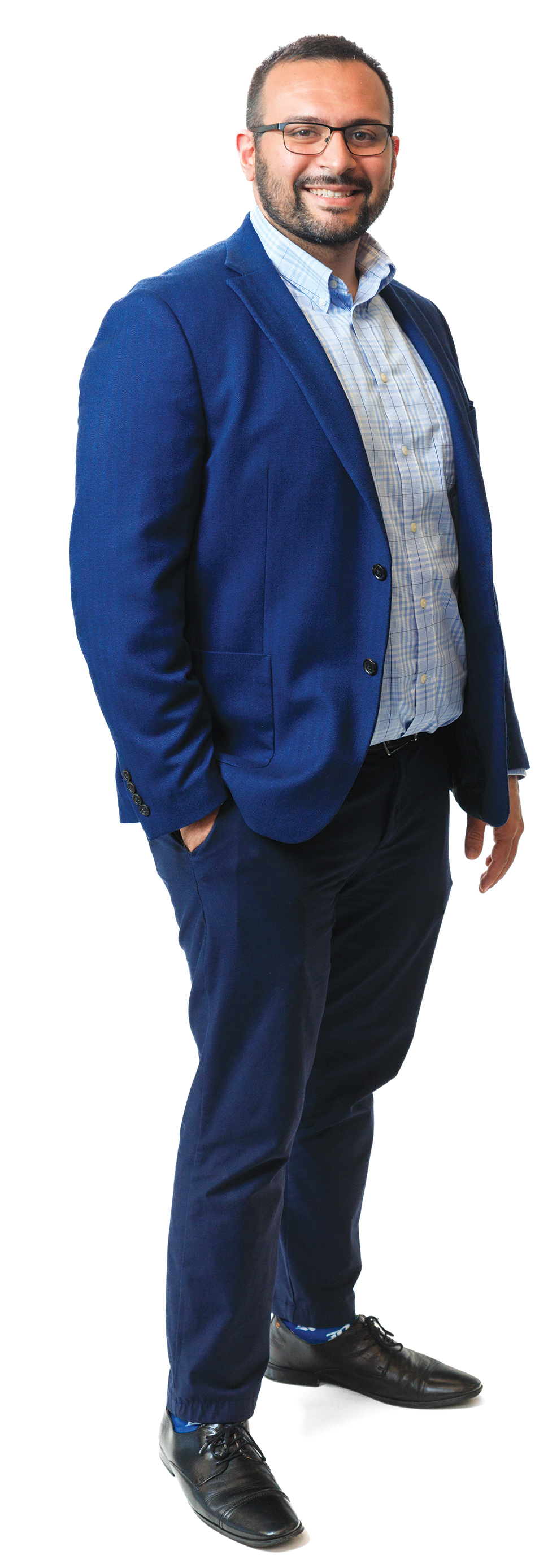
Assaad Mohanna ’21 is using lessons from childhood — and his experience at Rice — to reimagine the future workforce of Houston.
Assaad Mohanna (’21) is using lessons from childhood — and his experience at Rice — to reimagine the future workforce of Houston
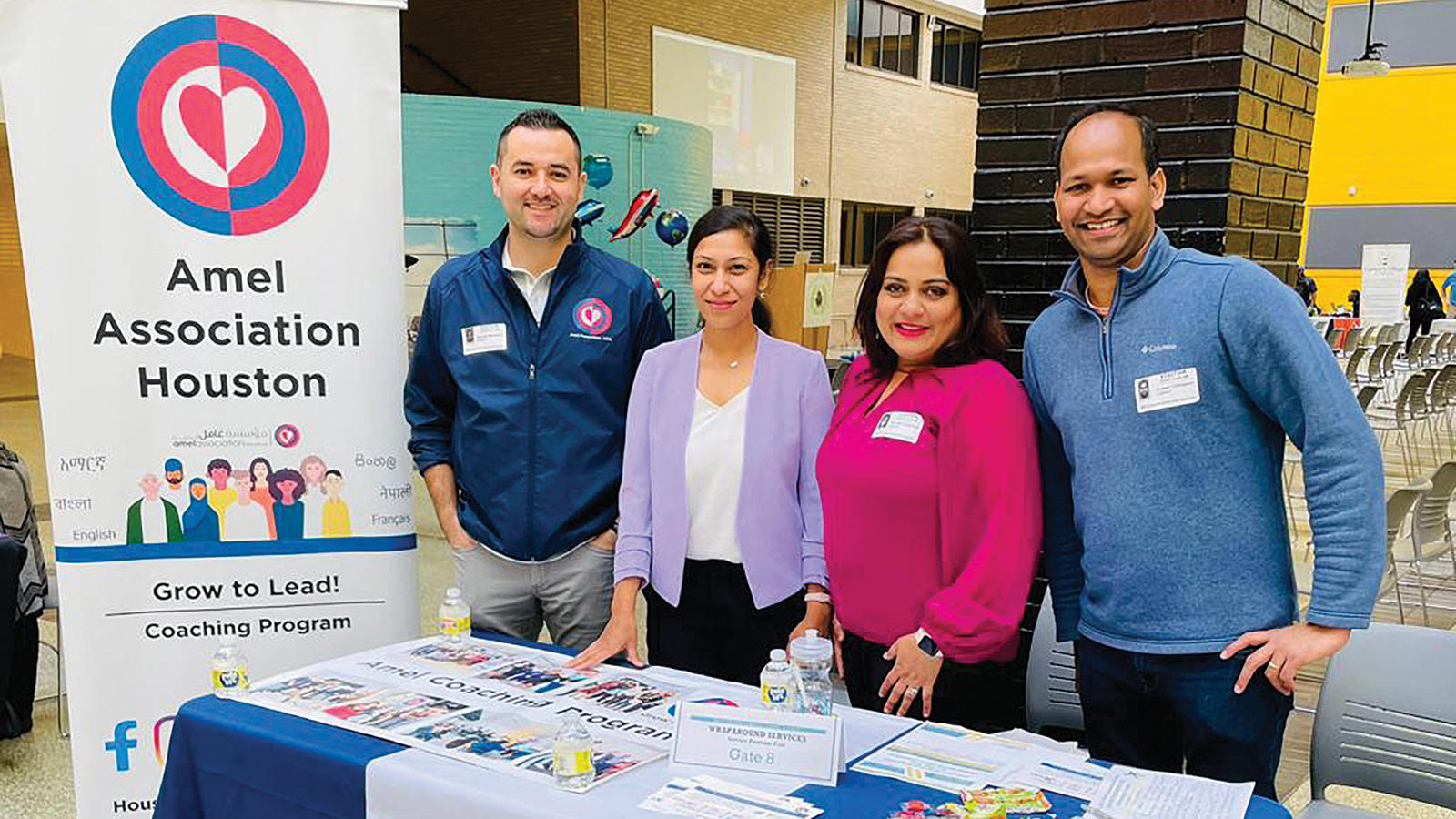
When civil war broke out in Lebanon in 1975, Kamel Mohanna, a pediatrician, knew medical help would be needed in the area — no matter which side of the conflict a patient might be on. Three years later, at the peak of humanitarian need, Kamel decided to take action to support the physical and mental health of displaced people in the region. Within a year, he had reached out to humanitarian organizations and health care professionals to found Amel Association International to provide emergency services and satisfy basic needs for refugees and asylum seekers. Over time, Amel Association International became one of the largest NGOs in Lebanon, with 28 medical centers, six mobile medical units, two mobile education units and more than 1,400 workers and volunteers.
At Kamel’s feet during Amel’s early years was his son, Assaad, who, by 11 years old, was assisting his dad and other volunteers — working with families and playing with the children who had left their homes. Young Assaad grew up to pursue a career in the oil and gas industry, but the Amel Association was always in the background. After following work to Dubai and Saudi Arabia, he came to Houston and used the lessons he learned from his father to establish the Houston Chapter of Amel Association International. The new chapter served as the impetus for a capstone project for Assaad and his fellow classmates in the Professional MBA program — Rice students from India, Colombia and the Middle East.
“As entrepreneurs walking into a new market,” says Assaad, “we identified the needs of underserved populations in Houston and figured out what we wanted to offer these communities.”
Like the “mothership” organization, as Assaad calls it, Amel Houston sought to support the mental and physical health of refugees, asylum seekers and more, but the group also saw a gap in the services needed in the American city. “We didn’t want to just reproduce what was being done in Lebanon,” says Assaad. “Rice helped us realize that this is not one size fits all.” In Lebanon, for example, Amel Association International assists with the fundamental integration services of refugees — access to food, shelter, health care, employment — and there are already plenty of Houston organizations offering those services. What Amel Houston could offer would be leadership coaching to underserved high schoolers — the very people who would go on to build the fabric and future of Houston.
Assaad and his team knew from their experience with the CoachRice program through the Doerr Institute for New Leaders that mentorship may be familiar to high schoolers, but leadership coaching is different — proactive instead of reactive. “Leadership coaching is more of an iterative, collaborative process between the coach and the coachee that identifies critical areas for improvement,” says Assaad. Rather than merely advising students — as a mentor may do — a coach will work with students to address areas of their lives or work that are hindering a student’s growth and potential.
As graduates of the CoachRice program, the Amel Houston team knew that they had the opportunity to assist not only high schoolers, but their peers as well. Rice students participating in CoachRice earned 60 hours of training time through the modules but needed 100 additional coaching hours in order to be accredited by the International Coaching Federation as a certified coach. It was a win-win: leadership coaching through Amel Houston would help high schoolers in economically challenged communities realize bigger dreams in the U.S. — like college or a career in business — all while giving CoachRice participants the hours they needed to realize their own dreams.
Amel Houston recently launched their second cohort — and the stories of empowerment help Assaad know he’s holding up his father’s legacy. He points to one student who signed up for the pilot program after being nominated by his school administration to participate. Due to his family and job search obligations, the student often missed class and gave little attention to his academic performance. But things took a positive turn when he was paired with his coach, Christoph. After the student attended several one-on-one coaching sessions on the school campus over a period of four months, his teacher made a point of visiting with the Amel Houston team to give heartfelt feedback. Her student had become more energized, present and confident. The student put it this way: “I feel like I have matured and expanded. I no longer get stuck. Instead I know I can find a solution,” he said. “I am more focused on what matters to me, and I am making progress with my goals”.
Amel Houston’s work is supported by three principles. First: Support local communities by empowering underserved communities and giving them equal opportunities to grow. Second: Step up DE&I efforts in companies by widening the talent pool in Houston. Successful firms are organizations where employees feel comfortable being themselves and take an extra effort toward making their workplace great. And third: Amel Houston hopes to make an impact on the future workforce and on the city.
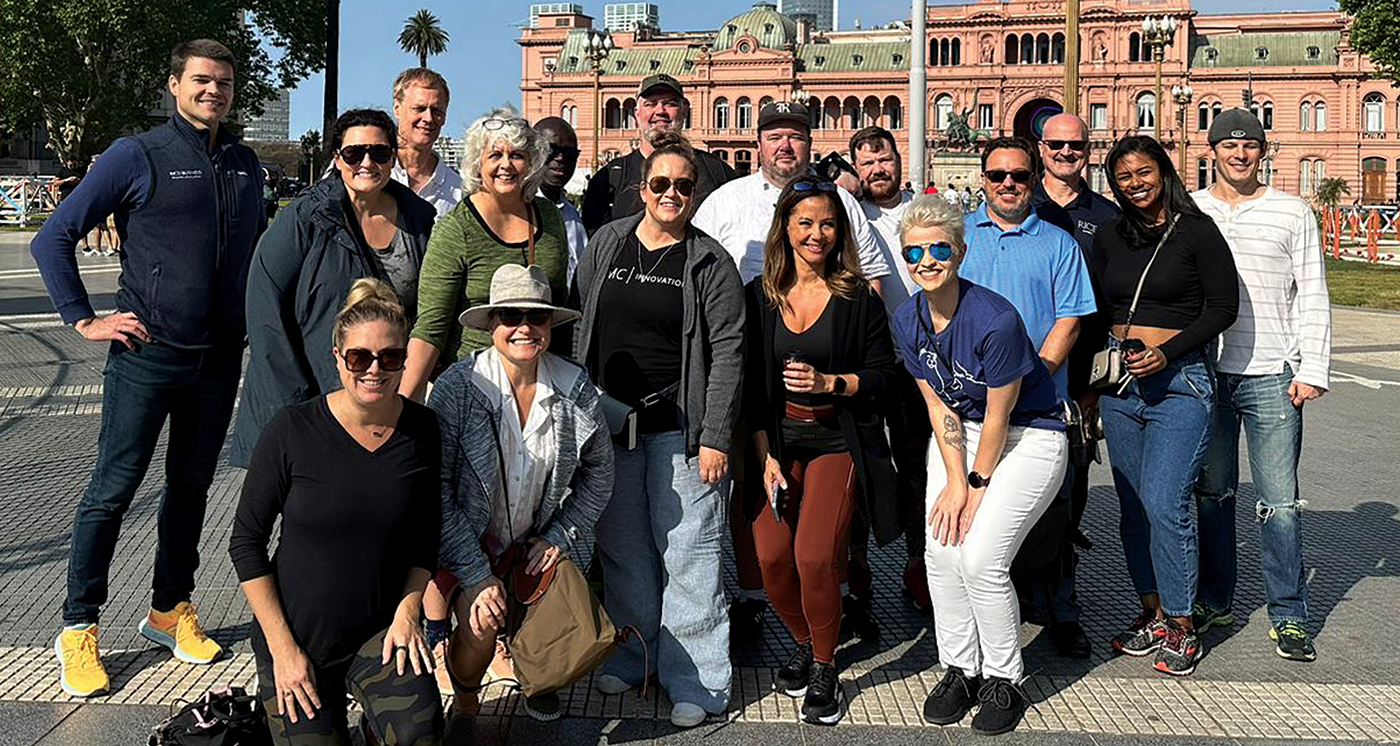
Beautiful Buenos Aires. In October, Rice Business alumni from the classes of 1987 through 2022, along with their guests, traveled to Buenos Aires, Argentina, for a weeklong exploration of Argentine culture and business. As one of the most vibrant and diverse cities in South America, Buenos Aires provided the perfect setting to explore a range of business topics, from innovations in environmental sustainability to Argentina’s unique economic challenges and opportunities. Cultural highlights of the trip included a visit to a traditional estancia, tango lessons, a graffiti art tour, a kayaking excursion along the Tigre Delta, and a bounty of steak and Malbec wine.
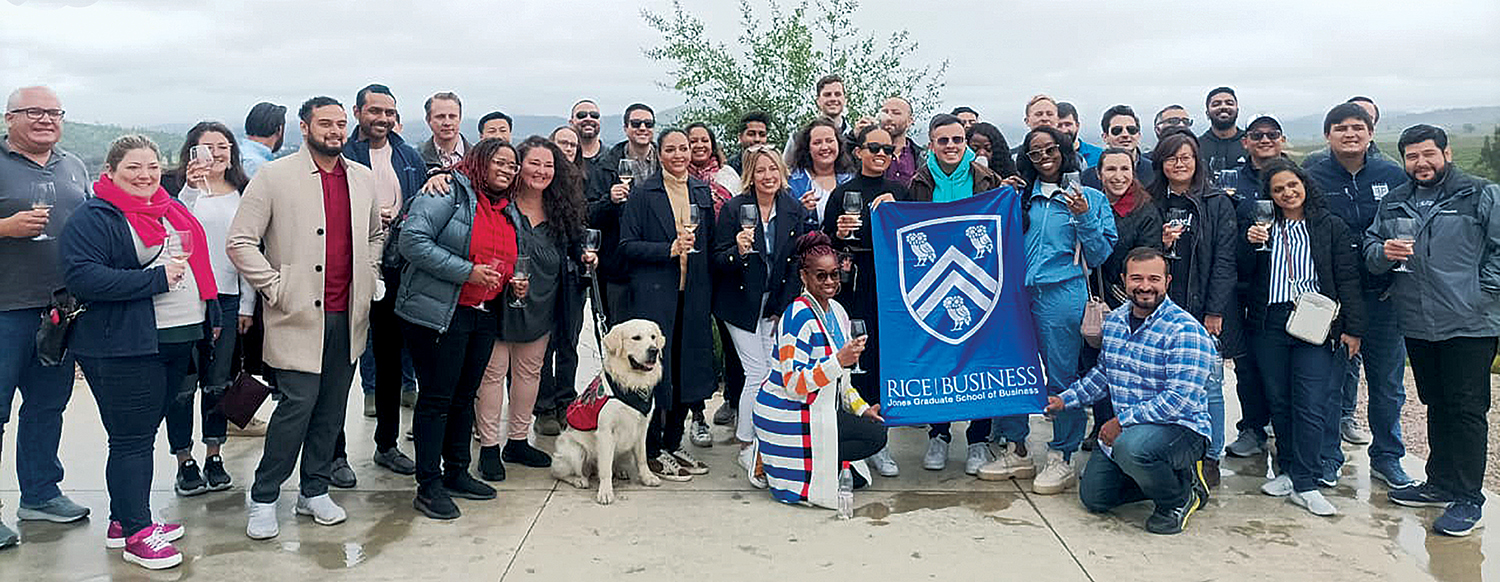
A total of 65 MBA professional students traveled to Santiago, Chile for their Global Field Experience course this fall. They completed 17 consulting projects with a focus on growth strategy and market expansion projects for Chilean small businesses, visited agency and program leaders at the U.S. Embassy, and met entrepreneurs with ventures focused on sustainability and accessible health care. Bonus: They got to speak with leaders from the wine industry in the Casablanca region.
Stephen A. Zeff, the Keith Anderson Professor of Accounting, accepted an invitation from the president of the European Accounting Association (EAA) to deliver the annual distinguished Yuji Ijiri Lecture on Foundations of Accounting during the EAA congress in May in Helsinki. Ijiri, who died in 2017, was a highly acclaimed accounting scholar at Carnegie Mellon University.
The world’s five major academic accounting associations agreed to rotate hosting duties of the annual lecture. Zeff’s humble response to the invitation? “It is quite an honor, especially for one who is 89 years old, when his colleagues believe he still has something to contribute.”
Congratulations to lecturer of management Larry Stuart, who teaches Business Law and Applied Contract Law in the EMBA program, for his selection by Thomson Reuters as a 2022 Texas Super Lawyer and for his recognition on their Top 100: 2022 Houston Super Lawyers List. Only 5% of nominated lawyers in each state are selected for inclusion.
Minjae Kim, assistant professor of management – organizational behavior, has been at Rice Business for just two years and has already been selected as one of Poets&Quants’ 50 Best Undergrad Professors for 2022. Students say that Kim is “fantastic at inspiring us to think deeper and think from more than our own perspective.”
During his time at Rice, Kim has taught undergrad courses and conducts research in a number of areas. But one thing all of those avenues of research have in common: commitment. Kim explains: “We often expect our exchange partners (e.g., employees-employers; customers-producers) to be committed to us but want to be flexible and have a choice of a different exchange partner. I study how individuals and organizations can appear committed to their exchange partners. I often discover that some ‘irrational’ actions that people and organizations take are actually outcomes of careful and strategic calculations.”
To learn more about that irrational behavior — and recommendations for a must-read book and a must-see movie from Kim — check out his full interview at poetsandquantsforundergrads.com.
Reunion 2023
The story of us. Share yours at Reunion Weekend.
Join us April 28–29 for Alumni Reunion Weekend 2023 and reconnect with your classmates, faculty members and staff!
Here’s what we have planned for this year’s activities: special events for milestone reunion years, presentation of the Alumni Awards, faculty panel discussions, Last Lecture, family partio and more!
During the Clean Energy Education and Empowerment (C3E) symposium this past November, Phoebe Wang ’13 accepted the 2022 C3E Business Award. C3E is a collaboration focused on advancing women in the energy sector and raising their visibility. Led by the U.S. Department of Energy, its three university partners are MIT Energy Initiative, Stanford Precourt Institute for Energy and the Texas A&M Energy Institute.
Wang is a cleantech venture capitalist who serves as an investment partner at the Amazon Climate Pledge Fund. She has more than a decade of experience in cleantech with a strong passion for fighting climate change for future generations. In addition to her investment experience, she has been an entrepreneur who built a startup in technology commercialization and — earlier in her career — an engineer in chemical and semiconductor industries.
Giving Back
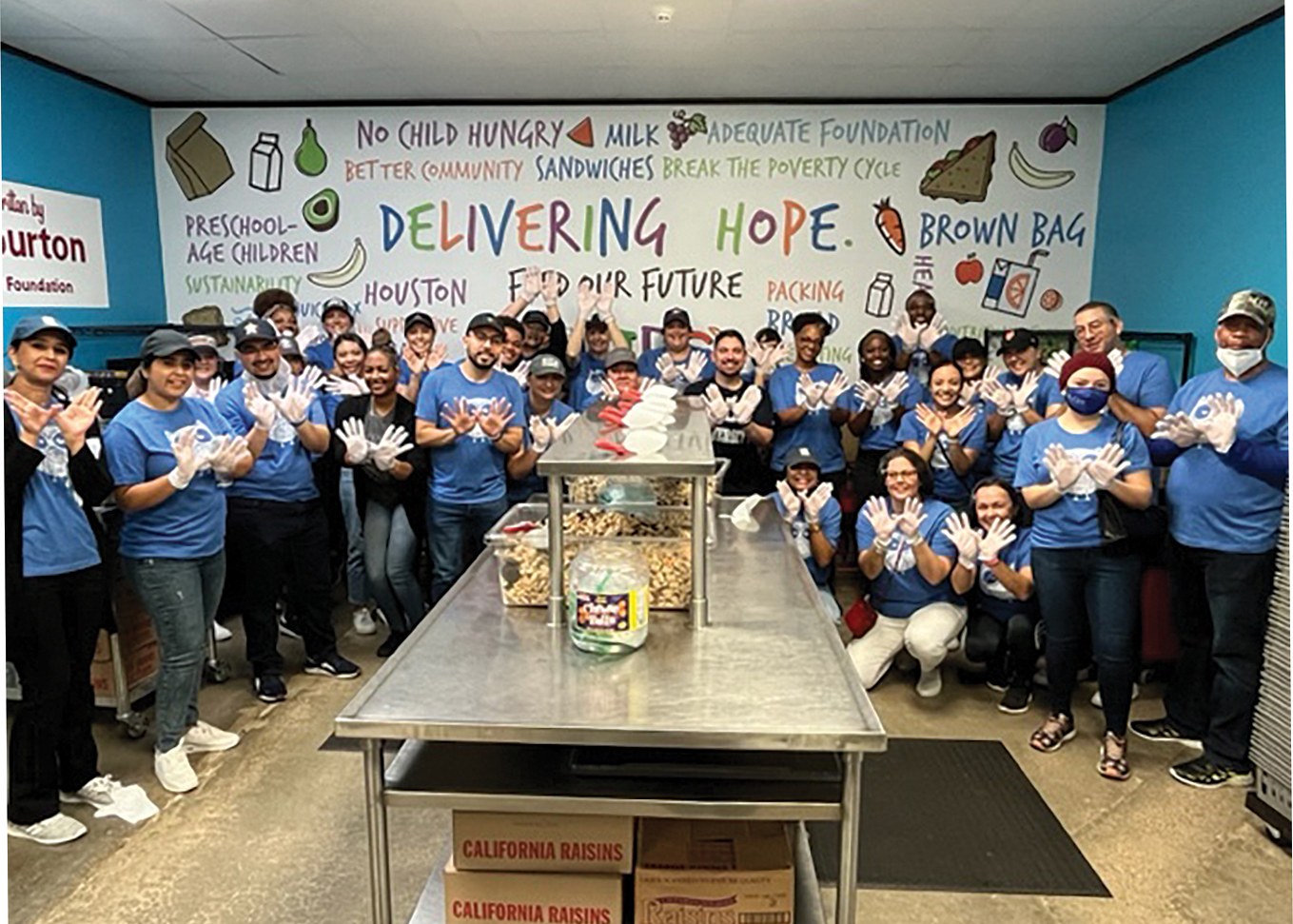
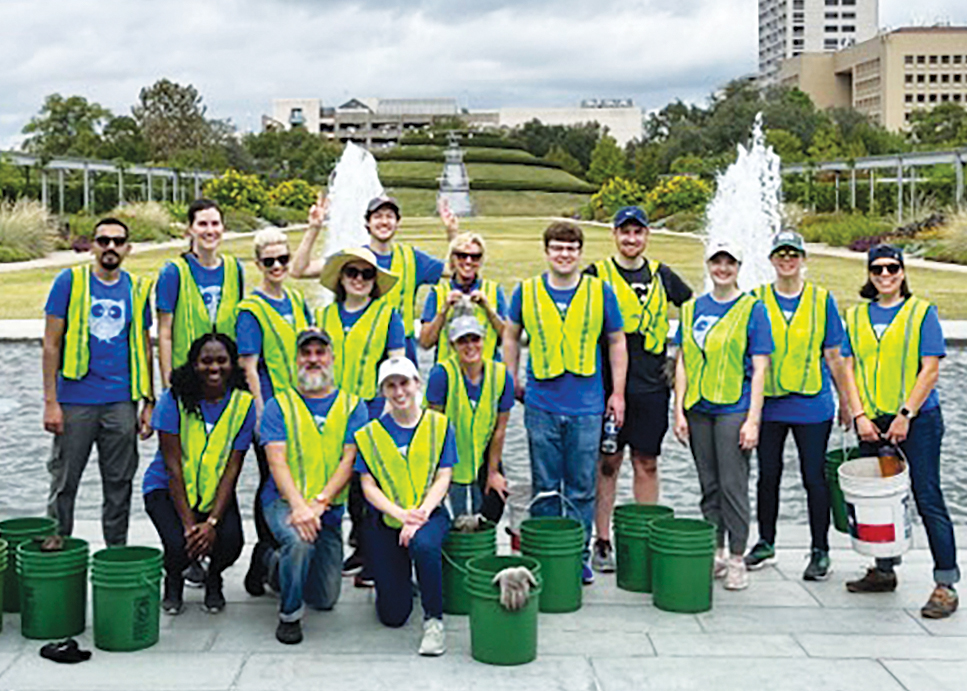
In November, staff and faculty prepared 6,300 meals for hungry children in Houston, many of whom live in food deserts. They filled pallets of snack bags, peanut butter and jelly sandwiches and ham and cheese sandwiches to be delivered by Kids’ Meals.
On the same day, other Rice Business Gives Back volunteers were at Hermann Park Conservancy weeding, mulching and helping to maintain McGovern Centennial Gardens. A big thank you to all who gave their time to Kids’ Meals and Hermann Park last fall — one of two service days hosted by Rice Business Gives Back.
Moon Shot
Image
Credit: NASA
Over three days last September, NASA and Rice celebrated the 60th anniversary of President John F. Kennedy’s iconic speech at Rice Stadium, a truly prescient, inspiring take on where we were at the time and where we wanted to go — to the moon! Kennedy’s speech, the university’s role in space exploration and the country’s history were captured in events and exhibits that were capped off with a keynote from NASA Administrator Bill Nelson.
On the Move
Cheers to Strategy and Environment faculty contributing to their profession as much as their research.
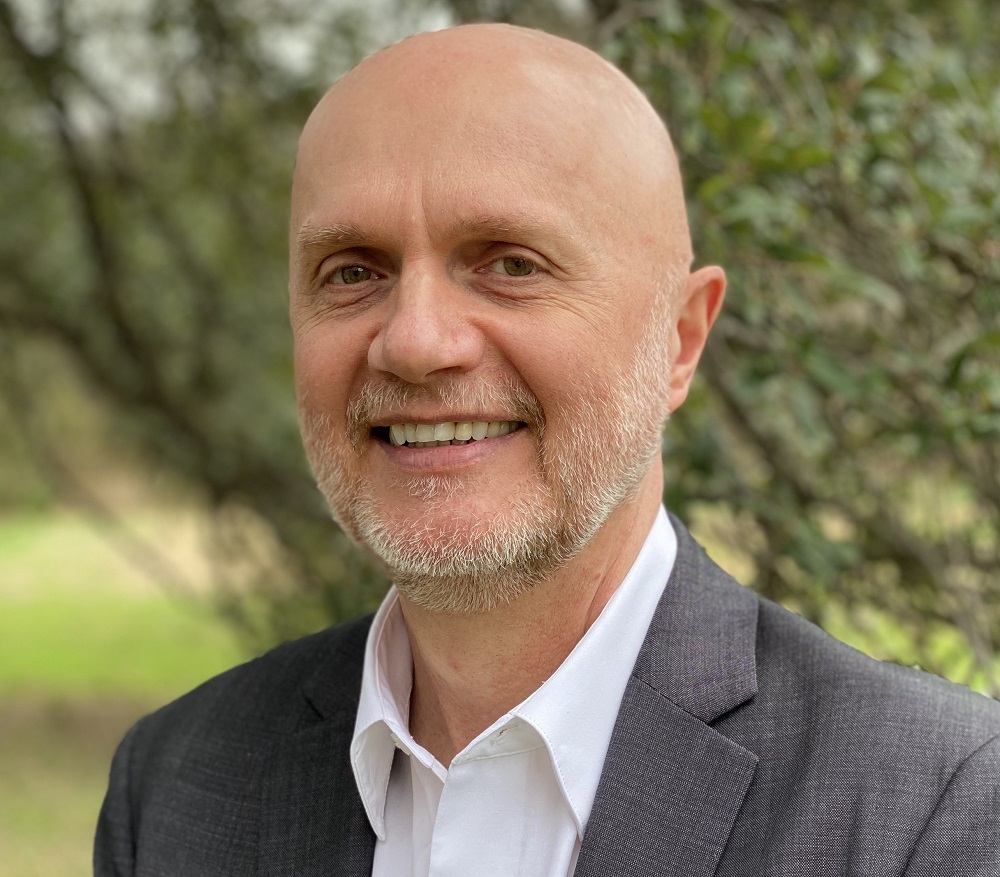
Laszlo Tihanyi, the William Alexander Kirkland Professor of Strategic Management, wrapped up his term as editor-in-chief of one of the most prestigious journals in the field of management, the Academy of Management Journal.
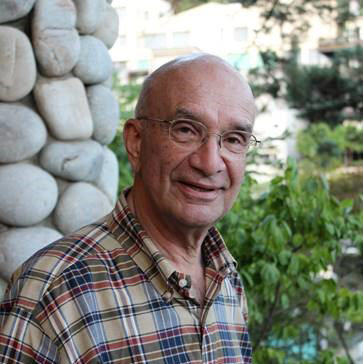
Yan "Anthea" Zhang, the Fayez Sarofim Vanguard Chair Professor of Strategy, assumed her role as president of the Strategic Management Society (SMS), which consists of over 3,000 academics, business practitioners and consultants focusing on the development and dissemination of insights on strategic management. Her new position comes after being named a fellow of SMS in 2021, a distinction honoring members who have made significant contributions to the theory and practice of strategic management.
"Paws" and Reflect
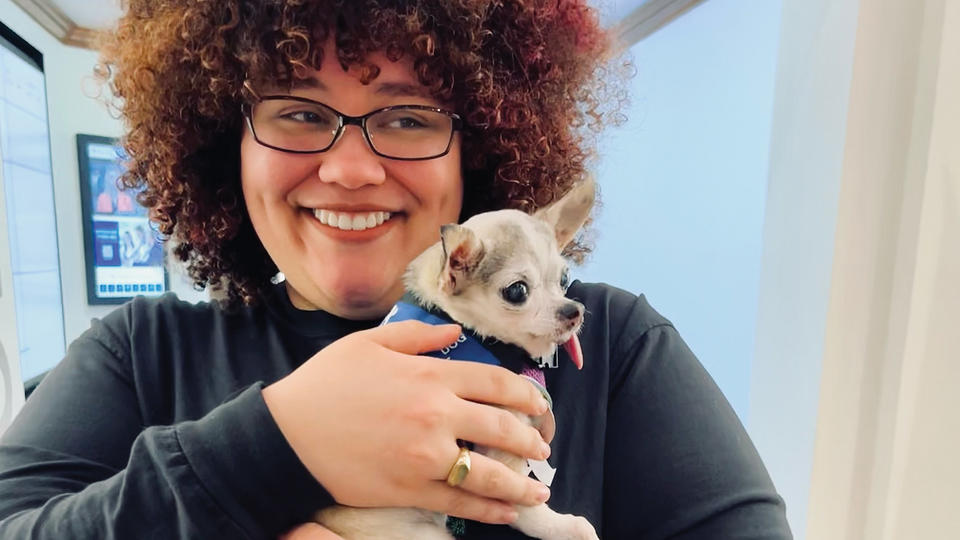
When the job search feels exhausting, let the Career Development Office come to your rescue. Relax and Reset was created to help students through their first recruiting season. A little self-care was just the thing — therapy dogs from Faithful Paws Pet Therapy, chair massages, a make-your-own bath salt station, as well as calming arts and crafts. Students also heard from a panel of their second-year peers discussing recruiting experiences and how to remain resilient when faced with career challenges. Our team of advisers were on hand throughout to discuss and facilitate next steps for all those continuing along their career journey — and our stellar team of pups offered nonjudgmental ears.
Image
By the Numbers
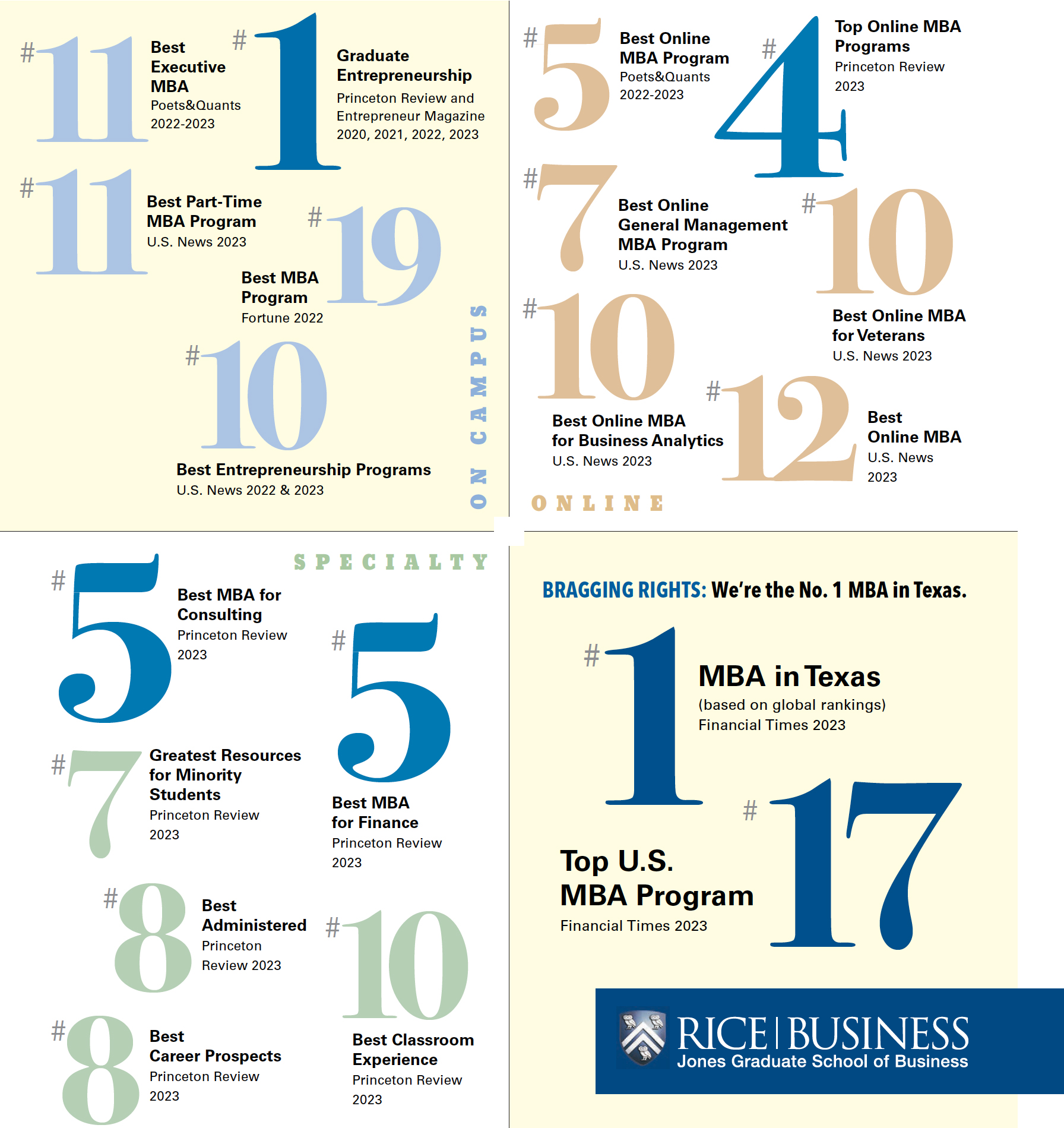
We know you’ve heard a lot about our rankings lately. Maybe too much? But, it’s our belief that the more you know about our growing reputation, the more pride you’ll feel about your alma mater. We get it that the rankings game is fickle, but when we’re recognized favorably by U.S. News, Businessweek, Fortune, Financial Times, Princeton Review and Poets & Quants, we want to spread the word.
The Jones Scholar Award is an academic honor conferred by the faculty on students whose cumulative GPA at the time of graduation is in the top 10% of their graduating class. Each graduate of Rice Business completes a rigorous set of courses, develops a robust complement of skills and knowledge, and refines their capabilities in leadership, critical thinking and problem solving. The Jones Scholars comprise a group of students who have performed exceedingly well — with high distinction — in completing a challenging curriculum. Note: Due to the compressed timeline of the end of the semester, final grades were not available to present the recipient names at Investiture. Congratulations to those from the Class of 2022 listed below.
Seth Adams
Ryan A. Baranowski
Behnam Beheshtipour
Alex Bower
Brianna Buckley
Catherine Cahill
Astrid Celis Betancourt
Koda Chovanetz
Nathan Churchwell
Diana T. Corwin
Beau Domingue
Elaine Dong
Nicholas Duarte
Charles Edward Fetter III
Patrick J. Flam
Zachary McRae Foster
Kristin Galligan
Jingxi Gao
Candace Gooding
Takeya Green
Aaron Haque
Blake A. Hayes
Lin Huang
Rahil Kaka
Andrew Kenner
Jessica M. Kent
Ruo-Hsin Rebecca Kuo
David Edward Lane
Sophie Lin
Leslie Lynn Lugrin
Darrin D. Madriz
Alejandra Maldonado
Kylie Marinzel
Chris Oommen Mathews
Marina Matselinskaya
Avinash Mohapatra
Austin F. Norris
Shelby Hillman
W. Patrick O’Keefe
Paul Palermo
Jonathan Paschel
Nick Pignotti
Shawn Henry Charles Quinn
Rahul Rasal
Alexander C. Ray
Doug Richardson
Bradley R. Rister
Neil Rodrigues
Michael S. Schmidt
Dallin Bud Scruggs
Corbett Senter
Kedrick Shin
Yuma Soga
Sergio Suarez
Fernandez Nigel Tarr
Tian Tian
Geethakrishnan Vasudevan
Elliott R. Vera
Nelson Waltrip
Luo Wang
Chandler Warren
Doug Woodcock
Naren Yellai
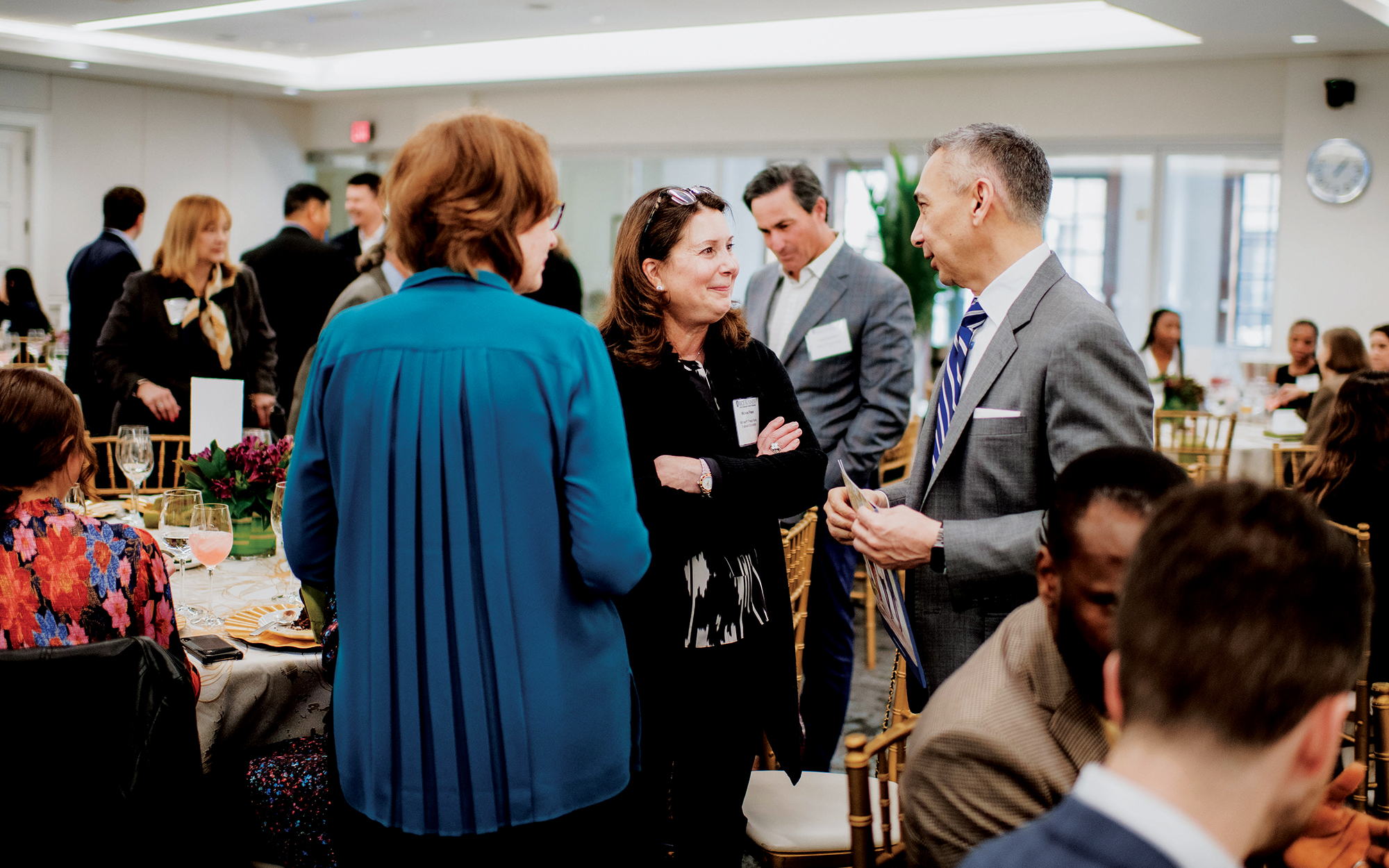
The Rice Business Scholarship Luncheon took place Feb. 17 in the Anderson Family Commons to honor our donors who open doors for our scholars. Erhun Aiwerioghene ‘24 remarked about the importance of giving back to the community — an effort he hopes to make someday for future Rice Business students.
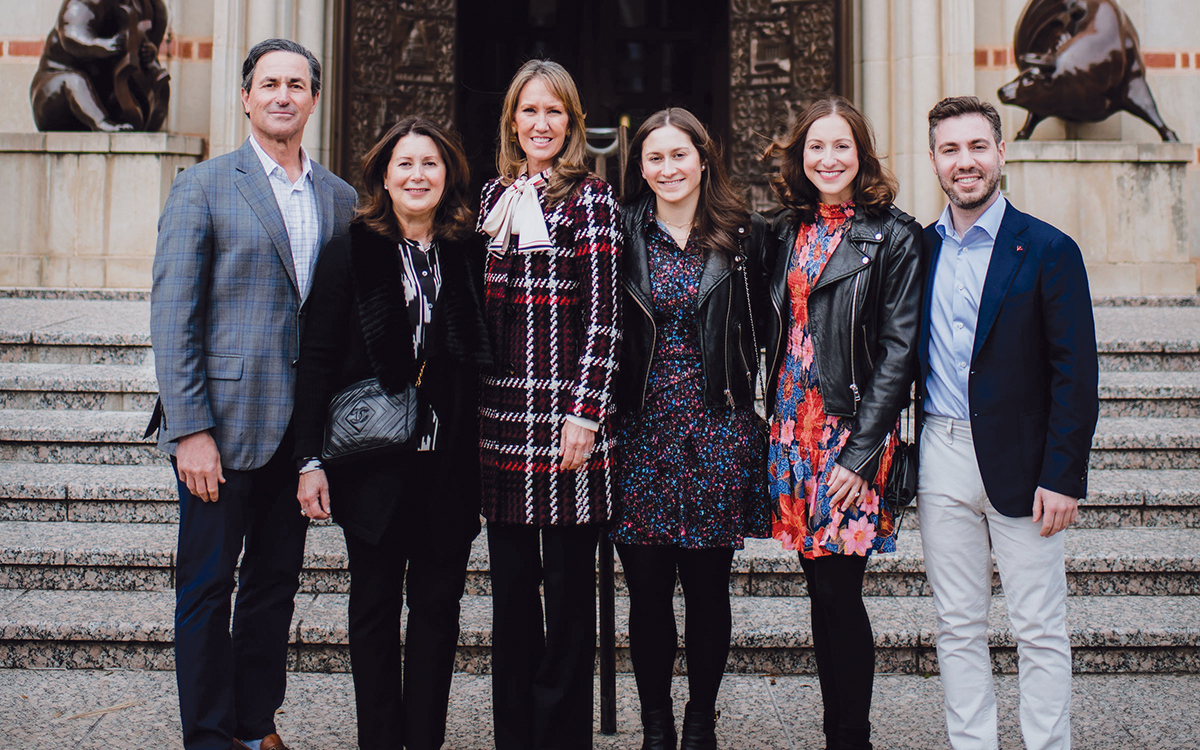
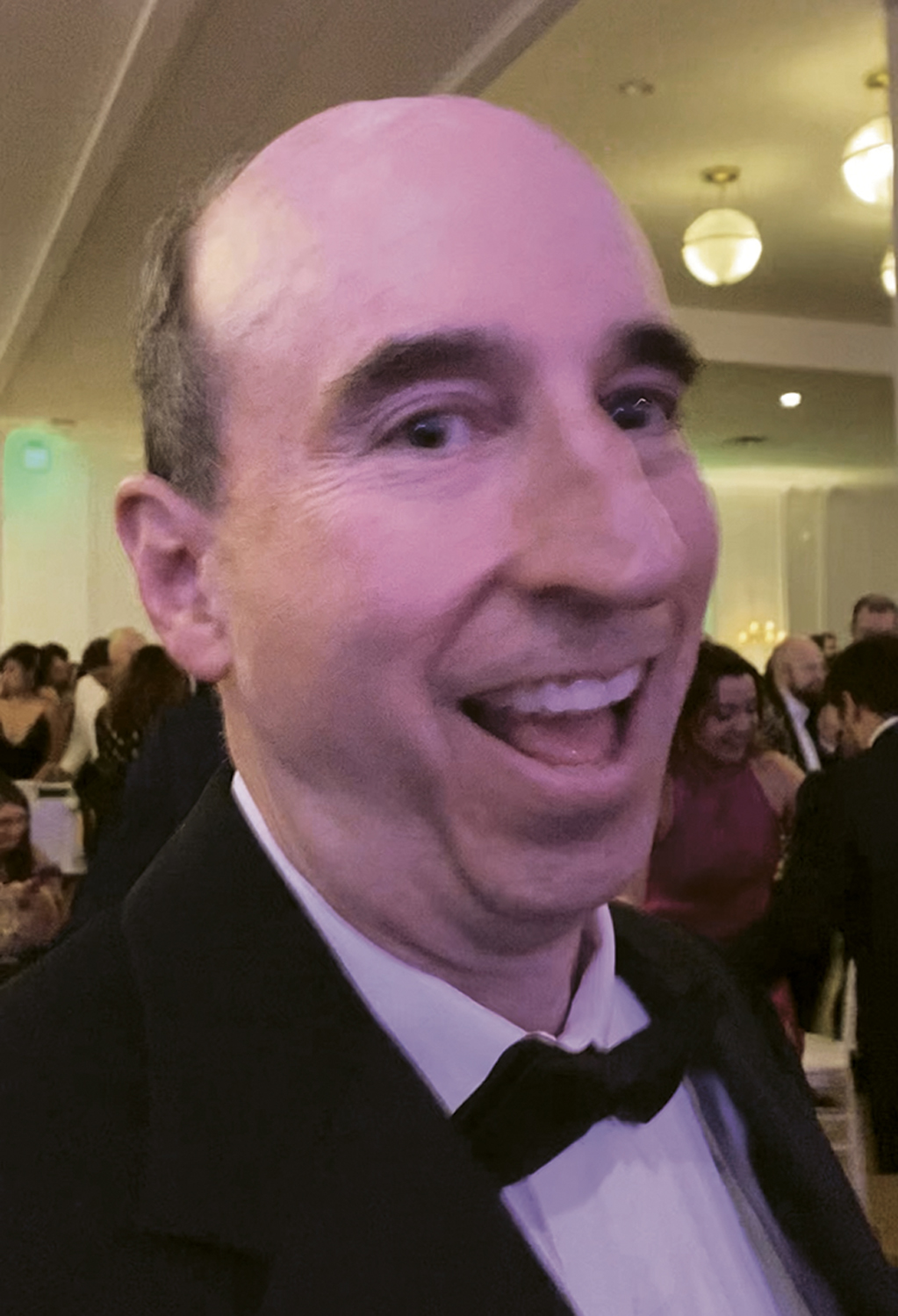
Lauren Friezo spoke in honor of her father, Michael P. Friezo ‘88, finance executive and co-founder of the oil and gas analytics company FLOW Partners, who passed away July 15, 2022. “It was a culture shock,” said Lauren, when she described her father’s move from New Jersey to Texas to attend Texas Christian University. But her dad knew that through empathy, curiosity, compassion and understanding, he could relate to anyone, anywhere. It was through that empathy that Friezo gave back to students who needed help supporting their Rice Business education.
Rice Energy Finance Summit
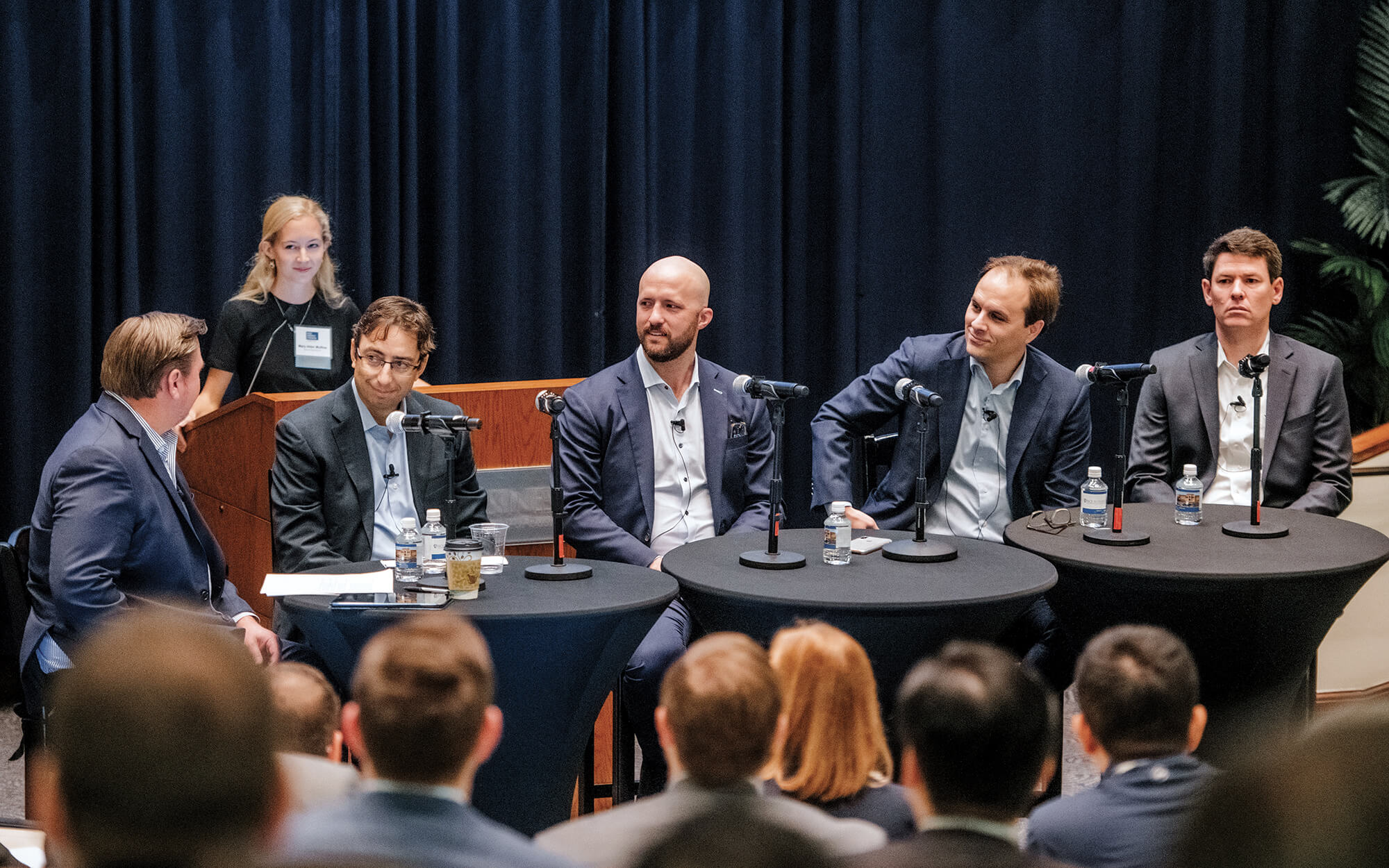
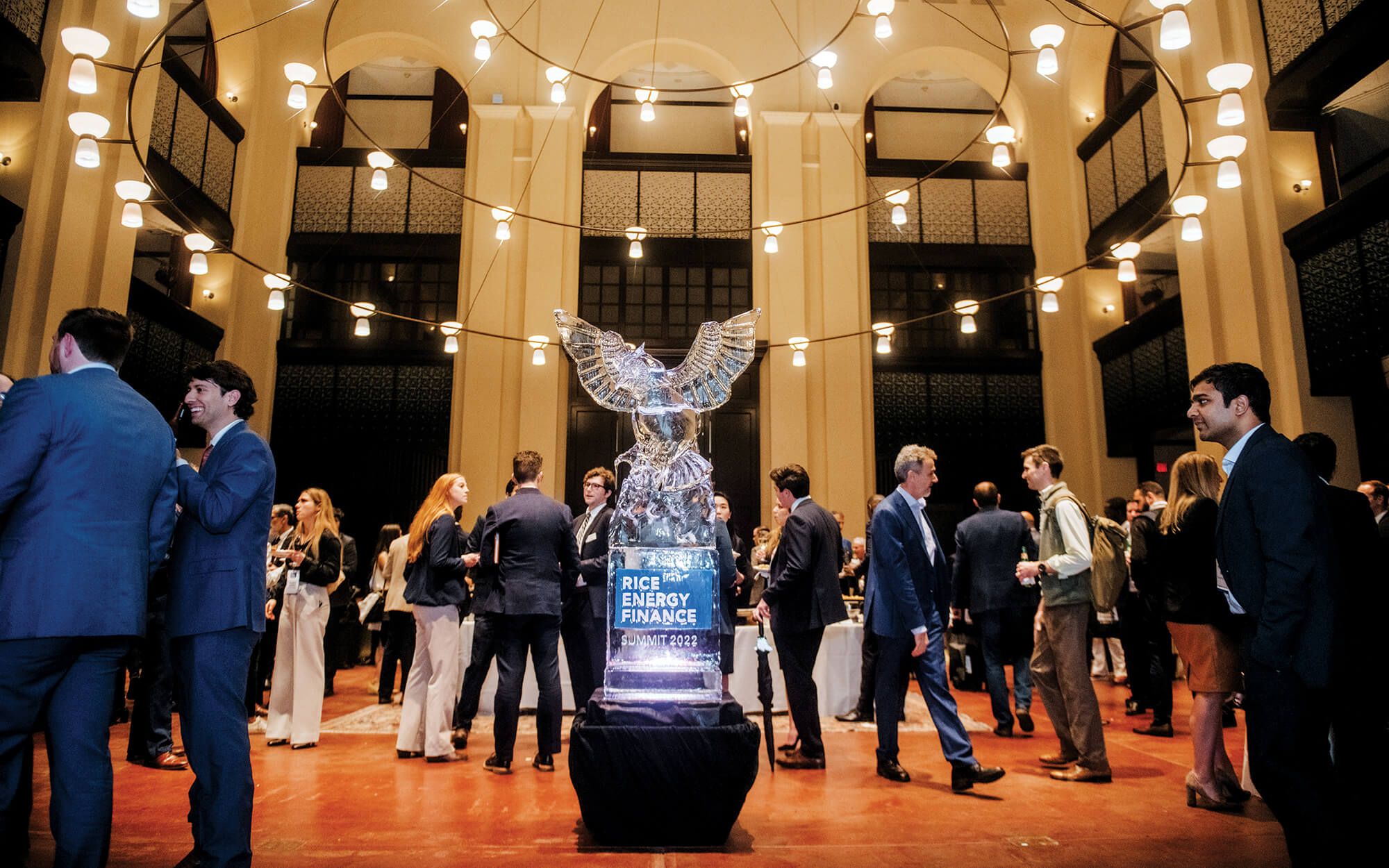
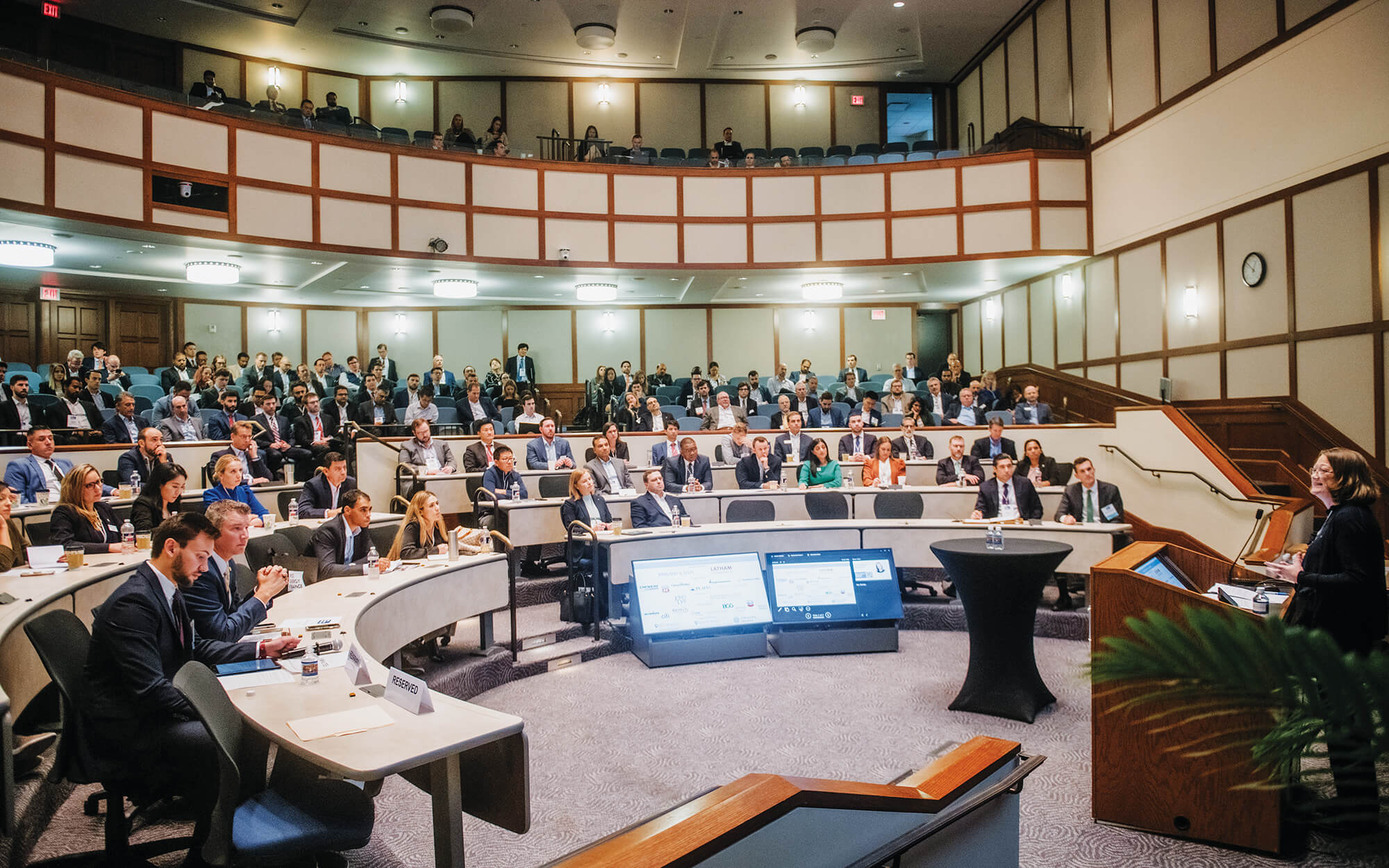
Last November, more than 375 attendees gathered in Shell Auditorium for the 2022 Rice Energy Finance Summit (REFS). The price of oil and gas wasn’t the highlight of 2022’s event, however. REFS, a student-run institution at Rice Business, covered all forms of energy with 28 expert speakers representing 28 different companies ranging from Shell USA and upstream E&P operators to geothermal and power transmission companies.
They also welcomed financiers, consultants and legal counsel with expertise in each represented sector. The conversations that day covered C-suite reactions to changes in the market related to Ukraine and the energy transition, ESG investing through a private equity lens, the impact of new projects on decarbonization, and keeping the lights on (literally) as a power supplier with an expanding energy mix. This event proved once again to be a top spot for new energy connections. The REFS committee and Rice Business were proud to host this transformative event. We again thank our wonderful corporate sponsors for making that day’s activities possible.
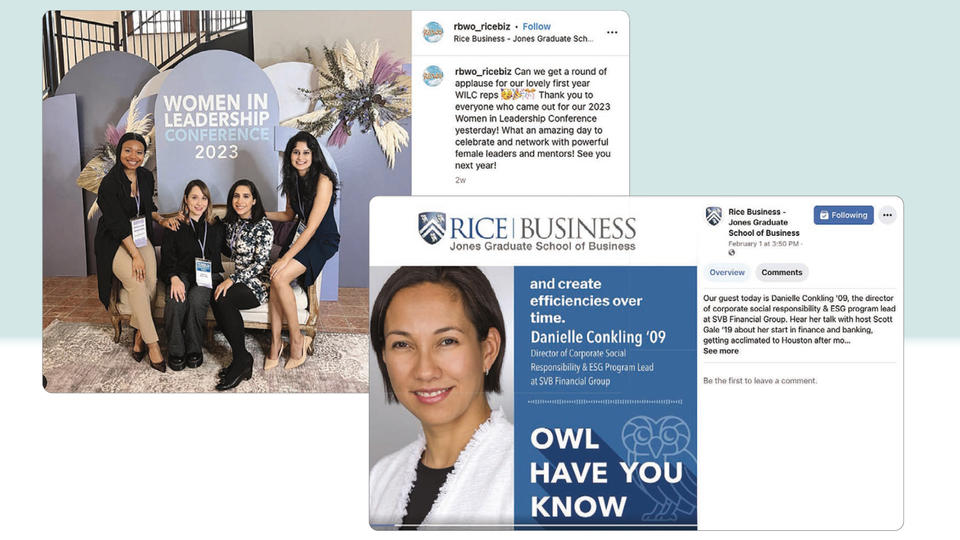
I attended my first Women in Leadership Conference (WILC) four years ago as a working professional. The next year, I submitted my MBA application to Rice Business with the goal, if admitted, to help organize WILC and inspire the next generation of female leaders.
I was admitted to Rice Business as a Forté Fellow and immediately joined the executive committee for WILC 2023, tasked with marketing the conference. I organized panels and collaborated with a team of strong student leaders. Forté Foundation CEO Elissa Sangster gave the kickoff keynote speech and underscored the work that remains regarding pay gaps and gender disparities in executive roles.
What resonated with me most was Sangster’s call for us to all become vocal allies, mentors and sponsors. Advocating for women within an organization creates a culture of inclusion and equality. Women bring unique perspectives to the workplace and contribute to better decision making, which drives innovation and growth. Equal gender representation in leadership roles is critical for organizations to be competitive in the business world. Society has made progress in promoting diversity and bringing women to leadership positions, but women remain significantly underrepresented in the C-suite due to lack of advancement opportunities and the “broken rung” obstacle at the first step to management.
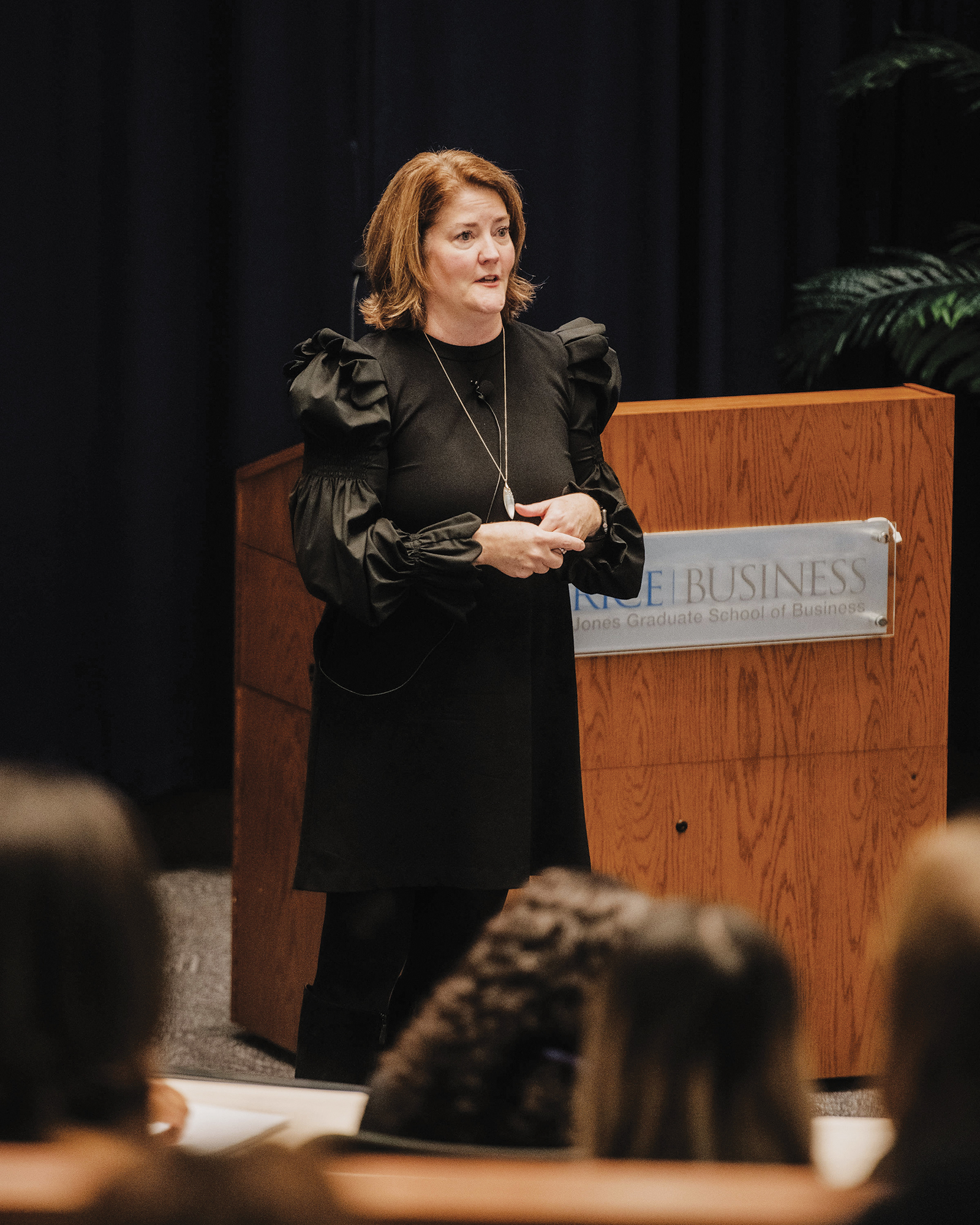
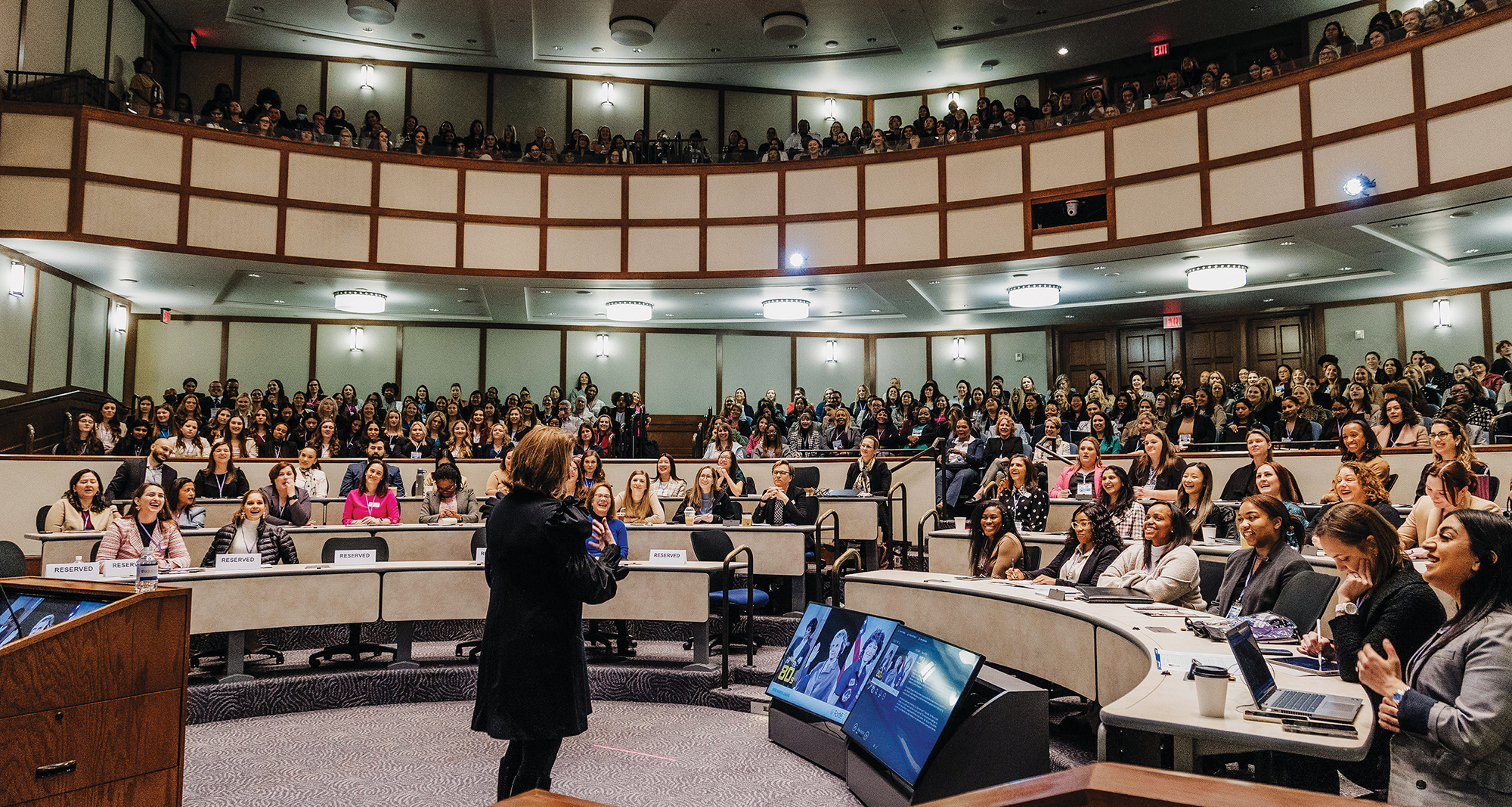
Being part of the planning committee for WILC 2023 has been a highlight of my MBA experience at Rice Business. This year’s theme of “Every Woman, Every Voice” highlighted the importance of sponsorship, mentorship and allyship as critical components for equality and equity in leadership. WILC 2023 sold out and achieved record attendance, surpassing more than 500 in-person attendees. The event provided a valuable opportunity to connect, build relationships, learn new skills and strategize competencies to succeed in leadership roles. Most importantly, the conference empowered its participants — including me — to aspire to greater heights in their careers and to inspire the next generation of women in leadership.
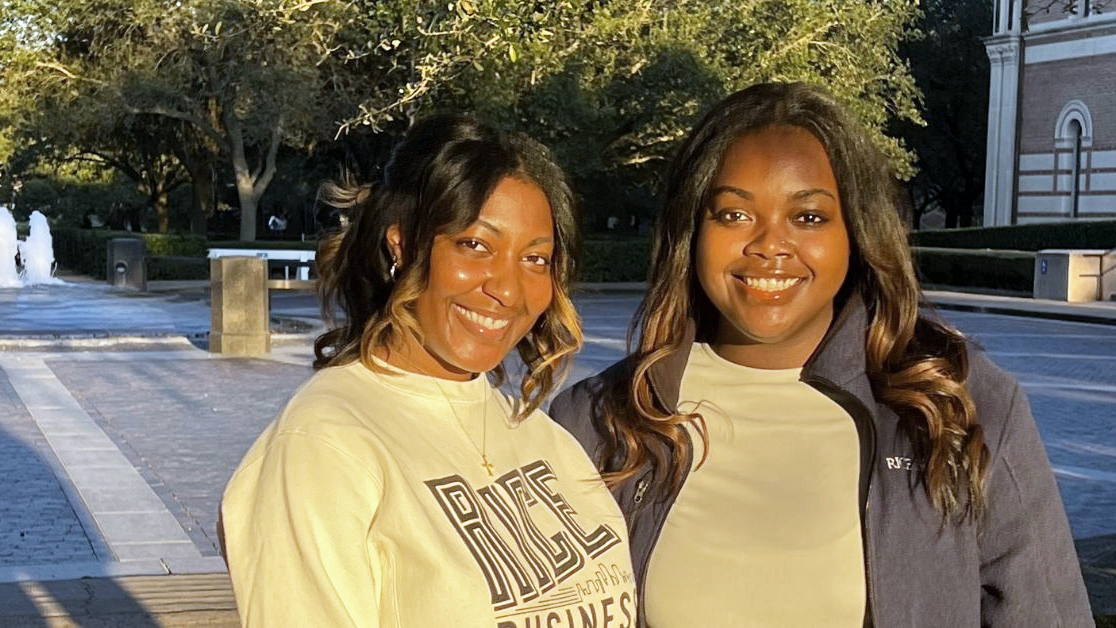
Ashley Ward '24 (left) and Ashleigh Rogers '24 (right)
Ashley Ward ’24, a fellow with the Forté Foundation, an organization focused on career development and business education for women, and Ashleigh Rogers ’24, talk about what it means to be a woman in business.
“I knew that if I was going to go back to school, I would need support financially, and wanted to see what scholarships were attainable for Black females,” says Ward. A scholarship, she says, made her “dream a reality.”
“It’s about making sure people are supported if they want to pursue financial roles that typically are extremely male-dominated,” said Rogers.
Vikas Mittal, the J. Hugh Liedtke Professor of Management – Marketing, weighs in on a recent proposal from Florida Gov. Ron DeSantis (R) supporting cell phone restrictions in schools. His conclusion: As polarizing as DeSantis has been, in education specifically, parents would be on board with this one.
From Mittal: “According to a 2022 study of 10,897 parents with a child in school, 61 percent agree they would support banning cell phones from classrooms. Support is high among Asian (64 percent), Caucasian (61 percent), African American (55 percent) and Hispanic/ Latino (56 percent) parents. Parents from low (60 percent) and high (61 percent) socioeconomic status support a ban.”
MBA salaries and bonuses were at record or near-record levels for the Class of 2022. Rice Business had a 14.9% increase in starting salaries in the last year.
“Starting salaries for MBAs graduating from the top 30 business schools flat-lined between 2020, the first year of the coronavirus pandemic, and 2021,” wrote Ethier. “But a year later, salaries and signing bonuses are looking robust, with new school records aplenty, whether those B-schools measure in averages or medians.”
Ten-year-old sustainability initiatives may be taking hold, signaled by the prediction that gasoline demand has peaked. Good news for the environment, maybe, but consumers are in for a bumpy ride. “In the next several years, the fuel industry is poised to cut supply faster than the drop in demand, with more plants due to shut or convert to smaller biofuels facilities,” reports Bloomberg writer Chunzi Xu. “The result could be production crunches for gasoline, price spikes or even limited outages because of the mismatch. Paradoxically for drivers, it’s gasoline’s slow death that will make it painful.”
Peak gasoline will "have significant implications for consumers, inflation, politics," said Mark Finley, an energy fellow at Rice University's Baker Institute for Public Policy. "All in all, a big deal — over time."
Ben Lansford, accounting professor and director of the Master of Accounting program, discusses the reason accounting is a major in decline at schools across the country — and why it’s worth the time.
“Accounting is difficult,” he says. “It’s just a tough subject area, and you need a fifth year of college education to qualify to sit for the CPA exam.”
Even so, says Lansford, accounting is a “rock-solid foundation” and a career path in demand: while there was a 17% drop in employed accountants in auditors from 2019 to 2021, according to Bloomberg Tax analysis, companies’ needs for accountants hasn’t budged.
Lyman Paden ‘77
Lyman’s twins are college sophomores — his daughter at Reed College (Portland, Oregon) and his son at St. John’s College (Annapolis, Maryland). Because he lives a block from the Rice campus, that option was too close. Now they’re as far apart from their parents and each other as they could arrange. Lyman continues practicing law at Baker Botts and is still involved with the Boy Scouts even though his son has aged out. He completed his second Philmont trek last summer.
1984
Michael Kane ‘84
Michael has been in Los Angeles for 34 years and co-founded Caltius Capital Management in 1997. He has been married to his wife, Cindy, for 34 years. She was earning a master’s in epidemiology at UT School of Public Health after he graduated from Rice. They have a 29-year-old son and 26-year-old daughter. He has been active in Lilie and OwlSpark in order to help Rice grads with startups and has endowed a need-based scholarship in undergraduate econ.
1987
Mary Bourne-Marth ‘87
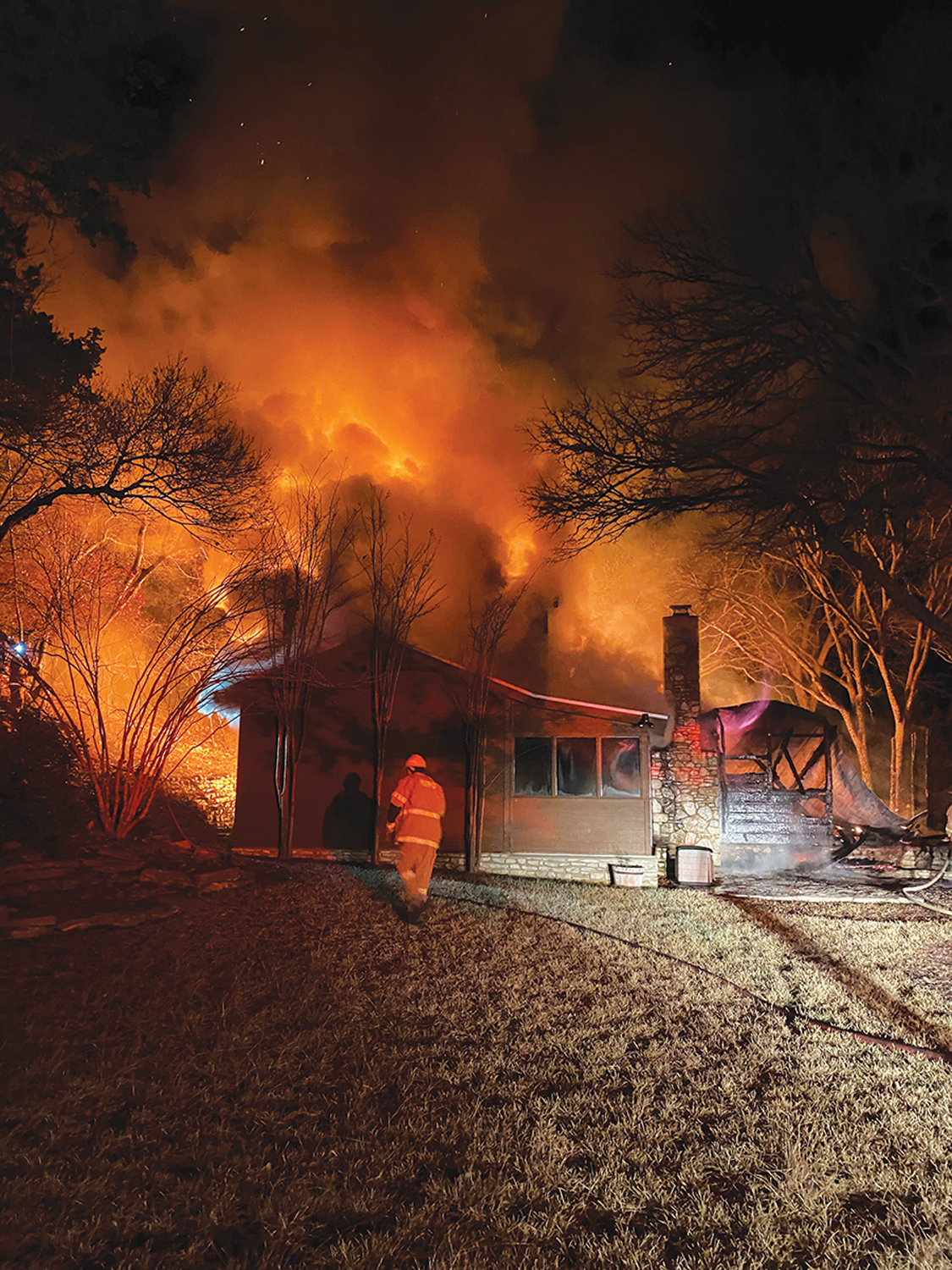
On Jan. 1, Mary and her husband lost their Hill Country dream home and two dear kitties to a house fire. Thanks to the efforts of four fire departments and at least 10 trucks, her neighbors and friends among them, the fire did not reach their guest house or barn and horses. She is living in their guest house for the next year while they rebuild. Words cannot express her gratitude at the outpouring of support she has received from friends, family, neighbors and the wonderful Rice Business alumni relations folks who sent a really nice care package. Their son, Carl, was visiting them from his Ph.D. studies in Berkeley and was their rock, remaining calm and supportive. Mary’s words of advice: 1) Check your appliance power connections — the cause of their fire was determined to be a crimped dishwasher power cord. 2) Get a fire and waterproof safe and put all of your vehicle titles, marriage and birth certificates, passports and important papers in it. 3) Don’t believe others when they say nothing is salvageable. Mary was able to recover most of her jewelry, the guitar she has played and carried all over the world with her since she was 16, their wedding album and her son’s baby album. Where there is hope and determination, a silver lining can be found. Anyone who has graduated from Rice Business knows the value of perseverance and positivity. Much love and gratitude to everyone who has helped her through this difficult start to 2023.
Image
Mary Bourne-Marth ‘87
1992
Tarig Anani ‘92
Tarig is happy to report that he moved to Dallas, Texas, and joined the McCathern Law Firm as a partner and head of their corporate department.
1993
Cathy Pereira ‘93
After a long, fruitful career in accounting both in Big 4 and industry, Cathy has changed focus and is now practicing enterprise risk management (ERM). She has been working for Mastercard in Europe for the last eight years, first as the regional controller and now as the risk program lead for the region. The COVID pandemic has been useful in terms of opening up possibilities to work in different locations and has resulted in Cathy and her family being able to move back to Madrid where she started her career 30 years ago. She would love to connect with classmates from the Class of 1993!
1997
Mark Williamson ‘97
After sourcing a Florida firm that produces green hydrogen via its own patented photobiocatalytic system, Mark is the clean energy partner at Techas Capital in Dallas.
Image
Mark Williamson ‘97
2003
Jeff Lanier ‘03
Jeff recently had his first book, “For the Minds and Wills of Men,” published in October 2022. The novel is a historical art mystery set in 1950s New York: a story of art, love, Cold War fear, suspicion and betrayal.
With post-World War II New York, 1950s avant-garde art world and the House Un-American Activities Committee hearings as background, the novel tells the story of abstract expressionism and mid-century American politics through the thrilling search for a stolen Jackson Pollock. The novel has recently won two Royal Dragonfly awards for first place historical fiction and first place new novel.
Image
Jeff Lanier ‘03
2008
Colin Caughran ‘08
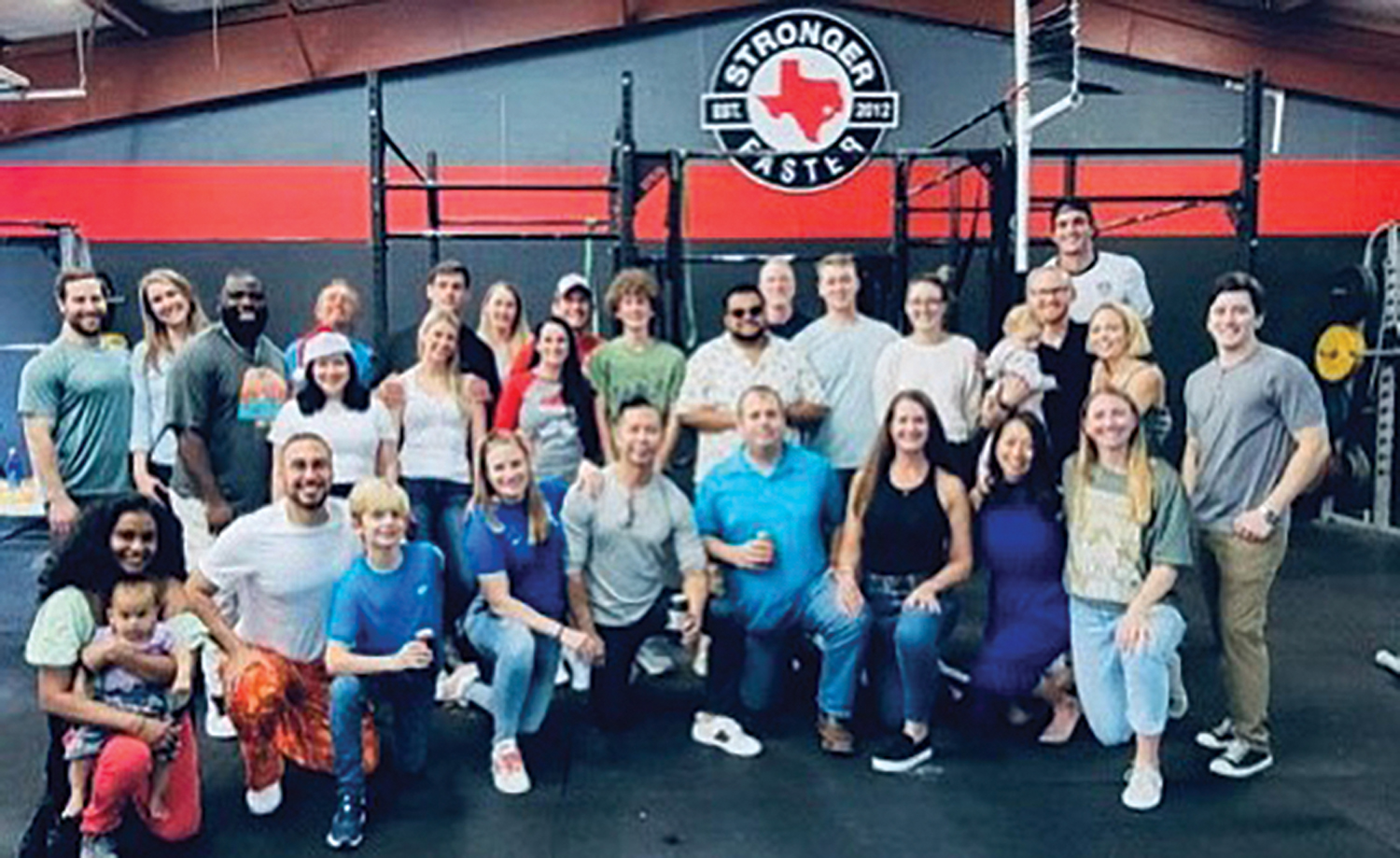
Colin and his wife, Lisa, dipped their toes into the entrepreneurship world, becoming small business owners after acquiring a strength and powerlifting gym, Stronger Faster Strength & Conditioning Gym, at the end of 2022. The facility is located in the Rice Military area off Washington Avenue and offers six group strength classes daily.
Image
Colin Caughran ‘08
Alejandro Cestero ‘08
Alejandro recently began a new role as general counsel at Virtuoso Ltd., the leading global network of agencies specializing in luxury and experiential travel, with more than 23,000 advisers. The company partners with over 2,200 of the world’s best companies and organizations ranging from hotels to cruise lines, airlines, tour operators, tourism authorities/governmental ministries, and many more. With headquarters in Fort Worth and offices across the U.S. and globally on six continents, he will be working remotely from Houston and plans to visit the headquarters at least once a month. Alejandro looks forward to seeing everyone soon.
Image
Alejandro Cestero ‘08
2011
Dylan Hedrick ‘11
With no opposition in the citywide election May 6, Dylan will soon begin his third and final term as city councilman for the city of Garland, Texas. It has been his absolute honor and privilege to serve the citizens of Garland over the past four years.
In his final two-year term, he is looking forward to continuing the implementation of the 2019 Bond Program, improving the condition of the streets and alleys, and building up the city through economic development initiatives.
Image
Dylan Hedrick ‘11
2013
Anthony Bilotto ‘13
Anthony is leading the product transformation for Wells Fargo Technology Infrastructure.
Image
Anthony Bilotto ‘13
Wendy Fong ‘13
Wendy has combined forces with Shelly Nixon as partners at talent and strategy consulting firm Chief Gigs. They work across industries from engineering to health care to help organizations solve people- and team-related challenges.
Image
Wendy Fong ‘13
Sara Hesson Wagner ‘13
Sara and her husband, Erik, recently launched a social marketplace for wine, called Sommly. Sommly has been featured in the Austin Business Journal, graduated from Texas Venture Labs’ accelerator and is a current participant in the Golden Ticket incubation program with The Capital Factory. The marketplace launched in October and has seen great traction between organic traffic and sales, as well as promotions and partnerships ranging from the State Fair of Texas, to Antonelli’s Cheese, to podcasts and catering events.
Image
Sara Hesson Wagner ‘13
2014
Laura Messier ‘14 and Ben Messier ‘15
The Messier clan is still living in Colorado, and they have moved to a new family home in Cherry Hills Village. Ben helped take his company, Vitesse Energy (NYSE: VTS), public and is now director of investor relations. Laura is now in new ventures business development at BPX (BP), where she is focused on energy transition.
2017
Margaret Schneider ‘17
Margaret presented best practices in three sessions on customer retention at CrowdStrike’s Sales Kick Off in Las Vegas.
2019
Sina Yilu ‘19
Congratulations to Sina, who welcomed his second daughter on Jan. 20!
Image
Sina Yilu ‘19
2021
Alex Bower ‘21
Alex recently accepted a new role with IBM as an associate partner. He works in IBM’s consulting business, supporting the federal health care account.
Ben Clemenceau ‘21
At the end of 2022, Ben received an early promotion to manager within Accenture’s strategy consulting practice.
Image
Ben Clemenceau ‘21
Robert Godinez ‘21
Robert was promoted to project execution manager. He works for Carbon America and leads some of the first carbon capture and sequestration projects in the United States.
Amr Radwan ‘21
After a journey toward improved mental and physical health, Amr will be opening Core360, a coreformer-based strength-building fitness studio a few blocks from campus at 2015 Southwest Freeway across from the Porsche dealership on Shepherd. The expected opening date is May 1, 2023.
Image
Amr Radwan ‘21
Casey Sherrod ‘21
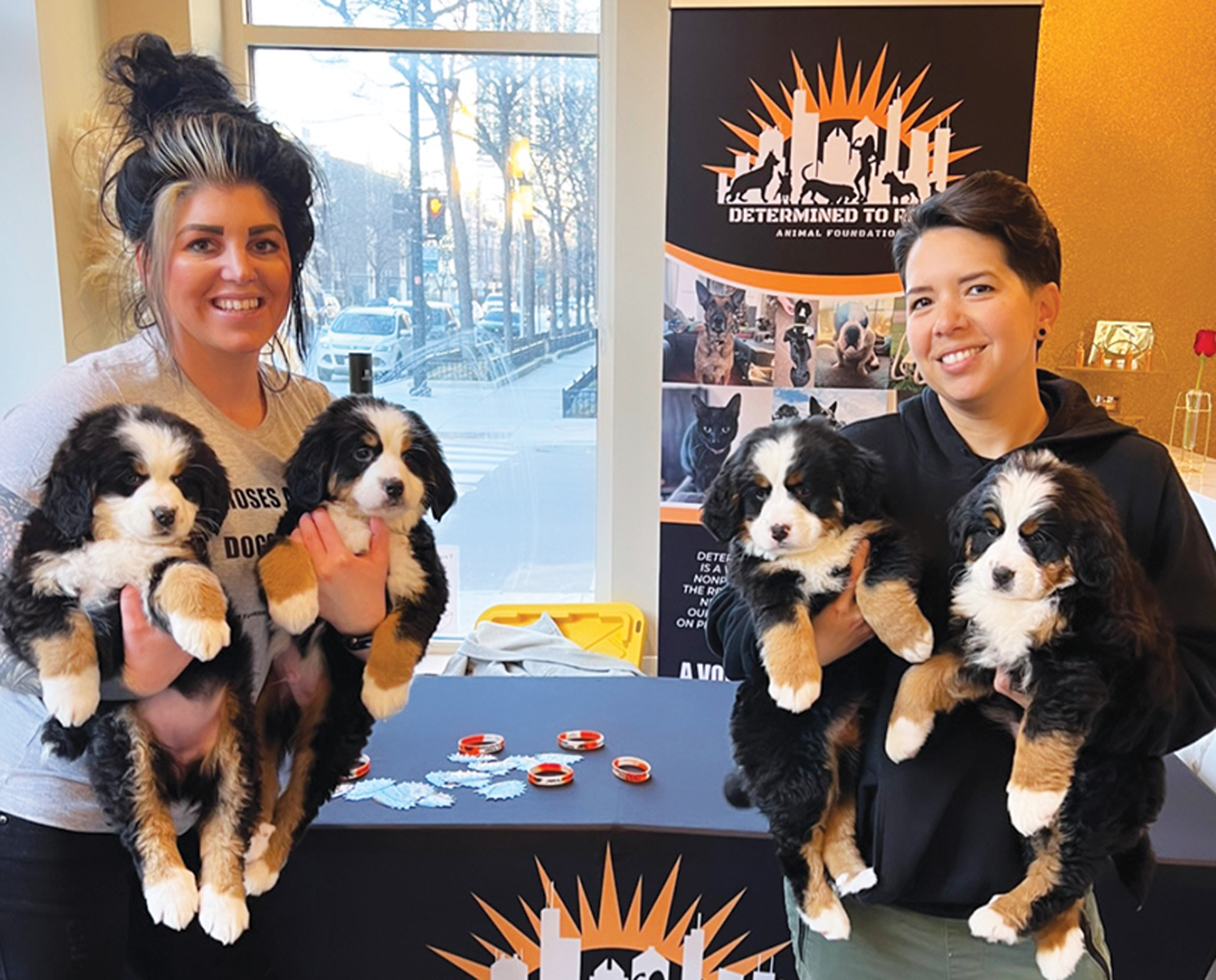
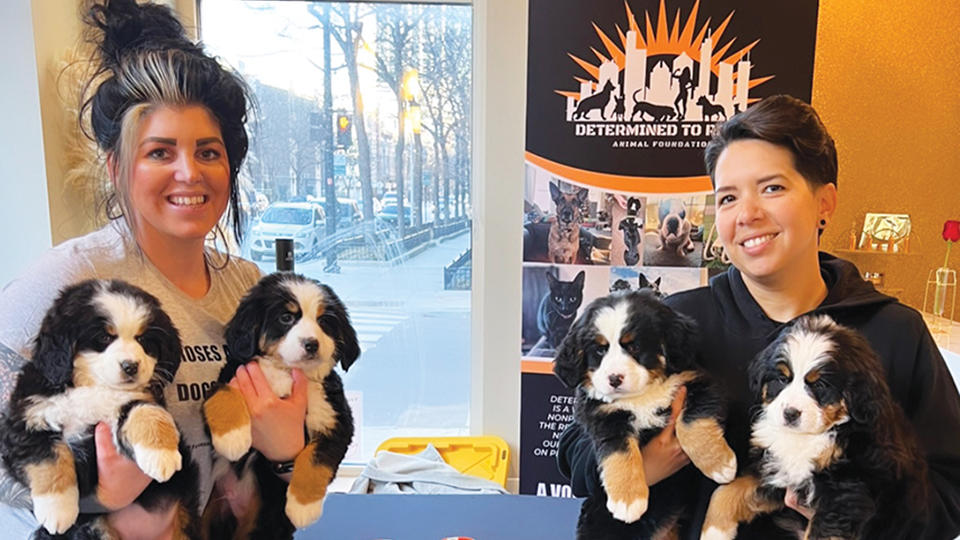
Casey and her spouse, Amanda, recently founded Determined to Rise Animal Foundation (DTRAF), a 501(c)3 nonprofit for animals with a focus on the rescue and rehabilitation of abandoned, neglected, abused and injured animals. Their mission is to educate the community on proper pet care and reduce the population of animals in the shelter. They have fostered hundreds of animals throughout the past decade and are finally at a point where they can help at a larger scale. DTRAF is currently based out of Mokena, Illinois, but they network and assist with the well-being of animals nationwide.
Image
Casey Sherrod ‘21
2022
Justin Chang ‘22
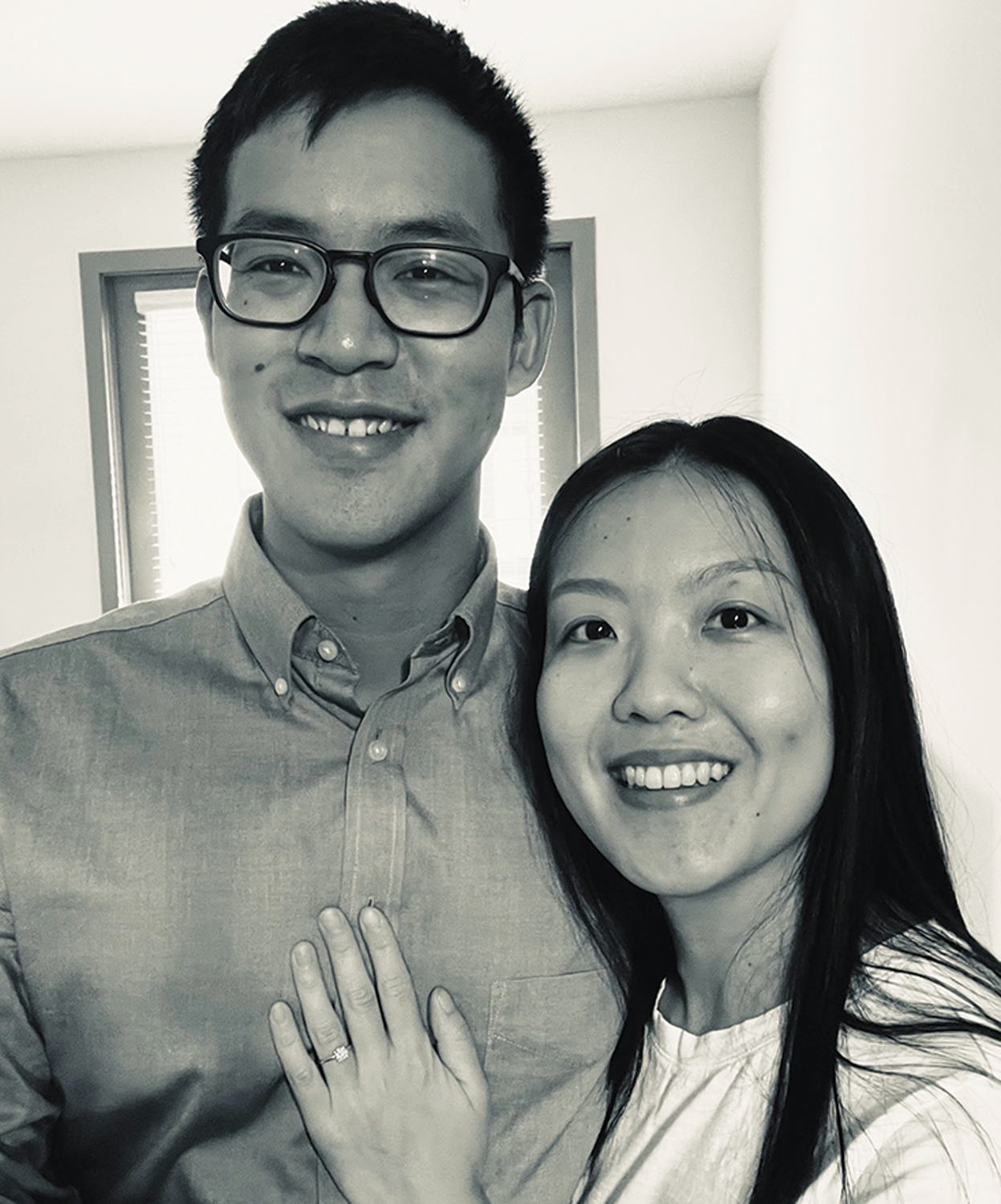
Congratulations to Justin and Joanna Wu ‘14, who were engaged in October 2022 and will marry in April 2023. Their wedding will take place in west Houston.
Image
Justin Chang ‘22
Aaliyah Gibbons ‘22
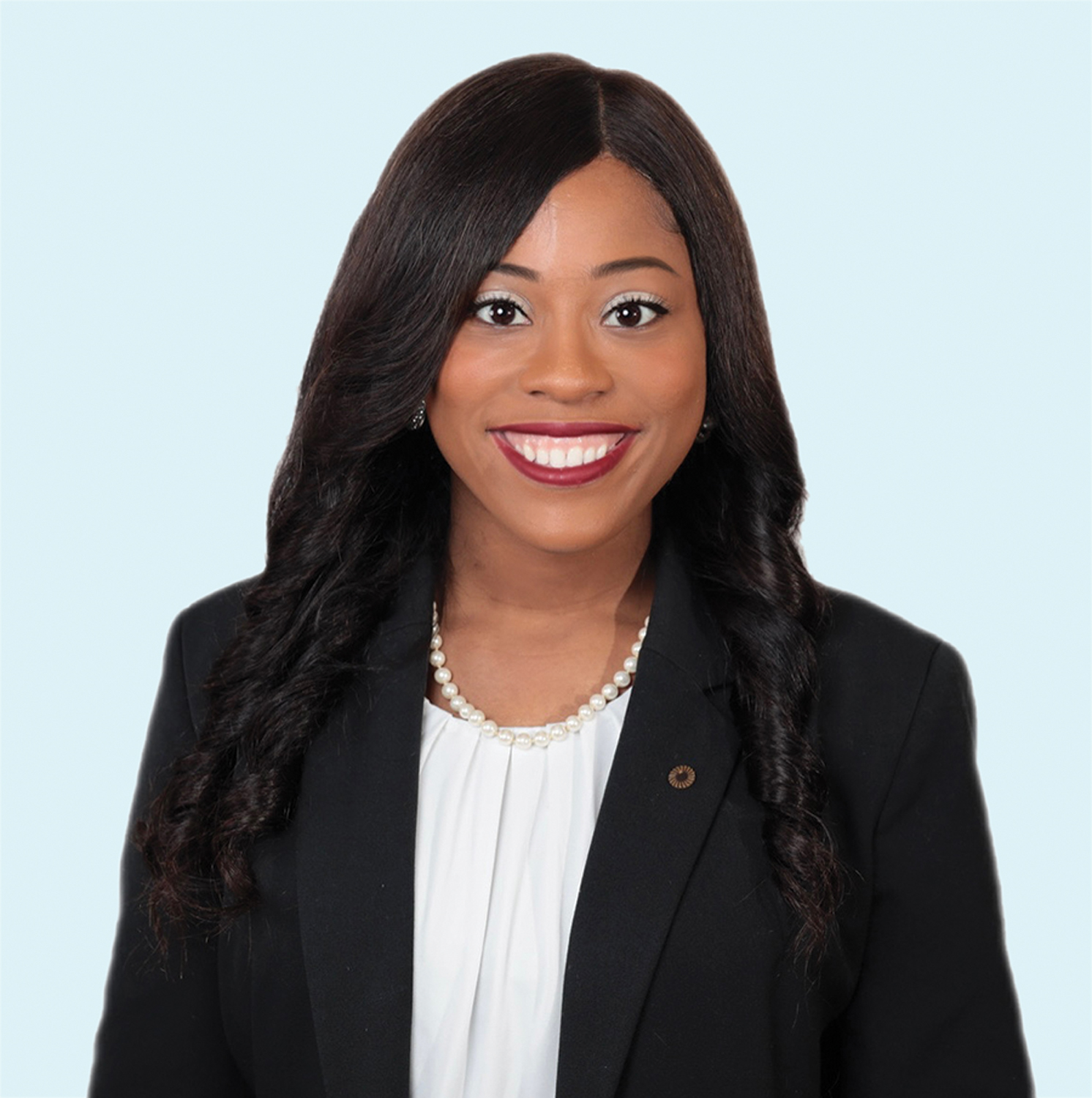
Aaliyah is grateful for her wonderful experience at Rice Business. She has learned so much about the business world beyond what she could imagine, which has made her view ideas and plans from different perspectives. Since graduating last year, she has been promoted to assistant vice president at her job. She is very grateful for the professors, the education and her cohort for making her experience amazing!
Image
Aaliyah Gibbons ‘22
Brett Harmeling ‘22
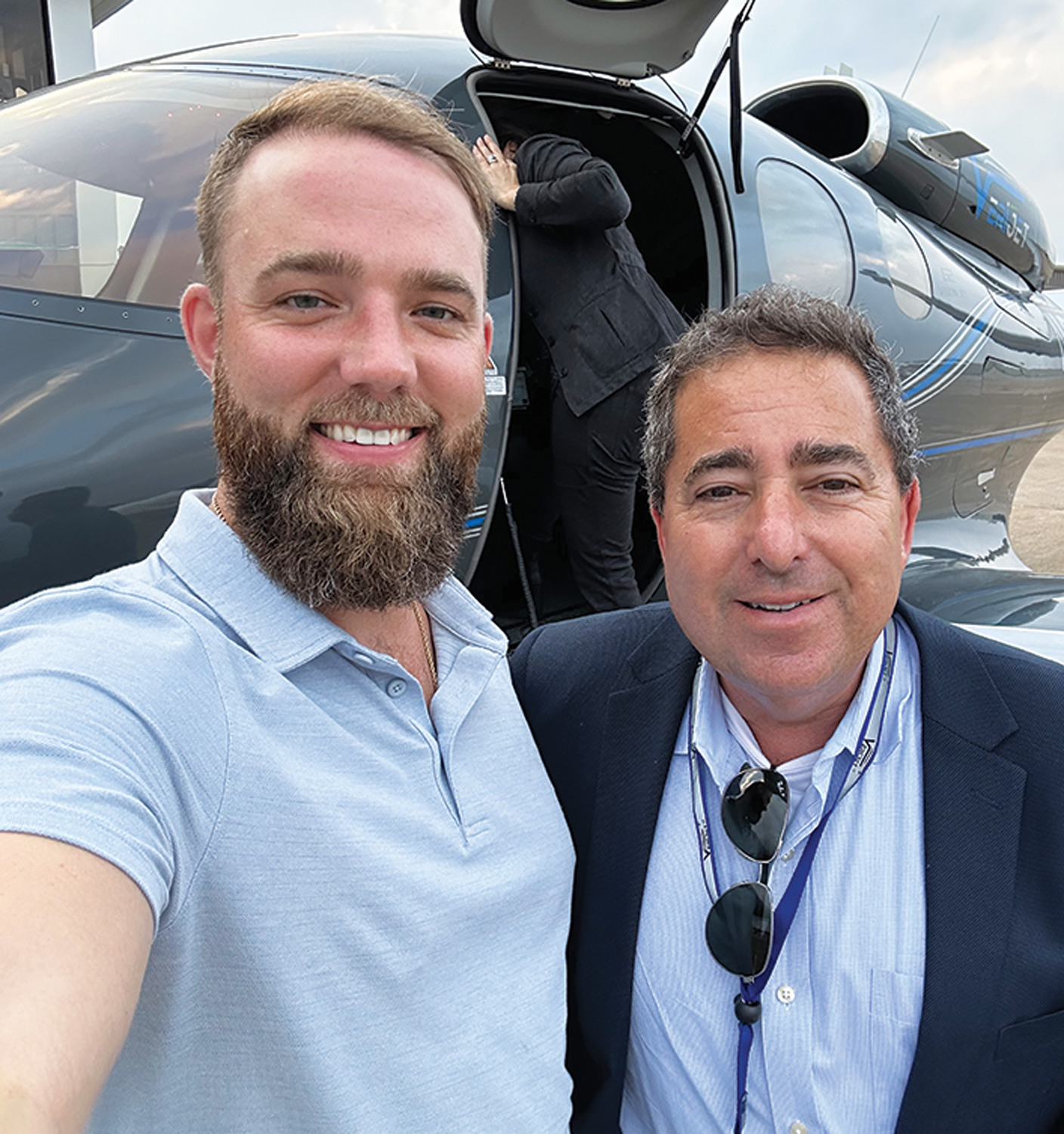
Brett is launching Verijet, a carbon-neutral, private aviation company in Texas that he hopes will disrupt how people travel by unlocking the fourth wave of high-speed travel.
Image
Brett Harmeling ‘22
Elizabeth Walton ‘22
Elizabeth started a new job as development associate with Kairoi Residential, where she’ll be focused on the design and construction of Waterline, a 1,022- foot-tall mixed-use tower in downtown Austin.
Chris White ‘22
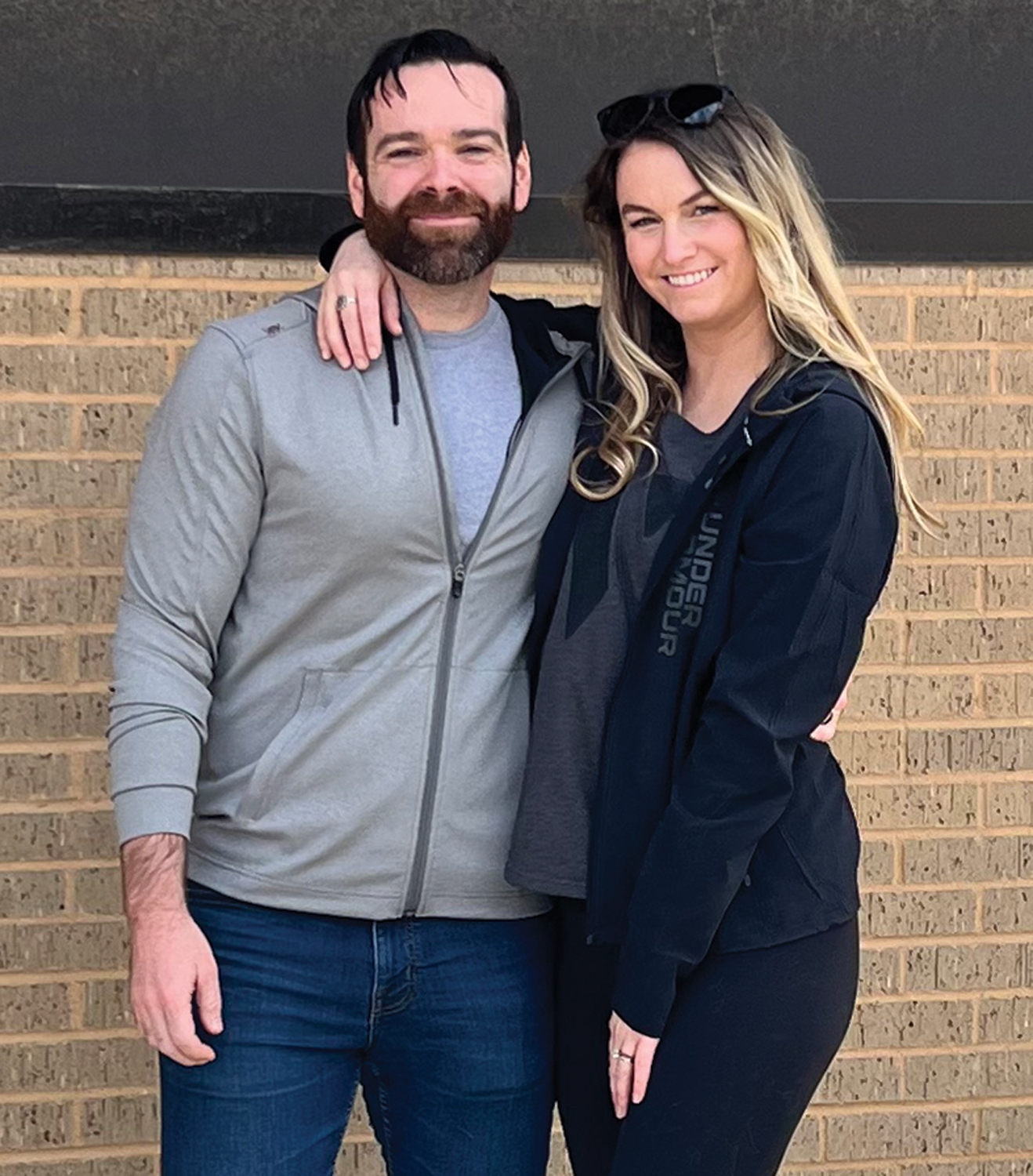
Chris and his wife, Britton ‘14, who are both Rice alumni, purchased a business toward the end of last year. They took ownership of Social Pack Dogs, a dog day care and boarding facility located in Carrollton, Texas, on Jan. 1 of this year.
Image
Chris White ‘22
Federico Zamar ‘22
Three months after graduation, Federico achieved his career goals by transitioning from engineering to corporate business, relocating from an oil service company in Midland, Texas, to an operator in Houston.
Time to check in with students from each of our degree programs to collect their final impressions before the end of the school year. What kind of music is motivating them these days — to study, work out, relax or get it done? Their varied responses give us a glimpse into the hearts and minds of our students.
“Roar” by Katy Perry
Taylor Anne Adams
Full-Time MBA ’23
Movie soundtracks by Hans Zimmer
Patrick Blonien
Ph.D. Candidate ’24
Tropical house music
Megan Lund
Professional MBA – Evening ’23
“We Will Rock You” by Queen
Rupesh Nigam
Executive MBA ’23
Mahler’s 5th Symphony
Sarah Wang
Undergraduate Business Major, Finance
Computational Applied Mathematics Major ’25
“Summer” by Hisaishi and the London Symphony Orchestra
“With every new program, student, staff and faculty member, I see incredible promise for the school.”
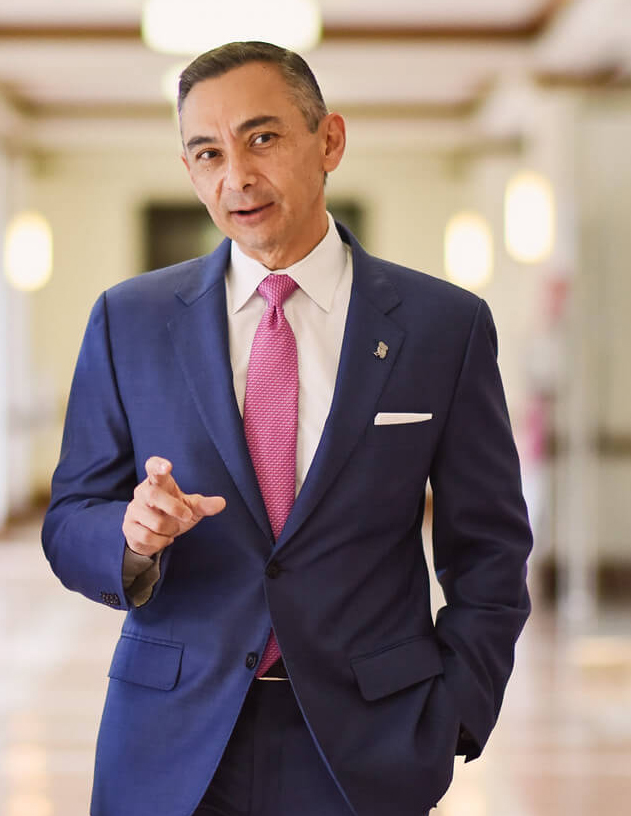
A letter from Peter Rodriguez, Dean of Rice Business
With every new program, student, staff and faculty member, I see incredible promise for the school and for the businesses and organizations our alumni will contribute to and lead.
Throughout the past six years, the one constant has been strategic growth. We’ve grown steadily while raising our standards in order to improve our degree programs and our scholarly impact on the world of business education. We’ve navigated issues like COVID and Hurricane Harvey and still managed to increase enrollment and add new programs to now include an undergraduate major, a Ph.D. in organizational behavior and a Hybrid MBA, and we’ve made plans to expand McNair Hall too.
While the final design for McNair is still being refined, we hope to break ground for the addition in early 2024 in order to accommodate our growth in enrollment along with the incoming faculty and staff who will support those new students.
With every new program, student, staff and faculty member, I see incredible promise for the school and for the businesses and organizations our alumni will contribute to and lead. It is through this magazine that we get to share that promise with you. Once again, I’m proud of the stories we are able to tell.
I hope you enjoy this issue and feel proud of your connection to Rice Business and to all the incredible people who teach, learn and work at your school.
How one business plans to remove 1 gigaton of CO2 from the atmosphere.
Alexander Gelfand
Since launching in 2017, Syzygy Plasmonics has raised $106 million in capital, largely from some of the biggest players in the global energy and chemical industries. Their collective goal: Remove a gigaton of carbon from entering the atmosphere by 2040.
When Suman Khatiwada and Trevor Best decided to call their cleantech startup Syzygy Plasmonics, they knew the seemingly made-up name would meet resistance from the folks in marketing.
“But we didn’t care,” Khatiwada says from the company’s headquarters, located in a nondescript office park just a few miles south of Rice University.
Image
Murtuza Marfani ’19
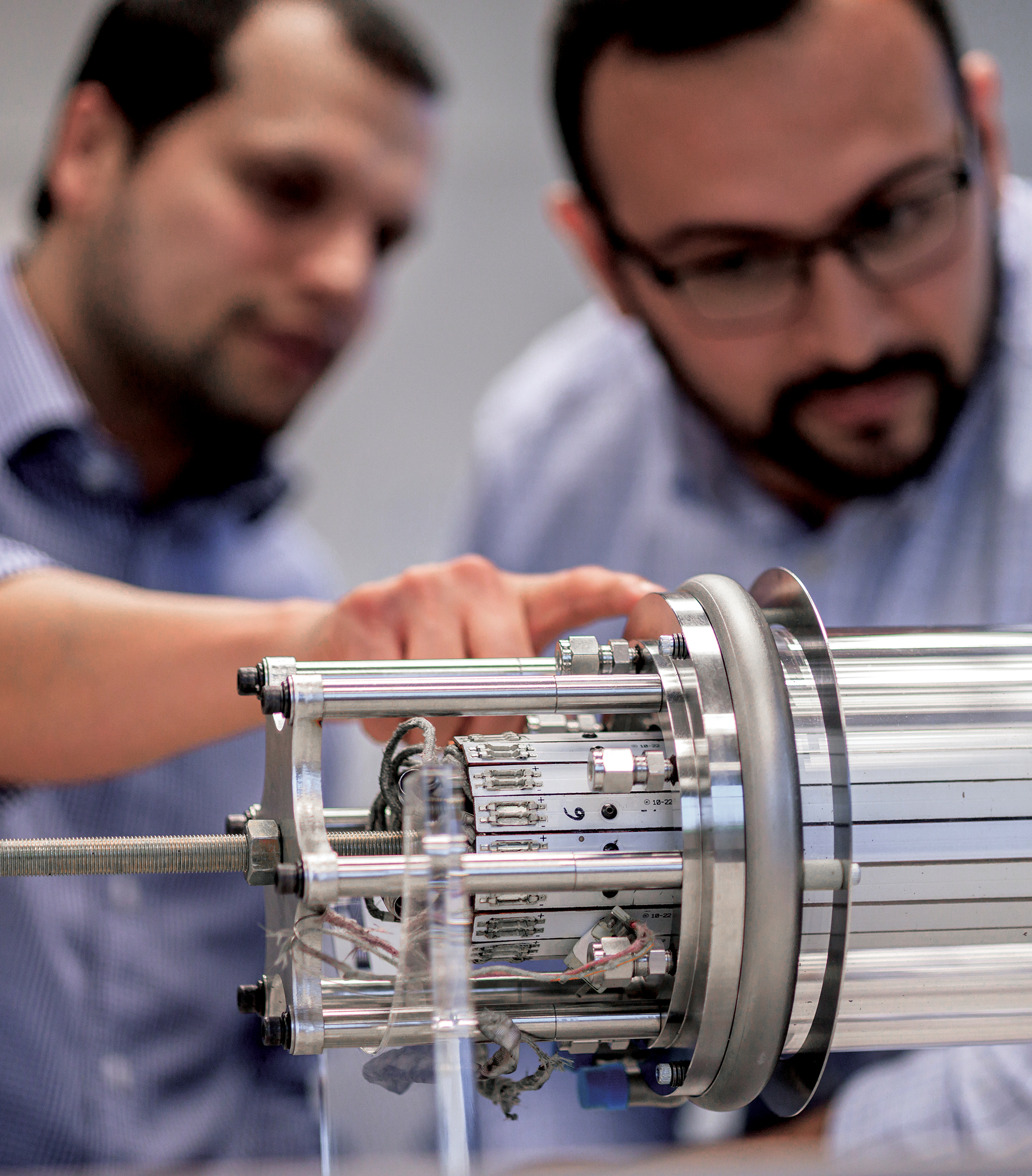
For one thing, there was nothing made-up about it. Though plasmonics might not sound like a real word, it in fact refers to a core element of the company’s technology. Similarly, the term syzygy describes an alignment of three or more celestial bodies, though in this case its three y’s represent the alignment of energy, technology and sustainability — the animating ideas behind the startup, which uses science and engineering to remove carbon emissions from industrial chemical processing.
And in a crowded cleantech market, having an unusual name turned out to be helpful.
“Once people got it, they seemed to gravitate toward it,” says Khatiwada, who earned a Ph.D. in materials science and nanoengineering at Rice in 2013 and is now Syzygy’s chief technology officer. (Best is CEO.)
That may be an understatement. Since launching in 2017, Syzygy has raised $106 million in capital. Much of that comes from strategic partners that represent some of the biggest players in the global energy and chemical industries, including BP Ventures, Chevron Ventures and LOTTE Chemical.
Their interest, explains VP of finance and corporate development Murtuza Marfani ’19, stems from Syzygy’s attempt to decarbonize the “trillion-dollar value chain” of the chemical industry. The first link in that chain involves turning feedstocks such as petroleum and natural gas into base chemicals like hydrogen and ammonia, which can be used to manufacture everything from fuels and fertilizers to plastics and cosmetics.
As important as that value chain is — and much of modern life depends on it — it is also highly carbon intensive. Industrial chemical processing relies on catalysts to increase the rate of chemical reactions. But conventional catalysts require huge amounts of heat and pressure to do their work (temperatures inside a chemical reactor can exceed 1500° F). And the easiest and cheapest way to generate that heat and pressure is to burn fossil fuels.
Image
Rendering of the Rigel photocatalytic reactor
As a result, chemical production currently accounts for 1 gigaton, or roughly 3.6%, of global greenhouse gas emissions. Reducing those numbers would represent a significant step toward combating climate change and a major boon to energy companies and chemical manufacturers that are navigating the transition to a low-carbon economy.
Syzygy has found a way to slash emissions from this hard-to-abate sector. Using novel light-driven catalysts developed at Rice and an electrified, light-powered reactor of its own devising, the startup can process chemicals such as hydrogen and ammonia without having to cook them at high heat and pressure. If the reactor draws electricity from renewable sources like wind or solar, fossil fuels can be cut out of the picture entirely.
Just as importantly, when operating at commercial scale, Syzygy’s clean approach to chemical processing promises to compete on price with conventional methods — a key factor when courting venture capitalists and industry partners whose eyes are focused on the bottom line.
Syzygy will enter field trials of its system in the U.S. and Asia this year and intends to prevent 1 gigaton of carbon dioxide from entering the atmosphere by 2040. But the company’s leadership is already thinking even bigger.
“For us, the ultimate ambition would be to completely eliminate emissions from any refinery complex,” says Marfani. “If we are able to get there, the world has a fighting chance against climate change.”
Syzygy was born when Khatiwada and Best both worked for Baker Hughes, one of the world’s largest oil field services companies — Best as a manager, Khatiwada as a research scientist. But Khatiwada, for his part, was no stranger to cleantech.
While earning his doctorate in materials science and nanoengineering, Khatiwada took classes on the side at Rice Business and participated in business plan competitions run by the Rice Alliance for Technology and Entrepreneurship. He now mentors cleantech founders at the Rice Alliance Clean Energy Accelerator.
“I wanted to see what MBAs actually learned,” he says.
He caught on fast: In 2013, with support from the alliance’s OwlSpark Startup Accelerator, Khatiwada and some friends founded Big Delta Systems — now called EnPower — a startup devoted to commercializing the cutting-edge lithium-ion battery technology they had developed at Rice.
At Baker Hughes, Khatiwada and Best discovered a shared interest in new, sustainable business models and eventually decided to find one they could develop on their own.
Image
Suma Khatiwada ’13
They began by scouting the latest technologies to emerge from top research universities, applying a framework they called TMI, for “technology, market, impact.” Their goal was to identify something that was based on solid fundamental science, had global market potential and could contribute to the greater good.
In 2016, the two found what they were looking for. That year, Rice researchers Peter Nordlander and Naomi Halas unveiled a new breed of photocatalyst that could drive chemical reactions by harvesting energy from light. By using so-called plasmonic nanoparticles to energize other nanoparticles made from traditional chemical catalysts, Nordlander and Halas discovered they could make and break chemical bonds without high pressures and temperatures. And because their novel photocatalysts could be “tuned” to many different chemical reactions, they had any number of potential applications.
“It checked all the boxes,” says Khatiwada, who set up a meeting with Nordlander to pitch the idea of pairing the researchers’ invention with a fully electrified, light-driven chemical reactor.
Nordlander was sold, as was Halas. The two joined Khatiwada and Best as co-founders, and Syzygy Plasmonics was born.
According to Marfani, who worked as a derivatives trader and investment banker before joining Syzygy in 2021 and who holds a B.A. in mathematical economic analysis from Rice, the startup will generate revenues by selling its reactors, licensing its technology, and providing service and maintenance to its customers, who will be able to use the platform as they like.
The startup’s strategic partners have already been quite clear about the applications they are most interested in, however. And Syzygy has been quick to respond.
Image
Initially, says Khatiwada, the company’s goal was to extract hydrogen from methane. In addition to being the most abundant element in the universe, hydrogen produces zero emissions when burned or used in fuel cells and is regarded as one of the building blocks of a low-carbon future. Unfortunately, the conventional method of separating hydrogen from methane generates large quantities of carbon dioxide, some of which comes from burning fossil fuels and some of which comes from the process itself. Using its electrified reactor, Syzygy reduced those emissions by 43%.
Over time, however, the startup’s industry backers let Khatiwada and his colleagues know that they were more interested in making hydrogen by splitting, or “cracking,” ammonia. Although it is chock-full of hydrogen, ammonia can be stored and transported far more easily and cheaply, making it a convenient hydrogen carrier. The chemical reaction that separates hydrogen from ammonia does not generate any CO2. And depending on how it is treated, ammonia itself can serve as a low-emissions or zero-emissions fuel.
A grant from ARPA-E (Advanced Research Projects Agency–Energy) allowed Syzygy to develop an ammonia-cracking process, and last fall the company announced that it was partnering with international chemical heavyweights LOTTE and Sumitomo to deploy and test an ammonia-cracking reactor powered by renewable energy in South Korea later this year. Khatiwada expects this upcoming field trial to produce perhaps 250 kilograms of hydrogen per day, whereas a large conventional plant might turn out 50 to 60 tons of the stuff. But if things go well, he anticipates ramping up to commercial-scale production within two to three years.
Industry investors also signaled interest in using Syzygy’s multipurpose platform to turn CO2 into something useful. With support from the National Science Foundation, the startup developed a method of transforming CO2 into syngas, a key ingredient in synthetic fuels and other products. This past January, the company announced that it would launch a field trial of the process in North Carolina aimed at making low-carbon fuels. If it succeeds, Syzygy could help decarbonize the transportation sector — which generates nearly a third of all U.S. greenhouse gas emissions — by replacing conventional jet fuel, diesel and gasoline with sustainable, CO2-derived fuels.
Syzygy is also pursuing efforts to crack hydrogen sulfide — a smelly, toxic chemical produced by petroleum refineries and sewage treatment plants — and synthesize ammonia. Making ammonia in Syzygy’s electrified reactors would allow customers to manufacture the chemical in places like North Africa and Australia, where wind and solar power are cheap and plentiful, and then ship it to markets in Europe and Asia, where it could be converted into hydrogen and other useful substances.
Taken together, these various initiatives would allow industry to reduce emissions without paying a green premium — and allow Syzygy and its allies to make money while mitigating climate change.
Rice Business launches a hybrid MBA – and the market is ready.
Larry Clow
In July, Rice Business will welcome its first cohort of students to the newly launched Hybrid MBA program. Dean Peter Rodriguez discusses the decision to build the program — and why the market was ripe for it at Rice.
Professionals seeking an MBA appreciate and value in-person instruction but require flexibility to accommodate work schedules, travel and family life. “Our charge, and our challenge, was to figure out how to balance those often opposite desires,” says Peter Rodriguez, dean of Rice Business. “We knew that Rice could provide high-quality remote education and high-quality in-person instruction through a new Hybrid MBA program.”
The Rice Business Hybrid MBA, the first of its kind at the university and in the state of Texas, is a 22-month, 54-credit program that begins with a weeklong in-person immersion. After that, classes meet once per month on campus, and in the weeks between, they meet online. Tuition includes residence at a hotel close to campus to help foster connections with peers and faculty while students work and study in McNair Hall.
Rodriguez recently spoke with us about the Hybrid MBA program, how it will expand our impact both nationally and regionally, and the value of networking across professions and MBA programs.
Hybrid MBA
a Q&A with the Dean
Image
What made this the right time to launch the Hybrid MBA program?
It’s the right time because people have adapted to the great work-from-home experiment, which coincided with the great online education experiment during the Covid-19 pandemic. What we learned is how many students would benefit from and enjoy a hybrid program. We also knew we could deliver it very well and thought it would help us adapt to the market. People have much more flexibility in being able to work wherever they want. One hypothesis is that they would be even more interested in a face-to-face traditional education, but the truth is they want a little bit of flexibility everywhere, and that includes their education. What we learned from Covid and from extensive market research is that a once-per-month program — with online delivery in the weeks between — would be a great combination to add to our portfolio of programs and help us reach more students outside of the Houston region.
When it came to designing this program, what lessons did you take from the great work-from-home and online education experiments?
One of the things we learned — and it’s not just from that experiment, but also from our fully online program that launched in 2018 — is that people highly value face-to-face, in-person meetings. But it’s difficult for a lot of our target population to be present in those meetings. Our new program has all the online components, which can be live or asynchronous, on Thursday evenings. It’s outside of working hours, and it’s only one evening, so people can pace their week and set aside time. One of the questions we had was, “who’s going to be most attracted to this program?” and our early hypothesis was that it would be students who live far away from the Rice campus. But we also found that work schedules are a challenge, even for people who live within a few miles of campus, so the idea was appealing to local students as well.
How does this program position Rice in the national business school landscape?
One of the things that makes you more visible in the national landscape is having student populations from lots of different geographies and many industries. Being able to reach more students who are part of the expansion of high-tech and software-related jobs in Austin, or part of the diverse manufacturing and service economy in Dallas, will help us. We’ve also had students from Mexico and from across the U.S. inquire. In the MBA@Rice program, we have students from Boston, Los Angeles, New York and other cities in the U.S. That has added to the quality of discussions we have and to the geographic expansion of the Rice Business network. I think that will help us to serve existing students in our other programs because there will be alumni and other students that they can connect with in these vibrant commercial centers, and not just in Houston. Working professionals bring contemporary problem sets from the organizations they work in, and we’ll be able to bring in students with those experiences from great organizations around the country and the big metro areas of Texas.
The program emphasizes the two weeklong immersion opportunities on campus and the opportunity to participate in the Professional MBA-Weekend electives. What makes those immersive weeks a core part of the program?
What we find is that some really special things happen when you spend more than 48 hours together. The weeklong immersions and the Professional Weekend MBA electives get people much more closely associated and comfortable as they learn more from each other, and they set the groundwork for having deeper discussions. That kind of connection enriches everyone’s education. It’s important to share meals together, to share ideas between class and down time together, to share study time together, and to be removed from some of the challenges of our daily lives. It’s also important for them to do that with our faculty.
So much of professional life is about making those face-to- face connections.
You’re 100% right. In our lives, we meet a lot of people who do what we also do. It’s harder for engineers to know physicians and salespeople and people working for not-for-profits.
We just don’t intersect as often with people outside of our own industries. Intentionally creating those new connections is valuable to our students and helps deepen their understanding of global business.
The program ends with the weeklong Global Field Experience opportunity. What kind of benefits do students get from that week out in the field?
A component of any high-quality business education is the ability to work in national and global contexts other than your own. It isn’t that business principles don’t cross borders well. Most of them do, but the context in which businesses conduct them and the values that people have across different cultures vary. A lot of the ways we think about problems and issues exist within our own culture and environment. What we want to do is ensure that every student has a chance to test those assumptions and see where they no longer hold true or how they’re challenged by an environment that’s highly relevant but may be very different than their own.
Image
In terms of the curriculum, are there any plans to adapt it or introduce new elements specific to the Hybrid MBA program?
We plan to introduce new elements, but they’ll be available to both the Hybrid MBA and weekend MBA programs. We will be delivering the in-person portion of this program on the same weekends as our existing weekend programs so that we can give both groups of students more electives. We’re offering some new energy transition electives that focus on decarbonization and optimizing the use of different energy sources, particularly renewables, in operations, as well as electives related to the business of health care.
What are you hearing in terms of feedback so far from applicants or people who are interested? What’s the buzz that’s building around the program?
There’s some really positive early buzz. Within one month of the program’s launch, we received hundreds of requests for further information. Applications have started coming in, and for the most part, they seem to be students who were not already planning to come to Rice. We have a newer audience that we had not reached previously. For example, we’re hearing more from medical professionals interested in the program and from prospective students in other cities.
What most excites you, personally, about the Hybrid MBA?
I’m most interested in reaching students whom we have missed before — students who have not been able to take part in a Rice Business education. We have some students who live in Houston, but they often have to work for extended periods far away. Sometimes that’s just in Midland or Odessa, but it could also be the Middle East, and they’ve also expressed an interest in the program. This flexibility means that even if their life changes during the two years of the program, they should still be able to participate fully.
I’m excited about what it will do to our weekend offerings in general. We will have a very broad, diverse group of people from many areas participating at Rice, and that’s exciting. Not long ago, our reach was quite good, but it was relatively narrow geographically. Now we can really expand. I’m excited about the students and the organizations they represent. I’m excited about the ways it will help our faculty become even better teachers. Students and faculty will get to have conversations with people who think about problems from different vantage points — and that will be wonderful for the Rice Business community at large.
Why leaders are juggling planet, profit and people to build better businesses.
Deborah Lynn Blumberg
The discussion about brand purpose is complicated. Our experts explain why it has become a juggling act.
Outdoor clothing retailer Patagonia is perhaps one of the best examples of a company synonymous with purpose. Soon after Yvon Chouinard founded Patagonia in the 1970s, he realized the climbing spikes he was making hurt rock surfaces. So, he created a more environmentally friendly alternative. He also started supporting “clean climbing,” building awareness about how climbers can take better care of the planet.
Most recently, Chouinard and his family turned over ownership of Patagonia to a trust and non-profit organization. All profits will fund efforts to help with climate change and wilderness preservation. Chouinard said in a letter on the company’s site that “instead of going public” by selling shares to investors, “you could say we’re going purpose.”
More and more of today’s companies are embracing this type of purposeful stance. They’re leaning toward the idea that a successful company is more than a profitable bottom line. Businesses are going back to the basics by redefining why they exist and how they want to make an impact in the world past profit. Some companies have adopted “purpose as a business driver” as a strategic priority, rather than just a nice-to-have.
Image
But the conversation around purpose is complicated. Often the term “purpose” is used synonymously with “brand activism” — and there are important differences between the two. First, a company’s core purpose answers the question, “What impact are we trying to make in the world?” A company’s purpose is often inclusive of its values and impacts the company’s approach to corporate social responsibility — an effort on the company’s part to do its best for its employees, its customers, its investors, its supply chain and even the planet and the communities in which it operates. But those values don’t necessarily work their way into marketing or an externalized “voice” or point of view on broader issues. Brand activism, on the other hand, is the use of the brand to comment on social, political or global issues that the brand believes are important.
Indeed, there is some research that shows that, in theory, global consumers are more likely to trust, buy, champion and protect companies with a strong purpose.
“Some consumers want to know that their money is going toward a product with a bigger purpose, whether it’s sustainability, ethical supply chains or community impact,” says Duane Windsor, Rice Business Lynette S. Autrey Professor of Management.
One study by communications agency Zeno that evaluated 75 brands found that when consumers think a brand has a strong purpose, they’re four times more likely to buy from the company, six times more likely to protect it in the event of a misstep, and 4.5 times more likely to recommend it to friends and family.
In practice, however, factors like price and quality still come out on top when consumers make purchase decisions. A Deloitte study of 11,500 global consumers across industries found price and quality at the top of purchasing criteria between 61% and 86% of the time.
So what’s a company to do?
In addition to Windsor, we spoke with Vikas Mittal, Rice Business J. Hugh Liedtke Professor of Management; Doug Schuler, professor of business and public policy; and Bethany Andell ’01, CEO of branding and culture-building company Savage Brands, about the latest trend of companies stepping back to rediscover and define their purpose — and the ways in which brand activism does (or doesn’t) increase the bottom line.
Is Conscious Capitalism Good for Business?
Conscious capitalism involves what businesses want for others, not what they want from them, says Andell. “We don’t typically have business conversations that start from that place,” she adds. Conscious capitalism — a relatively new term in the business world — flips the conversation.
Proponents believe businesses need to act ethically by equally serving the interests of all stakeholders — not just management and shareholders. Companies that embrace conscious capitalism take a human-centered approach and hire based on values rather than solely on skills.
“You’re changing the legacy, the ‘profit first’ way of thinking, and remembering that profit is the outcome of a good business,” Andell says.
Instead, you approach your business from a conscious place of care for each of your stakeholders and look at your company as a living, breathing entity. Leading with purpose delivers better performance, and better performance results in higher quality and better profits, Andell says.
Conscious companies start out by creating a map that outlines their stakeholders (customers, employees, shareholders, and suppliers) and shows how they’re interdependent. Business strategy is then based on decisions that satisfy the highest number of stakeholders, whenever possible — creating a win-win vs. a zero-sum model, she says.
“The sustainability of the organization is a result of your employees staying and being safe, your customers wanting to come back, and suppliers wanting to work with you,” according to Andell.
Image
How much does ESG play a role?
ESG is the acronym for environmental, social, and governance. It is a way in which companies evaluate the robustness of their governance mechanisms and how well they manage their environmental and social impacts. ESG responsibility is difficult to define, says Windsor, especially when it comes to who should cover the costs. For example, in recent years, major airlines have offered customers the option of paying more for their ticket to help offset the carbon emitted by their flight. “Is that my responsibility or the airline’s though?” Windsor asks. “Maybe the company ought to take it out of their profits.” Often, even if consumers have strong convictions, in the end, they’re unwilling to pay more. “The customer may well want green products,” says Windsor. “The question is how much are they willing to pay for greener products? The producer wants the customer to pay for the enhancement. The customer wants the enhancement without paying for it.” One danger of sustainability promises, however, is “greenwashing,” which occurs when a company touts their sustainability through marketing — leaning toward brand activism — but isn’t doing anything meaningful toward helping the environment.
For example, consumer goods company Unilever drew criticism from a shareholder after it declared Hellmann’s mayonnaise as a brand that fights against food waste. The shareholder said management had “become obsessed with publicly displaying sustainability credentials at the expense of focusing on the fundamentals of the business.” Mittal agrees with the criticism, and cites his research, which has found that ESG-focused companies do not necessarily do better in the market than other organizations. Mittal suggests that Unilever is actually lagging its peers as a result of putting ESG ahead of profits.
Must leaders always be an extension of the brand?
CEOs and other leaders often struggle when it comes to publicly weighing in on social, national or global issues. On the one hand, employees may demand it, Schuler says. On the other, speaking up risks alienating some customers.
“Maybe what companies should be doing is thinking about how these social trends might be associated with either their product or their general reputation,” he says. “Are there certain issues where perhaps there’s some advantage?”
For example, Patagonia leaders speaking up on environmental issues important to their core customer base can serve their brand well.
But generally, Mittal says, personal opinions on issues and political agendas should remain private. “For a CEO to pick sides is eventually a losing battle.” The real test of a CEO’s strength is to stay neutral even when provoked by employees or external forces, he adds.
Andell, for her part, doesn’t make political statements.
“I believe very much in diversity, equity and inclusion,” she says. “All voices and perspectives are important, so, I don’t take a specific, public stand on political issues.” Instead, she would rather demonstrate her stance through action, or rather inaction — for example, by choosing not to work with companies that do not share her company’s values.
What should be at the center of my company — my people, the planet or company profit?
Mittal argues that companies that build a brand around putting employees first are misguided. The academic literature shows no consistent support for employee satisfaction correlating with a firm’s financial performance, according to Mittal. However, there’s consistent evidence that customer satisfaction and financial performance are linked. On the other hand, Andell argues that engaged employees deliver a better customer experience — the interdependence between the two makes sense in service industries, for example, in which the customer experience is part of the product.
“At the end of the day, customers are the largest and most stable source of cash flow for any company,” Mittal says. “A brand can only be healthy if it starts with a customer focus.”
It is possible to be customer-focused while holding true to your values around your employees or ESG initiatives, he suggests, but if key customer needs aren’t met — like quality and price — don’t expect an uptick in profit solely as a result of happy employees. Any initiatives “have to improve customer value first and foremost,” Mittal says.
Image
For example, airlines have worked toward paperless ticketing because it’s more convenient for passengers and helps fulfill their purpose of providing a seamless travel experience. But it also helps the environment. For a company that makes goods, a customer-focused approach to sustainability would be to invest in materials that don’t need to be recycled rather than creating objects that are wasteful and putting the added burden on customers to recycle, he adds. As another example, French cosmetics giant L’Oreal recently unveiled a new handheld makeup applicator that helps people with limited mobility or tremors apply makeup on their own. It’s a great example of a company using their customer focus to have purpose, Mittal says.
The debate around purpose continues and brings up critical questions in today’s competitive business environment. Doing the hard work of rediscovering and shaping one’s purpose and values is mission critical. “Any business that wants to still be here in 20 years is going to have to take a hard look at their character,” Andell says.
But when purpose veers toward activism, tread lightly. According to Mittal and his research, “Customers’ perceptions of a brand’s political activism do not translate into higher purchase intention or customer satisfaction,” he says, “and they hurt consumers’ willingness to pay for the brand.” In short: If the goal is profit increase, a company needs to place customer values and needs, including quality and price — not activism — at its center.



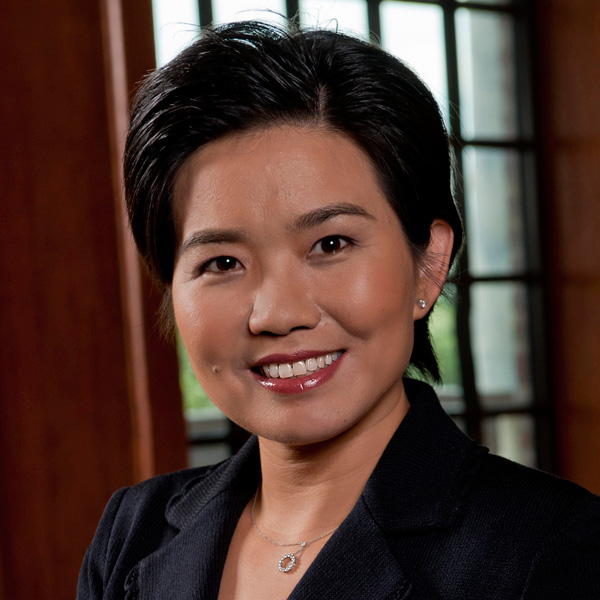 Yan "Anthea" Zhang, the Fayez Sarofim Vanguard Chair Professor of Strategy, assumed her role as president of the Strategic Management Society (SMS), which consists of over 3,000 academics, business practitioners and consultants focusing on the development and dissemination of insights on strategic management. Her new position comes after being named a fellow of SMS in 2021, a distinction honoring members who have made significant contributions to the theory and practice of strategic management.