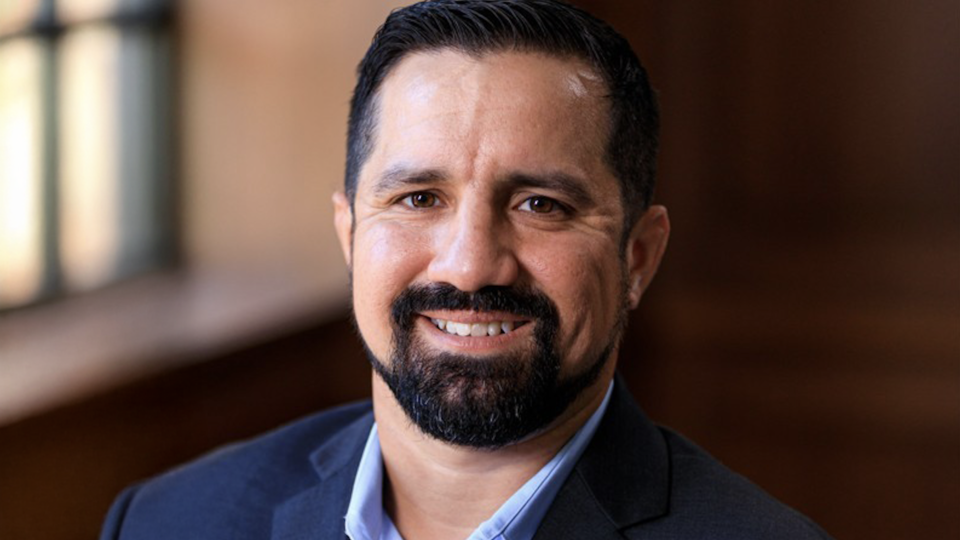
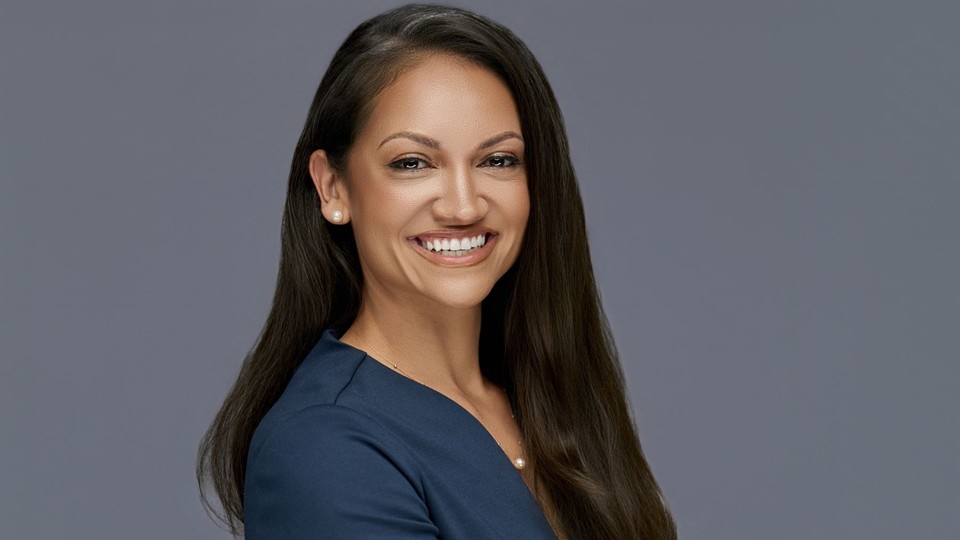
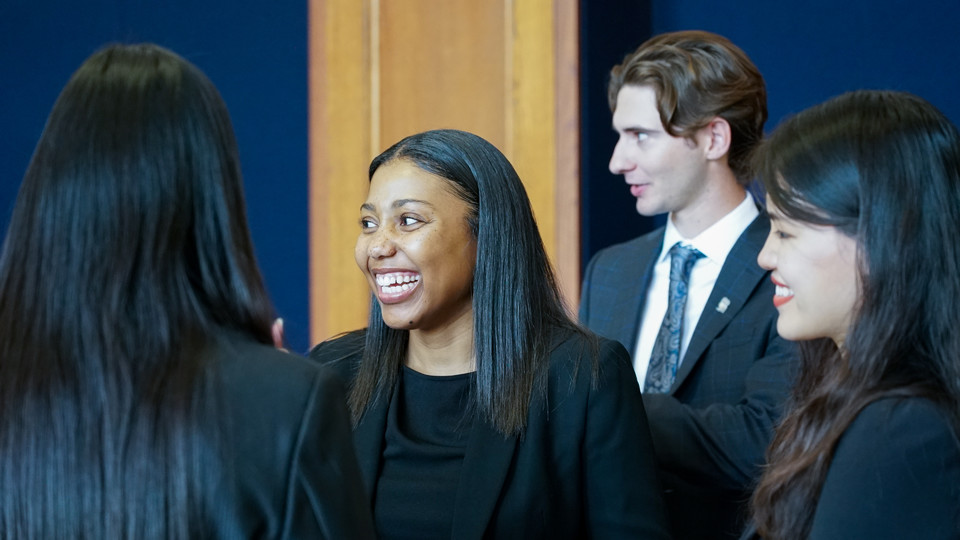
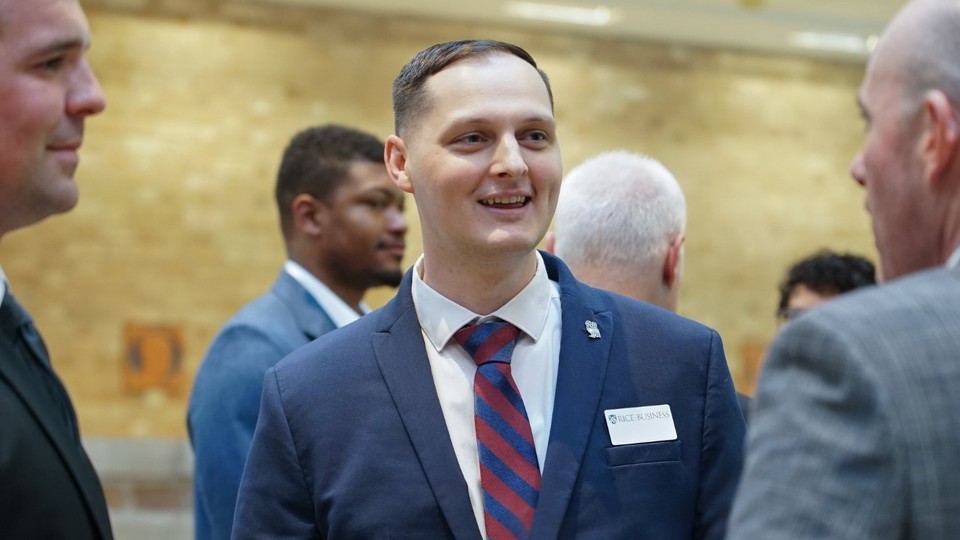
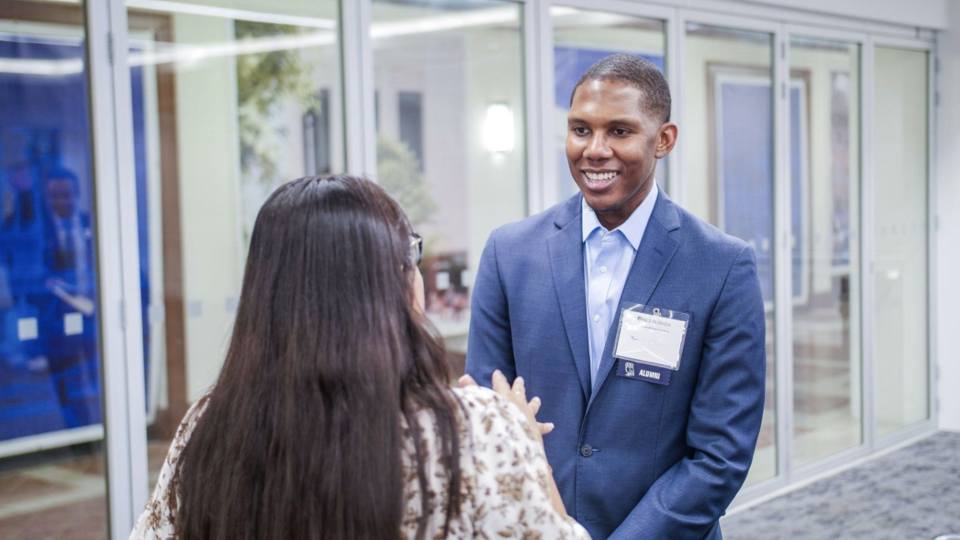
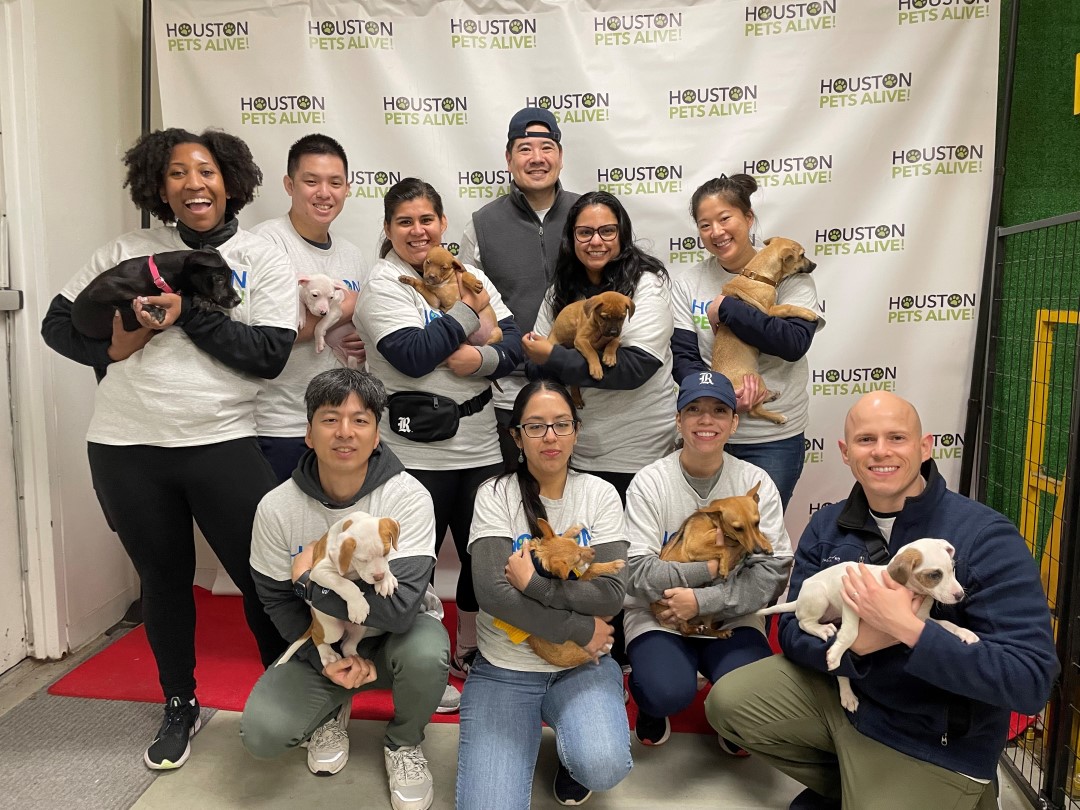
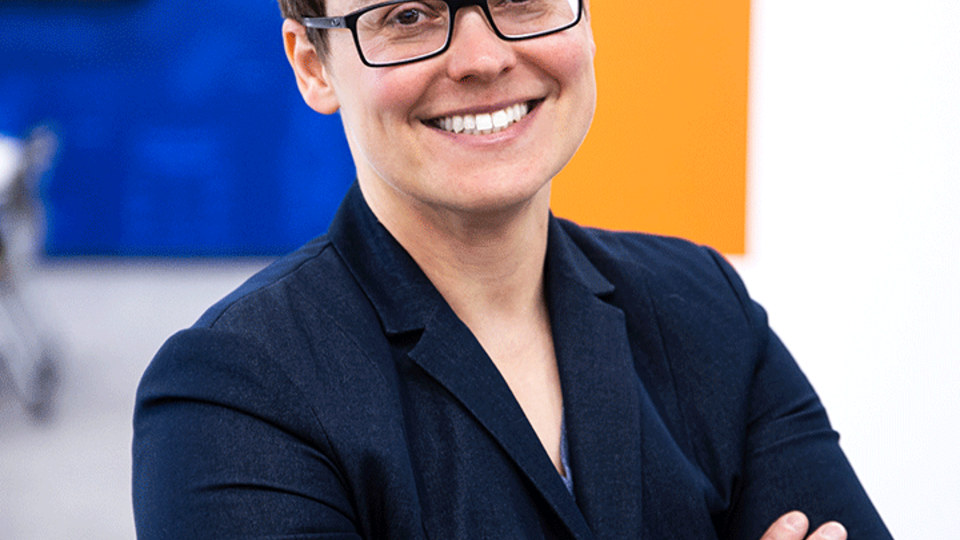
Prior to joining Rice Business, I was a pension investment consultant at a benefit consulting firm where I helped manage a book of business of roughly 70 clients with over $1B in assets under advisement.
What is your post-MBA Industry and function?
After graduation, I will be joining E&Y Parthenon as a Strategy and Transactions Consultant in the Houston office.
Why did you want to pursue your MBA? Why did you choose Rice Business?
I wanted to pursue an MBA to expand my knowledge outside the niche world of pension/401k consulting. I was ready to try something new, and I knew an MBA would help guide me in my career exploration. I chose Rice Business for the diverse and close-knit community, which is something I did not get to experience during my undergrad at a large state university.
What was your favorite memory or experience from your time at Rice?
Image
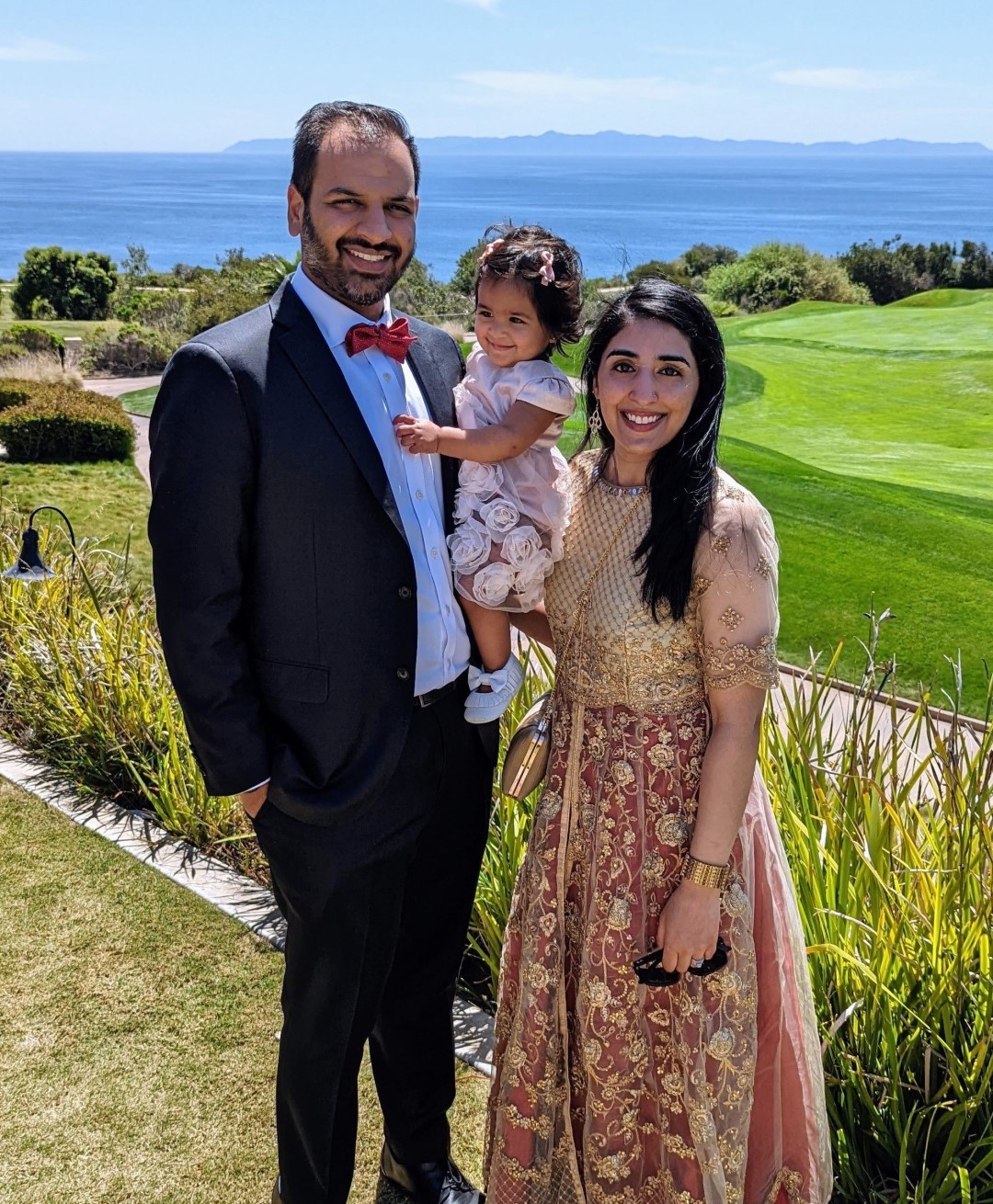
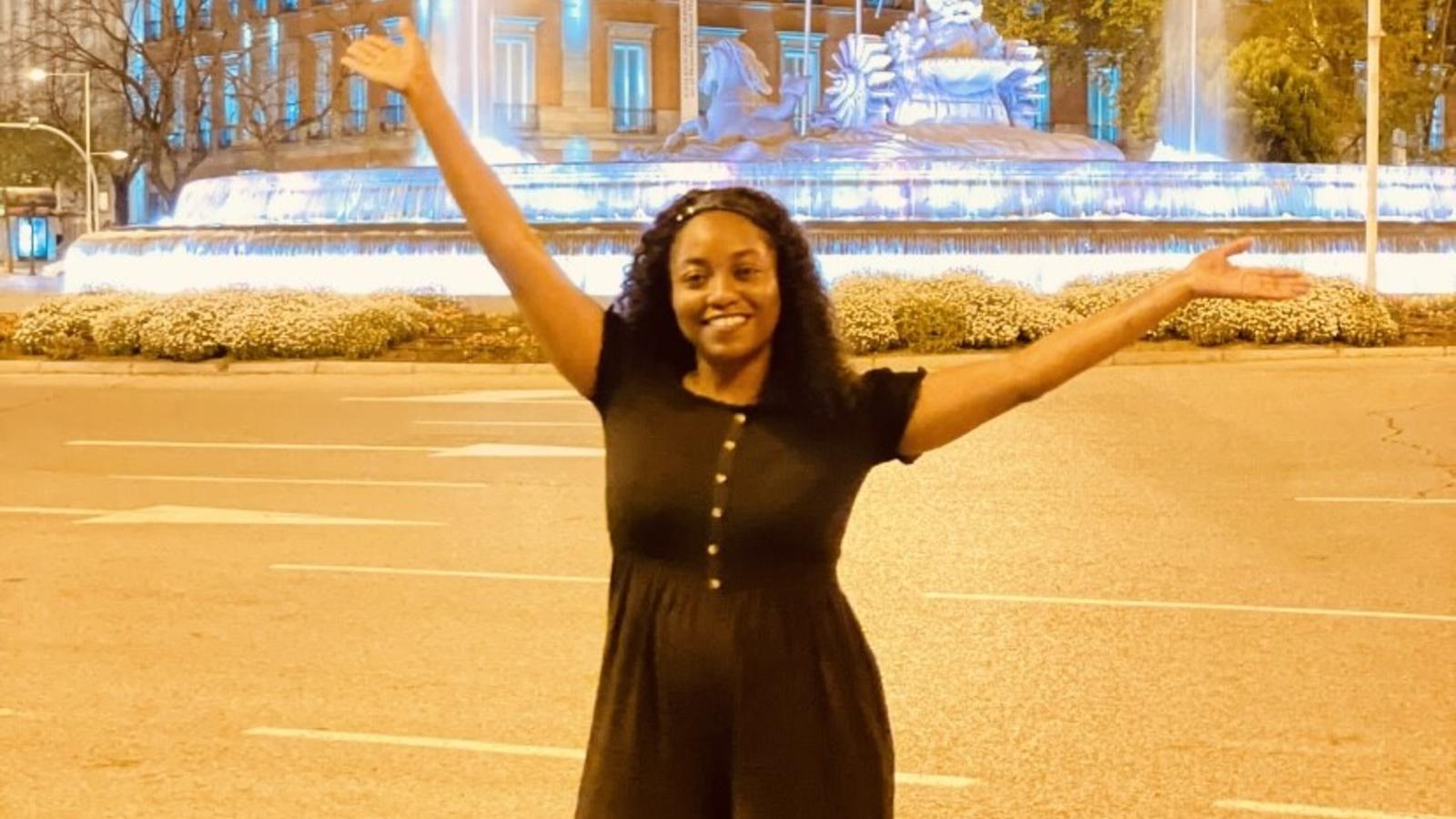
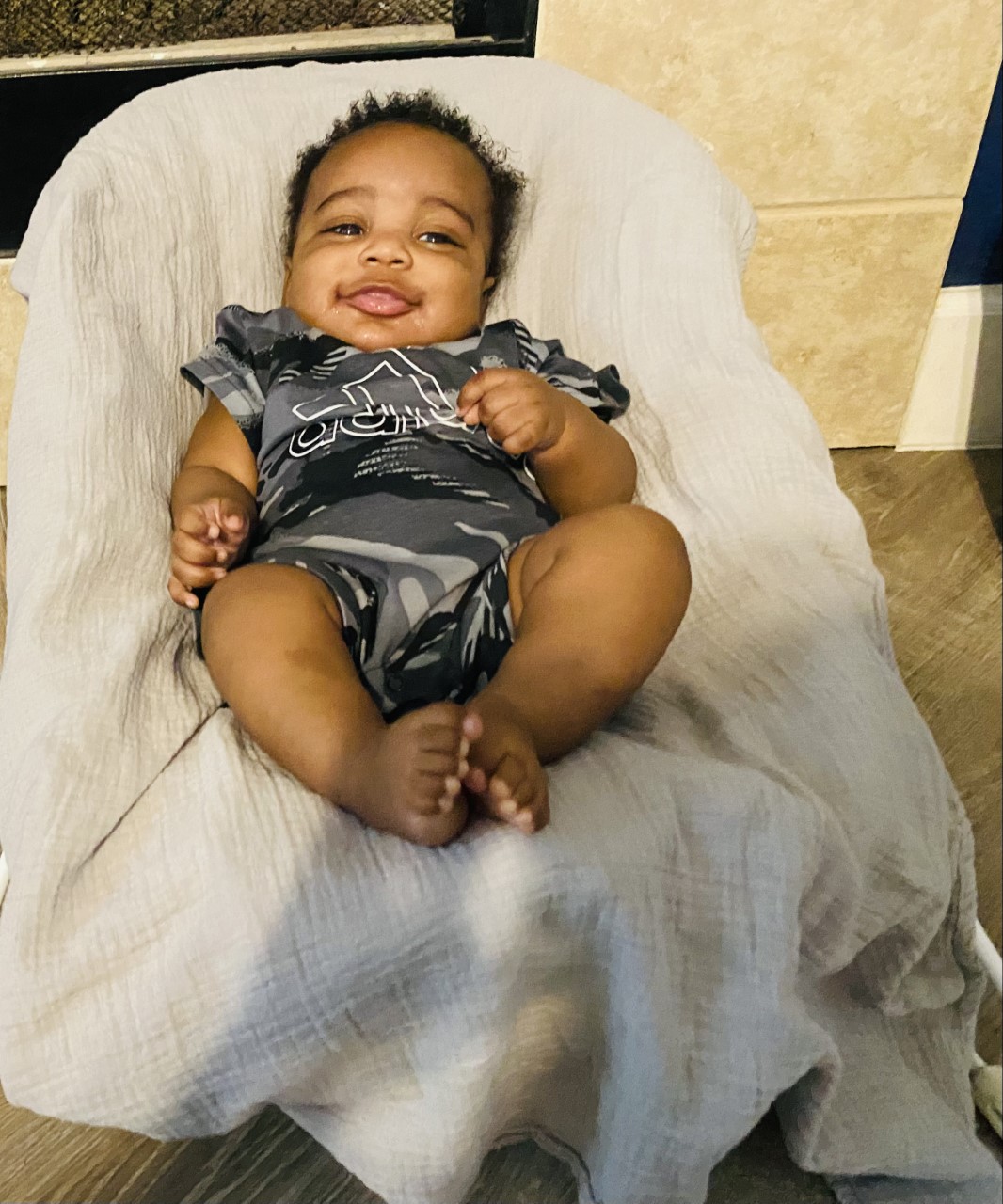
My husband and I welcomed our second child during my second year. I was a little nervous about having a baby during the program, especially since it would mean I would miss a few weeks of classes and events, including final exams. But I was amazed by the amount of support I received from everyone – teammates, professors, all the way to the APSE (the office of Academic Programs and Student Experience).
How has the Rice MBA helped you in your career?
Rice Business provided me with the resources and networking opportunities to land an internship in management consulting. I got a chance to use strategic-thinking skills I learned during first-year classes to provide actual value during the internship, and eventually receive a full-time offer.
What does it mean to you to be a woman in business?
Out of college I experienced the gender pay gap first-hand, as my now-husband and I worked at the same company, on the same team. Even though I was promoted before him and had more experience than he did, his paycheck outpaced mine. Women in business face an uphill battle, and we need more examples of women breaking through the barriers and becoming leaders. I owe it to my daughter to continue fighting for an equitable and inclusive world.
What do you think organizations should do better to build a diverse, equitable and inclusive organizations?
Organizations often say diversity is important to their workplace, but the profiles of their leadership & deeply embedded cultural stigmas usually don’t reflect their words. I want to see organizations be more proactive in who they choose for leadership positions before I can trust the rhetoric. When leaders are vulnerable, authentic, and empathetic, they create a culture where true diversity can thrive, and people feel safe to be themselves.
Image
What suggestions do you have for working with allies in the workplace or at school?
Show genuine curiosity and compassion for your team members and classmates. The MBA program exposes you to a wide variety of personalities, creeds, and communities, so keep an open mind. The best way to build trust and respect with your colleagues & classmates is to be a net giver (always give back more than you receive).
What advice would you give prospective students who are considering an MBA?
Be authentically you. From writing your application essays to conversing with alumni and current students, don’t be afraid to be yourself. If you start the application process with an open mind, you will quickly learn if this is the right step for you. Even when you begin the MBA journey, think of it as an experience rather than a transaction. The journey becomes more transformative along the way.
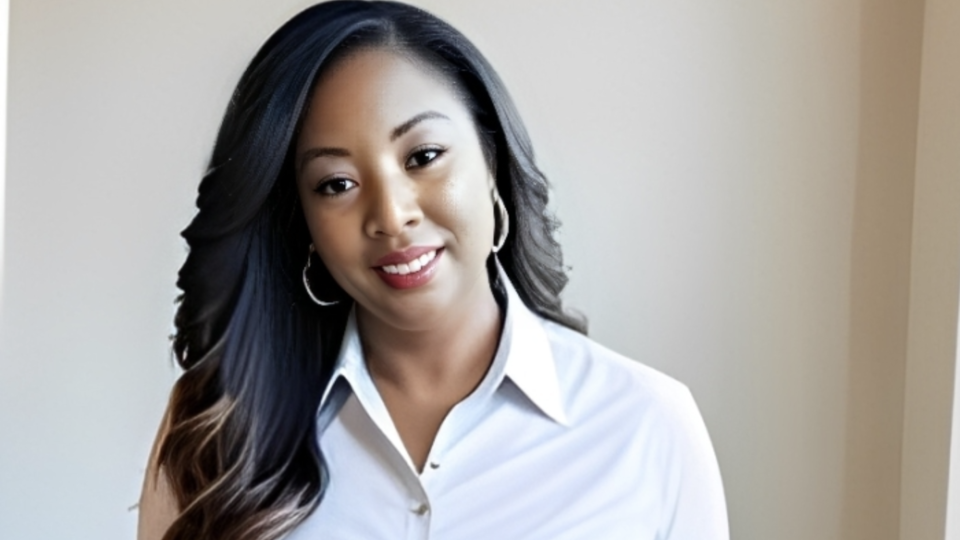
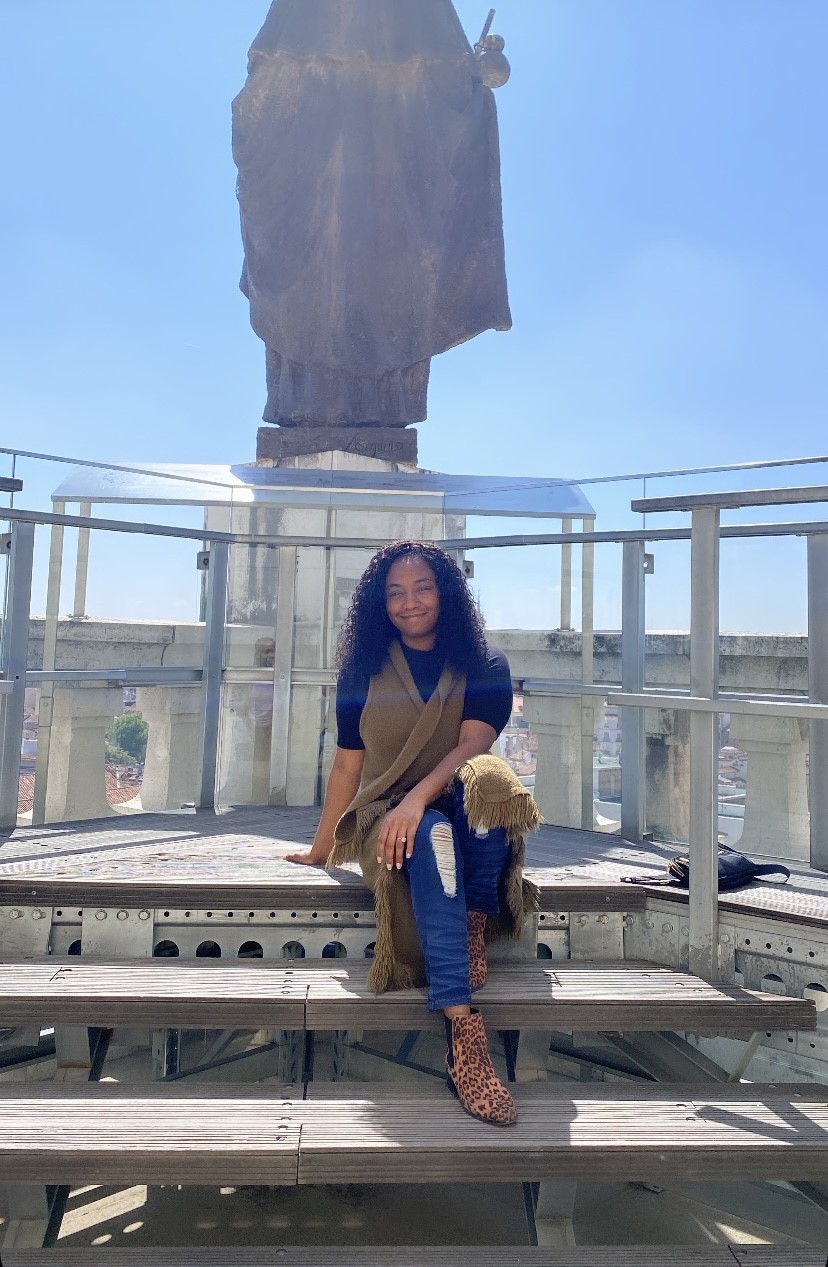
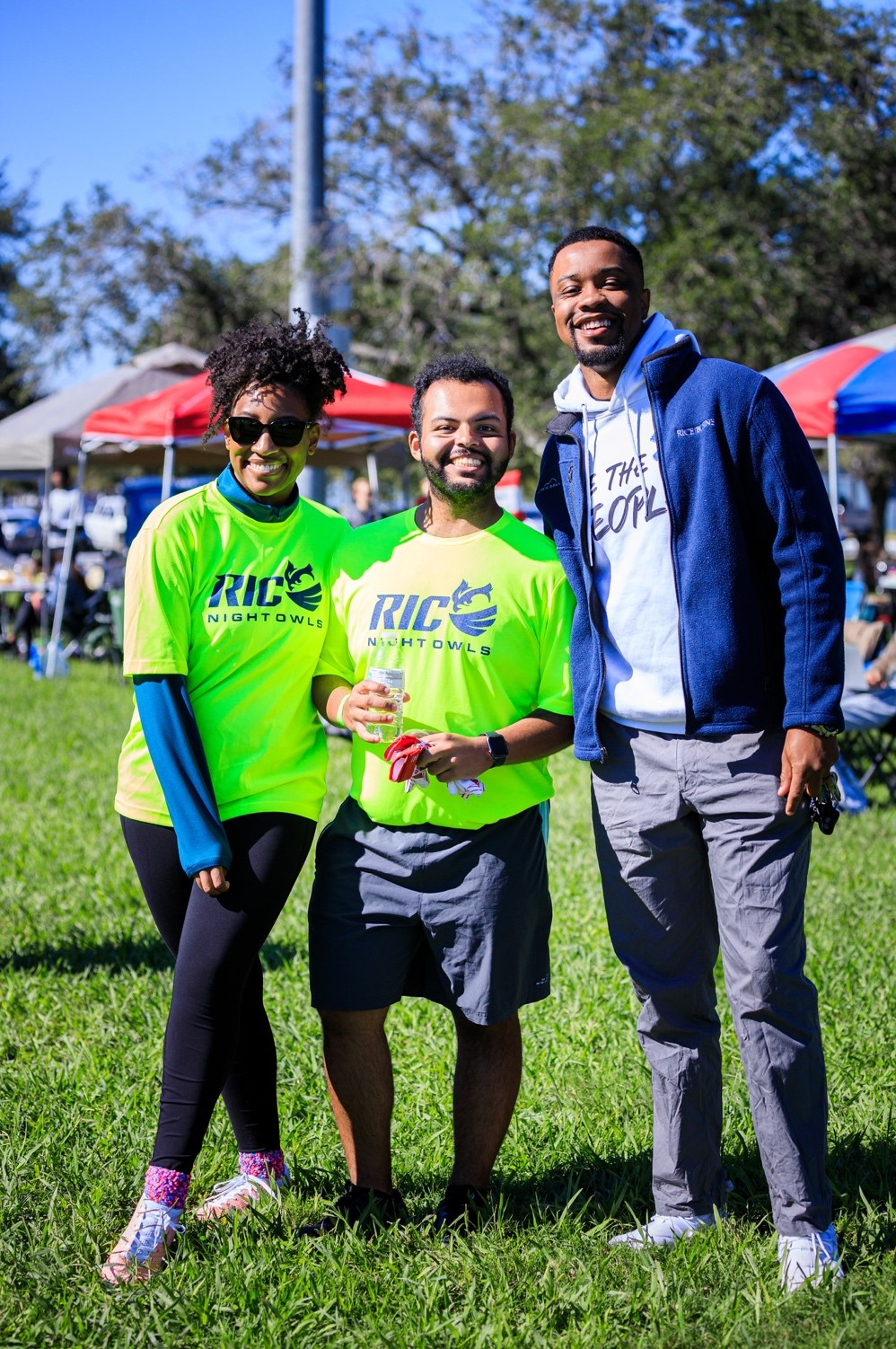
I come from a place where there aren’t a lot of opportunities. Following high school graduation, I joined the United States Navy. The military taught me discipline and provided me the space to build goals for my life. While deployed me and my battle buddies used to discuss our dreams together. For me, one of those dreams was to obtain a college education and give back to underserved communities. I joined Teach For America, and I taught middle school science for 3 years. Some of my most memorable moments were spent in the classroom.
What is your post-MBA Industry and function?
My post-MBA Industry is in the healthcare space. This target area allows me to combine both of my master’s degrees that I am pursuing at Rice. The healthcare industry has presented tons of challenges, especially from the patient perspective. I will play a role in alleviating some of these challenges.
Why did you want to pursue your MBA? Why did you choose Rice Business?
I chose Rice because it is a prestigious business school. As a former educator, the quality of education that I received was important to me. I also wanted to be a role model for the students that I taught. I knew that if they saw someone who looked like them attend a reputable school, it would increase their likelihood of doing the same.
What was your favorite memory or experience from your time at Rice?
Image
While at Rice, I had a son. His name is Jeremiah. While pregnant the Rice community showed me tons of support. I will never forget how my colleagues took walks with me to help me remain active. Around about seven months into my pregnancy, I received gifts at my door almost daily from Rice students for my son. It resulted in us having much more than we needed! It’s difficult to put in words just how much I appreciate how much the Rice community showed me support while pregnant.
How has the Rice MBA helped you in your career?
When I first joined the Rice MBA, I had a small vegan business. I sold baked vegan goodies. Within the first few weeks at Rice, I began to understand just how much was accessible to me. Rice forced me to dream bigger, to try harder, and challenge myself. The school also provided me with great mentors to help assist me in my goals throughout my journey. Now my dreams have evolved, and I desire much more!
What does it mean to you to be a woman in business?
Being a black woman in business means having a voice, a say so. Women in general have been silenced in certain spaces and left out of key decision-making. It puts me in the position to advocate for other women while building safe spaces for us to exchange ideas.
What do you think organizations should do better to build a diverse, equitable and inclusive organizations?
Organizations must begin to take action to build a diverse, equitable and inclusive environment. They should not only ensure that they have diversity within the organization but ensure that they are being inclusive. This means consistently looking at the numbers and ensuring that they have a diverse range of people within their leadership, making key decisions about the organization. They must consider the process that allows different people to rise within the organization and ensure that the process does not leave people behind.
Image
What suggestions do you have for working with allies in the workplace or at school?
When working with allies ensure that there is balance between listening and providing ideas.
What advice would you give prospective students who are considering an MBA?
Truly understand your "why" and come back to it. Build a community of support and lean on your community. There will be times when things may get rough. But by truly understanding your "why" and having your community, you will get through it!
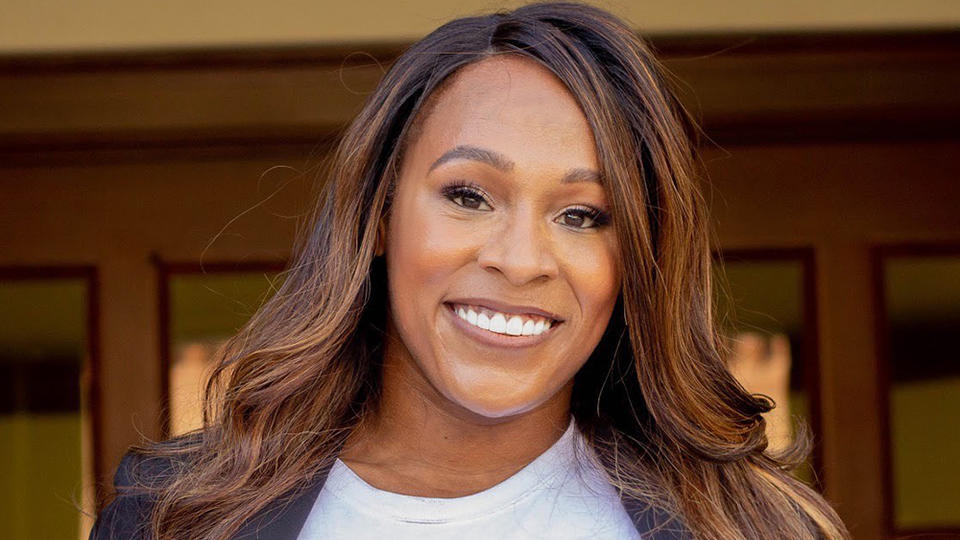
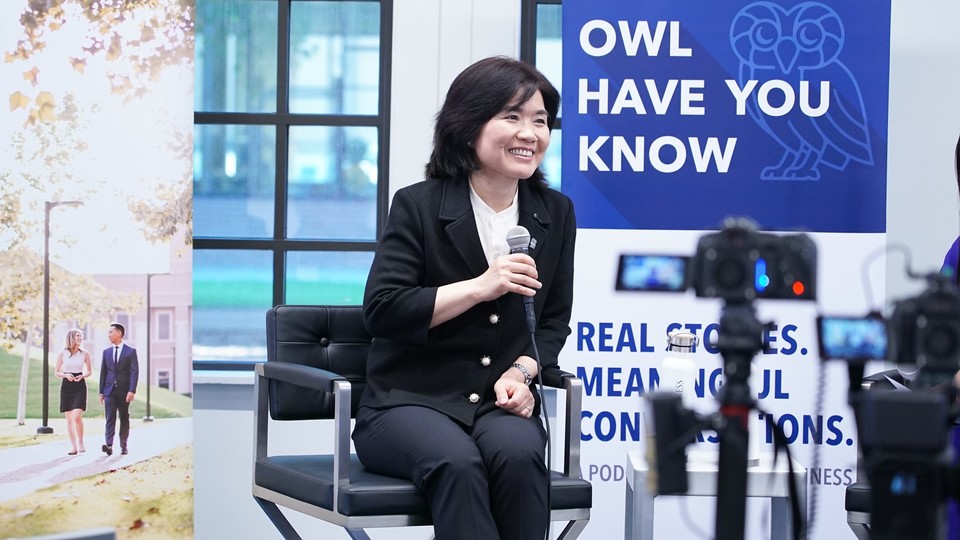
Takeya shares her incredible journey from the chemical engineering lecture halls of a top-ranked program to the control rooms of world-scale chemical manufacturing facilities, from NRG Stadium cheering for the Houston Texans to an investment banking career focused on clean energy.
Owl Have You Know
Takeya joined Citi as an investment banking associate in Houston, Texas for the clean energy sector. In today's episode with our host Scott Gale ‘19, she shares her incredible journey from the chemical engineering lecture halls of a top-ranked program to the control rooms of world-scale chemical manufacturing facilities, and her experience overcoming the challenges placed in front of her to being honored this year by the Texas Business Hall of Fame as a leader of distinction.
[00:00] Intro: Welcome to Owl Have You Know, a podcast from Rice Business. This episode is part of our Pivot Series, where guests share stories of transformation in their lives and careers.
[00:12] Takeya: And, I don’t know, man, it’s like as soon as I got off that plane it was like, “Man, I like it here!”
[00:19] Scott: On today's episode of Owl Have You Know, I'm joined by Takeya Green, recent graduate of the full-time MBA program at Rice. Takeya shares her incredible journey from the chemical engineering lecture halls of a top-ranked program to the control rooms of world-scale chemical manufacturing facilities, and from NRG Stadium, cheering for the Houston, Texans, to now an investment banking career focused on clean energy. Takeya brought her energy and passion to Rice business as a JSA rep, admissions ambassador, sponsors chair for the Women in Leadership Conference Committee, Finance Association Social Chair, and the CMO of the M.A. Wright Fund. Try and keep up, as we unpack the experiences and perspectives that drive one of Rice Business' newest graduates.
Takeya, welcome to the show.
[01:06] Takeya: Thank you. I'm happy to be here.
[01:10] Scott: I'm really excited about our conversation today. There's lots of different things that we're going to talk about. I kind of wanted to just start from the beginning. Born and raised in Chicago, you went and got a chemical engineering degree at University of Illinois. Why chemical engineering? What kind of led you towards that undergraduate?
[01:29] Takeya: Believe it or not, it was, it was literally my parents, without them knowing. I always wanted to be... like, going through school, I was like, oh, I came home one day and I was like, "I think I want to be like a high school math teacher." And my mom's like, "Absolutely not. You're not going to make any money." She was like, "Pick something else." Like, I kid you not, it was like junior year of high school. It's like that time to start like thinking about your apps. She was like, "Pick something else." So, I was like, “I'm good at math. I like chemistry. Chemical engineering.”
[02:00] Scott: Well, I love it. I feel like I had the exact same experience. I think that your mom and my dad would have a funny conversation about it, because I wanted to be a chef, and my dad said, "Go do something that doesn't result in you living in my basement." And chemical engineering, it was. That's fantastic.
You went and got a chemical engineering degree. You started your career post-graduation at Dow Chemical. You spent a number of years with Dow. Dow, obviously, headquartered there in Midland, Michigan within striking distance of Chicago. I started my career at Dow as well. What drew you to the chemicals manufacturing world?
[02:38] Takeya: Honestly, it was just the luck of the draw. I just think that was divine intervention. When I picked chemical engineering, like, I did not know what that was. There's so many realms of it that I probably, still to this day, just still do not know. And so, the great thing about going to University of Illinois in Champaign Urbana is like it's a top engineering institution, kind of like how Rice is a prestigious institution. University of Illinois engineering, it was like top five at that moment when I went. So, when it came time to look for jobs, it was literally, we probably had like four career fairs just dedicated to us where we had hundreds of companies just there. And honestly, I just went to everyone that said they hired chemical engineers. I just went to everyone because I just wanted a job.
And I just... I first started at LyondellBasell was the first one. And so, like the next... when it came time, with my experience, I really liked what I did. So, I just went to Dow, you know, amongst others. I had other offers, of course, but I ended up doing Dow because I wanted to live in Houston. Like, I just... Houston has always been a city that, out of all the cities I ever went to, I just felt like I was supposed to be here. It's weird.
[04:00] Scott: No, I love that. And I want to dig into that a little bit. But I do want to ask one of the challenges for women in STEM careers, did you feel like there were any barriers or challenges along the way as you were pursuing that degree and pursuing a career in that space?
[04:17] Takeya: Oh, yeah, absolutely. It's so hard being like in the top quartile of like your race or your sex, like where you see mostly black people are, you'll see ‘em a lot as, like, nurses or, like, working at the grocery store, your, kind of, like, blue-collar jobs. And then, like, for women, you know, you'll say, oh, teacher or secretary. And so, to be at the top for both, at the time as a kid, you don't really realize, like, why you feel like you're struggling a little more than you…than others. And it's even harder because I don't think people understand that it's easier for you to, like, voice your opinion with someone if there's something that you can physically see you connect on. It was hard for me to just voice, like, "I don't understand this concept," or hard for me to voice, like, "That didn't make me feel good the way you said that to me."
I had barriers on both ends, both on my race and my sex. And it played out a lot because I was a production engineer. So, it's not like your other engineering jobs where you might be designing equipment and you're sitting, you know, in a big commercial building on your computer programs, like I'm working with, what people would call your behind the woods, the blue-collar type of America that, maybe, your typical person who might have lived in the city that you've never seen. You've seen the blue-collar in the city, but the blue-collar in, like, rural areas are vastly different. And that's the world I was plunged in.
[05:50] Scott: It's really interesting. I grew up in a small paper mill town, and chemical engineering was you were either a lumberjack or you worked in the mill. And so, chemical engineering, very similarly, I didn't know what it was. I kind of discovered that, from my perspective, it was like glorified plumbing, you know, going out in a plant and you're counting elbows and feet of pipe and, you know, all these things. And you're right, the workforce that's making that happen in a manufacturing facility, it's a fascinating group of people that do that kind of work. And a, and a production engineer, I mean, maybe just tell the audience or, you know, just what is kind of like a day in the life of a production engineer. You know, you're out in a, in a manufacturing facility, but what are some of the outcomes that you're trying to drive from that seat?
[06:35] Takeya: Yeah. So, a production engineer, you want to think, like for an example, let's say I'm a plant and all I produce is tires. Like, I produce this, call it rubber. I produce rubber. So, you'll have a meeting with your commercial team. And they're going to say, "Hey, for this month, this is how much rubber you have to produce." You go back to your team. You go on our equipment. You know, everything's automated in a chemical plant. So, if I'm making rubber, I got to go look at my plant on the schematics and say, how much do I have to make per day to make my commercial commitment? I go do that. Relay that to my team, my operators who operate the plant. So, hey, we got a plan. Let's make sure we hit these goals for the month.
Well, let's just say halfway through, a pump breaks. Now, I'm hauling ass, trying to get a pump back online, because if I don't, I don't make my commitment. So, a production engineer is your... basically, your middle man between a company who wants to sell products and the people able to make it. I'm the middle person to make it happen. So, not only do I have to speak in a language that is smart enough so that my research and development folks can understand what I'm talking about, to still be able to filter it to my operators who some of them don't even have a college degree. I can't talk about thermodynamics with someone who doesn't have a college degree. But also, I got to communicate why all these theoretical concepts and stuff, why they impact my plant, to the commercial team. Business folks don't know nothing about thermodynamics, you know. So, it's kind of like that I'm the center nucleus of getting a product out the door into a customer's hands.
[08:30] Scott: That's a wild environment. I mean, it's like you're saying, fast-paced. Like, there's so many things that are out of control. I guess from just, like, an advice standpoint, things that you learned, like what do you tell underrepresented female engineers that are out there? Like, what are some of the skills that you've learned that you felt helped make that environment effective for you?
[08:53] Takeya: Man, it took some time. I think what's different for me is that it wasn't until I started working. This is going to sound so stupid. I didn't know until I started working that people knew I was black. Like, when you're a kid, right, like your whole time, like you know you look different, but it, like... it doesn't, like, really hit you. It wasn't until it was my first internship in 2011, LyondellBasell. It was the summer. You know, summer's hot, operating an ethylene cracker is hot.
So, the company sponsored watermelon for the day. Like, they were, like, just for snack because it was so hot, because of heat stress. And this older man, he was like, "Oh, Takeya, come on in. Here's some watermelon, blah, blah, blah, blah, blah." I'm thinking nothing of it, like nothing of it. Like, I'm like he asked me if I want watermelon. There's watermelon here. Everybody's eating watermelon. It's okay.
Next thing you know, literally, like this happened on a Wednesday, that Friday, I got called into the HR office of that building. And the woman started asking me questions about what the guy was saying to me. And this is going to sound stupid again. At this point, I'm thinking, "Ew, is she asking if this dude is hitting on me? He was not hitting on me." That was my first initial thought. I'm like, no, because the guy was so awesome. He was helping me, whatever. Next thing you know, she asked me questions about race. Like, did I feel like he was being racist? And I said... I'm 19 years old when this happens to me. I'm 19. And I'm like, “Uh, no.” Like, I was shocked. And then it was in that moment I was like, shit, my secret's out. I'm black. That's when it, like, came off.
And like, honestly, like, for every underrepresented person, and this can go for anyone, if you're just going into an environment where you just... you know, some things you just didn't really think about because it's just you're just novice to it, just know that you're going to go through them, but you got to allow yourself to go through them so you're able to identify those things as you move forward. And once you identify what those things are and you get into, like, places of leadership, that's when you can take that stuff back. That's when you can start openly speaking.
So, it's still going to happen. But I would just say just find your allies. Like, for me, if I did not have people that I could talk to, I would not have been there. And usually, when people who are women or, like, underrepresented minorities, if they leave a place, more than likely, it's because they did not have someone there, which should speak volumes to anyone. Like, the fact of someone being there.
That is like my advice, go through it, but have someone that you can trust that you can go through it with, so you can allow yourself to grow, because you need to grow.
[11:56] Scott: That's great perspective. Thank you for sharing that. I wanted to ask you. You kind of said that you, like, wanted to get to Texas, in taking a job in the petrochemical belt down here. Why Texas? And ultimately, you know, I want to ask as well, like, why a full-time MBA at Rice? What drew you to the third coast here?
[12:15] Takeya: Yeah. I love that, the third coast. Like I said, I was at this time when I worked for LyondellBasell, I was working in a plant in Morris, Illinois. I did two plants. But the first one I went to was Morris, Illinois. And there was this thing where they would ship all the interns to Channelview, which is on the east of Houston, right? They would ship you to Channelview for a week because they want you to go to Lyondell's big, you know, manufacturing land.
And I don't know, man. It's like, as soon as I got off that plane, it was like, “Man, I like it here!” Like, first, it was like, oh, they're not on horses, like they say, right? Like, it's a little more industrialized. And from Chicago, especially from, like where I'm from, where my family's from, people still thought, like, Texas like back in the day, 1865 Texas. Like, when we hear Texas, we... that's what we think. So, coming down here, I was like, oh, it's normal. Like, you know. But it's like I felt this connection with this city. And like I said, I just... when things just tingle, it just felt right. Like, I just felt, like, this gravitational pool, like I'm supposed—
[13:23] Scott: And it wasn't the humidity. It was—
[13:25] Takeya: No, definitely it wasn't because my hair literally puffed up. I was like, wow, I look like Mufasa at this point. But what's crazy is I tried to leave Texas. And this is why I feel like, again, like there's something that keeps pulling me here to Houston. And there's some reason, I don't know what it is. But I tried to leave Texas. Like, when I was first applying to get my MBA, I always wanted to go to Stern in New York. And that was more so driven, like, it's your typical story for a young adventurous female, right? Like, you're 26, 27. The dude you thought you were going to marry, you don't marry. And you just want to, like, start over. So, I wanted to have my, like... what's her name from Sex and the City? Is it Carrie? Whatever her name is, Carrie. I wanted to have my moment. You know, I was, like I'm going to go to New York, live this life, change everything. But then, I met a Houstonian boy, who... I don't have my ring on my finger right now, but who just proposed to me two months ago.
[14:24] Scott: Congratulations.
[14:24] Takeya: My now fiance. But I met him, and it changed a lot. And I was like, “I can do what I want to do here in Houston.” So, Rice became that choice, which ultimately, again, was the right choice because I don't think I could have accomplished as much as I did at Rice at Stern. I just think it's two completely different things. And I think it happened for a reason. Some people don't believe in, like, divine intervention, but some people, you know, you know when things are, like, tingling. Like, there's something happening. And that's kind of what's been, in my head, have been happening in my life, clearly, since I'm still here.
[15:05] Scott: I love that, kind of beyond coincidence, in that sense.
[15:07] Takeya: Yeah.
[15:08] Scott: I want to talk a bit more about your Rice experience, but I do want to ask, because I think this is amazing. You're a production engineer. And then you decide to audition for the Houston Texans cheerleading squad. I'm sure you get asked about this a lot, but I'm sure it wasn't like just an overnight decision. But can you just share a little... I mean, I've played some sports in school and stuff or whatever, but, like, I had just, like, abandoned all hope for doing anything athletic, like, after graduating. Like, what was the thought process and the experience of working in the Texans organization as a cheerleader?
[15:43] Takeya: Yeah, man. Every time I try to erase this thing about myself, it just follows me. But no, seriously, out of everything that has ever happened in my life, being a Texans cheerleader taught me so many valuable lessons that I, like, carry throughout my career. It's crazy. Like, I've learned more from that environment than I've ever had in my entire life. And I think it's mainly because everything's abstract, right? Like, when you see a girl dance, everybody has their own taste. You might like that her hair is black. And she might like that she could do a split. And he might, you know...
When everything is so perceptive, like, I tell people there... Now, there's some downsides, right? Like, I was 14% body fat when I was a cheerleader. And when I tell you I was that fit and still felt fat every day, like it's crazy. Like, the tricks your mind goes to when you're in those realms. However, like, working for that organization, I had such a great time. Like, I met Bob McNair before he died, a sweet man, like a sweet man. Even the late Jamey Rootes, the business president that just died, I met him a couple times. Such a great guy. That organization is ran like a family. And, like, I really, really say that, like you could feel, like, the Texas, you know, hospitality when you worked for them. So, like to, you know, see Bob passed, that was sad. And, you know, with Jamey passing, that was sad to see. But it was just such a beautiful experience. I just can't speak more highly of it.
[17:29] Scott: I think it follows you because it's such a unique experience. And I think, you know, someone born and raised in Chicago and, like, falling in love with Texas, and then to just, like, be a member of the Texans family, as you're describing, it just seems like such a unique experience. How did being a Texans cheerleader, like, hit your radar?
[17:47] Takeya: Yeah. So, I have to caveat, I never cheerleadered in my life. I was never a dancer. My whole life, I played sports. Like, I was, like, played basketball for 12 years. I'm a state-qualifying tennis player from high school. Like, I've done all those sports, never this. So, when I moved to Houston, the typical, "I need to get fit." So, I was looking for gyms, and I came across this gym here in Houston, Inner Me Studios. And it's like a female fun fitness gym. Now, it's located in Third Ward. The owner, I know the owner there now.
They just had, like, these fun dance classes. So, I just went to a fun dance class, just to, like, work out. And one of the instructors, she was an ex-Rockets Texans. And at that time, Houston Dynamo, when they had girls. She did all the cheerleading for them. And she was like, "You should really, like, go out for the Texans." And I laughed. And I said, one, my body type, I can't get Megan Fox skinny. And two, I'm not blonde. That's, like, what I told her, because, you know, when I was growing up, that's what the cheerleaders look like. They literally look like Adriana Lima. And I was like, man, I'm not eating three Cheerios in a day. Like, I like to eat. So, she was like, "Just do it." Like, she was like, "Just audition. Just audition."
So, I go and I audition. This was the Super Bowl year, the year that the Super Bowl was in Houston. And I went and I auditioned. Didn't make... I didn't get past second round. But I just was like, hey, I'm here. But preparing for that, that's a whole different type of experience, man, a whole different type. But...
[19:24] Scott: Yeah. No, I believe it.
[19:25] Takeya: So, that following... after I did it, I was like, “Oh, like, alright, yeah, I think I could do this.” So, I started to train. After I would get off work at Dow at like 6:00 or whatever, I'd be in dance classes, I kid you not, from like 7:00 to sometimes midnight. And I was just dancing. Like, literally, 20 hours a week, I was dancing — dancing, working out, getting fit. So, when the next year rolled around, I was like, “Alright, I'm in here.” Like, this is the time. I'm serious, because I got that stacked competition. I get eliminated in the exact same round as the first year.
[20:01] Scott: Oh, wow.
[20:02] Takeya: And I'm pissed. First of all, I'm going to tell my friend, "Let's go to Buffalo Wild Wings, because I haven't eaten... I haven't eaten nothing good in weeks." And I'm just sitting there, like, just I'm pissed, because I'm like, "I did this. I did that. I did that…blah blah blah." And I was like, man, forget this, because everyone kept telling me, with my body type, because I was so muscular-looking that they were like, "You should be a Rockets girl. Like, you're not the Texans type of cheerleader. You're a Rockets girl." So, I was like, “Fine, next year I'll go out for the Rockets.” So, that's why I went back to my training. So, now, I'm going even harder like, now at this point, there was some nights I was dancing 'til like 1:00 a.m. Like, it was like going back on it, I was a nutcase, but I wanted it so bad.
So, here I am, dancing almost 30 hours a week. And I was like, “Okay, if I got to do this Rockets audition, let me just do this Texans audition. Let me just do it to practice. So, when I get to the real thing, like, I'm cool.” But in that, because I was, like, throwing it off, like, “Oh, this ain't nothing,” I was like, “I'm going to just dance like how I normally dance.” Like, usually, when I would go to a Texans audition, I try to look like what the team looked like. Like, this is how they dance, so I'm going to dance that way. This time, I was like, well, they're about to get raw Takeya. And that's what I did. And when I tell you after I made that team, when I had a one-on-one with my coach, she sat me down. It was Coach Alto. And she said, "I picked you because you ain't look like nobody else."
[21:41] Scott: That's awesome.
[21:42] Takeya: And it was in that moment, and I take this everywhere in my life, your biggest competitive advantage is your authentic self. Nobody can be you. That is your superpower. And that's, like, how I live my life. Like, even to this day, like... it's like, if you like Takeya, you'll like her. If you don't, I'm just not your flavor. And that's okay.
[22:07] Scott: Takeya, that's amazing. And I think that's just a fantastic philosophy that's so hard for people to get to, is that, that self-discovery and that, just, courage to be you in so many unique different circumstances. And I guess as you've retired from cheerleading and now moved on to a different part of your career, you said it's one of, like, the most educational experiences, you've learned so much from that, what are some of the things that you take from that experience? I mean, you're touching on kind of just this authenticity, just embracing yourself. Are there any other things that you take from that experience that you carry with you?
[22:44] Takeya: Yeah. You can only control the things that you can control. That's one. Two is, there's no such thing as luck, man. It's when preparation meets opportunity. And three, like I said, your biggest competitive advantage is your authentic self. When I tell you, like I applied for business schools before. Like, while I was auditioning for the Texans, like I applied. And I got rejected. I remember I applied to Fuqua at Duke. I applied to USC, UCLA, and got rejected by everyone. Everyone, man. Like, everyone.
And that second time around, like when I was doing my applications, again, it was like what I felt in my heart, like what I really wanted to do, how I really wanted to portray me. Because a lot of times on your MBA apps, you just be saying all this foo foo fairy tale, you want to save the world. You know, everyone's going to drink water. It's going to be water everywhere, you know. But this time, it was like I was very realistic, but I was also me. And I got into every school I applied to. And that's why I just... I really firmly believe, like, your biggest competitive advantage is your authentic self, because people are not okay with being themselves. Like, I'm telling you, it's such a freeing experience.
And that's why, like for an example, I'm not trying to equate them at all, but, like, when people who might identify as gay, like, how much they change like when they are able to say, like, "This is me," it's such a freeing experience. And not everyone gets to experience it because people are really scared to be themselves, because they are afraid of whatever consequences they've built up in their head. And so, I always... that is my motto. Like, just be yourself. You're enough. You're enough, you know?
[24:40] Scott: I love that. I mean, that's just such fantastic perspective and advice. And like you're saying, there's so many social constructs and things that are, kind of, put in place that people feel like they need to conform or be a certain way or whatever it might be to, kind of, be accepted. And you do that over time, and that can create just so many self-inflicted barriers. I love that you're a living example of that. And thank you for sharing those experiences, because I just think they're so unique and important in terms of what people can learn from.
And so, I want to talk about your Rice experience. Obviously, we're on the Owl Have You Know podcast. Just want to talk about your experience and like what stands out to you having gone through the Rice program and what are some of the, you know, just experiences or favorite stories or kind of impacts. We'd just love to hear about, kind of, your time at Rice.
[25:28] Takeya: I had such a great time at Rice. And I think it's because I really wanted my experience to really transform me. And I was really able to unlock, like, my... when I say my fullest potential, that sounds so cliché, but I really mean it. Like, I wanted to see how much I could do. I've always been like a multitasker, like, doing multiple things at one time, always been able to do it. But I wanted to see, like, what's my barrier? Like, where am I stretched? And I did so much—sometimes, I think, too much.
But I will say, one of my, like, favorite, like, moments is, and it's just fresh off my mind, is when I won the M.A. Wright award for my class. It's an award where the class actually nominates and picks who they think made like the best contributions to our class in our MBA experience. And I won that award.
[26:28] Scott: That's a peer... an award from your peers.
[26:30] Takeya: Yeah, it's an award from your peers. And when you win, at investiture—because we don't call it graduation at Rice, it's investiture—at the investiture, I gave a speech after I won the award. And in my speech, I was very, again, myself. And I talked about some of the experiences that I felt. I went to Rice right after George Floyd got shot. So, I want, I want to, like, lay that foundation.
So, at that moment, there was so much turmoil going on in the world, you know what I mean? Like, that was like the last straw that sent Black Lives Matter all around the world. And so, you know, in school, we had, I want to say, the largest amount of black people at Rice in the full, in the full-time MBA program. We had the largest number ever. Just black women alone, you probably only had one-to-two in every class. Well, this year we had 14.
And what we found was, along all my experiences, is that, even though we were going into like a PWI that is known to be prestigious white, even down to our professors had to adjust to us in the classroom, because you increase the amount of minorities in the classroom, our perspectives are so different that, a lot of the times, we found ourselves teaching our professors certain things. But it's not their fault that they were ignorant to certain things. It's just, when you don't have a lot of black people in the class, you might not know you might be talking about slavery, but you don't know. Like, who's going to tell you? Like, your auditors are probably white. Why would they think of those things?
And so, there were some growing pains at Rice during our time there. However, like, the staff, like Peter Rodriguez is, like, an amazing... I've never had a dean that I felt like cared. And, like, Peter cared. And to be so openly available like him, Dean Andrews, even from the student program office, Adam Herman, you could just tell that they cared. And it just meant so much. And, like, that's one of those big things I'm going to always remember, like, being at Rice. And I talked about that in my speech. Being at that podium, getting elected by my classmates, how it's such a validating moment for me, because you... like, I feel like I've been seen. And it was just a very powerful moment at my time in B-school. And I still hear about my speech, like someone's like, my classmate, Jordan, is like, "Yeah, my dad was like, 'That girl who did that speech. She was right on.'"
[29:19] Scott: That's amazing, Takeya. I mean, it's just like... just a really cool perspective that's so important and so needed. And as you take that now from your Rice experience, you've now charged into this, like, new foray for you of investment banking. What drew you to investment banking? And how has been that transition, so far, newly graduated and now kicking ass in this new different realm?
[29:45] Takeya: In my black hip-hop culture, whenever we are not adjusting well to something, we usually say it's ghetto right now. That's what they say. Man... like, while you're in business school, you're, like, in this, like, moment of bliss. Like, money is not a factor, even though you have no job, you know, like... but you're traveling the world. You're doing whatever you want. Like, your time is really your time. And in that time, you forgot why you went to business school, it’s because being an adult is ghetto. Like, it sucks, like... So, to put it in layman's terms right now adjusting to just putting banking aside. If you talk to any of my classmates right now, we are all like, “Damn, we can't go back to school again.” Like, this is it. Like, this is it, right?
So, I chose banking because, well, one, I wanted... after the pandemic, right, like the pandemic really, like, was shifting my mind, and I wanted... I didn't want the same thing that happened to me out of undergrad to happen to me in business school. Like, you know, like, when you come out as a chem-e in production engineering, it's like that's the only job you can do now. Like, I can't, like, jump to something else. I have to jump to it within my own company first, and then I can migrate out. I was getting so tired. I wanted to go in the business side, and Dow wouldn't let me do it. They kept wanting to keep me to being an engineer, which is fair, whatever. But for out of business school, I was like, “I want to have a job where I have multiple options afterwards.” And so, in that, it's like it's either consulting or it's banking, because I did not want to do industry. Like, I didn't want to get stuck in an industry again. So, it was really between consulting and banking.
And so, what honestly drove me to finance is that, at the end of the day, since the beginning, I've always been a numbers girl. I know all levels of calculus, right? Like, I've always been a numbers person. And so, it just more so drove me more towards finance. I was still considering consulting, but I think the nail in the coffin was I did this... it was like a day in the life of an investment banker by this company called BrainCeek. And so, they let me experience what it was like being an IB, because what was keeping me from IB was the perception of: it's an all white men, they do drugs to stay up, and they work too much. Like, that's all I knew. Like, I was literally thinking Leonardo DiCaprio in the Wolf of Wall Street. Like, that's what I was thinking. IB was, and I was like, “That's not my... that's not my MO.”
So, we do this thing. And I'm like, this is how these guys do and this is how much money they make? Sign me up. Like, I was like, “Sign me up.” Like, because I was so afraid. I was, like, I thought it was so much harder than it was. And because I've explored my questions that were keeping me from going there, I was, like, I felt comfortable. So, I started recruiting for it.
Turns out, after going through my whole business school experience, I made the right choice. I still think I made the right choice. And being a banker, like, I'm one of the most sought-out finance professionals of anyone because I know how to raise capital now. And cash is king, as they teach you in business school, right? So, I'm super happy. I work for Citibank here in Houston, only work in clean energy transition. So, anything that's with the clean energy transition, those are the type of deals my group does. And it's so funny because your chemical engineering, it comes in. So, I find myself with certain—
[33:29] Scott: Technology risks.
[33:30] Takeya: Right. Like, even some of the companies, some of the things they're trying to do, like, I've done them before. And so, it's, like, it's so funny how things are kind of, like, coming back full circle. But investment banking is so hard, I'm not going to lie. I've been working, I think, almost three months now. And it's, not only battling the whole, “I'm back to work,” but also battling, like, I think people sugarcoat this, and I need this to be known for like a full-time MBA, especially for full-time MBAs, because the purpose of our program is to get a new job, you know, versus like executive program versus like the evenings. The value propositions are different for us. It's “change your life, get the new job,” right?
But to be 31 years old and having to start over is such a humbling experience. Like, I'm not an Excel guru. Like, people put they're proficient on Excel. You're lying. Like, I'm learning new things that I never... that I feel like are so elementary. Like, I should know how to shortcut in Excel, and I didn't. And, like, trying to learn that and then be in a new space, like, yes, I'm a chemical engineer, so I know a lot about downstream in oil and gas, right? But I don't know about hydrogen as a fuel source. I don't know about batteries. I don't know about solar, wind, nuclear. These are all verticals I hit now. So, it's like I'm hit with learning new hard skills, but I'm also hit with learning, like, a little derivative off of what I know.
And so, it's so humbling and frustrating at the same time to be in that spot. And I just want people to know, like, it gets glamorized. Like, yes, you do get a new job. However, like, think about yourself. At 30-some years old, you want to feel like you know everything. And to be back to where you were at 22, 23 straight out of undergrad, it's a humbling experience. It's definitely turning the boys or girls into men and women, as they should say, you know.
[35:32] Scott: Takeya, this has been amazing. As we wrap up, I just wanted to kind of ask, what's next? I mean, what do you have on the horizon? I mean, obviously, you've got your hands full with new job, new career prospects, and other things, but, like, do you have any sort of things in the back of your mind that you're cooking on or thinking about, like, on the horizon that you might go and tackle next?
[35:52] Takeya: My wheels have definitely been spinning. This is why I say getting an MBA is so, like, life-transforming. Like, now, I know that anything I want is obtainable. And it sounds so crazy, but, you know, even in my office, like, I, you know, network with people worth 50 million plus and it does not faze me anymore because I know it's obtainable.
And so, one of the things I am excited for is two big things in my head. One is, like I said, I just got engaged. My fiancé, Josh, proposed to me in Mykonos, Greece over the summer. So, that was phenomenal. So, I am in the midst of... well, I'm not planning. We're hiring a wedding planner. Thank you, God. But the second thing I would say is I don't know if people know, but I won an award from the Texas Business Hall of Fame. I won the Executive Leader... Leadership of Distinction Award, which is a brand-new award. It's actually only granted to one MBA student in the entire state of Texas. And so, I'm the first person to ever win this award. And it's named after the CEO of AT&T, Randall Stephenson.
They induct Texas Legends every year. And this year, it's, like I said, the type of people they've induct are billionaires who are generous with their wealth, as in, like, they use it to make things better. For instance, one of the inductees is Paul Hobby, whose grandfather is William P. Hobby, after the airport. There's a woman named Whitney. She was the youngest woman to ever IPO Bumble. These are, like, the people that will be there. Like, last year, like, Mark Cuban was inducted. So, just going there to be around a caliber of people that I never thought I would ever... I wouldn't say I never thought I'd be around, but to actually be 31 years of age and have that much access to millionaires and billionaires of Texas and be able to have that opportunity is, to me, it's, like, phenomenal. This is why I say I feel like I was supposed to be living here in Houston, there's just been so many things that have been happening to me.
And so, I'm excited for that, to get to know people on a whole different like era. Like, I'm super excited. That's what's on the horizon for me. I don't know what's going to come out of that. You never know. Like, my job at Citi, I wasn't supposed to work at Citi. I thought I was going to work at Credit Suisse. And I met the head of the group at a Rice scholarship dinner, and he gave me a job. Everything keeps happening to me here in such weird ways. So, I'm just trying to absorb the blessings. Hopefully, one of these days, who knows? Maybe, I can get a finance government position, I don't know, run the Bank of Texas, who knows? Bank of Texas, have my own family office, who knows? The world is my oyster at this point. And I honestly don't think it would've been like this if it wasn't for my experience at Rice. Like, I just feel like, at this point, anything I want is obtainable.
[38:52] Scott: It's amazing. The ceiling is high. Texas Legend in the making, Takeya Green, thank you for being on the show.
[38:58] Takeya: Thank you for having me. This has been awesome.
[39:03] Scott: Thanks for listening. This has been Owl Have You Know, a production of Rice Business. You can find more information about our guests, hosts, and announcements on our website, business.rice.edu. Please subscribe and leave a rating wherever you find your favorite podcasts. We'd love to hear what you think. The hosts of Owl Have You Know are myself, Scott Gale, and Maya Pomroy.
Kenzel chats about the inception of Three Keys Coffee, why entrepreneurship was a surprising path for her, and how Rice Business provided the right launchpad.
Our Career Development Office (CDO) shares five practical steps for getting a jumpstart on your job search when you join our Full-Time MBA program.
Tiffany Stott
Once you decide to earn an MBA at Rice Business, it’s natural to feel a mix of excitement and nerves about the transformative experience ahead. Luckily, our Career Development Office (CDO) has some tips for MBA students to help you channel your energies and get a jump start before you even step foot on campus.
Remember, you don’t need to have all the answers coming in. In fact, an open mind can be an important asset. But the more thought and research you do beforehand, the faster you may be able to narrow your focus. Ultimately, you will be the driver of this experience. So, be proactive and know we are here to support and guide you.
Check out our five tips to prepare for getting a job after graduating from the Full-Time MBA program at Rice Business:
1. Take Inventory
Before you dive in, think about your personal career goals. What’s driving you to get an MBA? Are you looking for leadership opportunities? Career advancement? A pivot to a new industry? Reflect on common motivators like seeking new challenges, increasing earning potential or gaining specialized knowledge.
If you are changing industries or roles, remember you have transferable skills that are absolutely going to be marketable and valuable. Go over past reviews and make note of what managers highlight as your strengths. Ask yourself, what did I enjoy in my past work experience? What is most important to me for my career? Is it financial security, work culture, ability to have an international career?
There are multiple resources available that can be helpful such as career development books or online tools. During your commute or while you go for a walk, explore podcasts or videos focused on career exploration.
2. Explore and Stay Flexible
Start exploring and expanding your expertise before you arrive on campus. Interested in finance? Add reputable financial publications to your reading list. Curious about recruiting trends? Consult career development websites or blogs. Note any skills or requirements that could enhance your competitiveness as a candidate.
Check out recommended reading material about leadership, problem-solving, and other focal points of MBA programs from respected sources in business education.
And remember: You may come into our MBA program thinking you want to pursue one path — only to discover a new passion that leads you in an exciting new direction. Be open. The experience is meant to be transformative. The more you know about all your options, the better you can prepare.
Get to know our resources and programming for prospective studentsas well as our suite of offerings for full-time MBA students and alumni. Before classes begin, you will take our comprehensive online career development course, which covers foundational information about our office, recruiting information, a career assessment, resume prep and more.
As an MBA student, you will gain access to robust career development services and programming, including career education workshops, networking events and employer engagement opportunities. Our long-standing relationships with alumni, as well as a spectrum of Fortune 500 organizations and professional service firms, can help you make crucial industry connections.
The dedicated CDO teamwill be one of your most valuable tools as you move through the program. Plan to develop a strong relationship with your career advisor — this is someone who will know and care about your unique story and who wants to help you succeed.
Rice provided me with the resources and the network I needed to grow my career.
Kehinde Opatola
Full-Time MBA
4. Know Your Recruiting Timelines and Requirements
There are various recruiting timelines that will be pertinent to you. It’s important to be proactive, do your research and plan ahead.
For example, investment banking and consulting recruiting often start early, so be prepared to jump in quickly in the fall. Conferences focused on recruiting diverse talent can start early as well and cover a wide array of sectors. In general, recruiting for health care, technology and startups may be more concentrated in the spring. (If you're part of Forté or The Consortium, there are some summer opportunities for engagement and recruitment. Also, some companies might have an application “summit” or similar event over the summer – and opportunities may emerge from that.)
These timelines, however, are merely broad guidelines. Companies can adhere to different recruiting schedules, so it’s key to verify your targets. Once you start the program, your career advisor can also help you understand where you fall in the process.
Keep in mind some recruiters, particularly in investment banking and consulting, may require standardized test scores to apply. Consider taking the tests before you join if you want to pursue those paths.
Check out this CDO blog post for more in-depth ways to prepare for recruiting.
5. Ready Your Mindset
Earning your MBA at Rice Business will be an exciting time in your life. As an MBA graduate, you’ll be in a position to be thoughtful about your career and take ownership of where it’s headed. Yes, you will work hard and the recruiting process can be rigorous. But, you're also going to have many incredible opportunities to explore what’s possible and connect with your classmates.
Once you launch, take a moment to remember you're here for a reason. You have unique talent and value to share. When we say, you belong here, we mean it.
Curious how Full-Time MBA recruitment works? Explore how top programs like Rice deliver high-ROI outcomes through career bootcamps, coffee chats and industry network access.
Are MBAs good for changing careers? Learn what to look for in an MBA program, including comparing program ROI for career changers pivoting to new industries.
At Rice Business, career development is a community endeavor. Here’s how our Alumni in Residence program is helping our MBA students on their career journey.
In October, Elon Musk took Twitter private, firing the previous CEO Parag Agrawal. In November, Disney’s board fired Bob Chapek and brought back Bob Iger as its CEO.
Despite a spate of new content moderation policies and proposed software improvements to enhance user experience, Musk’s Twitter has lost half of its top 100 advertisers including major automotive and pharmaceutical companies. Analysts project Twitter will also lose 32 million customers by 2024.
Meanwhile, Disney’s Thanksgiving release of “Strange World” lost more than $100 million. Customers remain upset with Disney’s price hikes affecting tickets, food and beverages at its parks.
However, customer and shareholder dissatisfaction was already festering at Twitter under Agrawal and at Disney under Chapek. From August 1, 2021, to August 31, 2022, Twitter lost 43 percent of its stock price and Disney lost 36 percent (compared to Dow Jones Industrial’s loss of only 9 percent). Restoring customer focus to gain shareholder confidence is the key challenge confronting Iger and Musk.
The top priority at customer-focused companies is to satisfy consumers. Research proves that higher customer satisfaction increases customer retention and referrals, pricing power, sales, margins, cash flow and stock price.
Under Agrawal, Twitter became inward-looking by streamlining content and participants rather than enhancing user experience. At the 2020 EmTech conference he stated: “Our role is not to be bound by the First Amendment… Where our role is particularly emphasized is who can be heard.”
Agrawal deployed 2,000 content moderators to assess, label and manage information flow. Meanwhile, investments in essential areas such as software development, advertising measurement, and user experience lagged. Over time, Twitter’s customers became increasingly frustrated with the user experience and fractious with the content moderation team accusing it of favoritism. Twitter lost both credibility and customers.
At Disney, Chapek emphasized content distribution and became mired in corporate political activism. He plowed money into Disney+, its streaming service and raised subscription prices. But with lower-priced competitors like Amazon and Netflix, Disney lost more than $4 billion in 2022. At Disney’s amusement parks, Chapek replaced the fixed-price FastPass+ system with flexible pricing Genie+ pass — customers saw it as being “nickeled and dimed.” Chapek also laid off 32,000 employees and fought a political battle that cost Disney its special tax status in Florida.
At both companies, customers became just a source of cash flow to create and support internally-focused bureaucracies that focused on initiatives unimportant to customers. For example, Twitter executives like Vijaya Gadde became more concerned with content moderation than customer experience. At Disney, internal clients like the distribution chief and other employees tilted Chapek’s attention to distribution, pricing and political activism — rather than the magic of storytelling.
Iger and Musk can restore customer focus by making three strategic moves grounded in peer-reviewed research.
Excel on satisfying the two most important customer needs: Amazon’s customers value the online shopping experience and on-time home delivery. Apple satisfies its customers through beautiful, easy-to-use products and reliable after-sales support. Disney and Twitter will need to focus on their customers’ two most important needs. Disney’s customers have always valued its high-quality, family-friendly content and the unrivaled experience at its parks. Twitter’s customers want an easy-to-use and safe platform.
Guide employees to keep the main thing the main thing: Customers’ most important needs should become the central focus of all employee efforts. Research shows that when customers are more satisfied, so are the frontline employees serving them. Iger intends to lead with “a clear mission focused on creative excellence to inspire generations through unrivaled, bold storytelling.” According to the Wall Street Journal, Iger has already returned decision-making power back to the company’s creative teams, emphasizing storytelling over distribution. Musk has made it clear that the main thing at Twitter is to rebuild the coding and programming team to make the user experience fast, friendly and enjoyable while supporting it with “light-touch” moderation, though recent decisions surrounding banned accounts have raised questions about his approach.
Keep the company out of political activism: A large body of peer-reviewed research shows that when companies with a diverse customer and employee base engage in political activism, they polarize their customers, dampen worker productivity and reduce shareholder returns. Injecting corporate political activism into the company’s value proposition to appease one group invariably alienates other groups. Research shows that CEOs’ political activism distracts them from delivering customer value. CEOs of customer-focused companies carefully walk the tightrope of staying socially engaged without becoming political activists. Costco, for example, focuses its charitable giving only on supporting children, education or health and human services, not on political causes. Twitter and Disney should make it a priority to increase customer satisfaction and not try to appease customers through political posturing.
For both companies, this will be an uphill climb. But, with a strategy that puts consumers first, they can emerge stronger and more resilient than before.
Vikas Mittal is the J. Hugh Liedtke Professor of Marketing at the Jones Graduate School of Business and author of Focus: How to Plan Strategy and Improve Execution to Achieve Growth.
Many companies treat safety training as a compliance requirement. But new research shows that making safety a strategic priority can actually create value for employees, customers and shareholders.
A new SEC proposal would let companies report semiannually instead of quarterly. Four scholars make the case for letting companies choose their reporting cadence, and for protecting safeguards.
“I think a school district would be totally within their rights to say, ‘You know what, leave your phone in some cubby or something, go sit in class and learn, and if you get it at recess and you want to text people, fine,’” stated Florida Gov. Ron DeSantis (R) on Tuesday. “They should not be on their phones being distracted from the lessons,” he concluded.
Ruth Ben-Ghiat, a New York University professor, immediately declared DeSantis to be a dangerous authoritarian, implying he was out of touch with parents and school leaders.
But DeSantis may be more in touch with reality than his critics imply. The majority of parents and principals support cell phone restrictions in K-12 classrooms.
According to a 2022 study of 10,897 parents with a child in school, 61 percent agree they would support banning cell phones from classrooms. Support is high among Asian (64 percent), Caucasian (61 percent), African American (55 percent) and Hispanic/Latino (56 percent) parents. Parents from low (60 percent) and high (61 percent) socioeconomic status support a ban.
School principals agree with parents. A 2020 survey of 210 principals published in the Journal of the American Medical Association showed that more than 90 percent supported restricting students’ cell phones in school and 86 percent believed it harmed academic performance.
Parents and principals who favor banning cell phones in classrooms argue they distract students and diminish focus, can provide students access to questionable content, increase cyberbullying and other disciplinary issues, create physical and mental health issues, encourage cheating and potentially expose children to sexual predators.
This should not minimize the potential benefits of allowing cell phones in classrooms. They offer a measure of safety for children, can be used by students for research and learning, expose students to academic information and new learning formats and offer individualized learning platforms to students.
The reality is that many school-going children may be addicted to cell phones. A 2022 Pew Research Center study found that 98 percent of teens between 15-17 and 91 percent of teens between 13-14 have access to a smartphone. In the same study, 46 percent of teens said they’re online almost constantly, with 36 percent confessing they spend too much time on social media.
Obviously, cell phone use is not restricted to students’ homes — it also occurs during school hours. During COVID-19, students increased cell phone use and also experienced heightened learning loss. As schools try to recover from COVID-19, parents and school leaders are united in their effort to get students to focus on academics in the classroom. Restricting cellphone use is part of that equation.
Nationwide, the share of schools that prohibited cell phones for non-academic use increased from 66 percent in 2015 to 77 percent in 2020, according to the National Center for Education Statistics. In 2019, California passed a law requiring school boards to enact policies limiting student smartphone use during school.
Since 2022, school districts including the Philadelphia Board of Education have started using locking phone pouches that enable teachers to make classrooms phone-free. “With a cellphone-free environment, schools can increase engagement in the classroom,” stated district officials.
Limiting cell phone use in classrooms may be one issue that can unite parents, school administrators and politicians from both sides of the aisle.
Vikas Mittal is the J. Hugh Liedtke Professor of Marketing at the Jones Graduate School of Business and author of Focus: How to Plan Strategy and Improve Execution to Achieve Growth.
Many companies treat safety training as a compliance requirement. But new research shows that making safety a strategic priority can actually create value for employees, customers and shareholders.
A new SEC proposal would let companies report semiannually instead of quarterly. Four scholars make the case for letting companies choose their reporting cadence, and for protecting safeguards.
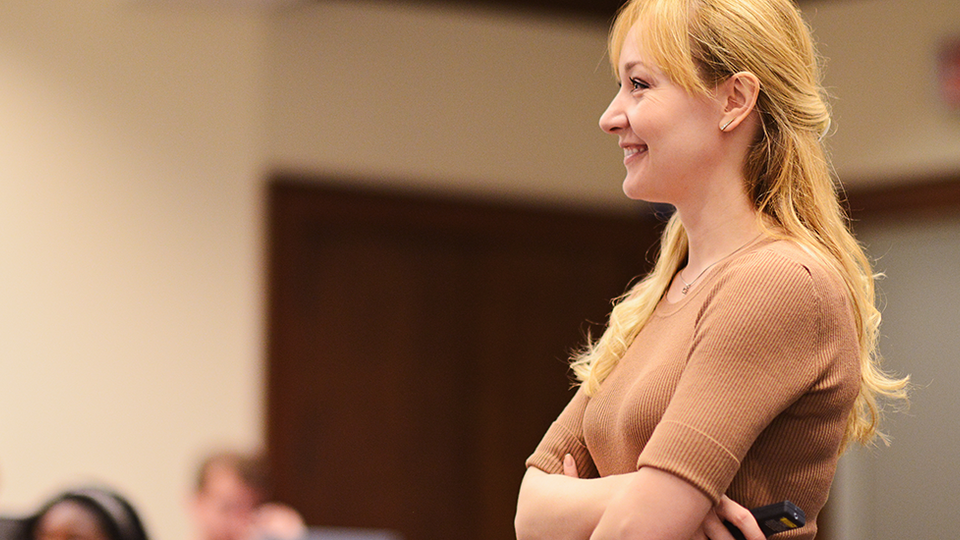
I received my Bachelor of Fine Arts in Musical Theatre and Rice Business fully embraced my arts background. They understood that my creative skills provide me with the empathy and agility to think outside the box and unlock new potential. I knew that Rice Business would give me the education and the network to achieve my career goals to positively impact underserved communities. As a native Houstonian, I have always admired the community-centric culture of Rice and how the school gives back to the community.
What are you most proud of from your time at Rice Business?
Image
I am proud to be a Rice Board Fellow! Rice Board Fellows is a student organization that pairs committed Rice MBA students with local nonprofit boards to serve as non-voting board members. Rice Board Fellows allowed me to apply what I learned in class and use it to advance my paired nonprofit organization. As CEO of Rice Board Fellows, I work with a wonderful executive leadership team. Through this opportunity, I have sharpened my leadership skills and empathetic listening in order to take cues, make decisions, act and react. In addition, I have enjoyed co-organizing Rice Business Gives Back events. These events allow Rice MBAs to unite and do good through volunteer and donation opportunities in the Houston community.
How has Rice helped you in your career?
Classes such as Introduction to Brand Strategy, Corporate Social Responsibility, and Environmental, Social and Governance Issues in Strategy have highlighted my interest in community impact. They have given me the analytical tools needed to make decisions that benefit organizations and society at large. Moreover, with my creative background in theatre, it was instinctive for me to bring a narrative-building angle to my approach to business. Rice Business helped me refine my storytelling and narrative skills in an age of overconsumption of content. These skills have become crucial to connecting with consumers and audiences.
What advice would you give prospective students who are considering an MBA?
The juice is worth the squeeze! The MBA journey is not easy, but it is worth it! Find a program where you can be yourself, be surrounded by brilliant people and welcomes you with open arms. I am so glad Rice Business checked all my boxes and is a community where I can thrive, learn, create and take chances!
Image
What do you think organizations should do better to build a diverse, equitable and inclusive organization?
To build a diverse, equitable and inclusive organization, the leadership must make DEI a priority. The ability to manage diversity, equity and inclusion is no longer a competitive advantage but an essential skill. Organizations should invest in conducting mandatory DEI trainings. This will help understand the challenges that groups and individuals face while highlighting the work needed to achieve a diverse, equitable and inclusive organization.
What suggestions do you have to work with allies within the workplace or at school?
Be fair, open-minded and willing to listen. Allies are a major role in achieving justice. This helps promote harmony, cooperation and enthusiasm to achieve the goals at hand.
Do you have any other comments or anecdotes you would like to share?
My favorite quote that has been a guiding light in my life is by Mae Jemison, the first Black woman to travel into space. She states, “don't let anyone rob you of your imagination, your creativity or your curiosity. It's your place in the world; it's your life. Go on and do all you can with it, and make it the life you want to live.”
Thank you, Rice Business for the education to help me make the life I want to live.
The Liu Idea Lab for Innovation and Entrepreneurship has established a new startup accelerator program called the Summer Venture Studio. The program is open to students of any major or year, including recent graduates.
Learn just how radically social media has changed the landscape of reputation management.
Owl Have You Know
On October 24, we hosted our first live podcast taping event at Rice Business, with Owl Have You Know host Maya Pomroy ‘22 and Associate Professor of Strategic Management, Anastasiya Zavyalova. Listen as they dive into Anastasiya’s research on reputation management, how social media has changed the landscape of the field, how that relates to the Russia-Ukraine war, and her hopes for the future.
[00:00] Maya: They say all you have in business is your reputation. But in today's rapidly evolving world, with social media lending everyone a microphone, who truly controls it?
Welcome to Owl Have You Know, a podcast from Rice Business. I'm your host, Maya Pomroy.
This episode is part of our Up Next Series, where faculty and alumni weigh in on the trends currently shaping the world of business.
On Monday, October 24th, we hosted our first live podcast in the Jones School of Business. We spoke with Rice Business Associate Professor of Strategic Management, Anastasiya Zavyalova, an expert in business ethics and reputation management, and also what happens when organizations mess those things up. During this conversation, we're going to dive into our research on reputation management and the role of social media and how that relates to the Russia-Ukraine War. We'll also talk to the professor about our hopes for the future.
Thank you so much for being here with us today. So, Professor, let's start at the beginning. Let's talk about your background, your upbringing, what sparked your interest in this space, and how you became a scholar of scandal.
[01:13] Anastasiya: Well, it's very difficult to construct your life retrospectively, like, it totally makes sense, this is what led me to today, right? But I've tried to do this. And one thing that interested me early on was detective stories. So, I read novels, Agatha Christie. So, I think a part of me thinks that, if I were to have another career, it probably would be like an investigator or detective or, maybe, journalist. But I try to, kind of, compile things like solve mysteries, so to speak.
Another, kind of, defining moment, I think, in my life was when Soviet Union collapsed and my family and my grandfather, in particular, lost all of his life savings overnight, pretty much. So, whatever he's been saving all his life was worth, like, a loaf of bread next day, which made me think about... I mean, back then I was still little, but it's something that stayed with me, and that's something that influenced my choices later down the road in terms of where I'm going to go and what I'm going to study. And that was, broadly speaking, I thought that I'm going to study business ethics. It turned into, kind of, unethical or illegal or negative business practices and how they affect reputation of organizations. So, that was the beginning of it.
[02:18] Maya: And so, I read that one of the key instances when you really got interested in it was the Mattel lead toy scandal. So, I don't know if any of you remember that, but that was when everybody recognized that there was all this lead in the paint of all these toys that children were putting in their mouths. And that was really what sparked your interest, correct?
[02:41] Anastasiya: So, the toy recalls was happening in 2007, and that's when I started my graduate school. I knew I was interested in something unethical that businesses are doing. And this was all over the news, right? So, like, children dying or their magnets falling off the toys, there's something that's happening that no one knows what's going on. And then, it turns out that it's the Chinese suppliers. And there was a whole, kind of, blaming game started happening in the media about who's responsible for all of this.
And this was constantly in the news. So, as I was studying and I just started my PhD in my education in higher ed, I was meeting with my advisor on a regular basis. And so, she was, kind of, asking, like, "Okay, well go read more and more of these articles and these articles." And it, kind of, coalesced. So, because this was happening in the news while I was reading, what are the frameworks, what are the concepts in negative events, unethical business practices, that's how it came to, okay, let's study this in the toy industry, in the product recall industry. And that's how it... Well, Mattel was one of the companies in our sample, but yes, that was a big part of it because it's one of the largest companies.
[03:41] Maya: And it also impacted the entire toy industry because everybody, sort of, got lumped in with Mattel, right? And so, you also... I guess your research was also with, how does Hasbro respond to something like this? How do the other toy companies respond to something like this? And so, what did your research show that is the best way to respond if you are in that industry and there's a crisis or a scandal that's happening?
[04:04] Anastasiya: Well actually... so, you are right. If you are like Mattel, a prominent company in your industry, chances are that you will be blamed for a lot of things. So, this is, kind of, a double-edged prominence, right? On one hand, you want to be known because it boosts your reputation. On the other hand, if something goes wrong, you will also be blamed for it.
So, in that study, what we were looking at is who is guilty, for certain things, right? In this case, product recalls. So, if the industry is guilty but you are innocent, what we found is it’s better for your organization to engage as what we called ceremonial actions, or think of symbolic actions, like you're trying to have a celebrity endorse your company or your product — maybe, you have some kind of promotion, sweepstakes — so, something that deflects attention over your stakeholders from the wrongdoing inside your industry.
But if your company is responsible for that wrongdoing — so, if you are that Mattel that actually did have lead in paint in toys — it's better to engage in what we call technical actions. Think about it as substantive responses, right? So, your stakeholders will hold you accountable for, "Okay, tell me what you've done. Did you fire the managers who are responsible for it? Are you still working with those suppliers who are responsible for it?" And so, that's what we found that, if your company was involved in it, it's better to take direct and substantive actions to address the problem.
[05:15] Maya: And that also happened in 2007 before social media.
[05:19] Anastasiya: That's correct.
[05:20] Maya: Right?
[05:21] Anastasiya: Nowadays, yes, with social media, so many things can go very differently than what you plan or how they should have gone in the social media era, yeah.
[05:31] Maya: And that's part of reputation management with brands. So, today, it seems that, on social media, there's quite a bit of negative response, you know, from, if something goes wrong or sour, or there's a crisis, and then everybody's talking about it on social media and it seems that it's more negative than positive, and it also seems to me that all brands now need a designated person to be in charge of their reputation management because of something like the rise of social media. Can you talk a little bit about that?
[06:02] Anastasiya: Yes. So, in terms of more negative than positive, so one thing that researchers are finding is that, if you are salient, right, like if you are prominent, if you are vocal on social media, chances are you'll polarize stakeholders, right? So, if you're trying to take a stance on a social issue, let's say it's abortion in Texas, for instance, right, if you are the CEO of a company and you want to try to make a stance, publicly stating something about where you as a person, and it trickles down to, like, you as a CEO of a company, where you stand on that issue, chances are you'll polarize your stakeholders. I think that's an important thing that we are learning now, that we have more and more data about how social media affects reputations. You will have advocates for your brand or for your organization, but you also will have opponents.
Companies are learning, some the hard way. Some are okay with that. It seems like private companies are more vocal about it than public, just because there's, you know, one fewer stakeholder group to respond to, which is investors. So, they have more liberty, I guess, in terms of taking those stances.
Another thing to mention about, kind of, negativity on social media is country-level differences. So, U.S., to me, seems a much more positive country and culture. People love... So, when I teach certain concepts in my class, like, I come from a positive angle, like, "Look at these success stories. Like, this is what you should do and this is how they tackled it and this is how they came out of crisis." I think if I were, for instance, teaching this in Russia or another less positive culture, so to speak, things will be like, "Well, what did they do wrong? Tell me how, which I should not do."
And I think that's a part of it, is that there are certain cultural differences. And some of our researchers actually here at Rice are doing it. So, one of the marketing professors, when they were looking on TripAdvisor and how people from different countries rate the same exact hotels, right, so, they're looking at TripAdvisor reviews and it's exact hotel, exact date. I mean, you know the quality was the same exact quality, right, that they received?
[07:53] Maya: Yeah.
[07:54] Anastasiya: But people from different countries who stayed at that hotel had very different reviews about that hotel. And that partly speaks to, kind of, negativity or, I don't know, I don't want to use that negative term, we're in the United States, but, kind of, differences in culture, right, and the expectations that stakeholders have. So, that negativity can also vary, depending on who is the stakeholder, where they come from.
[08:14] Maya: So, do you believe that social media, the negative review... I mean, because in our country, you have Yelp, you have all of these different ways to review brands and place, you know, hotels and everything else; whereas, in other countries, it's not, maybe, as prominent?
[08:28] Anastasiya: Many countries use reviews.
[08:32] Maya: But so many negative reviews in other countries, or is the U.S. just, sort of, in a class by itself?
[08:37] Anastasiya: So, it's not a negativity root. It's, kind of, people, what do you expect? Like, for some... in some countries, 3.5, that's... you know, it's a good rating. But for, you know, in the United States, anything more... less than 4.7, for instance, seems to be like that's a low rating. So, I think that's where I'm getting at, is that there are differences even in expectations of stakeholders in different countries.
[08:58] Maya: Right. So, let's talk about who does it right and who does it wrong. So, you know, there are some organizations that have managed crisis and scandal well and also use social media as their platform to elevate themselves. Do you have any examples that we could relate to of who to be like and who not to be like?
[09:21] Anastasiya: Wow, the who to be like is the difficult one because I tend to, at least in my classes, focus on, like, look at all these things that went wrong. And in fact, actually that's what makes it a crisis, right? Like, how you mismanaged what could have been just an instance or an incident, but turned out and escalated into a crisis. I think that's the difficult part, because the well-managed crisis we don't know about, right? This, kind of, like, you know, like a drunk person trying to find the keys, like, and looking under the light, you know. Like, why are you looking for them here if you lost them over there? Like, but that's where the light is shining.
That's the same partly with, like, scholars of scandals and misconduct. We look where the data are, but frequently the data on misconduct and scandals are, like, these are the revealed misconduct cases, right? Anything that was hidden we don't know about, and that's more difficult to study. So, to your question, Maya, about, like, when these scandal or crisis events were managed well, the well-managed ones no one even knows about, right? Like, they just... they're all handled within the organization. Maybe, you know, handled well and no one knows about it. So, I can talk about like the... some of them that, kind of, were mismanaged or —
[10:26] Maya: Sure.
[10:26] Anastasiya: — or instances where... So, one of the cases that I'm... actually, this is going to be the first one I'll be teaching in my MBA class is United Airlines. You guys probably remember how Dr. Dao was dragged down the aisle in the airplane and what happened afterwards. Arguably, this could be considered an incident, right? From the reputation management standpoint, it wasn't even the employees of the company that were involved in it. This was airport security that was doing this. And this is a great example of when you can actually, kind of, be transparent and say, “Horrible thing that happened to the passenger, the airport security, handled it not in the way that, you know, were inconsistent with the values of United,” for instance. Instead, what happened was, like, the classic example of how things can be mismanaged internally and externally. So, internally, the letter was disseminated among United employees that this was a belligerent customer, that that's what leaked out on social media. That's how they were addressing Dr. Dao, that this is a belligerent customer. Externally, it was said that, "We apologize for reallocating one of our passengers." And that's the term that started kind of... It became viral on social media. It's like, what do you mean reallocating? He was bleeding like that.
[11:35] Maya: And dragged with his arms above his head –
[11:36] Anastasiya: Exactly. And screaming, and people were in, like, in shock that this is happening. So, this is one of the examples that it could have been an incident if managed well and handled well. In fact, another interesting point is that the CEO of United back then, the year before, received an award for PR. And it wasn't quite reputation management, but he was like a great public relations person. And then, this hits.
So, kind of, another tangential point to that is that, if you raise people's expectations about what kind of company you are, once this, kind of, the push comes to shove and you are tested and you do this, this is like a classic case of mismanagement. But with the caveat, like, all of this with social media is getting so quick now, you don't have the luxury of, you know, Exxon Valdez in 19... when was it, '70 or '80s, where like you had a week to figure out, "Okay, let's do this. We'll say that. We'll use this newspaper to publish." Like, you don't have that luxury of time anymore. Things are, like, changing every second. So, with that caveat that there's a lot more pressure in general on CEOs of companies to handle it quickly. And so, that was the case where it was mismanaged, I would say.
[12:42] Maya: Well, and also it’s something that we have now that we didn't have in the '70s and '80s and, you know, before are these little things where you can take video of everything that's happening and then you can live stream it and you can post it on TikTok and you can post it on... I mean, other than Twitter, you can really post video of everything that's happening, which we can segue into, in a little bit, about the war between Russia and Ukraine and how everybody can really be a war correspondent these days and post what's happening in real time. And so, that is also part of that social media where it's not just words, it's actual video. And that kind of content is very powerful to see and to understand. And you can't refute that, you know. That's one of the things that I remember about the United Airlines scandal, because it was a crisis and it turned into a scandal. And I'd like to talk to you also about, you know, the difference between a crisis and a scandal, right? So, if you can manage a crisis, it doesn't turn into a scandal.
[13:36] Anastasiya: That's right, yeah. So, my gosh, I don't know where to start. So, in terms of social media, right, and how it changed the landscape of reputation management, so, a couple of things. I know I mentioned, kind of, the cycle of this, because now you don't have the luxury like I said, I mean you have to make decisions pretty quickly. You have to be on point.
Another thing that made the change is it's interactive now. So, to your point about, like, using phones, right? So, it's no longer that stakeholders are recipients of information, but they contribute to the reputation of the organization.
[14:05] Maya: They're content creators.
[14:06] Anastasiya: They are content creators. And they are not necessary... not only brand ambassadors anymore, right?
Like, they could be the complete opposite. And they may not even ever interact with your company directly. Maybe, you know, you never even flew United. But now that you see these images, very, kind of, visceral emotion, you know, the bleeding passenger that you're dragging, right? You're right, like, you cannot refute it. And so, that kind of interactivity between stakeholders and companies has contributed greatly, I think, to the changes in reputation management.
And the last one is the level of transparency, where, more than ever, I think now, the consistency between your internal and external messages has become important. Because if you mis- or if you communicate differently a different message to your internal stakeholders and then you say something differently for reputation management purpose to your external stakeholders, it's going to come about. Whistle-blowing will be an extreme example of that, but that can come about, right? So, your Facebook, you're using algorithms not to the best goals of your customers, right? And it's going to be, you know, something else is driving your decision-making that can come about quickly. And so, that inconsistency in message is something that has changed, kind of, the social media landscape for sure, too.
[15:20] Maya: And also, there's pressure with organizations and businesses to take a stance on socially significant issues.
[15:25] Anastasiya: Yes.
[15:26] Maya: Certainly, right now, I think we all know what those are, especially in the state of Texas. Has that always been an issue, or do you think that's something that has started because of social media? Or, you can literally put up an Instagram account, you know, sort of, pushing your messaging of what organizations or what people need to believe and think and everything else?
[15:46] Anastasiya: So, I would actually invite our audience to look at something that I like, the study by Pew Research Center. You probably have already looked at it. But they look at polarization of U.S. audiences or U.S. general public from 1994. I think most recent data they have is like 2019 or '20, like very recent. So, definitely, post-social media era. And what they show is that the society, at least in the United States, is becoming more polarized. So, if the... And they're looking specifically at the Republican, Democrat, or liberal and conservative values that people uphold. And you can see, kind of, the distribution of this is liberal, this is conservative, the means were very close to each other. Yes, people were on different sides, but they were closer to, kind of, the average level of distribution.
As the years go by, and you can actually click on, kind of, the animation of it, it's really telling to me how it gets polarized. And so, all of a sudden, we see this switch. So, now it's, kind of, this is the liberal side, this is the conservative side. So, polarization is occurring at that level. But we are also seeing it with companies as well. And there is pressure, for sure, especially for B2C companies. So, if you are, kind of, a, you know, consumer-facing brand to take a stance on issues that are important to the constituents.
Yes, it can lead to polarization, for sure. In fact, I have some students, when I teach this in my class, they will come up to me and say, like, "I don't care where they stand. I just want to have a good salary and good working relationships with my colleagues, and that's it," right? But some companies and some companies' CEOs feel that pressure and feel that they have to respond to that pressure.
This is not to say that everyone is doing it. In fact, some CEOs think like this is not... not necessarily that it's not their place because they are very powerful, but they choose to be reticent. That's their actual strategic decision. "We are going to stay out of the spotlight. We're going to be reticent. We are in the business." Like, Michael Jordan said, like, "Republicans buy sneakers, too." So, there we go. So, you know, "This is my business, and it's not my business to talk about, you know, the polarization of society." And some don't make those stances.
There's a complete extreme to it, where some companies do it and do it in a way that is not consistent, to say the least. So, for instance, one of the examples I use in the class is BMW. During the LGBTQ month, they use, kind of rainbow on their brands, on their brand on the logo, but only in certain countries in the world and not others. So, kind of, like Muslim and more conservative countries, they don't do that. And so, this is, you know, a skeptical person will say, "Wow, that's a cheap way to, kind of, say that’s where you stand, except you really don't. If you really truly believe that this is an issue that's worth taking a stance on, you'll do it across different countries." So, there's, kind of, pros and cons to that, but there is definitely more and more pressure from stakeholders from these companies or onto these companies to take a stance on issues that are important to them.
[18:37] Maya: And BMW doesn't think that those stakeholders or those customers are going to see that? I'm just curious because [crosstalk 00:18:41].
[18:42] Anastasiya: I don't know. So, I shouldn't have said it because I was going to take a poll with my students. I like to do that with my students. But, yeah, I don't know how many of you guys actually go online and look up, oh, let's see how they, like, position their brand in Saudi Arabia, for instance.
[18:55] Maya: Right.
[18:55] Anastasiya: I don't know how many stakeholders do that. Some of us just look, "Oh, look, this is what their brand looks like in the United States, and that's enough information for me."
[19:02] Maya: With that, I want to switch over to what you also discussed and what you studied in terms of scandals within universities and giving by alumni. And so, one of the things that was part of your research was that, if there's a scandal in a university, there are stakeholders that are like the die-hard alumni that are going to give. And they actually give more during a scandal up until a point. Can you talk a little bit about that? Because I found that fascinating.
[19:28] Anastasiya: So, this actually speaks to that polarization idea, right? So, once you take a stance, you will polarize stakeholders. Some will be your advocates, and some will be, kind of, the opponents of your organization. So, in that study, I was looking at alumni versus non-alumni. So, not quite opponents, right? But people who are not... who don't have the same involved level of relationship with the institution. And so, yes, we were looking at NCAA infractions by football teams, or athletic teams, in general, in the U.S. universities. So, things like creating fake classes to recruit student-athletes and then boost their GPA. So, I'm not going to name a school. You probably all know which school I'm talking about. Penn State was, like, an extreme example in that, you know, there's the big scandal.
[20:08] Maya: [crosstalk 00:20:09].
[20:11] Anastasiya: And I use that as, kind of, an illustration that, when negative information about misconduct in an organization just starts trickling down, those stakeholders that were your advocates are going to stand by you. They're, kind of, the loyal customers or loyal investors, loyal alumni, donors, right? They're going to be the ones who will, kind of, advocate for your brand. They will be giving you the benefit of the doubt. They will be saying that, "No, hold on. We don't have a lot of information yet. We don't know what happened," up until a certain point. When there is a lot more clarity, a lot more facts start coming about, and that's where, kind of, the mismanagement occurs, right? Like, if it's revealed that you've been covering it up all along, you're, kind of, risking to lose those advocate stakeholders.
And that's the worst you can do for your company is lose those because chances are they're not going to easily come back and be like, "All right, I'm going to support Penn State again," you know. It's, to go from negative to positive is very difficult, to go from positive to negative, quick and easy. So, yes, this is why it's important to build those positive stakeholder relationships, to build the loyalty of stakeholders for your company, for your organization, for your brand, because they are the ones who will be supporting you in light of a crisis.
[21:19] Maya: However, in some of the examples were, the alumni said, you know, "I don't really care what the scandal is as long as they keep on winning... so, as long as they keep on winning games, then I'm..." which is, which also brings me back, and I'm sorry this might ruffle a couple of feathers, but about the Astros and the whole cheating thing that happened, that people try not to remember about what happened with the Astros a couple of years ago. But people tend to have a very short memory, right? Like, that's just something that people don't... Or, like spying on the calls and all this whatever. Like, I'm not a baseball fan, so I don't know.
[21:55] Anastasiya: Why did you bring up Astros then?
[21:56] Maya: But everybody remembers, but you guys remember when that happened?
[21:59] Anastasiya: Yeah, I actually had students write a case on this, too, yeah.
[22:02] Maya: Okay. So, talk to me about the memory span of people remembering scandals or choosing to forget.
[22:09] Anastasiya: Ah, yes.
[22:10] Maya: Or, also, there are folks that weren't even alive during Exxon Valdez and when all of that happened. And people tend to have a short attention span with those sorts of things. And even like the, you know, New Horizon, that whole tragedy that happened and the scandal that followed that.
[22:27] Anastasiya: Okay. So, a couple of things on that. One is the athletic scandals were a unique type of crisis.
[22:34] Maya: Like Deflategate as well with the Patriots as well.
[22:37] Anastasiya: Yes, yes. So, that memory and the severity of consequences depend on the type of crisis we're talking about. So, what you're mentioning, Maya, that happened when I was asking people, like, "Hey, why did you stop it?" Or, like, "Why did you continue donating?" Like, "I don't care how they recruit. I don't know. I don't care if they have escorts at the recruiting event. Like, they're winning. That's good, right?" But is it real... So, in the view of these stakeholders, this was not a big crisis or a scandal or some kind of egregious violation that is worth breaking ties and not being loyal to the team anymore.
But think of a different type of crisis where this actually can matter a lot. So, another context that I studied, with the tremendous help of some of the people in the audience, was Catholic Church child molestation scandal. It is still an unpublished study. It's been so many years that I've been working on it. And I, like, so was entrenched in the context. But I was looking at how parishioners reacted to the scandal of child molestation in Philadelphia Archdiocese. And that's a different type of crisis, right? It's a different type of misconduct and violation. It's a different type of context altogether. So, all of a sudden, the victims are not, you know, 17-year-old boys who were recruited by having escorts, like mingling around in a recruiting event. The type of victims and the severity of the crisis mattered in that case, to the point where even the loyal parishioners, the loyal Catholics, were like, "Okay, I am done." They said that not only are they going to not going to go to that parish anymore, they're just going to... some of them actually switched to other denominations altogether.
So, the type of crisis matters. In terms of memory span, it was a revelation for me. So, I was teaching strategy class. It wasn't even a reputation management class, but strategy class for undergrads at Rice a couple of... well, many years ago now. It feels like a couple of years ago. And I asked them. So, they have a final project usually. And I asked them, kind of, "Hey, guys, like, which team or which company do you want to write your final project on?" And many of them say Nike. And it kind of stuck with me because I remember when Nike had a child labor scandal in the '90s, right? Like, they used child labor in their workshops. And that was a big thing, big taint on their reputation. And when I mentioned it to the students, they're like, "Oh, I've never heard of that." You know, the year... the age difference was maybe 10. I had 10 years on them, but they didn't even remember that. So, that didn't stick in their memory. So, that was kind of revealing to me. I'm like, I wonder how long that social memory lasts, collective memory, right?
I think, with social media, there are, kind of, two dynamics going in different directions. So, on one hand, yes, our attention span becomes shorter. Like, what happened yesterday we forget because there's so many more shiny and bright things happening right now. Like, you want to be constantly on point. Like, you know, you have to do so much more to just catch up. So, that's one thing that attention span may be shorter. But on the other hand, with social media, things... like, everything you've posted stays with you forever on the web.
[25:24] Maya: Well, you can delete it. But yes, it does, kind of, you can screenshot it.
[25:27] Anastasiya: Yes, exactly, people screenshot. And so, when your company's going through a crisis, those things that you've posted years ago can actually be brought up into light yet again. And so, that's, kind of, the, you know, the dual dynamic. So, yeah, on one hand people stop paying attention to your crisis because there's something new happening. But on the other hand, if they are starting to dig deeper, the social media is actually allowing them to, kind of, conduct that, you know, digital ethnography and see, well, what kind of person are you? Like, what did you say 10 years ago?
[25:55] Maya: Right.
[25:55] Anastasiya: What kind of Halloween costume did you wear in 1970s?
[25:59] Maya: Well, that's what you tell your children. Like, whatever you do, it will be on there forever. It will be on social media forever. So, let's switch gears a little bit about and talk about the Russia and Ukrainian war, and how those countries have used social media. And also, obviously, you're from a Soviet country. I am as well, full disclosure. So, both my grandparents are Ukrainian and both of us come from that neck of the woods. So, tell me about how, you know, this war is very much, it seems to be, black and white and no shades of gray. And you feel that, that's dangerous as well because there's plenty of people within Russia that aren't in support of the war in Ukraine because there is... there are so many close ties between the two countries. So, tell me more about how that's dangerous to classify it that way.
[26:50] Anastasiya: So, one thing I would say, yeah, these are really like switching gears in the conversation. The war itself was a shock for people in Russia. It was a shock for me. In retrospect, there were so many different red flags that, kind of, pointed to now that we are, kind of, you know, going through it, digital ethnography, including, it's like, of course, they would've done it. Like, look at what Putin published in 2015 and so on. So, that's... it was still a shock, even though... Regardless of how much information we had on our hands, it was a big shock. When it started, I was on sabbatical at Oxford. I mean, some of you guys read that in the Rice Business. So, I was in the middle of the research project that I was studying, and then this happens and it was a big shock. Yeah, I think every Russian family is split in a way. So, within each family, there are people who support and oppose the war, really. I mean, this is... it's that polarizing.
But also, what happened, I rarely post on these types of issues on social media, but something happened which, kind of, made me want to say something about it on LinkedIn, specifically. But I saw how quickly people started saying war of Russians or war by Russians against Ukrainians. And that, kind of struck me because, like, I'm ethnically Russian. I've been opposing this regime, probably not as adamantly as I should have, but I have been a part of the protest. I was walking in Russia when Navalny was put to jail. So, it hurt in a way that people kind of thought that all Russians are bad, right?
[28:18] Maya: Just like in the Cold War where—
[28:19] Anastasiya: Yes.
[28:20] Maya: … because I came here during that time. And when I was growing up here in the States, I was called all sorts of names, and a communist in this and everything else.
[28:27] Anastasiya: Yeah, the Red Scare, right? Like, you are the communist, and all of a sudden, like you...
[28:30] Maya: Well, it's happening to my children now in school.
[28:32] Anastasiya: There we go, exactly.
[28:33] Maya: Because they're half-Russian. So, I know exactly what you're talking about.
[28:37] Anastasiya: Right. And so, my... that post that I made kind of... I don't know, maybe that wasn't the right time to do it. To me, it felt like, okay, if I am ever vocal, this is what I'm going to say. Because I think I know something about, kind of, research on stigmatization or negativity and how it can be dangerous and think in categories. And that event that was happening right there and then. And I saw the lessons from my research, kind of, playing out live as I was, kind of, reading the news, that I felt like, okay, I need to say something. And that's, kind of, that danger of how quickly people started stigmatizing the entire, kind of, Russian nationality, even though there were like I said, people in Russia who were strongly opposing the regime.
That project that I mentioned a bit earlier was about NGOs in Russia who were actually fighting against what was happening in Russia for years, for decades, right? So, that's something that was very emotional to me, that, yeah, quickly, it was a category of like Russians. And now, everything that is Russian, all, like, you know, it's a Red Scare all over again. And that's something that I really hope that people won't do, to the extent that it was done that early in the war, and that I lived through, as probably many of you guys have, that danger of being classified into a category, without anyone knowing anything about, kind of, exactly who you are as a person.
[29:54] Maya: Right.
[29:58] Anastasiya: I think that's the dangerous path to travel.
[30:00] Maya: Absolutely. And it definitely damages your reputation. If you're an organization and you take that stance, or even if you're a human being and you take that stance. So, what are your hopes for Russia and Ukraine in the next few years? And in what areas do you see progress?
[30:15] Anastasiya: As anyone, I hope for this war to be over. Like, that's the first hope. My speculation is, you know, if I were to be true to, kind of, the research that I've conducted and my colleagues have conducted, my prognosis for Russia is that it's going to take years, if not decades, to recover from it. Because as the war was unfolding, I think one thing that Putin's regime did not expect is that how many more companies and countries are going to turn away from them. I think, in a way, the bet was this is going to be over soon, quickly, and just much like, you know, the war in Crimea. And it didn't. I think that was a wrongly placed bet. So, all of a sudden, multinational companies started leaving Russia.
[30:55] Maya: Exxon with $4 billion worth of assets still on the Sakhalin Island.
[30:58] Anastasiya: Exactly. They're like, yeah, done, this is a toxic asset now for me, right? I'm not going to do business with your country. And so, I can't imagine that those same executives or companies that turned away will change their mind pretty quickly, right? So, if I were to live like I said by my research, I would say that, no. To recover from negativity to start building up your reputation again, that is now going to take years to do, if not decades. And that's the... If I were to forecast, I think that's what's going to happen. Even if there is a change in regime, I think it's going to still take years to recover. And in terms of relationship between Ukraine and Russia, that's a whole other story because this is... there are homes that are being invaded. It's people who are being displaced. Crazily, many of them are relatives of Russians, right? And it's, yeah, it's going to take a long time to recover from this.
[31:47] Maya: Yeah, that reputation management is going to take decades.
[31:50] Anastasiya: And it's not just... I think, like, reputation management in this context feels too superfluous. And that's not what we mean, right? Like, it's more, kind of relationship management or restoring the trust. That's going to take a long time.
[32:02] Maya: Yes. Well, thank you for your input and your perspective on that. You recently took a sabbatical, and I wanted to talk to you about what you what you worked on during that time.
[32:09] Anastasiya: Yeah. So, it was wonderful. It was my first sabbatical. I've spent enough time at Rice that I worked towards my sabbatical. So, yeah, I was at Oxford University. And one of the projects that I started working on was actually looking at stigmatization of organizations and, kind of, the early stages of stigmatization. So, a lot of stigma research looks at what happens if you are in a stigmatized category. Think of, well, some studies were conducted in, let's say, like, gambling industry or gay men's bathhouses or marijuana industry. Like, that was a stigmatized industry in the United States. And so, given that you're in a stigmatized category, what happens and how do companies manage that, right?
There's less research on where does the stigma come from in the first place? Like, who's responsible for it? Like, why does our society, all of a sudden, think that marijuana is somehow worse than alcohol, right? So, that was, kind of, the theoretical question I had in mind. But I was studying stigmatizations of NGOs in Russia. In 2012, Putin signed a law that is called Foreign Agent Registration Act. Well, it's equivalent to the Foreign Agent Registration Act in the United States. The law is foreign agent law in Russia. And according to that law, NGOs that received foreign funding — and mind you, this could be like SourceFoundation, Greenpeace, MacArthur Foundation, Elton John's foundation, and many, many, many others — if you received foreign funding and if you engaged in "political activity," which could be defined, well —
[33:41] Maya: As anything?
[33:41] Anastasiya: Yes, anything can go under that umbrella. You are entered into a foreign agent registry. And so, the question that I was studying while I was interviewing leaders of these different NGOs in Russia is how did they, kind of, fight that early stage of stigma emergence, right? Like, how did that label start becoming stigmatizing to them? What strategies they took, not necessarily to recover, but to deal with this emergence of stigma.
So, I was, while I was in Oxford, I was actually interviewing them on Zoom, and WhatsApp, and Signal and all kinds of platforms to get more insights into it, but also conducting, kind of, archival research as well.
[34:16] Maya: Right. And you have a new title as well. Can you share that with us?
[34:19] Anastasiya: Yes. Thank you. So, recently, not because of that project but just because I've been involved in this... or entrenched in this research for so long, I have been named an international research fellow with Oxford University Center for Corporate Reputation. It's been an honor. It's a great institution. I've been involved with them for 10 years. And so, that's, yeah, that's another title.
[34:40] Maya: That's incredible. And we're very lucky to have you. So, don't leave.
[34:42] Anastasiya: Thank you. Thank you.
[34:43] Maya: Stay here with us, okay? Well, thank you so much, Professor. It's been great fun to talk with you.
[34:50] Anastasiya: It's all right.
[34:50] Maya: I would like to open up the floor to questions. So, if anyone has a question, we're actually going to have a microphone that we're going to have brought up here. So, if you'd like to come up to the microphone so we can hear you, come on up.
[35:01] Audience 1: Hello.
[35:02] Maya: Hi, Marcus.
[35:03] Audience 1: Thank you so much. So, my question kind of, goes back to the very beginning of what you're talking about with, like, the Mattel scandal. So, you mentioned that even companies in the industry that aren't guilty, they would do like discounting or do like celebrity endorsements. Do you ever see that that could be an issue in itself to where consumers could see that as their, maybe that company's covering up and maybe they could be guilty? And then, how could they potentially strategize to ensure that they're not seen as a guilty party, but they're actually ensuring that their reputation isn't taken down by the guilty party?
[35:37] Anastasiya: Yes. Great question. That can backfire, in fact. So, when I kind of, bring in the studies from the past to my students, like, look, this is how these companies manage that. Like, which scenario do you think is the best? The answers differ from what the studies published 20 years ago. So, I think what this speaks to is to the fact that people are more scrutinizing of what companies are doing and companies' motivations behind their actions. So, you're right on point with that. I wonder if I were to conduct the study now, especially with social media, how things will change. But in terms of, kind of, what should we do if this happens, so, the way that I, kind of, label this is guilt by association, right? You didn't do anything wrong. Let's say we're talking about higher education industry, right? And so, we know some universities forging rankings and trying to do certain things just to boost their rankings. And then, think USC, think of Rutgers University, like there's all of this, kind of, maybe not scandals, but negativity happening. It kind of, puts scrutiny on the entire industry of higher education, right, and the role of rankings and so on.
So, I think one thing that companies can take is reaffirm what their values are and how they tackle this, right? What do they do in order to address this and signal that they're not a part of this? With the caveat that that's true, right? So, that's something that can backfire to companies is when they say one thing, but in reality, what they're doing is completely different. And that's why I think of reputation management is not necessarily, how do you manage, kind of, the message you push to your external stakeholders? No. Like, if you are truly insincerely a company that's doing something really bad and rotten from within, I probably won't be the right person to be a consultant for your company. So, if you are truly a transparent and sincere and company that lives by its values, that would be the time to kind of signal it to the stakeholders that, "Well, look in our case, no, this is not what we're doing. We know this is happening with our competitors," but try to, kind of, mention what, kind of, strategies and actions you take to ensure that this doesn't happen in your company.
[37:37] Audience 1: Perfect. Thank you so much.
[37:38] Anastasiya: You're welcome.
[37:41] Audience 2: Hi.
[37:42] Anastasiya: Hello.
[37:42] Audience 2: I want to thank you all both for this opportunity for us to be here and to hear from you. I actually had a few questions that came up while listening to you. So, depending on how many other people have questions, I'll ask all.
[37:52] Anastasiya: I'll take more offline, for sure. I'll stay here.
[37:56] Audience 2: Well, the first one that I was thinking is when a company throws a line or on an issue or a company, you know, is, kind of, waffling or wavering in between what they believe or what they want to put out to the public, how do you create clarity or buy-in within the employee base? Because the people that are working for you, they need to know what to expect as well and where they stand, especially in an inclusive or a diverse employee base. Like, how do you... And I don't know if that's in your work, but like how would an executive do that sort of work?
[38:26] Anastasiya: Yeah. I haven't studied that myself. I can speak, kind of, from the studies of my colleagues. Some decide that this is not their place at all, right? But if there is pressure from stakeholders, and you can think about stakeholders differently, but if these are, kind of, the salient stakeholders who actually have an ability to put pressure on your company, let's say we're talking about employees or investors, you will have to say where you stand. And I think, usually, and let's not talk about, kind of, things that polarize stakeholders, but usually, what makes sense in those instances is what is the common goal? Like, I want to make sure that everyone feels safe and respected in the workspace. I don't think any CEO will come out and say, "You know what? I don't care about how respect..." Well, actually, there are some CEOs who can do that, but not publicly, I guess.
[39:14] Adrienne: We can think of a few.
[39:15] Anastasiya: Yes. So, there are a certain set of common goals and values that actually, regardless of where you stand on the party line, will resonate with different stakeholders. Like, you want to make sure that all the students at Rice feel welcome, right? And I think that's the message that will resonate with everyone. So, that's how some CEOs choose to make a stance.
I know I mentioned that you know, public versus private companies could be different. And we are seeing companies like Chick-fil-A or Patagonia, right? Like, private companies trying to be, like, really vocal because they have that liberty, I guess, to do it. But I think for publicly traded companies, it's a really fine line. But even so, there are a certain collection of values which everyone can understand and agree with. And so, I think that's where you can, kind of, publicly mention that, yeah, with due respect to everyone, make sure that the environment is inclusive.
[40:02] Audience 2: That makes sense. I'm going to ask one more in case someone... unless someone else is walking up.
[40:05] Maya: Yeah, absolutely.
[40:07] Audience 2: What skills do you encourage us to take up as consumers to better assess the fidelity of a company's commitment?
[40:14] Anastasiya: Yeah, be vocal and scrutinize them. I mean, if you see that there is something that's quite a bit off, like if you learn that the company is saying something different to the employees versus the brand they're trying to put out there, you have the power.
Like, we all have the power now to scrutinize that, to see whether the company is true to its words. So, I just came out of a class where I was... we're talking about, kind of, identity versus reputation of a company. So, identity is what internal stakeholders think, “who we are as an organization.” Reputation is what external stakeholders think about the company. And if there is a mismatch, that's a good recipe for disaster.
So, the example I was giving to the students was Enron. I actually looked through Wayback Machine on their website in like 1999. And they spell out all the values that they stand by. And two that I specifically highlight was respect and integrity.
And they say, you know, "We treat others like we want to be treated. If we promise something, we'll deliver on that promise." I'm like, isn't that kind of funny to see now? Well, not funny.
[41:11] Maya: Except for your retirement account, [crosstalk 00:41:13] everything else, yeah.
[41:15] Anastasiya: Yes. So, now, kind of down the road, we're seeing, look, this is what happened. People didn't have that, not even luxury, but that tool to scrutinize what the company is doing because I think a lot more people knew what's happening internally and could have been transparent or put the company under more scrutiny to make sure that they stand by those projected values. And so, I think this is one thing to say is that, yeah, put the company on the spot. If they're not doing something that you... that they promised they will do, if they're not living by the values that they project to others, you have an ability now to say that.
[41:48] Audience 2: Yeah, that is the one great thing about media and all of the technology we have to be able to actually be intentional about finding it and then calling them out. I really appreciate you answering that, and thank you for your time today.
[41:59] Anastasiya: Thank you.
[42:00] Maya: Other questions?
[42:01] Audience 3: I also wanted to say thank you to you guys for being here. So, my question is really about how you determine where to take your research in the future and what your process is like.
[42:11] Anastasiya: Oh, wow. Interesting. Funnily enough, it usually happens when I write the discussion section of a paper because that's kind of the last thing you write. And this is where you can speculate, you know, I haven't addressed this, I haven't addressed that. So, like with the NCAA scandal, for instance, what we saw was, you know, alumni support it, and then they don't.
And so, like, this “don't” part was interesting to me, like, when is enough is enough for them. And that becomes, kind of, a new study. And that led me to the Catholic Church, like, and made me think that maybe it's the different types of crisis or scandals, right? So, yes, it's easier to forgive the fact that there was a fake class because, you know, who really were the victims versus these were nine-year-old, in some cases, children, right? So, when I write out the discussion section and all the nuances, that kind of makes me think, “Okay, this could be the next study.” Or, so this is, kind of, the theory-driven approach to thinking of what's next to study.
Or, it could be phenomenon-driven. Something is happening out there in the world that maybe current theory cannot explain. But this is really a big thing. And that's exactly what happened actually with the NGO study that I mentioned. I did not quite have... I mean, theoretically, I had the question of, I wonder where a stigma emerges. And I look at sociology study, I look at the, kind of, business strategic management studies. And usually, they start from, given that there's a stigma, this is what companies do. But the question is like, how does it come about theoretically? And then, it was, I've been following, kind of, the development of Russia while I've been in the U.S. So, that phenomenon, especially once the war started, it all, kind of, came together.
Like, my research, the current events, the context, the importance of the context. So, sometimes it comes from, kind of, the phenomenon, and that drives the question.
[43:46] Audience 3: Thank you very much.
[43:47] Anastasiya: You're welcome.
[43:48] Maya: Other questions?
[43:49] Audience 4: Do you ever get approached by organizations or people... maybe not CEOs, but people who work for them about your research?
[44:00] Anastasiya: I do, yes.
[44:02] Audience 4: And what... do they ask you to come in and give them an assessment? And have they been through scandals, or are they just asking, maybe, ahead of something that might break?
[44:16] Anastasiya: Proactive, right?
[44:17] Maya: Yeah, scandal avoidance.
[44:20] Anastasiya: Yeah. So, rarely does that happen here. I'm usually like, oh, what do we do? So, I've had a couple of companies approach me just to pick my brain, right? So, usually, it's not like, "Oh, my gosh, we're losing," because that's when they invite consultants. In fact, like one of the speakers in my class is a McKinsey consultant whose job is precisely to do that.
Like, the company's going through a crisis. I do not want that job. It's so much pressure. I love being a researcher, instead. I don't know how he handles that. But I do get approached by companies where they try to figure out, like, how do we build this brand? Or, what would be... you know this is the situation we're in. It's not necessarily a scandal or a crisis, but something that they're struggling with and trying to, kind of, conduct some internal analysis, you know. What's the best way to, kind of, go ahead with building reputation? But yeah, sometimes companies do approach just to, like, pick my brain.
[44:20] Maya: Okay. Well, we want to thank you all so much for being here today. Professor, thank you for being here today and spending time with us.
[45:15] Anastasiya: Thank you.
[45:17] Maya: We are going to have a reception in the Woodson Courtyard in just a few minutes. And you can also have some time to speak with Professor Zavyalova and ask her additional questions. And we're just so grateful for you to be here today. And we're wishing you a wonderful evening. Thank you so much.
[45:33] Anastasiya: Thank you.
[45:35] Outro: Thank you for listening. This has been Owl Have You Know, a production of Rice Business. You can find more information about our guests, hosts, and announcements on our website, business.rice.edu. Please subscribe and leave a rating wherever you find your favorite podcasts. We’d love to hear what you think. The hosts of Owl Have You Know are myself, Maya Pomroy, and Scott Gale.
Professor Jonathan Miles discusses why so many talented people struggle to advocate for themselves, what his comic book store taught him about entrepreneurship, and why influence is often misunderstood.
Professor Zhang shares what her research reveals about the leap from functional roles to the C-suite, why taking risks is non-negotiable for career advancement, and how Rice Business Executive Education’s Executive Leadership for Women program is giving women the tools and community to rise.
Professor Yael Hochberg shares the origin story of the Liu Idea Lab for Innovation and Entrepreneurship (Lilie), the incredible innovation that has come from Lilie over the last 10 years and what the future holds for entrepreneurship education in the age of AI.
Rice’s Jones Graduate School of Business ranks 17th among top U.S. business schools and 29th globally — up from 28th and 47th a year ago, respectively — and is No. 1 in Texas, according to 2023 rankings from the Financial Times.
Avery Ruxer Franklin
Rice’s Jones Graduate School of Business ranks 17th among top U.S. business schools and 29th globally — up from 28th and 47th a year ago, respectively — and is No. 1 in Texas, according to 2023 rankings from the Financial Times.
“This year’s ranking is the result of Rice Business working toward meaningful, practical improvements for our students,” said Dean Peter Rodriguez. “Our students are able to personalize their education, learn from top-rated faculty and prepare for the complex, changing world —– with a tangible return for their investment in a Rice MBA.”
Metrics for the 2023 rankings included average salary three years after graduation and salary percentage increase as well as the core curriculum’s focus on environmental, social and governance and climate solution-related courses. Rice Business also ranked 12th in campus carbon footprint among U.S. schools, ninth for the number of faculty with doctorates, fourth for international mobility and third for sector diversity, which is a measure of the range of professional sectors that applying students worked in at the time they were admitted.
A Houston venture capital analysis co-authored by Rice Business Executive MBA candidate Stephanie Schmidt highlights the city's growing innovation ecosystem, arguing that stronger startup formation is key to building on recent successes like Fervo Energy's IPO.