
Flight Path
Allison chats about selling her first venture, Rebellion Photonics, to Honeywell in 2019 and how she's codifying blue collar genius through Alaris AI.
Liam Morris ’23 manages one of the most complex corners of United Airlines — airport operations quality control across more than 80 stations spanning Latin America, Central America and the Southwest U.S. In this conversation, he shares how early travel experiences opened the door to a career in aviation, the path that led him from loading bags in El Paso to overseeing global safety audits, and what it takes to lead with precision, clarity and calm under pressure.
Liam also reflects on United’s customer-centric transformation, the moments that shaped his commitment to the industry, and how the Rice Online MBA gave him the flexibility and confidence to grow as a leader while navigating an ever-moving, always-on operational world.
Subscribe to Owl Have You Know on Apple Podcasts, Spotify, Youtube or wherever you find your favorite podcasts.
[00:00]Brian Jackson: Welcome to Owl Have You Know, a podcast from Rice Business. This episode is part of our Flight Path series, where guests share their career journeys and stories of the Rice connections that got them where they are.
Today, we’re joined by Liam Morris, a graduate of the online Rice MBA program and aviation operations leader at United Airlines. As manager of airport operations quality control, he oversees safety and regulatory compliance across more than 85 stations in Latin and Central America and the Southwest U.S.
In this episode, we dig into how Liam found his way into aviation, what drew him to United, and how he’s grown to leadership roles that require clarity, precision, and calm under pressure.
Liam, it is great to have you as a guest on the Owl Have You Know podcast.
You're in aviation, which I think is really the most complex industry out there. I'd love to know about your role, your responsibilities at United Airlines. And if you had a typical day, I know that's probably not what we would use the word “typical,” but what that would look like.
[01:07]Liam Morris: Yeah. So, right now, I'm a regional manager for airport operations quality control, and that's in our safety and regulatory compliance world. So, essentially, I have about 70, 80-plus airports that feed into my team of auditors, where we ensure that those airports are operating at FAA standards, based on what we've agreed to with the FAA.
So, the best way I can describe it, everything in our industry is super, super regulated, right? So, when it comes to, even how we bring in an airplane to how we load bags in the cargo pit of the aircraft, it's in a manual and the FAA approves that manual, right? So, everything's written down specifically to be done. And every airline has their own manual.
Sometimes, the processes are very similar or the same. Sometimes, they're very unique. You know, United have a very unique process compared to one of our competitors.
So, my job is to ensure that our employees in the airport space are doing what we said we’d do in the FAA service manual that we've created and agreed with them. So, we'll go out and audit the Latin Central America region that I'm specifically responsible for. But there's stuff globally that my team deals with. So, there'll be times where I'll be traveling overseas and stuff to go conduct an audit or perhaps provide a second set of eyes to one of my peers, et cetera.
So, we really try to maintain that integrity of our audit as well. But that's my current role. You know, started way back in the day loading bags and cleaning planes while I was an undergrad. So, it's been a great progression.
[02:23]Brian Jackson: No kidding. So, are people happy when they see you? You're the audit guy. Like, do they like it? I mean, are they smiling? What's the environment?
[02:31]Liam Morris: It depends. Like, I can say I have risen to a level of LinkedIn fame for United. So, people will be like, “Oh, you're that guy. Hey!” Like, some are really excited and some are like, “Be fair and let us know how we're doing, but don't be too fair, you know.” So, it depends. But, you know, for the most part, I'm really thankful for the safety culture we have that actually, like, really welcomes us. I can see that other corporations, the auditor comes in, it's like, “Oh, no.” But, for the most part, I've been in this role for a year and I've been really welcomed in a lot of the stations and meeting the general managers and directors and VPs.
It's really cool to actually see that people are really actually happy that we're there and are willing to say, “Lay it on us, let us know what's going on and don't hold back. We want to make sure we're running a good, safe operation.”
[03:09]Brian Jackson: Well, I'm a recovering attorney, so people weren't always excited to see me. And that's okay. You know, not everyone's going to love you, but we're doing good work, right?
[03:17]Liam Morris: Yeah.
[03:18]Brian Jackson: So, you already alluded to, but you've been in the airline industry for a while. And you've had a lot of different roles. But what really brought you to it in the first place? What drew you in?
[03:27]Liam Morris: I think, since I was a little kid, I really loved traveling. I was fortunate enough to have parents that would take me and my brothers traveling and around the world. And I remember being, like, eight, 10 years old flying on Southwest and American and all these different airlines out of El Paso.
And it was just so cool to me to be in the environment of the airport and just see, like, how all these moving parts come together to achieve this really organized chaotic sequence of events to get an aircraft out, even from a young age.
So, I've always been interested in the industry. And I think, when I became older in high school going into college, I thought, man, I really want a job where, not only am I having the ability to travel, because I didn't know you get free flights before, but now, I'm like, “Oh, you know.” When I got older, I'm like, “That's a great perk, right?”
But I wanted the ability to be in an industry where, like, I'm a part of something bigger, right? And being a part of an airline, it’s really cool because even though, you know, my work now may not directly affect a flight leaving on time out of here, but it does affect the customer experience in some way.
So, I just wanted to be a part of a really, really big machine that gets people where they need to go. And of course, the traveling and having no limits, my first manager in United told me, you know, “Hey, the world is your playground.” And that always stuck with me. My first week working with him is, like, I want the ability for the world to be my playground, where if I want to just go for a weekend trip to another country, I want to just be able to do that, or even a day trip. And I had plenty of those stories. So, yeah, just that freedom and the ability to affect a big organization and help people is really what drew me there.
[04:49]Brian Jackson: You know, when you go to airports, it's like the one place where you realize how much we rely on other people in our lives to do what we do, you know. Like, I need to fly to Chicago for this big important meaning. Well, for that to happen, it took, you know, TSA, bag check, all these things to get me there. And it really dawned on me the last time I went to Bush to fly out, where the TSA agents were being paid. And they were there doing their work. And it was like, thank you. Like, thank you so much, because, like, without them, I couldn't do what I do.
[05:20]Liam Morris: Yeah. During COVID, that was, like, one thing we learned. You know, I remember. I'll never forget I received this letter. All of us got this letter from our VP of HR. And it was like, critical infrastructure in unrestricted access to any airport in United facility. And it really dawned on me, like, how important, like, our work was. I mean, we were transporting vaccines and ventilators. We were one of the only ones doing it. I remember the first shipment of ventilators coming off the United flight to Newark and we were there and we had no flight activity, but we were just all in the office airplane. Just ventilators going straight to Manhattan.
So, really, really cool to see that part of the business, see that you don't typically see or you don't really know what's happening. Like you said, you're sitting, you know, in 5A, your seat, but underneath there's life saving medical equipment going to another country or another city.
So, that's a really cool part to see.
[06:05]Brian Jackson: Yeah, or it's a doctor in 5B sitting next to you for an important… like, you never know. But it's, like, that level of interconnectivity and how we're all supporting each other to make everything happen. The airport, it can either be the loneliest place in the world when you're leaving a place you don't necessarily want to, or it can be exactly like this collective community building moment.
[06:22]Liam Morris: Yeah. I had those experiences, too, like, even working. I've had some great flights and some not so great flights where I'm going for good reasons and not good reasons, you know. But, I 100% agree with you.
[06:32]Brian Jackson: So, your role, you manage across, what, 80 stations?
[06:35]Liam Morris: Around 80 stations, depending on what we have open in the region, yeah.
[06:38]Brian Jackson: And you were saying Latin America. And is it North America as well?
[06:39]Liam Morris: Latin, Central, and in the southwest United States, yep.
[06:45]Brian Jackson: So, how do you manage across all those time zones? I can barely do Pacific through Central through Eastern. So, how does that work?
[06:53]Liam Morris: You know, it's funny, I've actually had several people ask me this question lately, how do I deal with the time, the jet lag? And honestly, I believe it's mainly a mental game. When I go international, specifically those trips, I have to get really mentally focused to say, “All right, we're not going to let this get to us, because if we do, it hurts.”
And one of the ways that I get over it is I actually don't take a rest day when I travel. I like to travel the same day and work straight through. You know, recently, I was in Frankfurt and London and same thing, I landed the day that I worked. So, I flew overnight eight hours and I worked my whatever eight hours that day, because you're really tempted to get to your hotel room at 11:00 or 10:00, you're just taking a nap if you're tired. But when you're, kind of, forced to work through, it helps a lot.
So, that's my way, is just to really power through. And some individuals like to take that day and they'll take a nap. But for me, I just find that if I land and work straight through and just push through it, it's the easiest way to get at least somewhat acclimated.
[07:46]Brian Jackson: You're right. I used to travel to Indonesia in the 12-hour time difference. My trick was always just if you can make it through a full day.
[07:54]Liam Morris: Yeah.
[07:55]Brian Jackson: You know, and, like, an eight to five-day, get through, have a dinner. And if it's, like, 7:00, 8:00 at night and you go to bed, it's early, that's fine.
[08:01]Liam Morris: Yeah, nothing wrong with that.
[08:03]Brian Jackson: Either makes or breaks it.
[08:04]Liam Morris: I 100% agree. And that's why I always say we got to push through the first day. And luckily, my peers are on board when I'm flying with monitors. They'll come with me and we just work through that first day and it's all better after that.
[08:15]Brian Jackson: So, airlines, everyone always has a favorite. I was a Delta guy for a while and, you know, now I've switched over to United and I'm working my way up status. I'm a lowly silver elite. Maybe this podcast gets me to gold. We'll find out. But why United? What's your favorite thing about it?
[08:33]Liam Morris: So, you know, before United, so, I took a bit of a break between high school and college, took about a three-year break. And in that three years, I actually ended up working for Chick-fil-A as a cashier. And then my owner operator found out I wasn't going to school and put me in this program that allowed me to travel and open up new restaurants.
I was more excited for the flights then, like, the actual Chick-fil-A, I'm not going to lie. But, you know, Chick-fil-A's an Atlanta-based company. So, we flew Delta a lot. And I can say, you know, before I worked for United, I was a huge Delta fan, too. I thought they were the best. You know, I had status with them. It was, you know, a great experience flying with them. I would go outta my way to fly with them.
And then when I decided to leave Chick-fil-A and go to college, back home, the only airline I could get into was a contractor for United. And, you know, I was like, “That's fine because United's a great airline, too. You know, there was nothing wrong with them.”
Started with them. And I just began to see this culture shift, even from the contractor perspective, that, we went from a culture of, didn't really feel like the airline knew what they were going. They had gone through a lot with the merger Continental, and it was just, like, kind of, messy still. It wasn't a consistent product like Delta. It wasn't, you know, or other airlines even. But there was a lot of purpose into what we were trying to achieve, which was a unified culture between employees and contractors and business partners. And then a goal to really become the best.
And I think, you know, when I started with, actually, United in 2019, right before COVID, we just started implementing so much for the customer. I mean, our app, our technology, the investments we do, you know, I could sit here and talk all day about what we're doing. You know, we have a connection saver. We have an algorithm that purposefully delays flights every day, all day to get people connected that are running late. We'll text them that we're holding the flight for them, all kinds of stuff, right?
So, we started to go into this really customer-centric environment. And then, during COVID, we took full advantage of the low in travel. And financially, we were very stable. And we invested. I mean, you know, we have Starlink wifi on over 200 aircrafts now. And it's going to all of our fleet. You know, we have TVs. We're bringing them back into all of our planes, overhead bins, all this investment.
Right now, we are the flag carrier of the United States. We fly more globally than any other airline.
So, we've done so much investment over the last several years to get us where we are. And we're not even finished yet. So, being where we are now, seeing the company culture, the employee culture, you know, the business resource groups that we have employees, all the opportunities that we give and stuff, you know, to advancement for growth, these career development sessions that we fly, management over, you know, at, the company's expense for development, it's just, like, again, there's so much happening for the customer and for the employee that makes us as employees proud to be here. But then also that translates down to the customer, right? Basic business. If you take care of your employee, you take care of the customer, and it's showing.
So, all the little stuff we're doing, it's just when you have a leadership team that's focused on doing the right thing, when we say, “Good leads the way,” which is our current marketing slogan, it's a true thing. We're doing things that are right for the customer. We're making good decisions that affect the customer in a positive way and affect our employees in positive ways.
So, that's why, you know, I'm thankful to be here. I want to be a part of what we're doing to become the biggest and the best.
[11:32]Brian Jackson: What's really great, and being customer-centric's everything. I feel like, with airlines and flights, everyone loves to talk about their worst flight ever, right? And I have plenty of those. I've had some really dog of flights. I've got bad luck, I think. But tell me your best flight story. What's the best route experience you've ever had?
[11:52]Liam Morris: Man, that's easy. So, that would be my very first international business flight. And it was on United. And, you know, it was to see family in Australia that I hadn't seen in ages. I remember, I was 22. My first standby flight just started six months earlier with the contractor. And just the whole flight experience, you know, just from getting onboard the aircraft, a really long 16-hour flight, and then getting to experience, kind of, like, you know, when you say experience your product, you know, it's one thing to work the product. Here I am boarding air aircraft as an agent, loading bags. But then to actually experience a product and see, like, what are my customers experiencing, it's really, really cool.
So, that was my best flight ever, I have to say, was going down to Australia and just experiencing firsthand what it was like to fly United long haul. And we're a leader in Australia. We have the most flights of any airline to Australia from the United States. So, being a part of that and just seeing, like, other people from Australia.
And, you know, I'm a very observant person. I love to be in the airport. And I typically have my AirPods on, but on transparency with no music. I love to hear what people are saying as they get on. You know, I was on a Starling flight recently and just hearing everyone say, “Wow, this is so fast. This is super cool,” to when we got off the aircraft and the terminal and everyone forgot to turn off airplane mode because they were on the aircraft wifi. And usually, the first thing you do is turn off airplane mode, but they were so engaged in the wifi, they forgot to turn off.
I love listening to that. So, that flight is listening to customers, you know, make little comments about how good the food is or the service. That was really cool for me. And it was an eye-opener to say, “Hey, even though I'm, you know, a contractor in El Paso, Texas, like, here I am in Sydney, Australia.”
[13:16]Brian Jackson: So, you know, you've said, I think, a few times to folks where you never planned on grad school. What made you change your mind? What opened that door for you?
[13:25]Liam Morris: Yeah. I mean, you know, I think I'll take it a step further. When I was in high school, I was very lazy, didn't study.
And that's, kind of, what drew me to not want to go to college right away. I thought, “I don't need that.” But when I worked at Chick-fil-A and I, kind of, saw, like, you know, I was working 60, 80 hours a week at these restaurants, sometimes even 100 to open them. And as an 18-year-old, yeah, that's really good money, right? But something clicked in me when I was 20, 21. One common denominator here is that everyone who owns a Chick-fil-A restaurant has a degree. At the time, that was all I knew, was, like, progression within Chick-fil-A was to own one one day. It's, like, the ultimate goal.
But it wasn't what I wanted to do, right? So, I was like, you know, “I need to go to school.” So, I went to undergrad and I really applied myself and I went from being, probably, the worst high school student to almost a 4.0 in undergrad. And I fell in love with school. I fell in love with learning. I love the challenge. You know, especially, I worked full-time throughout all undergrad and undergrad school. And I love that. I just loved being busy and keeping my mind active.
So, I'll never forget, you know, I was graduating undergrad. It was, kind of, COVID season, so it was all online. And I got invited to a United event. One thing United really does well is they bring employee social media individuals who post a lot. They fly them out to all kinds of stuff. I have a box of Winter Spice Sprite that was sent to me yesterday because we're about to serve it on… We're serving it onboard starting this month. So, they're really good at getting employees to talk about the airline, right?
So, in 2020, 2021, they asked, “Hey, do you want to fly out to New York, New Jersey? We're going to make a big announcement.” And that's where we announced that we were ordering all these planes and putting high speed wifi. And we made a huge announcement called United Next, which is our five-year growth plan to become the biggest and the best.
And I'll never forget, I met so many executives at that event. I was on the plane on the way back. I'm, like, scrolling through LinkedIn and I'm noticing, man, every single one of these executives that I met had a master's degree. And I thought to myself, you know, I just finished undergrad. I was on a cool down, like, oh, man, finally, I'm done.
I mean, two weeks here, I was like, “All right, I'm, like, you know, no grad school.” And down that flight home, it just, kind of, struck to me, like, “Hey, right now, we're still coming out of COVID. We're not super busy. What's stopping me from going straight into grad school?” And it was the best decision I probably could have ever made because I think, as my industry came out of COVID, having the circle of individuals in my MBA class to, like, bounce ideas off of and just learn from, right. Because I was pretty young. I think I was, at the time, what, 25, 26 applying for grad school. So, I had the work experience, but because I worked straight from 18, right? But I mean, I'm in class with, as you know, really, really distinguished individuals, right?
And it was more, like, I'm going to learn a lot from both the professor, the curriculum, and my peers. Like, it was just, like, something to soak up constantly. So, yeah, I made that decision based off of just seeing what the future could look like for me. And not that, you know, hey, I wouldn't have gone to grad school later. I probably would've still, right? I could've waited, but it just seemed like the right time because there was so much advancement happening to recover from the pandemic. And also, I was in school mode 100%. I didn't want to end it. I loved it. I wanted to keep on learning.
So, that's what really drove me to make that decision. And it was one of the best decisions I could have ever made. Looking back, I'm so thankful I did it. A lot of sleepless nights and stress. I was an operational manager at the time, so I was working night shifts, overnight sometimes. I remember I got home at 6:00 a.m. and I was finishing essays to submit before 8:00.
I remember I was taking final exams in my office because I would get off at 8:00 or 9:00 and it was due at midnight and I just hadn't had time the whole week. And I would just sit in my office and finish the exam before going home. So, you know, it was a lot, but it was a great decision overall and one of the best things I've ever done in my career.
[16:45]Brian Jackson: And it's something we have in common. We both did the online program. And I think the big thing with it was the flexibility, right? We could keep our careers going, we could keep maintaining our day jobs, but then at the same time, yes, we have those few minutes in the evening, and that's class, and it's homework.
The one benefit to it, too, is you're working and you're learning things. And you're going through case studies and you have professors working through different scenarios. And the next day you go to work and, hey, you can apply it.
[17:12]Liam Morris: Yeah.
[17:13]Brian Jackson: Did you ever have those instances?
[17:15]Liam Morris: All the time. I think, for me, I brought in as much into the class, I feel, through my experiences, and I took as much out at the same time. You know, we talk about corporate strategy. My role at that time was fully strategic. So, making those decisions. But it wasn't even, like, oh, we set an example in the class, or the asynchronous material had something that, like, I'm going to use that exact scenario at work.
But it also more so challenged me to think in a long-term perspective on how a decision that I could do in an operational environment could affect the company's bottom line, customer experience. So, it was almost like you have to take yourself out of it. Sometimes, you want to put yourself into the examples or the case studies and say, “Oh, that's me.” But no, it's not really you. But what's happening in that case study, you can apply the functions or the results that were achieved or whatever was executed in your work. So, you almost had to take a third-person step back. I would, a lot of times, reread the case studies. And instead of putting myself in the position, just think of, like, what if I was an outsider seeing what happened? Because it's so easy to get immersed.
But yeah, I found myself so many times applying the case studies that I would read. And I was off Tuesday, Wednesday. I didn't have a traditional schedule. Those were the days that I always had class. I actually went to campus often and just studied there all day because I had to get out of the house.
I would get up at 8:00 or 9:00, drive to the Rice campus and just sit in the library for eight, 10 hours. But I remember there's multiple instances where, on a class Tuesday night, I'd used an example from the night prior that I did at the airport, some sort of operational example of how I solved the problem or something and brought it into the class.
So, it was really cool to give and take. And again, I think it's important that, although I was soaking in so much from my peers and the professor, I also wanted to give, because there must have been someone else in my class that was intrigued by the work I do or maybe that the work that they do is very similar to what I do and maybe with examples that I gave, help them, right? So, it went both ways and it was great.
[19:04]Brian Jackson: Well, and I mean, in your industry, too, like, specifically, things change minute by minute. And so, you're trying to make decisions quickly. And the best way to make a decision sometimes is based on an example of another scenario that's similar and you can draw on that experience to then quickly go, “Okay, this is what we're going to do.”
[19:21]Liam Morris: Yeah. Yeah.
[19:22]Brian Jackson: I guess, from that, you know, is there a skill or maybe a habit mindset, something you developed during your MBA that you maybe didn't expect, but now you're finding that you rely on? You know, is there anything you could pinpoint?
[19:34]Liam Morris: I think, for me, it's to think outside the box and come up with solutions that are really not conventional, per se. And that's another thing why I like United so much, too, is the culture was, hey, if you have an idea and it's something we haven't done, let's try it. And it was really supported.
And I think my MBA really helped me with that because I had to figure out… There was a lot of things that I wasn't necessarily exposed to over years or I was really new to, a lot of classes that I was really new to. And I had to figure out ways to get immersed in these classes and learn or respond to the professor, to my peers in our working groups, in our quizzes, and our assignments.
I had to learn how to respond in ways that I maybe didn't know because I didn't have a whole lot of, other than the async material, I may have never actually experienced it in the business world. So, I think, for me, the biggest takeaway from the MBA program was just learning to respond to things unconventionally, come up with different solutions that maybe either you've never done before or you've seen before, but you've changed them. And don't be afraid to apply them. Don't be afraid to execute on them. That's the biggest thing that I took away from the MBA, coming back to the airport after I graduated, you know. I say come back full time because my head was finally all in the game.
I was in both, but man, I was, like, everywhere during the MBA. But coming back and saying, “Hey, you know, we're going to solve problems, but let's find different ways to solve problems that we've never thought before.” And I think, the MBA really helped because under pressure, under time constraints. So, I think again, just that unconventional idea and execution of those ideas is what my MBA really gave me. I didn't think it would, you know. I learned a lot more about finance than I probably known before in undergrad, and it's great. But just that last minute, how do we do this? How do we achieve this? How do we get it done? And how do we do it differently and be okay with it? That's what I took away the most from the MBA, is pivoting and changing.
[21:16]Brian Jackson: So, at work, I mean, you're growing as a leader. When you were doing the MBA at Rice program, you also served in the MBA Rice Student Association as a treasurer. Were there any kind of leadership growth moments there that you took back and apply back to work?
[21:31]Liam Morris: Yeah. So, you know, being a part of that, it was relatively new. It was still being developed.
[21:35]Brian Jackson: Started it after I was done.
[21:37]Liam Morris: Yeah, we did. I think we’re the second group to have it. But, you know, it's funny, I was debating whether or not I should join or not join. I have so much on my plate, right? And I said, no, I want to join because, you know, even if I could contribute a little bit, that's okay.
But I think that really taught me that, despite what we all have going on in our individual careers, it’s super important to come back together on one page. So, when we would meet, like, it was frustrating. Sometimes I couldn't meet, sometimes others couldn't meet. And I'll be honest, sometimes we were meeting and I'm so exhausted. I got class tonight. I've been working all week. But it really, really taught me to make time and space because what we were doing was not for us, it was for other people to have a great experience at Rice and to, kind of, experience a little bit more about the online program.
I think, when I first started the online program, I was in Dallas for a few months before I moved down here. And it almost felt like I was a little disconnected. And when I moved here I was like, there's no excuse to not be connected into Rice. But because you're online, you might tell yourself, “Well, I can't get connected because I'm online.” Like, that's, I don't go to the campus. And I think one thing that we really did well, and I'm thankful, is that I learned, like, we could get people to come to campus and show that they are a part of Rice. That they're not just on a computer, they're not just on a Zoom session.
And that's translated to my career today. Like, you know, I talk about United's business resource groups. Well, we have, I think, about a dozen resource groups. You know, United for Veterans and Gen Trend, which I'm a part of, which is young leaders. I took what we did there and actually helped start the Houston chapter for Gen Trend, which we have about 2,000 members in our employee group.
And from what I learned in that season of leading and being in that business association, the student association, I brought over to our business resource groups. And, you know, I'm the chief of staff, so I handle the finances. Like, I was the treasurer at Rice.
And it's all about, again, creating experiences for our employees. You know, we'll do stuff like tours at the airport or tours of the early baggage system, because there's so many employees that don't work at the airport. They don't see what we do. We'll have lunch-and-learns sponsored by the company. We'll bring in executives or other guests from other companies to speak.
So, you know what I learned… and our student association was really cool to bring over here and to help start a chapter for young professionals. So, I would say, if someone's considering doing that, 100%, dude, it's the best experience you can have because it's all about giving back to your peers and then you never know when it's actually going to help you later.
[23:46]Brian Jackson: That's a great point. I think, like, professional school and, like, MBA-specific, it's a playground. Like, if you feel like you need to expand the muscle of leadership, there are opportunities to do it. If you, you know, want to grow as a finance expert, there are opportunities to do it. Like, you just need to seek them out and then place yourself in the room to be there to have that experience.
My plug is always selfishly, like, alumni, be an engaged alumni of the school you graduate from. I have had more opportunities for growth as an alum than I think I ever expected I would. But it's that opportunity to be in those spaces.
[24:24]Liam Morris: Yeah. I think imposter syndrome does sneak in quite often and say, “Well, I don't belong here, or I shouldn't be a part of that.” Like, you have to get rid of that. You got to get rid of that because that's going to absolutely stunt any sort of growth or development. Sometimes, it tries to sneak in with me, too. I'll be in a room with high-level leaders. I'm thinking, “I shouldn't be here.” And I'm like, “No, I should be here because this is my job and I'm able.”
[24:42]Brian Jackson: They wouldn't have invited you if you weren't supposed to be there, Liam.
[24:45]Liam Morris: Exactly, you know, exactly. But it sneaks in and it gets the best of us, right? So, it's important to recognize that and be like, “No, I'm not going to let that have anything to do with where I'm at. I'm supposed to be here.” So, same thing with our Rice MBA program and alumni. Don't feel like you don't belong. You do belong. Like, I get those emails sometimes and I think, “Oh, that's a cool event.” And I'm like, “Oh, I don't think I should go to that event.” Like, but no, I'm a Rice alum. I have every right to be there and I should take advantage of those opportunities. So, I will say, don't let that sneak in.
[25:12]Brian Jackson: Don't at all. And I mean, I feel like campus is like a clubhouse that we are all so lucky to have the key to. Gorgeous, great spots. I mean, Brochstein Pavilion to go for coffee. Like, it doesn't get any better than having that, so take advantage of it.
So, okay, you've wrapped up your MBA.You are, you know, in a leadership role now. What's next? What's the big goal for you? It could be professional or personally.
[25:33]Liam Morris: So, you know, I will say I never, ever envisioned that I would be where I'm at now. And I can honestly say from when I was a business partner with United, cleaning aircraft and loading bags for another company, right, but working in the United product, I never had a plan to get to where I was.
My internship with United came up out of nowhere. And I moved to Jersey and then midsummer, I got a full-time offer to stay and I transferred schools, you know, the very last minute went up to Rutgers from UT El Paso. And then an opportunity came to transfer to Dallas. And then there I ended up, you know, our CEO lives there. Ended up meeting him and a lot of executives all the time. And my name got out there really great. And then I came down to Houston to go to Rice and as an assistant manager here in the airport. And then finished my MBA, went into the current role that I'm at, which is safety and regulatory.
I can honestly say I never really had a plan to get where I was, but I'm thankful that I was always willing to walk through the door, because every single opportunity that I've had, both promotion and a lateral, was a great move. And it was such an instrumental pivotal move.
Like, even now being in safety and regulatory, I honestly don't really know what the next step is. But I do know, I'm certain of a few things, right? And that's definitely stay with United. I'm very proud of the work we're doing. I love the culture here. I love what I do. And just look for opportunities to get out of my comfort zone.
You know, one thing that I often tell myself is, like, okay, like, when I see a job posted on United's internal system that I'm like, “Man, I don't really know anything to do with that role, but hey, I got a Rice MBA. You know, like, I'm qualified. I got years in this operational experience, in this role, in my current role, right?”
So, I think, being flexible and pivoting and being really open to anything is the best thing that one could do. And that's, kind of, where I'm at right now, is, like, hey, if there's a role that opens up that either I'm asked to apply to or that interests me and that I don't know about, I'm not afraid to do it. I'm 100% there to hit the Submit button. I love living in Houston, but if it's in another city, too, I'm open to that as well, right?
So, I think what's next for me is just continuing to know where I want to be, which is here. And then continuing to be willing to have that door and walk through whichever door opens, even if I'm not comfortable or know what it is. But I know it's going to be here, because of… Where we're going as a company and what we're doing an airline is exciting. So, I'm here for the long haul, for sure.
And as that most are, in the airline industry, that's a long tenure. I will say this one day, the executive C-suite would be great because I feel like there's so much that I would love to lead our teams into, whether that's a COO role or chief customer role, any sort of role within United. I know I could take our organization there.
[27:58]Brian Jackson: Yeah, and I think I just saw too that y'all have a new route to Bangkok, right? Bangkok, Thailand.
[28:03]Liam Morris: Yeah.
[28:04]Brian Jackson: Maybe you could work on that route somehow. I've Lived in Thailand. You would love it, Liam.
[28:09]Liam Morris: You know, it's funny, I've been here now, what, eight years of flight benefits. And there's so many places on my list, still. And you'd be surprised how many people work here that worked here for 25 years that haven't visited the most simple places. But that will be on my list, 100%. I'm thankful that we fly there. And I think we're the only U.S. airline flying there.
[28:25]Brian Jackson: You are. I'll be doing that at some point. That is on my to-do list. So, after you've done it, I'll ask for all your tips and tricks.
Okay. So, you spend a lot of time on airplanes, so I bet you have probably the best answer for this. What is the best seat on the aircraft?
[28:40]Liam Morris: Ah, man. So, there's a certain aircraft type that we have, where there's like no seat in front of you. So, it all depends on the plane, right, in each plane.
[28:48]Brian Jackson: Let's say a triple seven.
[28:50]Liam Morris: A triple seven is 31L, and it's the window exit row. The exit row on the triple seven is a massive door. So, it's not like the little over wing doors, right? So, what I'll do is, you know, you put yourself up for takeoff, but after takeoff I'll bring my backpack down and just put my feet on top there. And I have, like, almost a 90-degree angle and I'm just chilling. That's the best seat for me.
If not that plane, I would say I am an exit row, window kind of person. I love being able to sleep on the window. But also, the exit row has so much space where I can, like, lean forward and sleep on the tray after I've wiped it, of course, with one of our United wipes. But that would be the best seat, I would say.
[29:28]Brian Jackson: Okay. Noted. I'm going to steal those. You're going to have competition now next time you're checking in. What's something about airline travel that most people don't know but you do because of your experience?
[29:40]Liam Morris: I would say it's probably underneath you that you don't really realize what's traveling with you. And it's nothing like… I'm not saying like snakes on a plane, nothing like that, right? But in the cargo compartment, there's some pretty wild stuff. There's, like, lobster, live lobster. There's flowers from South America going to Canada. There's some really cool stuff. So, I think the most interesting part that people don't know is that it's not just bags underneath you. A lot of time, it's a lot of cargo. It's a lot of freight. And there's some really interesting cool things that get sent via airlines in the cargo pit that are traveling with you.
So, I always tell someone, if you're sitting in a window seat, take a peek outside while they're loading or unloading. And you'll see some really… because we label it, right? You'll see some really cool stuff coming on, in and off the plane big time.
[30:25]Brian Jackson: Okay, next time I'll be looking for my oysters from Prince Edward Island. Hopefully they're riding home with me.
[30:30]Liam Morris: You know, in Newark, I kid you not, there's a restaurant, I don't know if they still do this, but this is pre-pandemic, that would get their sushi fresh off our Tokyo flight every day. They would get their tuna and all the fish would come out. Like, literally, they had a specific box that was loaded, a cargo box of fresh fish from Japan every single day.
And it was sent to that restaurant. We had a partnership with that restaurant. And they would make fresh tuna from that flight every morning when it would land, fresh sushi, everything. So, yeah, you never know.
[30:58]Brian Jackson: Yeah, that's cool. Okay. One. silly question, just for my own edification. Let's say you own a nicer luxury piece of luggage, a Rimowa, that's a hard case, are you intentionally rough with cases like that when you're loading in baggage?
[31:13]Liam Morris: Absolutely not. I will say, I think, if you have the chance to go on YouTube and look at these baggage sorting systems, it is a maze of conveyors, it is a organized chaotic mess in our bag rooms. So, sometimes, unfortunately, the bags do get scuffed a little bit, but I would say, to be honest, the level of human interaction with bags has gone down so much with this automation that we've introduced.
Like, Houston has the first early bag sort system in the United States where it's a huge building that went up in terminal E and we actually store bags in, like, trays, Amazon style. So, if you have a long connection in order to avoid congesting the bag room area, we actually store it. So, all the bags get stored individually, and then as the flights are getting closer to departure time, the bags will drop onto the belt and come down to be loaded on the aircraft.
So, it's actually really wild. The days of handling bags by hand really have gone down. Most of it's so automated. There's only a couple of points where your bag is touched, and that's when someone puts it on the belt when you drop it off. Then someone puts it in the cart and then someone puts it on the plane. And someone takes it off the plane and puts it back on the belt.
It's barely touched anymore like it used to be. So, it's all automated now.
Only a few more years until all of our planes have big bins. So, hopefully, we'll avoid checking the bags in. Just give us a couple more years. We're still retrofitting everything, I promise.
[32:26]Brian Jackson: It's a nightmare dealing with people's luggage in the bins on the plane. And they're trying so hard to put bags that are obviously not going to fit.
[32:33]Liam Morris: Yeah.
[32:34]Brian Jackson: It just drives me nuts.
[32:35]Liam Morris: This is my public service announcement. Please, your backpack goes under the seat in front of you. It doesn't go in the overhead bin. Overhead bin's only for the big bag. Please, after takeoff, you can move your backpack behind your legs and stretch out. But please, put your small item underneath the seat in front of you. Everyone, a favor. No jackets. Keep that with you. That's my biggest PSA, is, you know, take care of each other, take care of your fellow business travel and person leisure travel. Like, we're all in this tube for the next three hours. And most of us don't really want to be there. We want to get to where we're going. So, PSA just do everyone a favor and look out for each other. That's the nicest thing I can say to anyone who likes to use the up all the overhead bin space.
[33:13]Brian Jackson: And do not stand up before the plane has stopped taxiing.
[33:18]Liam Morris: Yes. Correct. No, take care of your fellow travelers, y'all. Just be nice to everybody.
[33:26]Brian Jackson: Hey, Liam, this has been so much fun. Thank you for joining on this episode of Owl Have You Know.
[33:33]Liam Morris: Thanks, Brian. It was great to be here.
[33:38]Brian Jackson: Thanks for listening! This has been Owl Have You Know, a production from Rice Business. You can find more information about our guests, hosts, and announcements on our website, business.rice.edu.
Please, subscribe and leave a rating wherever you find your favorite podcasts. We’d love to hear what you think. The hosts of Owl Have You Know are myself, Brian Jackson, and Maya Pomroy.
Allison chats about selling her first venture, Rebellion Photonics, to Honeywell in 2019 and how she's codifying blue collar genius through Alaris AI.
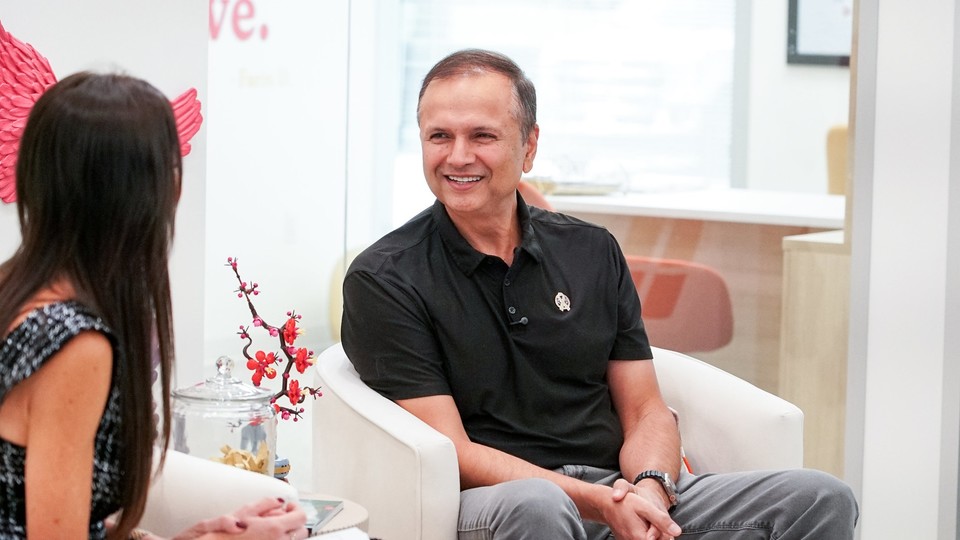
Farid Virani shares his entrepreneurial journey, the Virani family’s commitment to education and community, and the vision behind the Virani Undergraduate School of Business.
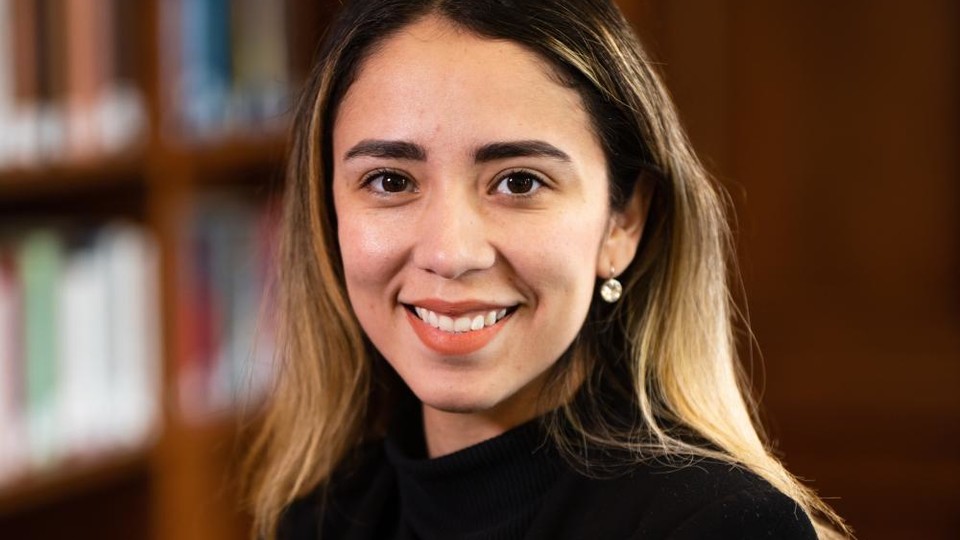
Marian shares how she’s built a career that bridges energy and art, the lessons she’s carried from Tabasco to Houston, and why creativity continues to guide everything she does.