Pivot
Season 5, Episode 24
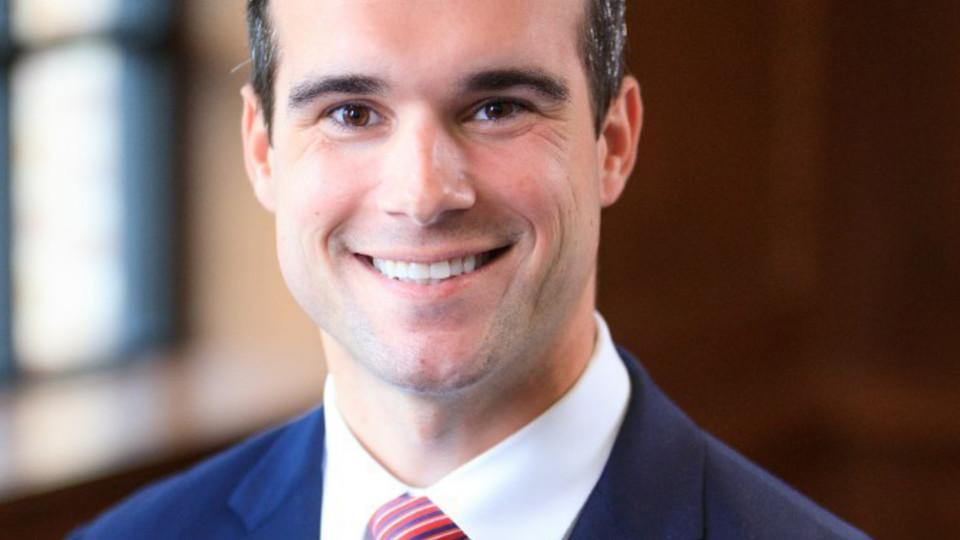
Now an investment banking associate at Bank of America, Chris discusses his military experience and how the Rice MBA helped him make a major career transition.
As a first-generation American from Saudi Arabia, Rzan Yunus ’17 learned from an early age what ambition and perseverance can lead to.
She credits her immigrant father’s determination to build a successful career and life for his family in the U.S. as inspiration for her own strong work ethic and drive. It was that drive that led her first to a career in insurance at American International Group (AIG), and eventually all the way to Rice Business. Since pivoting from insurance into consulting, Rzan has put her Rice MBA to use as a senior director at Alvarez & Marsal, where she’s helping companies solve tough problems.
Rzan chats with co-host Brian Jackson ’21 about how her father’s pursuit of the American dream inspired her, the critical skills she picked up at AIG, why she was drawn to the Professional MBA program and how her experience at Rice has left a mark on her forever.
Subscribe to Owl Have You Know on Apple Podcasts, Spotify, Youtube or wherever you find your favorite podcasts.
[00:00]Brian Jackson: Welcome to Owl Have You Know, a podcast from Rice Business. This episode is part of our Pivot series, where guests share stories of transformation in their lives and careers.
Today, we're joined by Rzan Yunus, a Rice Business Professional MBA graduate from the class of 2017, who used her MBA to make a thoughtful pivot from insurance into consulting. As a first-generation American, Rzan credits her upbringing for her work ethic and drive. Those values carried her from an early career in insurance to pursuing an MBA while working full-time and into her next professional chapter.
In this episode, we talk about her career journey, what motivated her pivot, and how Rice Business helped her make the transition. Hi, Rzan. Thank you so much for joining us on Owl Have You Know. How are you feeling about being here today on a podcast?
[00:51]Rzan Yunus: I'm very excited. It's my first podcast, hopefully not my last. We'll see how this goes.
[00:57]Brian Jackson: Pressure's on both of us. It's not either-or, right?
[00:59]Rzan Yunus: Right.
[01:00]Brian Jackson: One thing I had, kind of, done a bit of research on you, and one thing that really stuck out was your background. Your dad was in academia. It looked like you spent a lot of your childhood exploring different college campuses. What was that experience like for you?
[01:13]Rzan Yunus: That's a great question. So, as you may or may not know, Brian, I wasn't born in the United States. My story begins in the United States at two. I was born in Saudi Arabia, where my family would really teach me what ambition actually means. My dad decided to make a life-changing decision and follow an American dream that shaped everything that followed. You know, he had a very stable job, a very comfortable life, two young children, but he also had this vision of wanting to become this college professor. So, he made a decision to leave it all behind and start over in a different country that he'd only ever seen in the movies.
I moved to the States when I was two. I had my third birthday here, and we grew up on college campuses while my dad pursued this American dream. So, he really showed me what perseverance and sacrifice meant for a longer-term vision. When he was doing his Ph.D., I was old enough to understand what he was sacrificing. You know, we were committing to living in this two-bedroom apartment in residential on-campus housing. There were seven of us in a two-bedroom apartment, and it was, I mean, it was very fun. I have a lot of fond memories from it.
But I also remember just, like, even though my dad was so busy, you know, he was taking a full workload, he was working all of these jobs to make ends meet. I just remember him being so present and so engaged when I grew up. So, it wasn't just like I knew how much he was sacrificing. I knew how hard he was working, but also how present and available he was for us during my childhood.
And so, I remember him walking across the stage getting his Ph.D. diploma, and it was such a big moment for us, for our family, because we really did it together. And I remember me and my siblings pulling together all of, like, our little coins from our piggy bank and taking him out to KFC, which to us was, like, this huge, big, fancy restaurant. The first place he took us with his first paycheck in America, and it was such, like, an accomplishment for us.
And I feel like, you know, when people ask you, you know, where you come from, those are the memories that I really feel like make me unique in who I am. It's that journey with my dad and then the journey on all those different college campuses and, you know, what he's been able to accomplish so far.
[03:49]Brian Jackson: Yeah, so taking that risk, you've got a family of seven people, right? And folks are dependent on you. So, it's, one, a huge risk, and he had the ambition to back it, but then it's the family trust that he's going to get it done. Like, what did that teach you about relationships?
[04:05]Rzan Yunus: I think it's a collective sacrifice, and who is in your corner really makes a big difference on if you succeed. It wasn't just my dad, it was my mom, it was us, like me and my four younger siblings. And so, it was really like a joint decision that we all made. And so, to me, family is very important. Who you have in your corner is the biggest difference, I would say.
[04:33]Brian Jackson: It's a support system, right? And it's the people who believe in that dream that you have. So, I mean, how incredible, to have made it. I guess, looking back now, did he talk about his expectations of what the American Dream was and what it is, like, was it totally different before, you know, actually achieving it?
[04:52]Rzan Yunus: The one thing that my parents have always instilled in us is that you're able to really shape who you are here. It's not about your family, where you come from. It is what you make. And it is like the hard work and the preparation, and probably a little bit of luck, being in the right place at the right time, but taking advantage of those opportunities. I think it's the resilience, and I think also the commitment to education, and having that is really what defines that American dream and what I really am so grateful for, that he's given us and shown us that it's successful.
[05:39]Brian Jackson: Now, so that example of hard work and then having them support you, you started your career at AIG, and you were going through the analyst rotation program. So, I feel like with rotations, a lot of broad exposure, a lot of quick turns. With that experience, where were you thinking of heading with your career, and did it go the way you thought it would?
[05:58]Rzan Yunus: So, the rotational program was great in that I was able to see a lot of different parts of an organization. And then when I landed in the actuarial department working for the Chief Actuary, it really made me realize a few things. AIG, being a very large and complex organization, you have to learn how to navigate those. It's not you make a decision, and you complete that decision, or you do it on your own. It takes a collective, collaborative, cross-functional effort. So, I feel like that was one thing that I learned really quickly.
I also learned that, you know, being in a very technical department and being, you know, I did a rotation in finance, and I did a rotation in, like, product development. A lot of it is based on grounding your assumptions in data. You have to be very, very thorough in making up for, I would say, lack of expertise and lack of experience. If you let the data speak to you and you're presented in a way that's easy to understand and simple for executives to understand, the “so what,” that really gets you so far.
[07:08]Brian Jackson: While you're at AIG learning how to communicate to executives, are there any tips or tricks? Like, when you're taking information that's so granular up to the C-suite, you know, the journey to getting it there, to actually making it digestible. Any secrets there for us?
[07:23]Rzan Yunus: I would say that it's very important to keep in mind executives are very busy, and they also have a lot of competing priorities that are vying for their attention. And so, when you’re putting together the “so what” for an executive, it's about making it so simple and so digestible, which is a lot harder than it sounds, right? If you've got six to eight weeks of analysis, how do you boil it up into three key takeaways that an executive will see, one, see, two, understand, and three, be moved and influenced to act? Because they have a lot of competing priorities. They have a lot of pressure.
And so, it's about tailoring what your message is to them and their priorities and getting it to them in a way where they understand it and understand the ask for them, and they're compelled to do it. So, keep it simple. You know, a lot of the times I'll tell people, if you can't explain it to your parents, who aren't in your field, it's not simple enough. And then really focus on, if you were sitting in their shoes, what would be important to you? For example, if you're a Chief Revenue Officer, what is the most important thing? If you're a Chief Financial Officer, what is the most important thing about what you're trying to present and what you're trying to tell?
[08:49]Brian Jackson: Yeah, so it's a story of, like, why this? Why now?
[08:51]Rzan Yunus: Exactly.
[08:52]Brian Jackson: Yeah. I've recently done some decks, and they were 60 slides long, and I was told I need to simplify the material, which, great feedback. And so, that information became an eight-page deck.
[09:04]Rzan Yunus: Right.
[09:05]Brian Jackson: And it mattered. Then they could understand, why are we making action?
[09:08]Rzan Yunus: I've had a mentor tell me that when you open a slide, the first slide, every slide should punch you in the face. That's the impact that you want to make. They're like, "Oh, okay. Got it." You want them to visually understand what you're saying and feel an urgency to respond.
[09:29]Brian Jackson: Got it. Well, I'm going to take that down. I got to figure out how I'm going to start punching people in the face. Work's going to get incredibly violent.
[09:35]Rzan Yunus: It's a virtual punch. It's not a physical punch.
[09:38]Brian Jackson: A virtual. I mean, in your role at AIG, you already were learning executive communication, how to simplify material. Why did you get to the point of, ″Okay, an MBA is going to take me to my next level?" What brought you there?
[09:52]Rzan Yunus: I was thinking about an MBA because I really wanted to develop a broader framework for understanding business strategy, organizational dynamics, and how to lead across functions. I wanted to understand not just life insurance, but how different industries solve similar problems. I wanted to understand how to think about how to transform a business. And more importantly, I think I realized that my next chapter wasn't going to require a different skill set than the one I developed, but it was just that it would build upon the skills that I'd already had, and about acquiring the frameworks and the community I needed to make that transition in my career.
You know, my experience at AIG had really given me technical depth and real navigation… organizational navigation experience. But what it hadn't given me necessarily was, like, a peer group of people who were at the same stage in their career with similar transitions they were contemplating. And it hadn't given me exposure to different industries and how organizations approach different business challenges.
[11:04]Brian Jackson: And you did the Professional Evening Program, right?
[11:07]Rzan Yunus: I did.
[11:07]Brian Jackson: So, you're working full time and then in the evenings going to school and finding some capacity to continue to learn. What was that like?
[11:16]Rzan Yunus: It was really hard. I was working 50 hours a week at AIG. I was commuting to the campus two to three times a week during the week. I was studying before I went to work. I was studying after I went to work. It was very difficult, but it was also the most rewarding and fulfilling experience, and it truly changed my life. Like, I wouldn't be sitting here today with the success that I've had, with any of it, without Rice.
[11:49]Brian Jackson: You wouldn't be on the Owl Have You Know podcast for alumni, so...
[11:51]Rzan Yunus: That is true. So… And I mean, I chose Rice because it had, you know, the number one Ranking for the entrepreneurship program in the country. And I feel like, you know, just based on my dad being, I think, an entrepreneur, like he really pivoted, started a life and a self from nothing in a country he knew nothing about. I feel like that grounding and that framework for an academic program is something that you could always use. When you learn entrepreneurship, you learn to hustle. You learn to think like an owner or take accountability, to be resourceful, to drive results.
I really appreciated Rice's pathways with other organizations and other companies, particularly consulting. I knew I wanted to explore that eventually and knew that they recruit based on certain programs. And then, I… My favorite thing about Rice, and when I went and visited, is the team and peer atmosphere. You know, you spend so much time at work, but you also spend so much time in this program. And the people that I met, and the camaraderie and the collaboration, and the fact that you rarely ever achieve anything alone in life. I really wanted to be surrounded with people that were smart and hardworking and capable and collaborative and supportive.
Very similar to the support system that I think everybody needs in life to be successful. So, their cohort-based model, Rice's cohort-based model, especially in the Professional MBA Program, especially with people who are going through it the same way that you're going through it, I feel like creates the foundation for these lifelong friendships and relationships and community that, coupled with the entrepreneurship and the analytic frameworks, as well as the consulting pieces, really made it a no-brainer for me.
[13:50]Brian Jackson: While we're there, it's like the value of the program is… It’s really your peers. It's who's working through the case with you and the analysis that we're doing through Socratic seminar, right?
[14:01]Rzan Yunus: Yeah.
[14:02]Brian Jackson: And then after it, it's, of course, the value of the alumni group. And that is something I always continue to tap into and continue to find additional value in my career.
[14:11]Rzan Yunus: When I was thinking about going to get my MBA and when I was thinking about coming to Rice, you know, what I heard from alumni and what I heard from the staff was that these are really people that you would be friends with your whole life. That's something that I wanted, and that is something that I have. 10 years after graduation, many of my best friends are my Rice MBA classmates. You know, I recently attended a former classmate's wedding where his entire wedding party was Rice MBA alumni, me included. I'm in a monthly Mahjong club with my Rice classmates.
You know, these aren't transactional networking connections. It's friendships formed in late-night study sessions and early-morning study sessions. It's, you know, formed on a study abroad trip where we went to China, and it's been one of the most valuable aspects of my Rice experience.
[15:04]Brian Jackson: Well, the Mahjong club is incredibly unique.
[15:07]Rzan Yunus: You know, it's very funny to get a bunch of former Rice MBA alumni who love to learn. And we picked Mahjong because it was all the rage, and we get together once a month, and everybody comes, and they're ready to play.
[15:22]Brian Jackson: Oh, that's awesome. I've recently started to learn, and one of my mom's friends from abroad, she's teaching me. I'm still a novice, but at some point, we may want to play.
[15:32]Rzan Yunus: We should. You can come to our Mahjong club.
[15:34]Brian Jackson: Okay. I'm going to accept the invite. Give me some time to study up, but I'll be there. So, if you had to make the pitch to somebody considering Rice, you know, what would you say would be, I guess, the pushover point to make the decision for yes?
[15:50]Rzan Yunus: I would say just do it. If it's a consideration, if it's something you're thinking about, there is no reason not to. I'll just tell you this, my two years in the program, and I think I said this earlier, it really changed my life. I am becoming and am the person now that I never thought I could have been 10 years ago, 15 years ago. I mean, the program is hard. It's a top MBA program for a reason. Balancing school and your personal life is difficult. Working full-time while earning an MBA is not a casual commitment, but it's the most important step that you can take to invest in yourself. Surround yourself with people that reflect the ambition and the dedication that is contagious.
You know, if you're going to do an MBA, and this is something that I've given advice to, if you're thinking about doing an MBA, you should do an MBA. The value in the MBA is not about the prestige of the school. It is the value, as you said, in the network and in the community. Like, yes, you'll learn how to do a case study, and yes, you'll learn how to build really pretty presentations, but it's about the people that you're building with and growing with and pivoting with. And they'll become your advisors and friends and confidants and be in your corner every step of your way.
I just think that that, coupled with the academic side… And I will say, Brian, I think the confidence you get from accomplishing something so difficult, from walking into a strategy class at 6:15 at night and you're exhausted from a hard day at work, and you're put in a group with five other people you barely know and you're supposed to crack this case together, and getting through that on the other side and knowing that you can do that. That confidence that you can figure anything out is immeasurable, is invaluable, I would say, and it really carries forward.
And, you know, you get through that, the hardest thing you've ever done, and then the next thing you're like, ″Well, this wouldn't be so bad." And you feel like you can say yes to bigger and better and better things because, you know, if you could do this, then you could do anything.
[18:14]Brian Jackson: You're right, and it does make you feel that way. It gives you this muscle of, like, ″Okay, I can take on more." And you did that in your career. You had talked about, like, your father's journey, and it was entrepreneurial, doing something totally new and taking all that risk. You discovered your pivot and moved from insurance with AIG over to consulting. How did you know that that was the pathway and where you wanted to push yourself into something new?
[18:41]Rzan Yunus: So, I chose consulting because I loved the variety of work that they got to do. You know, in every year, and this was something that really attracted me to it when I was meeting with people from Alvarez & Marsal, you work in different industries and different projects. You know, one year you might be doing, you know, a transformation for a media company, the next working on a financial services operational improvement, the following year on, like, a manufacturing cost reduction. And I think that continuous learning really appealed to me.
[19:19]Brian Jackson: I mean, making the pivot's hard, right? And you're switching to something totally different. And, like you're saying, each client has different problems, different industries. You know, how do you make that transition?
[19:31]Rzan Yunus: It is funny, you know, they always have that saying, if it was easy, everybody would be doing it, right? So, it wasn't. I'd only ever worked at AIG. I worked there for six years, and it was the place that I've really grown up and believed in me and gave me opportunities that, you know, I never thought possible. You know, if I would've told the little girl who was watching her dad walk across the stage, like, you're going to go work at this big company where there's 40 floors, and you're going to be able to travel, and you're going to meet with executives and pitch to them different ideas, she would've been like, you're crazy.
And I got that experience at AIG, and so it wasn't a casual decision to leave, because I already had such a great role. But I was really looking for that variety, and my classmates were really instrumental in making that transition. You know, they give you permission to think big and to think broad, and they're doing such cool things. Like, they're interviewing for these big tech or investment banking or nonprofit or start… I mean, they're doing all of these different things, and they are people who make bold moves and make you feel emboldened, and you can do anything as well. It's all about who you surround yourself with. You know, being around people who made intentional career decisions, made the decision, makes me feel less risky. And that made it feel less risky, I would say, because everybody was doing it. And the MBA, I feel like, gives you, like I said, the confidence to succeed in a high-pressure, team-based environment, which consulting is. So, I spent two years proving it to myself, right? In the Professional MBA program. It's like this is another step in that journey.
And I think that the last piece is that the work in the MBA that we talked about, the case studies, the frameworks, the competitive analysis, it gives you a common language with consulting firms. You're already speaking the language. You already understand how it works. I would say it gives you an advantage that way.
[21:33]Brian Jackson: And you said when… I mean, with business school, it's so totally different. Like, okay, law school is very competitive, and all of my classmates, if we talked about offers, jobs, opportunities, it, kind of, just made you feel bad.
[21:44]Rzan Yunus: Because you're all going for the same type of job.
[21:47]Brian Jackson: Exactly. I mean, hearing it, and I'm like, ″Oh man, he's getting this offer. I'm just, you know, what's going on?" But in business school, you would hear people make these shifts, and it was actually like a story of promise. It was like, ″Oh, if they can do it,″ then, ″Oh, let me try something different." And they were then examples of success, and it was like somebody you could learn from, and they were happy to share.
[22:09]Rzan Yunus: Like, we were all reviewing each other's resumes. We were all prepping, even if we were all going for the same job, right? We would all meet the day before and quiz each other on our resumes and all of that. And it was such a collaborative environment and such an environment where you really feel, why not?
[22:27]Brian Jackson: Yeah, so I guess, to anyone who's in the program now, the advice is support each other.
[22:33]Rzan Yunus: Right.
[22:34]Brian Jackson: Share information, work together. There's plenty to go around.
[22:39]Rzan Yunus: You can't have a scarcity mindset. You create more, you give more, and more will come back. And so, it is, every single person is a representation of you because y'all are a part of the same program. You're a part of the same cohort. So, if somebody lands this very prestigious job, that's a win for all of us, and that's a win for the MBA, and that's a win for the Rice program.
[23:03]Brian Jackson: Absolutely. That's, I think, the best way to characterize it. Okay, so today you're consulting at Alvarez & Marsal. You're a senior director. What type of work are you leading?
[23:14]Rzan Yunus: So, the way that I explain it to my mom. Because my mom, she calls me probably every three to six months, and she's like, ″So what do you do? Who do you work for?" So, the way that I explain it to my mom and the way I explain it to my daughter is that I help companies and people solve problems that they either don't have the time to figure out, don't have the expertise to figure out, or don't have the people to figure out.
And then my favorite thing about Alvarez & Marsal, or A&M, is that it's not just a, "Hey, we think you, Company XYZ, should do this, and we're going to leave." It's, "Hey, this is what we think you should do, and we are going to be next to you implementing it day by day, and we are going to do this together." It's an action-oriented, it's a roll-up-your-sleeves, get-things-done culture. It's very spirit of service as well. You want to do what's best for your client, and helping them through their time of need is the piece that I really appreciate, and it keeps me coming back for more.
[24:20]Brian Jackson: And I guess it's unique, too. Like, you're actually starting a project but then seeing it through, you know, implementation. So, you're learning what worked, what didn't work, and then you apply those lessons learned to your next client, which only makes you better.
[24:33]Rzan Yunus: Yeah. Typically, you do an assessment, you put together your recommendations, and that's one piece of work, and that's one piece of challenges. Taking those initiatives and taking those recommendations and implementing them in a real company with their own culture and people and history and priorities, that's a whole different set of challenges. And the only way to do it is implement it side by side with your client.
Do good work every day. Show up with your best foot forward. One of my favorite parts of consulting is that I really see the impact of my work in a short period of time. It is, you know, three months, six months, nine months, a year, you're either implementing a new software that is taking a bunch of different, you know, manufacturing companies and putting them all in the same platform so that they're able to work more efficiently together, and that way you're changing their business forever, or you're optimizing a distribution company's network. It's just you see the work that you put in in such a tangible way that I just can't get enough.
[25:41]Brian Jackson: In your experience, and, you know, as you're, kind of, facing each of these, I guess I'm going to call them problem sets, because I'm assuming your clients call you, "We've got a problem." You know, what skills do you think really move the needle that you have?
[25:54]Rzan Yunus: So, I think companies at their core are made up of people. And your ability to connect and understand and then work with them to influence and implement change is critical. So, there's a people component to it, and I think as a part of that, there's a listening aspect and an understanding aspect. And then I think another component of it is you have to understand, like, at a micro level, for lack of a better term, this company is made up of each individual person, and then they collectively… And you have to win the hearts and minds to move the needle there.
But then you also have to understand how does that company make money? What are the inner workings of this company that drive it forward? What are the organizational financial priorities, and all of that? And so, if you can combine those two and really understand how the company works as an organization and what they do for the world, plus how the each individual person contributes to that, and tie those together, I think putting those two components together are what make projects successful.
[27:12]Brian Jackson: I feel like consultants are like lawyers when they show up. People typically don't get a warm and fuzzy feeling. It's a, "Here comes a riff. Here come mega changes. They're not going to, you know, understand what we do." To be honest, that's been my experience. So, how do you, you know, first approach that and then also work to build this level of trust between you and the client's employees?
[27:37]Rzan Yunus: Yeah, nobody really likes to see me coming.
[27:39]Brian Jackson: No.
[27:41]Rzan Yunus: I think the way that you build trust is by showing through your words and actions that you are on their side. You are there to achieve a goal. You are there to make their life easier or better. They can rely on you to get things done. You're there to help them. And so, you can do that by building… And I think it just takes a little bit of time. It does. But I think that one of the things that people get a read on very quickly is if you are authentic, and your intentions and your questions.
And so, if people feel… I know that it's not a word… We’re into the thinking and the doing, but the feeling, if they feel like you're asking questions to get a better understanding of their problems and that you are willing to do what it takes to solve those problems for them long after I'm there, me personally, I'm there, then I think that their willingness to open up and help and go to bat for you goes up exponentially.
[28:55]Brian Jackson: It's intentional questions, right? You're asking them for the purpose of understanding what they do and why they do it, what's driving them, right? And that effort and that time into it shows you have a genuine, authentic interest in them.
[29:06]Rzan Yunus: Yeah, I think that is how you do it, and it's one day at a time. You don't take it personally. And then, you know, it means a lot when your client speaks so highly of you and the work that you've done, and, you know, they are successful because of the work that I've done. It's mutual. Like, we can only be successful together, if that makes sense.
[29:32]Brian Jackson: Yeah. So, along the path, have you had a mentor or someone who's been influential in your career and, you know, helping you build this persona of authenticity as you're developing with clients?
[29:44]Rzan Yunus: There's so many. Like, I can't name just one. You know, from my time at AIG, like, I really feel that every interaction, every opportunity is there for you to learn, and so you should take advantage and learn what you can, right? I think that it is from every single project, every single boss, every single client, I have learned more than one thing to take forward. When I was growing up, it wasn't necessarily celebrated to be different. And so, I didn't really lean into that growing up at all.
You know, we wanted to be the same as everybody else, even though I had different food in my lunchbox, even though sometimes, like, you know, growing up, I would slip and say something in a different language, in Arabic. And then my time at AIG, and then leaning into, you know, part of being successful in consulting, like I said, is being authentic and being yourself.
And so, I think those experiences, you asked me about, you know, mentors, for bringing my authentic self to work, it's other people who really open up and share and are themselves. And that is whenever I think that you can make real, sustainable change, is when everybody is being honest.
[31:10]Brian Jackson: And that culture of honesty and authenticity and respecting it and seeking it, that is what, you know, is the difference. So, it's also, I think, incredibly hard to have a whole part of you that you're hiding and shielding and trying to navigate and grow in this world, while also concealing, is...
[31:30]Rzan Yunus: Yeah, very difficult.
[31:31]Brian Jackson: Very. And people sense it, right?
[31:33]Rzan Yunus: They do, and I think it really impacts, like, your effectiveness, but also your happiness.
[31:38]Brian Jackson: Yeah. So, with your current work, is there a particular project or, you know, a result from a client that you're particularly excited about?
[31:48]Rzan Yunus: You know, I get asked a lot, Brian, what's your favorite project or what's the project you don't like? For me, they each have their memories. Like, I remember, for example, when I feel like COVID impacted everybody a little bit differently. For us in consulting, it was very much, ″Okay, how do we pivot?" Because we were used to being on site with the client, building that rapport in person, building the rapport in the teams that we were working alongside, in person.
And to go from doing that to doing that fully remotely is something that I think the entire world had to adjust to. But I just remember that being a really big adjustment. And so, I was on this team where we were implementing a software to help them standardize and manage their… It was an accounts payable software. We were doing it all virtually and remotely, even though the majority of the team was in Houston, and then the client was as well.
And so, I think that the thing that I was most proud of is that you're spending all this time on the phone, you're trying to figure out how to use Teams, you're trying to figure out how to use file share, that we were able to implement the software in the time that we had said we would. We were able to build the relationship and the credibility with the client. We were able to build such a bond on this project team within Alvarez & Marsal, within A&M. And the ability to do that remotely was amazing.
I think every project I've done, I've been so proud of the results because you are doing it hand in hand, very similarly to the Rice MBA. You're on this team with other people, you're given this problem to figure out, you have to do it in what does not sound like a reasonable time, never does, and you're navigating all these trials and tribulations.
And another project that I've done post-COVID and doing a transformation of a company where, if we weren't able to take the costs out, they would cease to exist. And so, there's a lot of, you know, the team that you're working alongside with the client understands that, and we understand that. And every decision that we're making has such a heavy implication. It has such a big impact. And so, you want to make sure that you're able to not let them down. They trusted you to help them through this tough time, and that you were able to accomplish that with them side by side.
And so, it is… The people aspect is my favorite part. Seeing the accomplishment at the end is my favorite part. You know, everybody's always like, ″I always want to know what I'm doing next,” and I say, “That's so much fun." You don't know. You don't know where you're going next. You don't know if you're going to work in, like, an agriculture company or a different industry or a different type of company or a different type of problem. And so, I really enjoy the projects while they're happening. I enjoy when we wrap them up, and I enjoy starting the new one as well.
[35:24]Brian Jackson: Yeah, so it's always the mystery of what's to come. So, I guess it keeps it interesting. So, looking ahead in your career, are you going to stay in a role where you continue to have these continuous opportunities to learn? Is there something you're excited about, or do you have another pivot, uh, in the future?
[35:39]Rzan Yunus: I loved my time, and I continue to love my time at A&M, or Alvarez & Marsal. There's plenty of A&Ms out there.
I'm so proud of the work I've done and the teams that I've built, and the relationships that I've made. And I know that the opportunities at my firm, I feel like the sky's the limit. You know, one of my favorite things about A&M is the entrepreneurial mindset. You know, I was looking for that at Rice, which I feel like I found, that groundwork, and then I found that at A&M as well, that entrepreneurial mindset where you can be the CEO of your own career and really bet on yourself and make things happen.
So, that's the work side. And then, in addition to the work, you know, I've got, as I mentioned, four siblings — younger siblings — and my parents. You know, us being the only members of our family really in the United States, we're really close, and it is something that I don't take lightly. And I'm committed to being there for them and supporting my siblings' journeys and their careers and honoring really the sacrifice that my parents made, that they left their families to provide a better one for their own. And I continue to pay that forward now.
Now, I also want to be the best wife and the best stepmother, and the best mom to two pups that I can be. You know, that relationship is really important to me and is as important as my career achievements, and maybe more, because those are the ones that, they’re going to be with me for my whole life. I hope so. And I think the other piece that I really have taken to heart, and I've really seen, is that when you… You can't pour into others unless you pour into yourself first. So, very focused on my own physical, mental, spiritual well-being. You know, you can't sustain a high performance and demanding roles and being there for everybody else like you want to be without putting that same focus into yourself.
They're not luxuries. I feel like they're necessities, and I really constantly have to remind myself that. I’m surrounding myself with people who keep reminding me that it's not just about my future goals. Aren't just about career advancement, although that is a big one. It's about building a life where my work… I have a lot of meaning, and I feel like I'm accomplishing a lot. My relationships within work and outside of work are genuine. My family feels supported, and I'm taking care of myself so I can take care of those.
[38:12]Brian Jackson: Well, I have no doubt you'll be busy, and I'm sure there'll be a ton of pressure. Every time in this interview, it keeps coming to me. I had a colleague quote it to me last night. He said, "Pressure is a privilege." And I just keep thinking about your experience, your dad's experience. All of it is high pressure, and what a privilege.
[38:27]Rzan Yunus: I agree. You know, I think about that all the time. You know, somebody was like, you know, on my current project, they're like, "Well, you're under a lot of pressure." And I was like, "Right, but pressure makes diamonds."
[38:37]Brian Jackson: It does, and it's a true privilege to be under that. And to have that result.
[38:42]Rzan Yunus: I feel like I keep coming back to this, but for me, it’s… I saw firsthand what my dad was able to accomplish, and then building on that with what I'm able to accomplish. And it's just, I agree, it's such a privilege to be in these, like, leadership roles, working on these complex business problems and doing all of that, because who knows where I would've been otherwise.
[39:09]Brian Jackson: And that experience just compounds, and we grow, and it's what it's all for. Rzan, this has been really fantastic. Thank you so much for sharing your journey, talking about your experience at Rice. I really appreciate you joining me.
[39:24]Rzan Yunus: I really appreciate you having me. Thank you.
[39:29]Brian Jackson: Thanks for listening. This has been Owl Have You Know, a production of Rice Business. You can find more information about our guests, hosts, and announcements on our website, business.rice.edu. Please subscribe and leave a rating wherever you find your favorite podcast. We'd love to hear what you think. The hosts of Owl Have You Know are myself, Brian Jackson, and Maya Pomroy.
Season 5, Episode 24
Now an investment banking associate at Bank of America, Chris discusses his military experience and how the Rice MBA helped him make a major career transition.
Season 5, Episode 14
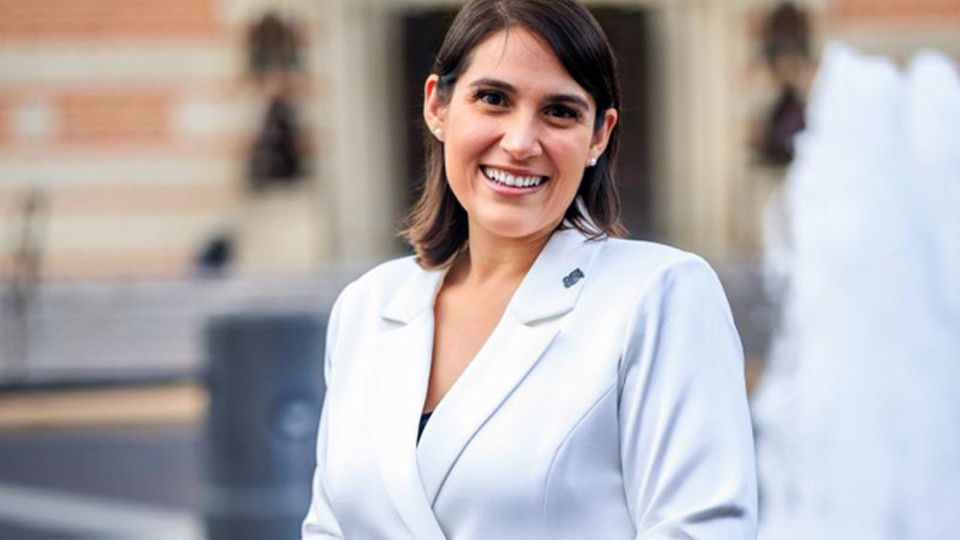
Monique shares how her health journey inspired her startup, Dr. Clara, an idea born in a Rice MBA classroom.

Season 5, Episode 11
Becky chats about traveling the world with Disney on Ice and founding a business that works with local law enforcement and veterans to make private security more accessible.