Applications for the Rice MBA are open. Round 3 deadline: April 3. Apply today.

A Self-Proclaimed Sustainability Nerd feat. Lauren Miller ’14

Flight Path
Flight Path
Energy
Entrepreneurship

Season 3, Episode 2
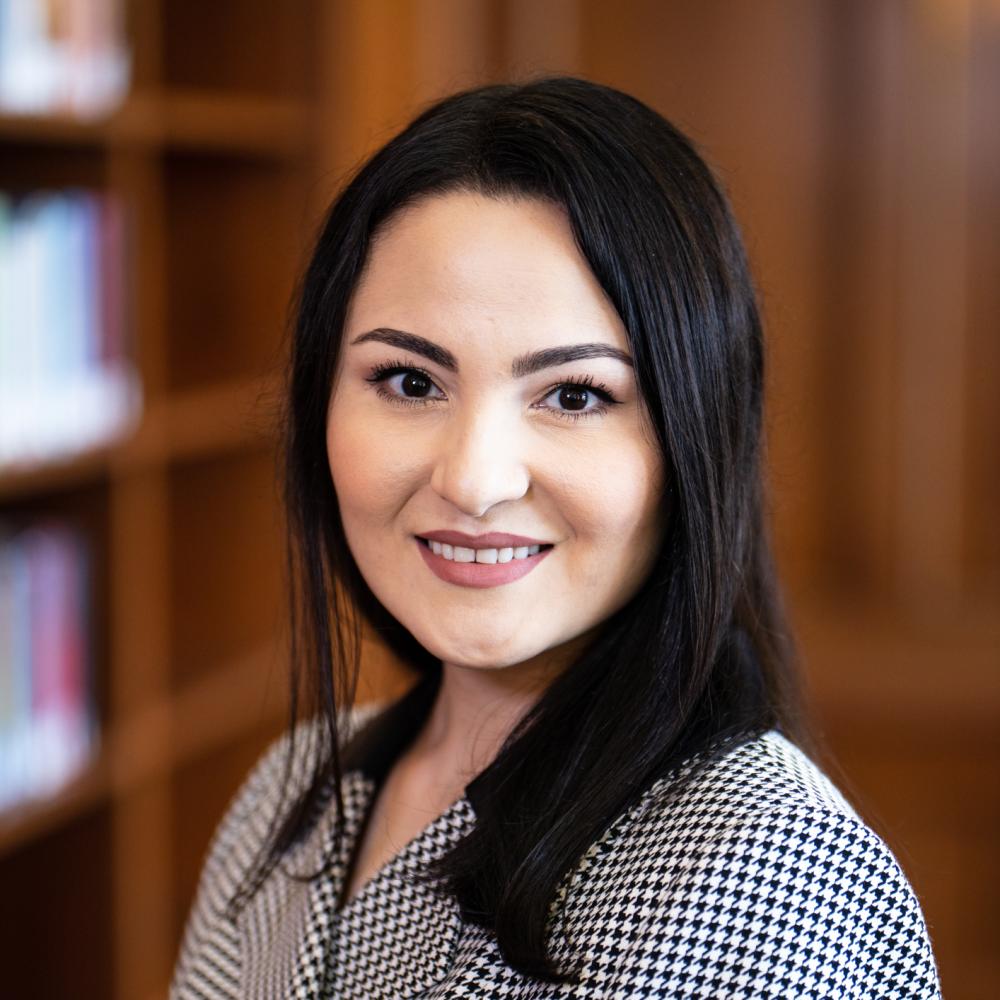
Lauren Miller '14 talks with host Maya Pomroy '22 about growing up in a family of entrepreneurs and Texas ranchers, being one of Forbes’ 30 Under 30s in the energy category, how a Rice connection helped her land her current role, and some of the challenges she faced after starting a company.

Lauren Miller

Owl Have You Know

Season 3, Episode 2

Lauren Miller '14 talks with host Maya Pomroy '22 about growing up in a family of entrepreneurs and Texas ranchers, being one of Forbes’ 30 Under 30s in the energy category, how a Rice connection helped her land her current role, and some of the challenges she faced after starting a company.

Subscribe to Owl Have You Know on Apple PodcastsSpotify, Youtube or wherever you find your favorite podcasts.

Episode Transcript

  • [00:00] Intro: Welcome to Owl Have You Know, a podcast from Rice Business. This episode is part of our Flight Path Series, where guests share their career journeys and stories of the Rice connections that got them where they are.

    [00:14] Lauren: I realized something that I had really been missing was feeling every day like what I was doing had impact, where I could sit back at the end of the day and say, "Okay, what I did today mattered."

    [00:26] Maya: On today's episode of Owl Have You Know, we connect with Lauren Miller, full-time MBA of 2014. Miller started her first business as a student at Rice, and she hasn't slowed down since. A self-proclaimed sustainability nerd, Miller is the Executive Vice President of Nature-Based Solutions at Grassroots Carbon, an organization also deeply rooted within the Rice ecosystem. Awarded the prestigious 30 Under 30 distinction by Forbes in 2015, Miller has a new title — that of mom. She shares her successes, failures, life lessons, and also, how being on the men's fencing team in college shaped who she is today.

    Hello, everyone. On today's episode of Owl Have You Know, we are going to have a nice chat with Lauren Miller, full-time MBA, the class of 2014. Welcome so much to the program, Lauren.

    [01:23] Lauren: Hi, thanks for having me here today.

    [01:25] Maya: So, Lauren, you have had quite the flight path since your graduation from Rice in 2014. And I want to start from the beginning and your voyage to regenerative agriculture and sustainability. I mean, you really were in the industry of sustainability before it became an industry that is now intertwined in just about every industry, right?

    [01:50] Lauren: Yeah. And as you said, it's been a very interesting path. I've been fortunate to work in a variety of industries getting here. And then with my current role, it's actually through a Rice connection. My current boss was one of my judges in the Rice Business Plan Competition.

    [02:04] Maya: Yes, I saw that. So, when you came to Rice, you really jumped right in and met one of your... the members of your cohort and started a business together.

    [02:15] Lauren: Yes. So, I had started the business when I was in my second year of the MBA program. And really, it was jumping in with both feet, because between your first and second year, you’ve got that internship. I got a great offer. I had really liked the company with which I had worked. And then I was starting this company for, really, a class project at the time, and ended up just running with it. So, fortunately, it had worked for a while, at least.

    [02:45] Maya: Yeah. And that was A-76 Technologies, correct?

    [02:47] Lauren: Correct. So, it was... it was started as A-76 Technologies. We had rebranded a few years later to make the Rust Patrol line of products under the Aidant Brand company name.

    [02:59] Maya: So, tell me. Tell me about A-76. And let me just preface this that you do call yourself a self-proclaimed sustainability nerd, right?

    [03:07] Lauren: Yes. And so, it was really funny because, when you're looking at chemicals, especially when we were originally targeting the oil and gas industry, you're kind of looking at that, going, okay, how on earth could this possibly tie to sustainability? But when I was in the MBA program, I was an intern with SURGE Accelerator, which was a clean tech and energy accelerator. I was working for Silicon Valley Bank. There were... I mean we were a team of just three people writing the entire clean tech investment strategy for all of SVB.

    So, I always really loved sustainability. I'd started my career doing sustainable development, though largely with a more economic focus. We did have some water projects. And so, I always really had a passion for that. And I saw these corrosion coatings as a way that we could still tie that in. It was still speaking the language. It was still chemicals. Folks understood that. But we had a green product line that had no VOCs. And then, also, simply by switching to our products, folks could reduce their use of other chemicals by four x. So, that right there, it takes a huge toll in terms of your emissions and reducing it, especially when some of the companies with whom we were speaking were literally manufacturing plants next door to an elementary school. And you don't want kids breathing that.

    [04:24] Maya: No, you don't want anybody breathing that.

    [04:26] Lauren: No. Yeah, exactly. You don't want anyone breathing it, but let alone like the five-year-olds who are on the playground right next to the facility, where you're looking at the chemicals they're using and you're like, "Oh, my goodness. Like, yeah, nobody should be breathing that."

    [04:40] Maya: Right. So, let's start... let's start from the beginning. Why did you decide to come to Rice? So, you're born and raised in Houston.

    [04:48] Lauren: I am. So, I am born and raised in Houston. I knew that I really did want to come back to Texas. I'd been living in Virginia for seven years. I went to William & Mary for undergrad. And then I was in the D.C. area for several years, managing community and economic development, stabilization, infrastructure projects around the world. And I just missed it. I was kind of homesick, in a sense. And fortunately, my now husband visited Texas and loved it. So, we moved down together. He went to UT Southwestern to get his PhD. I got my MBA from Rice. And it just felt like coming home.

    [05:27] Maya: I love that. It does. It definitely... I mean, it's coming home. And Rice, also, there's an opportunity here to really connect with your professors and their small cohorts. And it's really an opportunity to build that network and sustain that network for the rest of your life. So, you are very much a serial entrepreneur. I guess that's the definition of who you are. And so, tell me about your background and your family and what really propelled you to start all of these incredible businesses.

    [05:59] Lauren: I have to say I think that having a family of entrepreneurs really helped because that's what you're used to seeing. Both of my grandfathers started businesses. My dad had started... or, he took over his father's business. But in a sense, he was an entrepreneur himself, because when he took it over, it wasn't in great shape and he completely transformed it. So, he's at an age where a lot of folks are looking to retire right now. And instead, he's just started another company. And so, he's rapidly growing that one. So, it's just a natural thing in my family of, yeah, sure, you go start a company.

    And then, when I had stepped away from A-76 and I was in my, as I call it, my recovering CEO phase, trying to assess, see what I wanted to do next. I was again doing, in a sense, working as my own business. And I was working with other startups, specifically, doing early-stage consulting. So, I really like that early stage of companies. It's very exciting.

    [07:07] Maya: So, tell me about the newest company that you're a part of, which also has a Rice connection.

    [07:12] Lauren: Exactly. So, I had been doing the freelance consulting. And every year since I'd been at Rice, I had spoken at Hank Mooiweer's innovation class. Hank is an adjunct professor at Rice. He was at Shell GameChangers for 20-plus years. And that was actually where I first met him. When he was at Shell and I had A-76, we were talking about these corrosion coatings that I was working with. And when I was in the Rice Business Plan Competition, he was one of my judges. And through that connection, I was speaking at his class every year. So, he knew all of my career because, you know, it was often a similar story, but also just more of my background, the fact that my family has a ranch and everything. So, when he was starting this soil carbon storage company, I was doing my annual talk at his class, and we were talking afterwards. And I ended up joining, initially freelance, to help out with talking to more ranchers, since I kind of spoke their language. And it's so funny, just how these things turned out. Within a few months, I had joined the team full-time and have been there ever since.

    [08:17] Maya: So, explain to me or those of us that don't know, how does Grassroots Carbon... how does it work?

    [08:24] Lauren: Yes. And it's a very... it's a very new industry, so I know it's... people are kind of looking at this, going, "What is that? What is soil carbon storage?" So, basically, what we do is we're a broker or an aggregator of soil carbon storage credits. These are credits where every credit represents one metric ton of actual carbon drawdown and sequestration that is done through healthy soils. And the way to do that is through regenerative grazing practices.

    So, we find ranchers who are engaged in good practices or also will train folks to improve their practice and actually draw down carbon in the soil. And then, we go... We take everything through this whole measurement process, certification. And then, we deliver those credits to carbon credit buyers. So, those are companies like Marathon looking to reduce their carbon footprint and also really invest in good practices and support American ranchers. And then, also, companies like Shopify where they have both their sustainability fund and they have a way of offering it to others. In June, they launched their Shopify Planet app. So, now, anybody selling through Shopify can opt into this app and ship carbon-neutral. And we're helping to support that. And so, it's something that also gives access for small businesses.

    [09:38] Maya: So, it's carbon credit trading?

    [09:41] Lauren: I'd say we're more of a project developer. We're not really trading the credits, necessarily. But I think, within a few years, we're going to see companies and people buying carbon credits to basically be a new commodities market.

    [09:54] Maya: Absolutely. And that's something that I've noticed as well. And a lot of people are, you know, there's a lot more attention being focused on this specific way of really sustainability with... throughout the country. I mean people recognize the need for this, you know. I mean, the U.S. is one of the biggest carbon emissions, I guess. What's the best word for it, you know?

    [10:17] Lauren: We're a big emitter. We do have a pollution problem. And that's what's so funny is, you know, really, pollution shouldn't be controversial. Just, I feel like not wanting to breathe dirty air isn't that controversial of a statement, or not wanting to have chemicals in your water shouldn’t be controversial.

    The really awesome thing with regenerative agriculture and the carbon credits that can be generated from it is that there's really no downside. You start... You're improving your soil health, which is improving your water retention and improves the water cycle, which can reduce flooding. And any Houstonian who was there during Harvey knows full well what happens when the grasslands west of town have been paved over. And so, we have so many benefits from this. Also, the improved biodiversity, ecosystem restoration, etc., that there's really no downside for regenerative agriculture, especially when then you can generate these credits and put money back in the hand of American land stewards.

    [11:16] Maya: Absolutely. So, let's go back to when you were in the Rice Business Plan Competition.

    [11:22] Lauren: Yeah.

    [11:22] Maya: You got second place, and then went on to, really... I mean, you've got a term sheet for your business.

    [11:29] Lauren: Yes, we did. So... And it was funny because we were second place, but I think we actually walked away with more prizes than the grand prize winner. That's a little fun thing with the Rice Business Plan Competition is that people just throw out prizes left and right. And so, we ended up getting some that we didn't even expect or hadn't even been on the list of a possible prize to win. So, it was fun. That was a very exciting awards dinner.

    [11:54] Maya: You know, the other thing that many people may not know is that you were named one of the Forbes 30 Under 30 in the energy category in 2015, just a year after graduation. So, wow, congratulations!

    [12:09] Lauren: Thanks!

    [12:10] Maya: That must have been pretty spectacular.

    [12:11] Lauren: Thanks! Yeah, it was very exciting. It felt like a big validation for what we had been doing, too, because they go through a pretty rigorous vetting process. So, that was very exciting. And I feel like though I did get some help on that from, again, another Rice connection, Allison Sawyer, who had graduated a few years before me. Had actually been the one to nominate me for the Forbes 30 Under 30. So, again, it's just funny, these different Rice connections that have been popping up along the way.

    [12:37] Maya: And so, what actually got you involved or curious about sustainability?

    [12:42] Lauren: I'd always been really interested in sustainability. And that's both the environmental side, as well as the community impact side, and really, how those two tie together. So, with the first part of my career, I was doing that quite a bit. And the reason I was always interested in that is, growing up with a ranch. And again, it's predominantly recreational. We do have a small cow calf operation. So, I don't want to make it sound too fancy. But that said, you really see the impacts of the environmental changes and what that means. And when those occur, you see what that impact is on the towns nearby, too.

    So, when there are huge droughts, heat waves, etc., you're seeing that first-hand because you're actually looking at the land every day. And during COVID, I had a really good chance to actually sit back and sort of reevaluate. It was one of those just, you know, think about my life for a minute, take a pause. And when I was doing that, I realized something that I had really been missing was feeling every day like what I was doing had impact, where I could sit back at the end of the day and say, "Okay, what I did today mattered."

    And that's what I love with my current role at Grassroots Carbon, is, every day I feel like I've done something like that. I've helped a company figure out how to mitigate their climate impact. You know, that can be working with their supply chains. That can be helping them just purchase credits to offset their emissions, because at the end of the day, folks can only do so much to completely eliminate their emissions. And that also always is really exciting, because everything we're doing on the businesses is going to ranchers. And so, having grown up and seeing these rural communities get hit by so many different environmental factors, economic factors, etc., which all really intertwine, I can see what's happening when we put money back in the hands of these American ranchers.

    [14:33] Maya: Well, and waking up every morning and just being driven, you know. I think that's what everybody's goal is — to find what drives you. And it seems like you have certainly found that.

    [14:43] Lauren: Yes, I definitely have. And I love it. It makes it a lot easier to get out of bed when you're not going, "Oh, God, another day of work."

    [14:52] Maya: Especially, being a new mom. So, you're a brand-new mom.

    [14:54] Lauren: Yeah.

    [14:55] Maya: So, tell me about that.

    [14:56] Lauren: Well, so sleep, you know, that goes away for a while. We've actually been very lucky. He's very easy-going. And I've got like... My hearing's not so great. It's specifically in the range of babies screaming really terribly. So, it's kind of my superpower. Slept right through the night when he was teething.

    [15:16] Maya: Amazing.

    [15:17] Lauren: And it is exciting to have him, though, and especially working in sustainability, again, doing something every day that I feel like matters and is creating a better future for him. You know, when I'm done with work for the day, I can be proud of that and kind of be like, you know, "Mom did something for you today. Hopefully, the world won't be on fire for you at, you know, 15 years."

    [15:38] Maya: It won't be. No, it won't be (laughs). We're going to... we're going to think positive.

    [15:43] Lauren: Yeah.

    [15:45] Maya: Because there's, you know, like I said, this is a... this is a booming industry. And it is... it is a bit in its infancy. So, you really opened the door and continue to open the door for this sustainability initiative.

    [15:58] Lauren: Yeah. And it's very exciting to be at this phase. It is, as often described, the Wild West still. But it's exciting. And we get to have these different milestones that nobody's ever reached before. Back in January, Grassroots Carbon was the first ever company to pay American ranchers for delivered soil carbon credits. And we paid out over $200,000. And it was something too that is kind of emotional because it really impacted these folks. Some of them who had been doing regenerative practices for a long time where you're eliminating your herbicides, your fertilizers, you're really getting rid of all your inputs and having more cattle on the property but just rotating them frequently, some of these folks were being told by their neighbors they were crazy, it would never work. Well, not only have they improved their profitability over the years, but now they're also getting these big payouts. And year one, of the ranchers got over six figures in a payout. And he was visibly emotional at feeling like his practices had been validated. So, it's really exciting to be at this stage where we can show folks we're not going to use a stick to get you to change the region. Here is the carrot. We want you to transition. And we'll pay you for that, too.

    [17:15] Maya: Well, as you and I probably both learned at Rice, the best innovations are the craziest, right?

    [17:21] Lauren: Yeah.

    [17:23] Maya: It's the crazy ideas that make the biggest impact on our world, the ones that people say, "No, that will never work in a million years. You're nuts."

    [17:32] Lauren: Yeah. And it's so funny because everybody is looking at climate solutions at these huge technology-based solutions. And here we are, going, "You know what? Let's just give cows grass. Let's just move them the way they should be moved." And it's so funny because it sounds insane when you're telling people in the industry, but it's so effective. It improves profitability. It improves biodiversity. It improves the water systems, as I mentioned. And then they can make money off it, too. There's really no downsides versus with some of the forestry, you can end up, you know, you got to worry about, what if there's a drought? What if there's a wildfire? That's not an issue with ranching. People go burn fields as a controlled burn all the time. So, it's a really exciting place to be in.

    [18:19] Maya: That's awesome. I want to pivot a little bit and talk about something that I think is also very important with entrepreneurship, because it is filled with trial and error, as we all know. And failure is a real risk, but it can also be an essential stepping stone to success. So, can you tell us about a time you failed and what you learned from it?

    [18:40] Lauren: Well, I think what ended up happening with A-76 could only be described as a failure in a sense. But at the same time, it was a wonderful learning experience. So, ultimately, we ended up in a big dispute with the inventor. And I mean, it was just a mess, frankly. We had issues with our investors. And, you know, you never expect to get sued for somebody saying that you didn't tell them something when it was literally in the board minutes and the pre-reading materials that they had reviewed from five years earlier. It just seems like you would think that can't occur, but it did. And it was very stressful. That was a really tough time to go through that. But I think that was something that was a good lesson as an entrepreneur, is one like, that's as rough as it can get, I think. Like, you know, the company is struggling. We're now getting sued. You know, where do you go downhill from there?

    But what it really did show is, one, the extent to which, if you have done what you felt were making the right steps along the way, you can look back at that and say, "Okay, I did do, what I thought I was doing, is the best thing at that time." And you can also see who will really stand by you and be your support network. It's so important not to get completely lost in your business and to have people who are still supporting you, so that when you are in a tough time like that, there are others you can rely on. You're not just sitting there, stressed, alone, crying out by yourself, going, you know, what's going on? You have a... you have folks you can lean on.

    [20:20] Maya: Right. And did you... I'm sure that you probably leaned on your Rice network and Rice connections.

    [20:25] Lauren: I did. Allison Sawyer, who I had mentioned, you know, she was a wonderful person to be able to rely on because she also had a company. And so, she understood just the physical and emotional toll it takes to be a CEO. And I also had, you know, great friends from that network. So, that was all really helpful.

    [20:46] Maya: Right. And as an entrepreneur, I think somebody smart said that you don't ever actually fail. You either succeed or you learn.

    [20:54] Lauren: Yes, it was definitely a wonderful learning experience overall, looking back at my time with the company, because there were so many different challenges along the way. You know, we had to do a rebranding two years in because we couldn't use the name A-76 anymore. It was too similar to 76 Lubricants. And that felt like, oh, my gosh, we got to rebrand. But at the same time, it was fine because we could actually now choose a name that we felt really represented what we were doing with the products. We could have these Rust Patrol products. And so, it actually turned into a great experience about just learning how to pivot, how to build a brand, and something along those lines, too, that we were doing at the same time. We had set out to be selling to the oil and gas industry.

    Well, I think a lot of folks in Houston will remember what occurred at the end of 2014. And it was not great for the oil and gas industry. And 2015 was a really bad time to be trying to sell products to them. I had sales reps going on calls and trying to talk about Rust Patrol. And instead, the people are asking us for a job and if we were hiring. And so, that was pretty mixed up.

    [22:07] Maya: Was it like, "I don't know. Send over your resume, let's see what we got," right?

    [22:10] Lauren: So, it was wonderful, though, to see that, again, it was a huge challenge, but okay, wait, let's pivot. So, that's where we ended up going into other sectors, too, of ag, of retail, etc. And so, again, that just gave great experience in those other industries.

    [22:28] Maya: And so, A-76 was a lubricant that was rust-resistant, correct?

    [22:33] Lauren: Yeah. So, it was a corrosion coating and lubricant. And so, folks could use that to protect equipment that was just sitting in a warehouse after manufacture. It also worked as a penetrating oil to free stuck parts, or just, you know, keep things moving, too. So, it had a variety of uses. And it was really funny. We had folks, again, on the sales calls, especially when things were shutting down. Nobody was manufacturing anything. And this is what had inspired us to go into retail, is the sales reps would show back up, see how things worked. And these guys... and facilities would be like, "Well, no, we're not making anything. But I took it home and used it on my bike, car, boat, etc." And they were giving us all these testimonials and case studies. So, we went ahead and just pivoted.

    [23:16] Maya: And that's the biggest lesson that you can learn about entrepreneurship, is that you got to pivot and you also have to listen to your customers and to those around you and to really keep your eyes and ears open, because you never know what gems are hidden inside, you know.

    [23:30] Lauren: Absolutely. And that was what inspired us to even make an aerosol can in the first place, was that we were just selling in five-gallon or 55-gallon drums. And so, our samples were these little two-ounce pump bottles. And we didn't even have a price point for those. And people wanted to buy them. And if they were going to buy them, I mean, might as well... It was 2015. Times were tough in terms of selling to the oil and gas industry. So, since there was that demand, we went ahead to meet it. And the products are still being sold. They're... we ended up selling the trademarks and everything to our old manufacturer's rep. So, it's still around. And people like them.

    [24:08] Maya: What's it called? I want to go run out and get some for myself.

    [24:12] Lauren: So, it's still... it's still under the Rust Patrol brand. And so, we'd been building a great brand. And so, we ended up, after kind of everything we'd gone on with the company, ended up selling to them.

    [24:23] Maya: Awesome. So, being a female entrepreneur and a CEO, there's definitely been a transition where more women have been given an opportunity to lead in these roles, as CEO and in those C-suite roles. So, what do you think are essential skills for female entrepreneurs?

    [24:45] Lauren: So, for women entrepreneurs, I think a big thing is being resilient, because you're going to hear some stuff. And it's just shocking. Like, I remember being at a conference for startups in New Orleans, and they had all these swag... the swag out on the tables. And there were these t-shirts. So, I was looking for a size. You know, maybe I'd take one home for my husband, because they didn't seem to have my size. And this guy who's a... I could see his VC label and all on his name badge. And he asked what I was looking for. And I said I was looking for, you know, an XL shirt. And he's like, "Oh, here's one." And I was like, "Perfect, I'll give that to my husband to wear." And he goes, "Oh, I don't want to think of him wearing it. I want to think of you wearing it." I was like, "What? Excuse me, sir."

    And so, I think just being resilient, recognizing that you're going to come across folks like that, and being okay to frankly call them out. You know, we're at a point now, I don't think we need to put up with some of the stuff that we used to, or that people were willing to put up with. There are so many investors now who recognize the benefits of women entrepreneurs, of how hardworking we are, that we can really get things done. And if you find somebody who does not seem like a good fit, like, I can't imagine being a woman entrepreneur with that VC. You don't have to work with somebody like that. You can find somebody who really is a good fit for you and who treats you with the respect that you deserve.

    [26:18] Maya: Right. And you have to demand it.

    [26:20] Lauren: Yeah, yeah.

    [26:20] Maya: Yeah, those are... those are non-negotiables, so to speak.

    [26:24] Lauren: Yeah.

    [26:24] Maya: So, I do have a very interesting fact about you that I'd also like to discuss. So, you were on the men's fencing team at William & Mary. That's amazing. So, tell me about that.

    [26:36] Lauren: Yes.

    [26:37] Maya: And you... and you competed on a national level?

    [26:39] Lauren: Yes, I did. And so, it was kind of funny because, yeah, it was just me on this men's team. And it was really funny, our coach was this 84-year-old guy who... The way he'd always phrase it is he retired from the CIA. That's because he joined when it was still the OSS, prior to even being the CIA, and had worked there for his whole career. So, he is a, you know, kind of grouchy, old man. Wasn't sure when I showed up. But I'd been experienced, and quickly earned my place on the team. And it was great to see how he went from being skeptical of me to being one of my biggest advocates. He refused to go to one of the national club meets once because the organizer wasn't going to let me compete on my own team. He, in less polite words than what I'm using, told the guy to go, "Stick it where the sun don't shine," and refused to go. He still sent us as a team. He didn't want to deprive us of that. But he wanted to make a big statement. And they didn't let me compete on the men's team. I was the one... I had to be at this like one-woman team on my own women's team. And, you know, I still did pretty well, but it was really fun to see somebody go from being skeptical to being that level of an advocate for you.

    [27:55] Maya: And I think that that's true of women in business in general, you know.

    [28:00] Lauren: Yeah. Yeah, I think so.

    [28:00] Maya: It sort of mirrors... it mirrors life.

    [28:04] Lauren: Yeah. And again, it's one of those things where you can see who your supporters really are, because I ended up with a great group of friends from the guys on that team. And so, when we had... when that happened, I remember I was, you know, just my one-woman team. Some of the guys would stand behind me, kind of like bodyguards, so that we could look intimidating and I didn't have to just stand there on my own throughout the meet. So, it was just funny to do things like that.

    [28:31] Maya: Yeah. No, for sure, that's an incredible story. So, what does the future hold for you?

    [28:36] Lauren: So, right now, I'm really excited about what I'm doing. I'm really enjoying the nature-based solution space. It's very exciting to be in an industry at its... at its infancy, because there's so much change that can occur from here. And I think that folks are starting to pay more attention to it. So, I love the idea that we can just work with nature to support climate efforts that can also, just again, have no downside and really support both folks living in cities, as well as rural.

    [29:13] Maya: Excellent. Excellent. I love that. Is there anything that you would like to add that I have not asked you about?

    [29:20] Lauren: Well, I just think this is always good for folks to remember at Rice. This was, I think, the best advice I got there, was, at the time, our Dean Sean Ferguson would always say, if you're not networking, you're not working. And that is something that I have seen over and over to be true. I mean, if I hadn't stayed in touch with Hank through the years, I wouldn't be in my current role. I wouldn't have discovered this industry that I really love. And so, remembering to stay in touch with folks, I think, is always really helpful. And remember, it's not always about just asking something for yourself. It's also asking how you can help them, too.

    [29:56] Maya: And let's talk a little bit about Rice. So, how does Rice stand apart from other institutions? So, if somebody is looking at other, you know, MBA programs in the state of Texas and beyond, why should they choose Rice over another school?

    [30:15] Lauren: So, this is actually... I'm stealing somebody else's words. But years ago, when I was thinking about MBA programs, where I wanted to go, this is when I was first looking at programs all over the country, I was reading a message board on Poets & Quants. I don't even know if that's still around. Maybe, it is.

    [30:33] Maya: It is. It is.

    [30:34] Lauren: Oh, there we go. Yeah, because that was, you know, 10-plus years ago now. Rice had come up on this conversation about MBA programs. And I was looking for something that was more entrepreneurial, because I've just always loved that. And something that somebody said on there that has just always stuck with me is that, with a school like Rice, they do things right. So, they were talking about developing our entrepreneurship program. And that is something that just really has resonated. And I've seen that with Rice, not just with the entrepreneurship program, but all sorts of things on campus.

    Rice really does do things right. If there's something they see that can be a benefit to students, they just jump in. I mean, you look at the design kitchen, and that is such a cool innovative space. Or, now, we have Lilie, and we've got this whole entrepreneurship center. And there's so many different functions and ways that they work together across campus.

    I think what the Rice Alliance does in terms of bringing together these different technology, intersections, etc., is just such a unique feature. And again, Rice is just doing it right. They are really creating wonderful ways for folks to intersect, to engage. And it can be something as, you know, partio, where it's just a chance where you're talking with folks and you never know what that's going to turn into.

    [32:02] Maya: It's a very dynamic place, for sure.

    [32:04] Lauren: Yeah, absolutely.

    [32:05] Maya: It is. Okay. Well, we are so grateful for your time today, and we loved having this conversation with you.

    [32:13] Lauren: Thank you so much for having me.

    [32:15] Maya: Absolutely. And, you know, who knows? Maybe, little Logan, your sweet little boy, might be a Rice MBA graduate as well.

    [32:22] Lauren: I know. Exactly. Exactly. Little bias around here, I've got an owl lamp in his bedroom, just to, you know, slowly start that subliminal messaging.

    [32:34] Maya: I love it. I love it. Thank you so much, Lauren.

    [32:36] Lauren: Thanks for having me.

    [32:40] Maya: Thanks for listening. This has been Owl Have You Know, a production of Rice Business. You can find more information about our guests, hosts, and announcements on our website, business.rice.edu. Please subscribe and leave a rating wherever you find your favorite podcasts. We'd love to hear what you think. The hosts of Owl Have You Know are myself, Maya Pomroy, and Scott Gale.

You May Also Like

Allison Knight - Rice Business podcast
Flight Path

Season 5, Episode 21

Allison chats about selling her first venture, Rebellion Photonics, to Honeywell in 2019 and how she's codifying blue collar genius through Alaris AI.

Farid Virani on the Rice Business podcast
Flight Path

Season 5, Episode 19

Farid Virani shares his entrepreneurial journey, the Virani family’s commitment to education and community, and the vision behind the Virani Undergraduate School of Business.

Contains Video
No
Hide Date
No

Getting The Biggest Return On Your Online MBA Investment

In the Media
MBA
Programs
Student & Alumni Mentions
Student Stories
In The Media

Cody Bass '22 equates studying business to mastering a different language: “I mean you now understand (on a deeper level) what the execs are trying to do, or what and why investors are asking for certain metrics.”

Contains Video
No
Hide Date
No

Real Humans of the Rice Business MBA Class of 2024

In the Media
Programs
Student & Alumni Mentions
Student Stories
In The Media

Get to know some new members of the Rice Business MBA Class of 2024 in this edition of Real Humans: MBA Students from Clear Admit.

Contains Video
No
Hide Date
No

New Professors Bring New Insights

Programs
Programs

If you’re interested in becoming an effective leader and making a positive difference in the world, then participating in a class with one of our top scholars is your next step. We’ve set a high bar. Best students. Best faculty. Rice and Houston are ripe for that. We hope you are, too.

If you’re interested in becoming an effective leader and making a positive difference in the world, then participating in a class with one of our top scholars is your next step. We’ve set a high bar. Best students. Best faculty. Rice Business and Houston are ripe for that. We hope you are, too.

Competition is tough at the top of the business school market. Hiring high-caliber faculty to match enrollment growth is one of the biggest challenges we face as a school. This year, a record 10 new faculty members joined our business school to meet the challenge and bump our number of tenured and tenure-track professors to 63, an increase of nearly 50% over the last 10 years.

These kinds of numbers give us momentum and make the business school a place where other top faculty want to be, which translates to more expertise and deeper insights for students, the university and the city.

This year, the strong scholars hired to support our growing programs range from highly published and tenured to fresh out of Ph.D. programs at Harvard Business School, Stanford, Northwestern and London Business School with research under their belts. Their research spans finance, operations management, organizational behavior, strategy and marketing, and they will teach across all programs.

Meet the Faculty

To learn more about our growing roster of high-caliber faculty members, read our feature article in the Fall 2022 Rice Business Magazine

Daan Van Knippenberg

Daan van Knippenberg, Houston Endowment Professor of Management, is a highly published researcher focused on organizational behavior whose expertise also includes leadership, diversity and inclusion, team performance, and creativity and innovation. He has been a professor at Drexel University, Erasmus University Rotterdam, the University of Amsterdam and Leiden University in the Netherlands, where he also received his Ph.D.

Nicola Secomandi

Nicola Secomandi, Houston Endowment Professor of Management, focuses on operations management and the energy industry, with the energy transition of specific interest. Prior to Rice, Secomandi was the head of the Ph.D. program at Carnegie Mellon University’s Tepper School of Business. He earned an undergraduate degree from Ca’ Foscari University of Venice and a master’s in computer science and Ph.D. in operations research and statistics from the University of Houston.

Robert Dittmar

Robert Dittmar, professor of finance, joins Rice Business after serving at the University of Michigan’s Ross School of Business and Indiana University’s Kelley School of Business. His research focuses on theoretical and empirical issues in the pricing of fixed income securities and how different assets affect a firms’ equity. He earned his Ph.D. in finance from University of North Carolina at Chapel Hill and a bachelor’s in finance from the University of Illinois at Urbana-Champaign.

Jung Youn Lee

Jung Youn Lee, assistant professor of marketing, focuses on how firm or governmental policy affects distribution or efficiency. Her research aims to understand how consumer data, fairness constraints and consumers’ privacy preferences shape credit market outcomes. Lee received her Ph.D. in marketing from Northwestern University’s Kellogg School of Management and completed her bachelor’s in economics at Rice.

Tommy Pan Fang

Tommy Pan Fang, assistant professor of strategic management, received a Ph.D. in business administration from Harvard Business School and bachelor’s degrees in economics and computer science from the University of Pennsylvania. His research interests include the economics of digitization and entrepreneurship — how digital platforms affect growth and performance.

Yiangos Papanastasiou

Yiangos Papanastasiou, associate professor in management, focuses on operations management and has made significant contributions to the understanding of online platform and marketplace operations. He will teach MBA courses on business analytics, data analysis and statistics. In addition to operations management, his research interests include pricing and revenue management and business analytics. Papanastasiou completed his undergraduate degree at the University of Cambridge, where he also earned a master’s degree in computer and information engineering. He completed his Ph.D. in management science and operations at the London Business School.

David Zhang

David Zhang, assistant professor of finance, focuses on real estate and household finance. He graduated with a Ph.D. in business economics from Harvard Business School and a bachelor’s in economics and mathematics from Amherst College. Before starting graduate school, Zhang was a research assistant at the Federal Reserve Bank of Boston’s Consumer Payments Research Center.

Sora Jun

Sora Jun, assistant professor of management, focuses on organizational behavior and teaches the Diversity, Equity and Inclusion in Business course in Rice’s MBA program. Her research employs psychological perspectives to study social hierarchies and inequality, workplace discrimination and intergroup relations. Jun’s research also investigates when and why leadership fails to recognize racial discrimination and sexual harassment. She received a Ph.D. in organizational behavior from Stanford University’s Graduate School of Business and a Bachelor of Commerce and Finance degree from the University of Toronto.

Süleyman Kerimov, assistant professor of management, focuses his research on operations management as well as market design, matching theory and applied probability. He holds a Ph.D. in operations research from Stanford University and a bachelor’s in mathematics from Bilkent University in Turkey.

Amy Dittmar

Amy K. Dittmar, provost and professor of economics and finance, is a distinguished scholar of corporate finance, governance and gender economics. She served as senior vice provost for academic and budgetary affairs and professor of economics and finance at the University of Michigan. Dittmar earned her B.S. in finance and business economics from Indiana University and Ph.D. in finance from the University of North Carolina.


Interested in Rice Business?


You May Also Like

Programs

Wondering why Rice Business is a top MBA for healthcare professionals? Between access to the world’s largest medical center and a robust healthcare curriculum, Rice delivers an MBA experience that’s immersive, entrepreneurial and globally relevant.

Contains Video
No
Hide Date
No

Business major serves community as pipe organ player at Houston-area church

Other
Programs
Student & Alumni Mentions
School Updates

Bruce Xu ’24 came to Rice to study in the Shepherd School of Music but he’s since switched to the new undergraduate business major from the Jones Graduate School of Business. Performing at The Woodlands Community Presbyterian Church helps him not only maintain his musical talent, but also play his part in the Greater Houston community.

Bruce Xu sits in front of a pipe organ
Avery Ruxer Franklin
Image
Bruce Xu sits in front of a pipe organ
Bruce Xu

It’s a long drive, but a business major at Rice doesn’t mind hitting the road every week to play the organ at a church in The Woodlands.

Bruce Xu ’24 came to Rice to study in the Shepherd School of Music but he’s since switched to the new undergraduate business major from the Jones Graduate School of Business. Performing at The Woodlands Community Presbyterian Church helps him not only maintain his musical talent, but also play his part in the Greater Houston community.

“Everybody knows that Rice students — the organists — are top-notch, and so that’s usually the first place I go when I’m looking for someone to fill in,” said Jonathan Aigner, director of music at the church, who chose Xu from a group of musicians who auditioned. The church’s full-time organist is nearing retirement.

“I was expecting a really good freshman organist, and what I heard was a very capable, sensitive musician that plays way beyond his years,” he said.

Xu, who has won 15 international and national competitions -- including two just this past summer -- said playing at the church “allows him to get out of the hedges on a regular basis.”

“It’s been a pleasure getting to know some of the members here,” Xu said. “I feel like this church really prides itself in its community outreach efforts. Certainly, I think it has a great effect on me and makes me improve my character as well, and my levels of empathy and altruism.”

Pipe organ players are a dying breed as more churches move to ensembles, said Pastor David Jones.

“That’s a gift,” he said. “And I hope we hold onto it as long as possible.”


You May Also Like

Contains Video
No
Hide Date
No

Predicting the Stock Market Is Easier Said Than Done

Forecasts built on stock options consistently underestimate market returns.
Finance
Faculty Research
Finance
Finance and Investing
Finance
Finance

Forecasts built on stock options consistently underestimate market returns.

Predicting Stock Market is HArder than it Looks

Based on research by Kerry Back (Rice Business), Kevin Crotty (Rice Business), and Seyed Mohammad Kazempour (Rice Business)

Key findings:

  • Scholars and finance professionals have spent decades trying to develop tools to predict the ups and downs of the stock market.
  • Rice Business professors and a Ph.D. student evaluated one of these tools, which has to do with option prices, and documented an important drawback.
  • There is still potential to develop better predictive tools, but prediction will always be a risky endeavor. The stock market has always been hard, if not impossible, to forecast.


What do you think the Standard & Poor’s 500 index will do over the next year? 
When Rice Business finance professor Kevin Crotty asks his MBA students this question, the answers are all over the map. Some students expect the overall return on the stock market to be 10%, while others predict a loss of 20%. 

This guessing game is closer to real life than many people realize. Experienced investors, people who have watched the stock market ebb and flow for many years, know that making predictions is a risky business. “Many money managers are more confident choosing individual stocks than trying to time the market,” says finance professor Kevin Crotty. 

For most of the past century, academics have applied their power of analysis to understanding and predicting the stock market. Recently, some finance researchers have taken a closer look at option prices—the price paid for the right to buy or sell a security (like a stock or bond) at a specified price in the future. Combining economic theory with high-frequency options price data, they argued that they could estimate the expected return on the market in real-time, which would represent a tremendous development for finance practitioners and academics alike.

Crotty teamed up with Kerry Back, a fellow Rice Business professor, and Seyed Mohammad Kazempour, a finance Ph.D. student at the Jones Graduate School of Business, to evaluate whether the new predictors based on option prices really are a valuable forecasting tool. 

“Options are essentially a forward-looking contract, so it’s possible that they could be used to create a forward-looking measure of expected returns,” says Kazempour. 

Economic theory suggests that the new predictors might systematically underestimate expected returns.  The team set out to test if this may be the case, and if so, whether the predictors are useful as a forecasting tool. In their paper, the researchers ran the predictors through a more rigorous set of statistical tests that provide more power to detect whether the predictors systematically underestimate expected returns. The statistical tests used in previous research on the topic were less stringent, leading to conclusions that the predictors do not underestimate expected returns.  

In short, the new predictors didn’t pass the more stringent tests. The researchers found that forecasts built on stock options consistently underestimated market returns. Moreover, the predictors are enough of an underestimate that they are not very useful as forecasts of market returns. 

The results were somewhat anticlimatic, the researchers admit. If the option-based predictors had panned out, it could have become an innovative new tool for thinking about market timing for asset managers as well as investment decision-making for corporate finance projects. 

“Trying to estimate expected market returns is closely related to whether corporations decide to invest in projects,” notes Crotty. “The expected market return is an input in estimating the cost of capital when evaluating projects, and I explain in my MBA courses that we don’t have very precise estimates for this input. During this research project, I kept thinking about how cool it would be if we really had a better estimate,” he says. 

Their research doesn’t end here. Crotty and Back have already begun brainstorming ways to potentially improve the option-based forecasting tool so that it can become more accurate. 

At best, though, using option prices as a forecasting tool will only be one ingredient out of many that investors use to make decisions. “This tool may inform money management, but it will never drive it,” says Back.

For now, at least, the Rice researchers believe that trying to predict the stock market is still a very risky game.


Back, Crotty, and Kazempour (2022). “Validity, Tightness, and Forecasting Power of Risk Premium Bounds,” Journal of Financial Economics.   


Kerry Back
J. Howard Creekmore Professor of Finance and Professor of Economics
Finance Area Coordinator
Ph.D. Area Advisor – Finance

You May Also Like

Window text says Thank you for supporting local
Social Ventures | Strategy
For social ventures rooted in marginalized communities, sharing their origin story can deter mainstream customers due to fear of stigma transfer.

Keep Exploring

Contains Video
No
Hide Date
Yes

Entrepreneurial Growth

Five Minute Rice

Check out our latest 5 Minute Rice

"It’s exciting to see the growth in entrepreneurship and innovation on campus, at all levels – MBA, undergraduate, graduate and even at the faculty level,” said Professor Yael Hochberg, who is head of the entrepreneurship initiative at Rice University and academic director of the Rice Alliance for Technology and Entrepreneurship.

The Liu Idea Lab for Innovation and Entrepreneurship, fondly referred to as Lilie, is home to experiential learning and co-curricular activities on the Rice campus. Programs offered through Lilie continue to grow and new ones are added every year, including Rice Innovation Fellows, which supports Ph.D. students from engineering and the sciences who want to commercialize their research.

Learn more about Lilie and their offerings

The Latest and Greatest:

  • ChangeMaker Summit
  • Future Founders Summit
  • FIESTA
  • First Pitch & Founder Finder
  • Venture Development Workshops
  • Rice eXperiment Fund (RXF)
  • Ladies who LaUNCH
  • Launchpad
  • Napier Rice Launch Challenge
    • Alumni Napier Rice Launch Challenge
  • Rice Innovation Fellows
  • Summer Venture Studio
  • Rice Alumni Entrepreneurs & Innovators
    • (RAEI) Roundtables

You May Also Like

Features

Debut of undergraduate business degree is gaining interest.

Krissy White, Rice Executive MBA
Impressions

"The first year of the program has been transformational."

Contains Video
No
Hide Date
No

Big Dreams for Tiny Homes

Alums Doing Good

Craig Lindberg ’04 has a plan to create affordable housing communities that can stand up to tough Texas weather.

Craig Lindberg ’04 has a plan to create affordable housing communities that can stand up to tough Texas weather.

Helping people who are less fortunate has always been a priority for Craig Lindberg ’04. Nearly a decade ago, a family in need came to his church for help. What they needed, more than food, was basic hygiene supplies. That got him thinking: How many other people are in dire need of toiletries?

“Very quickly it became apparent that there are a ton of people who have good access to food, through food banks and federal nutrition programs, but not to toiletry items,” he says. “If you’re trying to learn in school, or trying to get a job, having the ability to brush your teeth, shower and have clean clothes can be as important as food.”

In 2013, Lindberg, the former president of Houston-based Shipley Do-Nuts, now the managing director of the Shipley family office, founded the 501(c)(3) nonprofit My Body and Soul, which has provided thousands of people a year with toiletries and school supplies that can’t be purchased with a Lone Star Card (formerly known as SNAP benefits or food stamps).

Then, in 2017, Hurricane Harvey hit. Many of the people Lindberg had helped had been barely holding on to housing before. The hurricane knocked them down.

“I remember visiting a mobile home [where a client of My Body and Soul lived] in a trailer park that was like a slum. I walked in and it was dark inside, almost like a planetarium because of the holes in the walls and roof. Why was it dark? The whole house is powered off an extension cord plugged into a contractor’s box, so you can only power one thing, maybe two, at a time. So if the light’s on, you can’t cook,” he recalls. “I’m walking around noticing rotting wood everywhere. You can’t get on the roof or even lean a ladder on the home, because it’d collapse. It wasn’t just damage from Harvey — it was like this before.”

The rest of the homes in the mobile home park were in similar condition. And although FEMA came to the aid of many Houston homeowners after Harvey, the residents of the park were renters who had no resources to repair the hurricane damage — let alone fix the preexisting problems.

“Once we started looking, we thought, we could do something about this,” Lindberg says. “There was so much overlap with what we did with toiletries. So much of your life is affected if you don’t have the ability to be clean. The same is true, and so much worse, if you don’t have shelter or are in really low-quality shelter.”

So Lindberg expanded the mission of My Body and Soul into a new nonprofit, First Priority Housing, with the goal of creating high-quality, energy-efficient homes that wouldn’t require ongoing subsidies to make the rent affordable. And he identified a way to create low-cost housing that’s durable and efficient even on the storm-battered Gulf Coast: using shipping containers, which are made to hold up in rough weather.

“They’re designed to go on ships, where they’ll be splashed by saltwater. They’re made of corten steel that’s self-healing, so they don’t rust or corrode,” he says. “Another benefit is how well insulated we make them. Out in the Texas sun, that’ll help keep the utility costs down.”

But while the containers themselves are affordable, the cost of land in the Houston area has skyrocketed post-Harvey. A plot of land in Galveston County — big enough for two or three homes — that would have sold for $8,000 to $10,000 before Harvey is now selling for six or seven times that much. That put a dent in First Priority’s plans, since the goal was not to build homes in isolation.

“We really wanted to build communities, rather than just a random house here or there,” Lindberg says.

“Folks who need affordable housing have a lot of related needs. With a larger piece of land, you can create solutions for all these needs in the same place. You can have a playground, a community center, a washateria.”

Instead of giving up on the goal, First Priority has partnered with another group, Everybody’s Place, a nonprofit with a similar mission to create affordable, supportive housing for people experiencing homelessness. Together, the two nonprofits are now working to build a village of 100 or more shipping container homes on a 20-acre parcel of land in unincorporated Galveston County. Working with architects, Lindberg and Paul Clines, the founder of Everybody’s Place, have designed one-, two- and three-bedroom container homes that are efficient, comfortable and attractive. Residents, who can expect to pay a fair, affordable rent, will also have access to a community center that will offer services to meet their needs, including playgrounds, vocational training, substance abuse treatment, GED tutoring, chapel and child care.

“It’s pretty exciting,” Lindberg says. “The goal is to give people the experience and benefits of individual home ownership, versus being in a high-rise apartment building, let alone a slum, because there are benefits, especially to kids. You have a porch, and a place to put a grill; you have some privacy. But you also have a supportive community around you. When it comes to the children, high-quality housing is like a vaccine against bad results.”


You May Also Like

Newsfeed
Department

Rice Business in the news.

Scott
Department

News and Notes from Rice Business Alumni

Contains Video
No
Hide Date
No

Rundown

Department

A roundup of news from Rice Business and beyond.

A roundup of news from Rice Business and beyond

A New Deputy Dean in Town

Jing Zhou

Jing Zhou, the Mary Gibbs Jones Professor of Management and Psychology, assumed the role of deputy dean of academic affairs for Rice Business July 1. She is the first woman to hold the position.

A highly accomplished scholar whose research has been cited more than 40,000 times — ranking among the top 1% of influential researchers in business and management — Zhou researches creativity and innovation, and creativity in entrepreneurship. She has been teaching courses on leadership, innovation, negotiation and organizational behavior at the undergraduate, MBA, executive MBA and Ph.D. levels at Rice Business since 2003.  Zhou is the area coordinator for organizational behavior, director of Ph.D. program and director for Asian management research and education at Rice Business. She is a fellow of the Academy of Management, the American Psychological Association, the Association for Psychological Science and the Society for Industrial and Organizational Psychology.

“Beyond these prestigious recognitions, we all know Jing as a generous colleague and as an honest and trusted friend and supporter of Rice Business and Rice University,” Dean Peter Rodriguez said. “We are fortunate to have in Jing an eminent scholar and a colleague of the utmost integrity to serve as our next deputy dean.”

In addition to her contributions at Rice, Zhou has served as president of the International Association for Chinese Management Research, as associate editor of the Journal of Applied Psychology and on the editorial boards for many other journals, including the Academy of Management Journal, Academy of Management Review, the Journal of Business Venturing, the Journal of Management, Leadership Quarterly, Management and Organization Review, Organizational Psychology Review and the Strategic Entrepreneurship Journal. She has also served as a consultant to organizations on issues related to leading innovation and negotiation.

Zhou succeeds Jeff Fleming, Fayez Sarofim Vanguard Professor of Finance, who completed a seven-year term as deputy dean on June 30. 

To learn more about Zhou’s “Intellectual Contributions”, “Media Mentions” and peer-reviewed research, visit this website page: https://business.rice.edu/person/jing-zhou


Winners' Circle

42 startups competed for more than $2 million in prizes at the 22nd annual RBPC

A startup that aims to increase production in the semiconductor industry took home the $350,000 grand prize at the 2022 Rice Business Plan Competition.

The winning team — Lidrotec, a student startup from RWTH Aachen University in Germany — says its technology can eliminate material waste during semiconductor manufacturing, saving money and increasing productivity.

The competition, hosted annually by the Rice Alliance for Technology and Entrepreneurship and Rice Business, is the world’s largest and richest student startup competition. Now in its 22nd year, the competition saw 42 startups competing for more than $2 million in prizes in April. They were chosen from more than 400 applicants to compete in one of five categories: energy, clean tech and sustainability; life sciences and health care solutions; consumer products and services; hard tech; and digital enterprise.

The RBPC’s more than 250 judges act as early-stage investors evaluating the startups’ potential. Teams pitch their businesses to investors, entrepreneurs, corporate executives and ecosystem partners during the event, then network and receive real-time feedback, advice and mentorship.

Alexander Kanitz of Lidrotec presenting in the Shell Auditorium

From left: Neethu Pottackal, third-year Ph.D. in materials science and nanoengineering, and Aasha Zinke, Rice ’24 majoring in materials science and nanoengineering, take the prize for EpiFresh.

This year’s top prizes included:

  • $350,000 GOOSE Capital Investment Grand Prize — Lidrotec, RWTH Aachen.
  • $155,000 The OWL Investment Prize — Hoth Intelligence, University of Pittsburgh.
  • $65,000 The OWL Investment Prize — Mallard Bay Outdoors, Louisiana State University.
  • $50,000 The OWL Investment Prize — TransCrypts, University of Toronto and Harvard University.
  • $250,000 TMC Innovation Healthcare Investment Prize — LymphaSense, Johns Hopkins University.
  • $125,000 Softeq Venture Studio Prizes (two prizes) — Mallard Bay Outdoors, Louisiana State University; Lidrotec, RWTH Aachen University.
  • $100,000 Jon Finger and Finger Interests, David Anderson and the Anderson Family Fund, Greg Novak and Tracy Druce Second-Place Investment Prize — Hoth Intelligence, University of Pittsburgh.
  • $50,000 Jon Finger and Finger Interests, David Anderson and the Anderson Family Fund, Greg Novak and Tracy Druce Third-Place Investment Prize — Invitris, Technical University of Munich.
  • $100,000 Houston Angel Network Investment Prize — Hoth Intelligence, University of Pittsburgh.
  • $100,000 TiE Houston Angel Group Investment Prize — LIDROTEC, RWTH Aachen University.

For more information, visit rbpc.rice.edu.


Rice Expands Its Reach to Paris

Rice Business Dean Peter Rodriguez joined former Rice President David Leebron and Houston city officials, along with civic and business leaders from the Greater Houston Partnership, in the City of Lights this summer to celebrate the opening of the university’s Paris Center. The June 29 launch ceremony was held at a historic 16th-century building that will house the new center. When it is complete in January, it will be home to student programs and international conferences organized through Rice.

It will also serve as a hub for European research activity, giving researchers from Rice Business and other Rice schools greater access to European partners.

“Rice University’s mission statement commits us not only to pathbreaking research and unsurpassed teaching, but also to the betterment of our world,” said Rice President Reginald DesRoches, who began his tenure on July 1. “We’re eager to extend that mission internationally, and the opening of the Rice University Paris Center demonstrates that commitment.”

The Center is located in Le Marais, a neighborhood in the historic center of the city famed for its narrow cobblestone streets, art galleries and sidewalk cafés. It is housed in a historic building known as the Hotel de La Faye, built in the early 1500s. The grand townhouse edifice — with four levels, a courtyard and a private garden — was listed as a historic monument in 1966.

To learn more, visit: https://arch.rice.edu/facets/paris


Investiture

Rice Business celebrated the Class of 2022 with an Investiture ceremony in May. The ceremony, which formally “invests” grads with their degrees, was held in Tudor Fieldhouse. It marked the largest number of graduates in school history, with more than 500 degrees awarded, bringing the total number of Rice Business alumni worldwide to more than 8,000.

Click the buttons to view photo albums from the festivities.

MBA Investiture       MAcc Investiture

Watch our Investiture videos at business.rice.edu/investiture.


Board of Advisors Appointment

Thomas Benford

Thomas Benford, the president and COO of Coca-Cola Beverages Florida, was appointed to the Rice Business Board of Advisors in April. He will serve for three years.

Benford, who has an MBA from Harvard Business School and undergraduate degrees in economics and computational and applied mathematics from Rice, leads an organization of more than 4,600 associates who serve 21 million consumers and deliver 114 million cases of Coca-Cola products annually. Benford’s career also includes other executive roles at Coke Florida and positions at Halliburton and J.P. Morgan Chase.

“We are so fortunate to have Thomas’ deep experience on our board,” said Dean Peter Rodriguez.


If You Can Make It There...

Rice Business is expanding its experiential learning portfolio to New York City this fall through an innovative alliance with Columbia University Law School and its Center for Public Research and Leadership.

The center immerses graduate students in the theory and practice of managing, governing and transforming public school systems and organizations. The other business school partners are Dartmouth Tuck, NYU Stern, Wharton and Yale.  

Through an intensive application process, Columbia Law School selected Cayden Lei ’23, a full-time MBA, to be our inaugural candidate. A native of Shenzhen, China, Lei is the only MBA from all the partner schools in this year’s session, which launched in September.

 “We are so pleased to begin our partnership with Rice, an institution that shares our commitment to improving public institutions, particularly [in our case] public pre-K-12 schools,” said Elizabeth Chu, executive director of the Center for Public Research and Leadership at Columbia Law School.


In a joint interview, Abbey Hartgrove, director of global programs and experiential learning, and Adam Herman, executive director of the office of academic programs and student experience, explained how the affiliation will work.

What does equity-focused leadership development mean to Rice Business?
We want to make sure that we are creating impact, and think equity is going to be a foundation. When we’re working with companies, we’re helping them shift out of this corporate model into working with communities and organizations that don’t have as many resources. That’s the student we’re looking for—the student who wants to make an impact, who is wanting to change the world, who is wanting to make things better.

What is the program structure?
Each section of the three-course, 12-credit program—“Structural Change in Public Education: Immersive Off-Site”—will host about 30 to 35 students. Students are getting credit and making an impact, so it checks a lot of boxes for us. Policy consultants work with the students guiding the consultant projects, so they get to come in and take their MBA knowledge, apply it in this New York City public sector context and get expert guidance.

How do accountability and ethics factor into our participation?
What we like about the courses we run are the components of accountability and ethics built in. You’re being held accountable for your performance to the client, in this case, your peers from other well-known schools, and also to the communities you have been selected to help. That’s the foundation of experiential learning at Rice because we are connecting with these external partners. You’re representing yourself professionally and Rice Business.

To learn more about the Center for Public Research and Leadership, visit: cprl.law.columbia.edu/.


Hall of Famers

Jasmine Johnson ’22 and Takeya Green ’22 were honored for their entrepreneurial talent and leadership skills at the 2022 Texas Business Hall of Fame Foundation Awards.

Jasmine Johnson

Takeya Green


Johnson, who won the foundation’s T.T. & W.F. Chao Award, serves as the CEO and founder of Sparrow Energy, an energy efficiency consultation and implementation company. Green, who won the AT&T Future Executive Leader of Distinction Award, is a Chicago native who began her career as an investment banking associate with Citi, working in sectors including oil and gas and the clean energy transition.

The foundation honors outstanding business leaders in the state by celebrating their impact in business and the community. Johnson and Green will be honored at the foundation’s 2022 annual induction dinner Nov. 3. They join about 800 leaders who have been recognized by the Texas Business Hall of Fame over the last 40 years.


A New Chief Business Officer

Christian Rafidi

Christian Rafidi is chief business officer, a new position at Rice Business, and oversees critical business and financial operations of the school. He has experience in higher education — including serving as chief administrative officer at the University of Michigan and as assistant dean for finance and administration at the University of Texas at Austin. Rafidi earned a B.A. in sociology from New York University and an M.Ed. from Northeastern University. He serves as an adviser to Dean Peter Rodriguez and the leadership team on business strategy; management and risk; and leading, managing and representing the financial, administrative and operational components of the school. Rafidi also oversees building operations, space management, the Business Information Center and the administration of human resource functions.


Belonging and Engagement

Fireside Chat
At a recent Fireside Chat, we recognized and celebrated influencers who are championing efforts in their organizations.

Image
Inaugural speaker Janet Pope, vice president of Corporate Social Responsibility at Capgemini and moderator professor Doug Schuler


Diversity, Equity & Inclusion Lab Course
The DEI lab is an experiential learning class that gives students the opportunity to work on a corporate/nonprofit partner challenge and apply the lessons and framework from Rice Business courses. The initial pilot had three projects for three different organizations; one was a nonprofit. The students had impactful recommendations, some of which have already been implemented at the client organizations.

Image


Donuts and Community
Regina Edwards hosted an event introduce the Everyday Inclusion app to staff. The Office of Belonging and Engagement launched the app for Rice Business faculty, students and staff. The easy-to-navigate phone app is a resource for learning and has fun features to use with teams and colleagues.

Image


Senior Leadership Appointments at Rice University

This year, Rice welcomed a new president, Reginald DesRoches, and several new administrators for specialized operations. Here’s a look at the new executives and their roles:

Amy Dittmar is provost and a professor of economics (social sciences) and a professor of finance (business). She has an extensive background in economics, finance and university administration. Dittmar previously served as senior vice provost for academic and budgetary affairs and professor of economics and finance at the University of Michigan. Dittmar earned her B.S. in finance and business economics from Indiana University and Ph.D. in finance from the University of North Carolina.


Paul Padley, a professor of physics and astronomy and director of the Bonner Nuclear Laboratory, is vice president for information technology and chief information officer. The office is the university’s central technology provider and supports research, academic and administrative systems, other core applications; and voice, network and computing infrastructure for the Rice community. Padley holds a Ph.D. and master’s degree in physics from the University of Toronto and a bachelor’s in physics from York University and serves on faculty advisory committees on information technology issues.


Omar Syed, an attorney with 15 years of experience in higher education, is vice president and general counsel. Syed guides the university on the best legal course to successfully execute its mission, including the unique legal challenges Rice will face while expanding its research programs. Syed previously served as associate vice chancellor and deputy general counsel for the University of Texas System. Syed earned his Bachelor of Arts degree with special honors in public policy studies from the University of Chicago and his law degree from the University of Minnesota Law School.


Kelly Fox is vice president for finance and administration and will supervise financial planning and policies, financial reporting, debt and cash management, financial systems, nonacademic budgeting, compliance, capital markets, accounting and audit, construction, facilities, security, housing and food, and human resources. A senior executive with more than 20 years of experience in higher education, Fox previously served as executive vice president and chief budget officer at the Georgia Institute of Technology. Fox earned her Master of Public Administration degree from the University of Colorado Denver and her Bachelor of Science in psychology from the University of Nebraska-Lincoln.


Ramamoorthy Ramesh, a condensed matter physicist and materials scientist with more than 25 years in academia, industry, national labs and government service, is vice president for research. He will oversee internal and external research ventures and will partner with senior leadership to bolster the research infrastructure and propel productivity and impact to new heights. He was previously the Purnendu Chatterjee Chair in Energy Technologies and a professor of physics and materials science and engineering at the University of California, Berkeley. Ramesh earned a bachelor’s degree in chemistry from Madras University, a bachelor’s degree in metallurgy from the Indian Institute of Science, Bangalore, and a master’s and Ph.D. in materials science and engineering from UC Berkeley.


Paul Cherukuri is the university’s first vice president for innovation. The primary areas of focus for the office will be technology translation, startup creation, commercialization, and entrepreneurship training. Cherukuri will also oversee engagement with the Ion, including programs in the innovation district. Cherukuri, who was previously the executive director of the Institute of Biosciences and Bioengineering, is a physicist, chemist and medtech entrepreneur with more than 15 years of experience in academia and the pharmaceutical industry. He earned his bachelor’s degree in physics from the University of Kentucky and his Ph.D. in physical chemistry under Nobel laureate Richard Smalley at Rice.

To learn more about the executives, visit provost.rice.edu and president.rice.edu/governance/administration.


Permanent Public Art Collection Makes Debut at McNair Hall

Image
Artist: Byron Kim | Title: “Irwin’s Disc,” 2008 | Photographer: Sean Fleming

Artist: Graciela Hasper | Title: “Sin Titulo,” 2013 | Photographer: Sean Fleming

Artist: Christian Eckart | Title: “Long Clouds Glitched,” 2022 | Photographer: Geoff Winningham

Image
Artist: Jose Dávila | Title: “Untitled,” 2014 | Photographer: Nash Baker

Artist: Joanna Pousette-Dart | Title: “3 Part Variation #6,” 2013 | Photographer: Geoff Winningham

Artist: Sheila Hicks | Title: “Minerve de la Sagesse,” 2018 | Photographer: Geoff Winningham


You May Also Like

Newsfeed
Department

Rice Business in the news.

Scott
Department

News and Notes from Rice Business Alumni

Contains Video
No
Hide Date
No

Seen on Social

Department

What we've been up to on social media.

What we’ve been up to on social media

You May Also Like

Department

A roundup of news from Rice Business and beyond.

Newsfeed
Department

Rice Business in the news.

Scott
Department

News and Notes from Rice Business Alumni

Contains Video
No
Hide Date
Yes
Subscribe to