Image
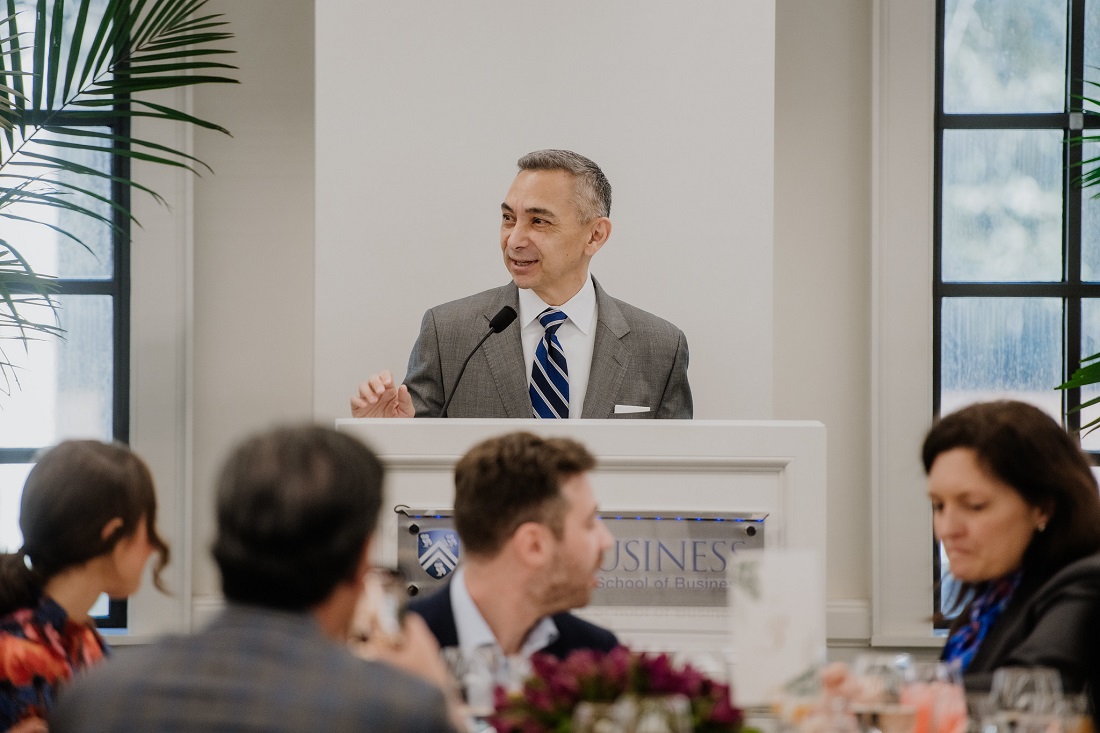
In July, Rice Business will welcome its first cohort of students to the newly launched Hybrid MBA program. Former Dean Peter Rodriguez discusses the decision to build the program — and why the market was ripe for it at Rice.


In July, Rice Business will welcome its first cohort of students to the newly launched Hybrid MBA program. Former Dean Peter Rodriguez discusses the decision to build the program — and why the market was ripe for it at Rice.
The Rice Business Hybrid MBA, the first of its kind at the university and in the state of Texas, is a 22-month, 54-credit program that begins with a weeklong in-person immersion. After that, classes meet once per month on campus, and in the weeks between, they meet online. Tuition includes residence at a hotel close to campus for the first semester to help foster connections with peers and faculty while students work and study in McNair Hall.
Rodriguez recently spoke with us about the Hybrid MBA program, how it will expand our impact both nationally and regionally, and the value of networking across professions and MBA programs.
It’s the right time because people have adapted to the great work-from-home experiment, which coincided with the great online education experiment during the Covid-19 pandemic. What we learned is how many students would benefit from and enjoy a hybrid program. We also knew we could deliver it very well and thought it would help us adapt to the market. People have much more flexibility in being able to work wherever they want. One hypothesis is that they would be even more interested in a face-to-face traditional education, but the truth is they want a little bit of flexibility everywhere, and that includes their education. What we learned from Covid and from extensive market research is that a once-per-month program — with online delivery in the weeks between — would be a great combination to add to our portfolio of programs and help us reach more students outside of the Houston region.
One of the things we learned — and it’s not just from that experiment, but also from our fully online program that launched in 2018 — is that people highly value face-to-face, in-person meetings. But it’s difficult for a lot of our target population to be present in those meetings. Our new program has all the online components, which can be live or asynchronous, on Thursday evenings. It’s outside of working hours, and it’s only one evening, so people can pace their week and set aside time. One of the questions we had was, “who’s going to be most attracted to this program?” and our early hypothesis was that it would be students who live far away from the Rice campus. But we also found that work schedules are a challenge, even for people who live within a few miles of campus, so the idea was appealing to local students as well.
One of the things that makes you more visible in the national landscape is having student populations from lots of different geographies and many industries. Being able to reach more students who are part of the expansion of high-tech and software-related jobs in Austin, or part of the diverse manufacturing and service economy in Dallas, will help us. We’ve also had students from Mexico and from across the U.S. inquire. In the MBA@Rice program, we have students from Boston, Los Angeles, New York and other cities in the U.S. That has added to the quality of discussions we have and to the geographic expansion of the Rice Business network. I think that will help us to serve existing students in our other programs because there will be alumni and other students that they can connect with in these vibrant commercial centers, and not just in Houston. Working professionals bring contemporary problem sets from the organizations they work in, and we’ll be able to bring in students with those experiences from great organizations around the country and the big metro areas of Texas.
To read the interview in its entirety, click here.
Larry Clow is a writer and editor based in the Midwest. He tweets at @larryclow.
Learn how to compare the best MBA programs for finance. Explore key factors like curriculum, recruiting and the strategic advantage of hubs like Houston.
Wondering how to pivot into consulting without a business background? Discover how the top-ranked Rice MBA curriculum, Career Development Office, and hands-on learning opportunities will empower you to make a successful career transition.

Rice MBAs receive unmatched entrepreneurial support, beginning with a curriculum that teaches collaboration and innovation and amplified by a community dedicated to giving back. Considering launching? Here are a few tips Rice Business entrepreneurs have shared on our podcast, Owl Have You Know.
Listen as host Scott Gale sits down with Ruth and Brent to discuss their cutting-edge insights on the science of leader development, managing zillennials, and what we’ve learned post COVID-19.

Join Ruth Oh Reitmeier, director of coaching at Rice Business, and Brent Smith, the senior associate dean for executive education and associate professor of management and psychology at Rice Business, as they sit down with host Scott Gale to discuss their cutting-edge insights on the science of leader development, managing zillennials, and what we’ve learned post-pandemic.
Subscribe to Owl Have You Know on Apple Podcasts, Spotify, Youtube or wherever you find your favorite podcasts.
[00:00] Scott: Welcome to Owl Have You Know, a podcast from Rice Business. This episode is part of our Up Next series, where guests weigh in on the trends currently shaping the world of business. I'm your host, Scott Gale. And today, I'm speaking with two leadership experts, Ruth Reitmeier, director of coaching at Rice Business, and Brent Smith, the senior associate dean for executive education and associate professor of management and psychology.
Certain topics like cryptocurrency, AI, political polarization, and Jennifer Coolidge's comeback speak to the cultural zeitgeist. They characterize moments in time. But the topic of leadership and what it takes to be an impactful leader is endlessly relevant and fascinating. We all have the potential to be trailblazers in our lives and careers.
Even if you aren't a CEO or on your way to becoming one, everyone leads from where they are. Life demands it of us. Leadership isn't a title or position, it's an identity that's forged over time. So, I'm excited to have both Ruth and Brent here joining us for an in-depth discussion on what it takes to be a strong leader today, common pitfalls in leadership development, and how Rice Business creates transformational leaders.
So, let's just dive right in. Ruth and Brent, for those in the audience that haven't benefited from your expertise yet, can you tell us a little bit about yourselves, your roles at Rice Business, and how you became interested in leadership coaching? Ruth, can we start with you?
[01:32] Ruth: Yeah, absolutely. So, I'm Ruth Reitmeier, formerly Ruth Oh when I was an undergrad here at Rice. I graduated in the early '90s, met my husband here at Rice, raised my kids here in Houston. I've got three grown kids. And I got interested in leadership coaching because it seemed to be the right intersection for my skills and my interests and my experiences.
People who know me well will say that I'm kind of, that blend of, like, radical candor. Like, my husband will say, you don't pull punches. But people also will say, like, you care deeply about people. And because you care about them and love them, you know, you can deliver those hard truths. And those are qualities that you need to be an executive coach. You need to have backbone. You need to have heart. My role here at Rice Business is to build bespoke coaching programs for the students. We want you to graduate here feeling like you've been developed as leaders. And we want to bring some evidence-based practices to how we develop you as leaders. And coaching is one of those evidence-based practices. We know that it's effective. We know that it helps build your leader identity. And we know that that personalized approach can really help unlock your potential as leaders.
[02:48] Brent: Hi, I'm Brent Smith. I've been a professor at Rice since 2001. Most of the time, I stepped away for a little while. Prior to Rice, I was a professor at Cornell in upstate New York, and I've been at London Business School for a short period of time in the interim for a while as well. My PhD is in psychology, so I got interested in leadership and leadership developments, you know, all the way back to the early days of my PhD program when I was studying leadership and, kind of, thinking about some of the psychological mechanisms that affect people's ability to make transitions in leadership roles, particularly leadership roles of greater and greater levels of responsibility. So, that was, that was, kind of, my, I guess, the font of my initial interest, you know, in development.
When I got my first job at Cornell, I was completely unprepared for the task, but the dean of the Johnson School of Cornell asked myself and a good friend and colleague, Randall Peterson, if we would build a leadership development program for the MBAs. And we sat there and we thought about it, and we realized that we had no idea how to approach that or, you know, how to really think about the challenge of that. You know, we had read all the research around leadership, but we really hadn't thought through the process of taking people who were in an MBA program and getting them to think about an MBA program, not as a collection of classes, but as a full leader development experience.
And we built, you know, partially in concert with some other folks who were giving us good guidance, we built, kind of, the first coaching program for Cornell's, the Johnson School's MBA program. And it, kind of, started to take off a little bit. And, I think, slowly and very iteratively over the course of a few years, we started to build it into something that taught me about leadership developments, you know, as I was getting more and more interested in the science of it.
So, that was, that was really the font of my interest in leadership developments and, I guess, my practical experience. When I moved from Cornell to Rice, I think we put in the first proposal for a leadership coaching program for the Jones School around 2005 or 2006. We weren't quite ready, I think, as a school to be able to consume that kind of program. So, it took a little bit longer to get it in place. But I think around eight or nine or 10, we implemented a coaching program in the EMBA program that really looked very similar to what we had done at Cornell.
[04:53] Scott: So, one of the goals here, kind of, is to demystify leadership a little bit. And so, I want to just, sort of, cannonball in and, kind of, ask the question, like, as you've on-ramped to this journey and as you're, kind of, traveling down this highway, what have you changed your mind about leadership along the way? Some orthodoxy or some approach or process.
[05:12] Brent: I don't know if I would say that this is changing my mind. I would say that what has been reaffirmed consistently over time about leadership is that the belief that there might be some kind of magic bullet, you know, that really can solve the problem of leadership, it's, kind of, unrealistic. I think those who have been in my class, probably, have heard me, you know, belabor the point that leadership is something that is just unfortunately quite contextual. And without an understanding of context, it's really difficult to understand leadership. You know, if you're a frontline supervisor, you know, leadership means one thing. If you're a COO, leadership might mean something entirely different. If you're in a company with a highly innovative culture, leadership might be something. If you're in a company that's high-reliability, it might be something entirely different.
So, I guess, if I've become more clear about something, it's that leaders need to be very thoughtful about the context that they're in and let that be, kind of, the guide to what kind of leader they should be, rather than trying to look for a magic answer that might be out there in some...
[06:12] Ruth: So, can I share an unpopular opinion? I think that most leader development, as we know it, is very elitist, individualistic, and not effective. I think that, you know, it's a $366 billion industry worldwide, but why do we have such a leadership shortage? Like, why is everybody's leadership pipeline so anemic? And so, there's something that's broken in the world of leader development. And I think that being in a room full of people that are attached to Rice University, I think you know that there are bogus leader development things out there and then there's evidence-based leader development.
So, I think that what I would say I'm really passionate about and what I've come to, like, really want to push back against is, kind of, the myth of leader development and sending people away on corporate retreats and they're going to come back magically transformed. It's just a very slow, iterative process. And I just think people don't realize it's like going to the gym. You know, one of my mentors, David Day, says, leader development is a gym membership. It's getting up and going to the gym every day and working those muscles. And that's not very sexy or appealing to most people.
[07:23] Scott: I love this. I, kind of, want to hang out here for another second and just to triangulate a bit more and just, sort of, ask a bit more of a direct question, too, to just, kind of, layer on is just, kind of, what are some of the words you use to define, let's just say, good leadership? And you can reject, sort of, the question and reframe it as well, because context matters, all of these things. But, sort of, I think that there's, certainly, interest in those that are listening of, kind of, like, what are some of the characteristics that you have found in your experience that good leaders have?
[08:01] Brent: I think we spend a lot of time trying to figure out what the unified theory of leadership is. Okay. And all you have to do is to go into Google and search, you know, what are the traits of effective leaders? Or, what are the characteristics of successful leaders? And you will find 1,000 pages of information telling you that this is what it is, right? This is the Holy Grail. And the research that's been done on leadership, kind of, basically belies that simple finding. And what's fascinating, honestly, if you're an academic, is that academics can look at this problem and just monumentally disagree about it, because we can look at something that is a study that shows that a particular characteristic explains a certain percentage of variance and effectiveness in leadership and say, "Wow, look at that." But it's still explaining only that much variance in leadership. And the huge amounts are explained by other things, because people are in different contexts.
And I get, I mean, what I... what frustrates me, I think, about trying to identify universals or suggesting to people that there are, is that it can be extraordinarily misleading. Right? Particularly when the concepts that we talk about themselves are somewhat ambiguous and open to interpretation. I would love for people to think that the tools to leadership are right in front of them, right? But they have to understand what's right in front of them. You know, what's the culture in which I'm embedded? What are the expectations that my boss has of me? What are the capabilities that drive success for my team? What do my employees actually need from me as a leader? And start to build this, kind of, rich understanding of what's right in front of them that's giving them great information about the kind of leader they need to be at that moment.
The problem is, and I think this will probably get to my slight non-answer to your question. The problem is that context changes constantly, right? And I think any leader who's in a complex organization dealing with really challenging issues will tell you that, sometimes, that context differs 10 times in a single day, where I'm dealing with, you know, analyst community at 10:00 A.M. but at 2:00 I'm dealing with an unhappy customer, and at 4:00 I'm dealing with an employee who needs a little bit of coaching, or something along those lines. They're all different contexts that require different behavior for me to be able to succeed.
So, I was talking about this in a program that I was teaching yesterday and today. I had about 20 physician executives, you know, in a classroom. And someone very thoughtfully heard me talk about that and said, "So, what you're saying is that it's all about adaptability, then." I was like, "Yeah, maybe that's important, all right." A willingness to be somewhat adaptable, you know, and let the situation, kind of, be, to a certain extent, your guide.
[10:24] Scott: Ruth, any thoughts on that? I mean, we're wandering down a path that is somewhat deliberately to, sort of, start to chip away at effective leadership and what that means and looks like.
[10:34] Ruth: Sure. I mean, I would agree with the last thing that Brent said there about, like, the adaptability, the versatility. Like, when I'm coaching a leader, I'm trying to make sure that they have a variety of tools in their leadership toolkit, because different situations are going to call for different behaviors. And so, for somebody to say to me, "Well, that just doesn't vibe with my personality," I'll say, "Well, that's too bad. You know, your people and your environment are going to require you to behave in some different ways, and you will diminish your effectiveness as a leader if you can't learn some of these new skills." So, leadership coaching is about helping you add some skills, you know, to that toolkit, helping you read the room and know what people need. I think, you know, when you read the room today, in a lot of industries, people are looking for transformational leaders. And everyone uses that word pretty loosely, but, you know, in the literature, transformational leadership actually does involve four particular factors.
And I think that these are the four factors that, kind of, resonate with me when I think about the kind of leader that I want to be, the kind of leader that, I think, that zillennials want to follow. I've got 20-something kids. And so, I think about, what are they looking for in their leaders? And what kind of managers do I want to be shaping for the world that they're going to graduate and work in?
So, a coach-like approach to leading is really probably one of the things that I'm going to, like, be the biggest fan of, because I think a coach-like leader is really empowering other people in saying, you know, "You have the capacity. You've got the potential. Let me develop you. Let's unleash your potential for this organization." And so, as an organizational consultant, I can sometimes, you know, look at the big picture with my client, but then change has to happen at that individual level. And we know from the world of psychology that human behavior and change is really hard, but coaching is an effective tool to help bring about that change at that individual level. And you can't really mandate change from the top unless you've also got those frontline managers who know how to coach and bring people along with that vision.
[12:40] Scott: Just want to, if we can, kind of, draw this line out a little bit further, because I like to think that, sort of, no one sets out to be a bad leader, if we're going to, sort of, an ineffective leader, right? But as you're talking about, there's, sort of, an individual component to this and there's an organizational component to this. And so, would love to just, sort of, unpack that a little bit of, kind of, what are organizations doing well, could be doing better in the leadership development cycle for individuals? And then, kind of, follow up with, sort of, how individuals, whether within or outside of organizational context, can, sort of, enhance their leadership effectiveness.
[13:19] Brent: Can I take a step back —
[13:20] Scott: Please.
[13:21] Brent: ... and not answer the question? So, maybe related to all of this, right, we keep using the word, "leadership." And, you know, this is one of those great examples of having an idea that you talk about in class a lot, and then somebody else writes the paper that gets published, that's, like, "I've been talking about that forever, and I didn't write it, so I don't get any credit for it."
But, you know, when I... I've had this amazing luxury through the course of my career and working with a lot of companies through my job here and through consulting and things along those lines and having taught leadership for so long, you know, I get this great, rich experience having so many people who are in leadership roles in my classes, and talking to them about the challenges that they face. And to be honest with you, what I don't see in organization, you know, is an absence of leadership. What I see in organizations is an abdicationof the most basic elements of management.
And I think we oftentimes mislead people and organizations in making them think that everybody has to be, kind of, whatever this pinnacle thing is of leadership, which I don't actually think that's the big problem that most organizations have. I think the basic tools that are in a manager's toolkit are things that people don't do very often. They don't do them consistently. They don't make them a part of their day-to-day job and their day-to-day activities. And as a function of that, organizations suffer, people suffer, engagement suffers, turnover rates are higher, commitment’s lower, you know, all of those things.
So, there is a piece around training people to be better leaders that's just getting them to do the simplest things, but to do the simplest things pretty consistently. And to be honest with you, that's not that challenging. So, I, kind of, slightly disagree in the sense that I don't think that the biggest agenda, meaning where we have the biggest bang for our buck in terms of development, are the things that are terribly challenging. We just have to figure out a way to get people to do the simple things consistently, because that's going to have a massive impact.
And I agree absolutely with Ruth, that it's hard for me to define leadership or even to think about those basic activities without having managers have this view that coaching is, kind of, part and parcel with what their responsibilities are. Because, yeah, I agree with your point, not too many people wake up in the morning to figure out how they can go into the office and be a really bad leader that day. Like, I want to figure out how I can, in a new and ingenious way, promote greater levels of disengagement, you know, among my team. How can I just instill that last little bit of conflict that I haven't been able to, kind of, ring out everybody, right? They just go into the office and try to figure out how they can get the 18 million tasks that are on their plate done, but they forget about all the basic aspects of management.
[15:49] Scott: Can you double-click on just, like, one or two examples of those basics that, kind of, are out-of-line?
[15:54] Brent: Well, I mean, think about what we know about what employees tend to get really, really upset about, meaning the things that lead to disengagement and the things that lead to challenges with commitments and the like or the desire, maybe, to look for other organizations. Managers don't wake up in the morning and go in and say, "When was the last time I had a career-related conversation with Scott about what his desires and aspirations are and whether or not we as an organization are, kind of, helping him think that through and maybe taking the next step in that career?" People don't go into the office and think about opportunities to provide feedback to somebody because they haven't done it in about two or three weeks, or two or three months, or two or three years. People don't go into the office thinking about how they can take one of the experiences that's right in front of them and use it as an opportunity to give someone else an insight in how to do something a little bit better and display interest in their personal development.
You know, so much of development is just basic grunt work, right? You know, it's... particularly from a manager standpoint, it's saying, "I've got this limited set of tools in my toolkit, you know, feedback and opportunity and my experiences that I can allocate to people in ways in which... that can allow them to learn." But we race in and, you know, I know what your day's like. I know what my day's like. I know what probably your day is like. We race in and we just try to get all those things done and forget about the people that are there to help us.
So, if I could just, like, get people to do that, you know, very consistently and not in a way that takes an enormous amount of time, I think we would solve a huge part of the problem, you know, that people raise about leadership and management.
[17:20] Scott: That's helpful context. Ruth, I'd be interested in, sort of, like, as you're talking about thinking about leadership coaching, you observed, like, any, kind of, gaps in individual motivations? Or, kind of, what are some of the things that are keeping individuals from, kind of, crossing that threshold into understanding, kind of, leadership through that, kind of, coaching lens?
[17:40] Ruth: I want to answer that question by connecting it to something that Brent, you know, also said, which is, I think the way that we select and promote people into leadership is also broken. And so, we look for certain traits in people, signs that they're ready for that next challenge, that next level of leadership, but we tend to have a bias for certain personality traits. And those personality traits do not always translate into leader effectiveness or good management skills. So, just because somebody's outgoing and speaks up a lot in meetings and, you know, is extroverted and at the happy hours, that doesn't mean that they're necessarily going to be effective in a role where they have to manage their peers if you elevate them.
So, when I'm coaching people who have been promoted to their first management role, there's panic because they realize, like, "I was a really strong individual contributor, but I'm being thrown into the deep end without this training, without coaching." And so, like you said, people don't wake up thinking like, "How can I be a terrible manager or leader today?" I'd say maybe about one-third of first-time managers succeed because they've got the experience, they've got some, you know, skills to draw from. Two-thirds — 60-some percent — of first-time managers fail in their first role. And it's for lack of training, sometimes for lack of support along the way. And I think coaching frontline managers has got to be an investment for every organization. If you want to have a strong leadership pipeline, you've got to start addressing it with those early career people. You can't really wait until they're in their 40s and their first senior role to give them an executive coach. And so, there's a very strong tilt towards giving resources to people at the top of an organization when, really, your investment needs to be, kind of, at the base of the pyramid, of the organizational pyramid.
[19:36] Scott: Is there anything else that organizations are doing well in terms of that early identification of leadership and, sort of, getting ahead of that versus putting it off?
[19:46] Ruth: I think one of the things that I think a sign of a healthy organization and an organization that's going to have a strong pipeline is internal leader development programs. I think, when you depend too much on external consultancies, you get, kind of, this scattershot approach. If you can build something internal that's contextual, that's giving them the competencies that you know leaders in your organization need to advance and succeed, those are the organizations that are going to have sustainable plans for the future.
[20:14] Brent: You know, I would say, using the term, "organizations," I would say the organizations that seem to, in my view, get this right, are organizations that, kind of, build a culture that supports the notion of succession-planning from the top to the bottom of the organization. You know, where it's not something that is an activity that is restricted to the top couple of layers, where they're really thinking about how to allocate developmental assignments in a way that will round people out to take on the next big job. But it's something that's an ethic that's almost built into the way they think about talent all the way through the organization. And they try to really build into their leadership and their managers this idea that your job is to figure out how to cultivate the next generation of people that's going to take on your role.
And they incentivize their managers to be thinking about and to be developing that talent, so that, you know, when they step into their next role, that they have someone who can just easily backfill in. And that idea that, culturally, you know, a focus on succession from top to the bottom is something that, I think, creates the fertile ground. I completely agree with Ruth that organizations... I probably shouldn't say this out loud, given my role, actually, only part of my role. I taught a program today where people from multiple organizations could come to it. So, it wasn't, like, contextual, I guess, completely. But it is always better. But absolutely, I mean, leadership development has to be, kind of, framed within the context of the organization that you're developing those leaders in. It's not a generic process. And, I think, anytime you can be very bespoke, you know, in the process of identifying the challenges that the organization faces, that the leaders need to be able to address, and, kind of, the culture of the organization that you need to continuously promote through the development of leaders, you're always much better off.
[21:49] Scott: I want to, kind of, pivot a little bit and fold in this ingredient of zillennials into the conversation and, kind of, define what that means and, sort of, how this next wave of generational leaders is shifting and changing thought process and some of the new challenges that that might be introducing, opportunities that's presenting. Start to talk a bit about what you're both observing in that space.
[22:14] Ruth: Where should we start?
[22:15] Brent: Ruth and I are going to disagree about this.
[22:17] Ruth: Based on my experience with, you know, working with undergrads here at Rice and then having, let's see... I've got three kids — 19, 23, 25. They're smacking that zillennial demographic. And so, when I say zillennial, I'm talking about, like, 18- to 30-year-olds. So, the baby millennials, and then that first cohort of Gen Z that is now in the workplace, I think they are distinct. I think they are different. There's something about having grown up with technology. Their world is a lot bigger. They've been exposed to a lot more ideas. Their approach, their philosophy around building their careers is very different. You know, I'm Gen X. We graduated. We put on our suits. We went to work and did what our bosses told us to do. And we were good little soldiers for a long time because we wanted a promotion.
Zillennials aren't like that. If you work with the zillennials, you know that they've got a lot of attitude. They've got a lot of confidence in themselves. They're planning to job-hop after nine months. They're going to ask you for a raise and a promotion after they've been there for six months. There's a restlessness to them. There's a boldness there. And it's making management kind of tricky for a lot of people.
And so, what I'm seeing is, sort of, this, I would say that the boomers were the builders. Gen X, we were the maintainers. The millennials were, kind of, dissenters. They grumbled about corporate structures and traditions, but they, kind of, basically signed up and went along. Your Gen Z, they are the disruptors. They want to do everything differently. They will challenge your processes on day one. Maybe, they'll hang out for a week before they challenge your processes, but they will challenge your processes.
And so... they're really relationally motivated, though. And so, when people say, like, "I don't know how to manage them," like, you've got to treat them like people. They're not cogs in a machine. They want to be treated like people. And so, transactional leadership isn't going to motivate them, retain them. I think you're lucky right now if you can hold onto a Gen Z for 18 months. Two years, you're pretty lucky. But that makes succession-planning very complicated for a lot of organizations.
[24:28] Scott: So, Brent, there's a lot of heads nodding in the audience. You said upfront that you disagree. And so, would love to hear your perspective on the topic.
[24:36] Brent: I will take on every head nod. How much time can I have? Okay. So, let's start with research, and then we'll take it into, kind of, a broader context a little bit. My concern is a couple-fold. One is, I'm pretty old. I've had the opportunity to live through, kind of, successive generations that people talk about, you know, in the popular literature.
The problem is how we talk about generations tends to be very inconsistent with what the research shows us about generational differences, right? And it's not easy research to do, because you have this problem of conflating the stage of life a person is in, you know, which does actually quite naturally lead to, kind of, differences and expectations with actual generational differences that are based on, maybe, kind of, these collective experiences that groups have.
And it's not easy to tease those kinds of things apart. I've got a colleague who... a couple of colleagues, actually, who did some research where they were able to actually tease that stuff apart. And that research, consistent with a lot of other research on generational differences, basically shows that our assumptions about the existence of those differences, it's not consistent with what we actually find. In fact, we tend to find that the generations are substantially more similar in what they value out of work and what they want out of work, you know, than our perception of them would be. More importantly, and this is actually much more important for me, is that, when you look within a generational band, there is huge variation across that band and what they want and desire out of work. So, calling a generation a homogenous group where everyone believes the same thing, I think, is completely inconsistent with what the research shows, right?
Secondly, and this is where I think things from an organizational standpoint get important, when we stereotype a generation by saying that the generation wants this, the generation has this challenge, the generation has this demand, we actually, and we create or we reify this view. We actually create a situation where organizations start to treat that generation as if those things are true and real. And they get very much back the same kind of behavior that they expect, based on the treatment that they receive.
It's the same concept as a stereotype. When I treat someone in a stereotyped way, I tend to get behavior that's more consistent with the stereotype right back. And I think there's some reasonable evidence suggesting it's exactly what we're doing in many organizations. So many of the things that have affected younger generations affected older generations, too.
Now, there is something that I think Ruth highlighted that's important, but I don't think it's a generational issue. And that is we have kind of changed the game, right, you know, over time for employees that are slightly younger than me although it affects me too. And that is we shifted the relationship between employees and companies, and we did so in a massively dramatic fashion.
The knock-on effects of that has created a really, really dysfunctional environment for people that are at the early stages of their career. So, back in the day, people have talked about this before, but back in the day, when job security was the name of the game, that organizations conferred job security to the people, and it was built on an assumption that those people were going to give security back and give loyalty back to the organization, that was this foundation of what we used to call the psychological or what we call the psychological contract that explains that set of responsibilities between employees and companies. When we got rid of that, because organizations started focusing on efficiency and downsizing and everything, well, it got replaced, you know, with this idea that organizations do owe me something. It's not job security. What do they owe me? Well, they owe me a focus on me, my development, my career, my growth, in ways that's going to help me create a sense of career security, right? Because I'll work for you as an organization if you show me that you're going to help build a sense of security that I'm going to have the career that I want in the long term, because you're probably not guaranteeing me a job.
And one of the things we found is a fantastic researcher at Wharton who's done this study, is that turnover rates have consistently increased in organizations over the last 20 or 30 years to the point where recruiters believe it's much better to replace people who are leaving with external hires, which creates this, kind of, self-fulfilling prophecy of churn, right? How do I improve my career? I go to work for some other organization because that other, kind of, organization is going to see me as already being trained by this one. I jump ship. I'm going to get a, you know, increased pay rate. I'm going to get pay raise and, maybe, a promotion. But we promote that ethic, right?
So, early-stage career people are, kind of, walking into an environment where they recognize that, because of how we've changed the world, you know, that this is the best cycle to improve their career on.
[28:53] Scott: So, it's, kind of, like, the causality or, kind of, how we attribute, sort of, the features that we're talking about in, kind of, this 18- to 30-year-old band, is helpful to think about as we, kind of, diagnose and talk about, how does one lead or manage work with, what are of effective ways to, sort of, work with this band of employees as they start to, kind of, work their way through the workforce should be... Would love to, sort of, get some perspective, Ruth and Brent.
[29:22] Brent: The work from consulting firms that I actually am willing to accept, right, is every... almost every piece that gets published over the last 10, 15 years has really highlighted the idea that, if you want to enhance the commitment of employees, you need to demonstrate an interest in their career developments, their growth, their personal development, their learning.
And that, actually, kicked into really high gear during the, kind of, COVID period. In fact, you started to see in a study after study showing that during the great resignation that one of the big explanations wasn't just what we thought it was, but it was also the fact that organizations weren't paying attention to how this was going to affect their careers and having conversations with people over and over again.
So, I think the solution is, probably, the solution that we've always known, which is to dive right back into being really good and sophisticated into talking to people about, what do they want? You know, what do they want out of their employment with, you know, us as an organization? How do they see their careers progressing? And demonstrating what we can do with the resources that are available to us to help them grow the capabilities that will allow them to, hopefully, take those steps, when and if they become available in the organization. Just get back to that stuff.
[30:25] Ruth: I, kind of, lost the plot.
[30:27] Scott: Let me pull it back around because I'm... I want to ask, because it's this idea of, like, okay, we understand what's the attribution or the causality of, kind of, why employees today are behaving the way that they are. Because I think we all see, kind of, the information in front of us, I think it's clear that, maybe, attributing that to a generational birth year might not, sort of, make sense that there are other things, sort of, at play, which I like, and this idea that, like, the pandemic has, sort of, I was going to say unmasked. That was, maybe, a bad way to say it, but, sort of, like, revealed, kind of, maybe, a deeper-seated issue, maybe accelerated some things.
[31:03] Ruth: Sure.
[31:03] Scott: And what I want to do, as we, kind of, start to land the plane on the end of the discussion, is... and there's some hazard in doing this, but I want to, like, what are, like... I'm trying to get to, like, tactical, actionable kinds of things, some takeaways. And so, I want to, sort of, talk about this: how people are integrating leadership coaching into, kind of, their day-to-day. Like, what are some tips or advice or things to bring leadership coaching into, kind of, a tangible, "I show up at work tomorrow. I can, kind of, go do these kinds of things?" I know it's a terrible question, but I want to get it, like, tactical.
[31:37] Ruth: I like it. I mean, I think leadership coaching is built on, like, several things, right, like, empathy and human connection, authenticity, vulnerability, intellectual humility. Like, if you can embody a coach-like approach as a leader and bring those things to work, you're going to inspire people, you're going to connect with people. That is what zillennials are looking for. Like, "Show me that you are human, that I can go to work and be fully human also."
I think the pandemic did accelerate some of these changes. The zillennials were already, kind of, living under this cloud of existential angst, right? They've grown up with school shooter drills, active shooter drills, climate change disasters, terrorism, 9/11, you name it, pandemic. So, like, they live under this, like, very dark dystopian cloud. And to a lot of zillennials that I coach and talk to, they're like, "Do I have to really go to work and do this for the next 40 years? I mean, can I just run away and join a cult?" This existential angst. And so, the antidote to that is let them be fully human at work. You know, show some empathy as a leader. Acknowledge them. Acknowledge their challenges and their tribulations, even if they seem like petty dramas to you. People feel things more intensely when they're in their 20s. We do have research around that. So, I think, bringing your empathy to work, being fully human, connecting with them at that personal level, that is probably the number-one retention strategy that I'm telling my clients, is you've got to think about how you're showing up at work. Can you regulate yourself so that your employees can co-regulate in your presence? People are living under a lot of stress, there's a lot of burnout right now.
[33:23] Scott: So, treating your employees like humans, that's a good piece of advice.
[33:26] Ruth: Revolutionary, I know.
[33:27] Scott: I love it. Brent, any advice or things that you, kind of, go to? I know, I'm certain you get asked advice a lot on this topic. And so, what's, kind of, some of your favorite actionable things to, kind of, go and do start to chip away at this?
[33:39] Brent: Yeah, I think about it as a broader problem, but I agree with Ruth that, if there's been a positive outcome in the world of work for the pandemic, I think what it maybe has been is creating an environment where there's less stigma attached to workplace wellbeing issues, where there's a forum now where people can have a conversation that's meaningful about the amount of stress that they're experiencing, how job demands can be extraordinarily excessive, the compromises that job demands create, you know, and all of those kinds of things.
So, I do think there is this domain. And it's not just younger generations, it's older generations as well, that have the same well-being problem. That, as leaders, we can promote the conversation and deliver the support that is necessary to get people to maybe mitigate some of the negative effects of the excessive job demands that are created in an environment where people are operating in a really lean situation.
The coaching part of it, if I had my magic wand so that I could wave and get people, I didn't really mention this, like, for about 12 years, I taught a course that was really designed to train managers to be better coaches in executive education here. And, you know, kind of, my punchline to that whole thing was, at the end of the day, being a great coach is making sure that you're putting on those lenses every day when you walk in, and that you're looking for opportunities to help your employees enhance their capabilities in ways that are going to allow them to succeed in the job that they're in, and hopefully in the next job that you're already talking to them about, right?
And so long as you, kind of, wake up and realize that, "Yeah, I've got a lot of things that I have to do. My boss has high expectations for me," but you, kind of, have to make sure that you're wearing the coaching lenses first, you know, and then maybe all the task lenses second, that it'll prompt you to help ensure that you're building that relationship with your employees that will ensure their engagement, ensure their success, and help you get all that stuff done. So, I, kind of, like to think of coaching as just a perspective that then translates into a lot of activities that can really help engage and get a committed workforce that's going to help support you achieving them.
[35:33] Scott: I want to, kind of, pull on a thread, which, Ruth, you, kind of, touched on a little bit, which is, it seems like we're in, kind of, these early post-pandemic innings and talking about there's... I'm not a researcher. I read a book one time about, like, generational research, which was, like, these lines of demarcation for generations are often made by experiencing fear or, like, being in a place. So, like 9/11, as you mentioned, is an example. If you can remember, sort of, 9/11 is, like, one of the earliest Ideas or thoughts of feeling that fear. And what that can mean is there's, like, kind of, micro-generations, that there's, like, a political uprising in a particular geography or whatever.
And so, coming out of the pandemic with, sort of, the technological connectivity and the worldwide nature of it, is we've actually are just coming out of the most, sort of, comprehensive generational marker ever in human history. And so, we're kind of in this, like, the fuse is lit, there's this experiment that's, sort of, now gonna happen. And so, this is a crystal ball question of, like, looking ahead to the future, like, we're starting to see these, kind of, early indications that there's a discontinuity, some kind of inflection point in the space that we're talking about. Where do you speculate that that's going to take us?
[36:50] Ruth: I think where it's going to take us is I think people are going to have this new appreciation for this one precious life that they have, like, "Oh, my God, we survived. We made it. We're still alive, and we're still here today. So, how do I want to live my life?" And it doesn't matter if you are a 21-year-old, 51-year-old, you're looking at life and having this appreciation for it and also feeling a responsibility to live well.
I think that, if you are a leader, think about your responsibilities to the people that you lead, and how can you contribute to their flourishing, because they're coming to work every day and putting themselves under your leadership, which means you have a responsibility to help them flourish there. And so, that's something that I think about.
I also think about for people in the zillennial bracket. They're going to have this, like, thirst for life, I think. Like, they're gonna want to taste everything on the smorgasbord of life, because life is short. You don't know when the next pandemic might hit. You don't know when the next earthquake might hit. So, more risk-taking, more career-hopping, more appetite for adventure and trying new things. And so, I fully expect that the 20-somethings in my life are going to have probably five to seven careers in their lifetime. And I don't see any of them hanging around one organization for a gold watch.
[38:12] Brent: I'm really reluctant to prognosticate. Every time I've tried, I've failed. I've always been wrong. So, I will preface whatever I say by saying that I'm just probably likely wrong. I don't know. You know, as I've been asked this question over and over again at different phases of going through the pandemic, I think my attitude about it has changed. I do believe, and I'm willing to say I do believe fundamentally that the future, probably, will require from employers and, certainly, for managers, a greater tolerance for flexibility in how we do work and where we do work. I do think that's, probably, you know, a fundamental shift that's happened in organizations. And we're going to have to figure out how to adapt all of our, kind of, management-related tools to an environment where the proportion of people who are coming into an office versus working somewhere else is different than what that proportion looked like in the past.
And that actually propose, that just creates a lot of challenges that we are yet to have the greatest answers to, right? You know, how do you onboard someone who you don't see very frequently, right, or ever in the office? How do you manage culture and maintain culture and create consistencies in employee experience when people are bouncing back and forth here and there? How do you do performance management, you know, in a context where they don't actually ever get to see someone, or I see somebody very, like, episodically and, intermittently, so to speak? We don't have good answers to all that stuff, right?
So, because of, maybe, this demand for flexibility, that will lead to this, kind of, change in how we do a bit of work. We're going to have to go back and, maybe, do a whole lot of research and, kind of, rewrite some of the guidelines on how to approach those issues. So, I think that's, kind of, a big thing that's out there.
Beyond that, I've got to be honest with you, we are not that dynamic of a species, right? I mean, this is like a moment in time. There have been a lot of moments in time like this. And we tend to go right back, right to the old ways of doing things. So, I think the jury's still a little bit out on most of the big things. And my experience in the organizations that I'm working with right now is that there's a pretty strong demand to get things, kind of, normalized a little bit, with just a few changes in the basic assumptions.
We're a group-living animal. We have always been one. We always exist in status hierarchies, right? That's how we organize ourselves effectively. That's not going to change. So, we build organizations around the presumption that's consistent with how we organize ourselves.
So, how new and different will it be 10 years from now? I'm not really sure. I think a pretty strong argument can be made that it might go right back to the way it was.
[40:35] Scott: Awesome. Ruth, Brent, thank you so much for being on the show today. This has been awesome. And thank you for bringing your talents and passions to Rice Business and the leadership development opportunities here for students. This has been fantastic.
And we are going to open it up. We've got 15 minutes of audience Q&A. We're going to bring a microphone up here and would encourage you to come and ask your questions into the mic, so we can capture it for posterity.
[41:11] Audience 1: Hi. So, thank you, both, for speaking. Right from the very start when you both started talking about topics like leadership as an identity and contingent and based on your actions, combined with your shared emphasis on the need to develop leadership lower down in the organization with the younger, more junior employees, it put me to thinking immediately about the concept of influence — so, you know, leadership without that legitimacy authority. And I wanted to get your thoughts on, number one, if leadership isn't so tied to your hierarchical position, then, first of all, what is the actual difference between leadership and influence, if any? And two, if we agree with everything that we've said, and I think we do, what would you say are the most important takeaways that we can have as leaders for recognizing and developing influence in those more junior employees to help bring them up into the company's succession? I know that was a very long question [crosstalk 42:36].
[42:24] Brent: Requires a very, very long answer. Ruth, you got a 30-second version?
[42:29] Ruth: I would say yes to all of the above. Yeah, you can walk into any middle-school cafeteria and figure out who has influence, right? And it's not necessarily the student council president that has a title or captain of a football team. You can see in any group of human beings who has the influence and who's going to be the de facto leader when the need arises. So, I think, being able to help people see... develop that leader identity, apart from a role or a title or a position, is really important. I think, you know, helping people find their voice, understand their values, living those out, that's really, I think, the heart of leadership. And there's something authentic and attractive about that, that people are drawn to. And when you turn around and people are following you, that's when you know you're a leader.
[43:19] Brent: Maybe, one way of thinking about it is that you can think about, you know, influence as an act and you can think about influence as an attribute. I, based on a variety of things, maybe a lot of it being built around my social capital that I've developed over time in the organization, you know, I have a lot of, kind of, natural influences built around that. And, you know, generating that kind of influence through social capital is really a function of recognizing the relational component, right? To what influence is building the relationships, establishing the relationships, creating relationships in a way that allows me to broker resources and, kind of, maybe broker other people's capital when I need it. And that's a very strong component of it.
Influence is an act. We've spent years and years and years and years studying that phenomenon. And helping people understand that to influence others is not a common set of strategy. It's not one thing, it's the recognition that not everyone is going to be influenced by the same strategy. And making sure you have an understanding of what all the strategies are, so that you can employ them when they're needed. And, yeah, I think you have to think about it differently in which side you're on.
[44:16] Audience 2:Hi. Let's get a little tactical for a moment. You both alluded to, and I'm thinking specifically, middle managers and line managers being thinly staffed. And, of course, we all know that, over the past, I don't know, 20, 30, 50 years, organizations have gotten leaner and managers are rewarded on their task output, not their leadership output. And it's time-consuming. The amount of time it takes to have authentic and meaningful conversations about, not only the employee's task, but their growth, etc., can take a considerable amount of a manager's time. And they're not necessarily rewarded for those activities. At a basic level, when you go into an organization to suggest additional leadership coaching, how do you quantify the value of [crosstalk 45:19]?
[45:07] Brent: Oh, this was... I thought you were going in an entirely different direction with that question. That was like a curve ball at the very end. Like, honestly, I have to ask... answer the first part. I actually think it's a bit of a myth that coaching takes a lot of time, right? Don't give me that reaction.
[45:21] Audience 2: I am a line manager in an active organization.
[45:24] Brent: So, I will tell you very quickly a conversation that happened in class today. And I have to give credit where credit is due. The person who, kind of, taught me a lot about all of this is a guy named David Peterson, who was a person who got really well-known in coaching early on. He got his PhD just a few years before me, but in counseling psychology, and mine's in organization psychology. And 25 years ago, I flew him into Cornell to teach a class on coaching to my MBA students because he was already really well-known as a coach, and I was just trying to figure out what this whole thing was all about.
And one of the students in the class, kind of, at the very end, raised his hand and said, "David, this has been really interesting. But maybe you don't understand what my job is like, because my job takes about 99% of my time, and now you're telling me I have to coach my employees. You know, but, like, seriously, come on." And David gave the best answer to that question I've ever heard, and it stuck with me for a quarter century. And it's, kind of, how I built my leaders coach class, you know, so many years ago.
What David said was, "You might, kind of, miss the point a little bit, because coaching isn't the hour meeting that you schedule with an employee once a week to deliver a little bit of coaching. Coaching is how you utilize the natural flow of your work-related experiences to give other people insights and opportunities to learn and opportunities to develop and opportunities to grow. Because right in front of you every single day as a line manager, you are doing tons of things, all of those tasks. What you have to figure out is, which one of those tasks are really developmental opportunities for other people, and how you can involve them in that in ways that show them how to do something that you're going to want them to do in the future that can, maybe, even give them an opportunity to actually do it, you know, with your supervision. And that can just expose them and demystify something for them that they might not have had any real insight into it."
And when you're using the natural flow of your own experiences, it doesn't take a lot of time. You're going to do the work, anyway. Just bring them into the whole conversation. Show them what it looks like. Give them that toolkit. The upfront cost is asking questions of people about what their career-related expectations are. But you can't manage people without having answers to those questions, right? That's just, kind of, a baseline.
So, once you get past that, I really don't think, you know, if you're doing coaching the right way, providing the feedback at the right time, sharing experiences and utilizing experiences, it has to be that big of a drain. You're just doing it in the context or course of your normal day.
[47:29] Audience 3: In the U.S., in general, coaching is regarded as a good way of, you know, or a way to elevate your performance. But in some cultures, it's still seen as remedial. So, in a global organization, how do you help these other cultures understand, when you're giving them this opportunity of an executive coach, it's to up-level their skills and not remedial?
[47:53] Ruth: That's a great question. I'd say that, you know, 20, 30 years ago, here in the U.S., it was considered remedial, also. What, kind of, turned the tide was just the flood of coaching at the senior leader level, right, where it became seen as a privilege and a perk, and this is an investment from the company because we value you so much and we want to retain you. So, you have to start providing coaching to those high performers, to those valued employees, so that it takes away the stigma of this being something for the problem people.
[48:24] Brent: Yeah, I would, you know, the more senior leaders can celebrate the fact that they themselves, you know, are benefiting from coaching, the more it actually creates a culture where it's much more, kind of, amenable to everybody getting on board. But I think just, kind of, communicating the message, right? So, there are so many different contexts in which coaching is really, really, really valuable. One is actually elevating performance. That is a fantastic context in which coaching can be valuable. But there are others that are equally valuable, like helping people adapt to change, right? Whenever your organization implements, you know, significant change, enterprise-wide change, there are going to be a lot of people who are uncomfortable, who are concerned about their competence and capability, who might just, because of their personalities, be a little bit resistant to doing new and different... And it's a great context where coaching can actually get people over that particular hump.
One that's also really important is taking people who are, kind of, fantastically capable, really great contributors, high potentials, and rapidly accelerating their development so that they can take on that much bigger role. And when you can celebrate examples of all of those, it destigmatizes, you know, the fact that they're... that it's always about underperformance and that you've been identified or you've been tapped only because you're not hitting your standards.
[49:35] Audience 4: Thanks for all three of you guys being here tonight. It was really enjoyable. Brent, you talked about succession planning from the C-suite individual contributors. And then, you said, "And you have to incentivize it." How do you incentivize it?
[49:47] Brent: So, the very best organizations, I think, are organizations that build directly into the performance management process some kind of evaluation of the extent to which managers are meeting human capital goals, right? And a part of that is asking employees of that manager, is your boss having conversations with you about whether your... what your career's going to go? Is your boss actually demonstrating an interest in your development? Are they allocating resources in ways that will actually give you that chance to develop?
We know those things are directly related to engagement. We get that data off of employee engagement surveys all the time. Build it into the performance management process, so people are being held accountable, not just for results and outcomes, they're being held accountable for the things that are going to contribute to the achievement of those results and outcomes, which are all these human capital metrics that aren't that hard to measure, right?
There are organizations, by the way, that do this. They do it in a pretty sophisticated way. And they actually build a component of a manager's incentive compensation around those very factors. And those are the organizations that are really trying to take it to a cultural level. You know, this is what we expect out of managers. We expect this to be the experience that employees have.
[50:48] Audience 5: So grateful for all the insights and what you've had to share, but Owl Have You Know, that we might have to consider the redefinition of the organization, because in the '60s here in Houston, we were working on getting a man on the moon. And now that we're in the 21st century, we're talking about a dystopian cloud. We're talking about a pandemic. We're talking about a food, water, energy, and health crisis. So, to me, from a leadership perspective, you keep talking about an organization as if that organization is the organization from the industrial age to present day. And then, you were talking about, where could we see ourselves in 10 or 20 years?
So, from a leadership perspective, shouldn't the organizations be thinking outside of their four walls? And we've already created this hybrid workforce, because we have to solve some of these seemingly impossible challenges, because now Houston wants to be the leader for the energy transition. And they're also building out this massive incubation, and they're trying to catalyze capital. Shouldn't we be thinking of leadership on how we're preparing an individual that could be job-hopping, from a career perspective, to already span organizations and being prepared as the organization we think traditional to the organization we're growing into, that I got to hand these employees off, and that, as an organization, I need to think of this as an ecosystem, and how do I then educate and coach for people to be in this ecosystem so we can solve these challenges that we are facing?
[52:30] Brent: No, we shouldn't do that. It's way too hard. I mean, leading question. There's so many things that I think we could add to that, right, you know, in ways that would shape the possibilities for what leadership could look like in the future. I've got a former colleague who, he and I are in faculty together at Cornell, and then went to USC. And he's just recently retired. He's done, like, some really interesting work on how the very unit around which we create organizations, a “job,” has changed pretty fundamentally and has made arguments about the future of what "jobs" are, with substantially less defined and more ambiguous, kind of, responsibilities and what the implications are for organizing, for performance management, for leadership, for all of these things.
And although it's a more micro-level view of what you're talking about, you know, it has a similar kind of effect. It means leaders have to be even better at continuously establishing expectations in ambiguous situations for what they need out of people in that particular moment. And figuring out how, over time, whatever that time period is, they can aggregate that set of expectations that they've created for people into something that's, kind of, meaningful, that can lead to how we define success, that can lead to how we choose to promote or not promote, to how we compensate or not compensate, right? I mean, I have no answers to those questions. But I think there's, like, just this very fertile bed for interesting research that can help us think it, think it through.
[53:58] Ruth: I love how you took us in this very, like, inspirational big direction because that should be what leadership does — it should inspire us to tackle the biggest problems out there. Every problem on this globe, you know, could be solved if we had the right kind of leadership and alignment and resources.
I want to point out over here, there's a little cluster of students that graduated from the MBA program a few years ago. They were coached. They learned a lot about leadership coaching. They saw a problem here in Houston with refugees coming in and not being prepared for the school system. They started a nonprofit. And, I mean, two years in, they're recruiting coaches, they're changing the lives of immigrants, just right here in Southwest Houston. And so, like, I love how you're telling us like leadership isn't about... it's not trapped in an organization. It's not limited to succession and titles. It's being able to take those abilities and have that vision and tackle those big problems.
[54:59] Scott: Love it. Great conversation. Thank you so much, everyone, for bringing your questions. And then, just a quick comment of gratitude to Kateri and Ananya here who helped coordinate and organize the event.
And again, a big thank you, Ruth and Brent, for being here. This has been a privilege. Thank you so much.
Thanks for listening. This has been Owl Have You Know, a production of Rice Business. You can find more information about our guests, hosts, and announcements on our website, business.rice.edu. Please subscribe and leave a rating wherever you find your favorite podcast. We'd love to hear what you think. The hosts of Owl Have You Know are myself, Scott Gale, and Maya Pomroy.
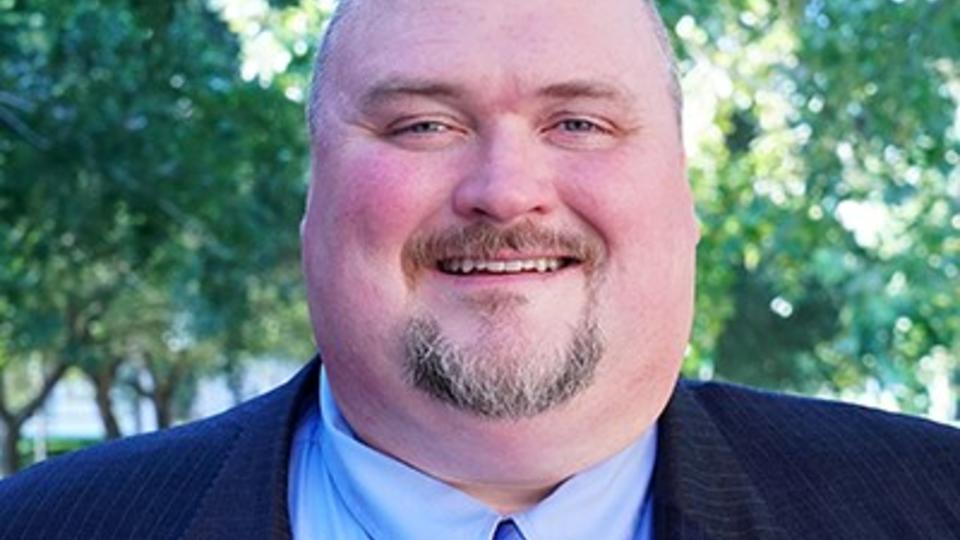
Professor Jonathan Miles discusses why so many talented people struggle to advocate for themselves, what his comic book store taught him about entrepreneurship, and why influence is often misunderstood.
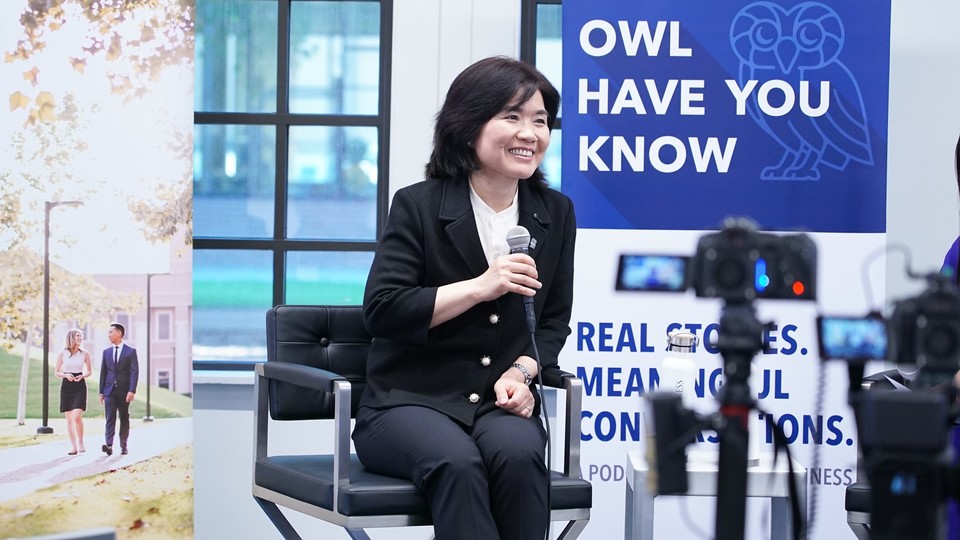
Professor Zhang shares what her research reveals about the leap from functional roles to the C-suite, why taking risks is non-negotiable for career advancement, and how Rice Business Executive Education’s Executive Leadership for Women program is giving women the tools and community to rise.
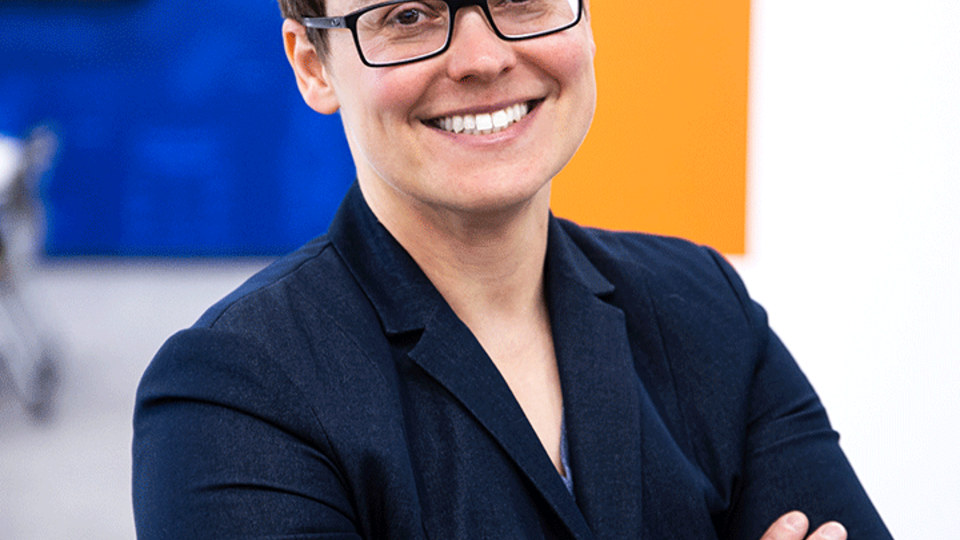
Professor Yael Hochberg shares the origin story of the Liu Idea Lab for Innovation and Entrepreneurship (Lilie), the incredible innovation that has come from Lilie over the last 10 years and what the future holds for entrepreneurship education in the age of AI.
The latest edition of U.S. News and World Report’s “Best Graduate Schools” ranks Rice Business No. 24 nationally — up from No. 27 a year ago — and two programs in the nation's top 25: entrepreneurship (tied for No. 10) and the professional MBA program that U.S. News ranks in its part-time MBA category (No. 15).
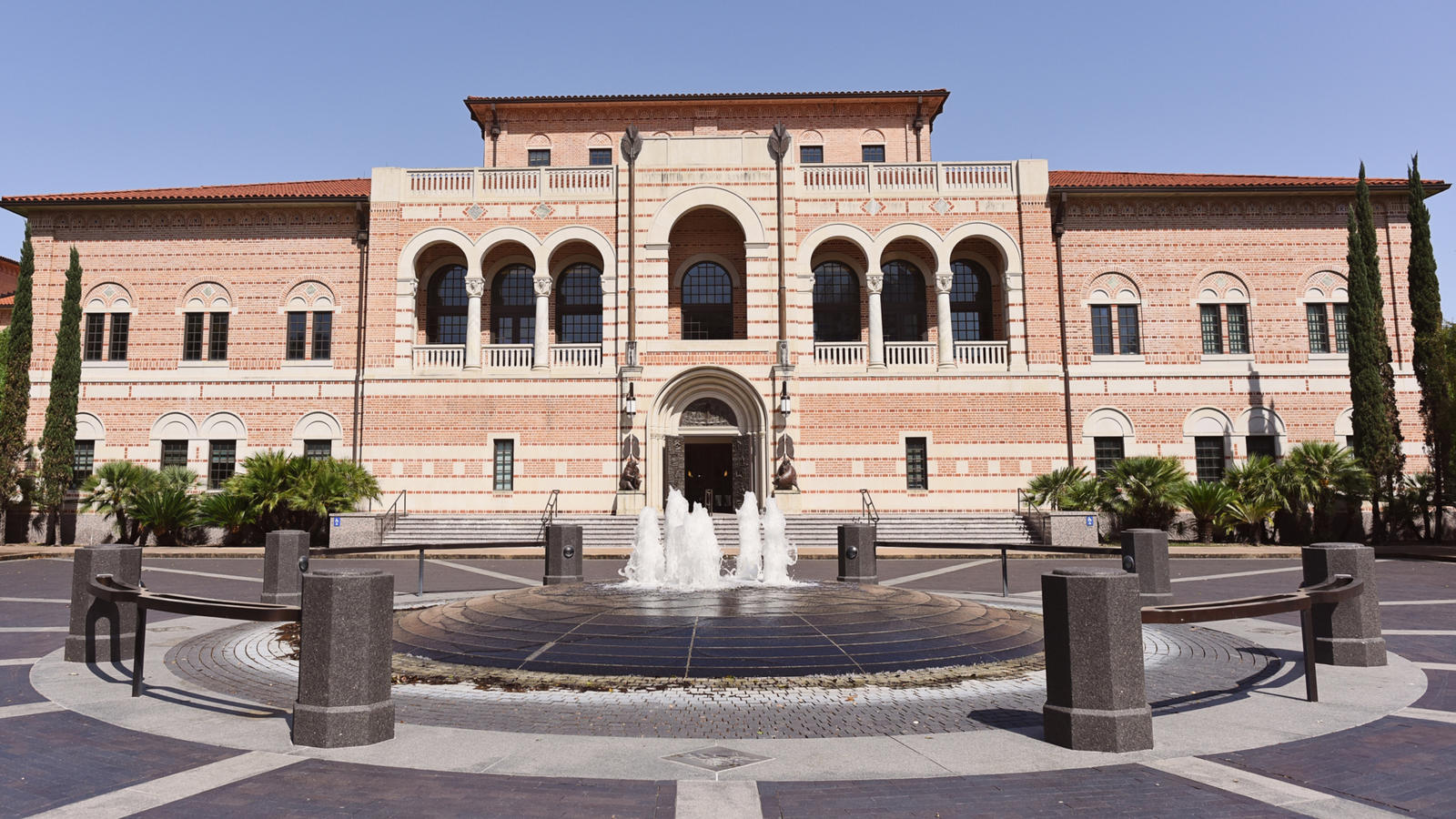
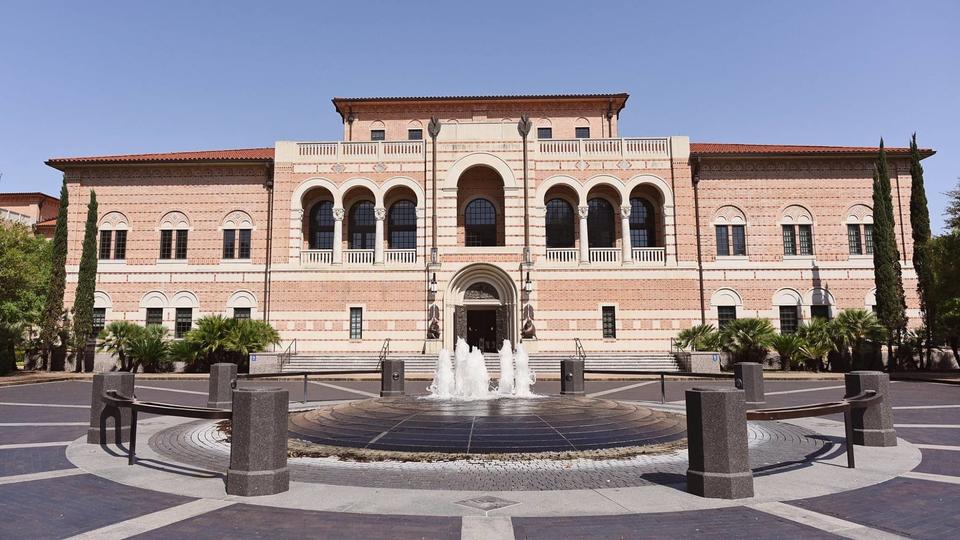
Numerous Rice University graduate programs ranked in the nation’s top 25 in their respective categories in the latest edition of U.S. News and World Report’s “Best Graduate Schools” rankings.
The George R. Brown School of Engineering, which ranks No. 30 nationally, has seven departments in the top 25: bioengineering/biomedical (tied for No. 10), environmental engineering (No. 12, up from No. 16 last year), chemical engineering (No. 22, up from No. 24), electrical engineering (No. 23, up from No. 25), civil engineering (No. 19, up from No. 26), materials engineering (No. 24, up from No. 27) and mechanical engineering (No. 25, up from No. 29).
The Jesse H. Jones Graduate School of Business, which ranks No. 24 nationally — up from No. 27 a year ago — has two programs in the top 25: entrepreneurship (tied for No. 10) and the professional MBA program that U.S. News ranks in its part-time MBA category (No. 15).
The high marks are “a reflection of the quality of faculty, staff and students and the impact of the research and scholarship produced from these programs,” said Rice President Reginald DesRoches. “Increasing the number of top-ranked graduate programs is part of my vision for the university. I’m proud to see we are making progress in this important area.”
The U.S. News and World Report rankings are among the most closely monitored annual surveys of the nation's institutions of higher education. Each year, the publication ranks professional school programs in business, education, engineering, law, medicine and nursing, including specialties in each area.
"I am proud to see so many of Rice University's graduate programs earning top rankings from U.S. News,” said Howard Hughes Provost Amy Dittmar. “It is an affirmation of the hard work of our faculty, deans, department chairs and Dean of Graduate and Postdoctoral Studies Seiichi Matsuda and his team.”
Said Matsuda: "I appreciate this recognition of the quality of our graduate programs and the achievements of our students, who are endlessly curious, bright and ambitious. We are committed to building programs in which students can achieve their hopes and their dreams, and I look forward to seeing Rice's graduate rankings continue to improve."
Rice's Department of Earth, Environmental and Planetary Sciences is tied for No. 20 overall in the Earth Sciences category, up from No. 24 last year. Its geochemistry program tied for No. 11, up from No. 14 last year.
Rice's Department of Physics and Astronomy is No. 21 overall in the Physics category, up from No. 28 last year. It has three programs in the top 25: physics of living systems (tied for No. 5) atomic/molecular/optical (No. 8) and condensed matter (tied for No. 19).
Rice's Department of Chemistry is tied for No. 27 overall, up from No. 35 a year ago. It has two programs in the top 25: theoretical chemistry (tied for No. 12) and physical chemistry (No. 21).
Rice's Department of Mathematics is tied for No. 30 overall. The applied math program tied for No. 18.
The Department of Computer Science, which ranked No. 31 overall, scored top 25 rankings in two specialties: tied for No. 18 in programming language and tied for No. 23 in systems.
U.S. News says its Best Graduate School rankings are based on expert opinions and statistical indicators measuring the quality of faculty, research and students. The publication says it compiled data from surveys of programs and reputation surveys sent to academics and professionals in fall 2023 and early 2024.
For more information on Rice's rankings, click here.
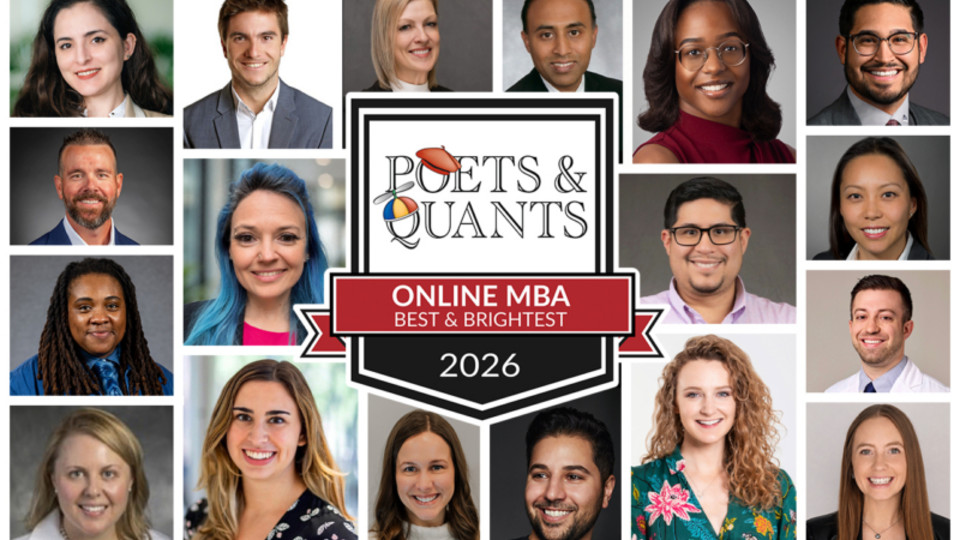
Congratulations to Marissa Minter and Alan Vu, recognized by Poets & Quants among the 2026 Best and Brightest Online MBAs.

A Houston venture capital analysis co-authored by Rice Business Executive MBA candidate Stephanie Schmidt highlights the city's growing innovation ecosystem, arguing that stronger startup formation is key to building on recent successes like Fervo Energy's IPO.
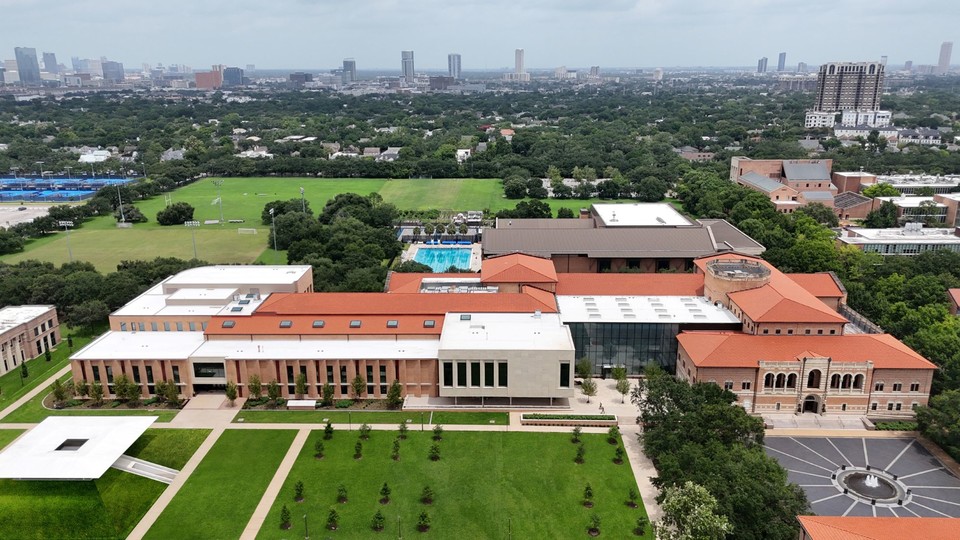
Rice University names its new $54.5 million business building after donors Asha and Farid Virani, the undergraduate business school's namesakes.
Several organizations — from tech startups to a nonprofit — have moved into the Ion recently to either relocate or expand their presence in Houston.

Goldie took home the top prize with its fit-finding software for women’s jeans at the April 19 H. Albert Napier Rice Launch Challenge (NRLC) championship.
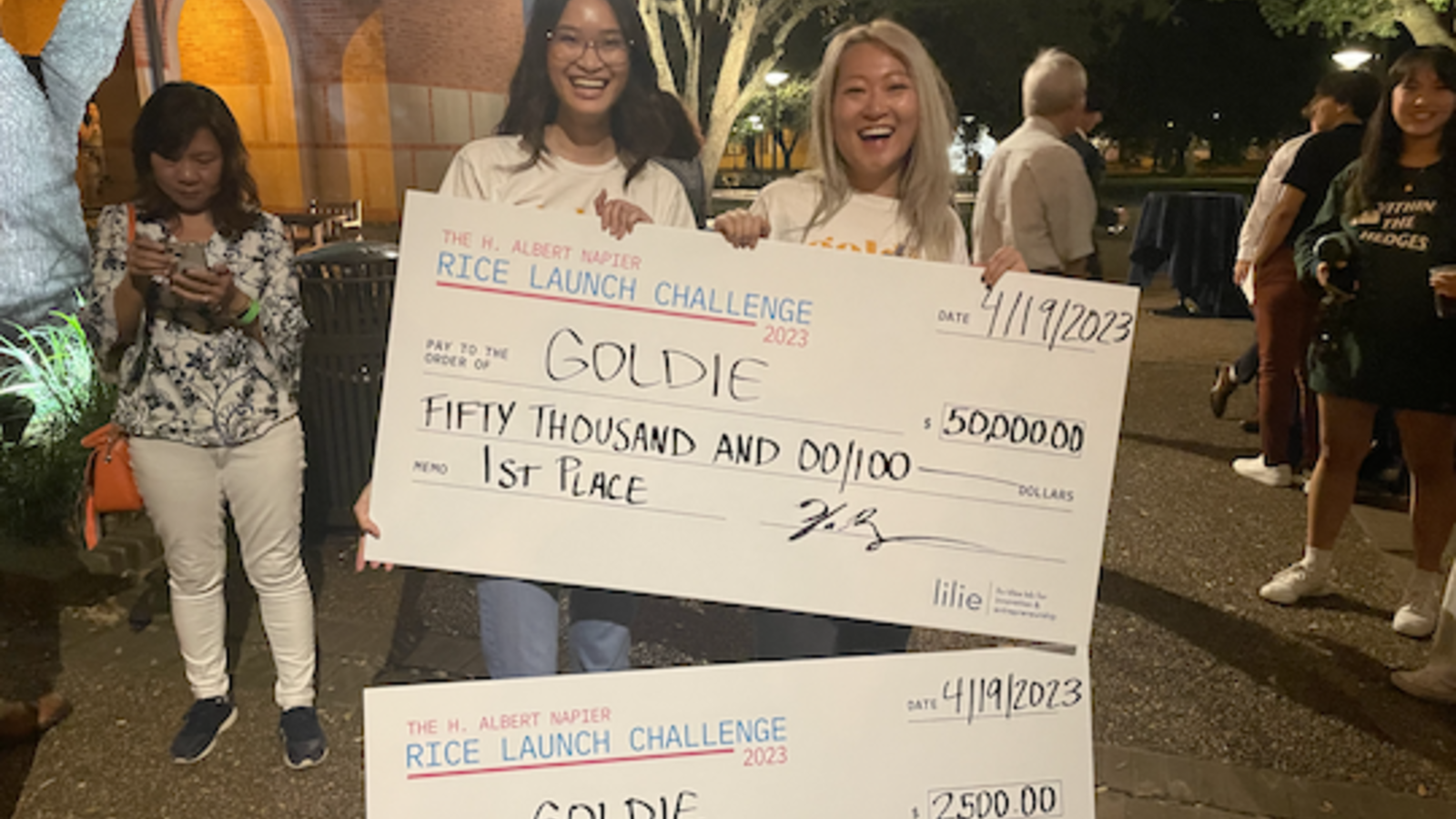
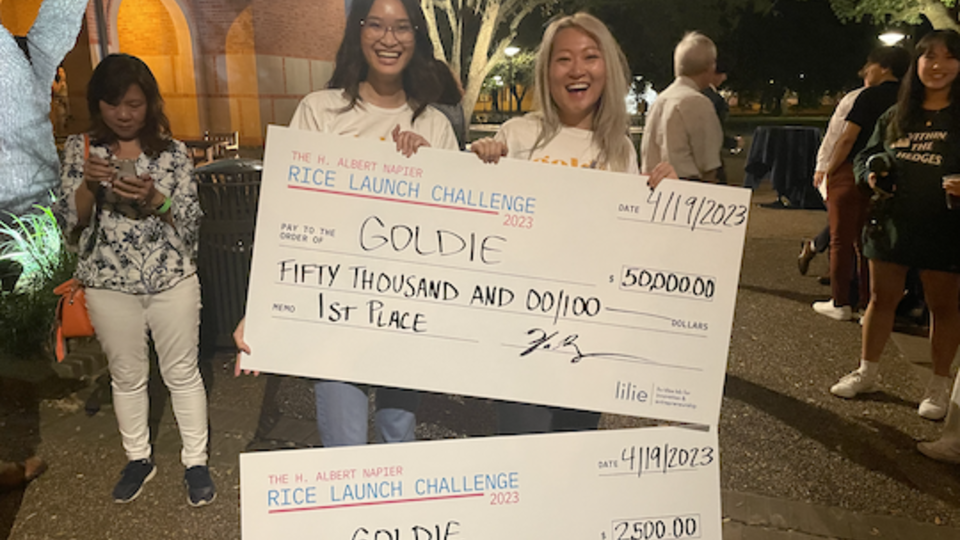
Goldie took home the top prize with its fit-finding software for women’s jeans at the April 19 H. Albert Napier Rice Launch Challenge (NRLC) championship.
The NRLC is Rice’s new venture competition, where its undergraduate, graduate and MBA students can pitch their businesses to win a share of $100,000 in equity-free funding. A record number of teams entered the competition this year, with judges narrowing the field to five finalists who presented their pitches in front of a live audience.
“It’s culminated in these few teams tonight, but it started with a record of 114 teams competing across Rice, from all disciplines, all backgrounds, Ph.D.s, master’s students, undergraduates, coming together with brilliant ideas to make a really big difference in the world,” said Peter Rodriguez, dean of Rice Business, on championship night. “We want to be the school where we can take all that creativity, all that intelligence and put it together and really give birth to great new firms that make a difference for everyone.”
At the championship round, each of the five teams presented a five-minute pitch, followed by 10 minutes of Q&A by judges Barbara Burger, former president of Chevron Technology Ventures; Jordan Miller, senior vice president and chief scientist for regenerative medicine at 3D Systems; and Rice MBA alum Omair Tariq, co-founder and CEO of Cart.com.
First-place Goldie took home $50,000, second-place Tierra Climate earned $25,000 and third-place Separion received $15,000. Sygne Solutions won the Audience Choice award of $1,500 that was voted on by the live audience. Learn more about the top five here.
Kyle Judah, executive director of the Liu Idea Lab for Innovation and Entrepreneurship (Lilie), welcomed the audience to the event with excitement for the competitors and gratitude for the Lilie staff and stakeholders who had put their “blood, sweat, tears, social capital, financial capital” into their programs and competitions.
He also mentioned how many of the competing teams this year were audience members at last year’s event who were inspired to work with Lilie to start their venture.
Yael Hochberg, head of the Rice Entrepreneurship Initiative, said: “We are extremely grateful to have Lilie, with everything that it includes. It is here for you: our students, alumni, faculty. We are here to support all of you in your entrepreneurial ventures.”
At the post-pitching reception, while the competitors and audience waited for the results over refreshments, remarks were given by Paul Cherukuri, Rice’s vice president for innovation. He spoke of how his office exists to enable the “magic” that Rice students are creating and help bring innovation out of the lab and into the world.
“I think it’s an amazing thing that we’re seeing inside of Rice,” he said. “Those of us who’ve been here at Rice for a long time — I’ve been in and out of Rice for about 20 years or so, I got my Ph.D. here many years ago — one of the things that we’ve always wanted to do in the research labs was to actually have people use our stuff, make the world a different place, a better place, hopefully from what we do. What you guys are doing is incredibly inspirational.”
The NRLC also awarded “sidecar” prizes, chosen from the initial 114 ventures. The $1,000 RISE@Rice: The Sen Social Pioneer Prize, sponsored by MBA alumna Runsi Sen ’04, went to The Parent Teacher Collective. The $2,500 Frank Liu Jr. Prize for Creative Innovations in Music, Fashion and the Arts, sponsored by the Liu family, was awarded to Goldie in the graduate student category and RiseWorks in the undergraduate category. The $5,000 Outstanding Undergraduate Award, sponsored by Lilie, was given to Tidepay.
Lilie helps the participating ventures refine their business plans and prepare award-winning pitches. Every team is paired with a coach and is able to utilize the lab to collaborate directly with its expert staff. Additionally, Lilie provides mentorship sessions with seasoned entrepreneurs from the community.
Congratulations to Marissa Minter and Alan Vu, recognized by Poets & Quants among the 2026 Best and Brightest Online MBAs.
A Houston venture capital analysis co-authored by Rice Business Executive MBA candidate Stephanie Schmidt highlights the city's growing innovation ecosystem, arguing that stronger startup formation is key to building on recent successes like Fervo Energy's IPO.
Rice University names its new $54.5 million business building after donors Asha and Farid Virani, the undergraduate business school's namesakes.
Meet Daniel Petterway '23 and read about his past experiences, leadership roles, items on his professional bucket list and his advice on the business school application process.
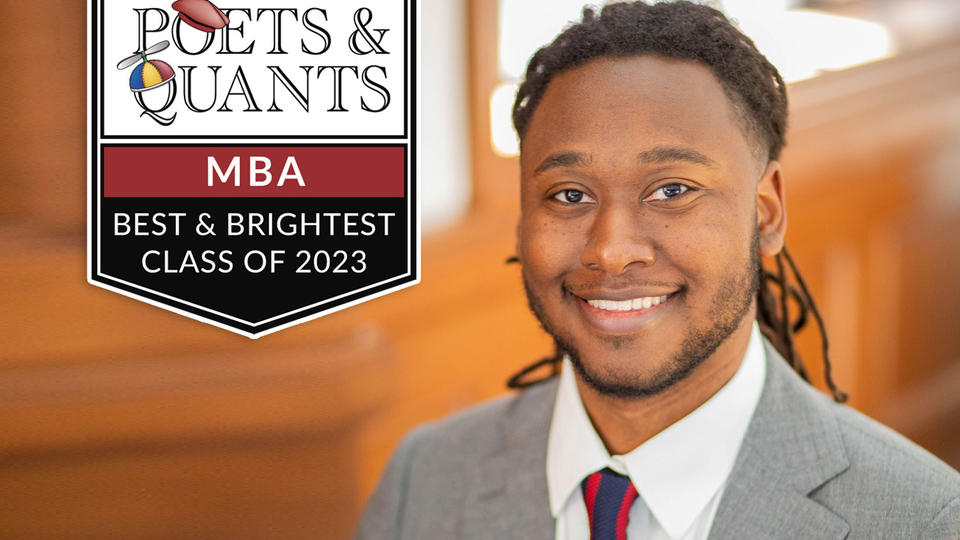
Meet Taylor Anne Adams '23 and read about her background, achievements, favorite things about Rice Business and lessons learned while earning her MBA.

More Houston hospital workers now have access to on-demand mobile ordering thanks to a Houston startup. Rivalry Tech, co-founded by Aaron Knape '08. The company rolled out its its mobile ordering platform, myEATz, into five of Houston Methodist's hospital cafes.
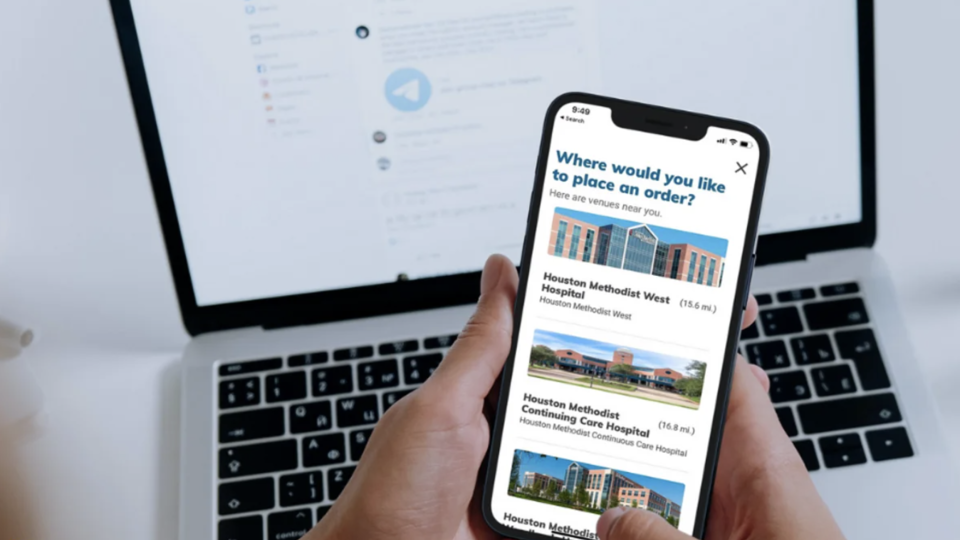
Dan shares the risks he took early in his career to get him to his current level of success, the importance of “work/life fit” and the incredible story of how Velentium became a major player in ventilator production in the early days of the COVID-19 pandemic.
Host Scott Gale '19 interviews Velentium CEO and founder Dan Purvis '05. Dan shares the risks he took early in his career to get him to the level of success he is at now, the importance of "work/life fit," and the incredible story of how Velentium became a major player in ventilator production in the early days of the COVID-19 pandemic.
Subscribe to Owl Have You Know on Apple Podcasts, Spotify, Youtube or wherever you find your favorite podcasts.
[00:00] Intro: Welcome to Owl Have You Know, a podcast from Rice Business. This episode is part of our Flight Path Series, where guests share their career journeys and stories of the Rice connections that got them where they are.
[00:14] Scott: On today's episode of Owl Have You Know, I'm joined by Dan Purvis, CEO and founder of Velentium, a professional engineering firm specializing in the design and manufacture of neurostimulation medical devices, which was recently recognized as Houston's most innovative company. Since graduating from the EMBA program at Rice Business in 2005, he has gone on to create multiple businesses, including Velentium, which he co-founded in 2012. He is the recipient of EY's 2021 Entrepreneur of the Year Award for the Gulf Coast area and author of the book, "28 Days to Save the World: Crafting Your Culture to Be Ready for Anything." This serial entrepreneur, father of four, middle school basketball coach, CEO, founder, shares his life lessons on culture, seizing opportunity, and bringing humanity to everything you do.
All right, for another episode of Owl Have You Know, I am your host, Scott Gale. I am here with Dan Purvis, EMBA grad of 2005. Dan is the CEO and Founder of Velentium. He has picked up a number of entrepreneurship awards along the way, including Houston's Most Innovative Company award, as well as an EY Entrepreneur of the Year Gulf Coast Area Award in 2021. Dan, welcome to the show. It's a privilege to have you here.
[01:38] Dan: Great to be here, Scott. Thanks a lot.
[01:40] Scott: You're a serial entrepreneur. You've had the opportunity to found and spin off a number of different companies, and we're going to talk a lot about the scar tissue around that and, like, what you've learned, etc. But I, kind of, want to just go back to, sort of, like, that initial spark of entrepreneurship. I don't know, like, how far back that'll go, but, like, what got you into starting, kind of, that first one?
[02:05] Dan: Sure. When you say the first one, it really started on a bicycle on the way to junior high. And I would stop by that gas station and pick up a pack of gum for 25 cents. And then, I figured out the people at school would buy pieces of gum for 25 cents. And that's a, that's a buck 25 on 25 cents of COGS. And the cool thing about that is my mom is a 25-year math teacher in that school, and she caught me selling gum. And rather than come down on me at that point, I learned about Sam's Club and the opportunity to lower my cost of goods, compliments of my mom. And so, I ended up with cases of gum, and I was the gum guy.
And so, that translated into high school where you've got friends that are working in the movie theater and that are working multiple nights all weekend. And I had 12 lawns on Saturday mornings, making more money than all of them. And then, I had the rest of my weekend to myself. And so, early on, there was definitely just this spark of, why would you work for someone else when you can work for yourself and create true value?
[03:03] Scott: Love that. Thank you for sharing. You did your undergrad at Texas A&M, electrical engineering. Why electrical engineering?
[03:11] Dan: Yeah, that's a great question. Like I said, my mom was a math teacher, so it was not optional to be good at math in my home. And so, I was okay at math. And as a result, engineering was a logical next step. And yet, I will say often around this company, I run a technology firm, and I am not jazzed by technology. I'm jazzed by people. And so, my love is really for people. But I got to Texas A&M and had the opportunity to become an engineer. They said in freshmen orientation that the average Aggie changes their major like 2.7 times. And I remember right then saying, that's not going to be me. And so, start to finish, that's a theme you'll find lots in this talk, probably, is that I think the spoils don't always go to the smartest or the most talented. They almost always go to the most stubborn and the person that just is not going to let go. And so, that was yet another example of that in my life where we began, my family decided, and I agreed that I was going to go be an electrical engineer. And I finished as an electrical engineer. I am proud to say that I run an electrical engineering firm, in parts. That's one of the many things we do. But I am most decidedly not an electrical engineer anymore.
[04:22] Scott: Recovered from that experience, it sounds like.
[04:24] Dan: Exactly. Yeah, you got it.
[04:26] Scott: And so, after graduating with that degree, you went and worked for National Instruments, is that right?
[04:32] Dan: Yeah, so I had the opportunity to go to Austin. And this is the first of many volunteer moments that you'll hear me talk about today, is that, as a theme, if you're thinking about going to Rice or you're just on your way towards graduation, you're going to have many moments in your career where you have an opportunity to step in, raise your hand, volunteer, and say, "That's me."
And so, it wasn't but about four or five months into my career at National Instruments where a regional sales manager called me into her office. And she said, "Hey, we have an opening in Michigan." And I was like, "I think that's north of the Red River." You know, it's like, do I need a passport to leave Texas, you know, this kind of thing? And she said, "And we'd like you to take it." And it was a Friday. She said, "Let me know Monday." I had 72 hours to decide if I was going to move to a state I had never been to. And I went in and said yes. And that was the first of many times where you just... you raise your hand and say, "Sure, I'm in. Let's do it."
And a proclivity for action is really, really a huge deal. This was in the mid-90s when gas was 89 cents a gallon. And when gas is 89 cents a gallon, people buy massive cars, big old SUVs. And so, Detroit was thriving at the time. I was going to split a territory with the most successful salesperson in National Instruments' entire network. And on day two, we went out to dinner. And he goes, "Guess what? I'm going back to corporate in Austin." And suddenly, I was the youngest salesperson with the largest territory. But the advice he gave me as I took over this massive territory in Michigan was, you're going to have executives coming up from Austin all the time because the automotive industry is such a big deal. Don't ever let them rent a car. And so, that's what I did for several years, where I would pick them up at the airport, I would drive them to their hotel. I would pick them up at 6:30 in the morning and drive them to their meeting. And that gave me shoulder-to-shoulder time with the top executives in what is now a multi-billion-dollar company. And that really forged leadership into me, just by getting to be exposed to these leaders.
[06:38] Scott: What a cool experience and opportunity early in your career. What did you go and do after National Instruments? I mean, did you jump right into, kind of, your Rice experience? Had you thought about starting your own company at that point?
[06:50] Dan: Yeah. So, two things about that. So, first of all, one more story about those executives coming up. The VP of sales came up. We were heading up to Chrysler. And going through North Detroit at the time in one of those places where the freeway is down below, and there's chain link fence up above and society's up above you, and you're just running through the interstate when I ran my car out of gas with the VP of National Instruments in my car. And he goes, "Well, I guess I'm going to sit under this tree while you figure out what we're going to do next." And I hopped the fence, and I thumbed a ride from somebody crazy enough in North Detroit to pick me up. And within five minutes, I was right back behind my car with a full can of gas, and we got on our way. But you just look back on your career, and you're like, "Ah, that was one of those moments where the career could have just ended, but it worked out okay."
I had a college friend that turned into a post-college sweetheart, which turned into a post-college fiancée. And she was at the Baylor College of Medicine and not leaving Houston anytime soon. And so, when she said yes, I had a very big and amazing motivation to head back to Houston. And so, I told National Instruments I wasn't going to be their guy anymore. And I was going around telling my clients in Detroit I wasn't going to be their guy anymore. And one of those was a company that takes the National Instruments tools and builds them into solutions, a service provider around the National Instruments products. And they had wanted a Houston company for years because it's a hedge against Detroit. When gas is expensive, you buy small cars. And when gas is cheap, you buy big cars. And yet, they couldn't find anybody they knew and trusted that was willing to go to Texas. And comes their sales guy from the last two years, saying, "I'm not going to be your guy anymore. I'm moving to Houston." They said, "We should go to dinner."
And man, at that stage of my life, I'm never going to turn down free food. And so, we went out to dinner, and they made me an offer. And I actually said, "Hey, I want less salary than what you're offering, but I want a piece of the action." And so that was the first time that I took my gum experience into the real world. And I went down for a small salary but a portion of that office. And over the next several years, for that company, I built out Denver, Dallas, Houston, and Minneapolis for them. They got taken over by a company based out of Rochester, New York. We were running a very profitable arm of the company for them. And I had a share of the whole thing because I had taken that risk early on.
[09:15] Scott: Super cool. And so, you know, you're from the Houston area originally, right? So, you, sort of, were coming back home.
[09:20] Dan: I am from Texas. I grew up in Denton, just north of Dallas. And then I met Julie at Texas A&M. And so she is a third-generation Houstonian and wasn't leaving anytime soon. And I'd like to say I married Houston 25 years ago. And, man, it's great. It seeps into you, just like the humidity. The Astros were very good in the late '90s. They're good again now. And we love Houston, for sure, yeah.
[09:41] Scott: Did that play into, sort of, your decision to attend Rice? Or, what drew you to a Rice experience?
[09:48] Dan: Yeah. So, I sat there with my Rochester-based head company, and I said, "Look, I want to take my leadership to the next level, and I want that to be through an MBA program." And because of my family's story and being here in Houston, it was really important to me that it was here. And yes, you could do these remote programs where you go spend a couple of weeks somewhere else, but I really wanted it to be here.
And so, there are a few games in town, and I went and did the info sessions with all of them. And it was really interesting. I asked somebody at the Rice info session. We're having some kind of reception. I said, so why Rice over all the other options? And the first reaction was she just said, "Well, it's Rice." And she just let that linger for a while. And I was like, I'm kind of looking at her, and she's looking at me. And yet, two and a half years later, after coming through that EMBA program, I get it. I get it. There's just an esprit de corps. There's a level of excellence. There's a level of connection within this town to the extent that you want to be a Houston business person. If you have a Rice MBA, you are connected to a very elite group of people that you can call colleagues and classmates, certainly, fellow alum. And so, there's just a comradery at Rice that I really enjoyed. But then, deeper than that, there was a connection with the people of Rice that was really, really valuable for me.
[11:12] Scott: How have you seen that play out now, approaching almost 20 years post-graduation? Do you have an example of where that's had an impact?
[11:19] Dan: It's really scary to think about post-20 years after graduation.
[11:22] Scott: Sorry about that.
[11:23] Dan: But yeah, you know, it kind of is what it is. You know, the class of 2005 just had a happy hour, once again, where it's an annual reunion and gathering of people. And I was all set to go to that. But I also coach my daughter's basketball team. And then, that game happened to be in Huntsville, which was too far away from the happy hour. But I stayed close to several of my classmates. And when I say stay close, these are people that, inevitably, in your career, you're going to have moments where you go, "Not sure what to do here." And if you're an entrepreneur, it's relatively lonely at the top. You can't go around asking your colleagues because they all work for you. And so, you don't really want to ask family because then they might know how dire the situation is, or whatever, you know. And so, and so, to call up a classmate and say, "Hey, you own a business as well. What do you think about this?" And sometimes, it's like, holy smokes, you got to get out of that, or, take a deep breath, you're going to be fine. And I've gotten both, quite honestly, from classmates over the years.
[12:22] Scott: Can you share a little bit about just a quick pivot here of the, kind of, chronology and just, kind of, share a bit about that family experience?
[12:30] Dan: Yeah. Really, really neat story, a redemptive story. And when I say redemptive, I mean redemptive for me and Julie, where we went overseas and we picked up two infants. And so, it could be redemptive of them. But we're the big winners, for sure. And so, I've always said I'll have as many kids as my wife will let me. And she's always said she'll have as many kids as her body could handle. And after eight years of marriage, it was, it was none. And nobody could tell us why. And I could tell you why now. It's because of Bennett and Nathan that, as a result of whatever our story was, we, through a course of events, ended up overseas. And so, really, really a sweet time. In Kazakhstan back then, you had to spend six weeks, spending two hours a day in the orphanage with your infant, just acclimating and getting to know each other, which means, for six weeks, you leave every day. And there goes your son back into the orphanage. And they did, they did their best. They really cared for them as well as they could. And then, we got to take them home. And so, we adopted one boy. Then, we went back and got a second boy.
I think, at that point, we thought that that was our family. And it turned out it was not our family because then we promptly got pregnant twice. And I had a four-year-old, a three-year-old, a two-year-old, and a newborn. The newborn was born in 2010, and we founded Velentium in 2012. So, I started the company that I now have the pleasure to run when I had a six, five, four, and two-year-old.
And that just shows you the caliber and the character of my bride. She's an amazing person. She's my favorite person. In fact, the kids will laugh at that. They'll be like, "Wait a minute, she's your favorite person?" I was like, "Well, right." "Well, does that mean you like her better than us?" I was like, "Of course, yeah. If we do our job, then you're going to go find your own family. You're going to go. You're going to grow up and leave. So, if we do their job right with each other as a couple, we'll be together for decades to come." And so, just a neat time. We are never bored with four kids that tightly packed. We move into the next phase of life very rapidly and then out of that phase and into the next one. And in the midst of all that, it has been wonderful to own and run and found my own company because I talk about it, this company, that we exist to change lives for a better world. That's our passion. But that starts with our staff and their family.
And I tell each and every Velentonian that. That, when you started our company, this is not a company where it is okay to go to donuts with dad or muffins with mom at the preschool. It is mandatory for you to go to donuts with dad or muffins with mom. And that doesn't mean you can't not do your job, but it means you need to... I can't stand work-life balance. I like work-life fit, which is just different. Because there isn't balance. There are going to be times where your family life takes over your life. And it should. And that story is a crisis moment or a high moment that you need more family time. And there are going to be plenty of times where this company will take as much of you as you can give and then some. And the family has to adjust. And so, that goes back and forth. And you end up in this work-life fit, which is just better.
So, I coach my daughter's private school basketball team. She's an eighth grader. And that means, at 2:30 each and every day during the basketball season, I'm out of here. And I tell my staff. I say, "Look, you might receive an email from me at 11:00 p.m. You might receive an email from me on a Sunday. That doesn't mean I require you or even expect you to respond. It's just when I'm working because in my story right now, weekdays from 2:30 to 6:30 are taken." And so, it's great.
[16:05] Scott: It's such an important backdrop, I think, for us to, sort of, like, lay that foundation for this next part of the discussion of where your career journey evolved to and the formation of Velentium. Can you talk a little bit about just the origin story of Velentium? Like, where, kind of, the idea came from and why you decided to, sort of, create a foundation and a culture the way that you have, and how that has shaped your philosophy on leadership over the last decade?
[16:32] Dan: You bet. So, I've had the opportunity to work for some really amazing individuals. The company I was at, I had what many people would call a dream job. I was running four divisions, like I said, in those four cities. And I had all kinds of autonomy. And then, all of the back office, the accounting, the invoicing, the legal, the benefits, it was all handled out of Rochester, New York. And they did a fairly good job, a pretty good job of it.
But there's nothing like the Rice EMBA to get you hungry. And what I like to say, in fact, we wrote a book on culture, "28 Days to Save the World," and we could talk about that a little bit later.
[17:09] Scott: Yes.
[17:10] Dan: But in that book, it says you don't enjoy the nest and just stay in the nest when there's something greater than the nest. And little eaglets, they think it's pretty great in the nest, right? And getting kicked out of the nest and having to flap really, really stinks. And yet, then you learn how to soar. And you're like, "Holy smokes, this is amazing." And so, for me, the origin story of Velentium, really, was not about running from something, but it was pursuing something. I had a dream of something greater, just something great. And so, the idea that I could be at the helm of a culture-forward, family-first, unbelievably fast, highly technical organization, that was my dream.
And then, my co-founder, Tim Carroll, is a med device guy through and through. He wants to change lives one patient at a time. And so, we started meeting for breakfast at a Cracker Barrel Friday mornings. And I don't know if you've been to Cracker Barrel recently, but the waitresses and the waiters they have, they have stars on their apron as they get more and more experienced. And so, when you start celebrating stars with your wait-person, you know you've been to that Cracker Barrel for a long time. And so, we would just we would sit down at the same table every Friday morning, and the food would just come out, and she would get more stars over the months.
And we got to a point where I said, I think I can build a really amazing culture-rich company. And Tim said, "I think I can build an amazing medical device company." And I said, "I think we could build an amazing culture-rich medical device company together. That would be even greater."
And that's a piece of advice I would give to you. If you're thinking about MBA school or you're going through the program right now, is, if at all possible, don't go it alone. That, when you have the opportunity to start something, start it with somebody that you know and love and use those trials and the stress and the strain, and there has been plenty of that. We could talk about the cash flow nature of just how challenging it could be to start something from the ground up. But when you're not doing it by yourself, then you know you always have a comrade in arms, if you will.
So, yeah, we met many, many breakfasts and finally got to the point where it's time to do this thing. And so, I had a one-year non-compete. So, I resigned and served that non-compete with honor. That's our top value. We have three values at the company. Honorable, we do the right thing. We do right for right's sake. Results ++, we do the job and then some. And then humble charisma. We strive to be the kind of people you want to be around — humble charisma. And, honestly, I had signed that one-year non-compete, I intended to honor it. And I got a call two weeks before the end of the one year with a pretty lucrative contract. It's like $150,000 opportunity, which was a really big deal back then. And I didn't say, "Call me in two weeks." I didn't even say, "I can't do that right now." I said, "I'm not in that business anymore." And I gave the number of my... the person that replaced me at the old company. And they went off and did the work, which is great. It's fine. Because I was still in the non-compete, and I wanted to treat it with honor.
And so we started it in 2012. When I was there, at first, Tim didn't come until a little bit later. We had group health insurance because I was employee plus children, and my wife, Julie, was employee only. And that was our group health. And so, now, we have, I think, 140 on staff. It continues to grow. We're on the Inc. 5000 for growth, and we're on the Houston Fast Group as well, and just continue to add momentum as the marketplace sees just what we can do to serve them.
[20:42] Scott: There's a number of things I want to dig into. Like, one of the first ones is you guys had kind of gotten your feet underneath, you'd been in business for seven, eight years, and then the pandemic rolls in. I think you referenced it as Project V. Like, you guys had taken pivot to help address some of the issues that were happening in the pandemic.
[20:58] Dan: Sure, yeah. It's a remarkable story and it's a fun one to tell. We, like most of your listeners who are business owners, were exploring the PPP program. I had a draft email in my inbox that talked to the staff about, either rolling layoffs or reduce pay or reduce hours, or we're just really not sure what this pandemic is going to do for any of us and can we survive?
We're not a big business. We were in our SLT quarterly, senior leadership team quarterly, offsite. If you're not doing quarterly offsite, it's highly recommended. The first few are a little bit awkward. By the time you get two or three in, you start to get into that rhythm. And I meet with my senior leaders once a quarter, and I have since 2012. And so, I really look forward to those four days a year.
And we are in one of those, talking about the PPP program, talking about layoffs. And at that point, we took a call, which is against the rules of the offsite. But we took a call in the midst of the pandemic with one of our clients, Ventec Life Systems. We had seen an article in Forbes that weekend where the CEO of Ventec — they make ventilators — had said, "If we had some help, we could do so much more." And obviously, we had been working with them for five years. So, we called him up and said, "Hey, we can help you." And he was very distracted on the phone. And I said, "Listen, it sounds to me like it would be beneficial to you if somebody was just there in the morning." And he goes, "Yup, we have an 8:00 a.m. war room meeting every morning at 8:00. It'd be great if you were here." I said, "Done," and we hung up. And so, then we continued our SLT meeting and said, who's going to go? We decided it should be a founder because that way we can make decisions on the fly. So, that was me or Tim. And we decided it was me.
And so, I came out of my bedroom office and talked to Julie and said, "I'm about to get on a plane. And I'm about to get on a plane to Seattle, Washington, and I'm going to go to Bothell, Washington, seven miles north of the first COVID deaths in this country right in the very beginning of this March stuff where we don't really know what we're up against." And we went for a walk. And she began to weep because there were all these unknowns. And the famous line is I said, "Babe, you know I have to do this. And why do I have to do this? Because we exist to change lives for a better world. And to the extent that you know your passion and your values at your company, that when you come across opportunities, you'll know very quickly if that opportunity is for you or not. And so, this was clearly for us."
I flew up there. We had some initial meetings. We're thinking about taking their 100 ventilators a month. Maybe, we could get it to 500 ventilators a month. Maybe, we could open up a factory. It's some semblance in Houston to help them get it from 100 to 500. And then, the head of operations said, "General Motors is coming tomorrow." I said, "General Motors, like the car company?" "Yeah, yeah, General Motors." I said, "Well, why?" "Well, I don't know, but we'll see what they have to say." And they showed up the next morning. I said, "Do you mind if I'm a fly on the wall?" And they said, fine. And within 45 minutes, they had that place turned upside down. The guy said, "I want to see a ventilator completely disassembled on this table on the next 45 minutes because two hours from now, I've got a global supply chain call with 70 buyers. We're going to build 10,000 of these a month." And over the next 28 days, we repurposed an automotive factory in Kokomo, Indiana, that belonged to GM into a fully scaled-up 10,000-ventilator-a-month ventilator factory, partnered with the federal government.
I mean, it was, it was surreal. Scott, we would, we would go to bed after 20 hours of work seven days a week. And I'd be like, am I manic? Like, am I? Because, you know, when you're manic, you think that everything's more important than it really is. And then, you, like, turn on the news and there's Mike Pence in the Rose Garden talking about the project. And I'm like, nope, that's where I am right now, you know. It's so... it was remarkable.
What I, what I would take away from that, though, is that the way that we were able to step into that fray and make it happen was because we had built a culture for eight years. And so, I went around to the eight leaders that ran different parts of this development effort over these 28 days ended up being about 60 by the time we finished. We got the first lineup in 28 days. And I said, "Look, I need 16 to 20 hours a day, seven days a week until your body gives out." I've always said we exist to change lives for a better world. That starts with you and your family. But the whole darn country just a step between you and your family. And there could be a time in the not-so-distant future where, Scott, your mom, and my mom are in the ICU, and there's one ventilator left. And we cannot let that happen if we can step in the middle and make a difference. So, I asked the eight leaders. I said, "Look, I need this crazy time commitment, but you can't just agree to that and take this role. You have to be willing to demand that of everybody on your team."
And I got seven for eight immediately. And the eighth person said, "I just got married. Let me go talk to my new bride." And the next day he was in as well. And we went eight for eight. Because the people of this company didn't join for money. It doesn't mean we don't pay well, but the people of this company joined to change lives for a better world. And so, there's just this deep vibe within the company aligned around our passion, such that when an opportunity to change the world came about, we stepped in and did it. And it was remarkable. And it's fun. We got a publishing deal through the story, wrote a book about it, and wrote a book about the culture of the company that made it happen. And hopefully, your listeners will pick it up and read it.
[26:28] Scott: Yeah. No, that's amazing. As you said, it's "28 Days to Save the World." And then, I know there's, kind of, a sub-tagline. You can find it on, like, Amazon. Like, is that the...
[26:34] Dan: Yep, it's on Amazon. And it was really big deal for me that it would be on Audible because I listen way more than I read because I like to run and walk and drive and play stuff at 2x. And my kids make fun of me for it, but, you know, you can get through the book at 2x in about four and a half hours. And yeah, it's on Audible and Amazon, for sure.
[26:52] Scott: So, can you just share a little bit about, kind of, what it took to, kind of, pivot from that just incredible, sort of, backdrop and that experience? I mean, there's something about a global pandemic. Everybody kind of knows where they were at the time. Like, you just, sort of, like, feel like the goosebumps, as you're describing, that war room and that environment, many people, experienced something, you know, to that effect in whatever business they were. There wasn't a pocket of the economy that wasn't disrupted. But to distill that story into a book, what were some of the things that you, sort of, took away, then looking back in the rear-view mirror, that maybe, because the adrenaline, the lack of sleep, maybe you didn't notice some of the kind of, key takeaways that found their way into the book?
[27:36] Dan: Sure. Let me, let me give you three. So, the first one is the company before needed to not be anything like the company after. And so, the company before was a company where we had a row of credit cards in an Excel spreadsheet that had the limits of the credit card the day that it looped. And hence, the day after that being the best day to buy because that would create about 45 days of interest-free floats. And, like, we're managing credit cards like crazy to just get the job done.
And then, moving past the pandemic where we did this remarkable and very large project, and I said, "Look, let's push all those chips into sales and marketing and processes so that we can grow and never be the company that was before that ever again." And that's really been great for us. We have turned the corner and won the Inc. 5000, gotten on the Inc. 5000 list a couple of years, I guess three years in a row now. And it's just been remarkable as a result of that moment.
But a couple other things. One is, like I said and touched on just a little bit before, volunteer. Volunteer when there's an opportunity. If we had sent one of our engineers, we might have been successful, but we would never have been successful on the scale that we were because it took somebody with enough craziness to say, "Yeah, we'll do the whole thing." And there was no way I could do the whole thing. I had 65 people on my staff at that time. We needed... We had 140 people on our staff about 10 days later because we went around and hired oil and gas workers who had been furloughed and brought them in and got them to work.
So, volunteer. Step in. There's a chapter in the book at the very beginning that says, "Why not me?" And when you think about it, there are people that we watch on the big screen, there are people that we watch in sporting events, there are people that we watch on news channels. There are people that we admire in our neighborhoods, in our civic organizations, etc. And these leaders all started somewhere. And why not you? I'm telling you right now if you're listening to this podcast, that means you're affiliated with Rice. It should be you. Like, you know, it's like you've got the giftedness. And so, now, step in. Step towards great and make it happen. Be one that volunteers.
And then, the third is be human. And when I say be human, we had a, what I called, a human moment at the beginning of every meeting I hosted, it was a midday meeting at 6:00 because 6:00 p.m. was midday when we were in the midst of that. And before we got into it... And man, there was a lot of fast-paced things going on. But before we got into it, I was like, "Timeout, give me a story that proves you're human." And it could be, you know, "I took 20 minutes out, and my daughter just learned to ride a bike." Or, it could be, "I was on the phone with American Express, and they couldn't expand my credit limit, and I was begging them to do it because the pandemic depended on it. And I lost it, and I started screaming at the lady on the other end of the line." The human moments are never... they're not always pretty, right?
[30:35] Scott: Yeah.
[30:36] Dan: It's like human moments can be glorious. Human moments can be traumatizing. But they prove that we're human. And so, out of that came this chapter in the book called "Be Human," where it essentially says, remember that you don't check your humanity at the entrance to your office or at the conference room door. That the person you're meeting with, even if they're the opposition, they changed a diaper this morning, or they lost a loved one, or they got their first gig to play live music in a bar on the side, or you know, whatever. All these things are happening in the lives of the people around you. Remember that they're people, and they're people first.
And the beauty of that is, in negotiations... I mean, one of the books we went through back in the Rice days was "Getting to Yes" and trying to find that time where everybody can win. But sometimes, there's winners and losers. Essentially, in competitive environments, somebody wins the bid, and somebody loses the bid. But then, when we get back to our humanity, we are all equal. We're just... we share this ball we live on, right?
And so, remembering to be empathetic, remembering to celebrate life events, remembering to look people in the eye and remember things about them, remembering to be human, and not letting even the busyness of a pandemic response ventilator project get in the way of that, I think, is really important.
[31:52] Scott: What are some of the things... I mean, that is fantastic advice and perspective and something that's hard for the average, you know, corporate employee or, even, just anybody that's, kind of, out there to, sort of, day in and day out achieve those outcomes. What are some of the things or tools that you use, however simple, to, sort of, keep yourself rooted and grounded in thinking about these things? Is it a list on the office wall to, sort of, check in? Is it meditation? Is it... I'd just be like real curious, listening to you, Dan, like, you've got this passion and fire, and, like, you've got this articulate view of how that all comes together. What are some of the things that you're executing on that you feel like are contributing to keeping you, sort of, focused on that?
[32:33] Dan: Sure, I'll give you several. So, the first is we like to talk around here about principles over rules, principles over rules. For us, there are four principles in this company. We exist to change lives for a better world. Honorable, right for right's sake. Results++, do the job, and then some. And humble charisma, we want to be the people you want to be around. Those four principles govern everything we do. And so, if we're going to have a rule in the company, it better inspire and motivate top performance in this company, not babysit and police bottom performers. Because I don't want a bunch of rules, I want four principles. And so, we are always asking the question, if there's a rule that is budding in the company, because as you grow, bureaucracy increases, right?
[33:18] Scott: Exactly.
[33:19] Dan: And you end up with rule after rule after rule. And most of those rules have an experience or a name with them. And I'm like, no, no, just because that experience happened doesn't mean you need a rule. And we had a guy that ended up being removed from the company. And he wasn't a very good performer. He had some ethical issues. But one of his managers found him playing solitaire on his laptop. And then, somebody else in the company said, "Hey, we need to take all the games off all the computers." And I was like, no, stop, stop. If you tell me that my top performer in the company needs solitaire for 20 minutes to clear their brain so they can continue to do whatever they do so well, great. I'm not going to tell you, you can't play games. I am going to tell you to get your job done, right? And so, principles over rules demands that you are very stingy with the rules you put into place but extremely lavish with continuing to publicize, celebrate, and laud the principles in your company.
So, that would be the first one. The next one is Ben Horowitz has a book that says what got you here won't get you there. And as a leader in a company — and most of our listeners are — you didn't get to be the leader by not doing things. You got to be the leader by doing things better than anyone else. That's why you got the raises you got, the opportunities you got, the chance to go to Rice like you did. And you're not going to win in this world without outperforming everybody else. And so, your listeners, our listeners here today, pre-select for top performance. However, if you're at the top of a company, if you're the leader, if you are the entrepreneur at the top of the company, the most valuable thing you can do is think.
And that's really, really different from what got us here, right? The larger my organization becomes, the more I have to proactively step back and clear my schedule and think. And so, you asked about meditation. It's like, if you can't be alone in a room for five minutes, you got a problem. If you can't be alone in a room for 15 minutes, then you got a challenge. If you can't be alone in a room for 30 minutes, man, let's work on it. But, like five minutes, that should be easy. And yet, man, five minutes of silence, that's really, really hard for most of us.
I was at Disney with the family right before the holidays. And one day, just not thinking, I left my phone in the car in the parking lot. And it meant for the entire day, in the parks, I had to, A, keep an eye on the rest of my family because if I got separated, there's no way to reunite. And B, in the lines, I didn't have games and email and chatting and texting and everything else. And you know what? I survived. And not only did I survive, but I think I was happier that day, right? So, just how do we detox just a little bit, especially as leaders. It was really monumental for me to get comfortable with just putting out of office in big chunks on my calendar. It doesn't mean I'm not working; it just means I'm not accessible.
Let me give you a thought exercise. If you get that upgrade on that flight to San Francisco, and next thing you know, for four hours you're sitting in the front, they're bringing you drinks, you know, you can get to the restroom without having to clean up your laptop like you went in a coffee shop, and you go, "Wow, I got so much done." And I find myself thinking all the time, why don't I proactively create four-hour chunks just like that? It's uninterruptible, right? That would be the second thing.
And then, the third thing, and this goes right along with principles over rules, my favorite two words at this company, by far. You decide. You decide. And it happens all the time. People will come into my office, and they'll ask me a question, and I'll be like, "Well, you know the principles, and you're closer to the situation than I am. You decide." And they say, "But, Dan, what do you think?" And this is my favorite. I'm like... I say this all the time, "I think that you will make a great decision."
And here's why, Scott, is, if we make the decisions as leaders to decisions that should be made by others within the organization, they will be trained to come to you again and again. And it's not that I don't want to be involved, but I want to be involved in the things that are the next thing that push this organization into the next place. And I can only do that if I have that bandwidth or I'm a workaholic. And I'm not willing to do the second one. I want to go coach basketball. And so, if every decision has to go through my desk, I either have to be here all the time, or we will be growth and scaling-limited. I don't want either one of those.
And so, pushing you to decide throughout your organization and forcing people to make those decisions and then having the forgiveness and the grace to say when you make a decision that's different than what I would've made, and you can defend it against the four principles, I've got your back. And so, we try to do that again and again.
[38:10] Scott: Dan, this has been a blast of a conversation. The time has flown by. As we wrap up, I want to ask a what's-next question. Like, what's next for Velentium? What's next on your horizon? What are some of the big goals as you look ahead for Dan as the human and Velentium as the organization?
[38:27] Dan: Sure. Love it. First of all, Velentium, as the organization, I needed a word where the dot-com was available. And I wanted something that was not "Dan and Tim, Incorporated" or something like that, because I want it to be timeless and go beyond us. And so, I came up with this concept of the idea of talent and speed. Talent and speed. If we could have just the smartest people we can possibly find who really enjoy working fast, we can send them home to coach basketball, and they can work, right?
And so, I wanted this idea of talent and speed where the dot-com was available. And we came up with "VEL" is velocity, "ENT" is momentum, and "IUM" is from the Latin "Ingenium" for talent. And so, Velentium is the speed of talent.com. That's who we are.
And so, when you talk about what's next, our dream is to become the world's leading elite neurostimulator design, development, and manufacturing firm. And so, on the design and development, we're getting closer and closer, where we now win huge projects in the neuro-stim industry around design and development. But we're new to manufacturing and really excited about that because the idea, when you think about it, is in design and development, if we do a good job, then the client moves on. Because you designed it for them, you developed it for them. And then, now they have their product, and they can go on and do their thing.
If you design development and manufacturing, now, our work for that client lasts for the life of their product instead of just the life of the project to design the product. And so, the future for Velentium, I know everybody talks about hockey sticks, but we really will have a revenue hockey stick in the, in the months and years to come, because now every project we add, as long as we can keep them into the... kick them into manufacturing afterwards, we now have perpetual ongoing annuity-like revenue from them for the life of their product. So, really, really excited about that.
We talk about a vision at Velentium of 1,000 families, the vision being the place you think you're going to go. And so, we've said it for years. I said 1,000 staff for many years. But a mentor of mine, Dan Moore, who is the CEO of Cyberonics, another Houston-based neuro-stim company, I was drinking beer and eating pizza with him one night, and I pursued him as a mentor. And after six months of pursuing him, he finally allowed me to spend some time with him. And then now, we're pretty good friends. And we're drinking beer and eating pizza. And I said, I said, "Man, I just am so excited about this company." He goes, "But you're passionate about the family, and you say 1,000 staff." And I was like, "Right." He goes, "Why wouldn't you combine them and say 1,000 families?" And I was like, "Oh, that's great. That's so awesome."
And so, that's where we're headed as a company, is 1,000 families. I'm really excited about manufacturing because we can add a lot more staff more quickly on the manufacturing floor because you just need a lot of workers. And the idea of offering a place that says, "Come here and learn how to change lives. Come here and learn how to live with honor. Come here and learn how to deliver results. Come here and learn how to be humbly charismatic and live according to these principles," and if you do that in 1,000 people's lives, they'll go home and change their families and change their dog parks and change their swim teams and change their civic clubs and change their neighborhoods. And we'll put a little dent in society.
And people go, "Man, Dan, you're crazy." I'm like, "Yeah, but it's working. It's really fun." We've been saying 1,000 staff since there were eight of us. I was like, "Yep, we're only 125 times away." Now, there's 125 or a little bit more than that. And now, we're only eight times away.
And so, that's where we're headed. We will continue to tell anybody that wants to listen that culture matters, that to the extent that you build into your company a culture-rich environment, people are going to want to come and stay. One last thing I'll give you is that when we interview candidates, we'll ask them a lot of times, what are you passionate about? And what we're looking for is just something outside of work, right? Something that just shows me that they're even a more human person than just a worker. And yet, in the history of Velentium, I've never had anybody answer air. I've never had anybody answer that. And yet, six minutes from now, Scott, you're dead, and so am I, without air. And yet, when we say why company, you'll get a whole group of American capitalism, which will say, returning funds to shareholders, to stakeholders, getting money. And I'm like, no. I mean, it's not that money is not important. It is the air of the company, but it is the air of the company. It's not the why of the company.
So, if you're at a place as a leader where it's all about the money, I would say, yes, the money is absolutely important because, without it, you can't do anything. But see it as a tool. See it as a necessary tool, as a tool to be maximized, for sure. So you can increase your influence. But then, go deeper than that and get to your true passion and get to your true values and create a principle-rich company that you might be able to attract more and more people to than just if it was about cash.
[43:26] Scott: Dan, thank you for such an inspirational conversation. It's been a privilege to have you on the show.
[43:30] Dan: Thanks, Scott. Enjoyed it.
[43:35] Scott: Thanks for listening. This has been Owl Have You Know, a production of Rice Business. You can find more information about our guests, hosts, and announcements on our website, business.rice.edu. Please subscribe and leave a rating wherever you find your favorite podcasts. We'd love to hear what you think. The hosts of Owl Have You Know are myself, Scott Gale, and Maya Pomroy.

Emma and Jacob trace their unlikely path from Citibank trading desks to startup life and share how Tierra Climate is helping reshape the energy industry.
Pablo shares why more physicians need business fluency and what it means to look beyond the exam room to the health of an entire community.
David shares how the Rice MBA helped him pivot into consulting and how AI is reshaping the industry.
“With all the digital media and all the conversations or videos being recorded these days,” said Jae Chung, an assistant professor of marketing at Rice, “there’s always a greater chance or a greater risk associated with the idea of using a particular person’s name to name the whole mission or the whole project.”