Image

Meet the contributing writers to this edition of Rice Business Magazine.

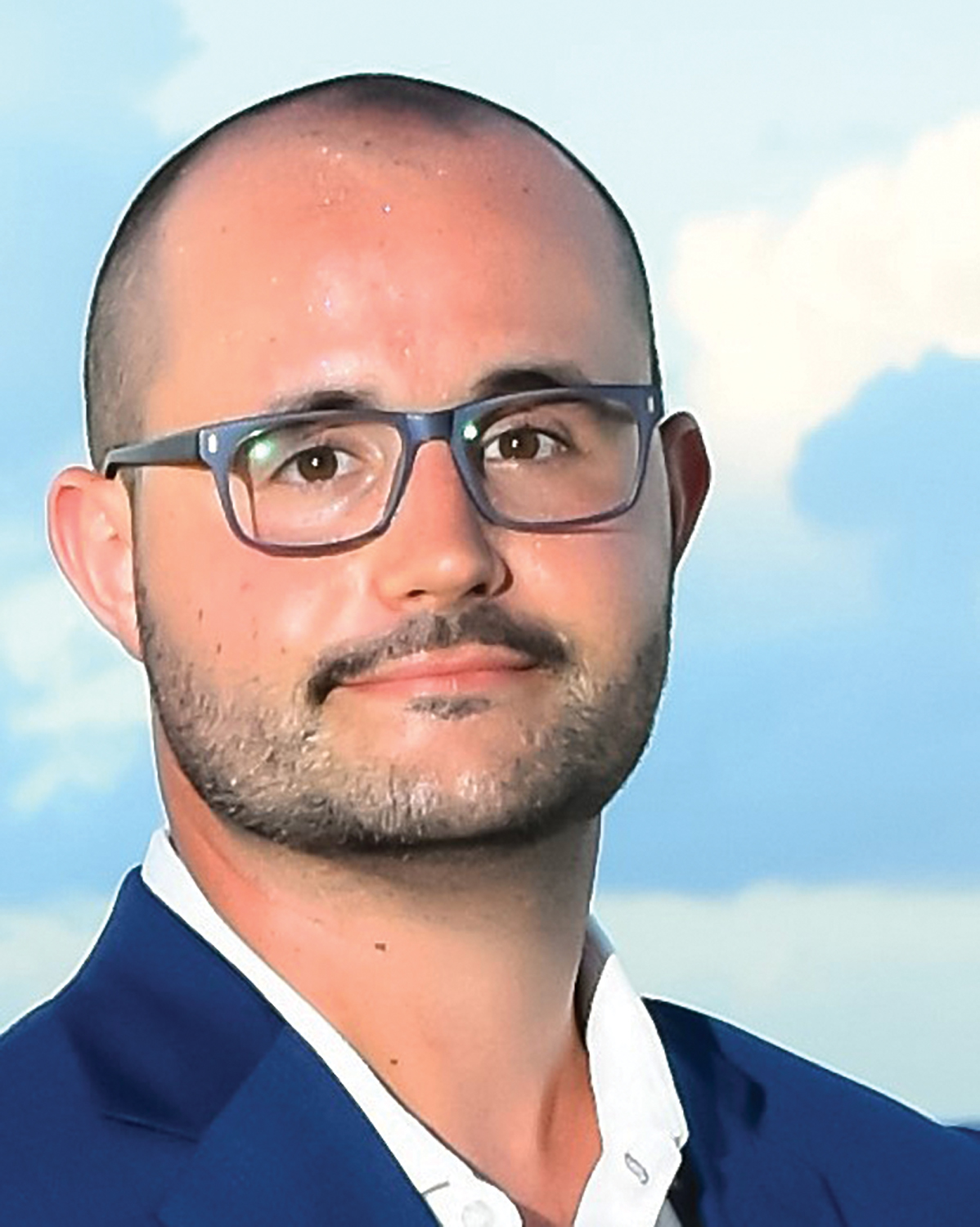
What’s the one place in the world you have never seen, but would like to visit?
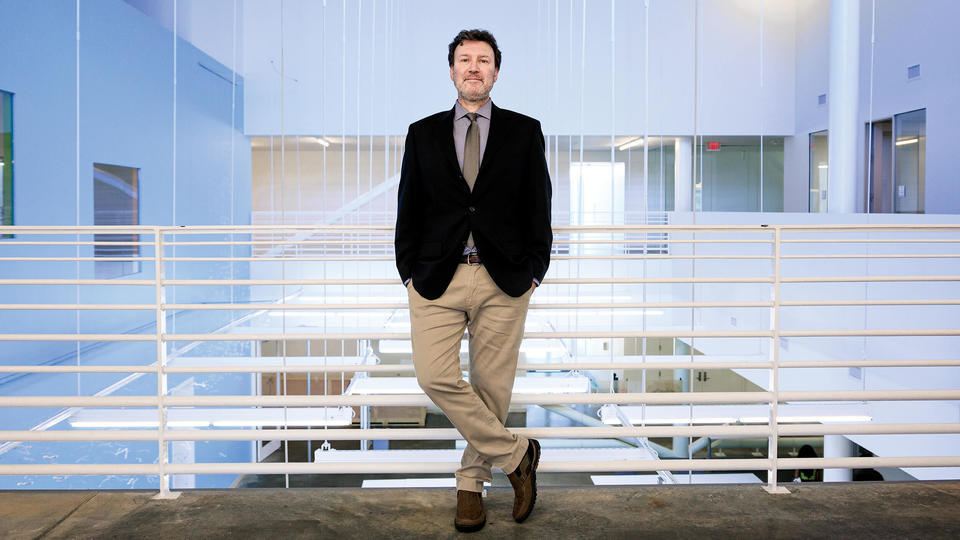
My in-laws are from Guatemala, which means my two kids are from there as well. So, Lake Atitlan, the deepest lake in Central America, is at the top of my wish list. It’s like Lake Como but surrounded by volcanoes. Seeing a sunrise there would be a dream.
Learn more about Scott

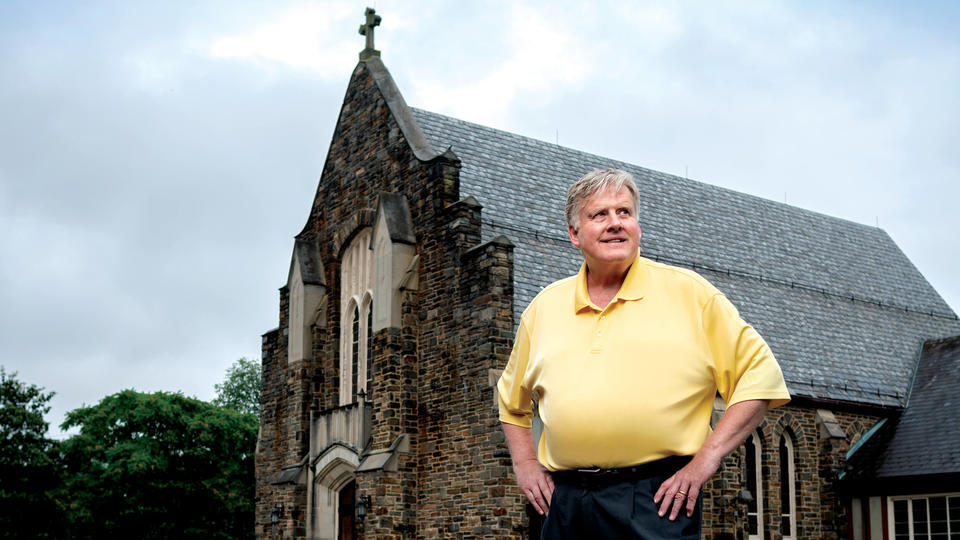
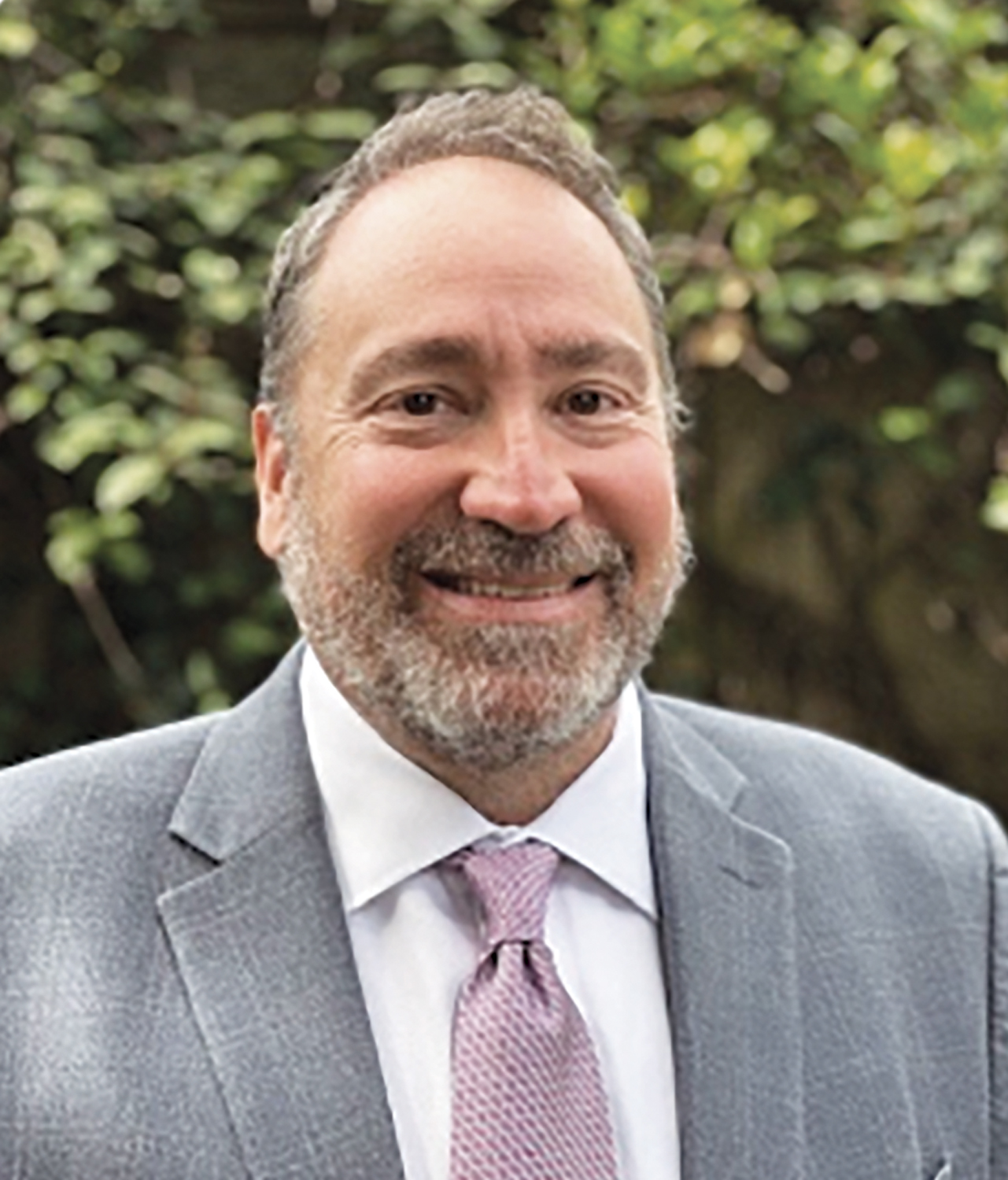
The Holy Land holds the most fascination for me —where the Christian, Jewish and Muslim religions all come together — though at the moment, returning to tubing down the Trinity River in New Braunfels provides some serious allure.
Learn more about Rick

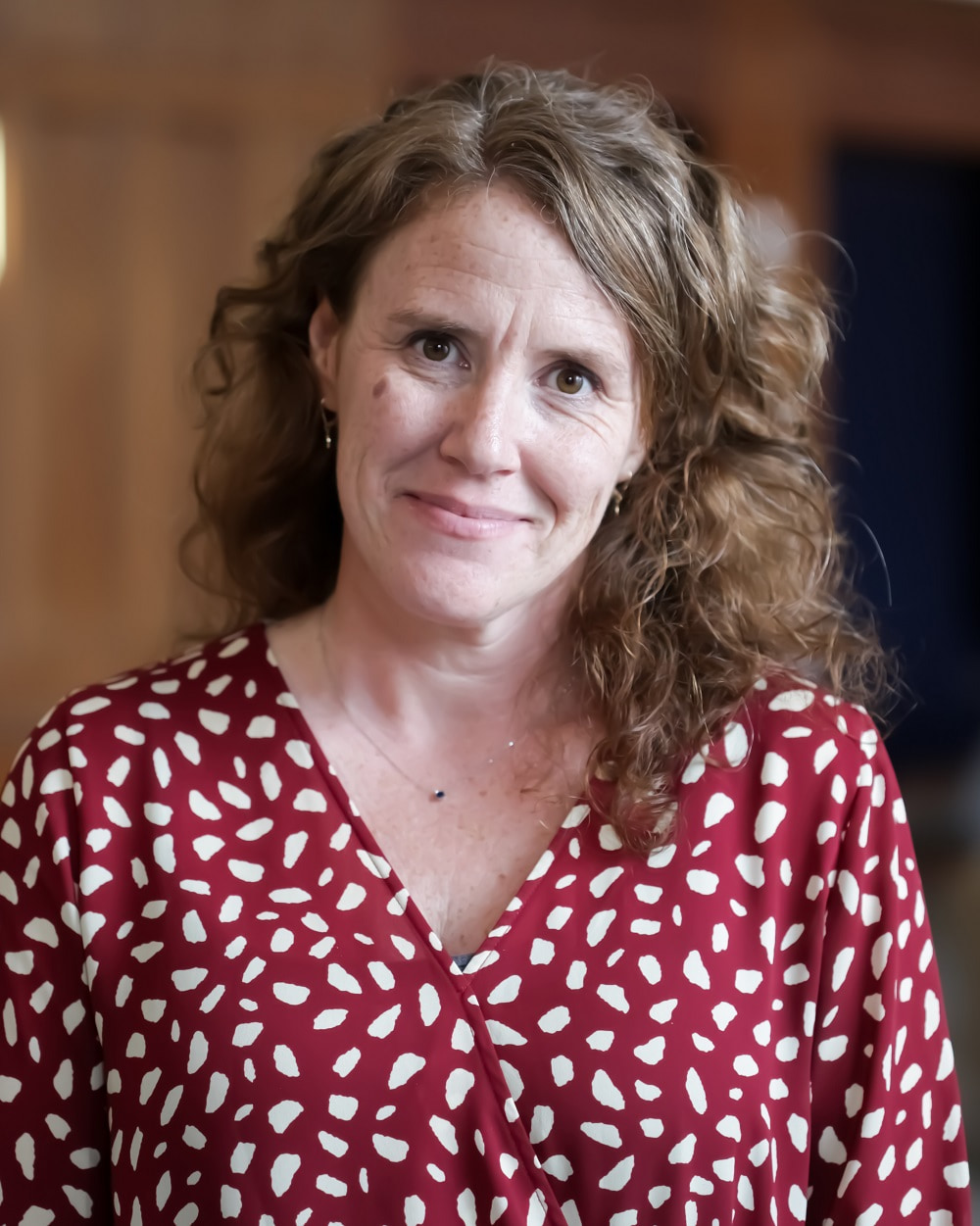
I’d like to visit the towns in the French countryside that I discovered my great-grandfather Gertz was stationed in after I read the more than 100-year-old love letters he sent my great-grandmother during World War I.
Learn more about Deborah
Dean
Peter Rodriguez
Executive Director
Marketing and Communication
Kathleen Harrington Clark
Editor-in-Chief
Maureen Harmon
Editors
Weezie Mackey
Scott Pett
Design Director
Bill Carson Design
Marketing
Kateri Benoit
Chelsea Clark ’23
Tricia Delone
Dawn Kinsey
Annie McDonald
Wafa Mohamed ’24
Michael Okullu
Kevin Palmer
Ananya Zachariah
Contributing Writers
Deborah Lynn Blumberg
Larry Clow
Maureen Harmon
Weezie Mackey
Scott Pett
Rick Reinhard ’82
Proofreader
Jenny West Rozelle
Contributing Photographers
Bill Carson
Jeff Fitlow
An Le
Annie McDonald
Mike Morgan
Contributing Illustrator
John W. Tomac
Printing
RRD Houston

As houses of worship close across the country, we need a new model for the buildings’ futures.
There is no doubt that the energy transition will happen, but we’re all still figuring out how to navigate it.
“Our location allows us to do what great educational institutions do best: give our students and faculty the resources and connections they need to solve global problems for the betterment of all.”
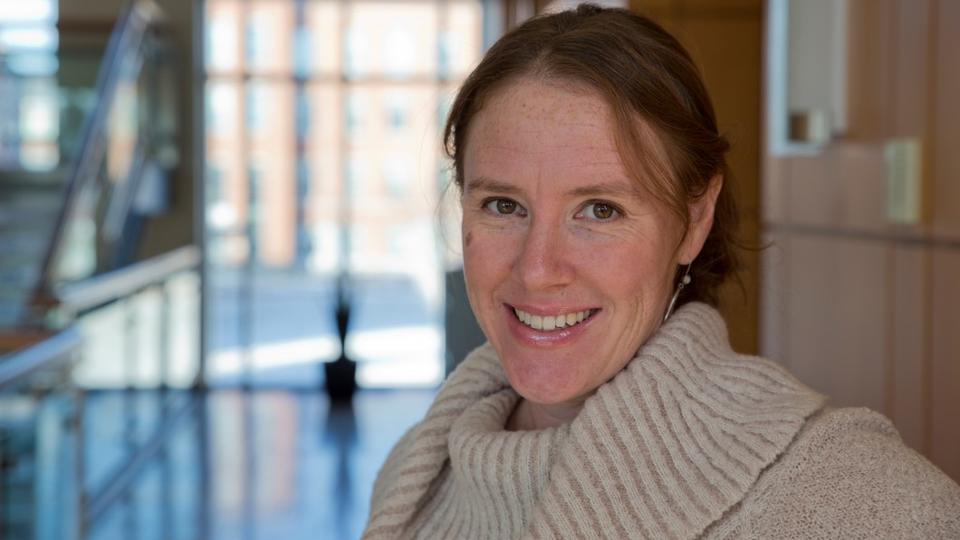
The first year in any new job is getting to know the people, the culture and the place — and I have spent the last few months doing just that. I’ve sipped Audrey’s coffee with staff to learn more about the services and opportunities we offer students. I’ve talked with faculty members to learn more about their research. And I’ve had great conversations with alumni about their career paths and story ideas.
When work is all said and done at the office, I’ve spent a lot of time getting to know the very cool city of Houston — its neighborhoods, like the Heights and Montrose; its outdoor walking spots, including Hermann Park and the new land bridge in Memorial Park; and its food, from the obvious Tex-Mex and barbecue delights to the extensive global cuisine that Houston offers, including any African, French, Mexican, Indian or Asian dish you’re after.
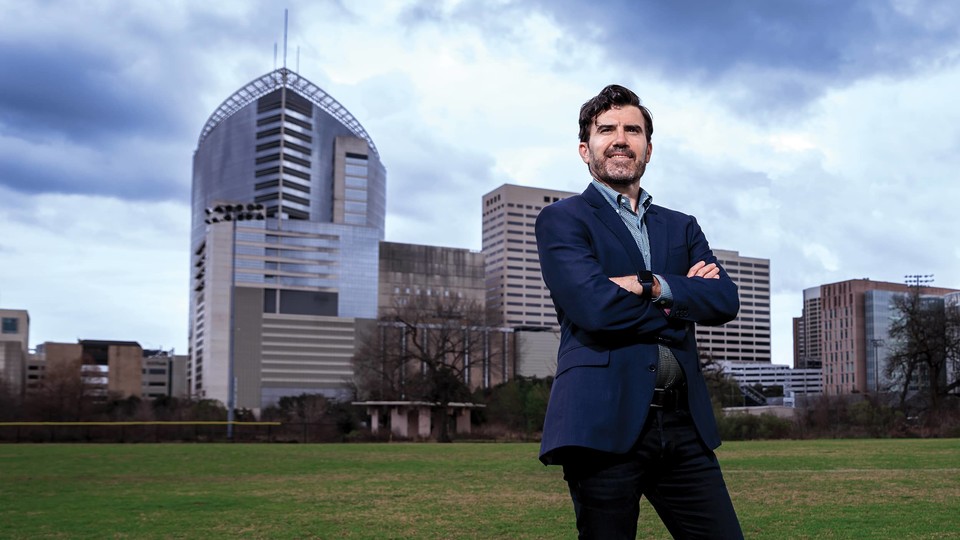
But our location gives us so much more than delicious meals and trendy neighborhoods. We sit at the center of one of the largest, most diverse cities in the U.S. with more Fortune 500 companies than any other city except New York City. This allows us to do what great educational institutions do best: give our students and faculty the resources and connections they need to solve global problems for the betterment of all.
One of those global issues is the coming energy transition. Our location in the energy capital of the world puts Rice in an ideal spot to study one the largest issues of our time. The decades-long transition to cleaner energy will be daunting as businesses try to grapple with the right decisions to move forward. To prepare, Professor Nicola Secomandi recently took on a new role at Rice Business: senior advisor to the dean on energy transition. Secomandi will be the first to tell you that he doesn’t have definitive answers. But he does know Houston is a great spot to find them, to have these conversations, to conduct this research and to collaborate with partners in the city. — Maureen
Our location allows us to do what great educational institutions do best: give our students and faculty the resources and connections they need to solve global problems for the betterment of all.
Email: maureen.harmon@rice.edu
As houses of worship close across the country, we need a new model for the buildings’ futures.
There is no doubt that the energy transition will happen, but we’re all still figuring out how to navigate it.
Wendy Fong EMBA ’13 looks back on the biggest mistake of her career — and the clarity it gave her to discover the work she loves.

Wendy Fong EMBA ’13 looks back on the biggest mistake of her career — and the clarity it gave her to discover the work she loves.
I quit my job. I was an associate vice president of operations for the neuroscience department at Memorial Hermann with 20 years of experience and a team of 200 behind me. I supported amazing physicians. I built new offices. I brought new capabilities and technologies to hospitals. I was helping people — administrators, staff, healthcare workers and patients. It was all so exciting — and I quit.
My intentions were good: I wanted to make an even bigger impact, one I thought I could find in a health-tech startup. But when my team dwindled from 200 to 10 overnight, I thought: I made a huge mistake.
Sure, I would have the chance to make an impact on patients if the product took off — millions of them. There were people out there who would be thrilled to take on that task, one with such an undoubtedly laudable mission, but I realized quickly that I didn’t love the day-to-day work. I realized in that “mistake” that a business’ external success isn’t where I find the most joy. In leaving my job I lost the chance to develop and mentor a large team. There weren’t established ladders for employees to climb because we were still building the infrastructure. I couldn’t help them identify and strengthen their talents because we were all wearing many hats and scrambling to make it all work with what we had.
In the past, I thrived in that startup, make-it-work-with-what-you’ve-got culture, but this time, something was missing. In those days, I learned a lesson: My true passion was people, not operations. In a big organization like Memorial Hermann, it was all so intertwined that I couldn’t see my passion clearly.
I thought a role in HR might make the perfect fit, but it turns out companies want HR employees who actually have HR backgrounds. Finally, I turned to a classmate for help. He had led HR for an international oil and gas company and connected me with colleagues of his, but he was also very honest. “You need to talk to these people to understand what their needs are, tell them who you are and find your path,” he said. “But, you know, I don’t think that it’s the path of an individual contributor in an HR department.”
He was right. And it turns out that I was wrong, not only in the idea that I should be in HR, but also in the idea that I could no longer thrive in a startup. In fact, I launched my own business, Chief Gigs — and I’m doing the best work of my life now as a business coach helping companies figure out how to unleash the talents of their people and put the right people in the right seats.
Today my work is truly fun and infinitely rewarding. I love helping companies put the pieces of their talent puzzle together. And I never would have gotten here — to this work that is making an impact not only on businesses like Fortune 1000 companies, nonprofits, startups and investment groups but on individual careers — had I not quit my job and made what I then thought was a poor choice. Turns out that misstep was actually just a step on my path.
Wendy Fong, partner and principal of Chief Gigs, offers a few pieces of advice to business leaders on building talent within your organization.
To hear more of Fong’s story, listen to her interview on the “Owl Have You Know” podcast:
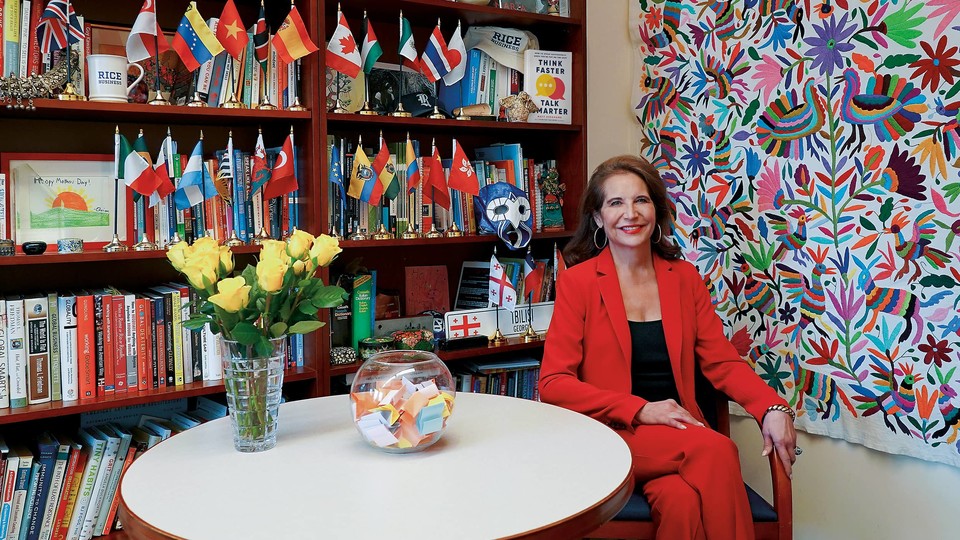
Inside the office of Janet Moore: communicator, educator and world traveler.
A conversation with Rice Business Professor Tolga Tezcan on how we can improve hospital operations and payment systems.
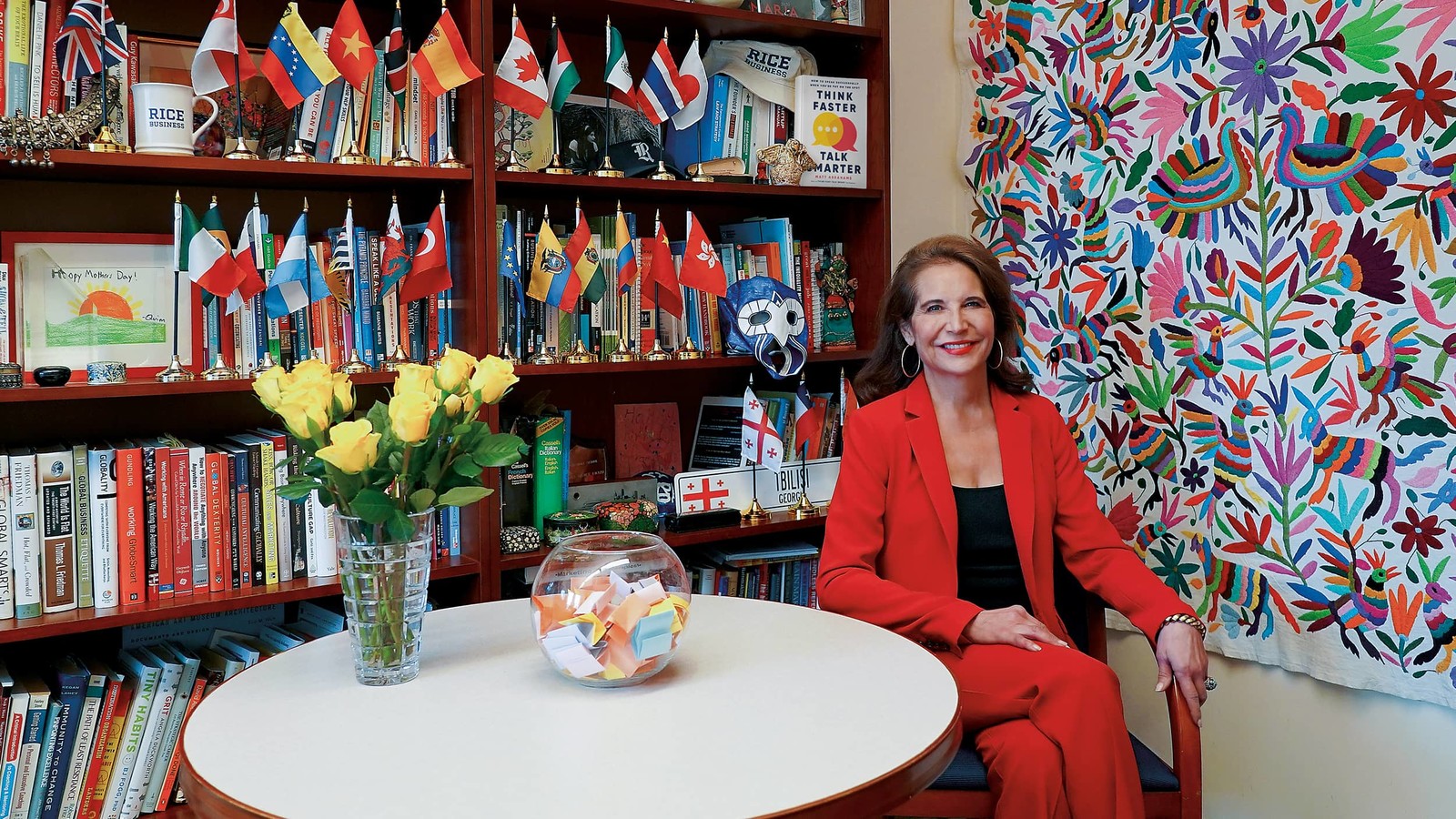
Inside the office of Janet Moore: communicator, educator and world traveler.
Inside the office of Janet Moore: communicator, educator and world traveler.
Janet Moore believes there is something interesting about everyone she meets. A look inside her office reveals plenty of interesting things about the communications leader and educator herself.
As a full-time faculty member, Moore’s expertise in leadership communication shapes the academic experience of nearly every MBA student, guiding them to develop executive presence and the ability to communicate with impact. The objects in her office, from artifacts collected on global adventures to awards recognizing her storied career, reflect the many facets of her vibrant life and work. Here are a few of the objects that make the environment almost as lively as its occupant.
For Moore, an expert in leadership communication, personal style is a way to tell stories — both for yourself and others. She references Madeleine Albright (whom she learned from at Georgetown), whose carefully selected brooches conveyed specific messages. On the day of our photo shoot, Moore is wearing a golden bracelet that her mother wore when she defended her dissertation.
If you want to learn more about leadership and the power of personal style, stop by to see Janet Moore. You’ll leave feeling more confident about telling your own story.
Wendy Fong EMBA ’13 looks back on the biggest mistake of her career — and the clarity it gave her to discover the work she loves.

A third of the world's population is cooking meals over open fires, without access to modern cooking technology. Dymphna van der Lans '02 hopes to change that.
A roundup of news from Rice Business and beyond.
A roundup of news from Rice Business and beyond
Congrats, new grads! Each December, Rice Business holds a graduation ceremony for MBA candidates whose degrees were conferred in August and December (though students may choose to walk in May instead). This year, 128 graduates were eligible to participate.


Princeton Review and
Entrepreneur magazine,
2020, 2021, 2022, 2023 & 2024
(top 10 over 10 years)
Financial Times, 2023
(based on global rankings)
Bloomberg
Businessweek,
2023
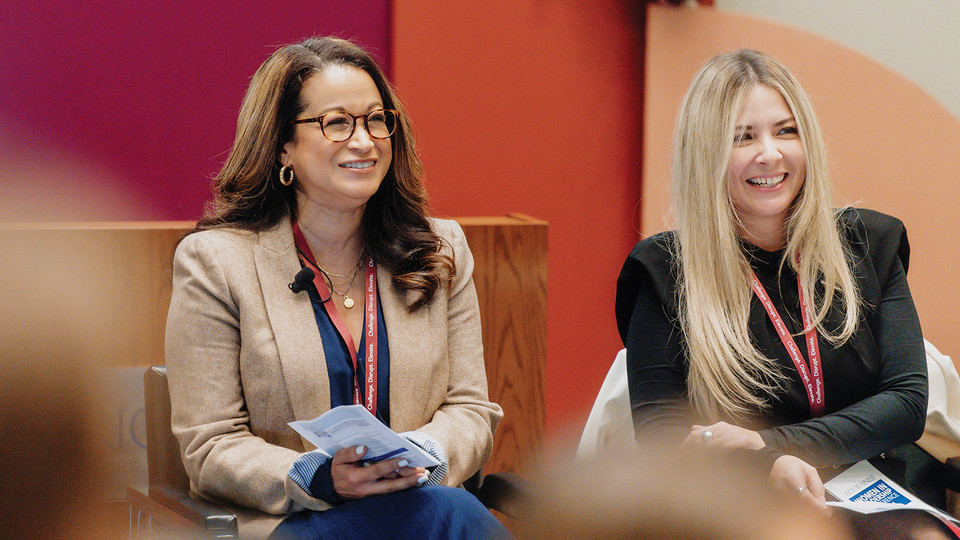
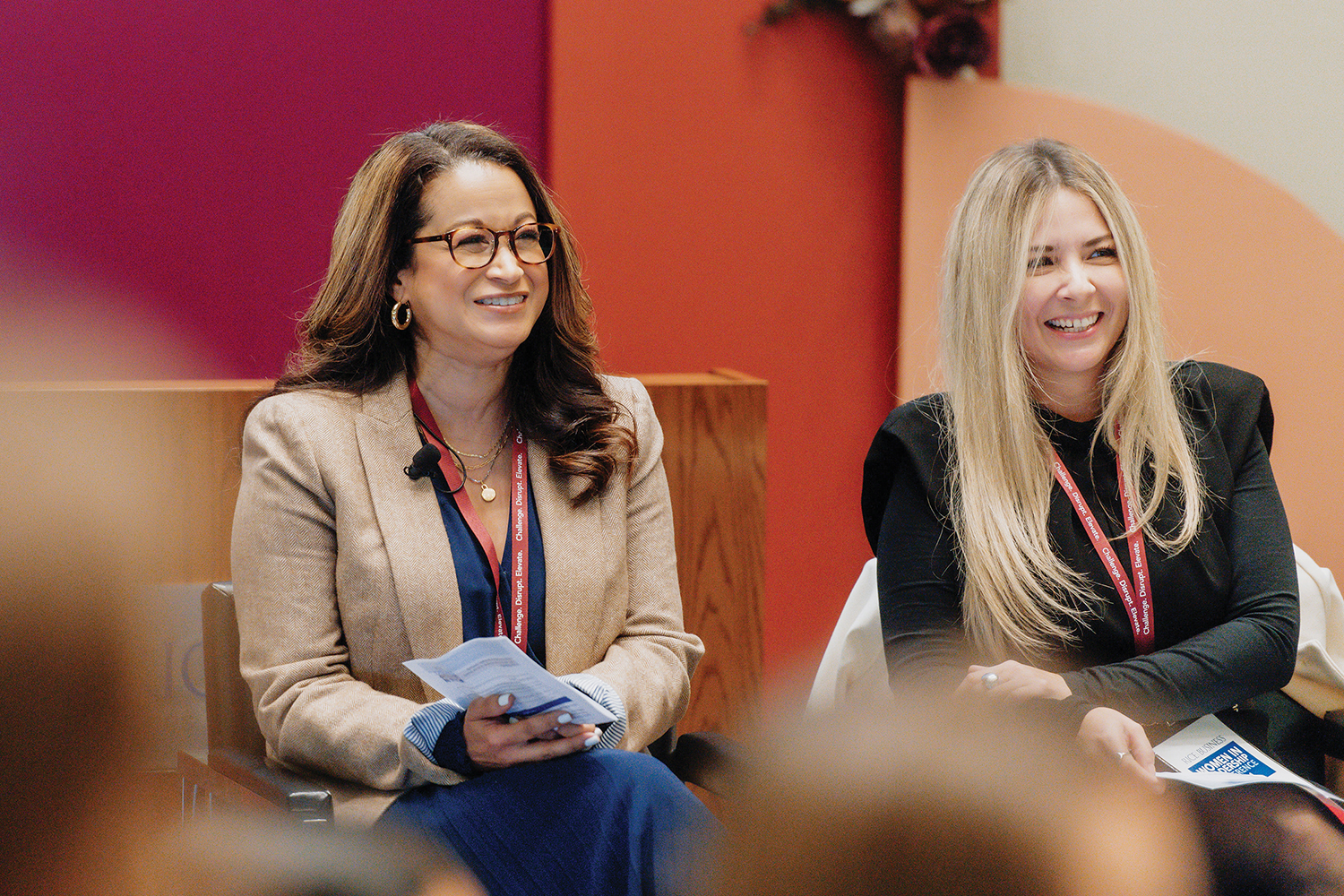
It’s part of our philosophy that experiential learning is a great way to acquire leadership skills. From roles in clubs to non-voting board seats, our students are in the trenches discovering where they shine. On-campus conferences (open to the public) are a big part of that informal leadership curriculum and give students the chance to build these events from the ground up, meet with industry leaders and directly contribute business knowledge to the wider Rice Business and Houston communities.
This February marked 24 years of the popular Women in Leadership Conference, which brings together women who are present and future business leaders to network and exchange ideas. Themed “Challenge. Disrupt. Elevate: Making Room for Women Everywhere,” the conference delivered keynotes from Tandra C. Perkins, SVP and chief digital and administrative officer at Phillips 66, and Kelly Rooney, senior vice president of Waste Management.
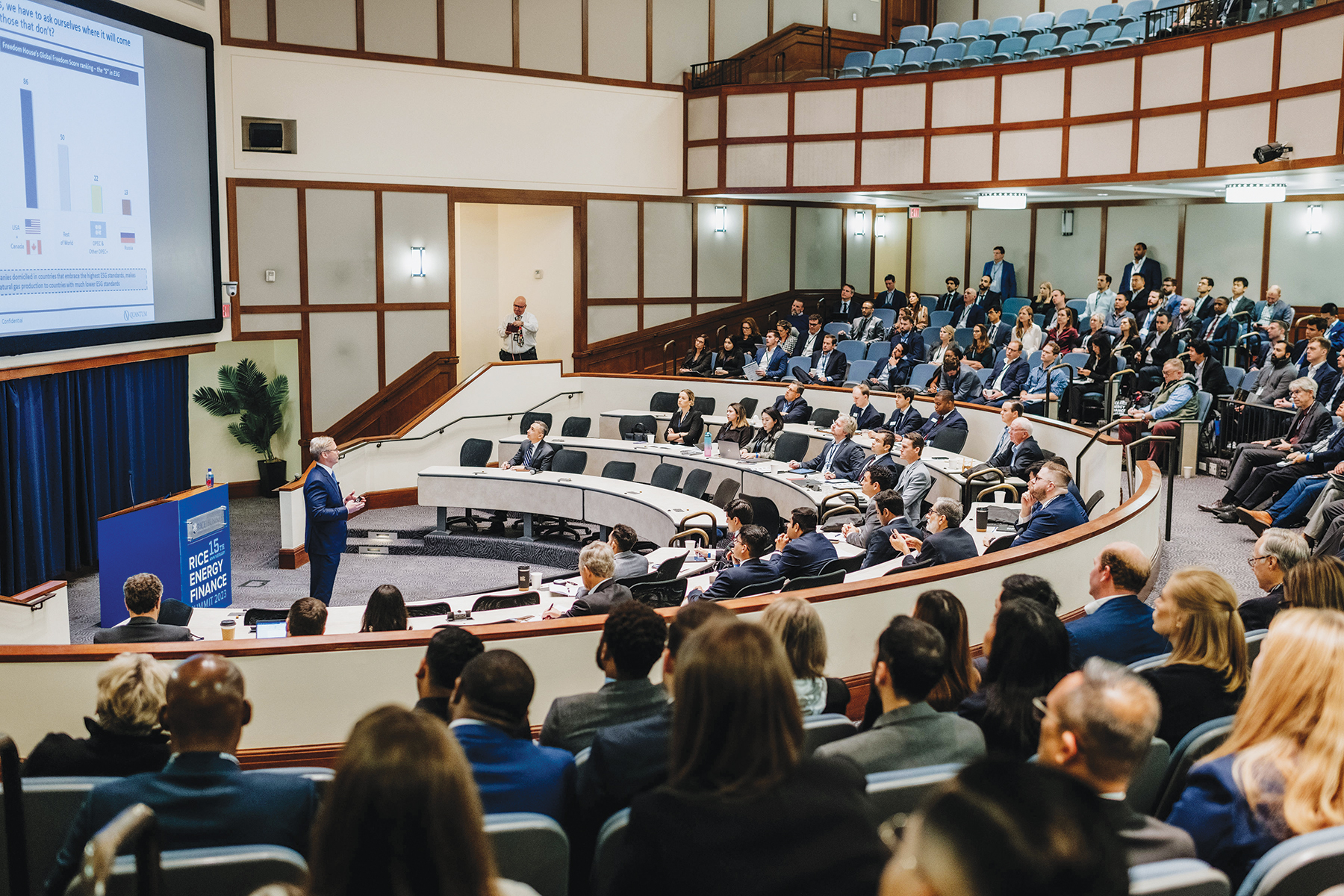
For 15 years, the Rice Energy Finance Summit has been promoting forward-looking discussions on the most relevant energy finance, investment and strategy topics affecting the global energy industry. It gathers senior executives, investors, advisors and policymakers to share their perspectives with fellow energy industry professionals, students, alumni, faculty and staff. This year’s theme, “Allocating Capital for Tomorrow: Energy Security and Transition,” brought keynotes Wil VanLoh, founder and CEO of Quantum Capital Group, and Lorenzo Simonelli, chairman and CEO of Baker Hughes.
There are lots of opportunities for students to learn by experience in planning and executing events. Along with the Rice Energy Finance Summit and Women in Leadership Conference, they include:
In addition to their research and teaching responsibilities, our faculty organize and host various academic events throughout the year.
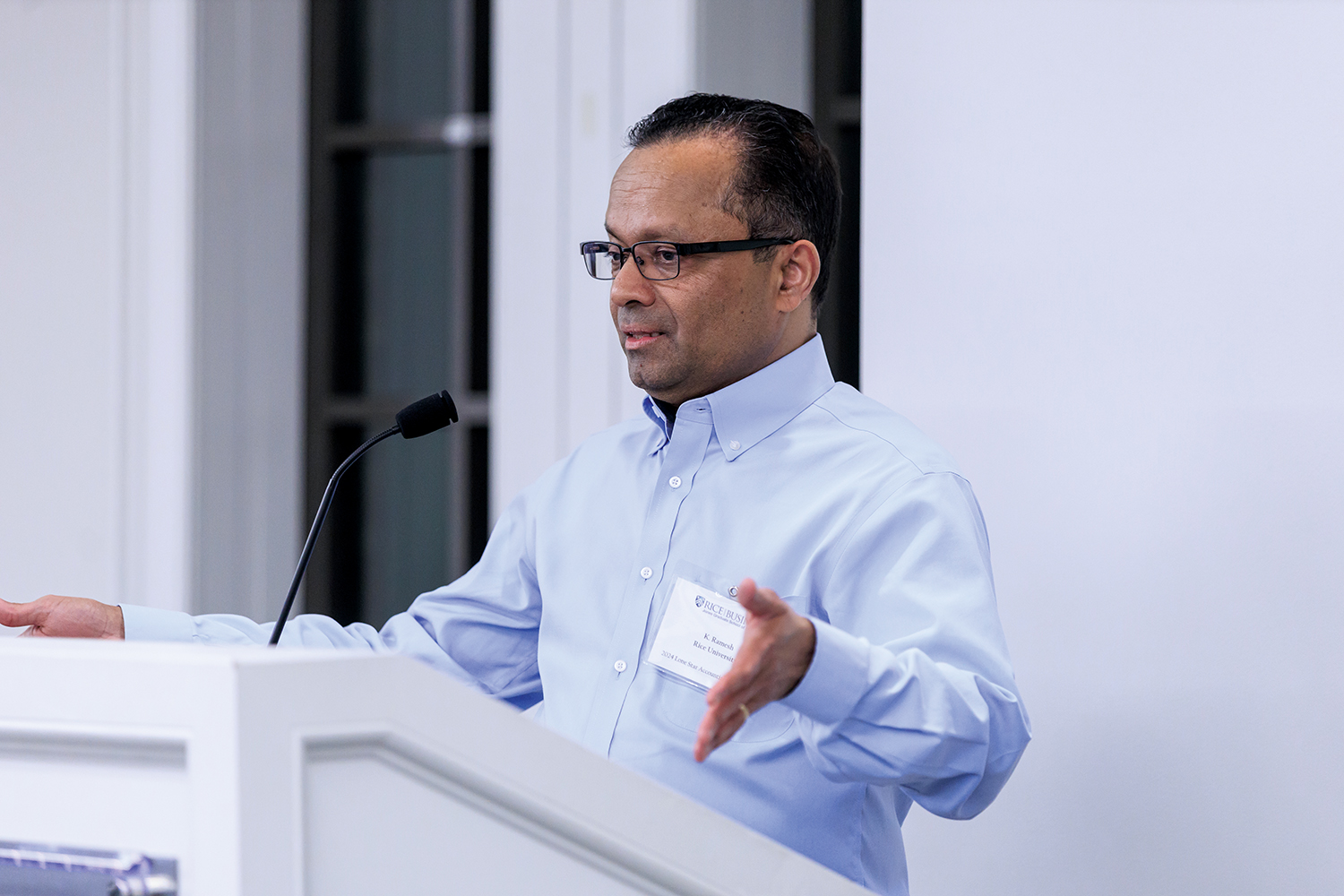
The Lone Star Accounting Conference in February brought together accounting professionals and academics to discuss the latest research and industry trends, featuring Ph.D. students and faculty presentations. This past fall, our finance faculty also sponsored the Lone Star Finance Conference.
In March, faculty hosted the 14th annual Rice Customer-Based Strategy Symposium. This event features cutting-edge research, industry insights and discussions with top executives on customer-based strategies, strategy planning and implementation.
The newest faculty forward event is the Dean’s Distinguished Visiting Fellow Program, also held in February. The inaugural fellow, Nancy Rothbard, the David Pottruck Professor of Management and deputy dean at Wharton, spoke about her research and spent a week with Rice Business faculty. The fellow program aims to promote high-quality and high-impact research and contribute to the growing academic community at Rice Business. The visiting faculty can conduct research seminars, professional development workshops or present other relevant topics to aid junior faculty and Ph.D. student development.


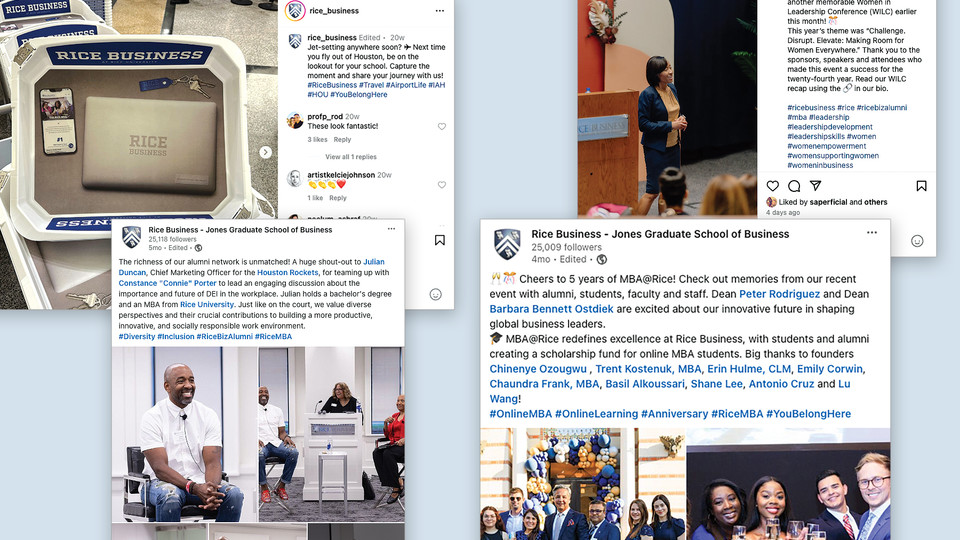
Rice Business in the social sphere.
What we’ve been up to on social media
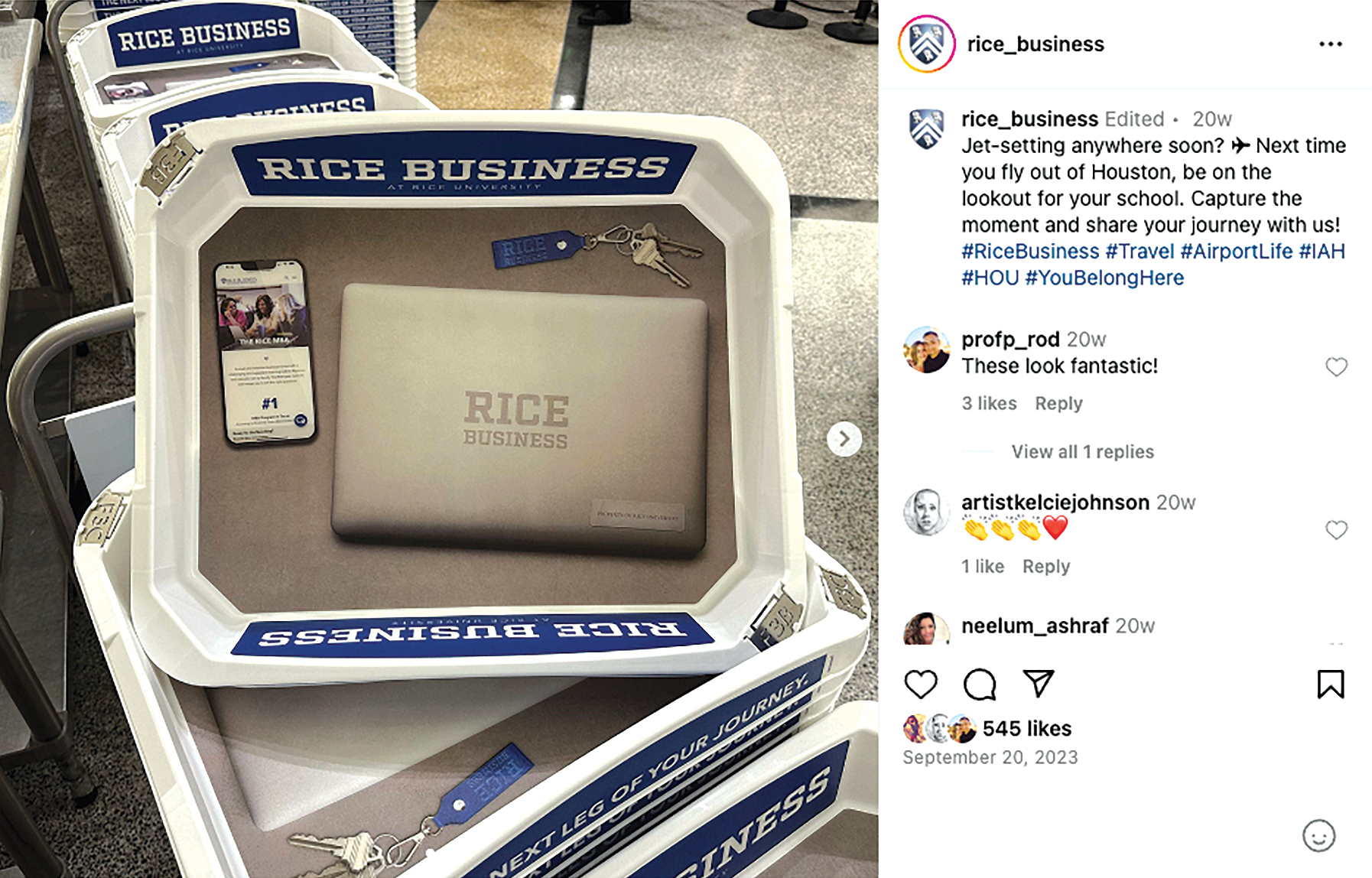
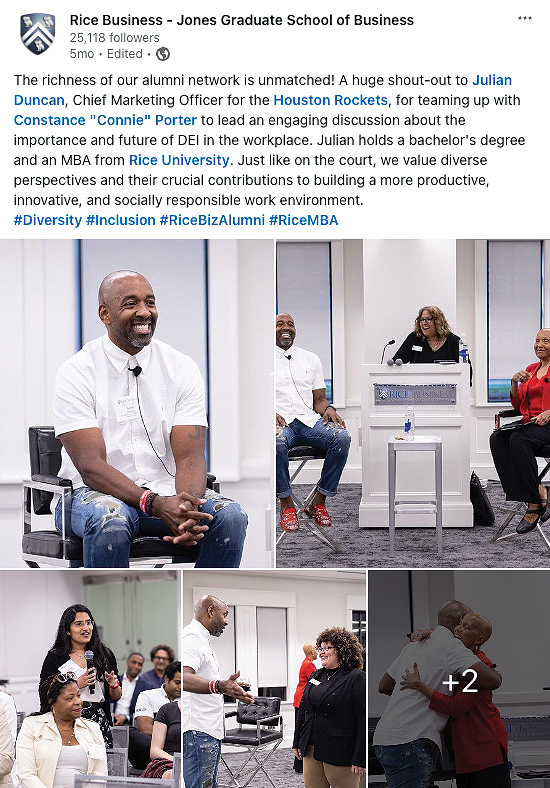


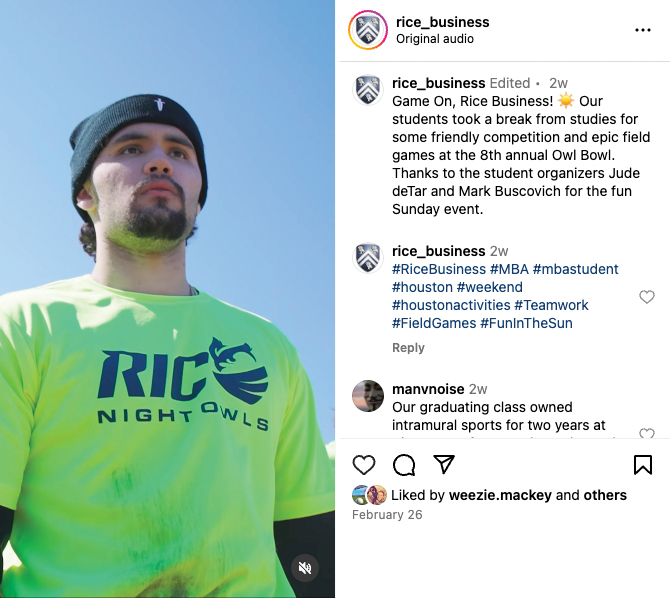
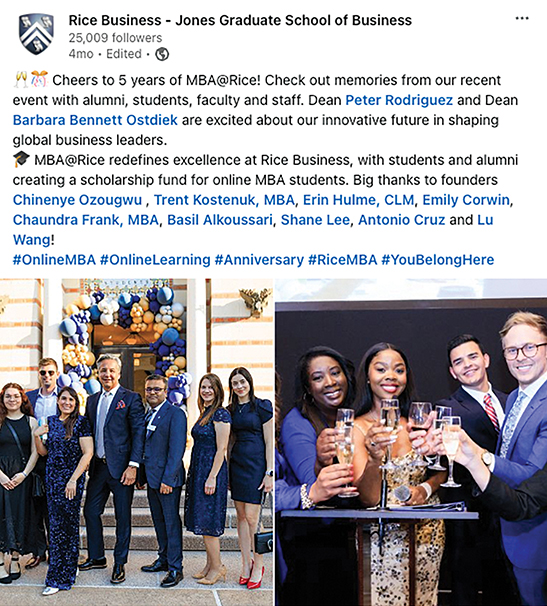

A conversation with Rice Business Professor Tolga Tezcan on how we can improve hospital operations and payment systems.
Rice Business in the news.


Texas has one of the highest unemployment rates in the country — despite leading in job growth — which experts say indicates an upward economy.
According to Dean Peter Rodriguez, lower unemployment can mean people are exiting the workforce. Texas’ high rate reflects more people moving to the state and staying, which expands the labor pool and benefits employers, especially smaller firms. However, job growth is slowing in Texas, following national trends. So, while the high unemployment rate indicates a rapidly growing labor force and economy, hiring seems to be slowing in line with the rest of the nation.
Oct. 3, 2023 | Maia Pandey


Budgeting apps like Mint have struggled to build a sustainable business of helping people spend less. Mint shut down Jan. 1, 2024, joining other failed personal finance apps. The problem is that few people want budgeting help, and even fewer will pay for that help. Apps battle high costs of aggregating financial data and low engagement from users.
As marketing professor Utpal Dholakia says, “Someone is going to become really, really rich if they can figure out how to get unmotivated people interested in really thinking about money.” Banks now offer free budgeting tools but lack the excitement of social media. Budgeting isn’t a “dopamine hit,” says Mint’s founder; it’s an adult responsibility. Motivating the unmotivated to budget remains an elusive pot of gold.
Nov. 16, 2023 | Imani Moise

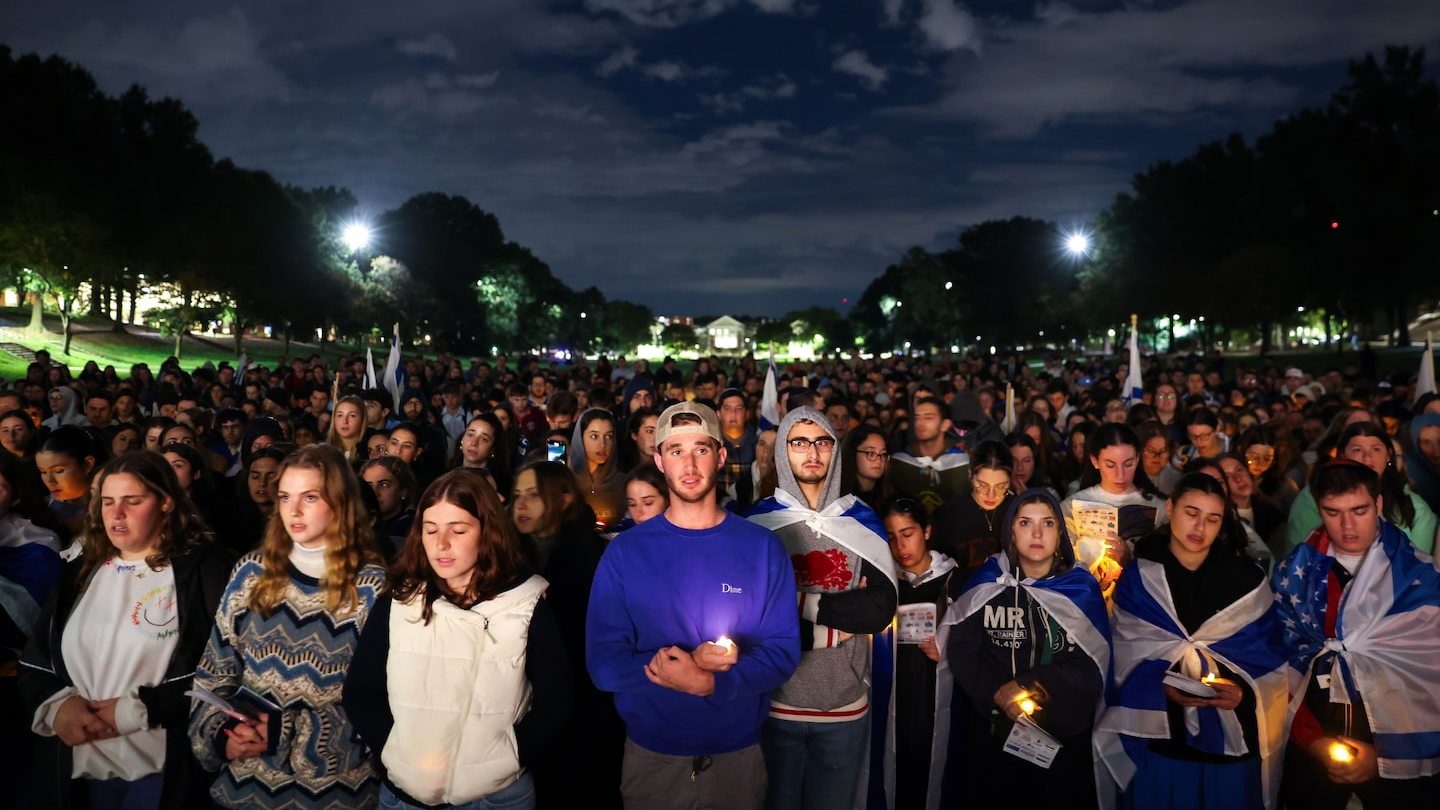
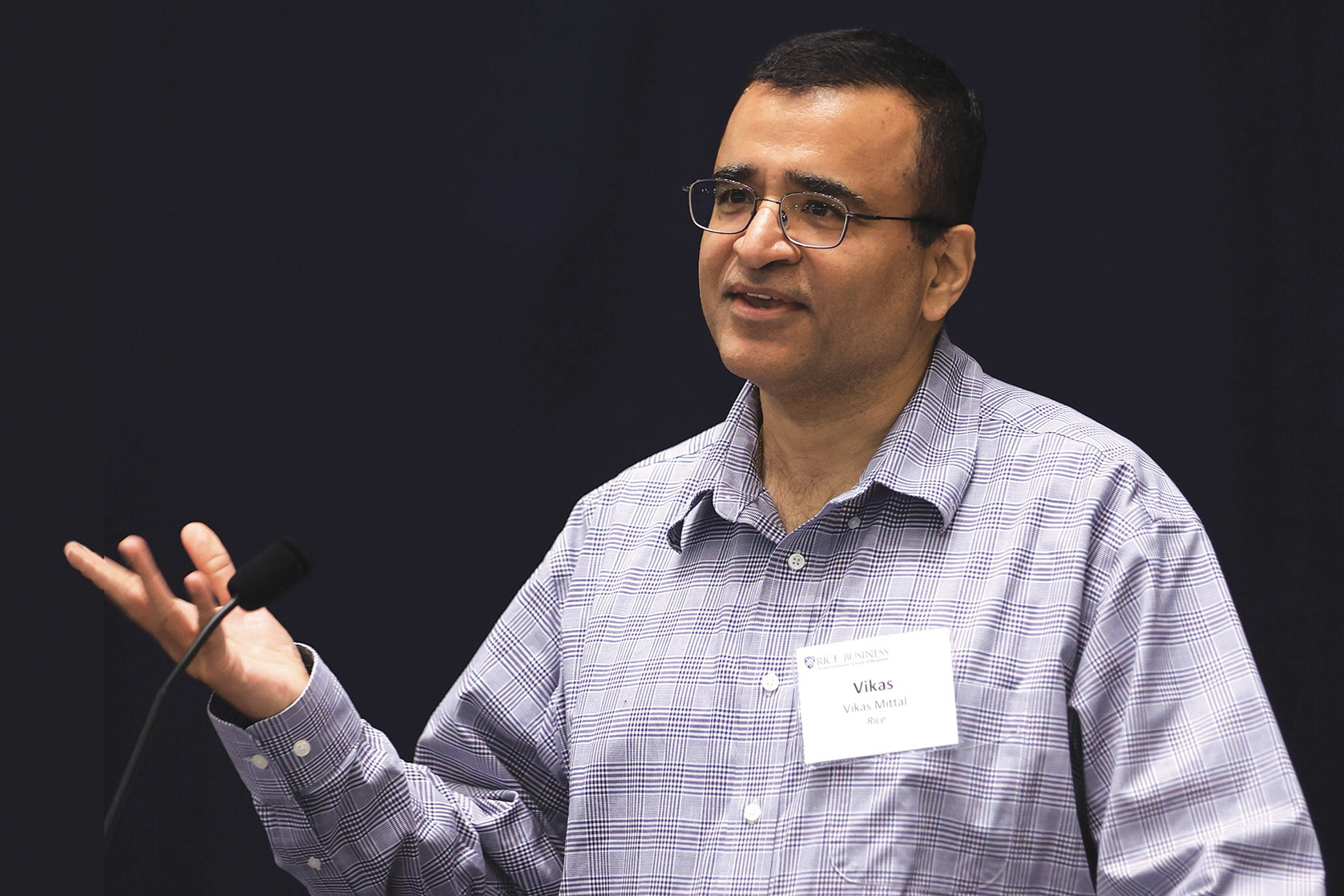
Companies, universities, and politicians have struggled with how to respond to the Israel-Hamas conflict. Condemning violence on both sides or expressing support for Israelis and Palestinians has drawn criticism. Professor Vikas Mittal says companies should avoid statements that take sides, given how quickly they spread online. He advises saying nothing or, before speaking, taking a few days to carefully deliberate.
Mittal cautions against “condemning this or that” and says companies should listen first rather than quickly commenting. In this heated moment, there are messaging risks either way organizations respond (or don’t respond).
Oct. 14, 2023 | Laura Meckler, Tim Craig and Aaron Gregg


A recent argument has erupted among finance professors over changes made to some very important data created by researchers Kenneth French (Dartmouth) and Nobel Prize-winning economist Eugene Fama (Chicago). These data help investors decide which stocks to buy based on factors like company size and share price. While some researchers are worried that the changing data was not fully explained and could lead to manipulated results, others like Rice Business professor Robert Dittmar say they should be careful criticizing such respected work.
Dittmar quotes a line from the TV show “The Wire”: “You come at the king, you best not miss.” He says most attempts by other researchers to perfectly re-create Fama and French’s data have failed, showing how complex their calculations are.
As a result of the controversy, Fama and French have provided more transparency by releasing their previous data versions online. They have defended the reasons behind updating their groundbreaking research on market factors, like finding undervalued stocks.
Mar. 11, 2024 | Mary Childs and Justina Lee


Professor Scott Sonenshein says the popularity of portfolio careers started rising around 2014 with the sharing economy and gig platforms. His early research found people with multiple jobs had diverse backgrounds — from high-skilled consultants to Uber drivers.
This trend accelerated during the pandemic, as people sought control amid uncertainty. Sonenshein says economic necessity still drives many to patch together multiple income streams. But increasingly, portfolio careers appeal to people seeking meaningful, engaging work and better work-life balance. This autonomy does pose a risk, however. The lack of built-in boundaries and structures for success can lead some to constantly work and fall into the traps of hustle culture.
Dec. 10, 2023 | Anisa Purbasari Horton

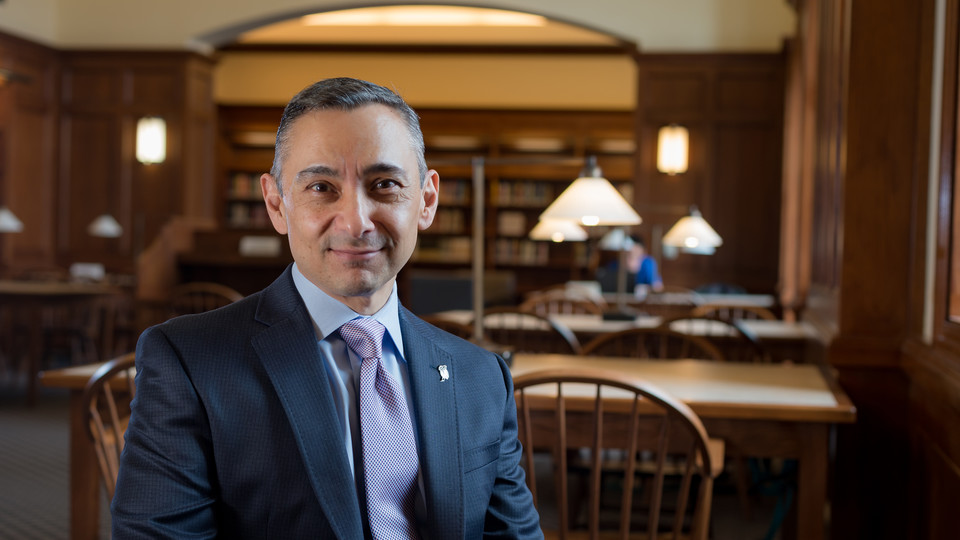
"This year is the perfect time to reflect as we celebrate 50 years since Houston Endowment funded Rice University to establish the business school and reinforce Jesse Jones' legacy to the city."
News and notes from Rice Business alumni.
News and Notes from Rice Business Alumni
Pam Reiland ’82
Pam began her term as chair of the board of Planned Parenthood Gulf Coast, a $20 million per year reproductive health not-for-profit organization that operates six health centers in the Greater Houston area and two in Louisiana. She is at the forefront of conflicts involving women’s health both in the Gulf Coast area and nationally.
George Brooks ’83
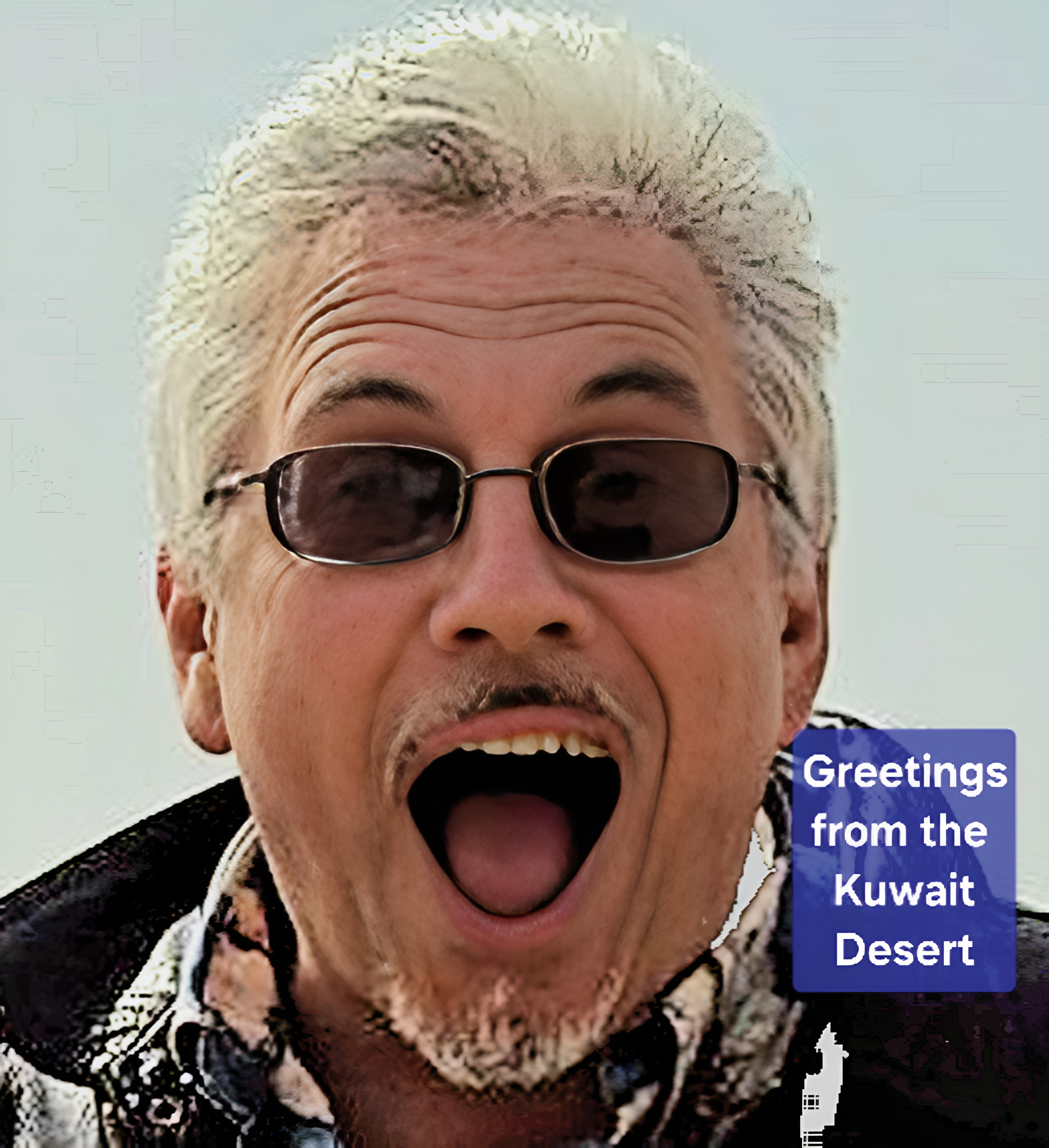
Forty-one years ago, during George’s graduation at Rice Business, he concealed a golf club in his gown (a rugged-looking driver). After receiving his diploma and a handshake, he unexpectedly produced the club and waved it around in celebration. After a career of staff positions in finance, George transitioned to working for the U.S. State Department. He spent three years in Kuwait City and Helmand Province, Afghanistan, where his responsibilities involved supporting economic development and providing financial assistance to the Afghan business community. Since returning stateside, George has helped 20 or so Afghan workers receive special visa status. His best and hardest work was six years with Verizon Wireless analyzing international telephone traffic. Retiring in 2019, George now fills his days and weeks with volunteer work at the Grand Lodge of Florida Freemasons. Correspondence welcome! GBrooks9@Outlook.com
Susan Harrison ’91
Susan has been living in the St. Louis area since 2019 and leading United Methodist Churches for 20 years (with some contract accounting work). She is ready to retire from the UMC and looking to get back into accounting part time, contract or full time, remote or in the St. Louis area.
Tarig Anani ’92
Tarig moved to Dallas a year ago and is now a partner and head of the corporate transactions department at McCathern Law Firm.
Ted Dimitry ’02
In addition to being the energy and marine practice leader at Higginbotham in Houston, Ted is now a managing director of the firm.
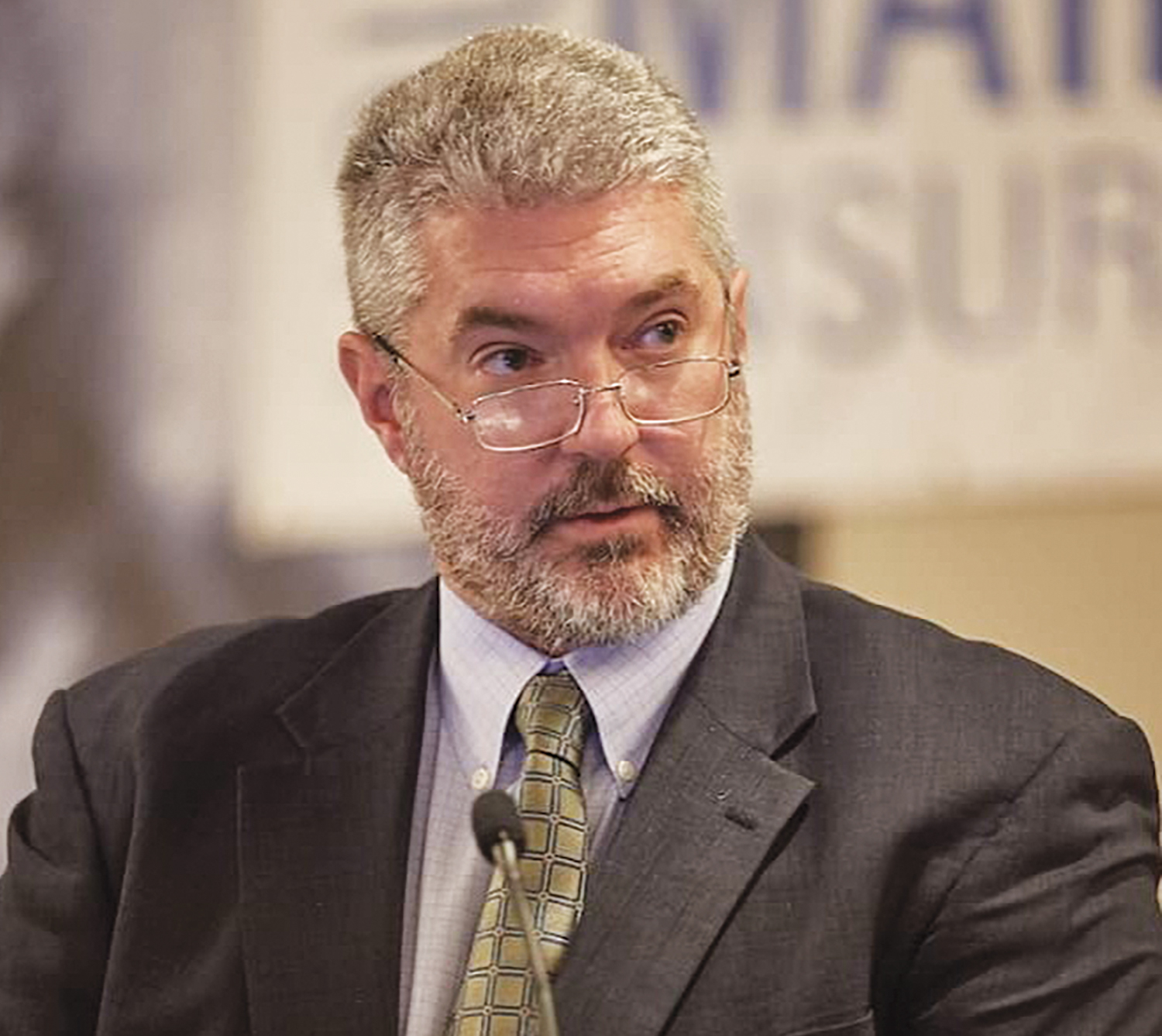
Wolfram Manufacturing, the company Nathan founded and runs with his wife and fellow alum Deirdre ‘99, expanded into a new 30,000-square-foot facility in Austin, TX. Wolfram has three synergistic business lines — contract manufacturing, manufacturing consulting around feedback controls systems/automation, and software to enable extremely high specific productivity in machine shops. The company is at the forefront of ML/AI in manufacturing, and Nathan always keeps the door open to friends!
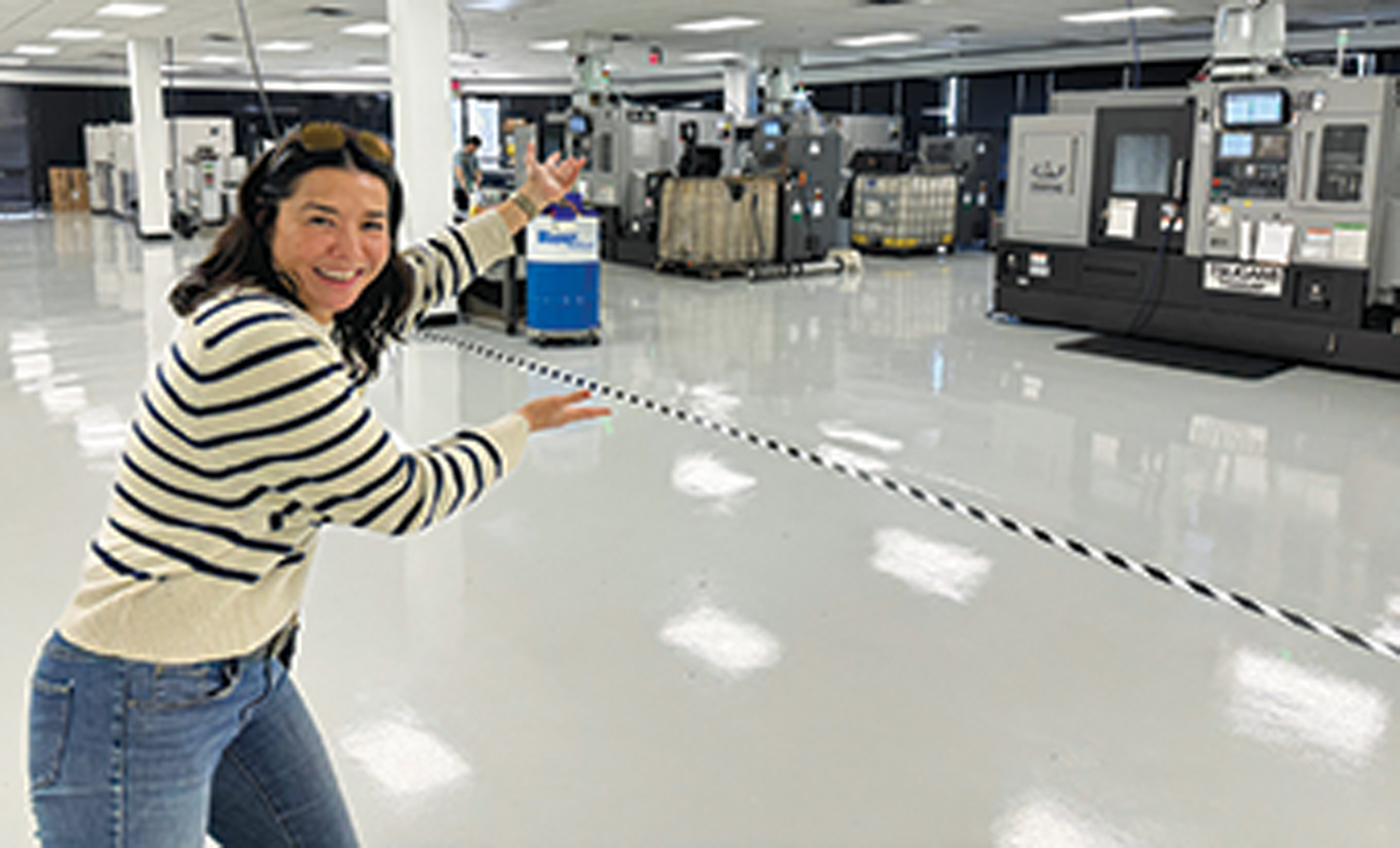
Nat Kreamer ’04
Happy 20th, Class of 2004! Gil Whitaker used to say, “You can’t overwork an MBA.” Since graduation, Nat fought in Afghanistan with the Joint Special Operations Command (JSOC), founded and led SunRun (NASDAQ: RUN), now the second largest solar company by megawatts, chaired the U.S. solar industry trade association, and secured more than $100B in government incentives for clean energy and EV transportation. He now has a private equity portfolio where he is on the board of Highland Electric Fleets, executive chairman of AMP, a leading AI-robotics waste company, and partner at HDM Renewable Finance, among other investments. Nat is also on the board of the Energy and Sustainability Institute at Northwestern, where he helped start the school’s master‘s program on the topic. A great family, a half a dozen companies, a few nonprofit boards and enjoying California living keep him fully occupied.
Henry Richardson ’09
Henry is excited to share that his organization, DEFINE, a health and wellbeing studio that expanded to 24 studios across the USA and Dubai, is now opening a brand new concept in Houston. DEFINE is joining forces with a multifamily developer here, and they are set to open Houston’s first wellbeing-focused apartment complex. They will be offering a variety of online and in- person focused services, including fitness, cooking classes, meditation and positive psychology seminars to residents. The website is www.defineliving.com, and you can follow what Henry is up to on his Instagram @define.henry or @definelivingwell. Feel free to reach out via phone or email: 917-686-3558 or henry@definebody.com.
Susan Rudolph ’11
With nearly 15 years of experience at Phillips 66, Shell and Calpine, Susan is joining Braven Environmental as director of commercial business development. Braven is a leading pyrolysis-based technology provider in the advanced recycling sector, where it is converting mixed-waste plastics into feedstock for the production of new plastics.
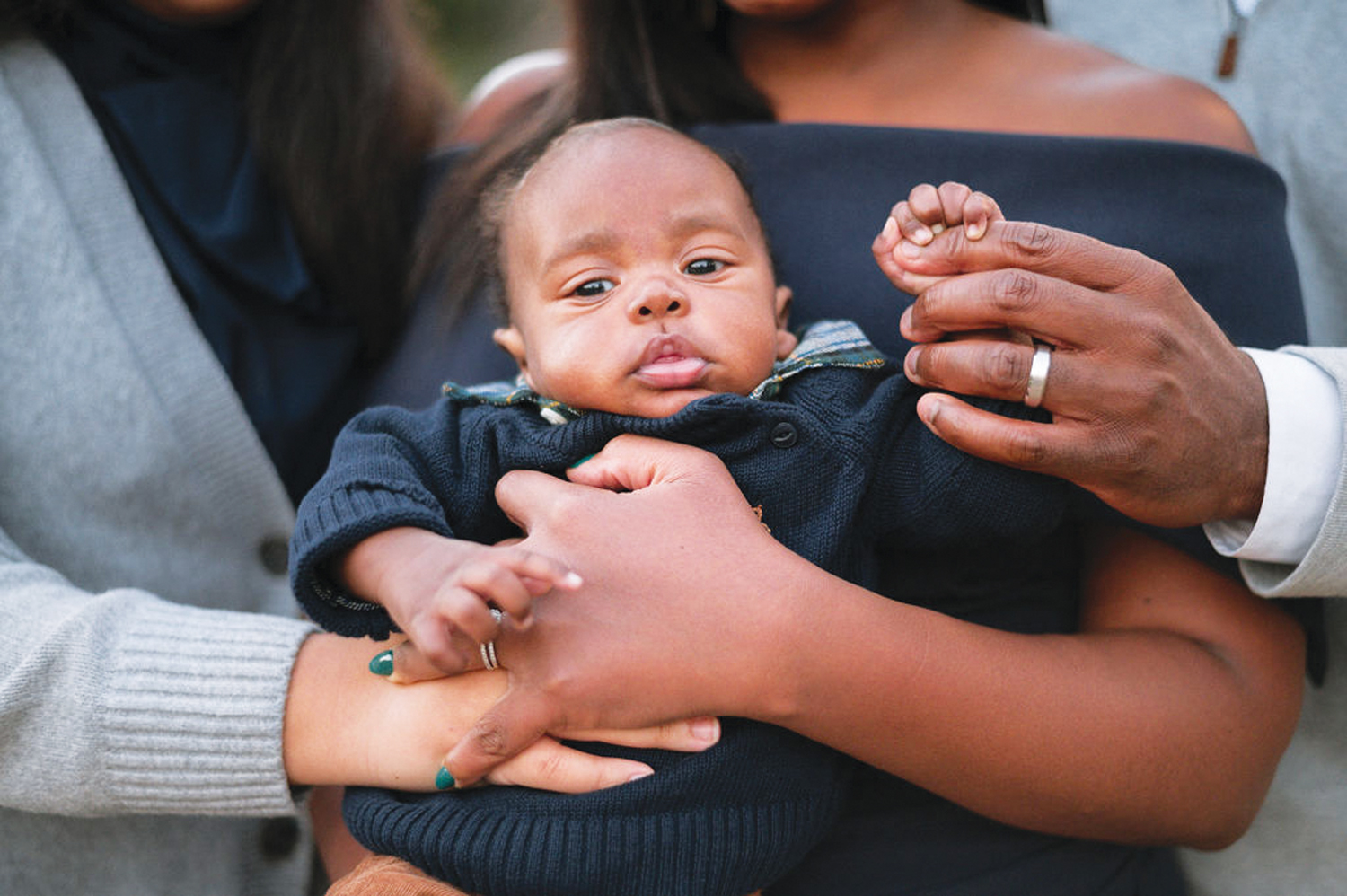
Brandi Wade ’11
On Sept. 22, 2023, Brandi and Wil, along with big sister Soraya, welcomed Dane Lewis Wade to their family.
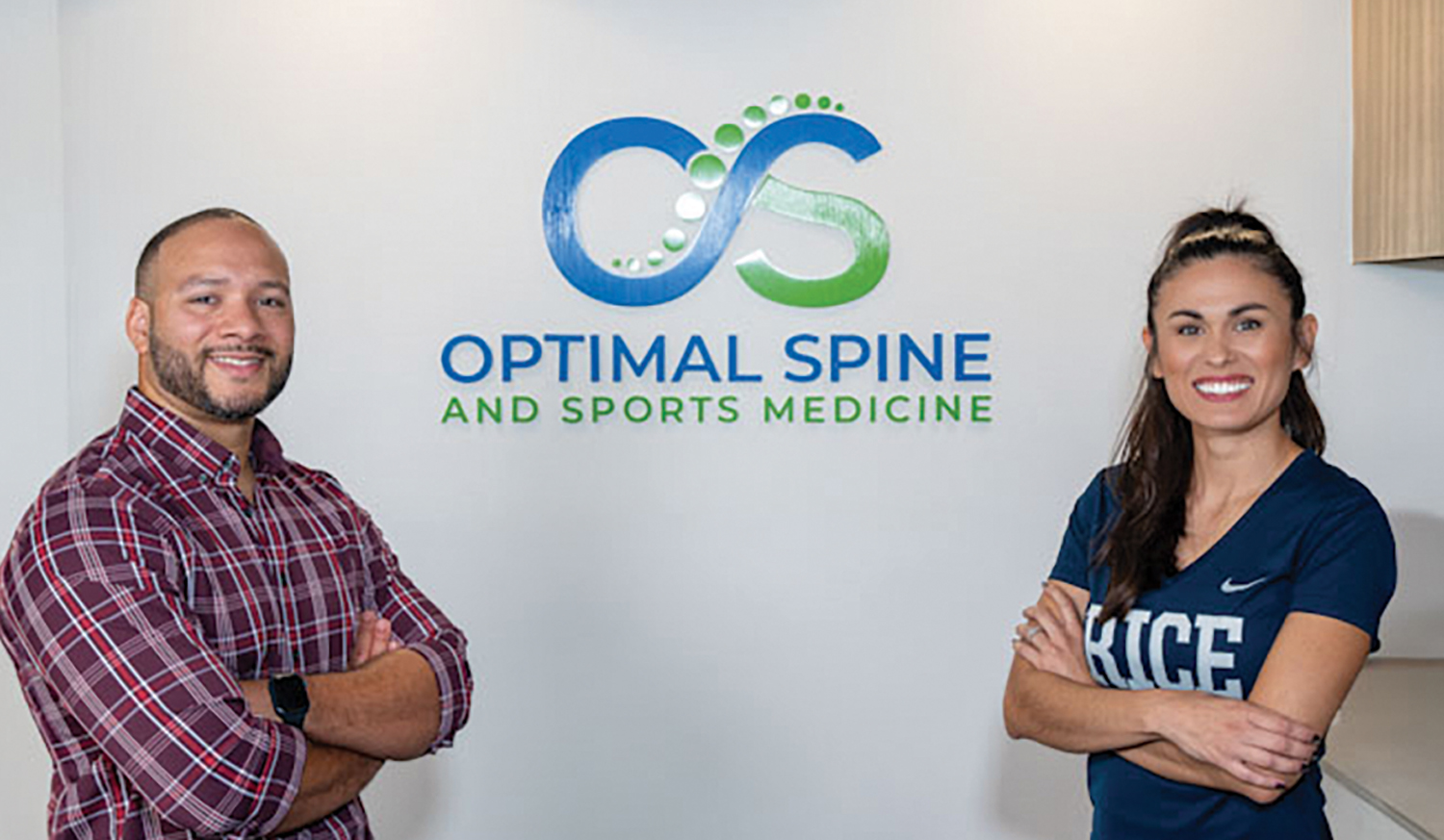
Amanda Haywood ’18
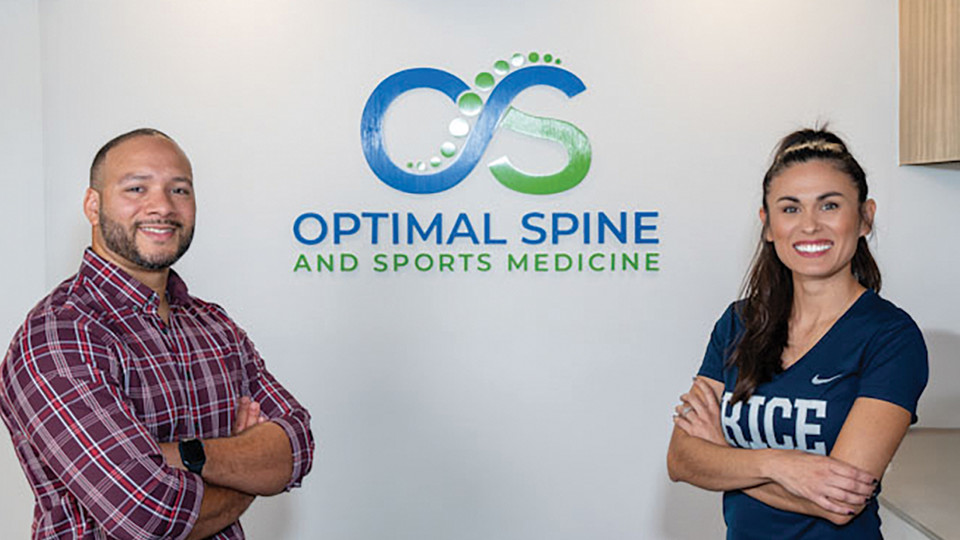
Amanda and her husband just opened up their very own business, Optimal Spine and Sports Medicine, a chiropractic office in the Heights. None of this would be possible without the amazing education Amanda received at Rice during her MBA that gave them the tools to get started. Amanda and her husband are very thankful for the endless opportunities their education, especially her MBA, has provided.
Daniel Ramsay ’20
Daniel is continuing to grow Core Group Consulting with frequent trips to Guyana. He has started a new company, Ocean Ridge Litigation Support, to provide expert witness and consulting to law firms.
Will Cunningham ’23
Will and his wife, Megan, are expecting their first baby boy in mid-March 2024.
Jason and his wife, Max, welcomed their second child, Madison Claire Fang, on Oct. 25. She weighed 7 pounds, 12 ounces, and measured 19 inches. She’s excited to be a little Owl, to come on campus and attend Partios. Jason also started his new job at Chevron in the Finance and Commercial MBA Program and is happy to connect with any Owls at Chevron.

William Pahl ’23
In December 2023, William was promoted to head of Xome’s AI/ML product management.
William Lawson Massey, III
April 13, 1970 — October 23, 2023
William Lawson Massey, III, 53, of El Paso, Texas, passed away on October 23, 2023.
Born in El Paso, Lawson grew up all over Texas and graduated from high school in Sulphur Springs. After, he graduated from Texas State University in San Marcos.
Lawson was a loving father, husband and brother; he was a devoted family man. He was a proud member of the Boy Scouts with his son William. He was an avid reader, captivating storyteller and golf aficionado. Lawson was devoted to service; he was on the Board of the Houston ISD Foundation and was an active member of his community. Lawson recently enrolled in the Rice University Executive MBA program, which invigorated his love of learning. He never met a stranger and was quick to help anyone in need. He was larger than life and loved unconditionally. He adored his family and friends.
To read Lawson’s full obituary, please visit: www.emken-linton.com/obituaries/william-massey-iii
Meet some of our current students.
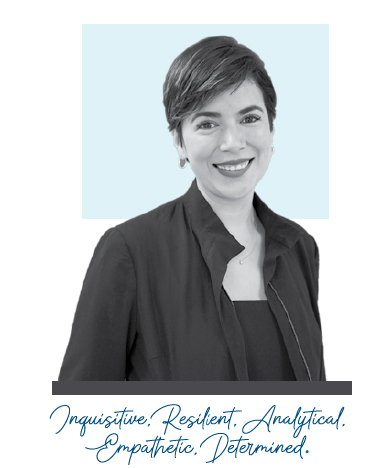
Marcela Aguilar, Ph.D. ’26
Inquisitive, Resilient, Analytical, Empathetic, Determined
Born in San Salvador, El Salvador. Her dissertation explores the role of accounting in the informal economy, specifically focusing on how it shapes economic and social dynamics within informal micro-businesses in developing countries. Currently reading “Poor Economics” by Abhijit V. Banerjee and Esther Duflo. Recently selected as a 2024 Deloitte Foundation Doctoral Fellow
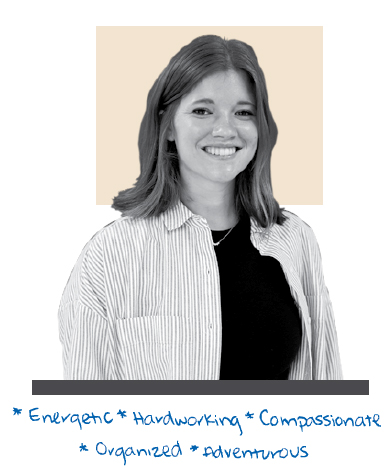
Natalie Stone, MAcc ’24
Energetic, Hardworking, Compassionate, Organized, Adventurous
Born and raised in Houston about 10 minutes from Rice. Will start work at Ernst & Young in their Boston office in the fall of 2024. Just finished reading “A Flicker in the Dark,” a murder mystery with a big twist in the end. “I highly recommend.”
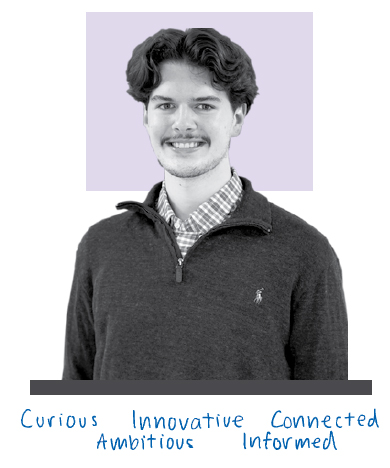
Spencer Kresie, Undergraduate Business Major ’25
Curious, Innovative, Connected, Ambitious, Informed
From Plano, Texas. Has a summer job with FTI Consulting’s Dallas office in their corporate finance – restructuring branch. Hopes to stay in the management consulting sphere as a full-time analyst after graduation. Spencer is also earning an entrepre- neurship minor and completing an Arabic Language Certificate. Listening to the podcast, “How I Built This,” with Guy Raz.

Dart Bebel, Hybrid MBA ’25
Curious, Observant, Goal-oriented, Kind, Authentic
Born in LA. Lives in Austin. Runs growth marketing at Vacasa, the largest full-service vacation rental management company in North America. Favorite memory on campus was MBA night at Rice Stadium, watching the Owls win the Bay- ou Bucket football game! Listening to the podcast “The Old Man and the Three,” with JJ Redick and Tommy Alter. Reading “Positive Intelligence” by Shirzad Chamine.
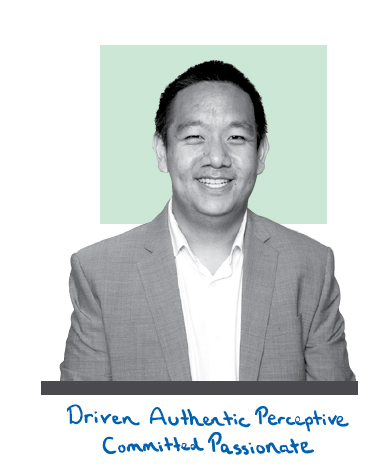
Nova Wang, MBA@Rice ’24
Driven, Authentic, Perceptive, Committed, Passionate
Born and raised in Vermont. Lives in Boston. Works as a FP&A financial analyst at Public Consulting Group. Reading “Greenlights,” a memoir by Matthew McConaughey.
Inside the office of Janet Moore: communicator, educator and world traveler.
Wendy Fong EMBA ’13 looks back on the biggest mistake of her career — and the clarity it gave her to discover the work she loves.
"This year is the perfect time to reflect as we celebrate 50 years since Houston Endowment funded Rice University to establish the business school and reinforce Jesse Jones' legacy to the city."
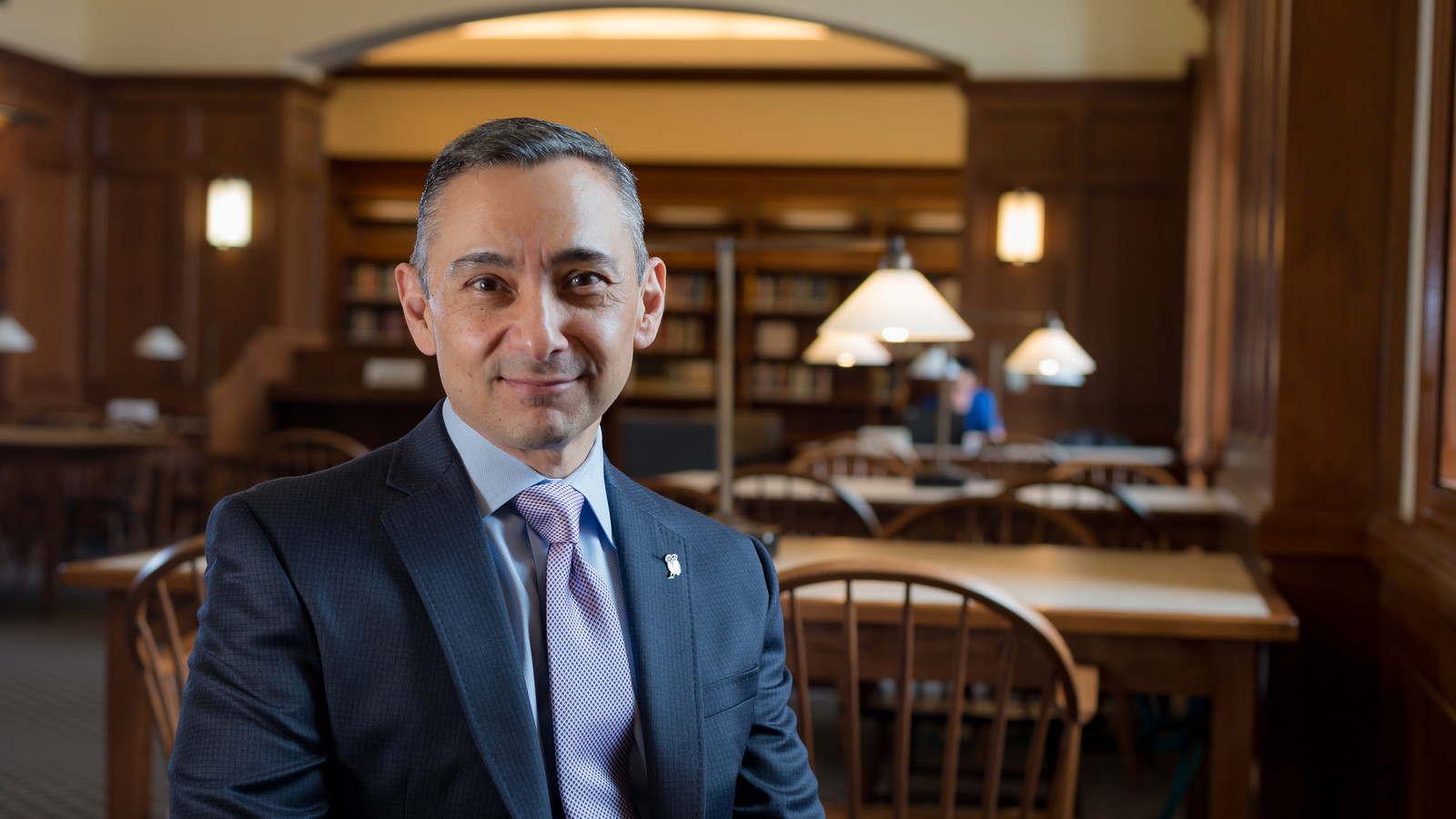
A letter from Peter Rodriguez, Dean of the Jones Graduate School of Business
This year is the perfect time to reflect as we celebrate 50 years since Houston Endowment funded Rice University to establish the business school and reinforce Jesse Jones’ legacy to the city.
Walking across campus has always allowed me the chance to take a break, take a meeting and take a look around. These days, I notice big changes since I arrived at Rice in 2016 — the Moody Center for the Arts, Brockman Hall for Opera, Ralph S. O’Connor Building for Engineering and Science, and the almost-finished Cannady Hall, west of Anderson Hall at the School of Architecture. And soon, our new building will break ground (more on that in the fall issue of the magazine). It’s an exciting time, and really, the new buildings are less about change and more about progress — that steady march forward to assess the current challenges and prepare to solve future ones.

This year is the perfect time to reflect as we celebrate 50 years since Houston Endowment funded Rice University to establish the business school and reinforce Jesse Jones’ legacy to the city. It’s remarkable that we’ve accomplished so much growth and transformation during that time. In truth, the school had a second wind in April 1996 after an external review committee found that this “glittering opportunity” of a school was not meeting its potential. We were at a “critical juncture” for the school and the university.
That critical juncture was a true turning point for our school — and thanks to that committee, and the current work of our faculty and community, we are mapping out the school’s future by seizing opportunities, deepening engagement and communicating our vision widely. Most importantly, we must be relevant to our students, to the university and to Houston.
Today, our vision is to be recognized for our impact on how individuals and organizations succeed and improve the world — through our faculty’s research and our graduates’ actions.
With doubled enrollment, an online and Hybrid MBA, an undergraduate business major, an increase in tenured and tenure-track faculty over the last 10 years, and a new building connected to McNair Hall breaking ground soon, we are delivering graduates into the workforce to solve organizational challenges and serve the needs of their communities.
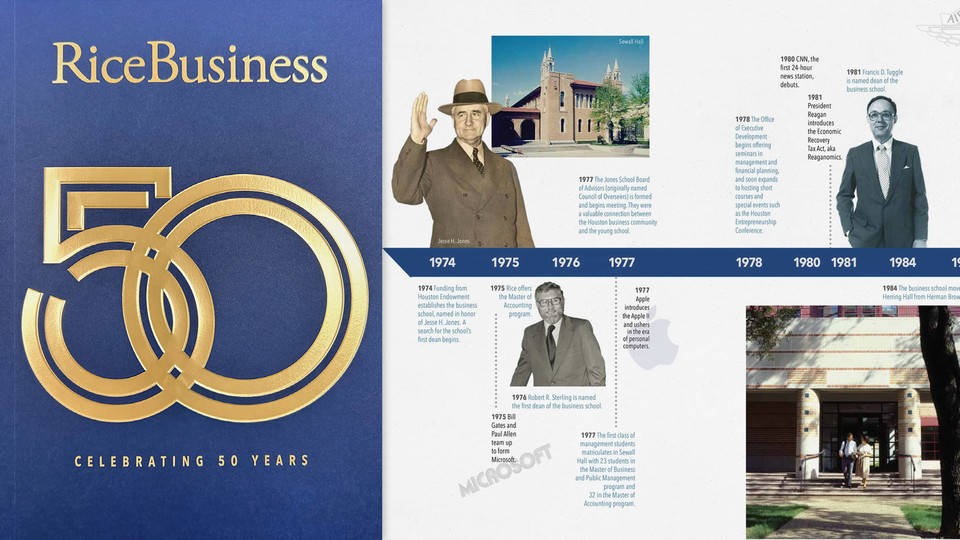
I am so proud of what we have become, and I invite you to read more about our progress since 1974 on the timeline on page 30. As deans have before me, I have joined with the leadership team and the board of advisors to chart our course for the next 50 years. I hope you’ll be part of the journey.
— Peter

Wendy Fong EMBA ’13 looks back on the biggest mistake of her career — and the clarity it gave her to discover the work she loves.
Inside the office of Janet Moore: communicator, educator and world traveler.