Image
Academic Influence, the company that uses artificial intelligence to arrive at its rankings, has applied its unique methodology to generate its first-ever rankings of dozens of online degree programs. The online MBA at Rice Business come in at number 5 in the nation.

“I am excited to join the board at Rapid Micro Biosystems at an energizing time in the company's growth,” Litherland said. “As the company pursues its vision, I welcome the opportunity to share my experience.” Litherland has a BA in Economics from Rice University and a Master of Accounting degree from Rice Business.

Few resume items command instant respect like the word "veteran." At Rice Business, this respect translates to a major investment in attracting military veterans as students.


Updated from original post that was published on 07/28/2021.
Few resume items command instant respect like the word "veteran." At Rice Business, this respect translates to a major investment in attracting military veterans as students. The most concrete evidence: our participation in the Yellow Ribbon Program at the highest level possible for all our MBA programs. This means veterans in our programs who meet the length of service requirement are able to obtain funding for up to 100 percent of tuition and fees, a monthly housing allowance, and an annual book stipend.
Unlike some schools, Rice Business doesn't limit the number of military MBA students who can use the program or the dollar amount it pays. Why this commitment? Rice Business values veterans both for their social contribution and because their skills predict success in business, Bethany Denton, Director of Student Financial Services, told me.
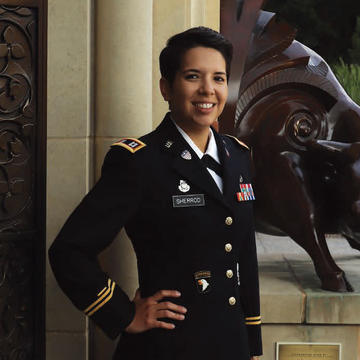
Casey Sherrod, Full-Time MBA, embodies these traits. "I decided to pursue my MBA because I want to bring the knowledge and skills I attain in business school to the fight as a strategic leader in the Army," she said. "My goal is to ultimately retire from the Army and return to Houston as a leader in the business community."
After joining Army ROTC at the University of Houston, Sherrod deployed to Afghanistan as a platoon leader a year after graduating. Now a captain, she commands the largest Army recruiting company on the West Coast. But, she said, she always wanted to come back home to Houston, so she took advantage of the chance to study at Rice Business while still on active duty, with the Army covering her tuition.
"The main thing I'd want to get across to veterans is just how good our benefits are," Denton said. GI Bill benefits at private schools are typically limited to an annual cap which seldom covers the full cost of graduate degrees, he explained, but in some cases, veterans who are eligible for the Yellow Ribbon Program at Rice Business are able to have tuition and fees covered entirely. A supplement to the GI Bill, the program helps veterans cover out-of-state private and graduate education expenses that may not otherwise be covered with their standard GI Bill benefits. Business schools such as Rice choose how much they wish to pay of the tuition that remains.
To reflect its high priority in attracting veterans, Rice Business has opted into the highest level possible of the program, paying 50 percent of a veteran's remaining balance. In turn, Veterans Affairs (VA) matches this commitment dollar for dollar. As a result, eligible veterans can have their entire Rice MBA tuition covered.
Our veteran students can select from an array of top-flight programs: Full-Time MBA, Professional MBA, Hybrid MBA, Executive MBA programs and the Master of Accounting (MAcc). Our acclaimed online MBA, MBA@Rice, has skyrocketed in popularity among active military students.
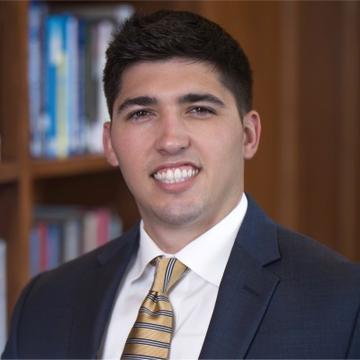
On campus, meanwhile, Rice Business offers its veteran scholars an environment full of specifically-tailored opportunities. "People at Rice legitimately care about each other, from the administration to the faculty and staff to the students and alumni," said Matthew Manriquez, Full-Time MBA.
A former Combat Engineer Officer in the US Army, Manriquez is a shining example of the drive that veteran scholars typically bring to Rice Business. A fifth-generation Houstonian, Manriquez graduated from West Point and gained a global perspective by serving in Texas, South Korea, Kuwait, Iraq and Afghanistan. The first-generation college graduate in his family, he interned with Morgan Stanley, and now works in Morgan Stanley's Investment Banking Division.
Reflecting on his education at Rice Business, Manriquez told Poets and Quants magazine, "There are so many incredible professors at Rice Business. One who stands out is Al Danto. Al teaches in our #1-ranked entrepreneurship department and I recently had the opportunity to take his enterprise acquisition class. I was impressed by his knowledge, experience and energy."
Other veterans who've earned Rice MBAs praised Danto's special commitment to his students with military roots. An entrepreneur and managing partner of Exit Advisors, a mergers and acquisitions consulting firm, Danto is also an active equity investor with Beachhead Investment, committed to focusing on veteran-owned businesses. At Rice Business, where is a professor, Danto co-founded the Veterans Business Battle, the country's largest veteran-focused business plan competition.
The annual competition gives invited veterans an arena for pitching business ideas to investors and lenders. In the final phase, the competitors get the chance to attend workshops in startup development and other skills, and to network with potential funders. Launched in 2015, the competition has provided more than $3.4 million in investment offers.
The Business Battle was founded as a partnership between the Entrepreneurs' Organization of Houston and the Rice Business Veterans Association, now one of our school's most powerful networking resources. Launched to support veterans' transition to graduate school life, the club also offers leadership guidance, resume help and networking opportunities to all veterans at Rice. It's a hub for the entire Rice veteran community, and, Denton said, a constant source of referrals for prospective Rice Business students.
The club is just one where our veteran scholars are leaders. Matthew Wilson, Full-Time MBA, was previously a Lieutenant in the U.S. Navy. At Rice Business, he not only was co-president of the veterans' association, but he was also a member of the Energy Association, the Finance Association and Rice Business Gives Back, in which student leaders launch projects to help the Houston community.
That high level of contribution is a key reason why we go to such lengths to welcome veterans, Denton told me.
"Veterans come in with a unique experience level, often with a background in leadership of large groups of other military, and they transition to the business world with the skills they have received from their service," he said. "What I have seen with other military students is that they are immediately leaders in student clubs and organizations. A lot of them also come from backgrounds like West Point, which are equally or more selective than we are. So they tend to be self-selecting and well-positioned to transition into the business world."

Discover how to pay for a part-time MBA with employer assistance, scholarships, loans and tax strategies. Explore your funding options with Rice Business.
Learn from Rice Business how to ask for employer support for your EMBA, including employer sponsorship options, other types of financing and negotiation.

Curious how new federal aid changes will affect you? Read about how MBA programs are impacted — and why our students are finding smarter, more competitive ways to fund their futures.
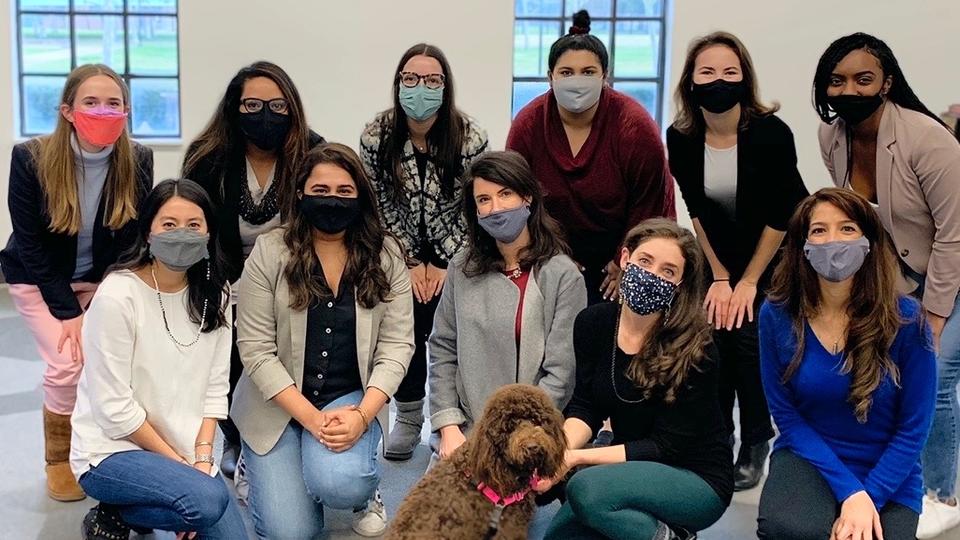
“Pippa, the pandemic pup, supported me as powered through Zoom classes, explored Texas, and led the 2021 Women in Leadership Conference. She became a bit of a Rice Business celeb," said Julianne Katz, MBA '21.
Arthi Vasudevan, MBA '21, shares how she created a path for herself and remains determined to give back to the community and culture she loves so much.

During the pandemic, business schools saw a surge in applications. Rice Business had a 63% increase! With more competition, it's time to figure out what test is the best fit for you: GMAT, GRE or EA?

Rice Business Professor Siyu Yu shows that even how insiders perceive their organization can determine its success or failure.

New research co-authored by Rice Business professor Vikas Mittal shows that mission statements do not enhance financial performance, even though companies prominently feature them as an outcome of their strategy-planning process.


New research shows that mission statements do not enhance financial performance, even though companies prominently feature them as an outcome of their strategy-planning process.
A systematic review of research in peer-reviewed journals shows the correlation between having a mission statement and financial performance was statistically zero, according to a chapter of “Focus: How to Plan Strategy and Improve Execution to Achieve Growth,” a new book co-authored by Vikas Mittal, professor of marketing at Rice’s Jones Graduate School of Business, and Shrihari Sridhar, professor of marketing at Texas A&M University’s Mays Business School.
One study in the authors’ systematic review examined 59 companies among the Financial Times 1000 and showed those with a mission statement were not more profitable than those without one. Another study of 136 large Canadian companies showed similar results: The presence or absence of a mission statement was statistically uncorrelated to return on assets. And a meta-analysis of a sampling of 1,945 companies and managers once again found the correlation between having a mission statement and financial performance is statistically zero.
“Mission statements are ineffective because they simply reinforce top executives’ salient beliefs, making them more inward-focused and detracting strategy from important customer needs,” Mittal said.
“For many companies, formulating a mission statement is a closed-door process facilitated by a consultant, but with no test of its internal or external validity among its customers, who are the primary source of cash flow.”
To validate this logic, the book analyzed how often eight different customer needs were mentioned in the mission statements of 50 U.S. energy-industry suppliers The results showed several glaring inconsistencies between customers’ most important needs and the values emphasized in mission statements.
Specifically, 33% of the mission statements emphasized product and service quality, but customers only put a 15% weight on it. While 13% of the mission statements emphasized pricing and billing, customers gave it a weight of only 6%. In contrast, customers put a 24% weight on service and support, which only 5% of the mission statements mentioned.
To improve strategy planning and make it financially accountable, companies need to eschew ineffective tools such as mission statements that only exaggerate and exacerbate executives’ reliance on salience, Mittal said.
“Senior executives should have the humility to acknowledge that what is salient to them need not be important for customers or drive a company’s financial performance,” he said.
“A strategy based on analytics using statistical analysis, machine-learning algorithms and randomized experiments to establish the true association between what executives emphasize and what customers need has a much higher chance of success,” Mittal said. “These techniques are used in basic corporate functions such as product development and testing, and strategy planning should have to stand the same test of rigor.”
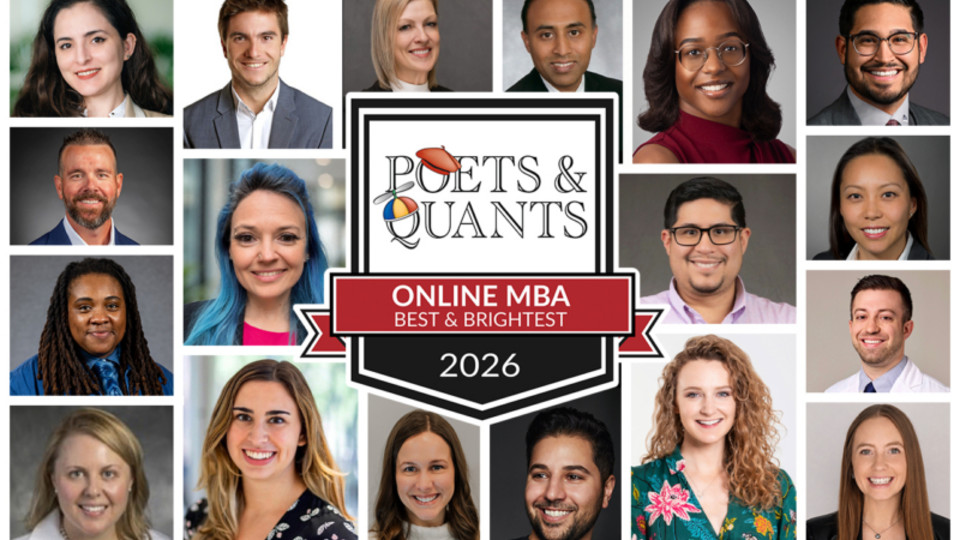
Congratulations to Marissa Minter and Alan Vu, recognized by Poets & Quants among the 2026 Best and Brightest Online MBAs.

A Houston venture capital analysis co-authored by Rice Business Executive MBA candidate Stephanie Schmidt highlights the city's growing innovation ecosystem, arguing that stronger startup formation is key to building on recent successes like Fervo Energy's IPO.

Rice University names its new $54.5 million business building after donors Asha and Farid Virani, the undergraduate business school's namesakes.
How a rule to protect consumers reduced access to credit


Based on research by Stephanie Johnson
How a rule to protect consumers reduced access to credit
In the Great Recession of 2007 to 2009, unemployment rates rose dramatically, from 5 to 10%. Men, Blacks, Latinx, young workers and the less educated were hit hardest. The economic freefall was precipitated by a deluge of lending with little consideration of borrowers’ ability to repay home loans.
Outrage over the economic disaster led to major governmental reforms of the $600 billion U.S. consumer mortgage lending industry. In 2010, a bipartisan Congress passed the Dodd-Frank Wall Street Reform Act, designed to reduce systemic risk and prevent predatory lending. Four years later, the Consumer Financial Protection Bureau (CFPB) was charged with implementing the so-called Ability-to-Repay (ATR) Rule, which requires lenders to make a good faith effort to determine a borrower’s ability to repay. Under this rule, lenders that fail to comply and then try to foreclose on a borrower are subject to legal action. The borrower is also entitled to retaliate and sue by asserting a regulatory violation.
As part of the consumer protection process, the CFPB also created a class of low-risk loans known as qualified mortgages. These automatically satisfy the ATR Rule because they require a debt-to-income ratio (DTI) of 43% or less. Such mortgages were designed to reduce defaults and limit the extent to which households must curb personal consumption when facing economic challenges.
But how did these policies work in practice? In a recent study, Rice Business professor Stephanie Johnson and a team of coauthors took a close look at how these consumer protections affected the average borrower in real life. Their results were unsettling. The macro regulatory approaches meant to help avert a repeat of 2008, the researchers found, had some large unintended consequences.
To reach their conclusions, Johnson’s team reviewed 1.2 million mortgages taken out between January 2010 and December 2015. For their data, they tapped the CoreLogic Loan-Level Market Analytics (LLMA) database. The average loan in the sample amounted to $265,000 with an interest rate of 4.3%. Borrowers had an average FICO score of 755, a loan-to-value (LTV) of 80%, and a debt-to-income (DTI) of 33%.
The team found that the new regulations affected mortgage lending in several areas. First, because the new policies make the lender responsible for a borrower’s inability to keep up with payments, lenders typically pass the burden onto the borrower in the form of high interest rates. As a result, consumers today pay $1700 to $2600 more for access to credit over the life of the loan. The consumers most deeply affected by the regulations were those who took out so-called jumbo mortgages: loans valued at $548,000 or more.
Under the new regulations, the lending of these mortgages decreased by approximately 2%, or $600 million. This is especially striking, considering that this class of borrowers tends to have both higher FICO scores and larger down payments.
The regulations also had unintended consequences on the loan industry. Because of new legal liabilities, many lenders got out of the non-qualified mortgage business altogether. Others simply slashed the number of high-risk products they offered. If the policy had been applied to the entire market (not just jumbo loans) mortgage originations would have declined by approximately $12 billion. Fifteen percent of jumbo loans with DTIs above 43 percent disappeared entirely. In some cases, would-be borrowers simply decided against home buying. Others took out smaller loans, making buying decisions that may have then affected their quality of life.
The researchers also looked at loan performance, which is typically gauged by default rates. For this study, a default was defined as a payment that was late by 90 days or more, or if the property was repossessed within 5 years of the loan date. Of the loans the researchers analyzed, those above the 43 percent cutoff did not perform much worse than loans with moderate DTIs. In fact, the team concluded, if the regulations had been in effect pre-crash, they would have had little effect, only reducing the default rate by 0.2 percentage points.
Designed to ward off a repeat of the 2008 economic crisis, the federal government’s new lending rule actually offered little new protection for consumers. At its core, Johnson and her colleagues found, the rule was based on a faulty premise of a strong link between DTI and default. As a result, the rule designed to protect homeowners simply reduced their access to credit – without reining in default rates.
Stephanie Johnson is an assistant professor of finance at the Jesse H. Jones Graduate School of Business at Rice University. Her research focuses on household finance and empirical macroeconomics.
Anthony A. Defusco is an Associate Professor of Finance at the Kellogg School of Management at Northwestern University.
John Mondragon is a senior economist at the Federal Reserve Bank of San Francisco.
To learn more please see: Defusco, A. A., Johnson, S., & Mondragon, J. (2019). Regulating Household Leverage. The Review of Economic Studies. https://doi.org/10.1093/restud/rdz040



Revisiting the merits of nondigital data collecting


Based on research by Michelle "Mikki" Hebl
Revisiting the merits of nondigital data collecting
Academics are learning quickly that investigations based on data from online research agencies have their drawbacks. Thousands of such studies are released every year – and if the data is compromised, so too are the studies themselves.
So it’s natural for researchers, and the managers who rely on their findings, to be concerned about potential problems with the samples they’re studying. Among them: participants who aren’t in the lab and researchers who can’t see who is taking their survey, what they are doing while answering questions or even if they are who they claim to be online. In the wake of a 2018 media piece about Amazon’s Mechanical Turks Service, “Bots on Amazon’s MTurk Are Ruining Psychology Studies,” one psychology professor even mused, “I wonder if this is the end of MTurk research?” (It wasn’t).
To tackle this problem, Rice Business professor Mikki Hebl joined colleagues Carlos Moreno and Christy Nittrouer of Rice University along with several other colleagues to highlight the value of other research methods. Four alternatives – field experiments, archival data, observations and big data – represent smart alternatives to overreliance on online surveys. These methods also have the advantage of challenging academics to venture outside of their laboratories and examine real people and real data in the real world.
Field experiments have been around for decades. But their value is hard to overestimate. Unlike online studies, field experiments enhance the role of context, especially in settings that are largely uncontrolled. It’s hard to fake a field experiment in order to create positive results since each one costs a considerable time and money.
And field experiments can yield real-life results with remarkable implications for society at large. Consider one experiment among 56 middle schools in New Jersey, which found that spreading anti-conflict norms was hugely successful in reducing the need for disciplinary action. Such studies have an impact well beyond what could be achieved with a simple online survey.
The best way to get started with a good field experiment, Hebl and her colleagues wrote, is for researchers to think about natural field settings to which they have access, either personally or by leveraging their networks. Then, researchers should think about starting with the variables critical for any given setting and which they would most like to manipulate to observe the outcome. When choosing variables, it’s helpful to start by thinking about what variable might have conditions leading to the greatest degree of behavior change if introduced into the setting.
Archival data is another excellent way to work around the limitations of online surveys, the researchers argue. These data get around some of the critical drawbacks of field research, including problems around how findings apply in a more general way. Archival data, especially in the form of state or national level data sets, provide information and insight into a large, diverse set of samples that are more representative of the general population than online studies.
Archival data can also help answer questions that are either longitudinal or multilevel in nature, which can be particularly tricky or even impossible to capture with data collected by any single research team. As people spend increasing amounts of time on social media, the internet also serves as a source of newer forms of archival data that can lend unique insights into individuals’ thoughts, attitudes, and behaviors over time.
With every passing year, technology becomes increasingly robust and adept at collecting massive amounts of data on an endless variety of human behavior. For the scientists who research social and personality psychology, the term “big data” refers not only to very large sets of data but also to the tools and techniques that are used to analyze it. The three defining properties of Big Data in this context include the speed of data processing and collection, the vast amount of data being analyzed and the sheer variety of data available.
By using big data, social scientists can generate research based on various conditions, as well as collect data in natural settings. Big data also offers the opportunity to consolidate information from huge and highly diverse stores of data. This technology has many applications, including psychological assessments and improving security in airports and other transportation hubs. In future research, Hebl and her team noted, researchers will likely leverage big data and its applications to detect our unconscious emotions.
Big data, archival information and field studies can all be used in conjunction with each other to maximize the fidelity of research. But researchers shouldn’t forget even more old-fashioned techniques, including the oldest: keen observation. With observation, there are often very few, if any, manipulations and the goal is simply to systematically record the way people behave.
Researchers – and the managers who make decisions based on their findings – should consider the advantages of old-style, often underused methodologies, Hebl and her colleagues argue. Moving beyond the college laboratory and digital data survey-collection platforms and into the real world offers some unparalleled advantages to science. For the managers whose stock prices may hinge on this science, it’s worth knowing – and understanding – how your all-important data was gathered.
Mikki Hebl is the Martha and Henry Malcolm Lovett Professor of psychology at Rice University.
Carlos Moreno is a graduate student at Rice University.
Christy Nittrouer is a graduate student at Rice University.
Ho Kwan Cheung is a graduate student at George Mason University.
Eden B. King is an associate professor at George Mason University.
Hannah Markellis a graduate student at George Mason University.
To learn more please see: Cheung, H. K., Hebl, M., King, E. B., Markell, H., Moreno, C., & Nittrouer, C. (2017). Back to the Future. Social Psychological and Personality Science, 8(5), 564–572. https://doi.org/10.1177/1948550617709113