Flight Path
Emma and Jacob trace their unlikely path from Citibank trading desks to startup life and share how Tierra Climate is helping reshape the energy industry.
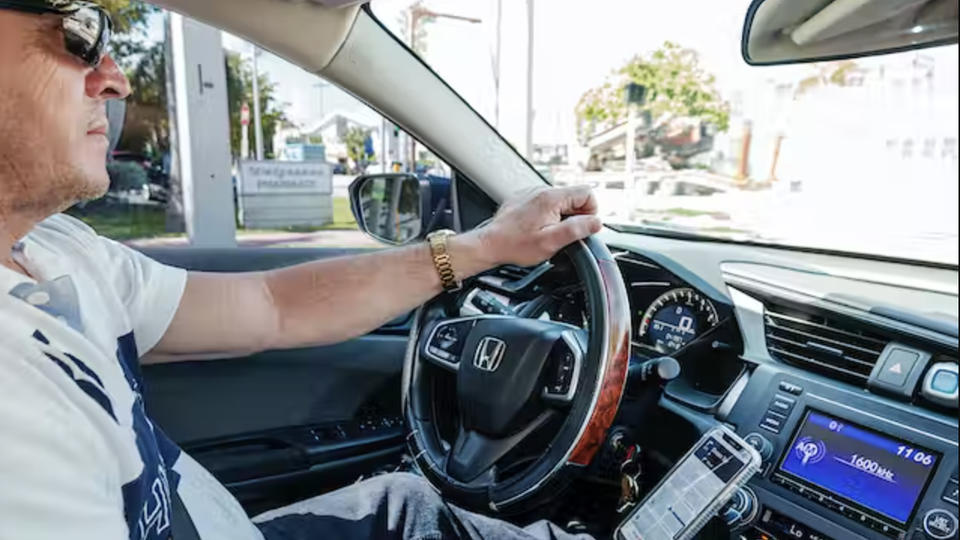
This Houston native sits down with host Maya Pomroy ’22 to talk about how his son pushed him to get his MBA, maintaining connections with his cohort even though he did the online MBA program, and being a lifelong learner.
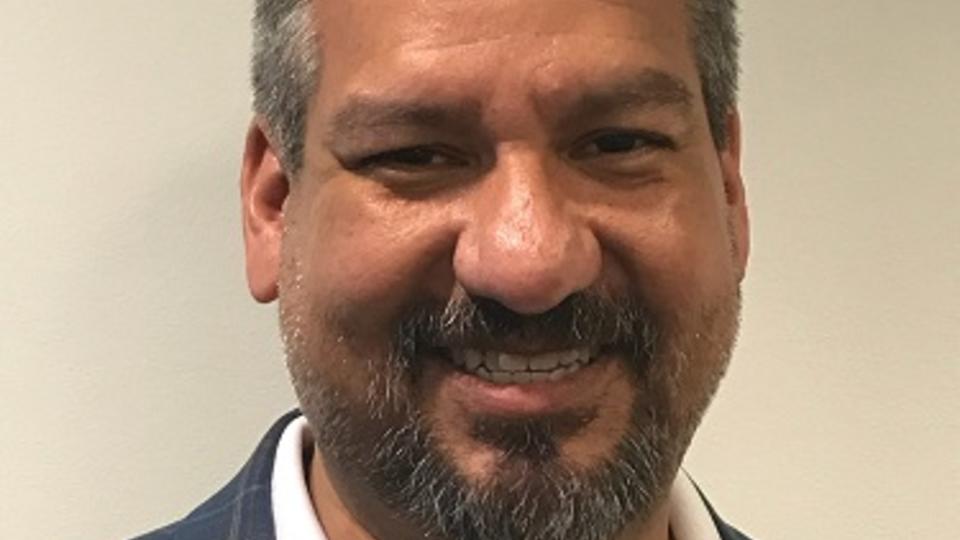
This Houston native sits down with host Maya Pomroy ’22 to talk about how his son pushed him to get his MBA, maintaining connections with his cohort even though he did the online MBA program, and being a lifelong learner.
Subscribe to Owl Have You Know on Apple Podcasts, Spotify, Youtube or wherever you find your favorite podcasts.
[00:00]Intro: Welcome to Owl Have You Know, a podcast from Rice Business. This episode is part of our Flight Path Series, where guests share their career journeys and stories of the Rice connections that got them where they are.
[00:13]Mike: Yeah, I guess it doesn't get more Houston than working for NASA and then going to school at Rice.
[00:17]Maya: On today's episode of Owl Have You Know, we connect with Mike Narvaez, online MBA of 2020. We talk about his impressive career including working as a safety engineer for the international space station, to his growth as a leader at multiple organizations here in Houston and internationally. Mike also shares who the catalyst was in his pursuing an MBA, his passion of being a lifelong learner, and how the opportunity at Rice Business changed the trajectory of his life. Mike, it's a pleasure to have you here with us today.
[00:51]Mike: Oh, the pleasure's mine. Thanks for having me.
[00:53]Maya: Absolutely. So, you're a Houston native. You grew up in Spring and then you went on to Texas A&M and got a bachelor's degree in Industrial Engineering. And then this is super cool and I'm going to geek out a little bit because your first job out of school was a system safety engineer at GHG Corp where you are identifying hazards affecting the international space station and astronauts by providing real time support admission control. Oh, my goodness gracious, that's amazing. Can you tell me about that?
[01:29]Mike: Yeah. I guess, I guess it doesn't get more Houston than working for NASA and then going to school at Rice. But yeah, it was kind of unbelievable to get an offer to go work for GHG, was a subcontractor at the Johnson Space Center and we were responsible for the safety of the international space station.
So actually, I went to flight controller school with everybody else that you see in the fame mission control, wasn't actually in that room, was in an engineering room that, you know, probably doesn't get as much attention, but it was awesome because just dealing with state of the art technology, a dream come true. I think for a lot of folks, to go work for such a fascinating organization as NASA, it was as very inspiring as it is when you read the title.
[02:09]Maya: No, for sure. And like I, you know, I wanted to be an astronaut growing up as a kid. So, any sort of link to NASA is just really, really cool in my opinion. And so, did you get to meet any of the astronauts that were up there on the ISS?
[02:24]Mike: Absolutely. I did actually sit in mission control during flights. And so, I remember in particular one mission where they were trying to repair a door on the international space station. And at the time, there were only two pieces to the space station. So, closing a door was a big deal because you could trap an astronaut on the other side. And I remember going to where we had the mockups and actually working with an astronaut on, you know, what's the best way that we could do this door repair without closing it. And then essentially, if something went wrong, then you had an astronaut trapped on the other side and we couldn't get them out.
So luckily, on that particular mission, the smallest astronaut and the astronaut core was in flight. So, that gave us a little bit of leeway on just how far we could close that door and still allow somebody to get back through. So, it was everything you've seen like on the Martian and any other NASA show, where there's just extreme problem solving going on. That's exactly what it was. You just kind of get presented with a problem and it's astronauts, it's engineers, it's all hands on deck, how do we fix this problem.
[03:30]Maya: So, The Martian is my all-time favorite movie and I've watched it like a hundred times. So, interesting that you mentioned that. And it is, it's about finding a problem and solving it. And you know, one of the things that I tell my kids all the time is that there's always a solution to every problem. And I feel like that's an important thing certainly in life and in your experience at NASA.
[03:53]Mike: Yeah. It was great. I mean, I worked with a bunch of, a lot of engineers just out of college. And so, weren't really tainted, you know, by, like, what you could or couldn't do or what you should or shouldn't do. It was, it was really neat to be around a lot of brilliant minds and just we got thrown a problem that nobody had to deal with before and we just had to figure out the best way to address it, and we did. So, every day was a new day. It was always an exciting challenge.
[04:18]Maya: Absolutely. And so, then you moved on and you became a manager of safety and risk at Sysco.
[04:24]Mike: Mm-hmm.
[04:24]Maya: So, what was that transition like?
[04:26]Mike: Well, you know, is, you know, would love to have stuck around NASA. Unfortunately, I lived on the complete opposite end of town. So, an hour and 40-minute commute was a bit much especially with a young child. And so, was looking to see if I could find something closer to home. And the great thing about Sysco was that it was a management position. So, kind of only a year out of school, like moving into the management ranks was something that I wanted to do. Didn't know that it would happen that quickly. But Sysco Foods was, at the time and I believe still is, the largest distributor of food, and they every industry you could think of from hospitals to schools, huge dry warehouse, frozen. I mean, we had a warehouse that was a quarter million square feet freezer essentially, just unique challenges. And you know, at night, you'd have order selectors that would go through these gigantic warehouses and restaurants want a box of this and a box of that. And so, they're literally just kind of zigzagging up and down the warehouse, grabbing these orders. And then all night, they're doing this so that first thing in the morning, when the drivers come in, they're loading those trailers. And then they're actually out delivering that product to school districts or the Kemah Boardwalk or just about anywhere that you can imagine that needs food. So, was actually a really interesting study in ergonomics.
So, if you can imagine the amount of lifting boxes and loading and then our drivers undoing those pallets and then putting them on dollies and then bringing them in. We actually have partnered with OSHA slightly before I had gotten there, where they had said, hey, we want you guys to be the industry leader in this because there's a lot of people getting hurt in this industry. And we want to partner with you and show the rest of the industry that this can be done right. And we did. We actually had huge success there in terms of not getting people hurt.
[06:17]Maya: And not getting people hurt, obviously, a priority for all organizations. And you are a certified safety professional. So, could you tell me what exactly that certification is and the process of obtaining it and all that goes along with that, and why it's important to you?
[06:34]Mike: So, I mean, the process is done through the board of certified safety professionals. It's considered the CSP. It's considered kind of the highest certification in the health and safety ranks. There are many jobs that you can't even apply to if you don't have that certification. So, there's a lot of advantage to the individual in getting that. And I'd be lying if I said that that wasn't one of my drivers. Certainly, wanted to get better jobs. And you know, in order to get some of those better jobs, you had to have that certification. And really, the process is and it's got a couple of ways that you can get there, but essentially, you have to prove through experience on the job, education and then an examination process that essentially, you know the basics of the profession. So, just kind of depending on what your track is.
There some folks that, you know, graduate with a health and safety degree and kind of, can kind of immediately sit for the first part of that exam. Most of the folks, myself included, you had to work five years then take one exam then work some more years to take kind of the second exam. So, it's a pretty tough process in terms of, I think the pass rates are like really tough. I want to say like 30%, 40% of the people…
[07:42]Maya: Yeah, 30%, that's low.
[07:44]Mike: Yeah. So, it's a really challenging thing. I mean, for me, I love learning, continuing to learn. And so, I was like, what better way to learn my profession than to go through that process. So…
[07:54]Maya: Absolutely, lifelong learner which brought you to Rice. And we'll get to that in a minute but after Sysco, you moved on to work for the Metropolitan Transit Authority here in Harris County. And then you had a six-year career at Chevron Phillips, chemical company and safety health and security. And then you were at BP, where you are right now. Is that correct?
[08:16]Mike: Yes. Yeah. So, majority of that has been in the safety business, 20 plus years in that. You know, right about the time that, you know, I was talking with my boss and saying, hey, I think I've got some more to give. And he's like, well, here's kind of where you are in the organization and there's only so much more you can go. And I just didn't really like that answer. That hearing that, I'd kind of ceilinged out, I guess if you will.
And so, I was like, well, I know I've got more to give and there was kind of a personal situation that made me decide to go back to school. And it all just kind of came together. And so, technically out of the health and safety business as that being my core business. I'm more in the operation side but there isn't a day or a week that goes by that I'm not talking safety. And so, that's been a huge, you know, part of what I do now.
[09:04]Maya: So, tell me, clearly that experience with your boss made you think about continuing on and getting an MBA. When did you decide that you were going to look into the opportunities that are… obviously you needed to stay in Houston. You have a family. You have children. And what drew you to Rice?
[09:24]Mike: Well, I mean, part of that's really easy because I've grown up with it in my backyard. And I even toured Rice a couple of times in middle school. Our school district was really good about getting us to local colleges and really kind of trying to plant that seed. I think anybody that aspires to go to college knows the gravity of the weight that the name of Rice university brings.
If I'm being fully transparent, it was my stretch school. It was my, there's no way I'm getting into that school, but I'm going to apply anyways because oh my God, what would happen if I did? I mean, really, the turning point for me was my son. So, on the eve of sending him off to college, he asked my wife why I didn't have my master's degree. She has hers. She pretty much plainly told him, well, you guys, you know, we started our family pretty young coming out of college. And I wanted to be a very present father for my kids. And I was, can say that with a very straight face. And I really put my masters kind of on the shelf and said I'd come back to it.
It mortified him. He made me promise the night before we dropped him off that I would look into it. Literally that night, I got a feed. I think it was Facebook on Rice University and said, yeah, let me find that out. And literally the next morning, I get a phone call, hey, we saw that you've got interest in the program. And this thing just grew legs.
Unbelievably, next thing I know I was, you know, studying for my graduate exams for the GMAT and then I was applying. And I remember just kind of turning and looking to my wife and going like, what the heck is going on here? She just kind of said, just roll with it. I mean, it's all fallen into place. Just keep going. And so, but yeah, I mean, that's the simple answer. I mean, the Rice name is really kind of the draw. And you know, having talked to some other folks that went through the program, heard nothing but great things. And then even when I came down to my final decision because I got accepted in a couple other schools, I remember talking to a colleague of mine that said, Rice, man, Mike, that's where we send like our top brass. Like-
[11:25]Maya: Yes.
[11:25]Mike: … that's impressive. Like, you need to go there. And so, I went.
[11:29]Maya: So, one of the reasons that you didn't do it to begin with was the whole reason that you actually did, your kids. So, how many kids do you have? Tell me about them.
[11:42]Mike: I have three kids. They're all adults now. My oldest is 25. She's a marketing manager as a… lives in Dallas. My middle son was attending Oklahoma State. He's actually taken a bit of a breather. I think the pandemic and college was a bit much to handle but I know looking at getting back into the fray. My youngest daughter was actually a college basketball player, played for a couple years, and recently said, you know, I'm done with that. Pretty challenging lifestyle, I'll say that, but is actually looking at going to U of H in the fall to get her degree in architecture. So, I think she's in that transition mode of no longer being a college athlete.
All super active, all wonderful human beings, which was exactly what I was after. I'd love to brag on them, but I love to brag on the fact that they're great people. They make me proud every single day. And that was my main objective, was to raise good kids. And I think I did that.
[12:45]Maya: Yeah. From the sounds of it, it sounds like you succeeded for that. And you did. You waited 'til they were grown to pursue this MBA. And one of the reasons that you chose the online program was for that flexibility. And it's a new, it's a relatively new online program.
[13:04]Mike: Yeah. I mean, it was a must. I mean, it was funny. I really went into this whole process, not so much hung up on I'm going to this school or I'm going to that school. It had to be online. And part of that was because my youngest daughter at the time, it was her senior year. So, we were packing my son up and sending him off to college. And senior year as a basketball player was huge. She ended up having a monster season that year. And I just couldn't miss games. I didn't want to miss games. And so, I still needed that flexibility. And so, more than anything else, the online program had to stick.
I already have an hour plus windshield time driving to work. I just didn't want now drive another hour to Rice and be there for a night or a weekend. And you know, I just, I wanted that flexibility. And as it turns out, it was a really great decision when the pandemic hit. Because when the pandemic hit, which was literally halfway through, we never missed a beat. And we'd already been accustomed to zoom. And we'd already been accustomed to an online platform and online learning. And so, it just, it was phenomenal in that. The pandemic really had zero disruption on the process.
[14:18]Maya: Well, and that's also interesting that you mentioned that because I was also deciding whether I was going to do the online program or the executive program, and had applied before the pandemic and was accepted before, I mean, right around that time. And so, I was like, well, I mean, I wanted to be in person. So, and I have younger kids, but I wanted to be in person and have that interaction. However, we had to start our executive program online because of the pandemic. And I think that a huge benefit and why we were able to pivot in the executive program is because of the online program and because of the capabilities that Rice had instilled into that.
And kudos to Dean Rodriguez and the entire team at Rice because for us, it was an adjustment because we were online, and then we were in person, and then we were a hybrid and everything else. And interestingly, I think that a lot of my classmates got comfortable with having the online option. And so, that's a, that's a tremendous benefit as you know. I mean, you've got folks that have grown children. You've got folks that have no children. You've got folks that have babies and jobs and everything else. So, it's really remarkable to have that kind of choice.
[15:35]Mike: No, I mean, that's huge. Truth be told, two years after, I probably would've, like you, I'm a people person. I would, I would've loved to have been face to face and really had that exchange with the folks in my cohort. But you know, at the time, that, again, my bigger priority was my family. And I just didn't want to miss out on that. And so, really, the online format was really the best.
And then the other thing that I didn't mention before was that my job changed in the middle of… so it's funny. You know, for years, I've been saying I wanted more. I wanted a bigger job. And it just hadn't worked out. And then two months after applying to Rice, that opportunity showed up.
[16:17]Maya: Funny how things work out-
[16:18]Mike: So then, it was like-
[16:18]Maya: … that way, isn't it?
[16:21]Mike: Yeah. And what it did is it, it was a lot of travel. And I think at one point in time, I had emailed the folks at MBA@Rice and said, hey, just so you understand how incredibly helpful this format was, I have taken classes in 12 different cities-
[16:34]Maya: Wow.
[16:35]Mike: … ever since, you know, I did that. So, I was taking class from Chicago, New York, London, just all these sites that I had to get to. And then also, again, my daughter was playing college basketball and at the time, we were traveling all over the country to these tournaments and things like that.
And I was able to, again, keep up with my education and not miss a beat because of the online format. But I agree. I think the great thing about Rice is it's kind of like, you know, what's important to you? And here's all these formats that we have available to you. And I certainly, obviously, I didn't do the face-to-face program. But having gone through the online program, I don't feel like I got cheated out of a, out of an education because I wasn't face-to-face. It was just as rigorous and as tough as I had suspected it would be. And certainly, the knowledge that I gained through the program has shown up and worked numerous times.
[17:29]Maya: Yeah. And Rice really does a great job of removing those barriers to entry, as we learned about in our program. To really be able to allow those that really want to go after this and recognize the importance and the need of this kind of education and to be able to weave it in and to make it work for you is what a lot of, a lot of schools don't have that. And that's one of the things that really drew me to Rice, and it seems like we share that.
[18:01]Mike: Yeah. No, absolutely. I mean, the fact that there were, there were options was just phenomenal. And then again, the pandemic was just, it…
[18:10]Maya: Rising.
[18:11]Mike: Well, I mean, I saw my kids struggle with it. I saw my kids go from a face-to-face environment and all of a sudden, they were thrusted into it had to be online. And so, I saw everything from teachers and professors that refused to utilize online platforms like zoom or it was just completely foreign to them. And I saw where their education suffered because of that And, you know, ultimately, at least in one of my kids' cases, it led them to be like, hey, I need a break from this because it was, it was on again off again. And it just, it was, it was just really disruptive. So, I thank God every day. I think about how I was able to get through that. And really, Rice offering that opportunity was just phenomenal.
And I think it was Dean Rodriguez, him and I had a conversation not that long after that where he'd said, you know, because the online program, the MBA program was the first that Rice, as a whole university, had done that. So, when the whole university had gotten impacted, they were able to take the lessons from MBA@Rice and immediately transition to those in the other disciplines. And so, I know it helped. Kind of to your point earlier, it helped the entire university, those that were, that were showing up face-to-face. And so, yeah, we got a little badge of honor that said, hey we helped char blaze this. And we helped kind of iron out some of the kinks before it went to everyone else.
[19:27]Maya: For sure. And you were. You were an expert. Did you, did you give your kids any kind of advice when they had to go to online learning?
[19:33]Mike: Yeah. It's funny. You know, out of all the things that I expected to learn from Rice, you know, becoming a zoom expert. You know, I was zoom before zoom was cool, was not exactly what I was envisioning, but it worked. And in fact, I even before, you know, even our environment here at work, it really embraced Microsoft teams, which is what we use now.
We were struggling with some of that platform. And I was able to use my zoom account to host some meetings and do some collaborative sessions. Because the way that the zoom platform is set up and the MBA@Rice, you could have breakout rooms and, you know, bring people back. And it was just like a… most people were just trying to figure out how to get off mute-
[20:12]Maya: Right.
[20:13]Mike: And you know, I was able to not only host a meeting but, you know, do breakout rooms and do some pretty, I'll say, fancy stuff. I'm making quotes here, you know, with zoom before anybody knew anything about it. So, that was, that was really cool. If nothing else, Rice taught me how to use the business tool.
[20:28]Maya: Well, and there was lots of memes about that, right? The meme of you're on mute, you're on mute.
[20:33]Mike: Yeah.
[20:36]Maya: Or maybe you should turn your camera off before you're taking a phone call or, you know, going and making yourself breakfast or whatever it is that you're doing. Those zoom faux pas so to speak.
So, I wanted to ask you, what's your favorite experience during your time in the Rice online MBA program? What were your biggest takeaways? Tell me about the relationships that you've built. And what really you feel is, you'd like other people to know that are considering something like this?
[21:06]Mike: Yeah. So, what I would say is definitely, there's a balance here, right? You're going to gain something. You're going to lose something depending on what avenue you take. And you know, again, I didn't do the face-to-face program. So obviously, I can't speak on all the pluses and minuses to that.
One of the biggest things for me with the MBA@Rice program that I know that I gained that I wouldn't had I gone to more of a traditional face to face was there were people in my cohort that were halfway around the world. There were people in my cohort, I mean, we had a Naval officer that was stationed in San Diego at the time that was on my cohort. We had people that were on the east coast, the west coast, people like me that went to Texas A&M that were in a whole other state, you know. And so, it was kind of, it was fun to have that connection of somebody that was, went to school but, you know, was often in other part of the world or another part of the industry.
So, I thought that was spectacular that if it were not for the online program, I wasn't going to, you know, mingle with people in California or mingle with folks in another country. And so, that was awesome because it just, you know, it just added another layer of complexity.
I think one of the greatest things about when you, when you join an MBA program is that I mean, for me, I really wanted to learn from the other people in the program. And so, the more diverse that is, you know, whether that's something as simple as geography, it certainly makes the program, you know, more enriching for me because I learned just as much from my, from my fellow students as I did from my professors.
And then this is going to sound kind of funny but the other favorite part was when we got together. So, one of the things that the-
[22:45]Maya: Yes.
[22:45]Mike: … MBA program has is that they had, they had these, it was called the ILE and the, I believe, the GRE, but essentially where we had to come on the Rice campus face to face and when we had to do an international trip. And of course, that was all face to face. And the beauty part about that was that we got to meet adjoining cohorts. So, folks that were a semester in front of us or a semester behind us. And so, that was awesome, again, because it just really opened up your exposure to other professionals and also hear their experiences. And we're all in the same program, right? So, it's always helpful to hear, like, oh man, that class was, like, just killer, you know. Or you know, or like, oh no, I really got a lot out of that, you know. And so, if nothing else then to just kind of talk about the program and because everybody, you know, want something a little bit different out of it.
There were people that came there that wanted more of a financial, you know, or accounting spin to it. There were folks that wanted more of a generalist spin to it. And so, you know, the more people that you got exposed to and the more people that you could kind of, you know, talk to and then you could gravitate to those folks.
And so, there are actually people that I still stay very connected with, that weren't in my actual cohort. And the only way that I met them was coming to those face-to-face. And later on in the program, the cohorts mingled more the second year, but it sounds ironic that the biggest thing about the online program I enjoyed was how much interaction that we actually got with everyone.
[24:15]Maya: Yeah. And I think that it also build stronger bonds, you know, because you do see everybody in those little boxes and you're able to see everybody all at once.
[24:27]Mike: I would say Rice did an unbelievable job of making us feel like we were, you know, even though we were online that we were still part of the university. I mean, they would invite us to stuff on campus all the time, everything from professional lectures to the famed parties that, you know, the folks that are, that are face to face know all about. They would invite us to those things. I mean, they were like, super conscious that, like, we want the online students to feel connected to the university. And I think toward the tail end of it, they even went so far as, hey, if you want to come in and sit in on, like, the women's leadership conference that they host, so the diversity conference that they host each year, they actually were helping people finance, like, the trip to come out and do that.
And so, I was absolutely blown away because it could have been very easy to be out of sight, out of mind and just, you know, not feel like they owed us anything in terms of making us feel physically connected to the Rice community. And I thought they just knocked that out of the park in terms of, you know, I really feel connected to the university.
[25:30]Maya: Yeah. They do a lot of things really, really well. And I will say that feeling connected even though everybody was feeling a bit disconnected during that time was really-
[25:38]Mike: Yeah.
[25:38]Maya: … unique. And I'm very grateful for that as well for my experience because I started in 2020. And so, we were the COVID cohort so to speak.
[25:48]Mike: Right.
[25:48]Maya: I did want to ask you. So, when you see everyone online and then you come together in person, and this kind of happened to me, and I wanted to know if this happened to you as well. Is the way that you imagined people, the way that they were? Because what I noticed was you show up and you're like, man, you are so much taller in person than I would have ever imagined. Did you have any experiences like that?
[26:12]Mike: It's so funny that you mentioned that because that was the, that's the immediate thing that happens. So, everyone, right, is when you're online, there's tall as there, you know, mid chest to their top of their head. Everyone's about the same height, right? It is amazing because the first time we all got together, there was this measure up that was going on in terms of, yeah, like, oh, you're much taller than I thought you were. You know, so, it's so funny you bring that up. That's exactly what happened. Like, day one, everyone was like it just, we were out of that medium where, you know, everyone was the same height and all of a sudden, that became a big deal. But yeah. That's kind of funny.
[26:49]Maya: It is. It is. So…
[26:50]Mike: It was just, it was just super nice to connect. I mean, it, you know, just heck, just to give somebody a hug. I mean, I'd been, we'd been in school with them for, you know, months, almost a year and you'd never, you know, physically we're in the same space. So, it was just really cool.
[27:04]Maya: Yeah. It's a human interaction, you know. And that's something that I believe, COVID really made us reevaluate the importance of it, to really be in the same room and to be able to give somebody a hug or a high five or a fist bump or anything like that. I mean, as human beings, you know, we crave that kind of a connection. COVID wasn't the best and for a lot of things and in a lot of respects, but in some ways, I think it made us reevaluate and really recognize what you value.
[27:38]Mike: I think collaboration, face-to-face collaboration, you just can't substitute it. I know my wife, who working professional as well, we would talk about the beginning months of COVID. And we would have 20 meetings a day because we were scheduling 15-minute meetings, you know, to just, well, I need to catch up with that individual on this or-
[27:59]Maya: Yes.
[27:59]Mike: … or I need to do that. And I remember at the… and I didn't realize it at first. But at the end of the day, just being absolutely exhausted because of just all that extra mental energy that I had to expend on. Okay, who do I need to go talk to? And yeah, it was going to be a quick conversation, but I got to get on their calendar.
Whereas here, and I'm in the office today, I could just walk down the hallway and I could just have that quick conversation, that five-minute conversation, get that answer that I needed. One of the terms that we use here is casual collisions, you know. When you're online, those are completely gone. I mean, as cliche-ish as it, as it sounds. The water cooler talk just goes away and those are helpful. Those are incredibly helpful. I can think of the first week that I came back to work here, and it was me and the head of projects and my boss, and we just happened to into each other and solve two problems in five minutes by us just bumping into each other. And, you know, and online, that just wouldn't have happened.
[28:59]Maya: Yeah. It's organic.
[29:01]Mike: Yeah. I think the answer's both. I mean, I certainly love the idea of working from home. And I certainly love the idea of collaborating. And so, I think the real challenge is trying to find out what that right mix is. And I think, you know, it was about 30 years of business evolution and about six months of trying to figure out how we work in this hybrid type environment. I mean, I know there's folks that will argue either way, but I'm a firm believer that it's a little bit of both.
[29:29]Maya: It is. So, being a father and a husband and a philanthropist and a volunteer and also working a full-time job and going to school, what advice would you have for people on how to balance all of those things? How did you balance everything?
[29:48]Mike: So, I'm a bit of a time management junkie. It just, I don't know. As a young professional, I had one company, with Sysco actually, that really bought into Franklin Covey and that the, if you're not familiar with Franklin Covey, I mean, most people just think of the planners, but it's really a whole philosophy on time management. And they were huge believers in that. And I can't tell you how many hours of training I went to that. And it was really just kind of getting the most out of each day, like, just really kind of planning your week, planning your month.
And so, for me, I mean, that's exactly what life is. It's I've got to be present for my kids. My church wants me to volunteer. So, I got to be present for them. I got to be present for, you know, my parents. They, you know, they want, they want me around. My kids want me around. Obviously, work wants me around. And so, like, how do you do that? And the only way that I knew was like I got to get better about time management. And so, I'm just a huge junkie in terms of that.
In fact, there's people here at work all the time that I see juggle a lot. And I go and talk to them. Like, how do you do it? Like, what's your, what's your philosophy? What's your, what's your style? And I've picked up a lot just from talking to other people in terms of how you manage your time and really how you prioritize your time.
Because I mean, I'd be lying if I didn't say that there were times where, you know, I had to pick. It was and certainly, school was a huge disruptor in that, right? And I would love to have gone to so and so's birthday party, but I've got this paper that I got to, I got to do or my group's meeting. And the only time we can meet is, you know, this Saturday at whatever time.
And so, you know, really understanding who you are and what your values are and what you prioritize, that's kind of the soft side of time management that most people don't think about. But it really plays a huge in terms of when you come up on those, what do I do, this or this? You can kind of go back to your values. You can kind of go back to what's important to you. And then it, and then it becomes a little clearer as to, okay, here's the right way to go.
[31:48]Maya: So, what's next for you, next five to 10 years?
[31:51]Mike: So, you know, as I mentioned before, 20 plus years as a health and safety professional, I'm now three or four years into a facility management role or professional. So interestingly enough, I'm going after my facility management professional certification. It's new to me. Again, I'm just this constant learner. And so, I kind of scour, you know, what was out there. And again, I want to do my job well. And so, the best way I know to do that is to go learn about it some more. So, I'm literally in the throes of that. I feel like I'm back in the MBA program because I'm spending about an hour a day after work, you know, going through these online modules, on getting that certification.
You know, probably the biggest thing for me that changed was, outside of the obvious profession change, was my geography changed. So, I used to only have to worry about one site. I now have to worry about over a dozen. And you know, with each of those different sites, they all have different characteristics, different cultural needs. And so, really, you know, getting to learn those things. You know, and then hopefully growing into another role where my geography changes more or maybe more of a global role.
So, it's funny because I wouldn't say there's a job in particular that I'm really after. I'm just kind of after the challenge. I think, you know, Dean Rodriguez used to say all the time when we would bump into him that, you know, you're only as good to your company as the problems you can solve. And so, call it sadistic. I'm out for bigger problems. I'm out for trying to solve big problems. And right now, I'm starting to feel I think a little more comfortable in this new role, in this new profession, but I'm always wanting to push the envelope a little bit more. And somebody once told me that, you know, you don't grow in your comfort zone. So, if you're not challenging your comfort zone, then you're not really growing.
[33:43]Maya: That's one of my favorite quotes. Love that. Because when you're comfortable, you don't grow.
[33:48]Mike: Right.
[33:48]Maya: That's a hundred percent true. Okay. So, one last question. Since you grew up in Houston, what are some hidden gems that you know about in this city?
[33:57]Mike: Oh man, God, somebody asked me something like this the other day where it was like restaurants. Like, what rest- what are some hidden restaurants? I mean, it's so funny. I mean, I've grown up here my whole life. I love this city. My son just absolutely eats up being a Houstonian. And having gone to school in Oklahoma, he's telling all his buddies like, oh, man it's the best. And some of them have flown here and he's just like this huge tour guide when we get here.
But I would say it's kind of funny now that we're, my wife and I are, you know, a bit of an empty nesters. I love going to these small like old downtown parts in Houston, like Downtown Tomball, Town Spring. There's just all kinds of really great things that are going on there. Everything from farmer's markets to, you know, great little hidden restaurants. And it's funny. We've really enjoyed, like, just kind of exploring the city and finding, you know, little things like that. So, just going out there. So, I don't know if I should endorse anyone in particular. I would say, I would say go to those small downtown areas. There's a ton of hidden gems there. So…
[35:06]Maya: Love it. I love it. Well, Mike, it has been a pleasure to talk with you today. Really appreciate your time. And would love to check back in and see where your path leads you.
[35:17]Mike: Yeah. Yeah. Hopefully five years from now, it's some place you guys want to talk about. So…
[35:22]Maya: Oh, absolutely. Oh, no. You're coming back for sure, a hundred percent, a hundred percent. Thanks so much.
[35:28]Mike: All right. Thank you.
[35:22]Outro: Thanks for listening. This has been Owl Have You Know, a production of Rice Business. You can find more information about our guests, hosts, and announcements on our website, business.rice@edu. Please subscribe and leave a rating wherever you find your favorite podcasts. We'd love to hear what you think. The hosts of Owl Have You Know are myself, Maya Pomroy, and Scott Gale.
Emma and Jacob trace their unlikely path from Citibank trading desks to startup life and share how Tierra Climate is helping reshape the energy industry.
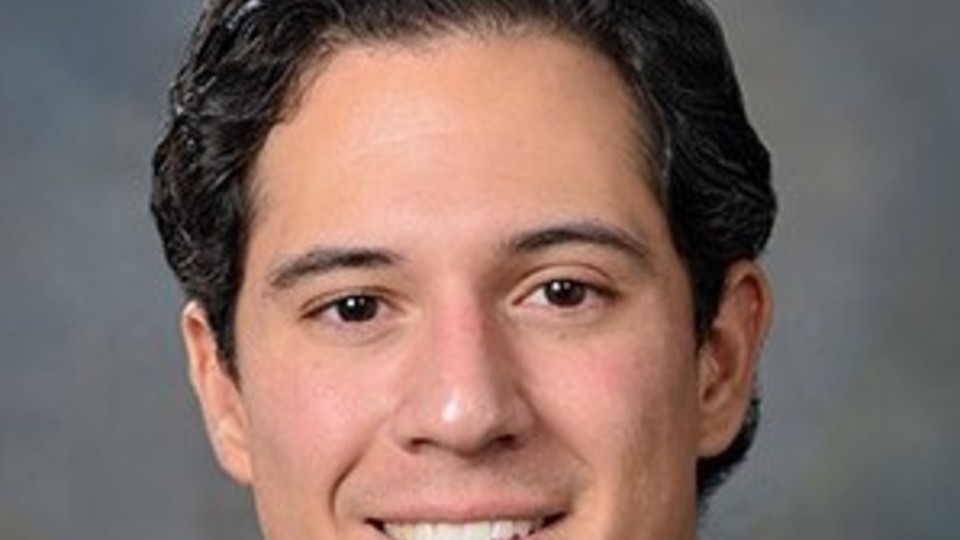
Pablo shares why more physicians need business fluency and what it means to look beyond the exam room to the health of an entire community.
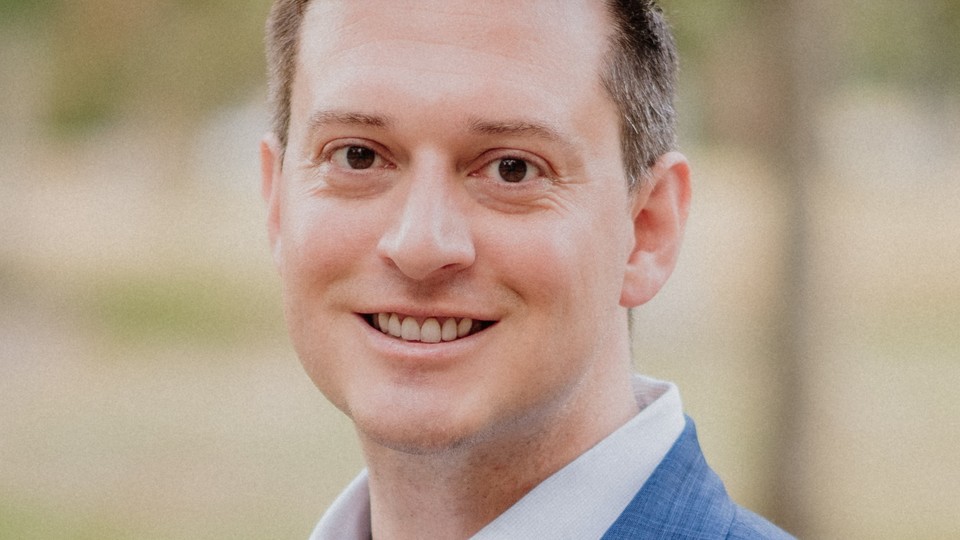
David shares how the Rice MBA helped him pivot into consulting and how AI is reshaping the industry.
Rice University is making it easier to get an MBA. The Houston university has launched a new hybrid program. The program "preserves the benefits of the in-person educational experience while leveraging the flexibility offered by online learning through live Zoom sessions and asynchronous course content."
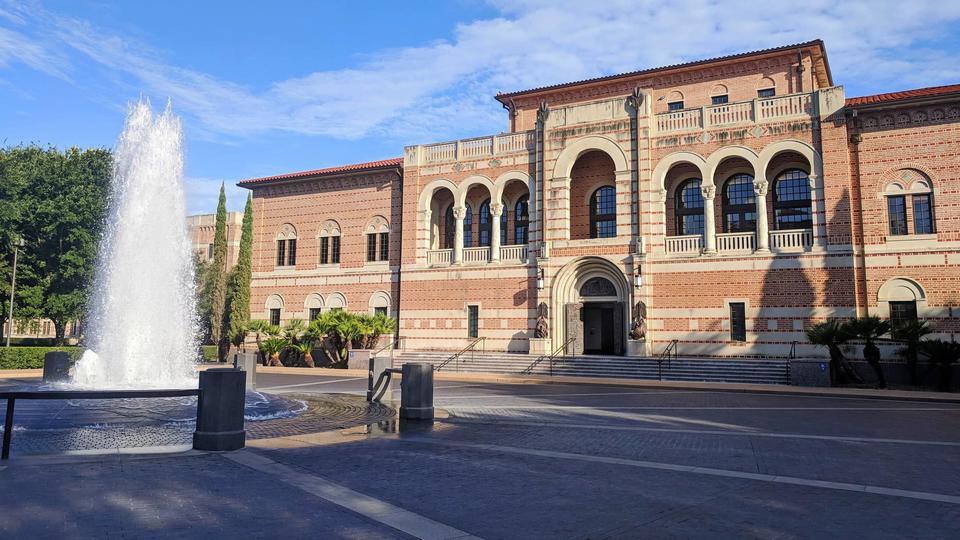
For working professionals who want to pursue a Master of Business Administration degree with a flexible schedule, the new Hybrid MBA program at Rice University’s Jones Graduate School of Business opens this summer.


For working professionals who want to pursue a Master of Business Administration degree with a flexible schedule, the new Hybrid MBA program at Rice University’s Jones Graduate School of Business opens this summer.
The Hybrid MBA — the first of its kind in Texas — preserves the benefits of the in-person educational experience while leveraging the flexibility offered by online learning through live Zoom sessions and asynchronous course content. The new program will also utilize the same highly recognized faculty as other Rice Business programs in developing and delivering courses.
Students will attend class in person on campus once a month, with online education during the weeks between. Tuition includes residency at a hotel close to Rice during on-campus weekends and immersion weeks so students can connect with classmates and skip the commute.
"After researching demand for MBA programs, we found that prospective students want an in-person experience but not one that meets every week," said Peter Rodriguez, dean of Rice Business. "Our Hybrid MBA makes it easier for working professionals in Houston and regionally to earn a Rice MBA with the on-campus experience they want.”
The 22-month, 54-credit program will provide students with all of the advantages of the Rice curriculum, community, campus and faculty. It begins in July with a one-week immersion on campus, followed by the monthly on-campus meetings, which will align with other Rice MBA programs to provide opportunities for hybrid students to interact with those in other programs as well as take Professional Weekend MBA electives. There is one immersion week at the end of the first year, and the program concludes with a one-week Global Field Experience in May 2025 before students return to campus for graduation.
To learn more about the Hybrid MBA, click here.
Rice Business will continue to offer its top-ranked MBA programs: Full-Time, Professional, Online and Executive MBA.
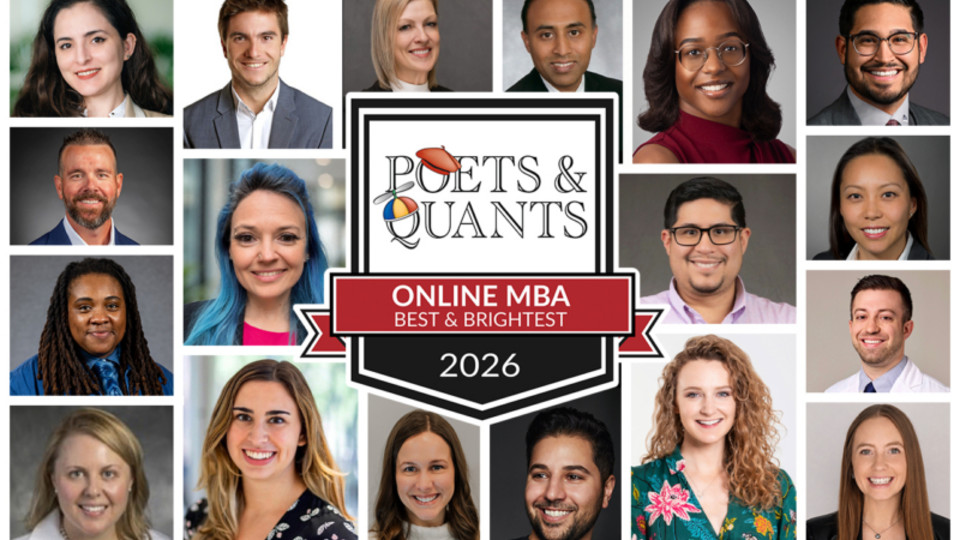
Congratulations to Marissa Minter and Alan Vu, recognized by Poets & Quants among the 2026 Best and Brightest Online MBAs.
A Houston venture capital analysis co-authored by Rice Business Executive MBA candidate Stephanie Schmidt highlights the city's growing innovation ecosystem, arguing that stronger startup formation is key to building on recent successes like Fervo Energy's IPO.
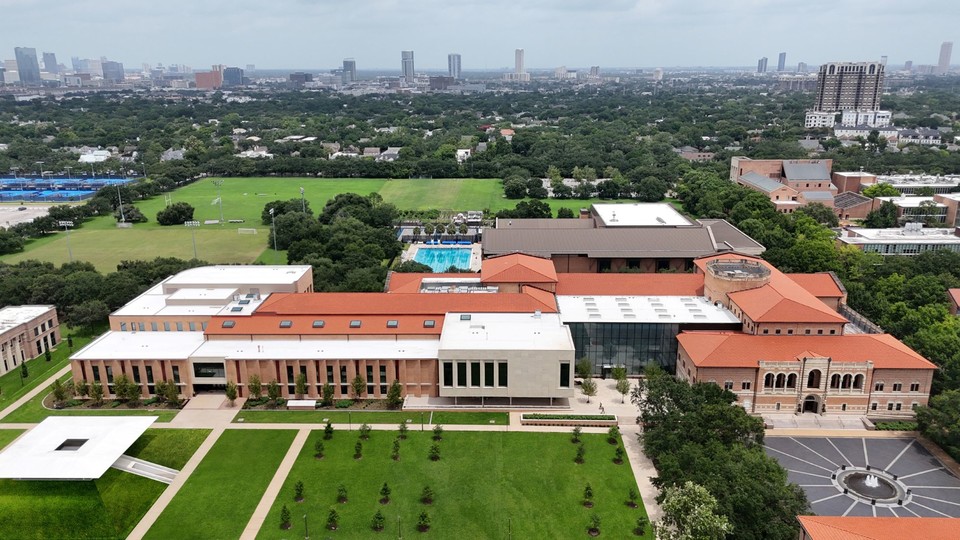
Rice University names its new $54.5 million business building after donors Asha and Farid Virani, the undergraduate business school's namesakes.
Rice Business professor Daan van Knippenberg and colleagues performed a meta-analysis and found that strategic dissent, often thought to provide positive outcomes to their organizations, actually does the opposite.

When Charles Hurwitz, CEO and President of Houston-based MAXXAM, Inc. addressed a “thought leadership” discussion at Rice Business recently, you can be assured of one thing. Everyone listened.

The vast majority of parents believe social media is a major distraction for students, according to a new nationwide study conducted by Vikas Mittal, a professor of marketing at Rice Business. The online study surveyed a nationally representative sample of more than 10,000 parents of K-12 students.

The online study, conducted in November and December, surveyed a nationally representative sample of more than 10,000 parents of K-12 students. An overwhelming majority from across racial groups — African American (70%), Asian (72%), white (75%), Hispanic/Latino (70%) — agreed that social media is a distraction.
Parents of children who attend private schools (82%) were more likely to see social media as a distraction than parents of children in public schools (73%) or charter schools (73%) or those being homeschooled (67%). Interestingly, parents with children in high school (74%), middle school (73%) and elementary school (73%) were equally concerned about the issue.

School leaders are also worried. Last week, Seattle Public Schools sued the tech giants behind TikTok, Instagram, Facebook, YouTube and Snapchat, claiming they’ve created a youth mental health crisis. Most schools prohibit cellphone use in the classroom.
“Suing social media companies or banning cellphones in classrooms may be trendy, but is unlikely to help students,” said Vikas Mittal, a professor of marketing at Rice's Jones Graduate School of Business, who conducted the 2022 Collaborative for Customer-Based Execution and Strategy (C-CUBES) K12 Parent Voice Study.
Cellphone usage and social media browsing is ingrained among school-age children, he argues. A Pew Research Center study of teens found more than 95% have access to a cellphone, 94% use the internet almost constantly or several times a day and 54% say it would be hard for them to give up social media.
“Many years ago, schools were in a race to provide every student with internet access,” Mittal said. “It was seen as a panacea for improving academic achievement. That policy seems to have had some unintended consequences.
“The distractive effect of social media is only exacerbated due to widespread internet access, and today’s school leaders must thread a difficult needle,” he continued. “They must continue providing students with high-quality and equitable internet access due to its potential educational benefits.”
“Policies like curtailing cellphone usage in classes to ensure teachers can teach effectively are necessary but quite limiting,” he added. “School leaders must proactively work with parents to educate children about the potential downside of social media usage and teach them strategies to self-manage potentially addictive behaviors associated with social media.”
Congratulations to Marissa Minter and Alan Vu, recognized by Poets & Quants among the 2026 Best and Brightest Online MBAs.
A Houston venture capital analysis co-authored by Rice Business Executive MBA candidate Stephanie Schmidt highlights the city's growing innovation ecosystem, arguing that stronger startup formation is key to building on recent successes like Fervo Energy's IPO.
Rice University names its new $54.5 million business building after donors Asha and Farid Virani, the undergraduate business school's namesakes.
Conflict among senior managers leads to worse organizational outcomes.


Based on research by Daan van Knippenberg (Rice Business), Codou Samba (University of Tennessee, Knoxville), and C. Chet Miller (Houston)
Key findings:
It turns out there isn’t evidence to support that belief.
Rice Business Professor Daan van Knippenberg has spent his career studying topics related to team performance, decision making, diversity and conflict. When a research team led by Codou Samba, an assistant professor at the University of Tennessee, Knoxville, approached him with an offer to test longstanding assumptions about conflict related to company strategy in senior management teams, he jumped at the opportunity.
In his experience, the business case for diversity is strong, but it comes with caveats. “Diversity of perspectives can lead to better solutions to complex problems, but only when team members are open-minded enough to listen carefully to each other and really integrate another point of view into their decision-making process,” he says. This does not seem to apply to differences in opinion about what company strategy should be.
When managers dig in their heels and refuse to consider and integrate other perspectives, that two-way door of communication slams shut and conflict ensues. “The popular idea that conflict is actually good for firms went against all my knowledge,” says van Knippenberg. “It’s annoying that this idea has floated around in my field for so long when the evidence really points the other way.”
The team led by Samba, which also included C. Chet Miller, a professor at the University of Houston, conducted a quantitative summary and integration of 78 papers that provide data about strategic dissent — a term used to describe diverging opinions about strategic goals and objectives on senior management teams — and its influence on strategic decision making and firm performance.
Every paper that made a prediction about strategic dissent (only a few did not) posited that strategic dissent leads to better outcomes for firms.
In their paper, the research team used a deep well of empirical data to demonstrate that the opposite is true. Turning common wisdom on its head, they found that strategic dissent among senior managers actually leads to lower-quality decisions and impaired firm performance.
The authors identify two major reasons for the negative impact of strategic dissent on firm outcomes.
First, strategic dissent causes relational breakdown among senior managers. “If managers walk away from a team meeting thinking they just had a conflict instead of a productive discussion, the outcome is rarely positive,” says van Knippenberg. The two sides retreat into their respective corners, believing the other side to be wrong and closing their minds to further information.
Second, strategic dissent leads to less relevant information being exchanged among managers. Inevitably, this blockage impairs the decision-making process. If a marketing director and an operations director are at odds, for example, they are less likely to share the marketing- or operations-specific information that is needed to make an optimal team decision.
Teams can benefit from diversity of thought, but it is not always clear what conditions need to be in place for that to happen on senior management teams that disagree about the firm’s strategic direction. CEOs would do well to realize that it takes an effortful investment to foster open-minded discussions of diverging views on the organization’s strategy, to create an environment that encourages members to express dissenting perspectives while absorbing the perspectives of others, and to prevent vested interest and power dynamics from determining the outcomes of such discussions.
Van Knippenberg, et al. (2018). “The Impact of Strategic Dissent on Organizational Outcomes: A Meta-Analytic Integration,” Strategic Management Journal.
Want to get better at a task? It may be possible to shop — or imagine — your way to success. This Rice Business Wisdom article was based on research from Jaeyeon (Jae) Chung, an assistant professor of marketing at Rice Business.

Chuck sits down with host Scott Gale '19 at the Digital Wildcatters Podcasting Studio right here in Houston to talk about his long-standing ties to Rice, pursuing a career in investment banking, his connections to Nashville and the music industry, and his hopes for rebranding the energy industry.
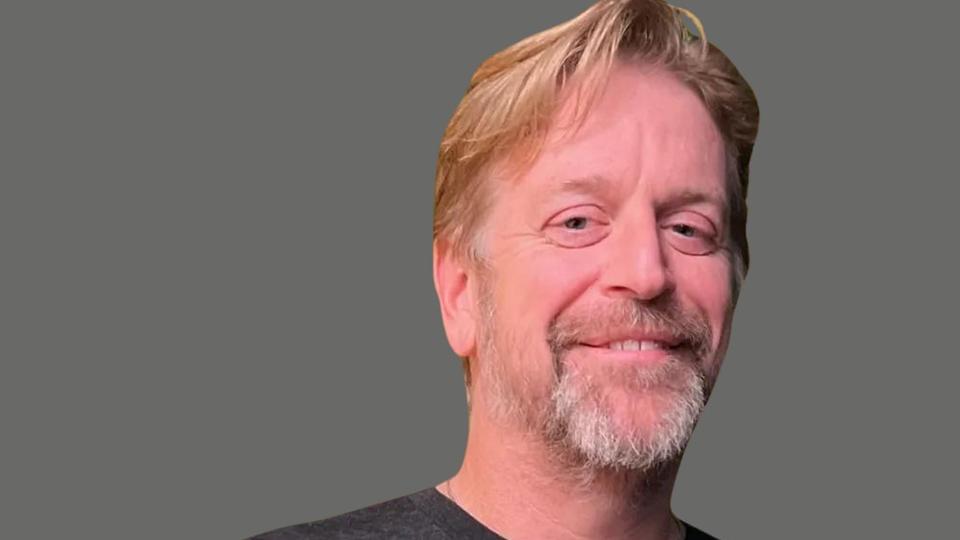
Chuck sits down with host Scott Gale '19 at the Digital Wildcatters Podcasting Studio right here in Houston to talk about his long-standing ties to Rice, pursuing a career in investment banking, his connections to Nashville and the music industry, and his hopes for rebranding the energy industry.
Subscribe to Owl Have You Know on Apple Podcasts, Spotify, Youtube or wherever you find your favorite podcasts.
[00:00] Intro: Welcome to Owl Have You Know, a podcast from Rice Business. This episode is part of our Pivot Series, where guests share stories of transformation in their lives and careers.
[00:13] Scott: Welcome to the Owl Have You Know Podcast. I'm your host, Scott Gale. I'm here with Chuck Yates, Rice undergrad '91, Rice Business School '94.
[00:23] Chuck: Now, did I get selected because I didn't pay my parking tickets and this is like my penance to the university?
[00:30] Scott: Cat's out of the bag, Chuck.
[00:33] Chuck: All right.
[00:33] Scott: I've come here with a collection.
[00:35] Chuck: There we go. There we go.
[00:36] Scott: It's a privilege to be here kind of on your home turf.
[00:41] Chuck: Your home turf as well.
[00:42] Scott: Yeah, we're at home.
[00:42] Chuck: This is, this is the home field. For those of you who don't know, Scott and I both have podcasts published by Digital Wildcatters, and this is the Digital Wildcatters Podcasting Studio.
[00:52] Scott: This is it. I encourage you guys to check it out. We'll talk a bit about “Chuck Yates Needs a Job” podcast. I want to hear a bit more about the origin story around that. But I wanted to, kind of, just start a little bit chronologically and go back, because the Yates family has a lot of connectivity with Rice University. Can you share a little bit about, kind of, some of that family history?
[01:12] Chuck: Yeah. So, I'm Charles Wilbur Yates III. Charles Wilbur Yates, Sr., so my grandfather, was class of '30, '31, '32, somewhere in there. I should probably know the date. So, he went to Rice. Great aunt went to Rice in the late '30s. I don't think she got a degree. Or early '40s somewhere that she attended classes. Then you had mom and dad both graduate from Rice in the early to mid-'60s. You had Uncle Terry graduate from Rice in the late '60s. Then you had me, brother Jay, brother Kenny, all graduate from Rice in the '90s. You... ex-wife, Kim, I met at Rice. And then I think, in the divorce, I won the right to say it is still a Yates family degree, but I'm not sure of that.
[02:07] Scott: Double-check.
[02:07] Chuck: I’ll have to check the divorce decree on that one. And then the two sister-in-laws, Crystal and Becca, both went to Rice. And just while we're piling on Rice stats, multiple of us have multiple Rice degrees.
[02:22] Scott: So, when you were graduating high school and deciding to go to college, was it even a conversation or was it...
[02:27] Chuck: I didn't have a choice, didn't have a choice. So, this was kind of funny. I decided sophomore year in high school that I was going to go to Harvard and went and announced that to my parents. Scared the hell out of my mom. She's like, "Oh, my God, my poor little baby from Richmond, Texas is going to go off to the East Coast, is going to become a rabble-rouser, liberal, marry Amy Carter, and start protesting and all this."
And unbeknownst to me, Dad says, "Don't worry, I got this." And I said... Dad said, "You know, Harvard's a really good school, Chuck. If you go there, I'll even pay for you to go there, but you got to go visit. You can't just show up on campus." I go, "Okay, dad, I'll go next summer." And dad goes, "Nah, why don't you go over Christmas break?" Mom says, to this day, the hardest thing she ever did when parenting me, they let me get on a plane to go to Boston, Massachusetts in the dead of winter. And it was 73 degrees in Houston, Texas. I didn't take a coat. I didn't know any better. I mean, I was just like, it's 73 degrees in Houston. Why do I need a coat? I got up there, and I had like one pair of jeans. Everything else I packed was shorts. And my mom knew this. And so, anyway, I got there and kind of walked around campus, you know, in my T-shirt. And I think I went and bought a jacket or something. So, I'm freezing to death. And Harvard is going, "Here is our latest building. It was built in 1796." And I was just going, "I don't think this is a place for me." Needless to say, I didn't get into Harvard, but I've changed the story so that, at the end of the tour, I walked into the admissions office and asked Harvard to tear up my application. That's a much better story, right?
[04:10] Scott: I like it. I like it.
[04:12] Chuck: Thank you.
[04:13] Scott: That's some great parenting approach by your parents as well.
[04:14] Chuck: Oh, I know.
[04:16] Scott: That's fantastic.
[04:15] Chuck: Typical Dad.
[04:19] Scott: So, you arrived on Rice campus. Obviously, you've got some familiarity. Can you share a little bit about your initial impressions having been on Rice campus and a bit of your journey through the business school?
[04:31] Chuck: The thing that was really cool about Rice that I think I gained some appreciation for, particularly, later in life, is the collection of intelligence that I was surrounded with at Rice, far and away, the greatest amount of intelligence I've ever been surrounded by. I mean, I worked in investment banking, I did private equity, which are supposedly the pinnacles of careers out there. And my freshman class at Rice had gazillion times the horsepower that I saw out in the professional world. I mean, just really, really smart people.
And I think the other cool thing about Rice, and it would be interesting to see my answer on this versus today's folks' answer on this, is when I went to Rice late '80s, early '90s, you were smart enough to get into Harvard, Yale. But generally, you couldn't afford it. So, Rice was the economic alternative to the Ivy Leagues. And so, what you wound up having is a bunch of middle-class kids that maybe got into Stanford or wherever but just couldn't afford it. Or you had some of them from a small town in Texas, etc. Because I think the tuition... I mean, it was a big deal. My freshman year, when tuition, I think, got raised to $4,000 a semester.
And so, that was kind of the character of Rice at the time. And what was great about it is it really wasn't a class system. Money didn't matter. You know, who knows what an Ivy League campus would look like? But I'm sure, at Yale, it matters what your last name is, how much money you had. And it just didn't seem to matter at Rice. It was more about how smart you were and what stupid pranks you could figure out to pull and stuff like that. So, huge amount of appreciation for that, particularly later in life because it kind of gave me a grounding of, where I... maybe not rightfully so, but I felt like I could walk into any meeting and not worry about it. You know, hey, who's my father? Or, you know, how much money do I have, or whatever? At Rice, you could walk into any meeting. So, I thought that was really cool about Rice. Did you have that vibe when you were there? What year were you?
[06:51] Scott: Yeah, I am a class of 2019. So, did the Executive MBA program at Rice.
[06:54] Chuck: Okay.
[06:56] Scott: And certainly found it to be approachable... like you're saying, just like the level of brilliance in the room. You're kind of looking around, like, how did I get in here? But just the, I don't know, just found that there was just, the class sizes were really small. There was just sort of like a humanity to it, in a way, that was unique. And I think, certainly through COVID, and as they've added like the online program and have kind of expanded classes, I think that one of those challenges is to kind of maintain that same feel, that kind of familial vibe.
[07:27] Chuck: Yeah. So, I got, I got a story along those lines. You know, during the '70s, Rice had about as bad a run in football as any university’s ever had. I mean, I think at one point we had lost 25 straight games or whatever. And, you know, God bless Ray Alborn who went to Rice with Dad, but he was kind of the coach during all that Rice alum, does good, takes over the program that never wins another game.
So, anyway, they fired Ray Alborn and they were looking for a new coach. This was early '80s. So, I think I was still in eighth grade. I wrote a letter to Norman Hackerman, who was the president of Rice, applying for the job as head football coach. And I detailed stuff out like I knew all the Dallas Cowboy statistics and that, one time, you know, when I was really young, I went to a Rice game and I was talking all about football, and the lady sitting behind me tapped my mom on the shoulder and said, "Your daughter sure does know a lot about football, you know."
It was, I mean, it was fairly tongue-in-cheek, the letter. Anyway, so I mailed it into Dr. Hackerman. I get a very nice written note. "Dear Mr. Yates. Thank you for your interest in the job. I have forwarded your letter to the committee making the determination. I wish you the best of luck. If there's anything I can do, Norman Hackerman," right?
So, about two years later. I'm on campus at a reception for a family friend. And Dr. Hackerman's in there, and I walk up and I go, "Dr. Hackerman, I don't know if you remember me. I applied for the football coaching job." And, you know, I'm like a sophomore in high school at this point. And he said, "Come here." And he kind of pulls me aside and he said, "Hell, son, I voted for you."
[09:14] Scott: That’s quite the endorsement.
[09:15] Chuck: Yeah, it was, it was really cool, so yeah.
[09:18] Scott: That's a cool confidence builder, going into the, into the experience.
[09:21] Chuck: Yeah. It's probably totally untrue. But anyway, he probably didn't, but it was nice enough. I was like, all right.
[09:25] Scott: That's awesome. Can you share a bit about, kind of, coming out of the program and launching your career, like, eventually, like you said, getting into investment banking and private equity? Can you tell a little bit about that early journey and what motivated you to get into that world?
[09:39] Chuck: Yeah. So, now, I'll be a little critical of Rice, or at least my time there. I mean very, very smart, all the people I was surrounded with. Professors really made you think. So, I thought that was great. There wasn't an undergrad business program of any sort, right?
[09:57] Scott: Right, they just launched it recently.
[09:59] Chuck: Yeah, they had managerial studies, which I mean was really just this compiling a bunch of statistics class, economics class, and all that. So, I really didn't know what I wanted to do. So, I kind of did what every political science major is. I defaulted into law school, right? So, I went to the University of Texas law school and figured out big, thick book, tiny print, no pictures. That's really bad. I dropped out after the first semester. And technically, I actually dropped out before the end of the first semester. But I feel bad, like, saying that I didn't even make it a semester. So, it's like...
And I just defaulted back into Rice Business School because I didn't know what to do. And what was cool about that is, for the first time, I had a real finance class. And to me, that was just my jam. I mean, I've always been a numbers type guy, really good at math. I actually kind of think in math, you know. As you talk, I break down things into numbers in my mind. It's sort of weird. I haven't heard about anybody else that does that. But that's kind of how it was.
And, you know, finance is really just translating accounting into value, right? I mean, at the end of the day, it's assigning risk, it's cost of capital, that sort of stuff, but at its simplest form. So, figured out that was my jam. And what was neat about it is I had this non-traditional-looking career path because undergrad, start and stop in law school, get an MBA, without any real true working experience. But it was amazing, the amount of Rice folks for such a small school that were in the finance world. And when I was interviewing for investment banks coming out of business school, Goldman Sachs was still private. It was a private partnership. And there were 133 partners. Five of them were Rice people. I mean, you know, arguably the most prestigious job on the planet. So, you just had a lot of Rice folks you were able to go talk to in that world. And so...
And one thing I'll say good about the Rice community is everybody takes your call, "Hey, I'm another Rice person." And there seems to be some commonality there that it'd be interesting if other schools to hear if they have it or not, because we certainly have it in Owl land.
[12:19] Scott: Yeah. Oh, absolutely, I think that's one of the features that kind of comes up again and again in describing one of the big advantages of being a part of the alumni base, is that anybody will take a call, like, it doesn't matter if there's a direct connection, some other alumni or whatever. It's like a cold call if you're connected to Rice, that there's a willingness to take the call. And I feel like people pay that forward.
[12:43] Chuck: Yeah, I know, it was interesting. So, arguably, the greatest venture capitalist in history is Burton McMurtry. Burton went to Rice undergrad, went to work for Sylvania in Silicon Valley, got a PhD at Stanford while he did it, became a venture capitalist, I think, as early as the mid-'60s. I mean, so really at the cutting edge of it. Microsoft only took venture capital from one firm, and they took it from... I believe the entity was called TVI because they wanted Burton McMurtry on their board, and, you know... so, all the great Rice Silicon Valley stories. Burton was here recruiting them, Jimmy Treybig, Kenny Oshman, you know, tick on down the list.
So, anyway, my dad went high school and college with Kenny Oshman who... big Silicon Valley success story, founded Rome. He's the ‘O’ in Rome, and they sold IBM for gazillion dollars and then had another startup with Echelon that did really well. My brother, Kenny, is named after Kenny Oshman. So, dad calls one day and they're supposed to be going out for one of the Oshman boys' bar mitzvahs. And dad says, "Yeah, we can't go. Your brother, Bobby, is sick." I'm the oldest of four boys. And brother Bobby is eight years younger than me. So, Bobby, at that time, may be, call it, 12 or 13. Yeah, we just can't go. But Bobby's sick, and I was like, "Well, I'll come take care of him, Dad. And you all can go to the bar mitzvah. I'll come home for the weekend to do it. And dad goes, "Really?" And I go, "But you got to do me a favor. You got to bring me Burton McMurtry's business card." And he goes, "All right."
So, at this bar mitzvah, you know, San Francisco, everybody on the planet's there. Dad walks up to Burton McMurtry and says, "Hey, I want to thank you. You're the only reason I'm here. And my son is watching his younger brother who's sick, and we didn't want to leave. But he said he'd come if I could get your business card." And Burton McMurtry said, "You know what? I don't bring business cards to these type things," takes out a cocktail napkin, writes his number on it, says, "Give that to your son." And anyway, every time Burton McMurtry would come to Houston on something, he'd take me to breakfast. I mean, here I am, just a Rice undergrad, and then a lowly investment banker, you know, working. He always took my phone calls and stuff. And so, I mean, he was on the board of Rice. It's McMurtry College, right?
[15:07] Scott: Yeah, yeah. I mean, what were some of the things in those quiet, one-on-one sessions with Burton over the years? Any kind of advice or perspective that stood out as you got to have that unique interaction, that coaching?
[15:19] Chuck: Yeah. It was kind of cool, kind of when I got into business school, figured out finance, you know, okay, private equity, venture capital, investment banking, the big allure of that. And I remember one time talking about it, then he goes, "Yeah, it's kind of cool, but on the other hand, you're never going to sleep." He's like, he's like, "You're going to be up worried all the time and all that." I was like, "Oh, okay."
The other cool thing that I didn't have an appreciation for, you know, he did venture capital, he did early-stage stuff. And one of the things he said is... that made his life a lot easier is he said, "You know what I've gotten to the point in my career is? I assume they can build what they say they're going to build." Because, engineers are really smart, software developers can really write software. So, I go, "Okay, great." And then I sit there, and I go, "Okay, this product, who cares?" And it's really about figuring out the market. Is there a market for it? Can you penetrate the market? What are the trade-offs with your product versus others? And he said, "That's what I spend my time worrying on." And, you know, at that point in my life, I was like, “No, can they build this machine?” And yeah, no, he's like, "Yeah, they can. They always do. They always have cost overruns, but they do." So, yeah.
[16:36] Scott: Can you share a little bit about your investment banking experience?
[16:38] Chuck: Coming out of business school, I went to work for Stephens, the Little Rock, Arkansas investment bank. I was in their Houston office for six years and Dallas office for one year. So, my running joke was I wanted to do well, but not well enough to get promoted to Little Rock. That said, could not be more grateful to the Stephens family, in particular, Warren Stephens, because what was cool about that job is you had an investment bank and, you know, investment banking, you're basically playing agent for someone. You're advising him on a merger or an acquisition, you're raising capital for him.
But during the period when I was there, really kind of the mid-’90s to early 2000s, they invested enough money just because of the family's worth, that, literally, they would've been something like the fifth largest VC firm in America if you counted the dollars there, or like the 10th or 12th largest LBO shop if you counted them as that. So, they did a lot of investing. And you always had to have your investing hat on, because at any given moment during a deal, the family's able to say, "Well, we'll just do it."
[17:48] Scott: Still to ride all the other...
[17:49] Chuck: Yeah. And then they'd ask you, "And how big's your check?" And you're always kind of like, "Oops, okay." So, it was a great place to work. And they're just a gazillion great Stephens stories. Jack Stephens was chairman of Augusta for like 18 years. So, he was the one that put the green jacket on the winner. And he is the most publicity-shy person on the planet. You know, he graduated from the Naval Academy where he was Jimmy Carter's roommate, just quiet career down in Little Rock, but, you know, just phenomenal success. And so, because of being chairman of Augusta, he always had a really close relationship with CBS.
[18:30] Scott: Sure.
[18:30] Chuck: Because they always showed that. So, CBS, you may not know this, CBS in the late '60s bought the New York Yankees, right? And they figured out, in about 1972, they had no idea what they were doing in baseball because they had bought it for content. It wasn't working out. It was a mess and all this. So, in 1972, CEO of CBS picks up the phone, calls Jack Stephens, says, "Hey, Jack, we're in over our head on this baseball thing. We don't get it. We paid $12 million for the Yankees. If you'll just give us $12 million, we'll sell you the Yankees and we'll just be done with it and all that." And Jack goes, "It's kind of interesting. Can I move them down here to Little Rock?" So, yeah, I was like, "Well, I'm not really sure you'd want to do that. You got the big media market here." And he goes, "Okay, well, then I'm probably not interested, but I appreciate the phone call." And so, they sold to Steinbrenner, and the rest is history.
But Stephens was this, was this amazing place. And then, kind of post-Stephens, I went to Kayne Anderson, and for about 27 seconds, I was an energy technology banker, because the early 2000s, oil and gas was in the tank and everything was dot-com related. And to raise your next fund, you had to, you had to have some sort of technology angle. So, I joined Kayne. And that was potentially going to be a focus. And six months later, the dot-com bubble burst, went away. And lo and behold, oil and gas was back. So, spent the next 20 years as a, as an oil and gas private equity guy, so...
[20:12] Scott: So, for, you know, a decent number in the audience are looking to have that kind of opportunity in their career of being in, kind of, oil and gas, private equity, energy kind of investing. What are some of the key features in your view as you've looked around and participated in that landscape of what made people particularly successful?
[20:34] Chuck: What's interesting about investment banking... because that's where you start, it's really hard to go school to private equity. Private equity needs you trained. And so, your path is going to be commercial banking or it's going to be investment banking, right? Well, if you think about it, an investment bank can look at your grades and figure out whether you're smart or not. They don't even have to meet you, right? So, they can go, "Okay, 3.9, great. Boom. Check." Then, the second thing is they can interview you and figure out if you can sit in a meeting and not embarrass them. So, that's pretty easy, too.
The thing that's hard is investment banking is a grind. I mean, you do tons of hours. And it's not just tons of hours. It's also, you do tons of unproductive work. I mean, a client may call up and say, "I want to look at buying XYZ company," and you spend, you know, three days putting together this analysis. You're right about to ship it. And they call back, "Nah, we don't want to look at it."
So, there are these two elements. And so, the biggest challenge for an investment bank when hiring somebody is, do they quit after six months? Because your first year at investment bank, they lose money on you. They're training you. Your work's not particularly very good. And then they make money on you year two, and then they make a ton of money on… if third-year analysts knew exactly how valuable they were, even though they're getting paid gazillion dollars, they could probably even charge more.
So, what I would say is, if you're trying to get a job there, your goal is really to convince them, one, I know exactly what I'm getting myself in for. I know about the hours. I know about the work requirements, etc. And I'm ready for it, and I'm not going to quit. And so, I think, kind of, one, you need to be very educated on the different banks and what strengths they have. If you go interview with a bank that has a great M&A practice, you're going to want to know... be able to convince them that you know that, etc., and all, not because they really care, but it shows, okay, they really want this, they went and researched this and all. And then, so, be able to convince them that.
And then, two, the best thing you can do is, you know, you can go get a drink with a Chuck Yates who may be running the group. I don't care. I don't know. I don't know who you are. If one of my second or third-year analysts that's really good walks in and says, "You need to hire Scott. I went to Rice with Scott, and Scott's really smart and knows what we do and all that," that's what matters. So, convince them that you're ready to work. Convince them that it's okay that half your work gets thrown in the garbage can, just the nature of the beast. And third, go find yourself an advocate who can really pound the table for you in there. And generally speaking, the lower an advocate is on the totem pole, actually, the better they are.
[23:32] Scott: Interesting, because they've spent time in the trenches, they know—
[23:35] Chuck: They spent time in the trenches, yeah.
[23:36] Scott: ... where it's really getting done.
[23:37] Chuck: And, quite frankly, if the second-year analyst walks in and says, "Scott's the guy," he or she is basically telling me, "I'm going to have to train him, so I'm willing to do it." And that's the best endorsement you can really get. You can't spend too much time researching. You can't spend too much time just talking to ‘em.
But then, what you do find out is, if you start talking to the energy group, a lot of them are in Houston, spend time in Houston, so you have commonality. So, that can get you a follow-up discussion with them. You can go grab a drink or whatever the case may be. But, yeah, good luck. “You’re in Texax. Nah, you think you want to do technology. You want to be in the energy group.”
[24:21] Scott: Well, there's a lot of shift in the, at least in the Houston area, to bring a bit more kind of tech approach. Maybe, that'll shift over time. I wanted ask just, you know, we're moving on chronologically, but I wanted to ask, you've got some connections or passion around music and the music industry, perhaps. And so, I wanted to just ask, I know you've spent some time in Nashville and have friends. I don't know what led you kind of down a bit of that path.
[24:45] Chuck: Well, it's really funny because, when you look at the history of the Yates family, there's not an ounce of musical talent in our lineage ever. So, I can't sing. I can't play an instrument. Although, the one thing I can play is I can play Jump by Van Halen on a synthesizer. It's nice. It's a great party trick to have. But I've always just been a music guy. I always liked live music. And so, just kind of through dumb luck, falling into this clique of having musicians as friends. And kind of my escape from reality is I'll go be the roadie for a week. And so, you know, I'll carry a guitar. I actually think my second career could be as a tour manager for a band. Only, I can't tune a guitar. That's the one, the one thing I can't. But yeah, I've been out on tour with Thomas Rhett, Jewel, the band, Garbage, my friend, Lindsay L. One of my kiddos' heroes is Porter Robinson, the EDM star. Turns out, I know Porter's tour manager. So, we got to go hang out on tour with Porter. So, for at least one weekend, I had a Father of the Year vote, from the oldest kiddo.
But the thing I find interesting about that is, at least my vintage, because I'm older than you, you know, music was, you went and partied, you trashed the hotel room, you did all that. That's not it at all. It's a business. Lobby call is at 8:00 a.m., you know. And you hit there. Sound check's at 3:00. The radio interview with the DJ is at 3:34. It's very much a business. And so, I always joke with all those folks when I go out on tour, it's like, I'm having a cocktail because I'm on vacation. I know it's your job, but, you know, it's like, this is, this is my vacation. But it's fun.
This was kind of crazy. When I was at Rice, some of my classmates, Alex Tittel, whose dad, Dr. Tittel, was head of the electrical engineering department for a long time. And then Jamie Daruwala actually started a band called Toy Subs and finished second one year on Star Search. That was Ed McMahon's old show that was kind of American Idol before American Idol. Yeah, just always been a music guy, don't know why, but...
[27:09] Scott: Love it. That's awesome. I think that there's a lot of the arts scene here in Houston, whether it's music or filmmaking or others, that doesn't get as maybe as much, kind of, love and appreciation as we're known for in NASA and energy and other [crosstalk 00:27:26].
[27:27] Chuck: Right. Real quick, though. So, you're later in life, later in life Rice, but we got to spend, even though historically we suck at this, we got to spend 30 seconds on Rice Athletics. Do you have a favorite Rice Athletics story?
[27:42] Scott: I don't. My connectivity with Rice Athletics is—
[27:46] Chuck: Null and void?
[27:47] Scott: ... pretty invisible.
[27:48] Chuck: I got you. I got you. So, literally, I went to the football games every Saturday, growing up.
[27:55] Scott: Sure.
[27:55] Chuck: A lot of times, we would just go and see the band at halftime and see the mob show and leave. But the greatest moment was winning the College World Series in 2003. That was, that was pretty amazing. Yeah, I was, I was up in Omaha for that. And watching Chris Kolkhorst go and jump up on the wall and make that catch against Stanford, because that's the only reason we won the College World Series. If that ball hits the wall, we lose the first game and we potentially lose that series. That was pretty amazing.
And what was really cool about that moment is I was recording the stuff back on ESPN. Even though I was in Omaha seeing it live, I was recording it. When I came back, I was watching the games. And so, anyway, Chris goes running. He catches that. And he does that with a torn ACL, you know. He'd torn it earlier in the game. Anyway, he catches it, bounces off the wall. You know, they're on the ground, gets up. And he's running back into the dugout, and he tosses the ball to the umpire. And you can see the umpire's lips go, "Nice catch, son." Yeah, so...
[29:02] Scott: That is cool. Well, I appreciate you wearing the Rice jersey.
[29:05] Chuck: James Casey, James Casey, the greatest Rice athlete in history.
[29:10] Scott: I love it.
[29:10] Chuck: He came on the, he came on the podcast, the “Chuck Yates Needs A Job…”
[29:13] Scott: Oh, that's amazing.
[29:15] Chuck: ... probably about couple months ago and told his story, so yeah.
[29:19] Scott: Can we chat a little bit about the podcast and...
[29:21] Chuck: We should have better things to talk about, but sure.
[29:24] Scott: I mean, you've been very public about where you were in your private equity job and moved on to what you're doing now.
[29:30] Chuck: You're so kind. You're so kind. You can say it.
[29:32] Scott: So, Chuck, tell us that story. You got fired from Kayne Anderson.
[29:35] Chuck: Yeah, I got fired from Kayne Anderson. And just in case anyone's curious why, oil went to minus $37, it was all me. I did it.
[29:42] Scott: You shouldn't have left.
[29:43] Chuck: I did it. No, no, no, no.
[29:44] Scott: No deals were getting done.
[29:45] Chuck: I did it, and then I got booted, right? Because I got booted for performance.
[29:48] Scott: Okay.
[29:48] Chuck: And so, you know, minus 37 didn't really help the performance much, right?
[29:53] Scott: Right.
[29:53] Chuck: No, it didn't.
[29:55] Scott: Like, how do you kind of... you know, that's a, that's a specter and a challenge that everybody, wherever they're at in their career, can, you know, oil and gas particularly, but other cyclical industries up and down. Like, what did you learn from that experience? And by all rights, you've gone and done awesome cool things sort of since then. So, like, what is it that sort of drove you through that experience?
[30:16] Chuck: You know, if you step back, actually, you know, wound up, unfortunately, getting divorced from Kim. We separated in 2015, divorced in 2017. So, a lot of the mental health aspects of going through something that you normally would when you get fired, I went through with the divorce. So, just tons of therapy. Spent a lot of time with my priest, did a lot of “God-ing,” you know, all that sort of stuff. And I've read all Brené Brown's stuff. But I think the key thing she finds in her research is, do we feel worthy? And when we don't feel worthy, that's ultimately our bad behavior. We drink too much. We do this. We do that. We yell, scream, all that good stuff.
And so, figuring out why you should feel worthy is something I think individuals just have to do. Mine kind of came with a reconnection back with God. I mean, I always went to church, but I went to church because I was scared, right? I thought I'd go to hell if I didn't. And, you know, kind of going through all that, working with my priest, Patrick, it was like, no, there's this cool guy, Jesus, that wants to have a relationship with you. That's not necessarily your path. I'm not suggesting that's the path for anyone else, but you do have to go figure out something on why you're worthy to fill that bucket. And going through all that, being managing partner at Kayne Anderson was not in the bucket. So, I mean... So, a lot of people have talked about, “Oh, you kind of took it in stride.” It's like, well, it wasn't in the bucket. I mean, it wasn't my sense of self-worth that I was a managing partner. It didn't, it didn't matter. It was a nice paycheck.
[32:02] Chuck: Yeah. You kind of recast your definition of awareness of who you are and what you wanted to be, and—
[32:08] Chuck: Yeah. And it, and... I mean, it was fun being rich. Now that I'm poor, I can look back, look back at those days and go, "Wow, that was really great." But, if there's kind of a lesson and... You know, if we're talking about pivots, it's, do it today. Don't worry about... don't wait till an event, you get fired.
[32:27] Scott: [crosstalk 00:32:27].
[32:28] Chuck: Yeah, go figure out what makes you you, what makes you happy. I'll give props to Dr. Zeff, the accounting professor over at Rice. I don't know if he was still around when you were there. But Zeff would do this thing where you'd sit and talk. And it would be, what do you want to do in your career? Oh, I want to be an investment banker, management consultant, whatever. And Zeff would go, "Oh, that's great," and kind of bait you into, you know, some conversation. Then, Zeff would go, "Hey, if you won the lottery tomorrow and you had $200 million, what would you go do then?" And just kind of bait you along in your story. And inevitably, your story was not "I want to be a banker," you know, or, "I want to be a management consultant." It was, "I'd go join the Peace Corps, I'd do all that." And Zeff would get you all you jazzed up about whatever you're saying when you have all the money in the world. And then Zeff would go, "Why do you need money to do that? I've never seen you that excited in your life."
And, I mean, I still went off and was an investment banker and did private equity, but it's a really good point. And it's an exercise people should do daily. It is like, why should I have my sense of self-worth? And you'll figure out, if you're really intellectually honest about it, it rarely comes down to money, you know. And it usually comes down to either something religious, the people in your life, service of some sort. Because when you look at all the, all the data on this stuff, they actually say you gain joy if you earn the money versus inheriting it. And the other thing they say is, if you spend money on life events. So, if you love the Rolling Stones and you buy a first-row ticket to see Mick Jagger and the boys, you're going to enjoy that. You go buy an object, like a Porsche or whatever, you just don't get satisfaction out of it. And so, do a lot of that work, because then you're in a position where if something bad happens, you can actually handle it pretty well, you know.
[34:29] Scott: Yeah. You have a much deeper foundation to, sort of, operate from when you've got that in place.
[34:35] Chuck: Yeah, exactly. Plus, it's just healthy. I mean, because it... because I mean, at the, at the end of the day... I mean, I was talking to my kids. And my kids are 15, 16, and 20. And we'd seen something about a kid. And I don't... he was going through a really bad spot and contemplating all sorts of horrible things. And I said, "Kids, please don't take this as dad is not taking your anxiety seriously, because I do, I understand it's real and all that, but I'm sitting here at age 54 and I have no idea what I was worried about sophomore year in high school. I really don't. I mean, you know, Sarah Steffy stood me up on a date and I don't really care, you know what I mean, you know. And so, I don't mean that to belittle what you're going through and all, but I'm just telling you, perspective goes a long way.
[35:28] Scott: [crosstalk 35:28] perspective takes some time and can be hard won in many ways. Yeah. No, that's awesome. I appreciate the candor and the perspective on it.
[35:38] Chuck: Oh, we're not editing this? Hold on.
[35:42] Scott: I just want to ask kind of as we wrap up, Chuck, like what's next? Like, what's on the horizon? What's on your wish list of things that you want to go and do?
[35:51] Chuck: That's a good question. It's been really fun creating content, because in effect, that's really what the podcast has been, is being able to create content. And there's been just some fun stuff I've done on the podcast. But then, there's also been some serious stuff. I mean, just given when the podcast started, kind of, post everybody in the industry getting fired and me kind of being vocal about, "Hey, you know, I did it," a lot of serious moments on the podcast. Jeff Davis came on and just talked about a hedge fund that blew up, didn't have the results he wanted, and was real about it. And we talked through it. You know, David Hayes came on, another Rice guy from the late '90s, who's at Natural Gas Partners, came on and talked about going through testicular cancer and just the perspective. So, I had my priest on, and we went through all of my therapy in an episode.
[36:44] Scott: Oh, that's fun.
[36:45] Chuck: So, there's been a lot of serious stuff. So, I'd like to figure out mental health-type things we can do in the energy business. Because I think just being blunt about it, we're really shitty, I mean, in our, in our industry about it. So, I'd like to do more stuff there. And then there's this whole thing that I haven't been able to figure out yet. But the energy business has clearly lost the narrative in the world. I mean, everybody hates us. We're polluting the planet, all that. And we do a lot of good for stuff. And what's interesting is, in the energy business, we take two approaches to it. One, we bury our head in the sand, or two, we quote a bunch of facts like a bratty, snotty little teenager at people, and turn them all off. And then we wonder why nobody likes us.
And if you look at the psychological research, if you want to change somebody's mind, there are basically three things you can do. Number one, you can just ask questions. That's why the Socratic method of teaching works so well. Two, you can scare people. I mean, you can make an argument. And it's been very effective. Three, you can make them laugh. I have a view that younger people, and you're probably in this camp. You grew up watching Jon Stewart. And Jon's cool. And he makes you laugh. And he makes you think. And maybe you... There's something to do energy advocacy there that is not the “inside the echo chamber” stuff we do today, you know. Oh, the environment is so horrible. High five, high five. Nobody listened to us say that, you know. So, I've spent a lot of time killing brain cells trying to think through that, but I don't know that I have a good answer for that one yet.
And one last thing, I'll be slightly preachy on my soapbox. 75% of that, in terms of just getting the narrative back, is convincing people we're human. So, don't print up the Freeze a Yankee bumper sticker when they have high energy prices. And it's okay to have an Instagram page where you go out to the oil field and just say, "Man, here's a drill bit. And this is kind of cool." It's amazing how close we actually are to being able to change the narrative.
Let me give one example, and again, I'll get off my soapbox. But I opened up Zoom calls and just had a bunch of "kids" come on and, "Tell me why you're not in the energy business or, you know, all the like." And I did that about three or four times. And some Rice students were coming on. It was really cool. We were talking all... and a lot of it was the stuff you would think. There was one guy, a Canadian engineer. He's about 25 years old. So, he's been out of school call it three years.
And he said, "Chuck, let me just tell you something." He goes, "Suncorp would come to my university. And my freshman, sophomore and junior year, they sent an old white guy, probably 55 years old, who gave a speech, discovering oil and gas, and like 20 people would show up. And two-thirds of the people would leave during the speech and all that. My senior year, they sent a 27-year-old Indian engineer. And he titled the presentation, 'Using AI to Image the Subsurface.' So, first off, 200 people showed up, because they're like, “Holy cow, this sounds really cool, AI, and, you know, what are they doing? And the guy giving the speech was just like, “Holy cow, I've never talked to this many people before. This is great,” and just started going on and on about how AI is really cool, and here's what we do. And let me pull this up. It's really cool. Supposedly, you know, the room went from 200 people to about 400 people during the speech because people were texting their friends, 'Holy cow, you got to...'"
Suncorp freshman, sophomore, and junior year recruited one or two engineers from that university. Senior year, they got like 15. So, we're really not that far off, as much as we think in the energy business everybody hates us and we're so defensive in nature. All we kind of got to do is prove to people we're human and show some really cool stuff, and we'll get a fair amount of, "Oh, you're polluting the planet." We'll also get a fair amount of people going, "Hey, man, that's pretty cool. That's awesome. Tell me more."
[41:08] Scott: Look forward to seeing it come together, because it's needed. There's a real opportunity to tell that narrative and an evolving audience as well. That's great to hear it.
[41:18] Chuck: The only problem is I figured out I'm fundamentally the laziest person I know. And so, unemployment just kind of jams with me. So, if I can overcome that.
[41:27] Scott: I love it. Well, Chuck, this has been a privilege. It's been a ton of fun.
[41:31] Chuck: It's been fun, Scott.
[41:32] Scott: Thanks for, thanks for coming in.
[41:33] Chuck: No, thanks for having me on. And I will pay the parking tickets, I promise.
[41:37] Scott: Good deal. Thanks again.
Thanks for listening. This has been Owl Have You Know, a production of Rice Business. You can find more information about our guests, hosts, and announcements on our website, business.rice.edu. Please subscribe and leave a rating wherever you find your favorite podcasts. We'd love to hear what you think. The hosts of Owl Have You Know are myself, Scott Gale, and Maya Pomroy.
Henry shares his journey from all-star athlete to entrepreneur and how he’s building communities that improve wellbeing.

Alecia discusses leading fundraising and development for the Rothko Chapel, one of Houston's most iconic cultural institutions.
Kenzel chats about the inception of Three Keys Coffee, why entrepreneurship was a surprising path for her, and how Rice Business provided the right launchpad.
‘Career portfolioing’ is a trend where people assemble different sources of income, such as side gigs, to give them a measure of independence from employers who provide little job security. Rice Business professor Scott Sonenshein discusses the trend for The Conversation.