In The Media
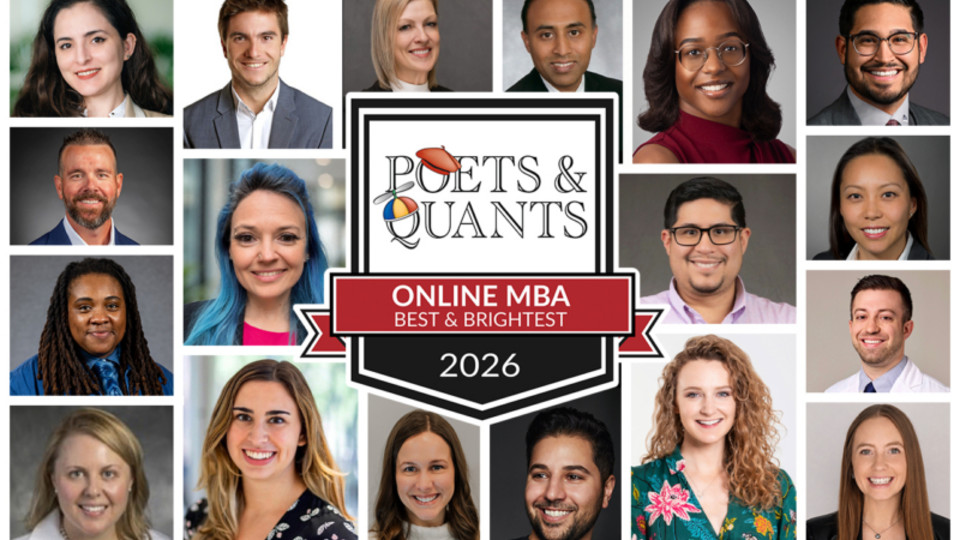
Congratulations to Marissa Minter and Alan Vu, recognized by Poets & Quants among the 2026 Best and Brightest Online MBAs.
Rice Business Executive Education offers custom-made programs for companies that want to strengthen leadership, enhance culture or address specific management challenges or organizational opportunities.
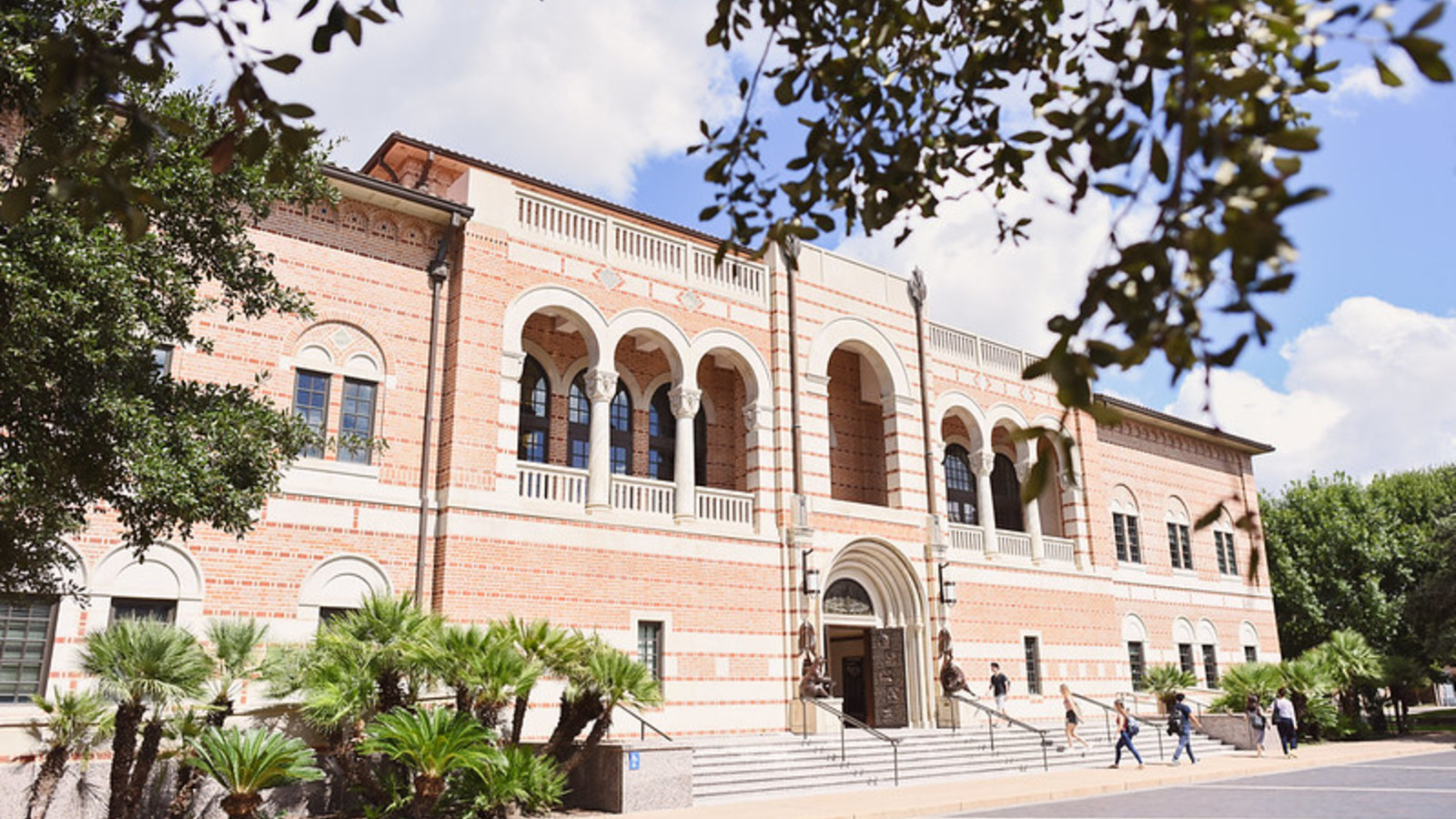
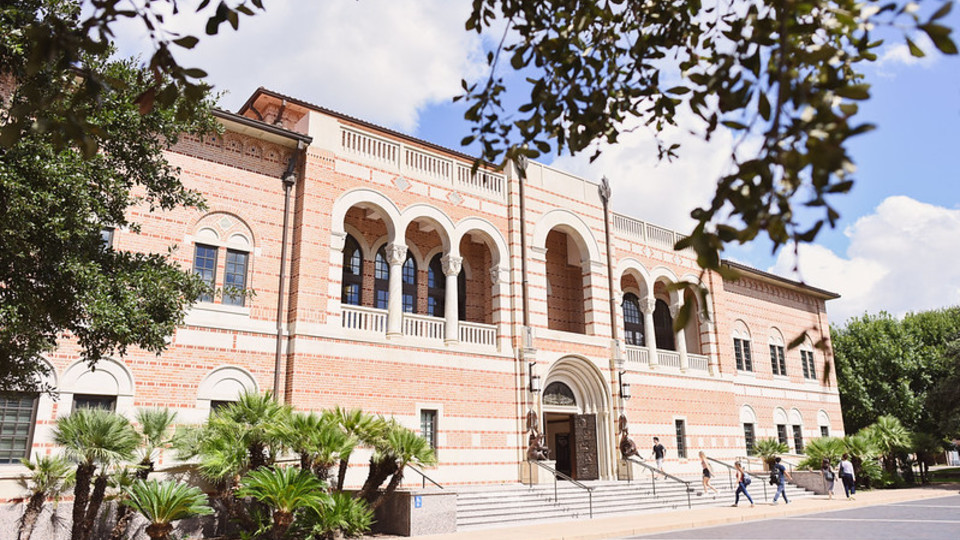
Rice Business Executive Education offers custom-made programs for companies that want to strengthen leadership, enhance culture or address specific management challenges or organizational opportunities. Phillips 66 leaders approached the Executive Education team to develop a custom program focused on leadership, strategy, change management and financial decision-making.
“We’ve got a talent program … we’ve got a collaborative agreement with Rice University where we’re taking our best and brightest and making future leaders of them,” said Mark Lashier, chairman and CEO of Phillips 66, in an interview with Bloomberg.
The team at Rice Business led by Brent Smith, senior associate dean for Executive Education, developed the two-week development program over the course of several months, combining academic expertise with real-world experience and application. Smith has taught more than 300 executive programs around the globe for companies including ExxonMobil, IBM, HSBC, Credit Suisse, Saudi Aramco, DeBeers, Goldman Sachs, Microsoft, Citibank and Red Bull. He served as leadership faculty for the corporate universities of TOTALEnergies, Lufthansa, Tenaris, NOV and Eaton Corp. and is a founding board member of the University of Texas MD Anderson Cancer Center Leadership Institute.
“We so appreciate the perspective Phillips 66 brought to our partnership,” Smith said. “They gave us the time, access to their executives and the resources needed to properly design a program that marries the expertise of our faculty with the challenges and opportunities at Phillips 66. Their willingness to invest in their people is a testament to the culture they have built and continue to cultivate. While companies say their people are their most important asset, the resources Phillips 66 puts into development demonstrates their belief in that statement.”
“Brent and the team at Rice have been so wonderful to work with,” said Meredith Lewis, director of the learning and development programs at Phillips 66. “We partnered on an extensive needs-analysis to create something really uniquely suited to address our challenges and support our business strategy. The customization they were able to provide makes the program relevant and far more impactful than off-the-shelf leadership development.”
Rice Business builds strong relationships with stakeholders to create a truly customized learning experience by taking the time to understand the organization’s structure, challenges and goals. This foundation helps design a program that not only aligns with management needs but also delivers meaningful impact to employees.
Executive Education faculty work closely with stakeholders to help create the program, blending academic insight with practical application through engaging methods like case studies, simulations and team-based projects. Whether the program takes place on the Rice campus or on-site at an organization, Executive Education programming focuses on creating an environment that supports dynamic learning.
Rice Business faculty are known around the world for their academic and research achievements — their blended teaching methods create a highly engaged classroom and rich learning environment. Custom topics range from the latest insights in leadership and strategy to data-driven decision-making and artificial intelligence.
To learn more about Rice Business Executive Education programs for teams and individuals, click here.
Congratulations to Marissa Minter and Alan Vu, recognized by Poets & Quants among the 2026 Best and Brightest Online MBAs.

A Houston venture capital analysis co-authored by Rice Business Executive MBA candidate Stephanie Schmidt highlights the city's growing innovation ecosystem, arguing that stronger startup formation is key to building on recent successes like Fervo Energy's IPO.
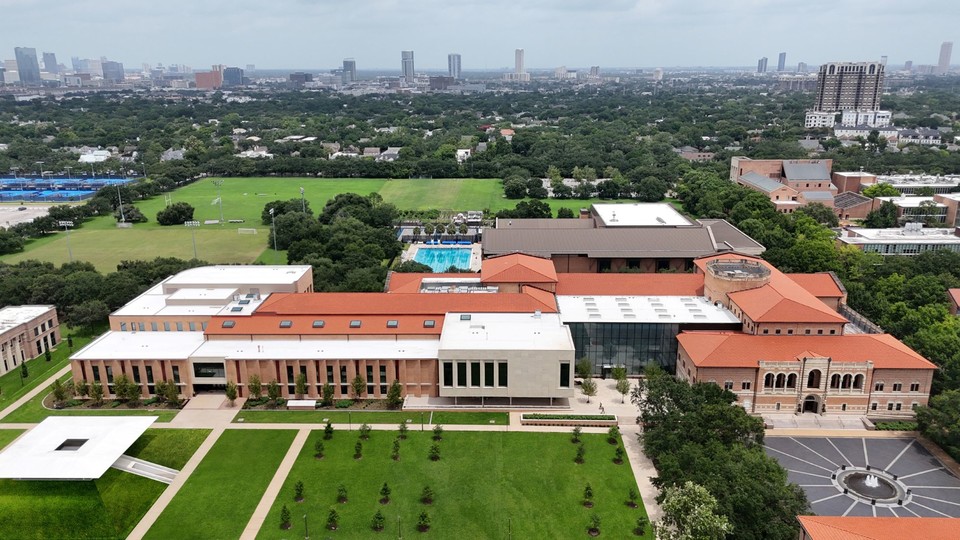
Rice University names its new $54.5 million business building after donors Asha and Farid Virani, the undergraduate business school's namesakes.
Rice University took center stage at the inaugural South by Southwest London, bringing Texas-sized ambition, pathbreaking innovation and global vision to one of the world’s premier gatherings of creative and intellectual leaders.
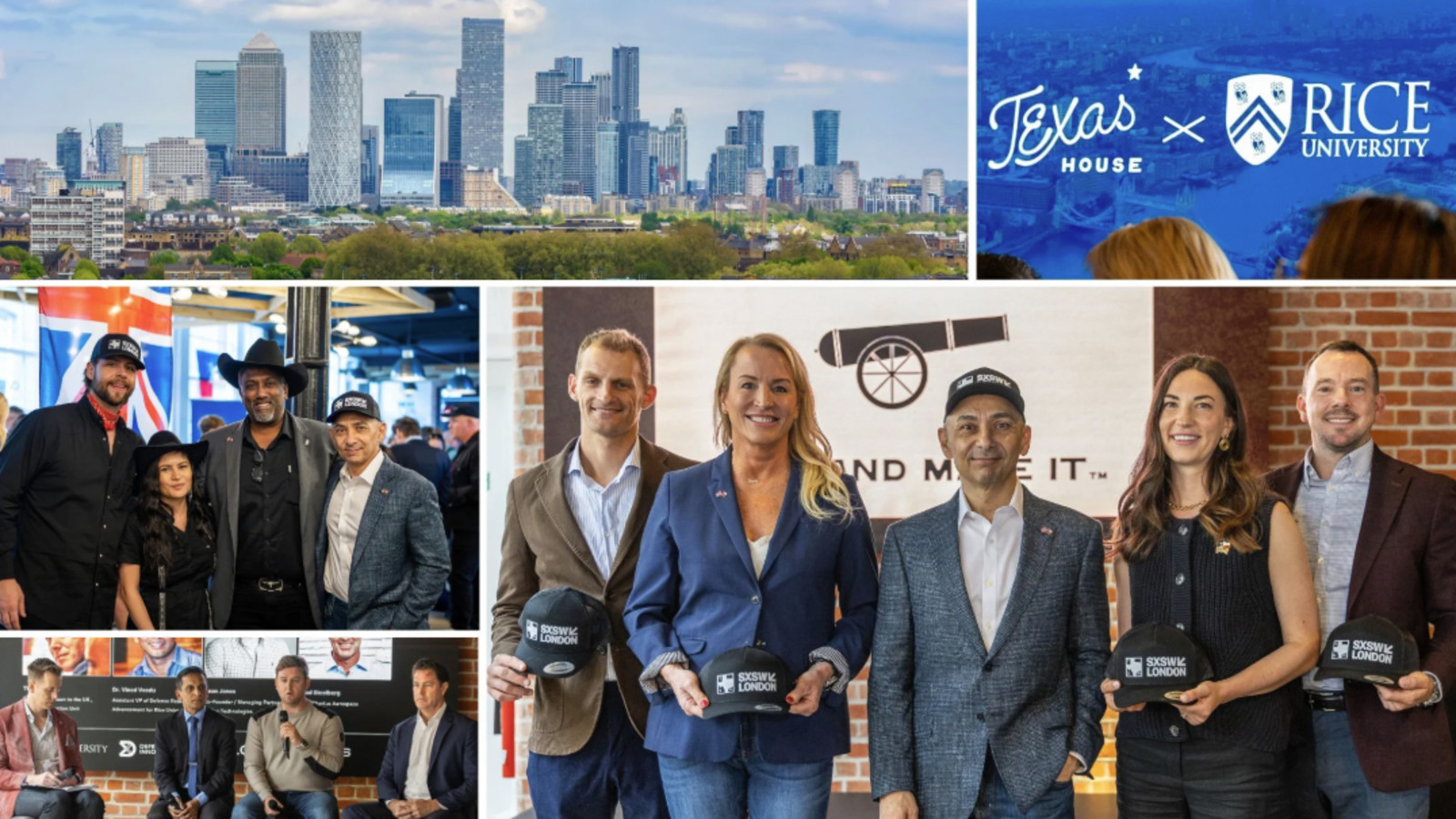
Rice University took center stage at the inaugural South by Southwest London, bringing Texas-sized ambition, pathbreaking innovation and global vision to one of the world’s premier gatherings of creative and intellectual leaders. As part of Texas House in the heart of Shoreditch, East London, several Rice leaders spoke on panels and delivered talks showcasing not only the university’s strength in business and innovation but also its deepening impact in Europe and beyond.
Chief innovation officer Paul Cherukuri laid out a bold vision for the future of innovation, positioning Rice as a driving force in discovery and impact.
“Higher education is really under a huge lens now,” Cherukuri said. “What we see is an opportunity — an opportunity to reinvent what higher education really means. And that’s what we’re doing in Texas.”
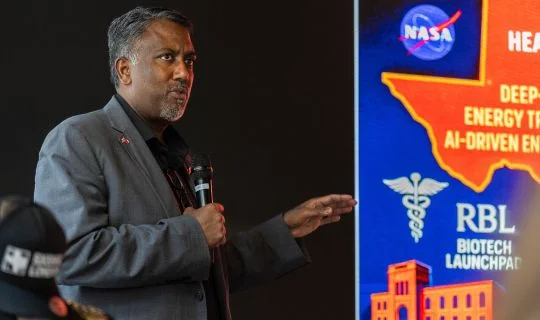
From cutting-edge biotech commercialization to global partnerships, Cherukuri emphasized that Rice is not just keeping pace — it’s setting the speed of innovation. “We’re wanting you all to know that Rice is actually engaged, not only in Houston, Texas, but globally. We are a global university. We bring the world to Houston.”
That engagement is evident in initiatives like the Biotech Launch Pad and RBL LLC, aimed at accelerating the commercialization of biotech inventions, as well as the Ion , Rice’s flagship innovation hub at the heart of Houston’s growing innovation district.
Cherukuri underscored Rice’s commitment to bridging the gap between research and real-world impact. “We’re taking it into the real world and commercializing it,” he said. “What we’re doing is to try to have an impact. When we create an invention, if we do not release it to the world … it is actually our responsibility to do so. By not doing so is actually a disservice to society.”
One of the university’s most ambitious moves is a partnership with Woodside Energy, launched in January 2024, to create the Woodside-Rice Decarbonization Accelerator. The five-year collaboration aims to bring advanced, lower-carbon technologies to market starting with plasma-based material innovations.
“The Woodside project is really unique, and the reason it’s unique is plasma,” Cherukuri explained. “This is a new technology, a new capability in being able to make materials. It’s the absolute cutting edge. It’s opening up new avenues — not only to create new materials but new fuels, new ways of doing chemistry, cleaner and cheaper and hopefully at scale.”
At the heart of Cherukuri’s message was a clear call to collaboration. “We are here to work with the world. That is the point of why we are here. We want to show that we are here to partner. We want to meet like-minded individuals who have the same philosophy: to change the world in terms of invention, innovation and impact.”
He also reminded the audience that Rice’s legacy of discovery is no accident. “It’s a remarkable institution,” Cherukuri said. “Anybody who steps foot in the halls of this incredible place can see that the DNA inside here is to think, to dream big, to think big, to really do things at a scale that no other university can do. And we have that wonderful charter — and we’ve done that time and time again.”
Peter Rodriguez, dean of Rice Business, shared timely insights into why Texas — and Rice itself — are uniquely positioned to lead in global trade and economic collaboration.
“There are a lot of reasons,” Rodriguez said when asked why Texas continues to attract international business. “You need to think of an economy — eighth largest in the world, 30 million people, a geographic footprint larger than France. Let’s just say it’s an enormous place.” But beyond size, he emphasized, the real draw is Texas’s momentum: “Growth is the environment in which you want to invest. We see that in Texas in a very big way. About 1,100 people per day move to Texas.”
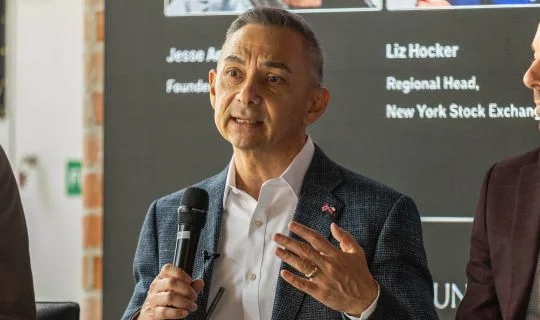
Rodriguez pointed to the state’s unmatched energy resources — “the No. 1 energy producer and exporter in the country” — as well as its growing renewable sector, diverse population and business-friendly climate.
“It’s a city of diversity because it’s a city of great opportunity. You can come there, and if you can build it, there is no barrier to anyone,” he said of Houston.
But for Rodriguez and Rice, the future of business and education doesn’t stop at Texas’s borders. “We call ourselves ‘Moonshot University.’ This is where big dreams are launched,” he said, referencing President John F. Kennedy’s famous 1962 moon speech delivered at Rice Stadium. “We realize you can’t do that — have impact — without great connectivity to the world.”
Rodriguez described Rice’s growing international presence, including its new center in Paris and presence in India. “We don’t need to be everywhere. We need friends everywhere. We need relationships everywhere,” he said. “That’s what’s going to make our university stronger: creating research partnerships with universities, bringing in top students and delivering top students back out to those universities.”
Innovation, Rodriguez explained, is central to both Rice’s mission and Texas’s economic future. “We run the world’s largest business plan competition at a university,” he said. Each year, tech-based entrepreneurs compete in areas like digital health, artificial intelligence and energy transition. “We want to bring together smart minds working at the vanguard of their technological fields and commercializing those ideas into something that makes a really positive difference.”
The key to turning ideas into impact? Collaboration. “It takes city leaders. It takes governments. It takes universities, and it takes corporations working together,” Rodriguez said. “We want to create the friendliest ecosystem for doing that.”
At Rice Business, that collaborative spirit starts early. “Every student has a chance to run a startup,” he said. “Every student has a chance to work with technologists, engineers and natural scientists to develop an idea, take it further and see if they can make a big difference.”
As Rodriguez sees it, Texas is a place that embraces risk and rewards ambition — and Rice is at the center of that energy, helping shape the next generation of global leaders and innovators.
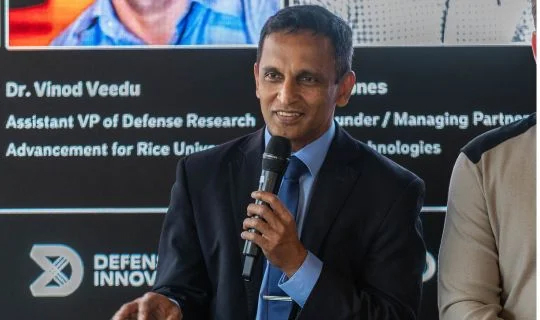
Vinod Veedu, assistant vice president for defense research advancement at Rice, took part in a panel focused on the vital U.S.-U.K. partnership in driving innovation across defense, business and capital investment. The discussion emphasized that close collaboration between the two nations accelerates technological advancement, bolsters both commercial and defense sectors and reinforces shared security objectives.
In March, Rice served as the educational partner for the inaugural Texas House during SXSW in Austin. A first-of-its-kind unofficial, off-site activation, Texas House brought together thousands of attendees to celebrate “Texcellence” — showcasing the bold ideas, pioneering spirit and world-class collaborations that define Texas’ forward-thinking vision.
As a key sponsor, Rice experts led dynamic panel discussions on topics including global partnerships, innovation in Texas, national security and supply chain connectivity, the development of collaborative life science centers and Texas’ role in the emerging brain economy.
Congratulations to Marissa Minter and Alan Vu, recognized by Poets & Quants among the 2026 Best and Brightest Online MBAs.
A Houston venture capital analysis co-authored by Rice Business Executive MBA candidate Stephanie Schmidt highlights the city's growing innovation ecosystem, arguing that stronger startup formation is key to building on recent successes like Fervo Energy's IPO.
Rice University names its new $54.5 million business building after donors Asha and Farid Virani, the undergraduate business school's namesakes.
Corey chats about her pivots from pre-med to English to her current role as an EdTech executive — as well as the importance of supporting AI literacy and how she's helping transform the education system.

Despite entering college as a pre-med major, Corey Layne Crouch ’13 found her calling in the classroom after working as a teacher’s aide for a kindergarten class. Switching majors, she set out on a path to transform the education system from within.
Corey’s entrepreneurial mindset in her work as a high school English teacher and school principal led her to Rice’s Professional MBA program. Now, she’s the chief program officer for AI for Education — an organization providing AI literacy training to educators and championing responsible use of AI in the education ecosystem.
In this episode, Corey joins host Maya Pomroy ’22 to chat about her pivots from pre-med to English to her current role as an educational tech executive — as well as her time at Rice Business, the importance of supporting AI literacy and the innovative ways she’s influenced the education system.
Subscribe to Owl Have You Know on Apple Podcasts, Spotify or wherever you find your favorite podcasts.
[00:00]Maya Pomroy: Welcome to Owl Have You Know, a podcast from Rice Business. This episode is part of our Flight Path Series, where guests share their career journeys and the stories of the Rice connections that got them where they are.
From high school principal to an education tech executive, Corey Lane Crouch has spent decades leading schools, school district teams, and inspiring every student in her classroom. As AI is becoming more intertwined in every aspect of our lives, including education, Corey recognized an opportunity to use and integrate new innovation in making an impact on the next generation of leaders. We talked with her about how she pivoted from a pre-med track to teaching kindergarten to being a student herself at Rice Business. We also talk about her new role leveraging AI and building a more equitable future for all students.
Welcome to Owl Have You Know. I’m Maya Pomroy, your host. And our guest today is Corey Lane Crouch, Professional MBA from the Class of 2013.
Welcome, Corey!
[01:05]Corey Lane Crouch: Thanks, Maya. I'm so happy to be here.
[01:08]Maya Pomroy: Well, we're thrilled to have you. You know, it's been a hot minute since you've been in Houston and at Rice. You've been up to quite a bit, and I'm so looking forward to talking with you about your story and your career pivots and the real dynamic industry that you are currently in, which is on the forefront of everybody's mind.
So, you were a former high school English teacher. You were a principal. And now, you are an educational tech executive. You are the chief program officer at AI for Education, which is something that I am very much intertwined with because I have children and they use a lot of AI in school right now. So, having this opportunity to talk with you about it, I think that a lot of parents and even those that are in the AI space are curious about your journey.
[01:59]Corey Lane Crouch: Great! Yeah. Well, I'm excited to talk about all that. And now, I'm really curious to know what you're seeing in your children and their experience with AI as they move through their education journeys.
[02:12]Maya Pomroy: We will get to that before [crosstalk 02:13].
[02:12]Corey Lane Crouch: Well, yes, we will.
[02:15]Maya Pomroy: Actually, you started out as a pre-med major at NYU.
[02:21]Corey Lane Crouch: That's true.
[02:22]Maya Pomroy: I mean, tell me, so, from that education, that's a shift.
[02:26]Corey Lane Crouch: Yeah. You know, I was always proud to be a good student. And I'm a lifelong learner. That's really a thread that goes through my story. And, you know, graduating from high school, I wanted to go to a fun, exciting, honestly, hard-to-get-into school. And so, when I was accepted to NYU, I was like, “Okay, great. Not going to think about anything else.” And I'm going to go there pre med, but also an English literature major, because I've always loved reading and writing and literature.
And when I was there, you know, I had my chem lab on Wednesday mornings. I still remember that. I remember dragging myself to the chem lab and, like, you know, being surrounded by all these other students who were, of course, brilliant but, like, you know, very focused on everybody getting the highest grade, which I understood.
[03:24]Maya Pomroy: Gunners. Those are called gunners, right?
[03:25]Corey Lane Crouch: Yes. Well, I'm still very much a recovering perfectionist. And I was, you know, dragging myself to those classes, but I also had the opportunity to get a work study job through… at the time it was called the America Reads program. And so, what I did for work while at NYU is that I was a teacher's aide in the kindergarten classroom in the Lower East Side. My week started to really shift because I realized how much I enjoyed being in that classroom with the teacher and with the students. I'm pretty sure I worked more hours than I was supposed to.
[04:07]Maya Pomroy: Well, that means that you have a passion for it, you know. And work isn't work, then that's passion.
[04:12]Corey Lane Crouch: Yeah. So, I certainly realized I had some reflections and some moments. NYU is an expensive… it was an expensive school 20 years ago. It's still an expensive school. And I realized, you know, maybe pursuing education is more where my passion is. And so, that took me to actually transferring to Rowan University here in New Jersey and becoming an elementary education and English literature major.
[04:42]Maya Pomroy: Wow. So, it was just that opportunity, that job, that you didn't think was going to shift anything and really just completely transformed your future.
[04:53]Corey Lane Crouch: It really did. It really did.
[04:55]Maya Pomroy: It's those unexpected moments, huh?
[04:56]Corey Lane Crouch: Well, yes, very unexpected. But then, you know, I was like, New York City. I love New York City. I'm a city girl. I was an elementary education major. Was getting ready to graduate and some other friends had talked about the Teach For America Program, which wasn't really very big at the school that I had transferred to, Rowan University. But I was like, “The mission speaks to me. Let me go ahead and apply.”
[05:23]Maya Pomroy: Could you tell us a bit about… because I know what it is, but for the listeners that don't, could you tell us about Teach For America?
[05:29]Corey Lane Crouch: Yes. Teach For America is a teaching corps, where, at the time, it was really targeted toward those graduating from college. And you apply to be a part of a corps that would go to an area that really needs teaching talent for at least two years and become a part, and then you would do training. And, you know, the idea of it is, like, to serve the population, you know, with a teaching talent, but also understand education. And then, if you go off to other careers and other industries of bringing that knowledge in order to continue to advocate for some of the changes that we saw that we needed at the time and still need now.
Well, the funny thing, Maya, is I was elementary. So, sure I was going to New York City. I got my placement, and it said high school English in Houston, Texas. Had never been to Texas, didn't know anything about Houston, you know. I'd actually called the Teach For America team and told them that I thought that they had made a mistake. I was like, “I think you made a mistake. Supposed to be an elementary in New York City.” And they were like…
[06:38]Maya Pomroy: “And now, I'm in high school in Texas, Houston?”
[06:41]Corey Lane Crouch: They were like, “No, you're qualified to TN. You said you would be willing to go to Houston,” which I think I said I would be willing to go places.
[06:49]Maya Pomroy: Go anywhere, yeah.
[06:50]Corey Lane Crouch: But that was the next big pivot. But really, I see it as, you know, such a serendipitous blessing because being, you know, fresh out of college and I did, I went to teach high school English in Houston and I was like, “Well, I have no idea what to expect.”
At the time, it was Sam Houston High School in the north side of Houston. I think it is now… the name has changed. But yeah, Houston is such a great city. As you know, to be a young professional in and to start your career, let alone having the opportunity to be a part of the thriving, innovative education landscape there, I really think that it helped me think much bigger about what it meant to be an education and what was possible with innovation and really moving the needle toward equity and supporting communities that, historically, you know, weren't being serviced in the way that they deserved.
[07:52]Maya Pomroy: Right. So, how many years were you in Houston teaching high school English?
[07:56]Corey Lane Crouch: So, I taught high school English for, first, I taught for two years, and then I actually joined the Teach For America team for a few years in Houston and trained pre-service teachers in that role for several years. And then I went back into the classroom with a Houston-based charter network called YES Prep. So, if our listeners are in Houston, they probably know YES Prep. And went back to the classroom and was both doing instructional coaching and teaching for several more years until I became the school principal when we opened the high school.
[08:36]Maya Pomroy: Wow. You're a very young principal.
[08:40]Corey Lane Crouch: Maya, I was like, “This is going to come up.” I stepped into that role while I was in the MBAP program at the same time.
[08:52]Maya Pomroy: Well, wow, that's a lot on your plate. So, wait, let's back up a little bit. So, you're teaching in HISD and YES Prep. And then, so, what was the catalyst? What made you decide, “You know what? I'm going to go get an MBA at Rice.”
[09:08]Corey Lane Crouch: Yeah, so, I had shifted from, you know, HISD to Teach For America and then back to YES. And I realized now and more as I was going, I always had a really entrepreneurial spirit. Like, even in my first year of teaching, I was a baby, you know, 22-year-old teacher. I still chuckle at myself. And I pitched, like, a new summer program for credit recovery for the high school students at my school. And my principal at the time let me do it, which is also…
[09:38]Maya Pomroy: Well, that's great to have somebody that believes in you and gives you the agency to do things like that. That says a lot about their faith and trust in you, you know.
[09:46]Corey Lane Crouch: Yeah, absolutely. Yeah. And I've had so many incredible supports along the way. But I realized that, in every role I was in, I was always coming up with, really, intrapreneurship, right? Coming up with new programs, new designs to solve problems or opportunities that I was seeing in the work that I was doing.
[10:08]Maya Pomroy: What were some of the problems that you saw? I'm curious. Like, what were some of the programs that you started?
[10:13]Corey Lane Crouch: Well, for example, when I was at YES Prep, which was in the Gulfton neighborhood — shout out to my Force family. We were the Gulfton force. As a school leader, I brought in house the local clinic called Legacy where they provided mental and behavioral health services, as well as, you know, physical health services, and created a space on our campus to have a mental health specialist and then also a nurse practitioner. And so, we started a partnership with Legacy so that my students, if something was going on with them or they needed extra support that, you know, our school counselors weren't equipped to give that regular clinical support, they could just come, you know, from their study hall or have an appointment once a week with somebody in house. So, it supported, you know, their parents didn't have to necessarily take them to separate appointments. And it just kept a lot more of our students on campus with us and really took a, like, whole child approach.
[11:25]Maya Pomroy: Yeah. And so much efficiency. And you were so ahead of your time.
[11:29]Corey Lane Crouch: Yeah. And while I'm doing all that, I was like, “I heard about this Rice educational entrepreneurship program. Maybe I should apply to that, too.”
[11:39]Maya Pomroy: Why not?
[11:39]Corey Lane Crouch: Cause why not? But I think, you know, I started to recognize how I always think about impact and I loved teaching and I still. You know, my colleagues will tell you every once in a while, I'm like, “Maybe I should just go back to teaching high school English because I love it so, so much.” But I was always seeing the opportunity for impact, opportunity to help others shape and navigate toward, especially for our students, a future that felt where they had agency, you know, and where they could fill their own potential and be fulfilled. So, as much as I loved being in the classroom, it was hard.
And it's also when you have 1,000 students and 100 staff members and you're very community-oriented and community-based, which I believe in deeply, especially that change should come from the community. It's hard to feel like you want to meet the needs and the desires of 1,100 people through, you know, only 24 hours in a day.
So, that work was rewarding but very difficult. But still, you know, I always saw the opportunity for impact and seeing what structures in education still serve us — us being the collective community — and what structures aren't serving us, and how can we continue to evolve and, you know, innovate and grow so that we're doing better by more students. And so, I always the next thing in mind as we were going.
[13:27]Maya Pomroy: So, tell me about the Rice program, because it was something that, obviously, drew you in. And juggling and managing a pretty rigorous career with school, that's a challenge. So, tell me about your time at Rice.
[13:42]Corey Lane Crouch: To say the least, it was a time in my life when I remember thinking like, “If I can do this, I can do anything,” you know, because it was my first year at Rice when I was, like, the assistant school director first for six months and then some things had changed in our organization where I became fully, you know… the way that my brain interpreted it was by myself, you know, principal, we call it a school director at the time. And I remember feeling a shift, like, during the day, at work, I was the person that was, really, the way I think of it, taking care of my school and my community and my employees and trying to make sure that we're making the most of the time, you know, talent, and money that we have available to us to serve the students and their families and the community.
And I was so thankful for the nights, this might sound weird to some people, for the nights that I had class, because I knew it was, like, nope, 4:30, have to be in the car.
[14:58]Maya Pomroy: Unplug.
[14:59]Corey Lane Crouch: Yes, unplug the school director Corey, and I get to put on my learner and my student hat. And I'm a learner at heart and a student. And I felt like, as intellectually as rigorous as being in class was, it was still the time during my week where I got to sit back and learn, and in some ways, like, have somebody take care of me, like, have somebody take care of, you know, how I'm spending this time versus me having to be the one that's always shaping that for others. But the hours were long. The coursework is, certainly-
[15:37]Maya Pomroy: Rigorous.
[15:37]Corey Lane Crouch: Yes, it’s very rigorous. And so, it was certainly an intense couple of years. But it was an interesting way to balance my ebb and flow of the week, such that I think it was sustainable for me.
[15:52]Maya Pomroy: Well, it was, so, you were sitting in class and then you would go and see your students sitting in class, right? Like, that's, like, living, sort of, parallel lives to those that you were serving.
[16:03]Corey Lane Crouch: Yes. I was also honored to have one of my staff members that was also in the MBA program. It just worked out that way. And so, at graduation, we bussed some of our students to be there at graduation and for them to see the work that we had done and everything. But my graduation photo, I will forever cherish. I am smiling so bright because it was a whole section of an auditorium of my students going nuts when they called my name.
[16:42]Maya Pomroy: Oh, I love that.
[16:43]Corey Lane Crouch: And it felt, you know, as tough as that was, I felt very much that it was something we had done together as a community and that it meant something for them too.
[16:53]Maya Pomroy: And their support of you for what you have accomplished, you know, is, sort of, giving back to you the way that you were always and continue to always give back to them. That's an incredibly special moment. So, after graduation, how did you get into the ed tech space?
[17:09]Corey Lane Crouch: I remember really thinking that I deeply believed and we saw the evidence of it that we were helping and supporting students and beating the odds, if you will. And all of our students were accepted to a four-year…
[17:26]Maya Pomroy: I read that. 100% got accepted to four-year college. That's huge.
[17:30]Corey Lane Crouch: Which in that, you know, in the Gulfton neighborhood at the time, that far outpaced the average. So, that was deeply important to me, but I knew we were helping them beat the odds but we weren't changing the odds.
And I remember just kept thinking to myself, “There's got to be a different way to have an impact on the way the system works, so that more, like, we change the odds, more students have access to an educational experience that gives them the option to go to a four-year college or university, if they want it, or give them the option to take another post-secondary pathway if they want it.” And then life things were going on as well, as they do, that was requiring me to move away from Houston. And so, I had some colleagues that had actually started to work with a program called Summit Learning out of Summit Public Schools in California.
And what I saw was that it was a program that was asking this question of, what should school design look like? And what should a school model look like based on what we know about learning and the learning science and best practices that's rooted in the community? And then how can technology support and make that happen in a way that-
[18:55]Maya Pomroy: [crosstalk 18:55].
[18:56]Corey Lane Crouch: Right, that was, like, never possible before. And I was like, “Yes, that is the type of thing that we should be exploring and pushing and really asking that question,” not just, you know, how great can technology be, or how far can it take us? Yes, that's something for society collectively, but this question of, how do we really service the outcomes of all students and really keep the vision for a school and a school design in mind and use technology as a tool to help us achieve that in, quite frankly, like, a system that's still pretty archaic, like, a lot of the constraints in education.
[19:43]Maya Pomroy: Based on districts and, you know, so many different variables.
[19:48]Corey Lane Crouch: So many different variables. So, that took me to being a part of Summit Learning that we eventually spun off to become our own nonprofit, which is now called Gradient Learning. And that was really my entryway into the ed tech space.
[20:06]Maya Pomroy: So, this was the time… because I remember this was the time when AI was just starting to become, you know, relevant. And for me, I feel like it was during that COVID time that it really started for our family anyway, just started to gain a whole lot of traction when, you know, the kids started going back into the classroom when classrooms were open again. And all of a sudden, you've got, like, Flint AI and all of these different platforms that kids could use, and even, you know, obviously ChatGPT and everything else. And now, it's really ingrained in everything. It's ingrained in every curriculum, it seems like, and in every teacher's learning plan and all that. For me, it, sort of, seems like it happened overnight. For you, it doesn't.
[20:55]Corey Lane Crouch: You know, yes and no, Maya. So, ChatGPT was released to the public in November of 2022. It was the fastest-growing consumer technology that we've ever seen before. And interestingly, it, in November 2022, grew a ton during that next spring, and then took a dip, the users took a dip in May and June. at first, those in the tech were like, “Oh, okay, is it cooling off this quickly?”
But we in education know what happened. That's when school let out. That's when school let out. And even recently, OpenAI released something. But what we saw very quickly is that students and teachers, even before all of the other ed tech layer products, we call them, so those are products, like you mentioned, Flint and MagicSchool and SchoolAI, those types of products, their user interfaces built on top of the frontier models like ChatGPT and Gemini and Claude.
But even before startups were launching those products, students and teachers were using ChatGPT in teaching and learning. And so, it was, kind of, all of a sudden. But at the same it's interesting to hear you say that, it's pretty integrated, because it is highly used, especially amongst students, but the work that we're doing, what we're seeing is that, by and large, especially in K-12 education, understanding how to integrate it responsibly in a way that really supports the learning and the development of students and prepares them for a future where the technology is going to be in everything that they do and supporting teachers that are trying to build the bridge from, well, pre-November 2022, this is how I would assess my students, you know, this is what my curriculum looked like, and now all of a sudden they have this technology in their pockets, really, that is like a magic essay button, you know, for all intents and purposes. What does that mean for how we need to evolve our practice? And that's a lot for teachers and school leaders and district leaders to think about while they're still running schools at the same time.
[23:33]Maya Pomroy: Yeah. Well, that's what I was going to ask, was that, you know, I'm sure that you've got a really good lens on how teachers are responding to it. Because I think that, for some teachers, you know, it's literally like walking on Mars. It's like, “I don't really know how I'm supposed to do this. And this is not what I'm…” you know, teachers that have been teaching for decades, then all of a sudden, it's like, “Well, here's this wonderful tool and you need to learn how to use it because this is the future.” So, how do you manage that?
[24:01]Corey Lane Crouch: Well, the thing that we saw early on is that, and of course, with any innovation, you have the innovation curve. So, you have your very early adopters and et cetera. So, we have… there's some teachers and some leaders that have been at the forefront of this for almost two years now. But overwhelmingly, a lot of practitioners, so the teachers and the leaders, their first encounter with it was realizing that students were using it to do their work in ways that weren't aligned with academic integrity.
[24:42]Maya Pomroy: I’m going to bring that up, too.
[24:44]Corey Lane Crouch: “AI is a cheating tool,” is a narrative that we really have to address head-on and then work to shift it. And the students tell me, too. I have the privilege and honor of, you know, doing focus groups with high school students, in particular. I was a 9th-grade English teacher. You know, I know how to get them to, like, you know, warm up and tell me what's really going on. So, they'll tell me how they cheat and, like, how not to get caught using it. And sometimes, it's like, “Well, my friend did this.” And I'm like, “Okay, your ‘friend,’…” So, for teachers and as a former, you know, English teacher, my heart goes out. I totally get it because you're already working so hard, and now you have to assess your students completely differently.
And they can't actually write a good essay with ChatGPT unless they know the content really, really well and have strong evaluation skills. So, you have to, you know, meet teachers where they are and then give them the space to be learners and explorers themselves, to build their capacity with the technology. And as educators, we naturally think like, “This is what makes sense for my students, or we have to, as a team, talk about how we're going to evolve our academic integrity policy and how we're going to evolve our assessment practices while still recognizing, you know, students have to take standardized tests. They're still going to have to write essays sometimes. But how do we, you know, continue to think bigger about the skills and the mindsets, really, that they need to be successful with the technology?”
[26:29]Maya Pomroy: So, that's one of the things, is that, for my kids, when they use AI in school, it’s not “give me the answer to this question,” which is, you know, the academic integrity issue, but more of “give me five problems about this geometry concept,” right? So, then it generates these problems, and then you can, you know, have more practice and figure out what you're getting right, what you're getting wrong, those sorts of things.
So, it took my husband and I a little while. I'm like, “Wait a second. I don't understand why you're using AI. Like, I don't. It doesn't make sense to me.” And then when we, sort of, dug a little bit deeper and the teachers were able to explain, you know, “This is about giving your child more access to more opportunities, to more practice, to build their skill set.” And, you know, that's part of it as well. So, then I was like, “Oh, okay,” because it was very hard for me to wrap my brain around how you can use ChatGPT, which immediately you think is cheating, to actually… but I mean, it's, sort of, the same way that Google was at the beginning, right? Like, you type in whatever you want on Google and there's a bazillion things that'll give you all the answers.
[27:37]Corey Lane Crouch: And calculators in the ’70s.
[27:39]Maya Pomroy: Right. That's a very good analogy.
[27:44]Corey Lane Crouch: I was not in high school math in the ’70s, but based on my research, it follows a similar curve.
[27:52]Maya Pomroy: So, those are some of those misconceptions about AI. What do you think is the biggest misconception about AI in schools?
[27:57]Corey Lane Crouch: That it's about the tooling and the technology. It's not. We feel very strongly about this, that it's about building AI literacy. It’s about, yes, understanding at a very basic level, you know, what the technology is, how it's developed, so that you can understand the capabilities and the limitations of it.
And then what we really focus on is both for educators and leaders, as well as for students, learning how to use the technology safely, ethically, and effectively. So, it's not just about, you know, how do I ask a question or get information in ChatGPT or NotebookLM or whatever tool you're using, but it's understanding the potential risks and how to keep yourself and how to keep others safe, which is data privacy and security. But it's also understanding that it's important to have a balance of human relationships and AI relationships, because we're getting more and more opportunity to have AI companions to support us in those things.
[29:14]Maya Pomroy: So, tell me some of the work that you do, because AI for education is really tackling one of the… I mean, this is one of the biggest shifts in modern learning.
[29:22]Corey Lane Crouch: Mm-hmm.
[29:23]Maya Pomroy: Right? I mean, yes, calculators in the ‘70s. This is another big, modern shift, and computers and all of those other things. So, tell me about AI for education and how you're really promoting this remarkable shift in learning and really giving all students the access, that equitable piece. Because there's some kids that don't have phones and don't have access to these sorts of AI technologies.
[29:49]Corey Lane Crouch: That's why we focus on the AI literacy piece. And we understand, because also, my change management background and understanding systems, that we need to give the time and space and resources for leaders to build their AI literacy, for teachers to build their AI literacy, for parents and caregivers to do it as well, and for students.
And so, we work with them to do exactly that — explore the tools and understand what that means for them in their immediate work and then think bigger about redesign or evolving a school program. So, we provide workshops. And the thing that we do as well is that we're tool-agnostic. We do have opinions about tools and where, you know, what's safe and what's fit for purpose and what we think isn't quite yet and how to integrate it in that way, because the technology is going to continue to evolve. But we really believe, a foundation of, which is rooted in durable skills, right, of critical thinking and evaluation and understanding the best tool for a job and how to be community-oriented, that is the work that we do. And of course, we teach people how to use the tools and drive towards outcomes with them while we're laying that foundation as well.
[31:18]Maya Pomroy: So, what kind of skills do students really need in an AI-driven world?
[31:23]Corey Lane Crouch: The million-dollar question that everybody wished they knew the answer to.
[31:29]Maya Pomroy: Well, I have a feeling you've got some suggestions and thoughts on the issue.
[31:33]Corey Lane Crouch: Well, to bring it back, I really believe that students need entrepreneurial skills. And not necessarily because every student is going to go off and start their own business, per se, but at the root of it, entrepreneurial skills is about, you know, understanding what you're trying to drive to or what's the job to be done. Seeing what's the diagnosis, what are the challenges, or, you know, opportunities to do better, and then understanding the resources that you have, and moving forward with strategy, as if it's a puzzle piece. And, you know, it's strategy but it's also about just seeing that opportunity and having the confidence and the belief in your own critical thinking, your own resourcefulness, and your ability to collaborate and build a relationship with others in order to solve a problem or drive something forward.
And the reason why I say those entrepreneurial skills, many reasons, but also, I mean, next week I'm working with a group of pre-K3 and pre-K4 teachers. Their students are going to be graduating high school in 2039 and then doing post-secondary. They're going into a workforce that we have no idea what it's going to look like. But what we do know is that, as things evolve, their ability to see opportunity and believe that they can, you know, drive toward that and that they can learn and adjust and use the tools available to them to get to that end point, that's going to be the thing that allows them to continuously have agency over the path that they take.
[33:24]Maya Pomroy: So, the time that you've been at this remarkable organization, what sort of feedback have you gotten? Because you said that you do workshops with teachers and, you know. So, what kind of feedback do you usually get, you know? I mean, people know that the train has left the station and either you, like, get on a raft and get out to the train or you've missed the train. Not a raft. On a scooter.
[33:46]Corey Lane Crouch: You know, we work really hard to be pragmatic. We're both not overly optimistic about where the technology is headed, but we're not pessimists, either. We are pragmatic. We say, “Look, it's here and it is a change. Let us meet you where you are to build some valuable skills.”
So, while I believe schools and classrooms need to evolve pretty drastically to continue to make sure our young people have agency in the workforce in the future, there's also just tools and resources we can give teachers that are going to help them in their practice in the immediate. We just need 90 minutes with them. It doesn't matter if they never touched ChatGPT before, they can walk out with some practical tools that are then going to go and enhance their practice moving forward.
And that's the feedback we get. People always come in a little… well, not everybody comes in hesitant, but for those that come in hesitant, or for those that are, like, “I'm a first grade teacher, this doesn't apply to me,” we're able to demystify it and open their eyes to possibility and the reality of why it's complicated for them as current teachers to integrate this in a responsible way.
[35:11]Maya Pomroy: So, what are you the most hopeful of and looking forward to in education in the next, you know, five years because of AI?
[35:20]Corey Lane Crouch: Well, I'll say two things. For young people, and you'll notice I refer to students as young people often, they are so brilliant and so motivated, you know, to solve for the things that are impacting their communities and their lives that we've already really seen how access to these tools can help them be even more self-directed in having an impact. We do something called a Prompt-a-Thon where groups of high schoolers come together over the course of a day and solve a problem in their community. And they use AI to help do the research, help put together their pitches, you know, all of those things. So, I'm just excited to see, when we get it right to see the brilliance of young people unlocked, because, I mean, I have so much faith that they're going to help us have a more abundant future with this technology.
And then the other thing I would say that I'm excited about is that I get to do this work with the educators on the ground day to day. And sometimes, when you're in product development, and eventually, as we grow, this might not always be the case, but I'm really basking in it right now because there were times, you know, in previous years where I didn't get as much on the ground time with educators that are working with students day to day and they're just trying to continue to get better at what they do, too. And so, while I bounce around the country quite a bit, it is just such a privilege to be able to sit with them in their schools and in their spaces and see what they're really trying out and how I can have a positive impact on what they're doing.
[37:07]Maya Pomroy: Well, it seems like your entire career has been a very positive impact, from the very beginning. And I'm sure you would have been a wonderful doctor, but I think that I'm very grateful that you ended up in this industry and in this space because it's a brave new world. And here we are, and you really get to be on the forefront of all of that.
And I'm really grateful that you took some time to talk to us about this and so much that you have done since your MBA at Rice. And there's a lot of wonderful AI happenings at Rice. So, if you ever make it back to Houston, you should come and check out Rice Business because it's really been transformative in the last couple of years for even, you know, us older people that get our MBAs.
[37:47]Corey Lane Crouch: Yes, I know. I am way overdue to be back, so I have to keep an eye on those events. And maybe, I can, you know, make it the good excuse to get back in Houston for a little while.
[38:00]Maya Pomroy: Well, it's been a pleasure, Corey. We really appreciate it.
[38:02]Corey Lane Crouch: Thank you so much for having me. I really appreciated the space to talk about this important work.
[38:10]Maya Pomroy: Thanks for listening. This has been Owl Have You Know, a production of Rice Business. You can find more information about our guests, hosts, and announcements on our website, business.rice.edu. Please subscribe and leave a rating wherever you find your favorite podcasts. We'd love to hear what you think.
The hosts of Owl Have You Know are myself, Maya Pomroy, and Brian Jackson.

Emma and Jacob trace their unlikely path from Citibank trading desks to startup life and share how Tierra Climate is helping reshape the energy industry.
Pablo shares why more physicians need business fluency and what it means to look beyond the exam room to the health of an entire community.
David shares how the Rice MBA helped him pivot into consulting and how AI is reshaping the industry.
In the wake of scandal, organizations face a critical question: who will stay committed and who will leave? The answer depends largely on what type of institutional events people attend — and how far the scandal spreads.


Based on research by Anastasiya Zavyalova (Rice Business) and Bryan K. Stroube (London Business School)
Key findings:
Drawing on detailed records in the wake of the Catholic Church’s child abuse scandal, researchers Anastasiya Zavyalova (Rice Business) and Bryan K. Stroube (London Business School) analyzed two decades of member engagement data to understand how different types of rituals can help organizations weather a scandal.
To answer those questions, the study looks not at press releases or crisis messaging, but at what organizations do — the rituals they use — to mark evidence of community rupture, responsibility and renewal.
In their study, published in Organization Science, Zavyalova and Stroube identify two fundamental categories of member-engagement events: “rites of integration” and “rites of passage.”
Rites of integration are the recurring events that build community identity — monthly town halls, company-wide off-sites or, in the context of this study, weekly worship services. These events continuously reinforce shared values and attract an organization’s most committed members: lifelong members, parish-council regulars, office culture boosters, volunteers who stay late to lock up.
Rites of passage mark individual milestones — retirement and promotion celebrations, for instance; or, in the religious world, weddings, baptisms and funerals. Because these events mark a transition in a single individual's life, they attract a wider circle of engagement, including members who rarely attend rites of integration that have more to do with community identity.
The research demonstrates that regular, low-stakes community events create psychological and social infrastructure that can withstand crisis — at least initially.
The Catholic Archdiocese of Philadelphia provided an ideal research setting for Zavyalova and Stroube because of its unusually detailed attendance records, as well as the scandal’s well-documented timeline. In 2002, when The Boston Globe exposed widespread abuse in the Catholic Church, investigations spread nationwide, including to Philadelphia where registered Catholics represented nearly 30% of the metro area’s population.
The researchers analyzed parish-level data from 1990-2010, tracking attendance at Sunday Mass (rites of integration) alongside participation in weddings, baptisms and funerals (rites of passage). This comprehensive dataset, spanning the scandal’s emergence and aftermath, revealed how different types of community engagement respond to organizational crisis.
To isolate the scandal’s effects, the study controlled for demographics, economic conditions and seasonal variations that might independently affect church attendance. The researchers also compared parishes with accused priests to those without direct involvement, creating natural control groups within the same archdiocese.
The data revealed two distinct patterns of response. Overall, rites of passage suffered more than rites of integration. That is, rates of baptisms, weddings and funerals declined more than Sunday Mass attendance, especially in parishes with accused priests.
This pattern reflects the different psychological investments these events represent. Core members who attend weekly services have the organization woven into their identity, making immediate withdrawal difficult despite moral concerns. Meanwhile, families planning weddings or baptisms — events that can be relocated — quickly sought alternatives when misconduct emerged on a local level.
However, if the scandal spread to neighboring parishes, this pattern reversed dramatically. Sunday Mass attendance began declining more steeply than milestone events. Once the scandal became system-wide rather than isolated, even the most devoted members started questioning their organizational ties.
“When scandals crop up at nearby branches, the issue feels more severe to core members,” explains Zavyalova. “Once several neighboring branches of the organization are implicated, ignoring or excusing the misconduct becomes nearly impossible.”
Most likely, Zavyalova explains, parishioners attending weekly Mass identified more highly with their parish and felt connected to the community than members who only held a wedding or baptism. “Members who feel deeply connected to the organization have it woven into their identities, so walking away is much harder.”
Another interesting thing happened as the scandal spread: core members pulled back even more sharply than the peripheral members who, perhaps seeing every parish as equally tainted, continued holding their personal ceremonies.
Were there any exceptions to this pattern? Yes. At older and larger parishes, Sunday Mass attendance was more resilient — perhaps because the psychological and identity-related associations of core members were strongest within these communities.
These findings offer crucial insights for any organization building resilience to scandal. The research demonstrates that regular, low-stakes community events create psychological and social infrastructure that can withstand crisis — at least initially.
Of course, Sunday Mass carries more spiritual, historical and social weight than any office holiday party or lunch-and-learn. Nevertheless, the study shows that rituals designed to build community — whether sacred or secular — follow similar engagement patterns when scandal strikes.
Organizations should invest in consistent rites of integration long before trouble emerges. Weekly all-hands meetings, cross-departmental volunteer projects, regular social gatherings, alumni reunions and informal traditions build the shared identity that helps communities weather scandal’s first impact. These events also provide natural platforms for leadership communication and collective problem-solving when crisis strikes.
However, the research also reveals the limits of community loyalty. As misconduct spreads across an organization, even the most committed members will eventually withdraw from core activities. This suggests that preventing scandal spread — through rapid response, transparent investigation and decision action — is more critical than simply building strong community bonds.
The paper also highlights how organizational characteristics influence scandal resilience. Larger, more established organizations have natural advantages in crisis management, possibly due to greater resources, more diverse member bases or stronger institutional traditions. Newer or smaller organizations, like startups, may need to invest more deliberately in community-building activities to achieve the same level of resilience.
Catholic Church, while unique in its spiritual and historical dimensions, reveals universal patterns in how communities respond to scandal. By understanding these dynamics, leaders can build more resilient organizations and respond more effectively when it strikes.
Written by Katie Gilbert
Stroube and Zavyalova (2025). “The Relative Effects of a Scandal on Member Engagement in Rites of Integration and Rites of Passage: Evidence from a Child Abuse Scandal in the Catholic Archdiocese of Philadelphia,” Organization Science.


Ivan Diaz is a full time student studying business at Rice University and the owner of Oasis, a concept that offers acai bowls and smoothies in the Lyrics market. “I don’t think age really defines what you can and cannot do,” he says.

David Jaurrieta ’24 shares his journey to becoming an associate at McKinsey & Co. He talks about the value of community, shines a light on the importance of commitment and more.
What makes the Executive MBA so valuable? Learn how this flexible, high-impact degree empowers experienced professionals to lead or pivot — and go further in their careers.


If you’re a mid-career pro, you could be eyeing the C-suite, a career pivot, or the start of your own venture. You might also be wondering whether an Executive MBA could help you get there.
If that sounds like you, you’re in good company. For many professionals, an Executive MBA isn't just a smart option — it’s a strategic career move with long-term payoffs.
Executive MBA programs (EMBA) differ from a traditional full-time MBA and other working professional MBAs in a few key ways:
This last point about the EMBA class profile is probably the most notable. At Rice Business, the typical Executive MBA student brings:

At its core, EMBA programs are built for professionals who are already leading at work — and are ready for what’s next. It’s not a pause in your career; it’s a way to deepen your expertise, expand your network, and position yourself for bigger opportunities without stepping away from your current role.
Rice’s STEM-certified EMBA program takes 22 months to complete — giving students time to build a strong foundation in core business fundamentals; explore electives tailored to their interests; and strengthen their leadership skills through hands-on experience.
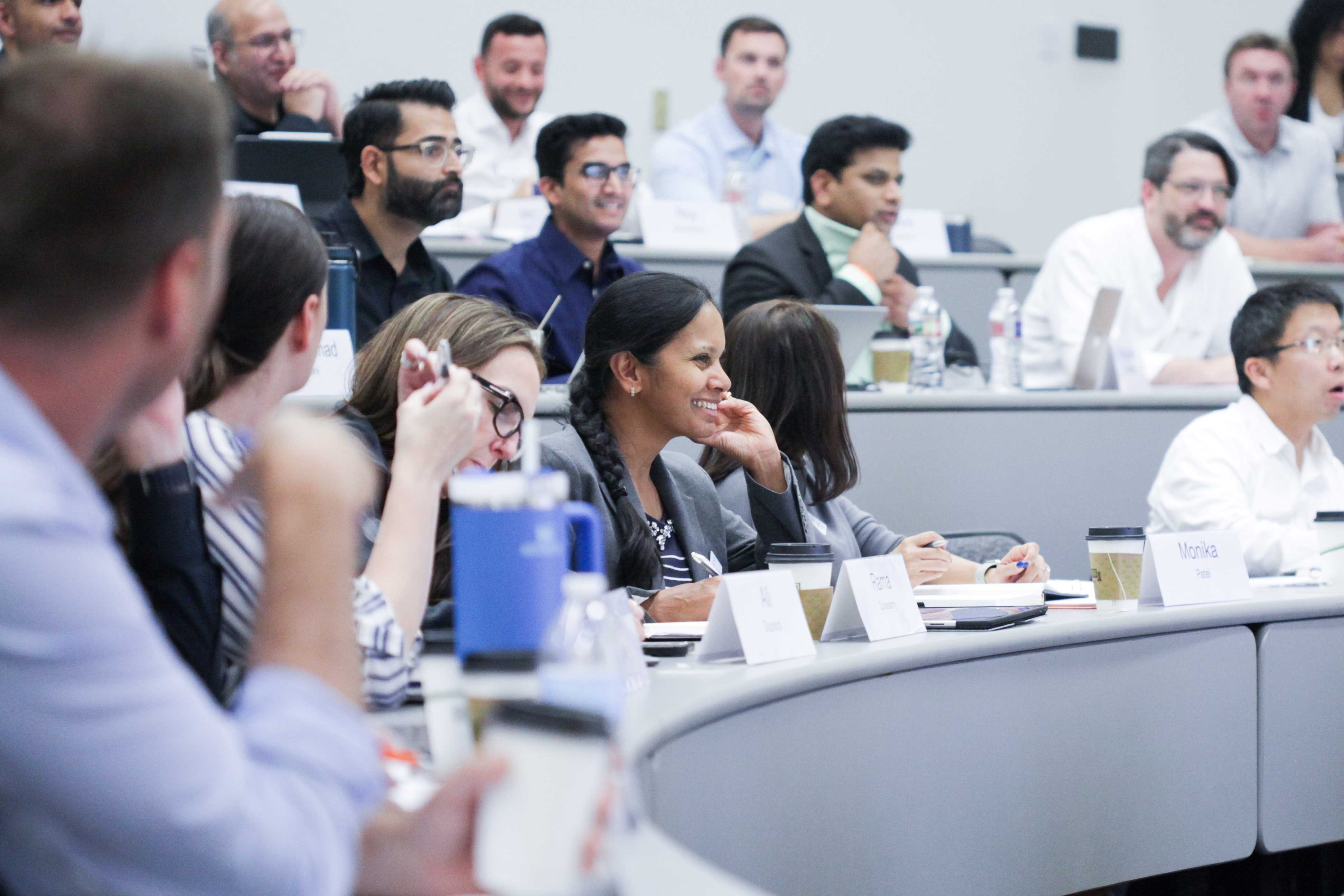
The Rice Business EMBA includes:
Our cohort-based model meets two weekends per month, fostering close connections among classmates and a professional network that lasts long after graduation.
Rice EMBA students don’t just learn from top faculty — they learn from each other. The program pairs personalized leadership coaching with a diverse, experienced peer group that brings real-world insight into every discussion.
And the return on investment goes beyond the classroom, with lasting benefits like:
Hear about Executive MBA alum Dan Tinker's decision to pursue a Rice MBA and how he took a business from bankruptcy to an $18 billion acquisition:
Houston isn’t just the energy capital of the world — it’s also one of the fastest-growing and most diverse business hubs in the country. With two major airports and a central U.S. location, Houston offers easy access to global markets.

As a Rice EMBA student, you’ll tap into premier events and insights across industries like energy, tech and healthcare. Our home base, McNair Hall, sits minutes from the world’s largest medical complex and is within reach of the second-highest concentration of Fortune 500 headquarters in the nation.
Whether you're aiming to rise within your company or launch a new venture, Houston’s business ecosystem connects you directly to industry leaders, global perspectives and high-growth opportunities.
And when class is over? There’s always something happening in Space City.
The Rice EMBA is built to help you apply what you learn right away — so you can make an impact in your current role while preparing for what’s next. Along the way, you’ll gain a close-knit network of peers and mentors you can rely on for years to come.
If you’re an experienced professional ready to lead at a higher level, the Rice EMBA could be the next step.
Learn how to compare the best MBA programs for finance. Explore key factors like curriculum, recruiting and the strategic advantage of hubs like Houston.
Wondering how to pivot into consulting without a business background? Discover how the top-ranked Rice MBA curriculum, Career Development Office, and hands-on learning opportunities will empower you to make a successful career transition.

Rice MBAs receive unmatched entrepreneurial support, beginning with a curriculum that teaches collaboration and innovation and amplified by a community dedicated to giving back. Considering launching? Here are a few tips Rice Business entrepreneurs have shared on our podcast, Owl Have You Know.
A seasoned entrepreneur, investor and mentor, Ben discusses his incredible career journey, approach to mentoring entrepreneurs, and the many lessons he's learned over the past 50 years.
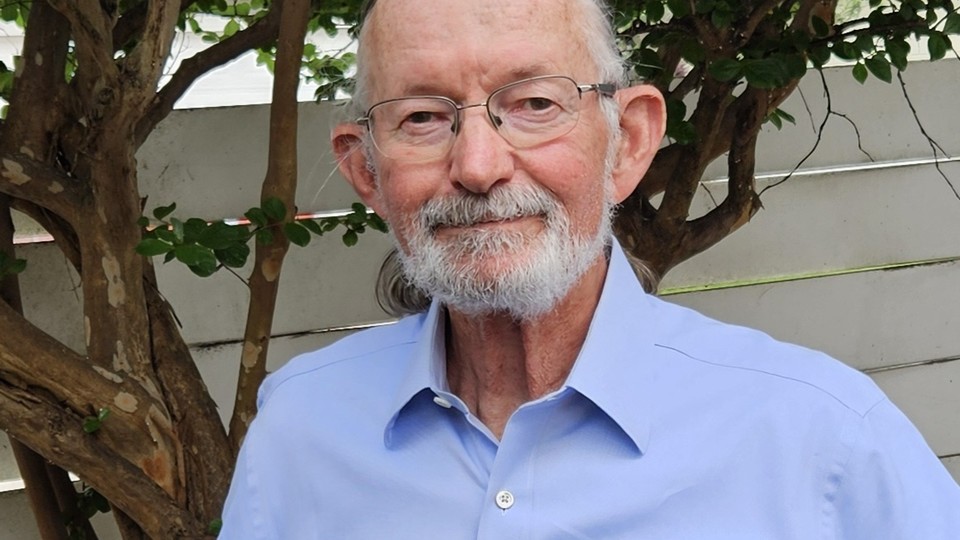
As a seasoned entrepreneur, investor and mentor, Ben Mayberry ’76 has seen a lot of change in the Houston business sector over the last 50 years.
Beginning his career in the technology sector, Ben went on to co-found companies like BSG and Winston Sage, and has been deeply involved in the Rice Business community through mentorship and recruiting. Ben has also served as the president of the Rice Alumni Association and has been a judge in the Rice Business Plan Competition for two decades.
Ben joins Owl Have You Know co-host Brian Jackson ‘21 to discuss his incredible career journey, commitment to Rice, involvement in the Houston Angel Network, approach to mentoring entrepreneurs, and the many lessons he’s learned over the course of his 50-year career.
Subscribe to Owl Have You Know on Apple Podcasts, Spotify or wherever you find your favorite podcasts.
0:00]Brian Jackson: Welcome to Owl Have You Know, a podcast from Rice Business. This episode is part of our Flight Path Series, where guests share their career journeys and stories of the Rice connections that got them where they are.
Today, we're sitting down with someone who's done it all—built companies, backed startups, mentored founders, and even bred white-tailed deer. Joining us is Ben Mayberry, a twice Ricer whose 50-year career spans technology, venture capital, and business leadership. He co-founded BSG, a pioneering systems integrator that grew from just two employees to over 650 with multiple offices before its sale.
Later, Ben launched Winston Sage Partners, an investment and advisory firm that has guided numerous small businesses through acquisitions, strategic growth, and executive leadership.
As a founding member of the Houston Angel Network, now one of the most active angel investment groups in the country, Ben has been a driving force in Houston's entrepreneurial scene. He's also been a dedicated mentor and judge for the Rice Business Plan competition, helping shape the next generation of innovators.
Ben, welcome to Owl Have You Know.
[01:17]Ben Mayberry: Glad to be here.
[01:18]Brian Jackson: We’re very happy to have you join us. Like I said, you've had an incredible 50-year career spanning so many different industries. I mean, the breadth is incredible. When you look back, what's the common thread in your journey?
[01:30]Ben Mayberry: Well, I guess it's going against the thread a little bit, because I started my career at what is now Accenture. I realized I was way too contrarian to make partner on their schedule. So, I left at age 26 and started to work for myself. So, there's always been a bit of an entrepreneurial spirit or the, I guess, rejection of the corporate America and working on my own.
[01:56]Brian Jackson: Interesting. You said contrarian. It's a word that's actually been used to describe you and your perspective. You know, what's an unpopular opinion that you've had about business or investing?
[02:09]Ben Mayberry: Oh, gosh! Well, you're asking me hard questions here. I have to think about that. I'll give you an example early in my career. I was working for larger companies doing large IT projects. And the typical corporate group, you know, they had the 8:00 to 4:15 schedule and that you did as much as you could in that timeframe. Meanwhile, the projects had deadlines. And so, I often found that I was more dedicated to the project and more concerned about the success of a particular corporate goal than the people who worked there.
So, I don't know if I'd call that contrarian. It's just a different perspective. And that was also why I realized that it would be difficult for me to work in a large corporation, because the drive to get things done or meet particular goals didn't necessarily always align with people that worked in larger corporations.
[03:06]Brian Jackson: That's interesting. So, from coming from that perspective of working for a large corporation, but then to managing a large corporation, I'm curious, as a leader, has that impacted how you, you know, one, builds your teams, but also how you manage them?
[03:22]Ben Mayberry: Well, when we started BSG that you mentioned, we knew that we needed a different corporate culture. And so, in the late ’80s, where everybody was wearing coats and ties, for example, we started with no white shirt Monday and no blue skirt Monday. And that quickly morphed into business casual long before it was acceptable, even though, when we had certain clients where we had to wear a coat and tie, we did.
Secondly, in recruiting, we started with the best and the brightest. We knew we couldn't have people who would settle for a particular way of doing things. So, we hired high achievers. We trained them in what we needed them to know. And it worked for us.
[04:07]Brian Jackson: So, when you hire high achievers, I feel like they're climbers. How do you manage someone like that, where they've come into your organization, they see you as a leader, and they also want to be a leader, too?
[04:19]Ben Mayberry: Well, I'll just tell you the story of BSG.
[04:23]Brian Jackson: Sure.
[04:23]Ben Mayberry: In 1987, we started with three people over 10 years. We grew it to 650 with offices in Dallas, Atlanta, New York, Chicago, and of course, Houston, and projects all over the country. So, fortunately, we were able to promote people because we were always in high growth mode. So, we recruited at Rice, UT, and A&M in Texas. And during that process, at Rice, we'd hire from any major, which was contrary to what you do in an IT consulting company. But we found that English majors usually had a 700 math SAT so we could teach them what we needed and they had good writing skills and good communication skills. And at A&M and UT, we would recruit from computer science and their MIS degree. And because we were hiring the top of the class, they understood that they needed to be promoted to succeed.
And so, as we are… if you're growing a company, there's always new leadership positions. So, it's not a problem.
And today, I can point to, I don't know, dozens of people we hired that went on to become entrepreneurs or successful company CEOs, and some successful in corporate America, because those are the type we hired. In 1993, we hired 20-plus Rice undergrads and 5% of the Jones School. So, in the April Fools edition of the Thresher on the back page, it said, “Attention, graduating seniors. Those going to work for BSG will have your final senior lecture held at the Hamman Auditorium. All other graduates will meet in the janitor's closet at Anderson Hall.”
[06:04]Brian Jackson: Oh, that's awesome. So, you've brought on a ton of recently graduated folks. I mean, that comes with mentorship. And, you know, beyond BSG and even Winston Sage, like, you've mentored countless entrepreneurs. I think, with mentorship, we always think of advice. I'd be curious, like, what's the best piece of advice, one, you ever received? And then, two, what's the best piece of advice you've given to those you've mentored?
[06:31]Ben Mayberry: I don’t know if it's the best piece of advice, but I remember the first time, I was in my early 20s, mid-20s, I joined a breakfast club of people who each came from different professions. And we had this older guy talking to us. He had a wool spinning company, as I recall. And he said, “You have to have a gross margin of at least 50% or you're not going to succeed.” And that wasn't necessarily startup advice, but I still think about that today. The other piece of advice came from Jerry Finger at the Rice Business Plan Competition, who would give a speech every year. And he would say in this speech as he rambled on during dinner, “Cash flow is more important than your mother.”
[07:18]Brian Jackson: Wow.
[07:18]Ben Mayberry: So, he said that with emphasis.
[07:20]Brian Jackson: Emphatically. And you've remembered it all these years.
[07:24]Ben Mayberry: Yeah. But each entrepreneur is, especially if they're in a startup, is unique. They have some traits in common. They're generally stubborn. They don't listen as well as they should. And so, you have to figure out if they're willing to listen at all. If not, you move on. If they're willing to listen, then you're able to give them advice. And it's based on, you know, CEO doesn't have it all. They may be technical, they may be good at sales, they may be good at marketing, but they're rarely good at all of those. So, you've got to figure out where their weakness is and attack that and help them understand that's really where they need help.
[07:58]Brian Jackson: So, be interested in knowing more about Winston Sage Partners. And also curious about the name.
[08:05]Ben Mayberry: Okay, so, I formed a partnership. When we sold BSG, there's a guy that I hired as our head of sales, Richard Scruggs, and we decided to form a partnership. And he wanted to call it Olivaria or some other random name. I thought Scruggsberry sounded really good. He was equally offended. And at the time, we were fishing in the Clark Fork River. He looked at his Winston fly rod and my Sage fly rod, and he said, “How about Winston Sage Partners?” And so, that's how the name was born.
So, Winston Sage did some M&A deals. We worked with a venture capitalist out of Toronto to help them find energy technology deals to invest in. We did interim management roles. We made some strategic investments, some of which have paid off and some didn't. We bought a grass farm or sod farm and kept that for several years. The sod farm never made any money, but the land appreciated, which made up for it. And lots of adult supervision for small companies.
[09:05]Brian Jackson: So, forming a partnership, I think it has to be one of the more challenging of relationships to enter into. It's that marriage of, you know, a bit of friendship, but also business. Curious about your Winston to Sage. When you look for a partner, what are you looking for? And what were the strengths from that partnership that, maybe, you know, folks could learn from?
[09:25]Ben Mayberry: Well, first of all, you… I mean, it's good if you have a strong friendship because you're going to agree to disagree now and then. You have to understand what the revenue sharing is, what each person contributes, whether you're going to hire people; if so, what type of people? You need to see some ground rules with the ability to change them when necessary. And Richard and I had complementary skills. It was easy for us to switch roles or pick up where the other one left off if there were other issues that needed to be addressed. But the main thing is, if you have an issue, you need to hit it head on and discuss it rather than let it linger or fester.
[10:04]Brian Jackson: So, you were one of the early founders of the Houston Angel Network. You served as a second president. I'm curious about the original vision of the network, and then also really curious about how it's evolved over time.
[10:18]Ben Mayberry: Well, the early debates when we founded it is, what were the criteria for investing, for example? There was one school of thought that said, “Well, if you aren't going to invest at least $100,000 in a company, you shouldn't be a member.” There was a contrasting view that said, “We should open this to smaller entrepreneurs or investors so that we can have a larger membership because the venture capital community is the one that makes the larger investments and follow-up investments in companies.”
So, in the end, the criteria for joining were accredited investor, willingness to invest, and not be a felon. That was pretty much it. So, membership came from people from the oil and gas community, from entrepreneurs, from people who were members of family office or had a trust and the like. So, it was a mixed bag. We invested in technology, science, and medical biotech, and consumer products, and things like that.
And so, as it evolved, we found that there were some people who would join and didn't invest. And there was, at our board meetings, we would debate whether or not we should kick those people out after two years if they didn't make any investments. And my argument was, well, they're going to introduce the Houston Angel Network to their friends. They may bring us deals. So, I don't really care if they invest or not. We want to expand the membership and be all-inclusive if we can. And who knows, they may see something they like that they want to invest in. But, you know, I know you don't want this to be a social club, but the fact is, you join to invest and to meet other people from other disciplines that you otherwise wouldn't know at all. So, that was my position, which I think has largely stood over the decades. And they’ve been very active over the past 20 years.
Our first success was a company called Sweet Leaf Tea. And, you know, the criteria you want in a startup, if they've done it before, is there a ready market for their product? Is there a path to profitability? And they've got to get a plan for that. So, Sweet Leaf Tea showed up. They'd never done it before. They did have revenue. And there was a market for their product, because I couldn't find a bottled tea that I really liked. So, we invested three quarters of a million dollars as a group. And it paid off about, I think, eight times revenue after about six years.
[12:43]Brian Jackson: That's great.
[12:44]Ben Mayberry: And so, that was a nice success. And we'd had many failures, of course. But that success, in particular, urged us to continue to invest. And the deals just get better and better.
[12:57]Brian Jackson: So, I guess the road to success is, kind of, paved with a lot of, you know, I'm not going to say failures, but not total successes. But you keep trucking on. Is it the spirit of it? Is it the excitement of the win? You know, what's driving you to continue to be involved, I guess, entrepreneurially?
[13:14]Ben Mayberry: Well, it's several things. Whether you invest or not, you want entrepreneurs to be successful. So, you can help them succeed in many ways. You can invest or you can be their mentor. You can make introductions. But if you've had startups yourself, you understand how difficult it is. And you always want to help other people who are doing the same thing.
I'll give you a recent example. I decided I wasn't going to make any more investments. But I needed a new e-bike, so I was researching e-bikes and found this company called Euphree, E-U-P-H-R-E-E, for, “Are you free to go bike-riding?” And they were in Houston. So, I went over there on a Sunday afternoon. It said they were open. They weren't. And I dialed the 1-800 number. Nobody answered. But a minute later, this guy calls me back. I said, “Well, I thought your shop was open.” He says, “Oh, well, you know, I'll be there in five minutes.” And this guy rides up in a bike, and he's a former Exxon engineer who decided he wanted to do something different.
So, he designed a bike for his sister. He said, “You know, there's no good bikes out there.” So, he designed an e-bike. And I really liked it. So, I bought one. And I ended up investing in his company. And he's done very well over the past four years. It's a crowded space, but he's got the supply chain he needs. And I got a couple other people to invest. And I'm mentoring from time to time. So, I invested in him because I believed in the product and believed in him. And so, there I was, investing all over again.
[14:45]Brian Jackson: Wow. I want to pivot a little bit over to Rice.
[14:48]Ben Mayberry: Okay.
[14:48]Brian Jackson: You know, you were in one of the first MAcc cohorts. And it was in 1976. You know, what do you remember most about the experience? And, really, you know, how did the MAcc program help to shape your career?
[15:01]Ben Mayberry: I became an accidental MAcco. And then over a 10-year period, the MAcc program slowly grew. They had the Masters of Public and Business, MBPA. I don't even remember exactly what it stands for. But it wasn't an MBA that they gave back then. It was an MBPA. They did that for several years. Do you know the history of how school transitioned in the ’90s?
[15:27]Brian Jackson: I know a bit of it. I know that there was at one point of review, and they had talked about closing it down.
[15:33]Ben Mayberry: That's right. So, the first dean was Dr. Robert Sterling. He was a world-renowned accountant. But he was, you know, a hard charging guy. He was followed by Dr. Francis Tuggle. And then they brought in Ben Baylor, who was the former postmaster general and did not have a Ph.D., which was, kind of, unusual for a dean of a business school. It was a bit of an experiment.
He did have the forethought to start the Jones School Partners, of which I was a founder. I think it's called Rice Business Partners now. It was supposed to be an affinity group to bring people in from outside the hedges, corporations. And it's a way to bring people who were not Rice grads or familiar with Rice to the campus.
And it worked pretty well. But when it was time to replace him, the school was just bumping along, and they brought in a committee, which included Gil Whitaker. Gil was the retired dean of the University of Michigan, Rice grad of ‘53. And their conclusion was that they needed to get serious about having a business school or shut it down.
And my first meeting with Gil was the Jones School Partners. He met with us. And he says, “I've got five things I want to accomplish. I want to double the size of the enrollment, double the size of the faculty, raise money independently of the university, seek accreditation,” because the school was not accredited at the time, “and build a new building.” And I said, “Gil, did you just come from Valhalla?”
Interestingly enough, within 18 months, they were breaking ground on the new building. And Gil also said, to become a great business school, you have to be on somebody's top 20 list. And during his tenure, we barely hit somebody's top 20 list in a category. And when Dean Glick came on, he greatly expanded our part time master's program, which you've been a benefit of. And we started showing up, not only on top 10 lists, but at the very end of his tenure, I think we were ranked number one in finance and number one in entrepreneurship by a couple of different rankings.
[17:41]Brian Jackson: Well, you've been deeply involved with Rice Business. I mean, even before we started talking on the podcast, we were sharing that we've both been on the alumni association board. So, from doing, you know, alumni leadership to teaching to judging competitions, I'd be curious what's the most rewarding part of that engagement.
[17:59]Ben Mayberry: Well, it's recognizing that everything we did has led to some success. For example, when I was on the alumni board, we started an alumni scholarship. And at that time, we charged dues of $30 and we would ask people to donate more than $30 and apply that toward the scholarship. And so, from what I understand, it slowly grew, even after they didn't charge alumni dues anymore, to a scholarship that basically funds one student's tuition or maybe more. And the Jones School Partners has evolved into, you know, a living, breathing, organized organism.
And, you know, we did subtle things to make that happen. For example, you know, when it's time to find a new president, I convinced Jay Collins, who was not a Jones School alum, but was a Rice alum and a Harvard alum, to take over as president. And because of his corporate connections, he was able to bring on a lot of corporate members and dramatically expand that side of the partners.
So, the real reward is in seeing each of these things grow over time. And I taught in the Action Learning Program. But through that, I got to meet a number of different students over a 10-year period and got to follow their careers to a certain extent. And every once in a while, they want to walk up to me in a restaurant or whatever and say, “Hi, you know, that was so great when you were helping us.” So, it's not one thing. It's the fact that the school has been so successful through all the small things that a lot of different people did.
[19:31]Brian Jackson: And one of the big things you still continue to do is the Rice Business Plan Competition. What's the most memorable pitch that you've ever seen at the competition?
[19:41]Ben Mayberry: There have been so many good ones, but a couple of them stand out. One was, very early, there was a team from Arkansas. There were five people, two women and three men, I think. And one of the women's fathers had invented a special tool for, I think it was for taking bolts off that had worn ridges and for stripped nuts.
And they were so effective, I don't remember if they came in first or second. But it was really compelling. This woman was so compassionate about her father's invention. And they gave a good pitch. I mean, these presentations now are finally tuned. They're very professional. They're advised by professionals. They've been able to look at 25 years of historical presentations, what worked and what didn't. But back then, it was just interesting to see people who just spoke from the heart and did a good job.
And then there was a team where they had a battery-operated system to run the air conditioner for an 18-wheeler so they didn't have to idle the engine all night. And they actually brought a prototype and parked it right outside the building so you could walk out and see it. In fact, I suggested that to them. They said, “We've got a prototype out in the parking lot.” I said, “Well, if I were you, I would drive it up here and just park it right outside the door. And they did. And they were one of the six finalists. I can't remember if they won or not. But it's just, you know, common sense suggestions like that to me are, sometimes, good differentiators.
[21:19]Brian Jackson: So, you're now up in the hill country.
[21:23]Ben Mayberry: Well, actually, I'm not. I'm just an hour outside of town. No, I'm near Belleville, which is in a town called Cat Spring. It's only an hour away, for the Hill Country, you have to go all the way to Austin or San Antonio. I had a ranch in the Hill Country for 15 years that we sold and bought a place in Montana for a summer place, and then moved to the country. And I have about 60 acres.
[21:45]Brian Jackson: So, when you had the ranch, you were breeding, what was it, white-tailed deer?
[21:49]Ben Mayberry: That's right. We were one of the early breeders of white-tailed deer. And really, the idea was you breed large bucks and you sell them to other ranches. And you sell those that had the genetics for producing big bucks and you sell it to other ranches. It was, kind of, interesting. One year, we were bottle feeding 30 or 40 fawns that had been born. So, it was a unique experience, to be sure.
[22:15]Brian Jackson: Well, it's patience, right? And there's long-term planning. And then, I mean, you're dealing with real living things, so you're going to have to adapt to forces beyond your control. Looking at that experience, did it impact the way you approach life and business?
[22:30]Ben Mayberry: What's interesting is, so, I'd go to the auctions for deer, for example, and I would expect all of these people who own deer to conduct themselves in the same way you would if you were, you know, operating in a business in Houston. Well, it turns out that that's not the way it worked. Some of the guys would say, “Look, I'll bid 50,000 on your buck and you bid 51,000 on my buck and we'll help drive the price up.” And I found the lack of ethics in the business to be a little bit challenging, unfortunately.
You know, one of the things that they taught you when I went to work at Accenture, which was Arthur Andersen at the time, back in the ’70s, they had a strong emphasis on ethics. So, I had it drilled into my head my first month on the job. And so, I've always had a strong sense of business ethics that's never left. I suppose it shouldn't surprise me anymore, but it still surprises me when I'm doing business with someone who is less than ethical because it just seemed like it's not something you should do as a matter of course in conducting business.
[23:38]Brian Jackson: I agree. It's the backbone of good business, right?
[23:41]Ben Mayberry: That’s right.
[23:41]Brian Jackson: To have solid principles and to do the right thing. And, I mean, I think, in entrepreneurship, your reputation's everything, right? And if you do it one time, it'll follow you to the next.
[23:53]Ben Mayberry: That's exactly right. Even if it's a small thing where no one else will know but you, for me, it would nag me because I'd know I'd done it.
[24:01]Brian Jackson: Yeah, that loud voice in your head saying, “Wait a minute.” So, you know, for me, the highlight of your story is that you're not averse to taking risk. But you do it from a position of looking at, kind of, all of the variables at play and running an analysis based on your past experience. But you can take a risk because you're analyzing and you're thinking through and you're utilizing your past experience. What's the risk that you took that paid off in an unexpected way?
[24:32]Ben Mayberry: Well, when I went to work, decided to leave Accenture to go to work for myself, I didn't have a job. So, I was pretty confident that I could find work as an independent consultant or contractor or whatever. And I did. And that led me to, when I decided to switch gears and we were working on very large projects. And I would typically be the focal point trying to bring all these projects together, what we call the big bang theory. And I wanted to work on PCs instead. So, I went to a friend of mine who I'd actually recruited to go to work at Arthur Andersen's consulting group.
I said, “Pat, I want to get into PCs. I'm not sure how to do it.” And he gave me the name of someone who he had worked with at Arthur Andersen's consulting group who left because they weren't doing PCs. And he was the guy that I co-founded BSG with. So, there’s never one thing that I think makes a difference. It's a series of calculated or maybe not so calculated choices that you make that lead you down a certain path and lead to success. And you make mistakes. You make some investments you shouldn't have. You wish you'd bought more equity in a particular company.
So, there's not one pivot point in my career I can point to, other than deciding to work for myself at some point. Then the decision points along the way that I've made. And, fortunately, I never made a decision that was so devastating that it, you know, shut me down. The most fun job I think I had of all was when we decided to open our other offices at BSG. And I was in charge of opening our remote offices. And I just learned a lot about how you do business around the country. I learned how to negotiate with New Yorkers, people in Atlanta, Dallas, et cetera.
And the most important thing I've found is Houston is the easiest place to do business. You can move here, Brian, from somewhere else, go talk to one of your neighbors in Southgate, and say, “I just moved here.” They’ll say, “Really? What are your interests?” You can say, “Well, I want to play golf and I'm interested in cross stitch.” And one of the guys says, “Oh, my wife is in a cross stitch group. I'm going to introduce you.” The other guy says, “You know what? Let's go play golf on Saturday.” You know, any other city, they'll say, “Oh, that’s nice.” But in Houston, people are generally welcoming to people that come from somewhere else because it's been a melting pot for so long.
[27:04]Brian Jackson: Ben, you're absolutely right. There's a generous spirit in Houston. And I think, yeah, talking with people, telling them what you're doing, what you're interested in, I've had more success personally from doing that, which is actually, kind of, my last question for you is a hot take. I'm curious, you know, I'm a remote worker. A lot of folks are working remote. Sometimes, I find myself sitting here, thinking I need to be out in the world, pressing the flesh, talking at the water cooler, you know, sharing the weekend stories, because that's how you really build that network. What's your opinion? You know, do you think, if you're trying to be an entrepreneur in Houston, you know, that in-person element, getting beyond the phone call, how important is that?
[27:49]Ben Mayberry: Well, I think it's extremely important because people have gotten used to working remotely enough so you can stay connected with your company via Zoom and social media. A coworker that you've never met in person, you feel like you know him because you learn about their family or you meet with them two or three times a week. But it's a closed environment. And you may deal with clients now and then. But if you want to get together with other entrepreneurs and bounce ideas off of them or even build teamwork within your group, I think two things. Number one, within a company, it's important to have functions where you get together occasionally. We used to have quarterly meetings where we'd bring everybody in to a central location. And it's not inexpensive. Once a quarter, we're also bringing the leadership from various places and have a strategy session all together. And certainly, you can do it by Zoom, but there's nothing like getting together, going out and having a few drinks that night or dinner or whatever.
Now, for someone like you who you're in Houston and nobody else is, you need to make a list of people you're going to have lunch with every day. Don't have lunch in your office. Go out three or four times a week and have lunch with somebody that's different and new. Find out who's in charge of the Houston Angel Network. And go meet with them and say, “Look, I'm not in a position yet to join because I don't meet the criteria. But I want to learn what you do. We have a podcast at Rice.” And then, you know, people like me, you meet with outside of the podcast and just pick their brain. You know what was it like at Rice, you know. What should I do in town? And, you know, go to the Ion and get somebody to give you a tour there. Find out what companies are there. And if you don't make it happen, your world will get smaller.
[29:33]Brian Jackson: It does. And it becomes the screen in my office at home.
[29:38]Ben Mayberry: And all the more reason for you to basically say, “Okay, I'm going to go have drinks twice a week with somebody. I'm going to go to lunch, or I'm going to take a two-hour break in the afternoon, and I'm going to do this research tonight.” You know, just do things that get you out of your office for whatever reason. It's just an important thing to do, because it's easy to not do it. It's easy to say, “Well, next week, I'll go have lunch. I've just got too much to do.”
[30:04]Brian Jackson: That's great advice. And it needs to become, like, a part of my job where I think of, okay, 20% is, like, physical engagement with people and start putting it in there and tracking it. My last question to you, if you could sit down with your younger self and you could give yourself one piece of advice, what would it be?
[30:22]Ben Mayberry: I would say start a contracting company today, because what I found later is, especially in the ’80s, there was a lot of demand for independent contractors. There was great cash flow, easy to do, easy to start. And because I was a CPA and I had a different perspective, I didn't think about it. But the people I know that did were, I mean, they didn't work particularly hard at it. They made lots of money. And they sold them for a good multiple and retired 25 years ago. Other than that…
[30:56]Brian Jackson: Shortcut.
[30:58]Ben Mayberry: Yeah. That's the other thing. You know, when you're 20-something years old, I would say, be fearless. If you want to talk to somebody but you're a little hesitant because of their position in a corporation or their title or whatever, don't be. They're probably perfectly willing to share their experience with you if you just take the time to ask. And if they don't, you have not harmed yourself, in the least.
[31:22]Brian Jackson: I agree. It's a time to be humble. And folks know, when you're 25, you don't know everything. And it's okay to admit that.
[31:29]Ben Mayberry: That's exactly right.
[31:30]Brian Jackson: Ben, I grew up with a dad where we would drive through nice neighborhoods. If he saw the owner walk out the door, he'd pull the car over and say, “Hey, I got to know, what do you do to afford this house?”
[31:41]Ben Mayberry: I've never been that bold.
[31:43]Brian Jackson: I feel like young in your career is the time everyone's a stranger and you want to know their story and you just learn from people.
[31:49]Ben Mayberry: No, that's right. Well, and also, don't forget that people who are my age and retired do have a story to tell. And don't ignore them. There's, people when I read their obituaries now, I think I didn't know that about him. I wish I'd asked.
[32:04]Brian Jackson: Well, we started the call as strangers, but it has been just fantastic to hear your story. Thank you so much, Ben, for being on the podcast. It's been a real pleasure.
[32:12]Ben Mayberry: Oh, sure thing.
[32:15]Brian Jackson: Thanks for listening. This has been Owl Have You Know, a production of Rice Business. You can find more information about our guests, hosts, and announcements on our website, business.rice.edu. Please, subscribe and leave a rating wherever you find your favorite podcasts. We'd love to hear what you think. The hosts of Owl Have You Know are myself, Brian Jackson, and Maya Pomroy.
Emma and Jacob trace their unlikely path from Citibank trading desks to startup life and share how Tierra Climate is helping reshape the energy industry.
Pablo shares why more physicians need business fluency and what it means to look beyond the exam room to the health of an entire community.
David shares how the Rice MBA helped him pivot into consulting and how AI is reshaping the industry.
A “permissive governance” policy is empowering financial advisers to fight the exploitation of older Americans.


Based on research from Bruce Carlin (Rice Business), Tarik Umar (Rice Business), and Hanyi (Livia) Yi (Boston College)
Key findings:
These true cases of elder financial abuse, or elder financial exploitation (EFE), are shocking and extreme, but they’re far from unique or isolated. Not all individual cases of EFE are newsworthy; but collectively, they reveal a deeper vulnerability in society, rooted in the intersection of aging, cognitive decline and concentrated wealth. As people age, changes in cognition — and the fact that older adults tend to hold more wealth — make them especially vulnerable to abuse and exploitation. Perpetrators are often caregivers, friends and even immediate family members of the victims.
According to a June 2023 report from the AARP, victims lose over $28 billion annually to EFE — but the true human and societal costs extend far beyond money. Many times, it goes unreported due to shame and embarrassment victims feel. And with the senior population set to rise dramatically over the next few decades, these crimes are expected to become more common.
To combat the growing problem, the North American Securities Administrators Association (NASAA) created the “Model Act to Protect Vulnerable Adults from Financial Exploitation” in 2016. For the first time, the Model Act deputized financial professionals to report financial red flags, and to pause questionable transactions. By 2020, 30 U.S. states had adopted some version of the act.
The Model Act is a “permissive governance” policy, meaning it allows but doesn’t mandate that third-party professionals report suspicious activity. There’s no reward for acting and no penalty for staying silent. So, the question is: Does this kind of permissive policy help combat EFE?
According to a Journal of Financial Economics paper from Rice Business finance professors Bruce Carlin and Tarik Umar, along with Boston College’s Hanyi (Livia) Yi, the answer is yes. The team found that even without new mandates or enforcement mechanisms, financial professionals can serve as highly effective early-warning systems, helping to reduce financial crimes against vulnerable older adults.
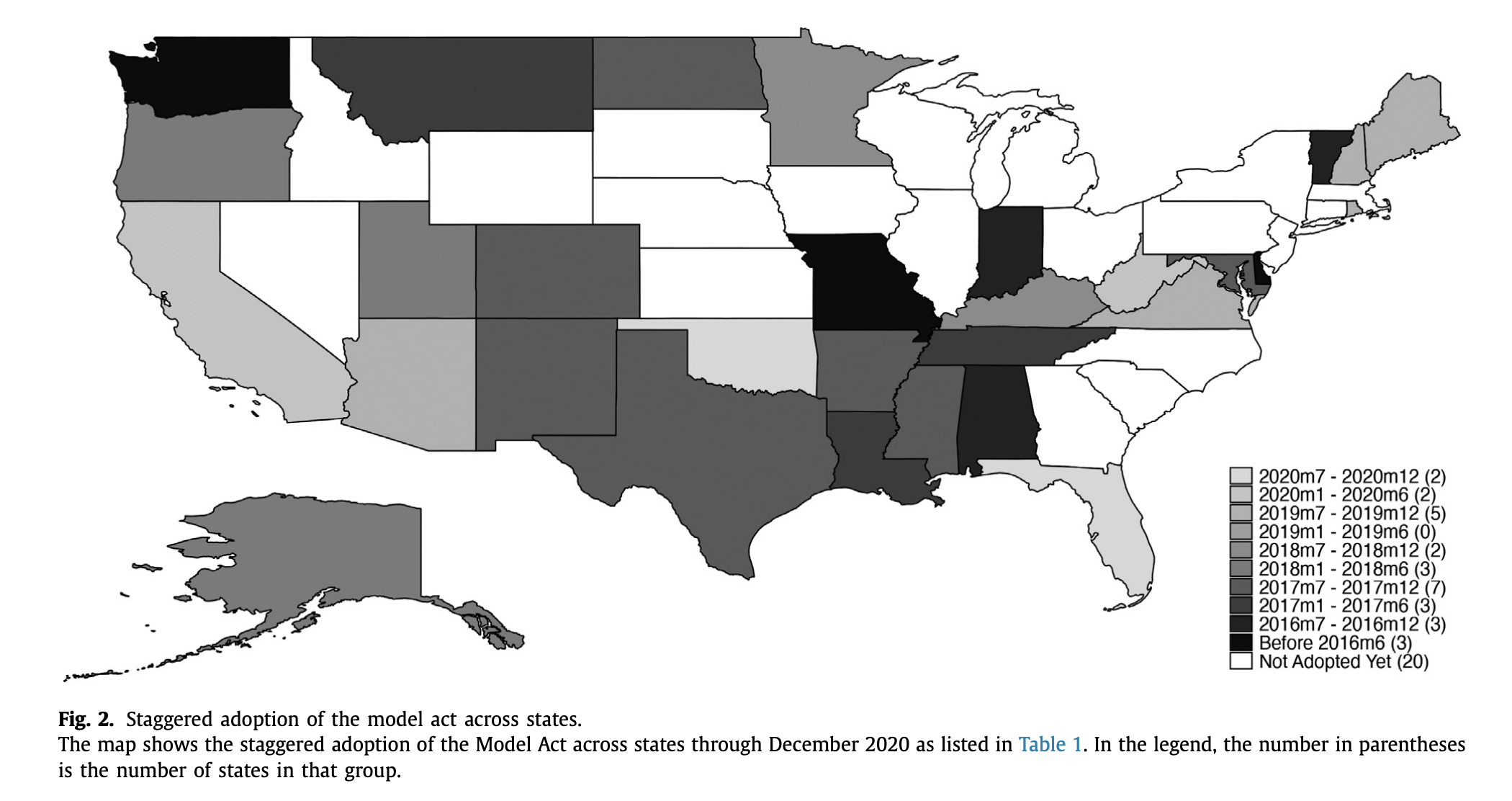
For years, strict privacy laws made it difficult for financial professionals to intervene when they noticed something suspicious. Even when a client appeared confused, coerced or exploited, advisers had little recourse — once the money left the account, it was usually too late.
The Model Act changed that. In states where its provisions were adopted, broker-dealers and investment advisers gained the authority to delay disbursements from a senior’s account for up to 15 to 25 days if they suspect fraud. They could also reach out to a designated “trusted contact” to share concerns about mental and physical health status — without violating privacy laws.
This legislative shift may seem small, but it gave financial professionals something they hadn’t had before: permission to act. “You don’t always need mandates to make a difference,” says Carlin. “Sometimes, just giving professionals the legal cover to speak up can stop harm before it happens.”
To test whether these new powers have made a difference, the researchers analyzed cases of EFE in all 50 states between 2014 to 2020. They compared states that adopted provisions of the Model Act with those that did not, using two key data sources:
“You don’t always need mandates to make a difference,” says Carlin. “Sometimes, just giving professionals the legal cover to speak up can stop harm before it happens.”
The findings were striking. In states that enacted the Model Act, reports of elder abuse by financial professionals declined, reducing the average level of misconduct by 15% compared to the mean level of abuse.
The effect was strongest in counties with a high concentration of financial professionals, especially those working at large bank holding companies. The researchers concluded that giving advisers room to act — without pressuring or penalizing them — made them more willing to speak up and intervene.
The researchers found that the policy’s benefits weren’t evenly distributed. Seniors who were more socially isolated — those with fewer connections (based on Facebook’s social connectedness index and the number of religious institutions per capita) — saw the biggest drop in EFE. Less likely to have someone else watching out for them, these individuals were most helped by a vigilant financial professional.
Certain types of financial products also saw sharper declines in abuse. Cases involving debit cards, credit cards, wire transfers and personal checks fell significantly. But fraud related to products with more built-in safeguards, like home equity lines of credit or insurance claims, didn’t change much.
In short, the Model Act has had the biggest effect where vulnerabilities are greatest.
So why did a law with no teeth make such a difference?
According to the researchers, it comes down to timing and deterrence. By allowing advisers to flag issues early, states gave them the tools to stop abuse before it escalates. And that early action makes reporting less necessary down the line.
There’s also a chilling effect. When families learn about these protections in conversation with advisers or during the process of naming a trusted contact, they may think twice before trying something unethical. The presence of a potential witness can be enough to deter abuse.
Crucially, the researchers found no evidence that financial professionals misused their new authority. For example, they did not see an increase in customer complaints against advisers. And regulatory actions against advisers did not increase in states that adopted the Model Act, suggesting the law’s safeguards were effective.
The study offers a rare bit of good news in the fight against elder financial abuse — a growing and deeply personal threat for many families. It also adds nuance to the often cynical narrative around financial professionals.
“Often, there’s a dark characterization of advisers, especially when it comes to their relationships with older clients,” says Umar. “But this shows that when you empower them to help, many do.”
The researchers believe the success of this “permissive” model could apply to other professions and policy areas, especially where vulnerable clients rely on experts, such as law, healthcare or social work. Giving professionals a green light to intervene, without mandating action, may strike the right balance between empowerment and overreach.
“Sometimes privacy laws meant to protect people can have the opposite effect,” Umar adds. “This shows how small shifts — just giving someone permission — can create meaningful change.”
Written by Deborah Lynn Blumberg
Carlin, Umar, and Yi (2023). “Deputizing Financial Institutions To Fight Elder Abuse,” Journal of Financial Economics.
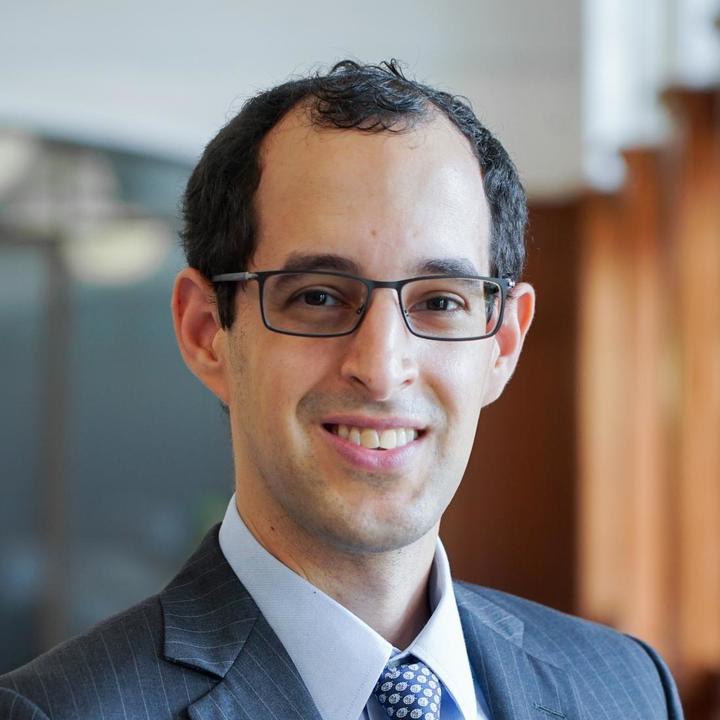
Diego brought five years of engineering experience at Shell into the Rice MBA, pivoting to finance post-grad. He shares valuable insights and advice for MBA students looking to chart their own transformative career paths.


This article was originally published on Clear Admit.
Meet Diego Pedrazas, a recent graduate of Rice Business and a rising leader in the renewable energy investment space. Originally from Bolivia, Diego brought five years of engineering experience at Shell into the MBA program at Rice University, where he focused on finance to pivot into strategic and deal-focused roles. Now serving as a mergers & acquisitions and investments associate at energyRe, Diego reflects on how his MBA prepared him to navigate high-stakes transactions and align his technical background with broader business impact. From leveraging an internship into a full-time role to navigating the transition from oil and gas to renewables, Diego shares valuable insights and advice for MBA students looking to chart their own transformative career paths.

I attended business school because I wanted to move beyond technical roles and take on strategic, finance positions. An MBA equips me with the business and financial skills to complement my engineering background, allowing me to make a bigger impact.
Rice Business has a strong reputation for its connections to the energy sector and finance industry, particularly in Houston, which is a global energy hub.
My MBA gave me a solid foundation in finance and strategy to better analyze deals and structure transactions, and it provided the base to start my M&A career.
I interned for the CEO at energyRe, where I gained direct exposure to renewable energy finance, strategy and top leadership. Working on a capital raise gave me hands-on experience in high-stakes transactions, solidifying my interest in deal-making and shaping my post-MBA path in M&A.
My internship at energyRe gave me a firsthand look at its leadership, vision and approach to complex transactions. The chance to continue working in a fast-growing, impact-driven company with exposure to high-level deals made it the perfect place to continue building my M&A career.
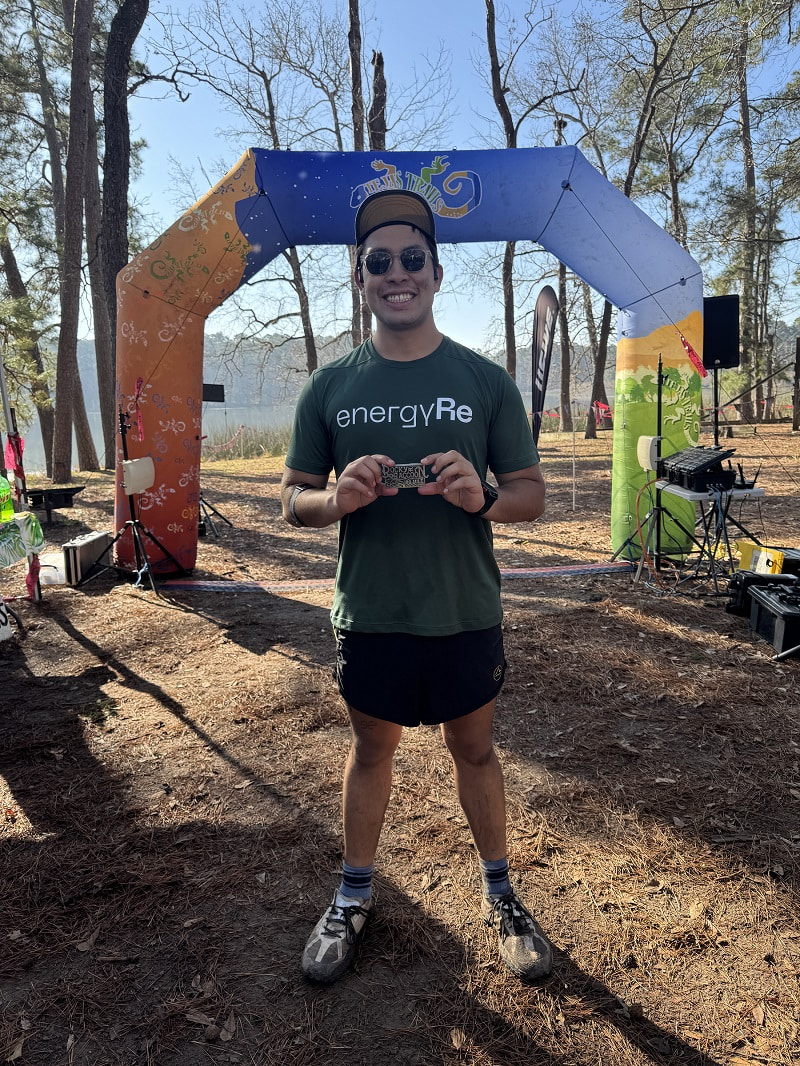
I would leverage my internship to build strong relationships and gain meaningful experience. Doing this played a key role in securing my full-time role and gave me valuable exposure to leadership and strategic decision-making.
I’d stress less and trust the process — opportunities come together when they’re meant to. At the same time, I’d invest more in MBA friendships; the job will come, but those relationships last a lifetime and shape your career in unexpected ways.
Since I interned at energyRe, my transition to a full-time role was more organic. The biggest surprise was how much influence informal interactions and demonstrated initiative had in securing the offer.
Don’t just focus on landing a job — focus on finding the right fit. The best opportunities come from aligning your skills, interests and long-term goals with a company’s culture and vision.
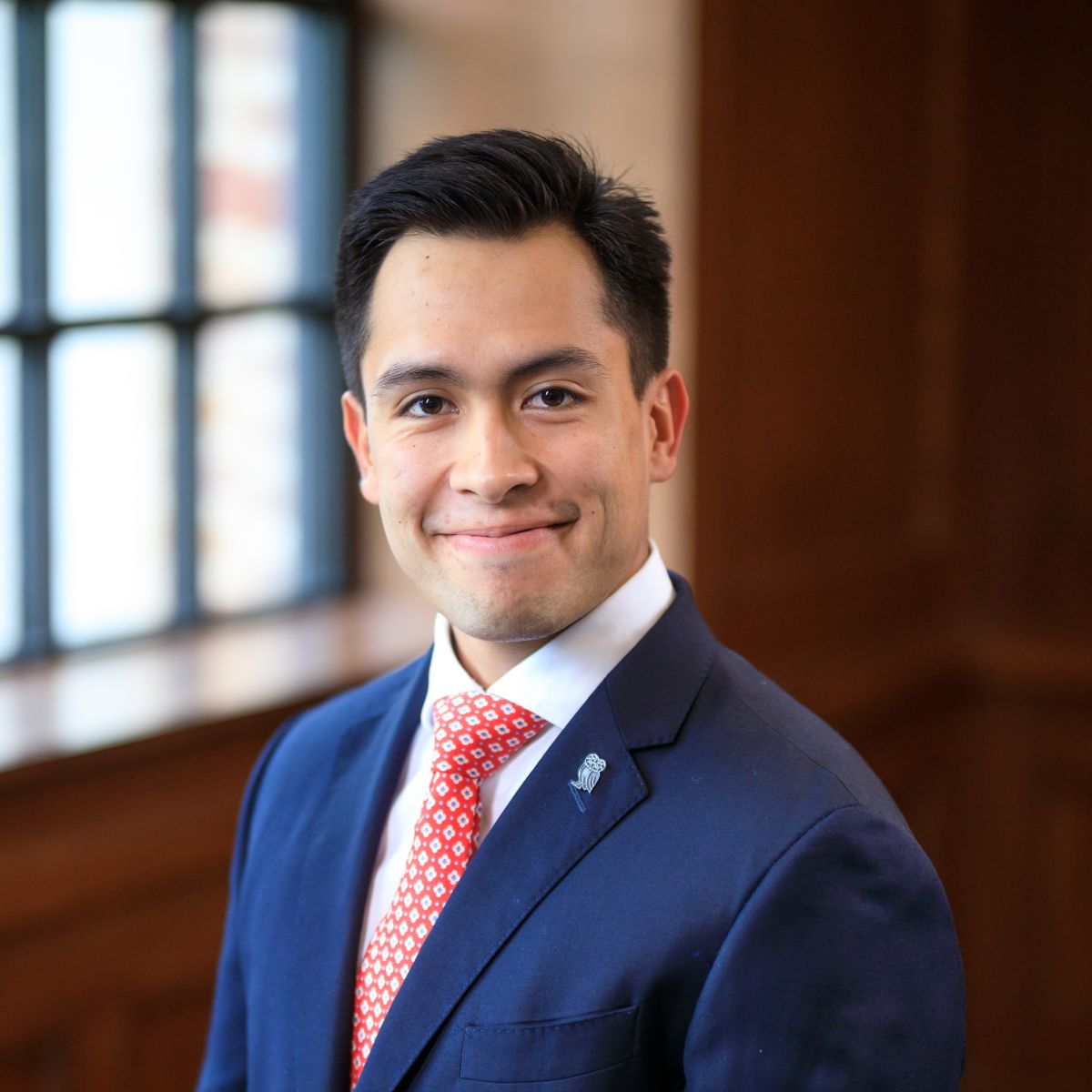
Age: 30
Hometown: Santa Cruz, Bolivia
Undergraduate Major: Petroleum Engineering
Pre-MBA Work Experience: Drilling engineer, Shell
Post-MBA Work Experience: Mergers & acquisitions and investments associate, energyRe
Are MBAs good for changing careers? Learn what to look for in an MBA program, including comparing program ROI for career changers pivoting to new industries.
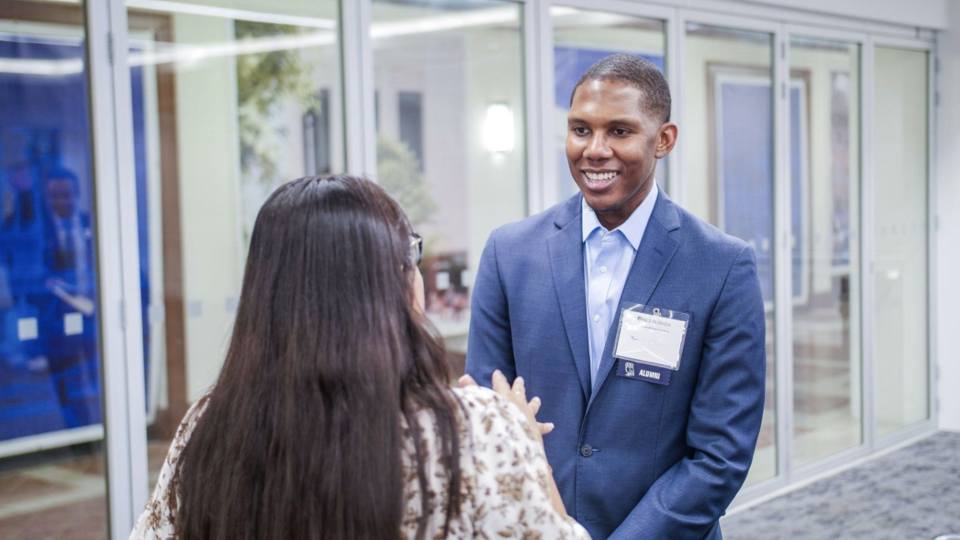
At Rice Business, career development is a community endeavor. Here’s how our Alumni in Residence program is helping our MBA students on their career journey.

Meet Brandon Nimmers, Chaundra Frank and Josh Obregon — three Rice MBAs who are helping ensure the 2026 FIFA World Cup runs smoothly in Dallas, TX.