
Image

The Women in Leadership Conference has long been one of the defining gatherings at Rice Business. This year, the momentum was unmistakable, with more than 600 attendees filling the venue and tickets selling out in just five weeks. Fifteen companies supported the event through sponsorships across multiple tiers, reinforcing the conference’s reputation as both a professional forum and a community investment.
Now in its 26th year, the conference has matured into something far more enduring than a day of panels. It has become an institution that offers professionals a rare setting for candid conversations about ambition, failure, doubt and growth.
Ideas travel across industries and career stages, linking one generation of leaders to the next, much like the long chain of knowledge that binds readers across time. The result is a gathering that balances practical insight with personal reflection, leaving attendees with something more durable than a list of takeaways. It offers perspective.
What makes the conference particularly distinctive is the way it is built.
The Women in Leadership Conference at Rice is entirely student-led. Each year a new cohort of MBA students inherits the responsibility of building the event from the ground up. This year, 32 students worked across multiple teams under the guidance of seven executive chairs.
Their work extended well beyond coordinating speakers or managing logistics. They secured sponsorships that support the education of future female leaders and designed the experience with the precision of architects drafting a blueprint — from the tone of the first email to the signage and visual design that guided them through the space; the networking areas where conversations unfolded between sessions; even the swag bags were assembled with the understanding that, weeks later, they would serve as small reminders of the ideas exchanged inside those rooms.
The day began with a keynote from Kathleen Barron, executive vice president and senior advisor to the CEO at Constellation, whose reflections established the tone for the conversations that followed, and it ended with a keynote from Madeline Haydon, founder of nutpods, who left us with introspective questions and the courage to lead.
Here are some insights from the day’s conversations.
The conference opened with Kathleen Barron’s keynote, where she spoke about how careers are not linear ladders that must be climbed step by step. They resemble open landscapes, where leaders occasionally pause and reconsider the direction they wish to take.
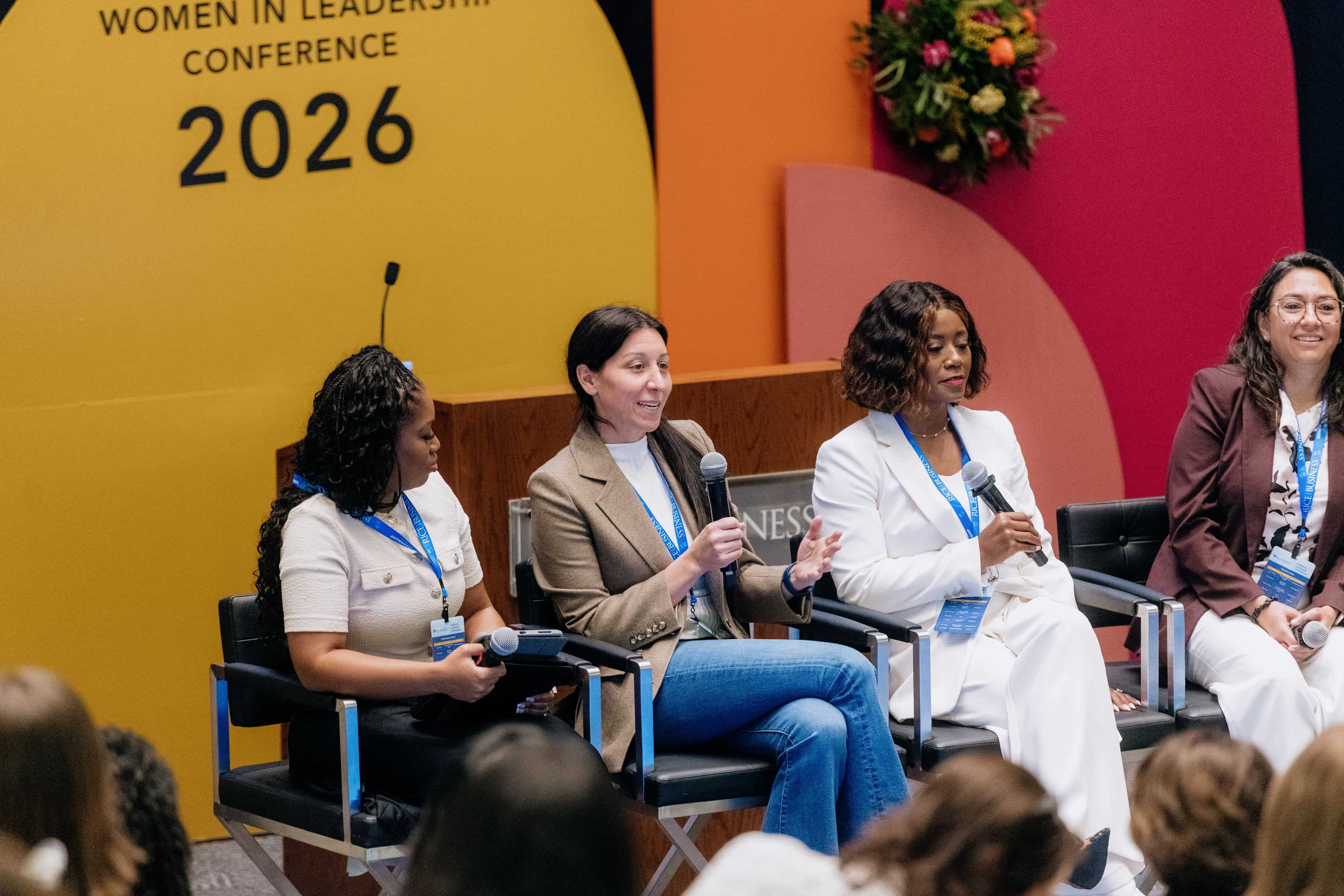
A similar sentiment emerged later in the panel “It Wasn’t a Straight Line.” Panelist Melissa Mohr reflected on how early in her career she assumed each year had to bring advancement. “Your career does not have to be the most important thing every year,” she said.
Together, the speakers reframed career progression as something closer to a series of seasons than a single upward climb.
Another theme that surfaced repeatedly was the tension between ambition and readiness.
During “Power in the Crossover,” one panelist offered a simple rule: If you meet every qualification listed for a role, you may already be aiming too low. One panelist, Brooke Grammier, described how she approaches leaders whose roles she hopes to grow into. “I want to do your job one day,” she said. “So teach me how to do it.”
The panel also explored subtler signals of authority. Sadie Rucker, president and founding principal at Horizon International Group, LLC, noted that tone alone can shape how ideas are received. A steady voice in a room often carries more influence than credentials alone.
The session “Negotiate to Yes” turned the conversation toward a practical strategy.
NASA chief science officer Judith Hayes encouraged attendees to keep a written record of accomplishments and positive feedback throughout the year. “Write down what you’ve achieved,” she said. “Otherwise, there is no proof for yourself and others.”
Another speaker emphasized that negotiation rarely begins in the meeting itself. Knowing the relevant data, understanding organizational constraints, and entering the conversation with composure can reshape the outcome.

One of the most personal moments of the day came during “Unfiltered Resume.” Panelist Jessica Bolaños spoke candidly about experiencing discrimination. Eventually, she stopped searching for organizations where those problems did not exist. Instead, she built one.
By founding her own company, she created the environment she had spent years hoping to find.
The session “AI But Make It Work for You” explored how artificial intelligence is reshaping professional environments. The panelists encouraged attendees to view AI less as a replacement for human work and more as a tool that amplifies productivity. Yet the conversation returned repeatedly to a simple conclusion: the qualities that define leadership remain distinctly human.
Empathy. Judgment. The ability to translate complexity into clarity. Those skills are unlikely to be automated anytime soon. The session ended with laughter when one speaker joked about using AI to generate conversation prompts for discussions with teenagers. Some negotiations, it seems, still require human intuition.
Across every session, the conversations returned to the same underlying idea. Leadership rarely follows the tidy path people imagine at the start of their careers. It develops through curiosity, resilience, mentorship, and the willingness to adapt as the world changes.
For many attendees, the conference served as a reminder that leadership is not a solo act. It develops within communities willing to share experience, challenge assumptions, and create opportunities for the next generation.
After 26 years, the Women in Leadership Conference continues to do exactly that.
Written by Lipi Gandhi, marketing chair for the 2026 Women in Leadership Conference. Insights collected by marketing committee members Ali Dupnick, Lipi Gandhi and Muskaan Dua.
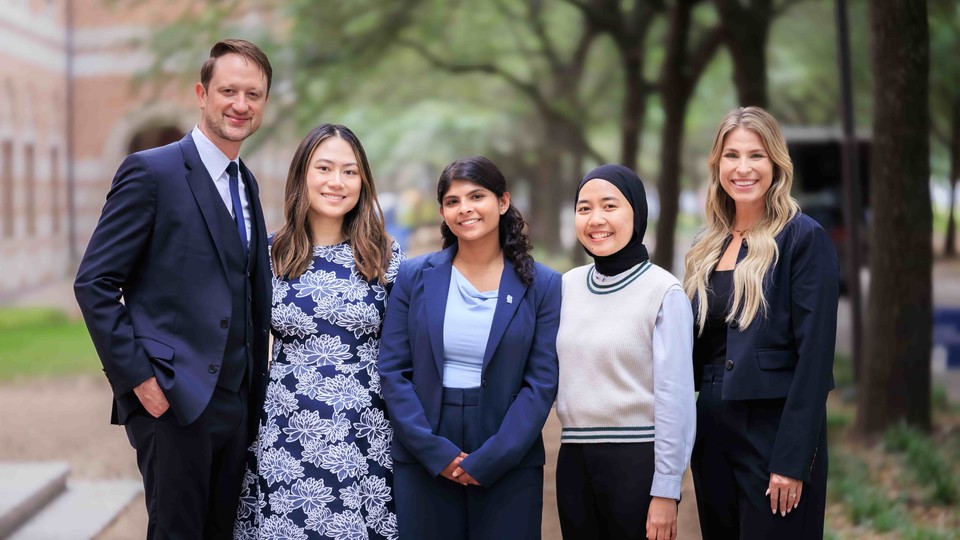
Rice Business’ Inaugural AI in Healthcare Conference began as just an idea. Here’s how the school’s network of support helped MBA students launch and host a successful conference exploring the future of AI in medicine.
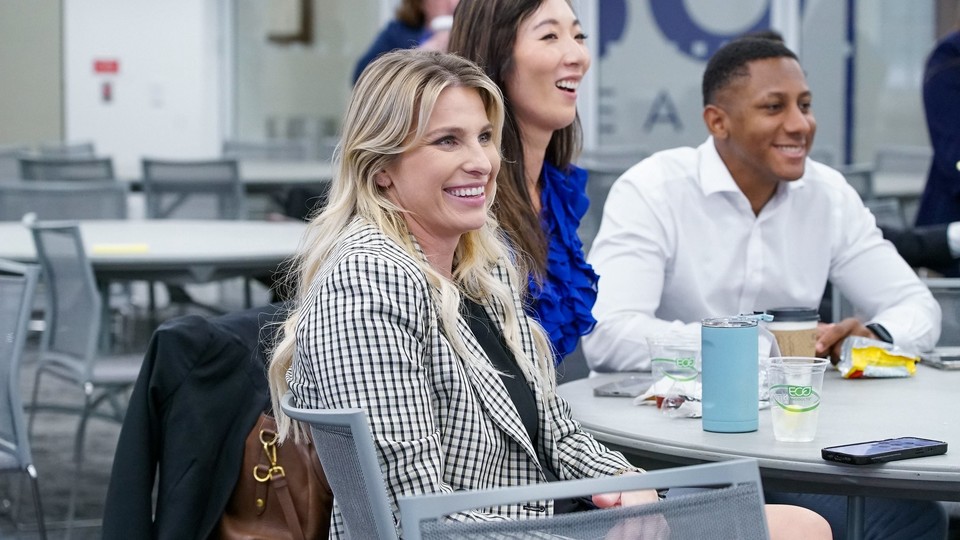
Learn from Rice Business how a part-time MBA fits a full-time career, along with tips for typical weekly workload ranges and practical planning strategies.
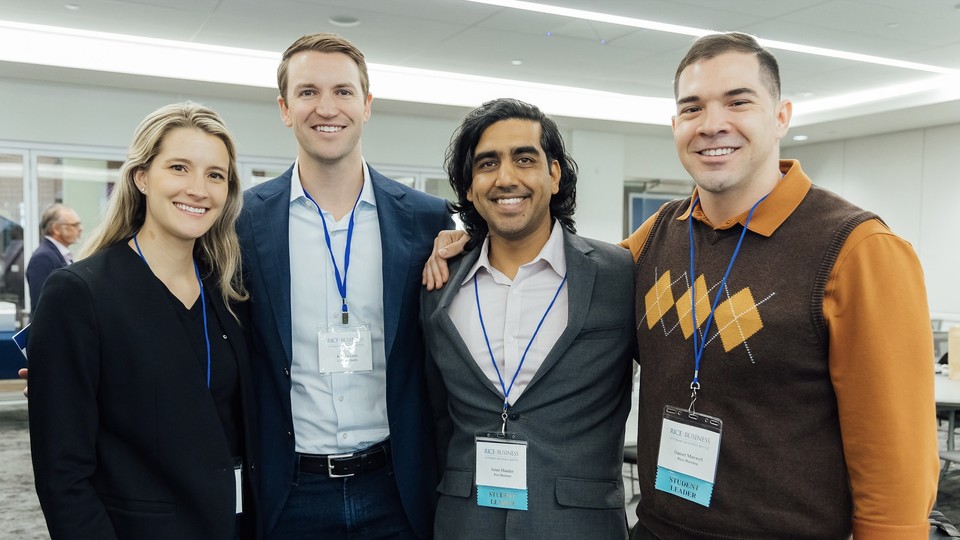
Rice Business clubs reflect professional pathways, cultural backgrounds, shared experiences and a variety of hobbies. Continue reading about why MBA clubs and organizations are so important to our community and how to get involved.