
Flight Path
Emma and Jacob trace their unlikely path from Citibank trading desks to startup life and share how Tierra Climate is helping reshape the energy industry.
Detractors are suspicious of the anonymity that comes with blockchain technology. Supporters say it's exactly the point. Rice Business adjunct professor Manolo Sánchez explains.

The Rice Business MBA for Executives ranks at #11 on the latest Poets & Quants EMBA list.
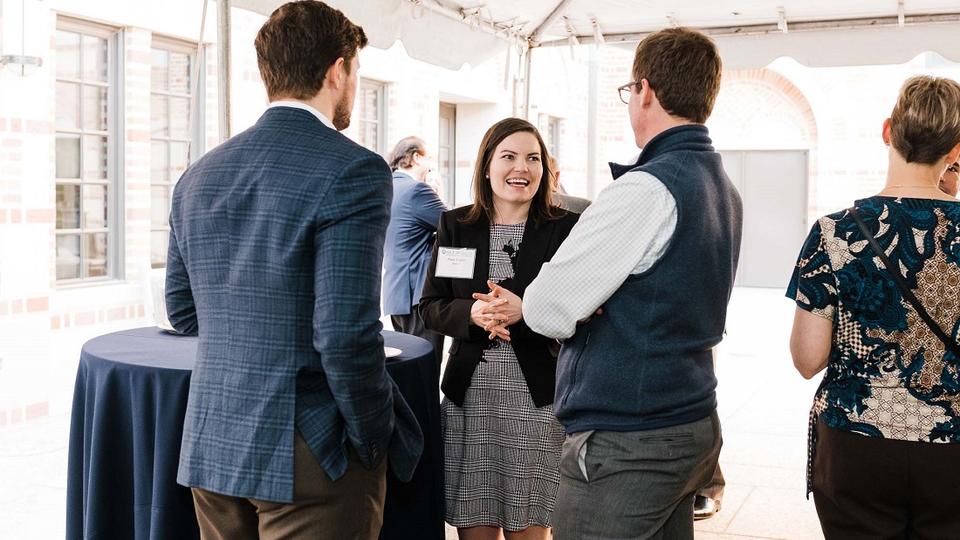
The Rice Alliance Clean Energy Accelerator named the early- to mid-stage startups that will participate in its second annual class — five of which are based in Houston. The 10-week program kicks off at the Rice Alliance Energy Tech Venture Forum in September.

Discussing the Texas commercial real estate market with Christine Mastandrea, adjunct professor in management – real estate at the Rice Business.

Beyond everyday items, having inflation on the brain is likely making people think more about prices than they normally would, explains Utpal Dholakia, professor of marketing at Rice Business.

Ruy joins host Christine to look back at their time in the MBA program together, the diversity of their class, the business element of public service and some of the toughest times Ruy experienced during his work with the Houston Fire Department.
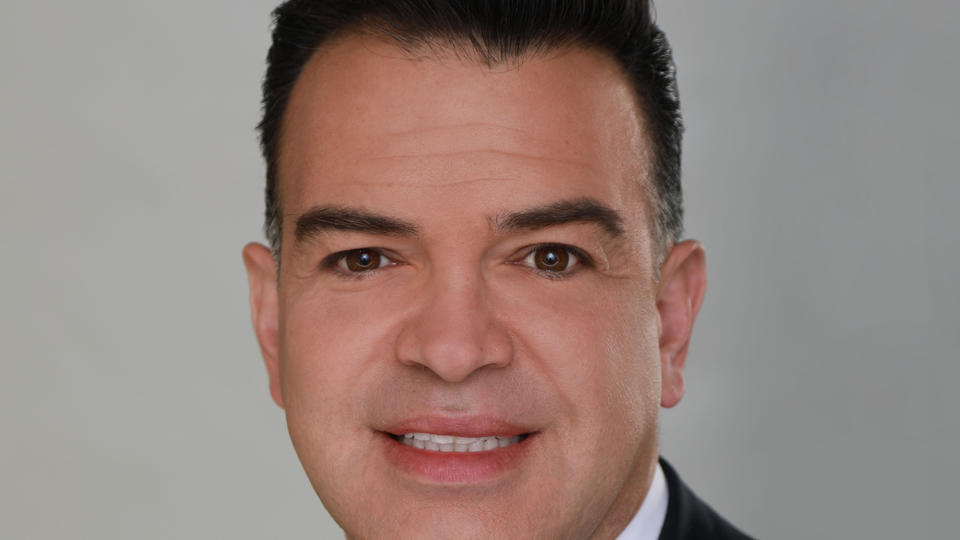
Ruy joins host Christine to look back at their time in the MBA program together, the diversity of their class, the business element of public service and some of the toughest times Ruy experienced during his work with the Houston Fire Department.
Subscribe to Owl Have You Know on Apple Podcasts, Spotify, Youtube or wherever you find your favorite podcasts.
[00:00] Intro: Welcome to Owl Have You Know, a podcast from Rice Business. This episode is part of our FlightPath Series, where guests share their career journeys and stories of the Rice Connections that got them where they are.
[00:14] Ruy: So, it was a huge advantage to be able to grow together. Growing as an assistant chief, I had only been an assistant chief for less than a year when I joined the program. And then growing as an EMBA, you got an opportunity to see the theories being applied in practical use. But then, you had that amazing cohort that you could bounce ideas off of. So, was it tough? Sure. There's always sacrifices. And unfortunately, most of the time, it's your family.
[00:40] Christine: A life of public service before coming to Rice Business' Executive MBA program, Houston Assistant Fire Chief, Ruy Lozano, is moving on to a new leadership role. We'll find out where, as he talks about how the program shaped his skillset, balancing work and studies and his biggest challenge in his next role.
Today on Owl Have You Know, we are joined by Ruy Lozano, Rice Business EMBA class of 2020. Ruy, thank you so much for joining us.
[01:09] Ruy: Thanks a lot for having me, Christine.
[01:11] Christine: Well, I want to give everyone an introduction. You completed the Rice Business Executive Program in 2020, you were Assistant Fire Chief for the Houston Fire Department, and are embarking on a new position as Fire Chief at the New Braunfels Fire Department. Can you just tell us a little bit about this new role? I know it's going to be a big change and a move from Houston as well.
[01:35] Ruy: Well, first, I think we've got to say we graduated in the class of 2020. So, we were cohorts together, which was an incredible experience. We had an amazing cohort. And part of this change is attributed to going through the class at Rice at Jones School and the amazing cohort that we had the opportunity to learn from. That's one of the greatest experiences of my life, is attending Rice, but not just learning from the instructors but learning from the conversations where professionals were debating, dialoguing, and just having an exchange of ideas. And as you know, we had an incredibly diverse group, you and I being the outliers, the only two communication professionals. But the diversity of experience and just people was incredible. And I just feel so blessed to have gone through it.
[02:25] Christine: I totally agree. I jumped right in introducing everyone to you, but you and I, we actually knew each other before starting at Rice Business. Do you want to tell the story of how we know each other?
[02:37] Ruy: You're a nationally recognized reporter. And everybody, I think, recognizes you. But you and I spent time on a bridge as there were rescuers bringing victims from a flood. And we've met in other experiences, my experience in the Houston Fire Department in spite of it being atypical. Twenty-six years ago, I did start as a firefighter, but when I made the rank of captain—I also had a degree in PR and communications. And that catapulted me to be the media spokesperson. So, you and I had the opportunity to meet on several occasions, sometimes good, unfortunately, sometimes not so good. But it gave me somebody to lean on when we were at Rice that we weren't the only two PR professionals or communication professionals in the group.
[03:21] Christine: Definitely. And I remember being out there in many situations and circumstances—like you said, not always pleasant. But you were the spokesperson for the fire department. And I was interviewing you as a reporter for Channel 13. So, it was definitely interesting when we both walked in to that event and realized we both were going to be in the same cohort at Rice Business.
[03:41] Ruy: That was refreshing. Like I said, it was great to have a friend and colleague that you can turn to when you're first making those introductions. But to be honest with you, everyone was so warm in our class. I really felt very welcomed. Obviously, being in Houston, there was a lot of engineers from oil and gas. We had some physicians, some surgeons, professionals from a diversity of group. But everybody here, I think, accepted us as people that could add value. I think we added a new dimension to the discussions, and we stole a lot of information from them. And it really helped everyone have that professional exchange of ideas. And I think we're all better for it.
[04:18] Christine: I completely agree, just such a diverse amazing group that I think I use things every day that we learned from one another.
[04:24] Ruy: Yes, it's always amazing to me how you'll be working in your own environment and topics that you discussed in class pop into your head or the notion of something brings back some information that you can now apply. And our cohort had also people from all over the world. So, it also gave you a different perspective on how you look at things, just how important our government is and how it impacts the global economy and situation. We had people in our military that really added some amazing leadership learning opportunities. And then you and I, whenever there was a PR crisis class, that's where everybody looked at you and I and say, "How do we handle this one?"
And I think there was a lot of value there. And the fact that you were allowed to be vulnerable. You were allowed to make a mistake. You were allowed to make a fool of yourself a couple of times. And no one was going to judge you for it because we were all there to learn. And I truly attribute my pivot that I'm taking—or I guess it's not truly a pivot—but my progressing into the position of fire chief to Rice and the amazing cohort that we had.
[05:25] Christine: Definitely. And I think, sometimes, maybe we forget public service, government entities, that business element to it. Can you talk a little bit about how you implemented your learnings at Rice Business into your role with the Houston Fire Department and that value?
[05:44] Ruy: Well, Chief Peña, he's the current fire chief for Houston. When he selected me to be the assistant fire chief, the area that he wanted me to really look after was the capital budget, the procurement side, and purchasing. And that's part of the reason why I said, "You know what? If I'm going to do this, I'm going to do this right." And that's when I applied for Rice and I got accepted. And it really gave me an opportunity to understand the language that was being spoken. And that's one dimension.
But I think something that is a little bit different from Rice from a lot of different institutions is Rice is very innovative. They don't want you to conform to the box that everybody wants to put you in. Myself, I had an opportunity to look at the current landscape. Budgets are always tight. I don't think there's ever been a government that says, "Oh, we have plenty of money. Buy whatever you want." Traditionally, you have to triage. You have to look at the budget, see what's most important, and make decisions.
But where I think Rice really helped me was it allowed me to look at things creatively globally. And one of my current successes is we implemented some new lease opportunities for vehicles. The American fire service is a mechanized industry. We can't do our job if we can't get where we're going. And we have a huge fleet of fire trucks, ladder trucks, EMS units, standard vehicles for inspectors, and arson investigators. And they come at a cost. And Rice really gave me the ability to make negotiations, think differently, try to use operating budget instead of capital budget, and apply lease strategies, and be creative.
And most recently, about a year ago, we were able to work with an incredible organization. And we purchased well over 105 vehicles, one of the largest acquisitions and replacement of vehicles in the history of the fire department. And the strategy was very different. We weren't going to just purchase and hang on to them forever and then depreciate. We were going to lease them, and then we were going to arbitrage our economies of size and government incentives and get rid of them in a year and replace them. And the finance department wasn't sure how they were going to take this. And that's where I really appreciate being able to communicate it thoughtfully, use the language of business, but also be able to use the data and be data-driven, put it out in a spreadsheet in a way that made sense. I actually had the opportunity to present this particular strategy to the mayor, because a lot of people were not comfortable with this new strategy. It wasn't anything we've ever taken on.
And we're now at a year later. We're completing the first cycle of replacement. And we're actually going to show a profit. The secondary market really exploded on us for vehicles. And we were forecasting a revenue stream of close to $1 million and with, probably, a net profit somewhere around $500,000. And the goal was really just to hopefully just not outperform the capital but outperform any expectations. Now, I can't completely take credit for that because a lot of that was the market did what the market does. But being able to leverage the situation and communicate it in a language that is spoken by the finance department and procurement department, I think Rice brought a lot of value to me to be able to present, to be able to use data, and to do it in a way that the mayor took one look at it, and literally in a 30-minute meeting, he said, "We're doing it. And we're doing all of it."
I have to thank Chief Peña for having confidence for me to tackle this project, the mayor for looking at the data and having confidence to say, "You know what? We're going to do this." And he knew that I had gone through the program, and he put a lot of value in the fact that I had gotten the education at Rice. And they took a risk. And true reward only comes from true risk. And it's paying off. It's paying off to the citizens of Houston. It's paying off to the men and women of the Houston Fire Department. And hopefully, this will continue.
But I think it's just one example of how you might come from one area and you get an MBA and you're able to apply the two. I speak the language of business. I already had a communication background. I was able to marry them to be able to communicate thoughtfully over an innovative program that had shown success.
[09:55] Christine: And I think taxpayers can find appreciation in that.
[09:58] Ruy: Absolutely, because at the end of the day, we have a fiduciary responsibility to the citizens. And that's one element that the fire chief always told me. He said, "You got to make sure that whatever you're doing, you're doing for the right reasons." And if you can apply data and financial strategies and then communicate it, I think you're going to be successful. And Rice really added a lot of value to that.
[10:19] Christine: So, I know you've been with the Houston Fire Department for more than two decades and seen your share of crisis—Harvey, we could go on and on. Is there one particular, maybe, crisis that you've learned the most from in how to handle? And what it's really taught you?
[10:35] Ruy: Well, I can think of two just incredible crisis. Honestly, May 31st was just a devastating day for the Houston Fire Department. We lost four firefighters at the Southwest Inn fire. And that one really showed me that it's important to get in front of situations, be transparent with the citizens, know how to communicate, and at the end of the day, despite everything else, people matter most, whether it's the firefighters that were involved, the families that were impacted, the citizens that truly carried us through a very tough time.
The second one was Harvey. I had been assistant chief for just a few months. And the roads had already flooded. We had firefighters at the stations that I couldn't get supplies to. Forget supply chains, we were looking at actual delivery roads that we have supplies but we can't get it there. But you know what? The men and women in the fire department showed that, in crisis, people pulled together. They figured it out. When the roads finally did subside, we're able to get resources to them. We were able to execute and provide the level of service that the citizens deserve.
And lastly, COVID. COVID is just a monster. Nobody knew what to expect. Supplies were down. When you're a large organization like the Houston Fire Department, you have 4,000 firefighters you have to protect. And during COVID, it was trying to find N95 masks, trying to find gowns, trying to find gloves. To supply an organization of this size was tough. And we were coming towards the end of our program. And it was very helpful to have that business acumen because I was making negotiations with people in Monterrey, Mexico. I was talking to people in Saudi Arabia, trying to locate the appropriate resources, and then trying to figure out the proper way to get them to the states, because when you're trying to make multimillion-dollar purchases, sometimes you encounter a lot of political just challenges in delivery. Supply chains were so disrupted during that time. And I really have to be thankful that Rice provided me some opportunities to discuss and talk about supply chains and disruptions. And we had such a diverse group in our class. And to understand the different cultural and political situations that we're going on to be able to handle these supply chain issues.
But we're very fortunate, our firefighters never had to do without. Now, did we have to ration? Absolutely. It was one of those times that everybody had to tighten their belt, be creative. But at the end of the day, I think we provided an amazing service. And I don't take any credit. These were the men and women at the street level. This was retail service, going door to door, making sure the citizens were safe, making sure we were protected, making sure that they were protected. It was a tough time. And I am so proud of the men and women and how they executed, and the citizens, understanding that there's going to be challenges.
And it's unfortunate we did lose three firefighters to COVID-19. But I think it could have been far worse, had we not all come together as a community. And I'm just thankful that there was so much support. There was times that supplies on the shelf—the shelves just looked empty. And you're sitting there going, "What am I going to do?" And all of a sudden, a delivery truck pulls up. And you're like, "Thank God that these items showed up." It was just in time.
But it also gave us perspective. We have to now be thinking of the world a little bit different. Things aren't always going to be at your fingertips. You're not going to be able to just afford it on Amazon and have it show-up the next day. So, you gotta really be thinking about what your inventory holdings are going to look like. You need to be thinking of forecasting disruptions, maybe not having sole source providers for certain items but having multiple providers so that you are a little bit more nimble than you were before COVID-19 and all of these supply chain disruptions.
[14:30] Christine: After serving as assistant chief for one of the country's largest departments and moving into a role as the head chief in a smaller but growing department, how is that different? How do you approach it differently?
[14:46] Ruy: I think the first thing is, when you first show up, you can't show up trying to make changes. You show up trying to learn and get a feel for the landscape. New Braunfels, the New York Times just said that they were the fifth fastest growing city in the country. So, they're having a huge population boom, huge housing boom. And from a public safety perspective, we looked at the risk concept that comes along with it. Whenever you get population density, there's going to increase call for service. You have a huge housing boom. Well, that's going to be a huge call for permitting, fire permits. I think part of the reason that I was so attracted to New Braunfels, despite its beauty as a national treasure, was the opportunity to be involved at the ground floor and continue to grow an already great organization to match the risk that is inherent to this type of population growth.
And for me, when I first saw it come up on my LinkedIn to apply for New Braunfels, I did my homework. I really loved the area. I know many of us, whether in college or when we were younger, used to go tubing down the rivers and enjoy that whole New Braunfels Canyon Lake in San Marcus area. So, that was already very attractive. And then to see that growth, I said, this is an opportunity to apply all those different strategies that we learned. And I just hope to be able to add value there. We already have an incredible leadership team. When I met with the city manager, they saw the growth. They realized that there's inherent risk. And they want to be deliberate, but they want to be smart. They want to be innovative. Let's match the risk with the appropriate resource. And let's do it in a way that is responsible and thoughtful. So, you're going to have to have, obviously, institutional knowledge of public safety. But you've got to have a business acumen when you're trying to run an organization, because at the end of the day it's not your dollars. It's the taxpayers'. And you have that fiduciary responsibility to do what's right.
[16:44] Christine: What originally drew you to public service, public safety, the fire department?
[16:49] Ruy: I was at University of Houston. I was in the army reserve. And I was in the Corps, starting to be an officer. I really thought that my calling was to be an officer in the military. And somewhere along the way, one of the sides of—I was a chemical operations specialist, but I was also a medic. And one of the things that really attracted me was that medical side, being able to serve from a medical perspective. Well, I was on my junior year, I think, and the fire department was hiring. And it said, we'll send you to paramedic school. So, you're going to go to fire school, then paramedic school. They're going to pay for it. And being able to show up to someone's house when they're having the worst day of their life and being able to have the knowledge to make it better, that was very attractive, too, for me.
And I joined. I was a firefighter paramedic for the first 12 years of my career. And it was probably one of the most satisfying careers that anyone could have. Any time that you're out there and you're just helping people at a grassroots level, it's fulfilling. You go home knowing that you did good. The fire department schedule is a very unique schedule.
And the other part that was really attractive is that, when you go home, you can separate yourself. You can decompress. You don't take home the emails and everything else. And that was really attractive to me. And I love the paramilitary organization, being in the army. And after 12 years, I just started promoting fairly quickly. And that's when I realized that there comes a point where being the guy boots on the ground, that's a young man's game. And at 45, I don't know if I could still be jumping off a fire truck running into burning buildings or running behind an EMS unit. So, it was time for me to say I want to continue to contribute, but I want to contribute at a higher level. I want to be able to provide the resources for the men and women that I consider my family.
And that's what actually led me, one, when I became the media spokesperson to tell their story. But when I went to Rice, it was to really give them the tools to be successful and be innovative. And so, now, going to a whole new organization as the top person, I feel fortunate that I've had some great leaders that I can learn from. I hope I take a little bit of everything that they taught me. I take with me the experience of being at Rice with an amazing cohort, my PR background from the University of Houston, I started at the Valenti College of Communications. And also, 25 years of being in a great organization. And I think everything is going to be okay. The first year, I think it's going to be a time to learn. Pay attention. And you know what's funny when we did our personal development plan? One of the things they told me is that, as a communicator, I have a bad habit of talking more than listening. And one of the things I'm going to do here is do a lot more listening than I am talking.
[19:44] Christine: What was it like balancing the EMBA program while maintaining your day job? I think I remember one day we were in class, and I don't know if you left class totally, but I know you had to leave. I think it was a three or four alarm fire. But I know you were juggling that. How did you handle that?
[20:02] Ruy: Was it tough? Absolutely. But there's so much cross-pollination. There would times that I'm working. And things that we were talking about in class were coming into my workplace. So, it was a huge advantage to be able to grow together. Growing as an assistant chief, I had only been assistant chief for less than a year when I joined the program. And then growing as an EMBA, you got an opportunity to see the theories being applied in practical use. But then, you had that amazing cohort that you could bounce ideas off of. So, was it tough? Sure. There's always sacrifices. And unfortunately, most of the time, it's your family. And I got to owe a lot to my wife and my family for not being around and being with a nose in the book thing.
But I think doing it together is huge because it's not just theory. It's practical application, modern-day instructors that are giving you what happens today. I remember in our accounting class, somebody asked a question. I don't really quite recall the question, but instead of the professor just looking for the textbook answer, he turned to one of the cohorts. And he said, "Well, wait a minute." And I forgot who it was. "Don't you work in that environment?" He goes, "Yeah." And then the student in our class started explaining how they did it in the real world. And I remember just taking so many notes. And you couldn't write fast enough. There's so much information. Sometimes, you wish you could take the same classes three or four times with hope you absorb enough. There was so much opportunity to bounce ideas in our class that I think it was truly built for professionals.
[21:37] Christine: You've said before that you're always present in the moment. Is that a skill that you think you just had innately or you took time to develop? How did that come about?
[21:50] Ruy: I think being present in the moment is about being engaged. Whether I was treating a diabetic patient 25 years ago or in the boardrooms here trying to decide what our next strategy is going to be, I've always been fairly engaged. But I will say this. As much as Rice taught me so much about business, they really taught me that people matter most. And that was a skill set that I didn't have. I used to put work before everything else. And I started learning more and more when I would hear some of the stories. I don't know. I can't remember if it was just the environment we were in. Maybe because we're going through COVID together and everything else. But you started really learning that they're not just human capital, they're real people. Everyone you work with, no matter above you, below you, lateral, there's real people there. And they have real problems. They have real successes. And you decide one day to be more authentic with them and be genuine and listen to them and realize that they're going through their own life just like you're going through yours. And I still remember in our graduation one of the speakers said that—that people matter most. And that just resonated with me because that's what Rice taught me.
[23:09] Christine: Excellent advice. I know you've been in many, many high-pressure situations. I can't think of many professions that would have a higher pressure situation than the business that you've been in. How have you learned to manage that, cope with that, apply it as a positive experience and learn from it, rather than what, in a lot of cases, could become very negative, given the situations you've seen?
[23:35] Ruy: Well, when I was still operational, when I was on the streets, I always felt that, if you were trained up to your best and you were really keeping yourself as a good medic or a firefighter, you're doing your best no matter what, at the end of the day, if you did your best, that's all you can really do. Now, when I got to administration, the pressure was a little bit different because when you're out on the streets it's all about you, what can I do? When you get up to the boardroom, you have to learn how to work as a team.
And second, you also had to—for me, I used to take things to heart. I hated to lose because I felt like if I didn't always get everything I was supposed to get, then I'm letting these firefighters down, I'm letting the community down. But I think there comes a point where you have to realize that, you know what? You can only do what you can do. As long as you did your best, you did it for the right reasons, you took the politics out of it, and you did what was right because it was what was right, and win, lose or draw, you go home and you're okay with it. You want to make sure that you learn to separate and process your failures just as much as you enjoy your successes. When things don't go right, don't just put it in a drawer. Take a breath. Step back. Give yourself some time. And then review it. Why didn't it go right? What could I have done better? Be systematic about it.
Too many times, when a project goes down or doesn't happen, we just close up the binder, throw it on the shelf, and we move on to the next one. But the lessons learned from that one might help five more projects down the road. So, always taking a moment. I always say give yourself enough time to feel sorry for yourself. And you get all of five seconds, and then sit back. And I remember it because Chief Peña did that to me once. I beat myself up over something, and he pulled me aside because he could tell I was pretty upset. He goes, "Look, I'm going to let you feel sorry for yourself." And he looked at his clock and he goes, "All right, time's up. Now, dust yourself off and get back out there because I need you. I need you to do what you do." And so, I think you have to give yourself a little time. You have to process. But always review your failures. You'll learn far more from your failures than you ever will from your successes.
[25:50] Christine: Five minutes might be a little short. I recently heard it was a professional football player who gave himself 24 hours after a big loss. And then it was forget it, back to it. But I guess, in your line of work, you've got to move on quickly.
[26:03] Ruy: You have to adapt to the environment. And I think this was post-Harvey and the environment with everything was moving so fast and half our fleet was under water, half our stations were not functioning, and you just felt helpless. Okay, dust yourself off and keep going because this environment is not going to wait for you to decide when you feel better about it. Like I said, I have some incredible mentors. I have to hand it to Chief Peña. He's been an amazing mentor towards me. He's the one that pushed me to go to Rice, gave me all the time I needed to study. That's another thing I would always recommend to anyone. If you're coming up in any organization, find a mentor, but be a mentor. If someone's bringing you up, make sure you bring somebody up with you.
[26:45] Christine: When you started at Rice Business, did you know, maybe, what direction you might want to go in post-graduation? Did you see yourself as a chief at a different department in Texas or across the country? Was that on your radar? Or did this opportunity just come up and that's when you started thinking about it?
[27:03] Ruy: No, no, I wasn't really sure what I was going to do. I was really looking to possibly take a pivot, go into the private sector, maybe do consulting. I really wasn't sure. I've felt in a weird place, here I am, a firefighter by trade, with a PR undergrad and a master's from Rice. That's a very unique skillset. Many times, when you go into these high executive levels, they're usually people with institutional experience. And I had a repertoire of being a paramedic fighting fire, and then speaking on camera. And now, you throw in this business degree. So, I wasn't really sure where I fit in the mix. I felt like a square peg in a bunch of round-holed world. But eventually, I think, sometimes, what you do is you give yourself options. And what I learned is a lot of people, when they're looking for executives, they're not looking for a skillset. They're looking for the character of the person. And I think this was an opportunity. I noticed that a lot of the candidates that I was competing against in New Braunfels, a lot of them had a lot more operational experience and they were amazing firefighters and chiefs from other organizations with 40 years. But most of it was operational. And here I was. I was probably one of the youngest ones. I only had 25 years, which is fairly young for a fire chief. And a lot of it was in administration and with a huge business background.
And I really thought, man, I'm probably the last guy they're going to pick. It turns out I was their top choice. But I think it's because they realize, in organizations a lot of times, you have a lot of people that know the operational level. But who can look at things from a global perspective, look at the business side of it, be strategic, and learn how to manage people? And I think maybe—I won't say maybe. I know for a fact that they looked at my MBA. They looked at some of the work that I have already done. And they felt that I was the right person for that organization for that time. Huge growth. There's going to be a huge expectation to manage the growth appropriately, look at the budget. Right now, cost escalations are through the roof. You see inflation going. That impacts everyone. But at the end of the day, we still have to provide a certain level of service. In most organizations like fire departments, you have two big responsibilities. You're here to provide the highest degree of customer service to the citizens while providing for the safety of firefighters. But at the end of the day, both of those, they cost money. And you need someone with a business acumen to be able to manage that appropriately to provide that.
[29:27] Christine: Well, it seems like a really good fit, given, like you said, where they are at this point in time and the growth projections and what they might be, looking for what they might need.
[29:37] Ruy: Yeah. They're already talking. We're already having conversations, even though I'm doing a professional handoff. That's another thing. They were amazing. They gave me over a month to find my successor here and give a professional handoff, which I would make sure anyone in any organization does. You should always try to leave the organization in a better place, but they’re already sending me the financials. They want me to start reviewing the budgets. The fiscal year for a lot of organizations are June, July in the public sector. And so, they're sending me the financials to start reviewing, seeing where the future and see where there's opportunities to expand, to be creative and innovative. And that's where I have to say Rice has really given me that opportunity to be able to assist in that format.
[30:17] Christine: What advice would you give someone who is, maybe, considering Rice Business? And maybe, coming from a more, perhaps calling it a non-traditional background, what would you say to them?
[30:29] Ruy: What I would say about Rice is that there's so many different areas. The Jones School is going to really prepare you. It's going to give you the language. It's going to give you the perspective. And it's going to introduce you to so many amazing people. But being at Rice, even while I was in business school, I was in the data science center. And we did a couple of studies that got a lot of national attention. You met people from the public policy area.
And to me, Rice gives you a very unique perspective. Business is very structured. But Rice itself is very creative. And they've managed to bring the two together. So, I would recommend Rice over any other institution because they teach you that structure of business while being innovative and keeping a growth mindset. They don't want you to just follow the pack. They want you to lead. And they want you to lead in the direction that maybe most would be apprehensive. But they'll teach you. Don't be scared. Be bold, but do your homework.
[31:26] Christine: And it sounds like you took advantage of a lot of the opportunities, talking about the data center, and there's just so many opportunities there on campus to take a look at.
[31:34] Ruy: Yeah, the data science center, I think I've done three studies personally. One got national recognition, we've applied. We're trying to be more outcome-driven than just meeting some arbitrary numbers. More and more, data is the way to go. And especially, when you're trying to go in a new direction, you can't just be anecdotal or go with your gut. If you've got to sell an idea, you better bring some numbers to the table. And the data science center really has an ability to bring data and financials to any project. And at the end of the day, no matter how innovative, the first question anyone's ever going to ask you, how are you going to pay for it? And that's where I think Jones School really prepares us on—how to present data, how to find your data, but at the end of the day, how do you use it to your advantage to create new innovative ways to do things? Don't always follow the pack. If you do your homework on Rice, there's been a lot of innovative thinkers out of there. We've had astronauts come out of Rice. We've had mayors come out of Rice. People that just chose to lead because they felt that it was important to lead in a new direction. And that's what I will attribute it. If you want to be a leader and be an innovative thinker, you need to go at Rice.
[32:45] Christine: Well, we want to thank you so much for joining us. Do you have anything else you'd like to add that I haven't asked you about?
[32:50] Ruy: I hope my EMBA Class 2020 is listening. And I hope they know just how much they mean to me.
[32:56] Christine: I agree. Thank you so much, Ruy Lozano, Rice Business EMBA Class of 2020. We wish you the best of luck in your new position. And we thank you for taking time with us today.
[33:05] Ruy: Thanks, Christine.
[33:08] Christine: This has been Owl Have You Know. Thanks for listening. You can find links and more information about our guest, host, and announcements on our website, business.rice.edu. Please, subscribe to this podcast wherever you find your favorite podcast. And leave us a comment while you're at it, and let us know what you think. Owl Have You Know is a production of Rice Business and is sponsored by the Rice Business Alumni Board. The hosts of Owl Have You Know are myself, Christine Dobbyn, and David Droogleever.
Emma and Jacob trace their unlikely path from Citibank trading desks to startup life and share how Tierra Climate is helping reshape the energy industry.
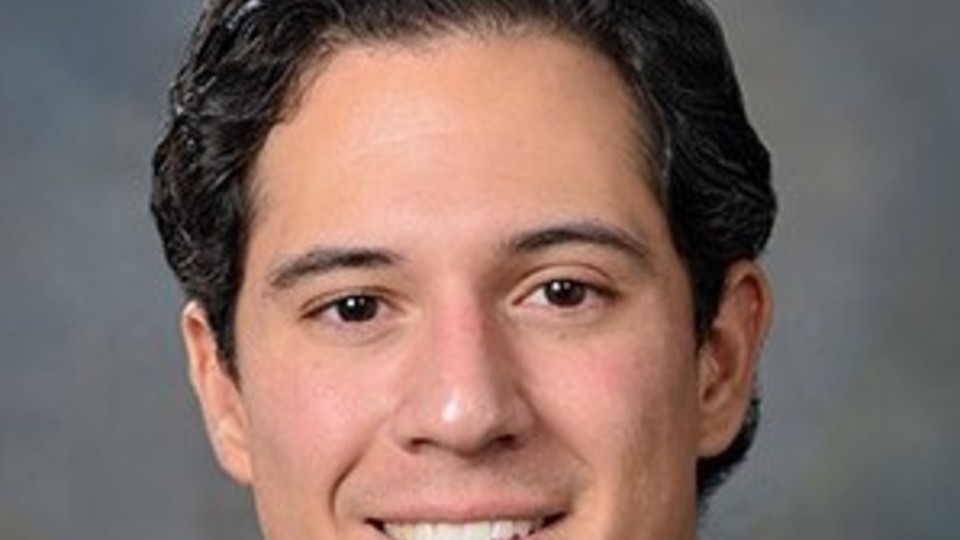
Pablo shares why more physicians need business fluency and what it means to look beyond the exam room to the health of an entire community.
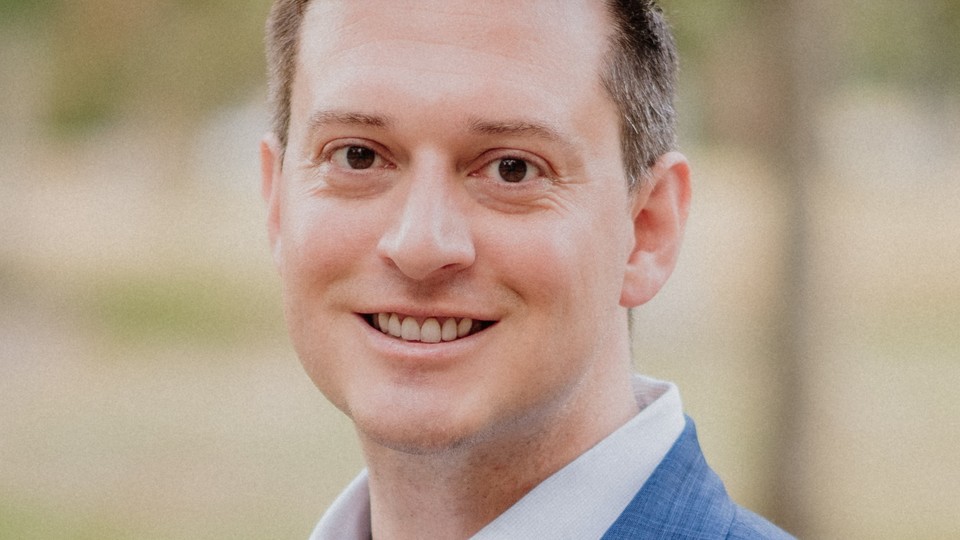
David shares how the Rice MBA helped him pivot into consulting and how AI is reshaping the industry.
During the last semester of business school, Megan Smith ‘22 added they/them pronouns to their email signature. It was part of a long journey from coming out as queer in college to finding their true identity as non-binary. Each leg of that journey shaped the person — and the leader — they would become.
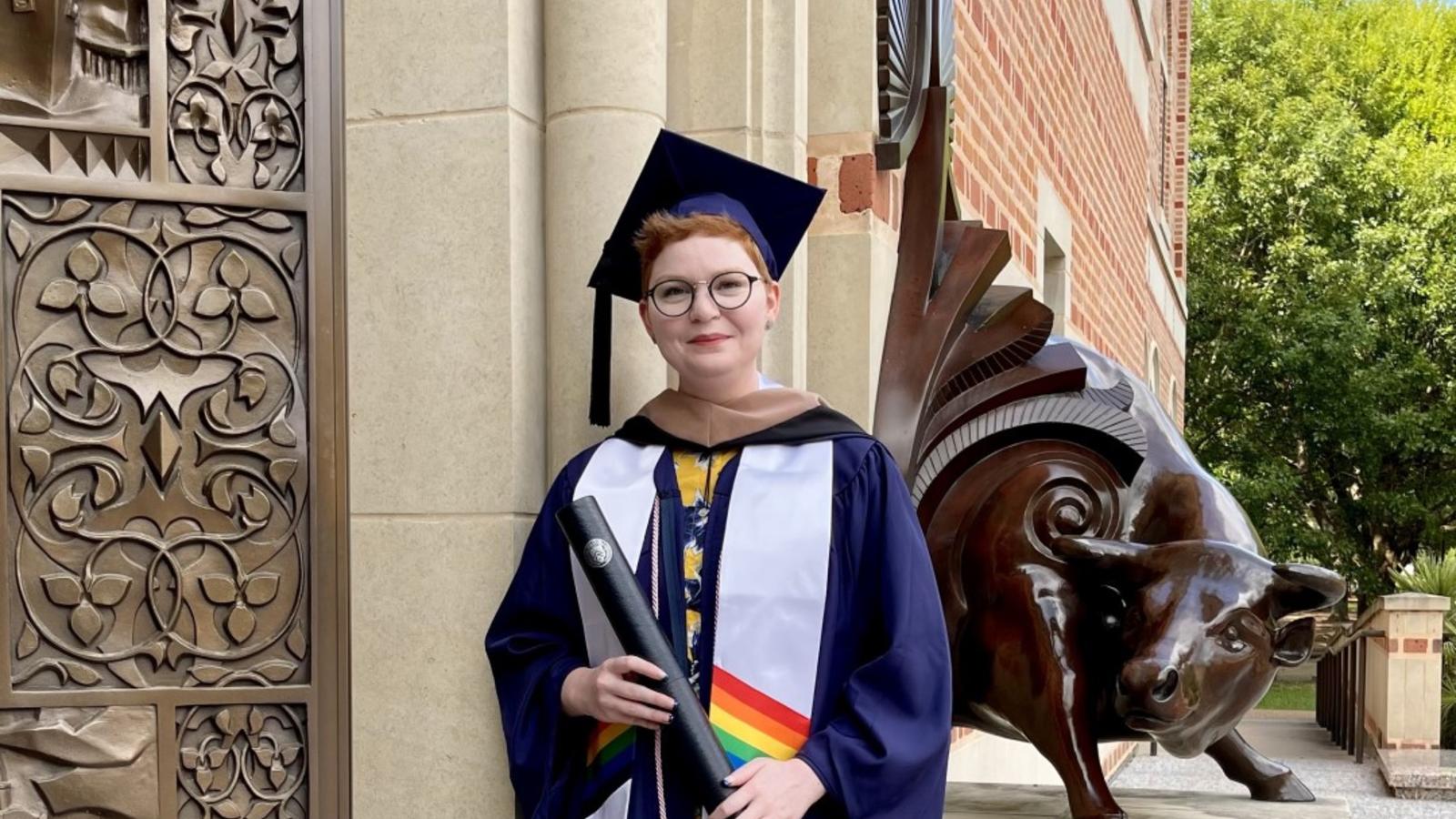
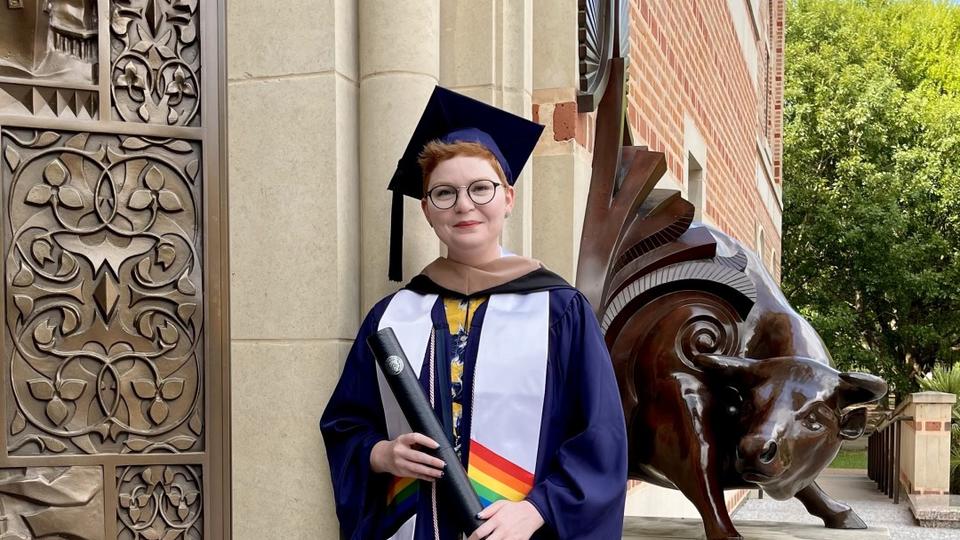
During the last semester of business school, Megan Smith ‘22 added they/them pronouns to their email signature. It was part of a long journey from coming out as queer in college to finding their true identity as non-binary. Each leg of that journey shaped the person — and the leader — they would become.
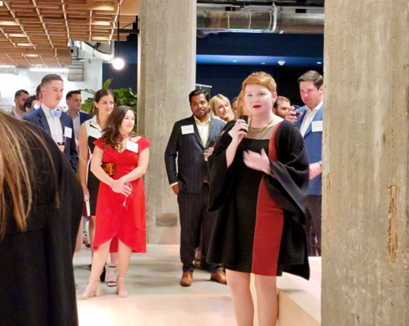
During college at Trinity University, Megan’s friend, Jady — who has since come out as a trans woman — was advocating for LGBTQ+ rights in San Antonio. Jady took on a key role in passing the city’s LGBTQ+ Nondiscrimination Ordinance. Watching their friend secure such a victory for marginalized people while being so authentically herself, Megan felt inspired and empowered to do the same. They realized that one of the best ways to begin affecting change is by being true to oneself. They also learned that “being queer means being political,” and that their identity in a heteronormative society requires taking action to protect their and others’ rights.
Megan quickly got involved in politics by working for Ron Nirenberg, an LGBTQ+ ally who was running for city council and stood in strong support of the Nondiscrimination Ordinance. After winning that race and a re-election two years later, Nirenberg went on to become mayor of San Antonio. “He never backs down from a tough fight – even when he’s in the minority. He always stands up for what’s right. That’s authentic leadership in my eyes. Mayor Nirenberg and Jady know themselves and what they’re fighting for. They’ve influenced me as the leader I am today,” Megan shared. After getting more wins under their belt, Megan opened their own political consulting firm. After a few years of working to elect leaders with similar values — and earning a 73 percent win rate — they realized that in order to scale their business, they needed to hone their business fundamentals. Where better to learn that than business school?
Before Megan joined the Rice MBA program, they connected with Adam German ‘21, the Out & Allied president at the time, and he introduced them to the LGBTQ+ community at Rice. Connecting with the queer community before joining the program made Megan feel a sense of belonging before starting classes. And when Megan saw an Instagram post about student body president Casey Sherrod ’21, and later an interview with her and Associate Dean George Andrews, Megan was not only positive they had selected the right school – but also that they wanted to serve in a leadership role to further cultivate an environment of equity and inclusion at Rice Business.

Seeing Casey, a lesbian veteran with a wife and son, elected by her peers as the president of the Jones Student Association (JSA) seemed almost unreal to Megan. “I’d never seen someone who looks like me in a role like that. We rarely see queer folks in leadership roles at all.” It made Megan think it could be possible for them too. Megan flipped from managing campaigns to becoming a candidate themselves when they ran for JSA president. And they won. “Rice Business was at a crossroads – my class was returning to campus after a year online and isolated from one another. We had the opportunity to rebuild the in-person culture and community and double our efforts to make our school feel as inclusive as the student body looks. Those were my priorities.” Megan served as the first non-binary president of JSA and also served as vice president of Out & Allied.
It was during the pandemic that Megan had time to introspect, look at their life and truly understand their identity. Megan also knew that to lead authentically, they felt compelled to – when they were ready – come out again. But how to explain? Megan worked with their leadership coach, Ruth Reitmeier, director of coaching at Rice Business. After many sessions centered on authentic and empowering leadership, Ruth helped Megan feel confident about coming out as non-binary. “I owe a lot to Ruth for giving me the space to figure out who I am. I feel that I’m a better leader because of it. I’ll always be authentically me. Seeing Jady, Mayor Nirenberg, Casey and Adam be authentically themselves gave me courage to be myself. I hope I offer the same courage to others.” Megan’s experience in life and throughout their Rice Business journey taught them that leadership is about empowering others. But the first step is empowering oneself.
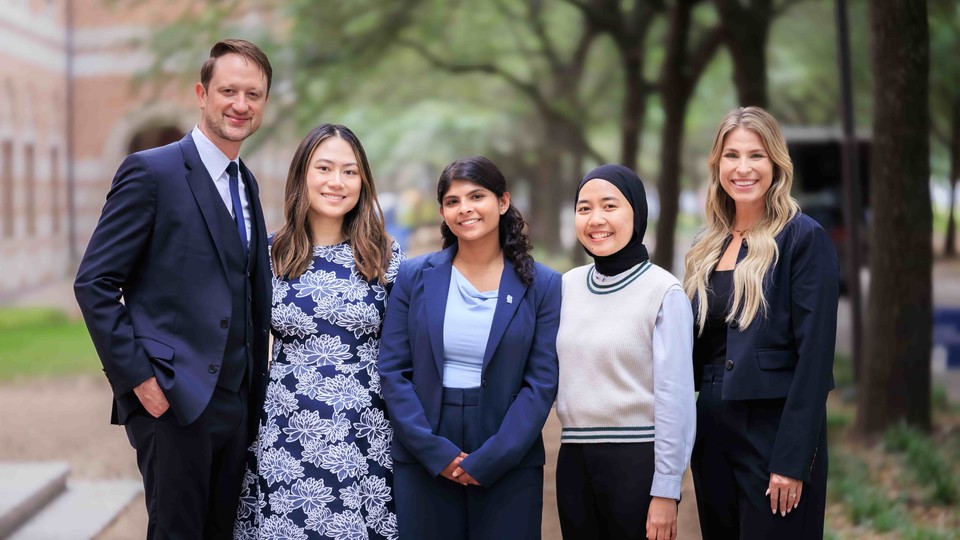
Rice Business’ Inaugural AI in Healthcare Conference began as just an idea. Here’s how the school’s network of support helped MBA students launch and host a successful conference exploring the future of AI in medicine.
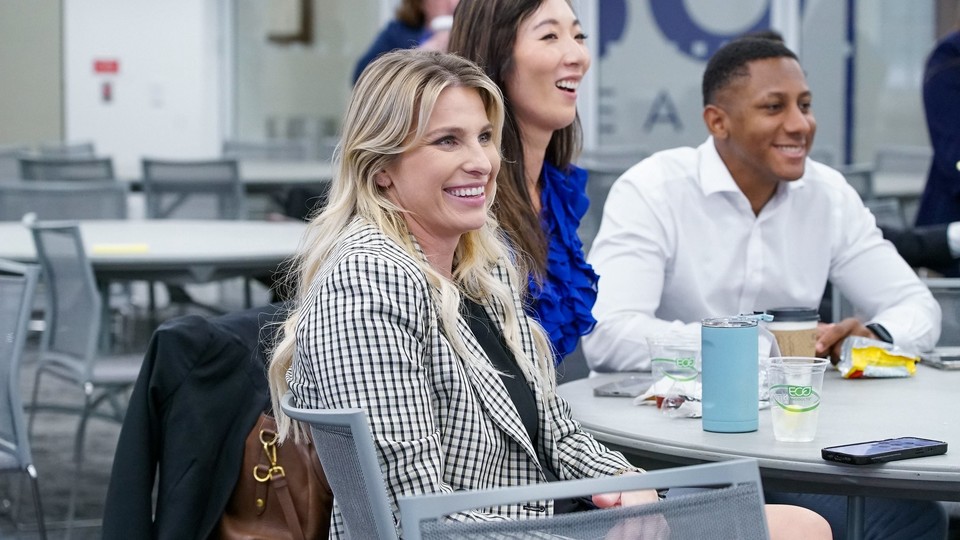
Learn from Rice Business how a part-time MBA fits a full-time career, along with tips for typical weekly workload ranges and practical planning strategies.
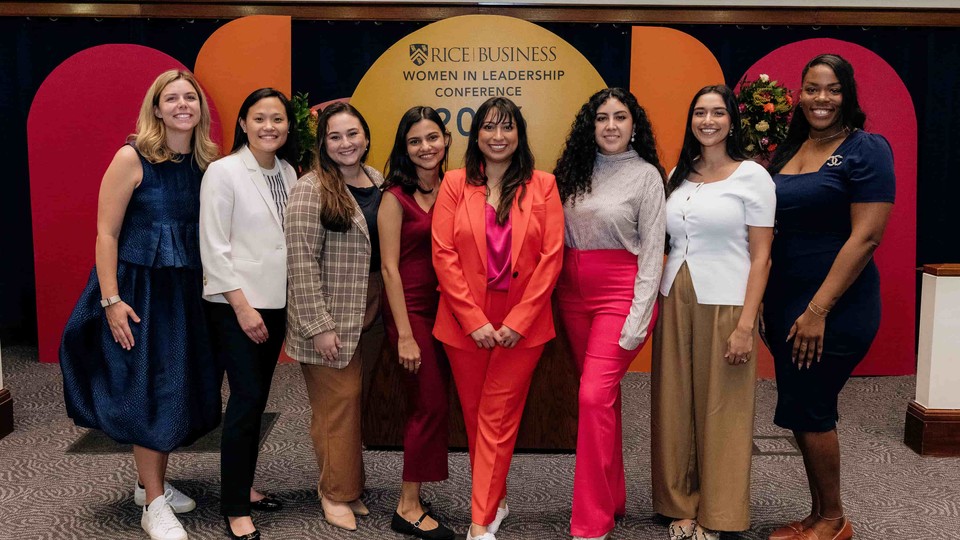
Now in its 26th year, the Women in Leadership Conference has long been one of the defining gatherings at Rice Business. This year, it welcomed more than 600 attendees, fifteen sponsoring companies and endless advice on leadership.
Congratulations to Pierre Aristide and Keri Sprung for being featured in Poets and Quants Best & Brightest Executive MBAs Of 2022.

Cart.com CEO Omair Tariq '16 began by hawking jewelry in Houston flea markets. Now he's out to prove his tech company is a giant-killer. Rice Business lecturer Rafael Alvarez added, "...something great is in store for Houston because of the immigrants here.”
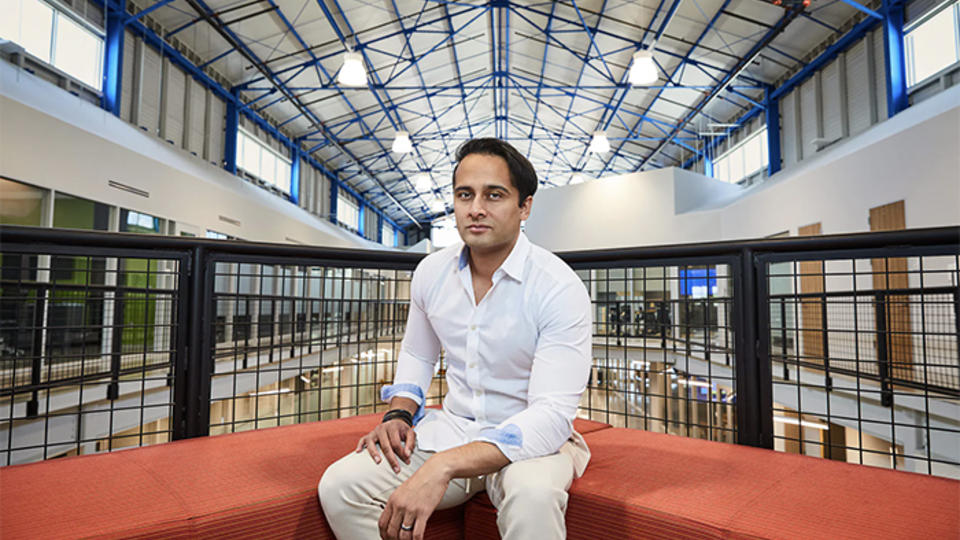
Andrew Clifton, MBA '13, has been named president of Zing Health. "Andrew embraces our mission to bring whole-person care to urban and rural areas with fewer medical resources," says Dr. Eric E. Whitaker, Zing Health founder and CEO.