Pivot
The Rice MBA spring boarded David into a career in investment banking with a special focus on agriculture and food. Now he's applying his industry expertise to his own investment banking firm.
Leveling up your game just got so much easier, thanks to the new cutting-edge technology from BeONE Sports — a startup that uses mobile motion-capture and AI to enhance athletic performance, prevent injuries, and support coaches and athletes at every level.
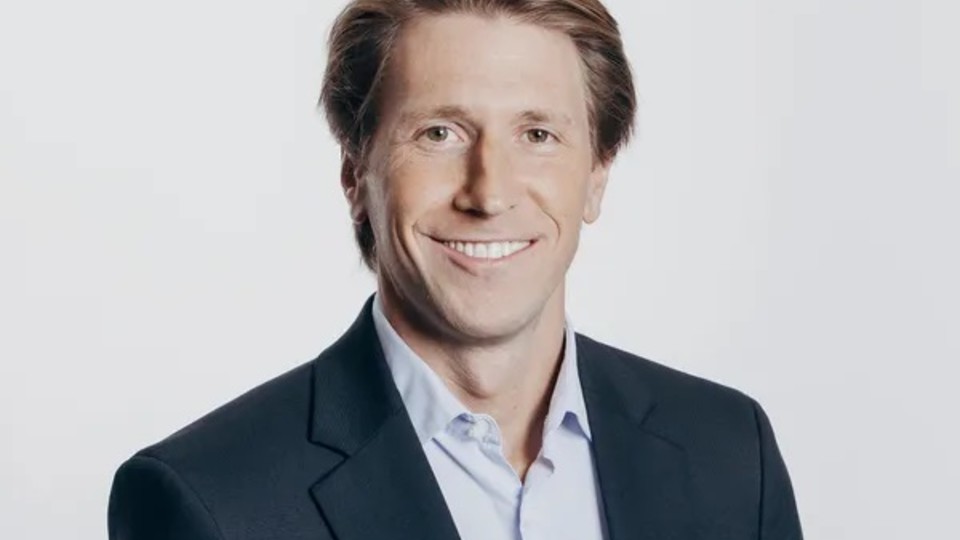
Co-founded by former Division I athlete Scott Deans ’22, the idea for BeONE started right here at Rice Business. Scott has loved sports since his days playing football, and through the EMBA program, he found a way to bring his passion and business acumen together.
He joins co-host Brian Jackson ’21 to discuss his early career journey through architecture, the 12 years he spent at bp and what ultimately led him to Rice Business. They also dive deep into the exciting technology being used at BeONE and how the company’s partnership with Rice Athletics is helping student athletes optimize their performance and prevent injuries.
Subscribe to Owl Have You Know on Apple Podcasts, Spotify, Youtube or wherever you find your favorite podcasts.
[00:00]Brian Jackson: Welcome to Owl Have You Know, a podcast from Rice Business. This episode is part of our Pivot series, where guests share stories of transformation in their lives and careers.
Today’s episode features Scott Deans, Executive MBA Class of 2022, co-founder and CEO of BeONE Sports, an innovative sports tech startup using AI and data analytics to help athletes to perform better and stay healthier. Scott’s journey is anything but linear. From division one athlete to architect, to senior analytics later at bp, and now entrepreneur. He’s built a career at the intersection of performance, data, and design.
In this conversation, we talk about what inspired his pivot to Rice Business, how BeONE Sports was born, and how his partnership with Rice athletics is helping redefine athlete performance.
Oh, hey, good morning, Scott. Thank you for joining me on Owl Have You Know.
[01:00]Scott Deans: Yeah. Hey Brian. Thanks for having me.
[01:02]Brian Jackson: Of course. Well, you've got such a colorful background, and I saw that you were previously a D1 athlete. So, what sport did you play, and do you happen to still play it?
[01:13]Scott Deans: I don't still play it the way I used to, but it was football. Played all through high school and college. I was a kicker and a punter, and in high school I was a quarterback, and pitcher, and broke my elbow pitching. So, that kind of ended the quarterback career, but went on to be a scholarship to athlete, and after that had a short attempt at the NFL, and the point came when I either had to continue following that dream or sort of make a new one, and it ended up going back to finish my architecture degree. So, that was sort of the formal ending of the football career.
[01:52]Brian Jackson: What was that moment like, where you're kind of like, "Okay, path, two choices." Both don't seem like the wrong one, right?
[01:59]Scott Deans: Yeah. It was painful, to be honest. I mean, my intention as a little kid growing up was three letters: N-F-L, N-F-L, N-F-L. That was it. And when that, you know, it became clear that that wasn't going to happen, or at least it wasn't the path that I thought I should take, it was a decision that wasn't easy, but, in retrospect, a good one.
I certainly play a lot of sports now, just not organized football. And so, that competitive nature doesn't go away. That's really what has stayed with me through my sporting career. And so, I think, you know, athletes who are in competitive sports are given this opportunity to learn an environment that is not typical, and that actually transcends later in life, whether you're in business or a corporate world or a job that really has nothing to do with sports. You can bring those things with you.
[02:55]Brian Jackson: So, you went back and did your master's of architecture. What drew you into it? You know, I was thinking about your background and as in high school I did architecture drawing and I had a teacher named John Stupka and I just remember sitting out in his classroom and having the drafting table and it was like the best hour and a half period because it was quiet and you had your ruler, you had your pencil, and it was just perfect.
[03:20]Scott Deans: Yeah, no, I agree. So, I think a little bit of the interest in architecture started from art, I have a grandmother and mom and great-grandmother that were all artists, and in some fashion or another. And I think I got a lot of that, but also, having a lot of time by myself as a kid, I found myself diving into art, and so drawing and painting, and making things was just something that I did as a kid.
And then, when I learned about architecture and learned that there was sort of this combination between art and science, and you're solving problems that allow you to express yourself and come up with crazy ideas. And I think I got drawn into that concept. So, architecture, you know, it's funny, you talk about coincidence or serendipity and those sort of things, but the reason I chose architecture, honest truth, I was sitting in a hotel room on my visit to Portland State University for football, and they said, "You know, you need to pick a major."
And I took the catalog and just went [inaudible], and landed on architecture, and I was like, "I'm going to get into architecture." And lo and behold, that was like the thing I was supposed to do, but the way that I arrived at it was completely coincidental maybe.
[04:45]Brian Jackson: Yeah, but sometimes leaving it to chance and just letting things happen, right? It puts you where you're supposed to be.
[04:51]Scott Deans: Yeah. I think, you know, I've always been somebody who's sort of, let life unfold in front of you, while you can have serious goals and intentions and objectives. It's almost more powerful, in my opinion, to let things occur, be observant of it, and then adjust and pivot and move to those goals and objectives that are facing you.
So, that was a case of how I ended up in architecture. It was a tough road being in an architecture school and a scholarship athlete. Which, I found out later, I was the very first scholarshipped athlete to graduate in architecture.
[05:33]Brian Jackson: Wow.
[05:33]Scott Deans: It took six years, because the first two years, you know, you're 100% focused on sports and athletics, but architecture's very demanding in terms of studio time, and I just wasn't able to be successful the first two years. So, when I decided to really focus on it. I just had to turn it on and go 100% into that. And that's where, you know, things kind of kicked off from there.
[05:56]Brian Jackson: Well, and you ended up at BP, where you spent about a decade, where you were planning, analytics and performance. This is a bit of a pivot from architecture.
[06:07]Scott Deans: Yeah. And the reason I got into it was during the oil spill or the incident, Macondo, and I was actually brought into that emergency event, because the person who sort of recruited me was looking for someone who thought like an architect. And I said, "Well, wait a minute, what's the job?" And my whole family for about five generations is military background, and so I must have that sort of DNA in me.
And emergency response has a heavy kind of connection to militaristic thinking, incident management, and all those things are very structured. They're very architectural in my mind. There's things that you do. There's line of command, there's all these things that I resonate with. So, I went to the incident, and we ended up working that for about a year.
And after that, BP said, "Well, we'd like you to come to Houston and work on some other things." So, I decided to do that and moved right into the performance management world, where I could actually start to combine really the artistry of organizational thinking or strategic thinking, because the community of engineers and physicists and those folks, in the energy world, I think welcomed a little bit of that artistic thinking, which may have been an anomaly in the environment.
So, I found myself drawing diagrams on whiteboards all the time with, like, a group of people, and I'm trying to, like, convey a message, and I think part of the success in that was, it was just a completely different way of thinking about a problem that they were solving. It ended up working out really well, learned a lot, not only about the energy industry, but large corporations. Ultimately ended up being the director of performance across the upstream, which is a massive organization with many components of the business.
And my job was to basically tell the executives what the performance data is telling us, to help them make decisions. And that came with a lot of data and analytics. It came with visuals, it came with conveying messages through graphics or whatever else. And throughout the 12 years at BP, it went from sort of paper or classical ways of showing information.
Excel spreadsheets and charts and graphs, and that sort of thing. And like, you know, reports on paper. But the digital transformation that occurred in probably 2008 to 2012, I started leading, like, digital product development to do those same things. How do you make it faster? How do you make it simpler? How do you create tools where people can do it themselves? You know that sort of thing.
So, that was kind of the latter years of working there. In my mind, it was a combination of how being an architect meets engineering and energy. And so, yeah, it was really, really a fun time.
[09:33]Brian Jackson: And it's challenging too, like communicating really complicated information to executives. Like they need to know why. What is the impact they need to make decisions based on it? At the same time, like you were saying, technology was changing, and the ways of communicating information were changing. I don't know, any tips or tricks you learned kind of through the evolution that you could share?
[09:56]Scott Deans: I think, always try to ask better questions, and this has been a mantra of mine since I was a little kid, I think. Because you know, there's always going to be answers. You can always find a solution. But is the solution the right one? And is there a better question we could be asking to really achieve an impact or a positive outcome that you're looking for?
But sometimes that leads you to, you know, a lot of rework or pivoting and changing. And so, it creates a mindset of constant flux. Like you're in constant change. And that's not an easy mindset for many people. So, some of the advice I would give is, if you're a structured thinker and a structured person and you need step A, B, C, D, E, F to kind of operate, that's great, and you're probably really good at that because you've been working in that modality, but test yourself.
If all of a sudden A, B, D occurs or W shows in from the side and, you know, like, what are you going to do? And that, that could be in like, technology exploration. That could be in completely changing your strategy because you found a better question to ask. And so, being nimble and being agile, I think, is a really powerful skill in anything that you do.
So, yeah, that's kind of what I... The big things that I've taken from my experience, and 100% deploying all those things today in my new venture, which is challenging. It's challenging and great at the same time, but it's something that I think is really important, to make sure that you're kind of tackling the most powerful thing you can be and not being afraid to say you're wrong and scrap it and come back to something new. Just do it fast, reiterate, or iterate many times. That's a really powerful thing.
[12:06]Brian Jackson: Absolutely, and I feel like being afraid of asking questions, some folks feel like it's an admission of not knowing, then it's an admission of inadequacy, and that fear stops you from these possible iterations like you're talking about, and these other opportunities because you're straddled onto A, B, and C.
[12:25]Scott Deans: 100%. And it is something that you have to wrestle with, I think internally a little bit. And it starts to speak to, you know, what kind of a leader are you? And I think I try to practice vulnerability and transparency, because I'm learning too. I'm learning every day. So, yeah, being willing to say that you were wrong or you could do something better is often a healthy thing, I think.
[12:52]Brian Jackson: Yeah, absolutely. It builds the culture of openness. Right? So, I guess your next kind of phase I think of is your Rice MBA. What made you decide that, you know, an MBA was something that you wanted, those three letters at the end of your name?
[13:06]Scott Deans: Yeah, well, a couple of things sort of again pushed me into the decision. One, my time at BP was coming on the back of a COVID year. So, a remote year, we were actually doing a massive project on reorganization and changing everything. That was kind of the way things worked. And the remote environment just started to create some disconnect, and I found myself wanting more.
And so, I figured what… I have an extra, a lot of extra time here, and I'm starting to really get excited about the business side of things. So, I applied the MBA program at Rice, along with a few others, and had a decision at the end, fortunately of where I wanted to go. And Rice is a quarter mile from my house, you know, obviously one of the best programs in the world.
And so, yeah, decided to go for it and of course, wanted to do that simultaneous with working and maintaining a full-time job. So, got in. And then that was sort of the first day of a big new chapter coming, which happened about a year later, halfway through the program.
[14:23]Brian Jackson: When you sat down that first day, did you go, "Okay, right decision," or "What am I doing?" What was the feeling?
[14:32]Scott Deans: To be honest, in the beginning, because our first year of the program was also remote because of COVID. So, we were like the first class ever doing this Executive MBA, full-time, remotely. So, you know, our cohort was pioneering something brand new. So, I kind of thought that was interesting and fun.
But it also made it pretty challenging because, you know, part of the real interest in the program was the people, and we didn't really get to meet each other for a year. Lots of Zoom calls like this, so you, you know, you're meeting people and creating relationships through a screen, which ended up working out well, and to a really cool, actual meeting of people one year into the program.
And so, the beginning was kind of what I've… what I expected. I expected to be challenged to learn new things, to find what I'm good at and what I'm not good at, and you know, the neat thing was it was just, "We're doing it. It's 100%. I don't care what shows up, we're going to go," and that was the kind of mentality going into it.
[15:43]Brian Jackson: Yeah, I was, uh, online program, we're the, I think the second cohort. So, we were really the initial pioneers on the online space for the business school. But it's tough to go through a computer screen and build relationships, and a lot of the value of your MBA, it's your classmates and networking, and learning from each other.
But also in 2026, most of the new calls I have with potential customers or opportunities, it's over Zoom. Like this is where you build relationships, and this online kind of persona that you have to build is ever more important, you know, than it was 10 years ago.
[16:21]Scott Deans: Definitely.
[16:21]Brian Jackson: So, at one point, the MBA program, I guess it dawned on you that, you know, entrepreneurship was a pathway, and then it seemed like a real legitimate pathway that you could take. What was that kind of realization like?
[16:35]Scott Deans: It was really just a confirmation, rather than a new realization. I'm an only child, and I grew up on a boat, a small boat in San Francisco Bay.
[16:44]Brian Jackson: You're kidding.
[16:46]Scott Deans: No, so-
[16:46]Brian Jackson: Wow.
[16:47]Scott Deans: ... I was secluded and by myself a lot of times. So, I was an entrepreneur of a very young age. I think, at my first business, I was nine years old. So, I've always had an entrepreneurial kind of process and mindset, but I didn't know it. I didn't know it was entrepreneurial kind of thinking, or that I should have probably done this sooner.
But, at one point in the MBA program, when you're going through Al Danto's class at the time with pathways to entrepreneurship, and you're going through leadership training, you're going through all these different internal processes of like, "Who am I and what do I want to do with my life? What's the purpose of what I'm doing with my life?" All those things.
I was like, "Wait a minute. I'm supposed to own my own business here." And that happened pretty quickly, actually. And so, maybe after the first semester, I was already working through ideas. And in fact, I went through two ideas before BeONE Sports at the program. And one of them was through the energy world, because I thought maybe I would do something in energy.
Another one was actually a food and beverage concept to solve a problem that I found in that industry. And even went through customer discovery for both of those things and had people interested and all this stuff. And I was like, "You know what? These things aren't really scratching the itch." And I sat back again and went back to, "Okay, where is my passion?" Not, "Where is my experience?" or "Where is my, you know, current knowledge base?" "What's my passion?"
And it always goes back to sports. It always goes back to that competitive moment with learning and struggle and, you know, what happens in the world of sports. And so, I was like, "Okay, that's it." So now, I start taking in my experience and my knowledge and all that from competitive environments, the data and analytics side from my previous jobs, the art and architecture, all that stuff combined into what is now BeONE Sports.
And that's what's really neat about that process of finding what you want to do with what you can do and then working simultaneously between those things. I think that's why I am still at it here, you know, in our fourth year at BeONE, because I am truly waking up every day and doing what matters to me and what matters, I think, to the people that we work with and provide solutions for.
So, I sometimes imagine if I had chosen the other, one of the other companies, and I was like… There's no way I'd be here after four years, grinding through the trenches as they say on something that didn't matter to me. So, yeah, I think that's a huge, huge point in any entrepreneurial journey — that it has to matter to you, otherwise you're not willing to compromise and go through all the pain in order to make it successful.
[20:03]Brian Jackson: That's, I think, fantastic advice. So, Scott, BeONE is pioneering this thing that’s called comparative training technology. Could you explain kind of what that is?
[20:15]Scott Deans: Really simply in a nutshell, in sports, you are learning all these different movements and actions, and those movements and actions lead to success in the sport or success on the field or on the court. The perfect example is like being a quarterback. A quarterback in football, there's a lot of mechanics that go into playing that position successfully, whether it's your foot placement on a drop back or your throwing mechanics, or you know, even just being in the right body position to scan the field and read the defense, there's biomechanics and body movements that can be trained.
And so, what comparative training does is basically give you an option to learn from somebody who's already achieved a level of progress or a level of greatness. And so, the concept around, you know, when you're a kid, and you're learning from a coach, or nowadays you're watching YouTube or something, and you're trying to understand what to do, and then translate that to your body while you're on the field training.
And there's a massive disconnect between watching somebody do something great and then try to mimic that on the field for yourself. So, the technology that we developed is just a way to make that simpler and faster, and more consistent. And so, we use computer vision technology that tracks what your body's doing.
And through a variety of algorithms and pieces that we've added to the technology, it basically allows a subject with some other subject to be seen in the same space and time, which allows us to create all sorts of calculations that are supposed to be what we call metrics that matter. And through those metrics, a person can actually learn faster.
So, in a nutshell, if I want to learn to be a quarterback, like a collegiate athlete or a professional athlete, then we provide that comparative, that athlete in the system, so you can see yourself against that athlete, and it actually creates the calculations and tells you where on your body and when you're producing errors.
So, the whole technology is about learning, and the whole process is about how do you make it simpler, faster, and more versatile for everybody to use.
[23:03]Brian Jackson: Just thinking of an example, so let's say I am a golfer. You record me with my swing, you would then get the metrics from a comparative, let's say, Tiger Woods. You would put that over my swing, and then it would give me metrics that matter, which show, kind of, the differences and potential movements I could make in order to achieve a better swing?
[23:23]Scott Deans: Essentially. Yep. There's components of this, right? So, each movement can be broken down into micro actions. And those micro actions are things that we've developed and embedded into the artificial intelligence. So, they're called AI recognition models for sports. And so, we train models to find these key moments in any movement.
Now, the trick is, Tiger Woods, for example, if you're actually using Tiger Woods, then you have to have license to do so if you're going to commercialize that product, right? So, that's been one of the hurdles or barriers to the concept, although I think we now have 220-something comparative athletes in elite sports, so we've solved that issue.
Now, of course, Tiger's not in the system because we haven't quite gotten there yet, but maybe someday, he just would get excited about training kids around the world without doing anything. And that's the value proposition to the comparative athletes that, you know, there's so many athletes out there with 10, 20, 30 years of grit and tears training their craft.
And we've created a technology where they can now pass that on to the next generation without doing anything. So, the concept has really been for every athlete that we've spoken to who has a desire to give back in some way but doesn't have the time and effort to do it. It's been really positive because their skillset is there, and we're just finding a way to unlock all that talent and pass it on to everyone else.
[25:13]Brian Jackson: Oh, you're solving a huge issue for players and coaches, right? Like, you're giving them this example that would otherwise not be available.
[25:22]Scott Deans: Yeah. And the kind of trick I think behind it is having the example be relevant to the person, right? Because I mean, there's tons of examples out there. You can go watch pretty much any athlete, probably on YouTube, and you're just watching it. But the real innovation here is that it is lined up to what the subject athlete is doing.
Otherwise, you're always trying to say, "Well, what's that guy doing and what am I doing?" And there's a disconnect. That's where the real sort of technology innovation exists. And that's really where we're on the cutting edge of producing this. And now, we've patented that process. So, we think we can really enhance on it for quite a while.
[26:09]Brian Jackson: And that only sports people I know are golf people, and I'm also just not very good at sports, but like you're saying, matching to the right athlete for, you know, a comparative, that makes sense. So, you wouldn't necessarily have Tiger Woods match with me, maybe John Daly or Bubba Watson. Like their swing, their form, for whatever reason, it hits metrics, it makes more sense for me. Right?
[26:33]Scott Deans: That's right. Yeah. So, everybody's different, whether it's your skillset, your maturity in the sport, or the movement, or just your physiology, right? Your anatomy, all of these things, make everybody unique and different. Your style could be different, but that's kind of the beauty, and the way we've built this is we don't attempt to fit everybody into a single athlete or a single comparative.
We're creating a catalog of elite athletes because they, too, are different. You can be a professional athlete, you know, in the hall of fame, and look and swing a baseball bat very differently. One, because your just anatomical ability is different. Your physiological ability is different, but your style might be different.
So, we create this massive catalog of learning opportunities, and then that way, when an athlete who wants to learn fits a certain style, or it fits a certain anatomy or physiology, we can match them up. And say, "Hey, we've recognized you're moving like this person or these top five or whatever, consider using these."
So, it's really about just providing the largest catalog of learning opportunity possible and then kind of matching people up based on movements and things that we recognize or find. And that's kind of the sort of concept that really anybody can use this, and anybody can learn from it, and then you have fun in the process, sort of training with your heroes.
[28:12]Brian Jackson: That's incredible. And you were, you were able to co-found BeONE with another Rice MBA alum, Jason Bell, and also a former Rice student athlete, James McNaney. What did each of you bring to the table? I mean, I feel like partnerships, there's like elements from each of you that matter so much.
[28:30]Scott Deans: Oh, definitely. So, another big piece of the program at Rice was really focused on, like, building a team. And I've been a coach for a long time. I've been part of teams and built teams, so teams are, in my opinion, the linchpin, you know, really the basis for a product and, you know, a business and all those things.
But part of that process is everybody's recognizing what they're good at and what they're not good at, and then where you have gaps. You need to find people who are strong in those areas. So, I recognize really quickly the areas that I'm not strong at, and Jason, basically, from a business side and many other sides, filled those perfectly.
And so, when we started working together in the early days, we were able to really sort of look at everything we need to be doing and saw that, "Okay, between the two of us, we really can cover all the bases," but there was one side that was not covered, which was basically the data science side behind what we wanted to produce.
Now, interestingly, Jason and I, across the two of us, probably have like 45 years of collective experience in data and digital products. However, the data science component of this, the machine learning component, and building artificial intelligence, the actual nitty-gritty behind this, is what we needed to get.
And so, we had the opportunity to hook up with James, and he is a wiz in that regard. But also happened to be training for the Olympics at the same time that we found him. So, we were like, "This is amazing," you know, collision with sports competitive knowledge, and data science. So, you know, we really started working heavily with James, and he showed a deep interest.
So, you know, we quickly, the three of us, got hooked up and been building ever since. You know, James is really, now we think of him as a Technical Founder. His name is on the patent with mine. So, it's like a really important side of this because it's the basis of, kind of, what we're doing.
[30:50]Brian Jackson: And those partnerships, I mean, I think Rice brings a ton to the table. That's one part of it, is that access. And you had an additional partnership with Rice University's Office of Innovation, and also the Athletics Group, Rice Athletics, you know, could you tell me a bit about that and what the goals are for that partnership?
[31:06]Scott Deans: Yeah, so the, the first partnership was with Rice Athletics, and that was mostly because we were basically showing something new, and they were very willing to test it out and help us and use the product, generate data. And that partnership was really great in the beginning. Now that we're moving the software to the next version, we're going to sort of redo and kind of re-up that partnership, because the technology has advanced, the use cases for the technology have advanced.
And so, now we can do even more inside of Rice Athletics. The Office of Innovation was actually based on our goals and sort of interests in applying our technology in the military. And so, once we learned that we actually had a lot of use cases inside the military or the Department of Defense, we started connecting with the Office of Innovation who also has a group and a team and an effort who does the same thing. And so, we built a little team with Office of Innovation, created a partnership and an agreement to tackle a couple open RFPs for technology.
And we ended up actually getting a contract in the Air Force together. And that Phase 1 contract was an amazing first time working for the government. And, you know, we sort of combined our efforts to produce a Phase 1 solution. We proposed the Phase 2 solution, which would've been a massive, massive contract, and we fell just short of getting the Phase 2 contract, but the opportunity still sits there, and there are so many opportunities in that space that we really, we really want to continue building that branch of the company and continue to enhance that partnership.
Our challenge right now is focus priority and human resources to do all that. Because we have to keep our company objectives clear, which is sports right now. But the moment we are able to grow a little bit and have the ability to start continuing that military and Department of Defense use case, that's where we're headed.
[33:42]Brian Jackson: Wow. I guess I'm really interested, you know, how are Rice Athletes using your technology during a season? What does that look like?
[33:50]Scott Deans: I think currently they're probably not using it because we're in between 1.0 and 2.0. So, 1.0 was just a mobile application. It was really kind of a beta on the whole concept, what we had eventually patented and everything. In the initial days, it was all functional movement, mobility use cases. We had a lot, like, focused on speed and agility, so you know, how athletes are sprinting? What their form and technique looks like coming off of the line? What their mobility patterns look like?
And baseball, soccer, tennis, I think golf is going to start here pretty soon. So, lots of applications within the department. What I think we're hoping to do for 2.0 is go 10x on the use of the technology throughout the different teams. Partly because we've now built a platform that will allow coaches and athletes to do that. But there's also this piece where, which it's not just Rice. We're seeing it across the industry where companies are creating technology sort of on a curve like this.
And the people using it are sort of at a more flatlined use of it, partly because technology is advancing very, very quickly. And it's advancing faster than people know what to do with it. But also, there's a customer adoption piece that we have to sort of grow with our customer base because a lot of coaches and athletes, one, don't even know the technology exists, but two, don't know how to use it.
And then three, don't know how to adapt what they currently do to the new way, potentially of using technology to inform decisions. So, all three of those things lead to how well this is being deployed across the industry. And so, those are some of the challenges, and we see that really with all of our customers.
[35:58]Brian Jackson: So, then how do you deploy it? I mean, are you going to conferences, kind of, road shows? Are you, you know, directly going to university sports athletics programs and presenting? Like, what does that kind of pitch look like?
[36:11]Scott Deans: Yeah. There's a lot of thought that has to go into your go-to-market strategy. We've mostly focused on creating organizational relationships. However, the product is actually designed for the mom or dad in the garage training their 12-year-old, and what… The challenge for that is there's quite a bit of difference in your target sectors or your customers that you're actually designing for.
Because whether you're shooting an organization in the NFL level or the MLS level or whatever, versus an individual user, that's like both ends of the spectrum. The real trick is building something that works across that entire spectrum without requiring the company to do things vastly different, and that has to go across marketing, that has to go across product design.
And so, it is a bit of a challenge, but at the end of the day, we're really building contracts and relationships with organizations, with schools, with clubs, but also with private trainers, and individual users who want to use the technology. So, we're building quite a versatile model to allow any of those relationships to occur.
[37:34]Brian Jackson: Wow. So, I guess as a founder, what's one assumption that you had early on that now you look back, and you're like, "Ah, that was completely wrong?”
[37:42]Scott Deans: There's a few that I would say. One of them is the commitment of your closest people. So, your family, your friends, they will absolutely be affected in an entrepreneurial journey. They'll be affected financially, emotionally, they'll be affected just by your presence or lack of presence. So, you have to really think about everyone that's close to you in this journey, and are they up for the challenge as well? Because you need that support.
You can't be fighting that area, otherwise the meaning behind what you're doing changes. So, there's a component of compromise. What are you willing to compromise in order to be successful? And then, you have to ask them, what are they willing to compromise in order for you to be successful? That's something that I was not appreciating at the beginning, but something we learned pretty quickly. And I'm fortunate to have such a strong support structure with my wife and my kids, and family. So, that's a big one.
The second one is double whatever time you think this journey is going to be. So, if you think, "Oh, this is going to be a two, three year thing and I'm just going to build it and sell it or whatever," double it, and then take your current salary at your current job and reduce it to 10% across that doubled time, then say, "Okay, do I want to do that?"
Because that is more than likely the reality. You know, they always say in school and everywhere else that you've got to grind through the trenches and you got to be tough and you got to keep going and all that stuff. That doesn't mean anything to anybody until they're in the trenches, and you're not truly in the trenches until all those things have occurred, like, you're broke, you're tired, nothing's working, you have no customers, you know.
It isn't until then that you're like, "Holy moly, I'm in the trenches." And so, you just have to be prepared for what you're about to put yourself through. And then lastly, it's assess and reassess where you are. So, as a founder, you have to be the one that is leading. You have to be passionate. You have to be the one that's like driving inspiration, like "We're doing the right thing, all these things are great," but you also have to be the very first one to look at everything and say, "This is going to fail, and we need to stop."
Which is a really challenging thing because if you're just the person saying, "Rah, rah, rah, let's go, let's go." Then you're just going to spend a decade, ruining what you may have built. You have to be the first one to also say, "Okay, it is time to cut the cord and bow out. And you know, chalk it up to a failure."
So, it's a really, it's a really challenging and important place to be. And again, it all gets back to internal transparency and being able to assess things objectively.
[41:04]Brian Jackson: That's great advice, and I feel like if it's something you're passionate about too, knowing how to temper the passion a bit to say, "okay, time out. We got to pause this. It's not working," is probably the hardest decision to have to make.
[41:18]Scott Deans: Yeah. Because you're, like we were saying before, you're not just telling everybody you were wrong. You're telling yourself that, "Well, wait a minute, maybe my passion is a little bit skewed," or "I'm being overly ambitious," or "I'm naive," or whatever. But, at the end of the day, I love it. You know, I'm doing exactly what I'm supposed to be doing. There's always going to be products, always going to be solutions, always going to be ways to solve problems, but are you doing it in a way that matters? And I think that's the biggest key.
[41:50]Brian Jackson: Yeah. The one last question I had, the Winter Olympics are happening now. What's your favorite sport to watch?
[41:57]Scott Deans: Oh, that's a tough one. Well, first of all, every time I see the Olympics or major sporting event, I get really jealous, especially if we're not there. Because I sit there and I'm like, "Oh, my gosh, there's so many uses for BeONE technology in this sport and all of these things." I mean, obviously, in winter sports, I love the snowboarding and the skiing.
I actually really like speed skating. I'm a hockey player. I still play hockey, but the form and technique in speed skating would be absolutely perfect for what we do. But I think those opportunities will come. We have some interesting connections going. We know a few athletes that are competing. So, maybe the next one we'll be, we'll be there.
[42:46]Brian Jackson: Yeah. Well, Scott, it has been fantastic speaking of you this morning. Thank you for joining me. I greatly appreciate it.
[42:53]Scott Deans: Absolutely. Well, thanks for having me. We'll do it again sometime in the future.
[43:00]Brian Jackson: Thanks for listening. This has been Owl Have You Know, a production of Rice Business. You can find more information about our guests, hosts, and announcements on our website, business.rice.edu. Please subscribe and leave a rating wherever you find your favorite podcast. We'd love to hear what you think. The hosts of Owl Have You Know are myself, Brian Jackson, and Maya Pomroy.
The Rice MBA spring boarded David into a career in investment banking with a special focus on agriculture and food. Now he's applying his industry expertise to his own investment banking firm.

Now an investment banking associate at Bank of America, Chris discusses his military experience and how the Rice MBA helped him make a major career transition.

Rzan shares how her father's pursuit of the American dream inspired her, why she was drawn to the Professional MBA program and how her experience at Rice has left a mark on her forever.