Image
A roundup of news from Rice Business and beyond
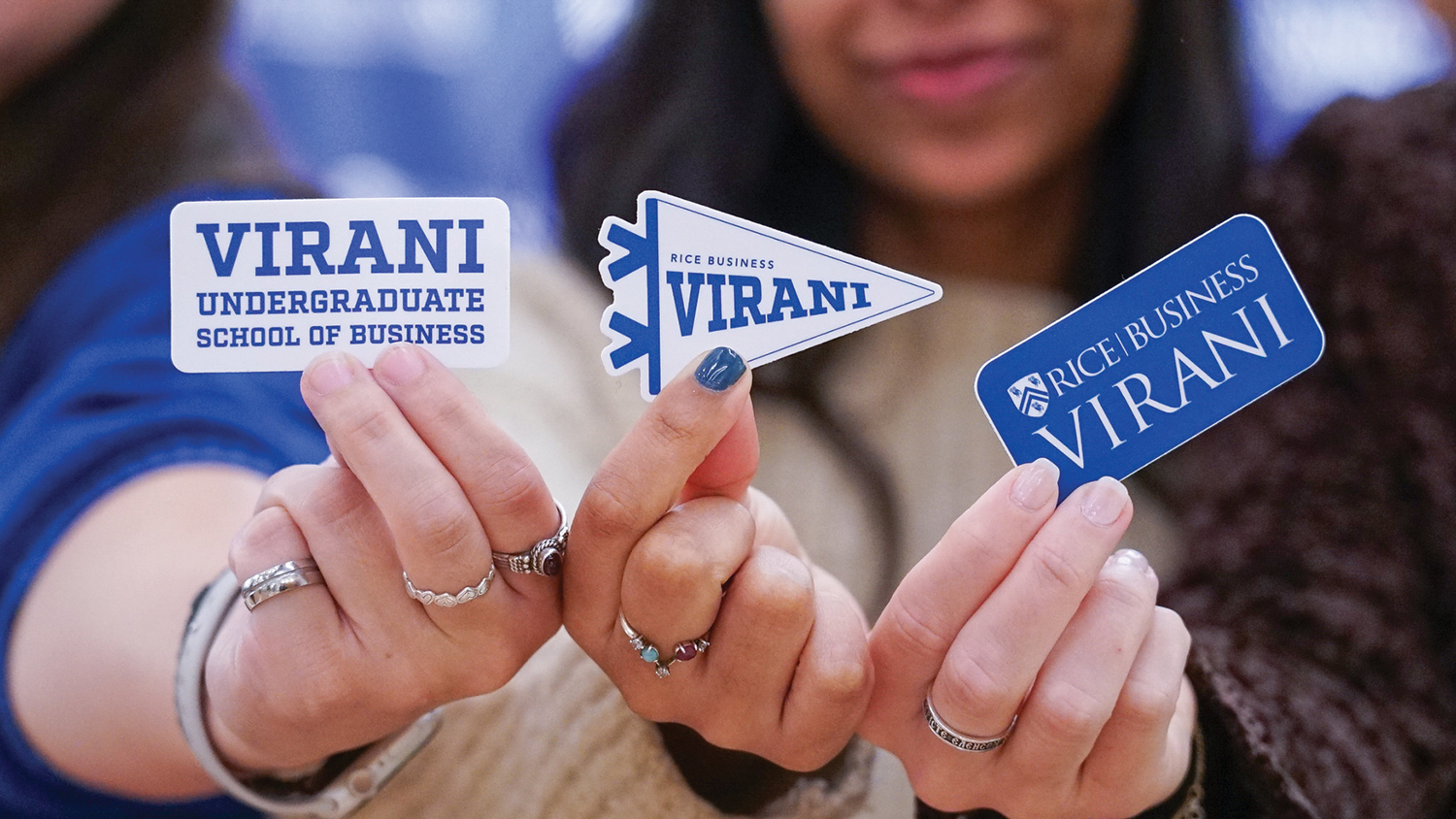
This spring, the Virani Undergraduate School of Business launched two new initiatives: the Moody Business Scholars Program and a concentration in marketing.
The Moody Business Scholars Program, announced at the annual Spring Fling, will offer co-curricular programming to selected business majors through tracks in finance, management and marketing.
Earlier this year, marketing joined finance and management as the third concentration for business majors and will offer support for students seeking roles in product and brand management, digital marketing, consulting, entrepreneurship and more.
The Virani Undergraduate School of Business, which celebrated its one-year anniversary in October, has flourished to include more than 451 current business majors, 133 business and entrepreneurship minors, and promising career outcomes — with 95% of Class of 2025 business majors securing postgraduate roles within six months of graduation.


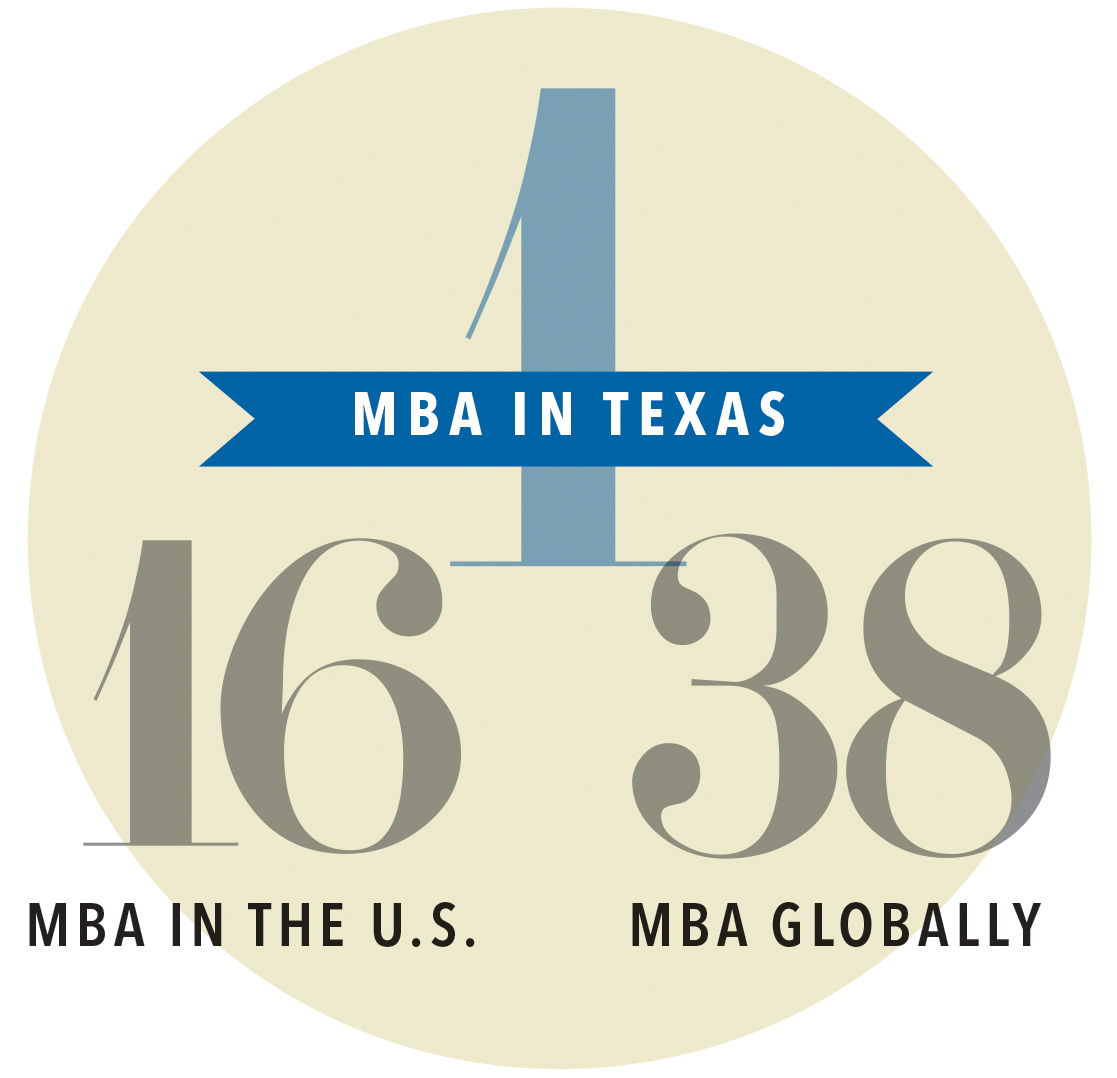
According to the 2026 Financial Times rankings — which ranked Rice Business as the No. 1 MBA in Texas, No. 16 in the United States and No. 38 globally — our school earned the top spot worldwide on one metric in particular: “Aims Achieved.”
The 93% score represents the share of Rice Business alumni who reported that the Rice MBA helped them achieve the goals they set before enrolling. As just one of many criteria for the Financial Times’ global MBA rankings, we are extremely proud of scoring so high — as no program in the world ranks higher for helping students reach their ambitions.
Peter Rodriguez was named Poets&Quants’ 2025 Dean of the Year at the publications’ annual awards ceremony in late October. Since his appointment as dean in 2016, Rodriguez has guided Rice Business through extraordinary growth and innovation — including the launch of the MBA@Rice and Hybrid MBA programs, the establishment and naming of the Virani Undergraduate School of Business, and the construction of the new building next to McNair Hall. Rodriguez has also overseen a rise in student enrollment, growth in the school’s faculty and staff populations and continuous top placements in rankings worldwide.
Kerry Back, the J. Howard Creekmore Professor of Finance, was recognized with an Innovation in Teaching Award from the Financial Management Association International for his Generative AI in Finance course. “I view the role of the course as threefold,” Back said. “I want to show students how to use new tools for financial analysis, to show them the ways in which generative AI is implemented in and impacting the finance industry, and to deepen students’ understanding of core finance and related topics.” Read more from Back here.
Jing Zhou, deputy dean of academic affairs and Mary Gibbs Jones Professor of Management and Psychology in Organizational Behavior, co-authored a paper that was selected by the American Psychological Association for its December 2025 Editor’s Choice list. The paper, “How and for Whom Using Generative AI Affects Creativity: A Field Experiment,” examines how generative AI affects employee creativity in actual organizations. Read more on Rice Business Wisdom.
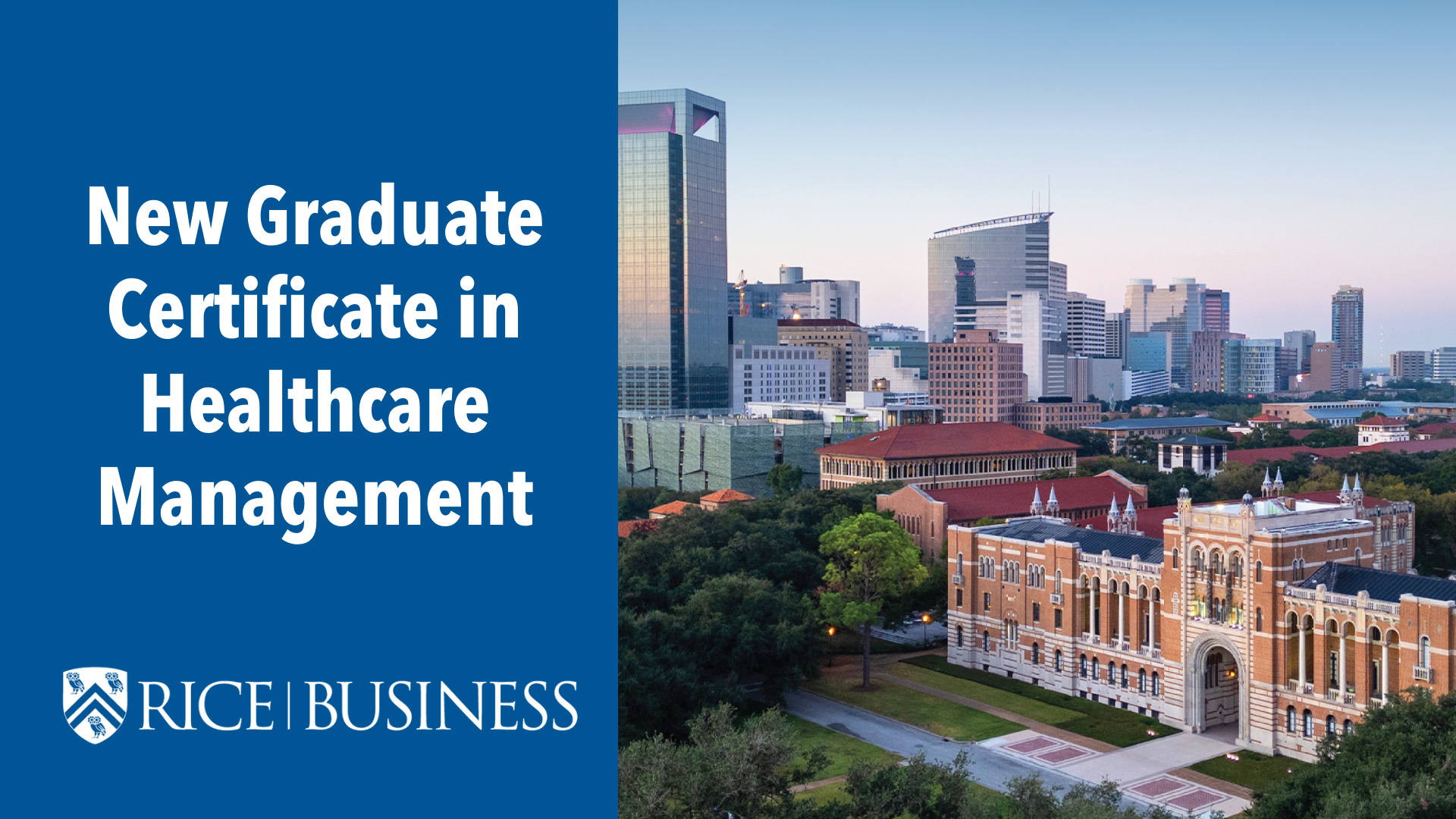
In January, Rice Business launched the new Graduate Certificate in Healthcare Management program. The 10-month, credit-bearing professional credential is designed for current and aspiring leaders in the business of healthcare and emphasizes practical application, peer networking and real-world insights through relationships with the Texas Medical Center. The new graduate certificate serves as a path for those seeking to deepen their business expertise in healthcare.
Learn more about the program here.
Rice Business students, faculty and staff lead a wide variety of annual events that draw crowds from across the country and around the world. Read more about recent conferences and competitions at Rice Business, and learn how you can support their missions.
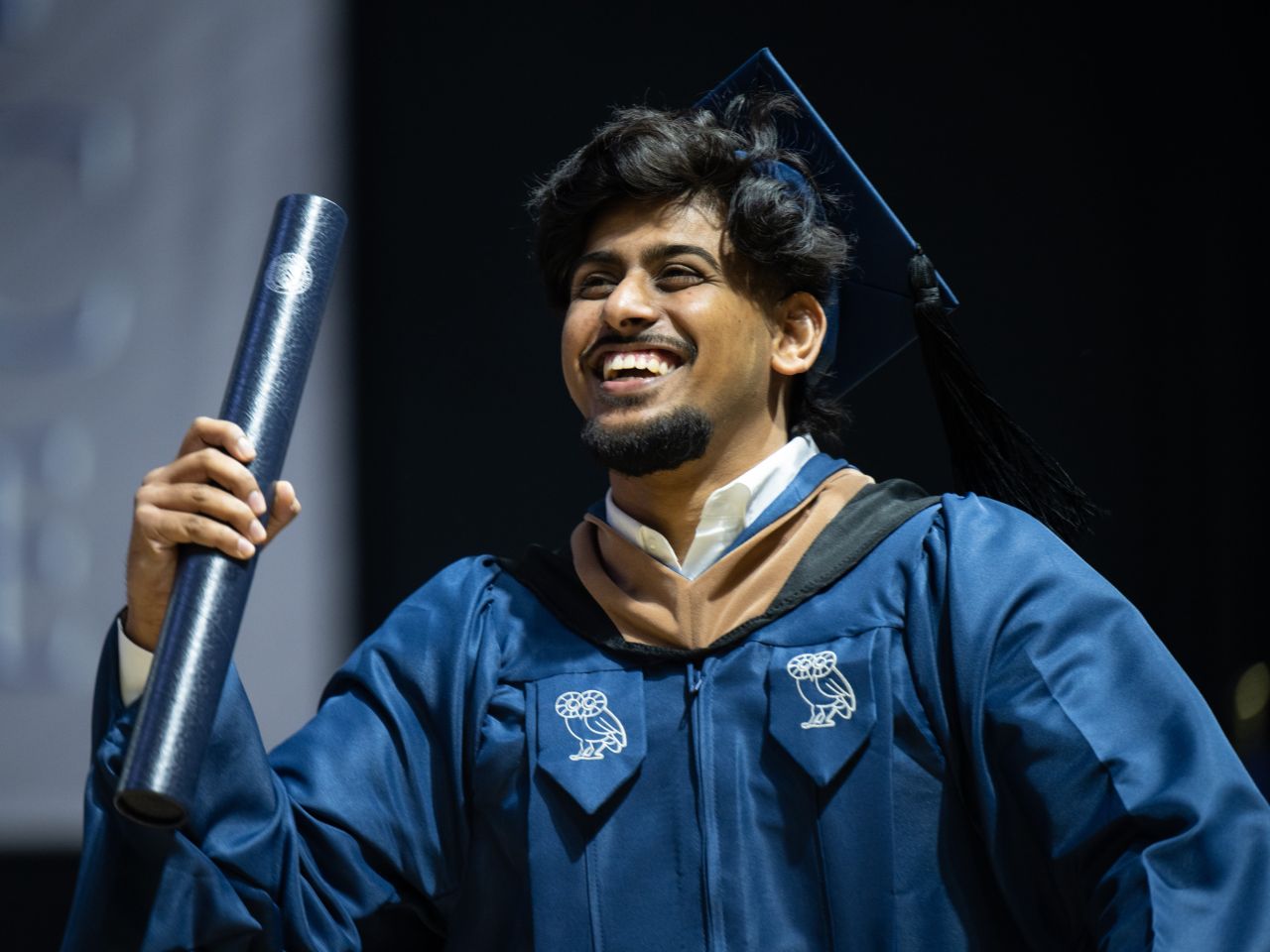
Congratulations to all who graduated in December. As some of our newest Rice Business alumni, we know you are all achieving great things. Don’t forget to keep your community updated!
Each semester, distinguished fellows are invited to visit McNair Hall and share their impactful research. The program fosters development among junior faculty members and Ph.D. students, while building connections and bridging scholarship from around the globe. This spring, Rice Business welcomed James Wade, Avram S. Tucker Endowed Professor of Strategy and Leadership at George Washington University School of Business; and Katherine DeCelles, Secretary of State Professor of Organizational Effectiveness at University of Toronto’s Rotman School of Management.
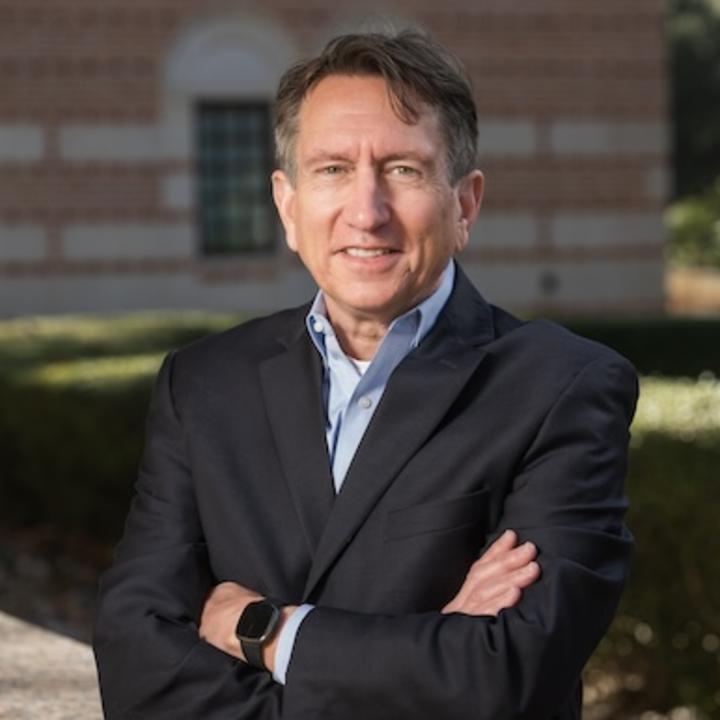
Honoring Brad Burke
Brad Burke will conclude his tenure as director of the Rice Alliance for Technology and Entrepreneurship on June 30, 2026. Since joining Rice Business, Burke has established the university as a global leader in entrepreneurship through opportunities like the Rice Business Plan Competition, which grew into the world’s largest and richest student startup competition under his leadership. Burke shares his thoughts on his 25-year career at Rice Business.

Welcoming JR Reale
JR Reale began serving as interim associate vice president and Rice Alliance executive director on April 15. A longtime Rice supporter, Reale has contributed more than 17 years on the Rice Alliance Advisory Board and has served as a lecturer at Rice Business. Reale co-founded Station Houston and has supported countless local startups. He joined the Rice Alliance as managing director in 2025.
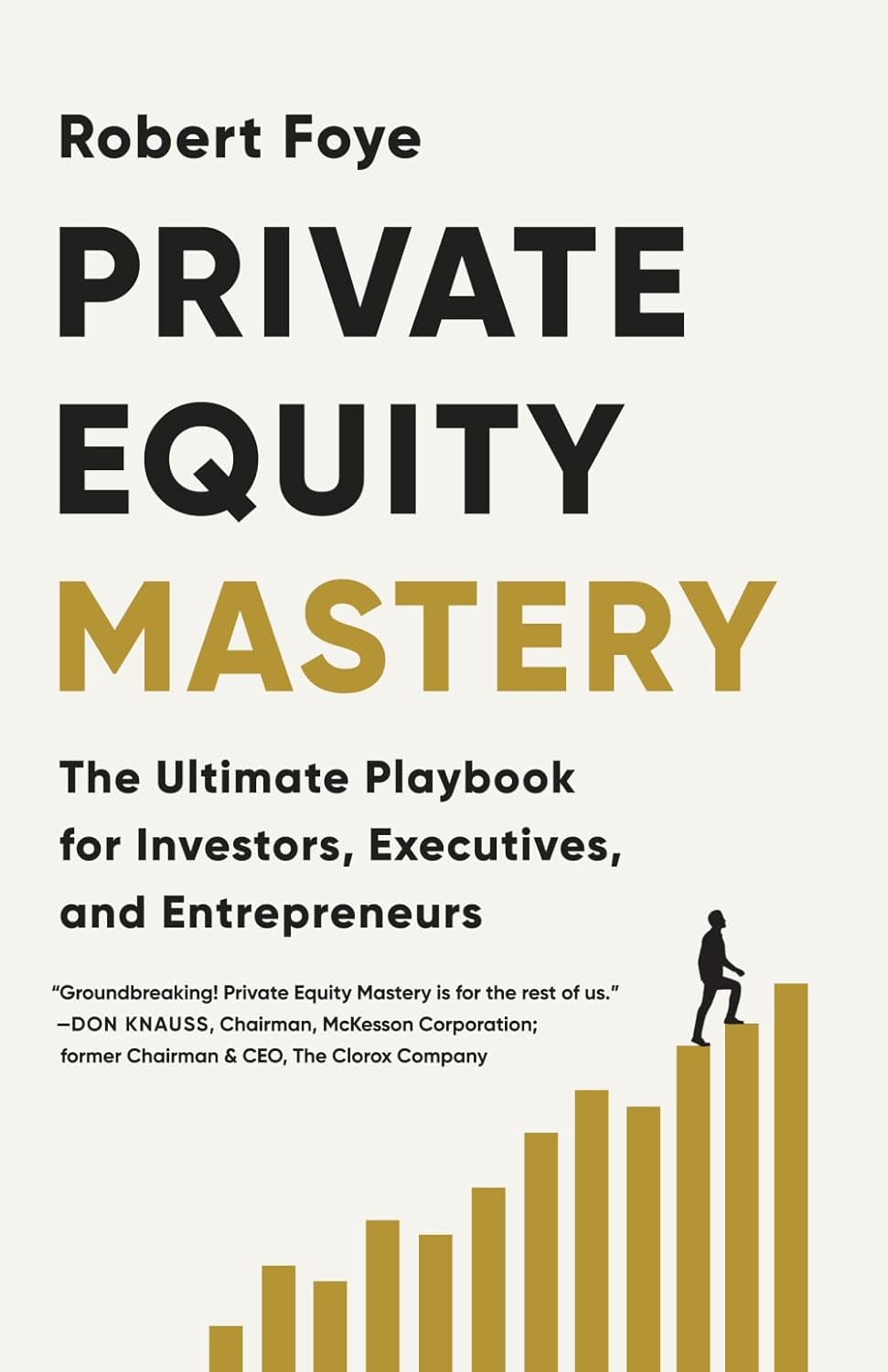
In “Private Equity Mastery: The Ultimate Playbook,” veteran executive, investor and educator Robert Foye ’88, ’90 demystifies one of the most powerful — and least understood — forces in the global economy. Drawing on more than 30 years leading companies, including Accolade Wines, Treasury Wine Estates and The Coca-Cola Company, Foye offers a clear insider’s guide to how private equity firms raise capital, create value and drive rapid transformation. The book is written for founders weighing a sale, operators navigating PE ownership and investors seeking stronger returns —anyone who needs to understand the financial engine reshaping modern business.
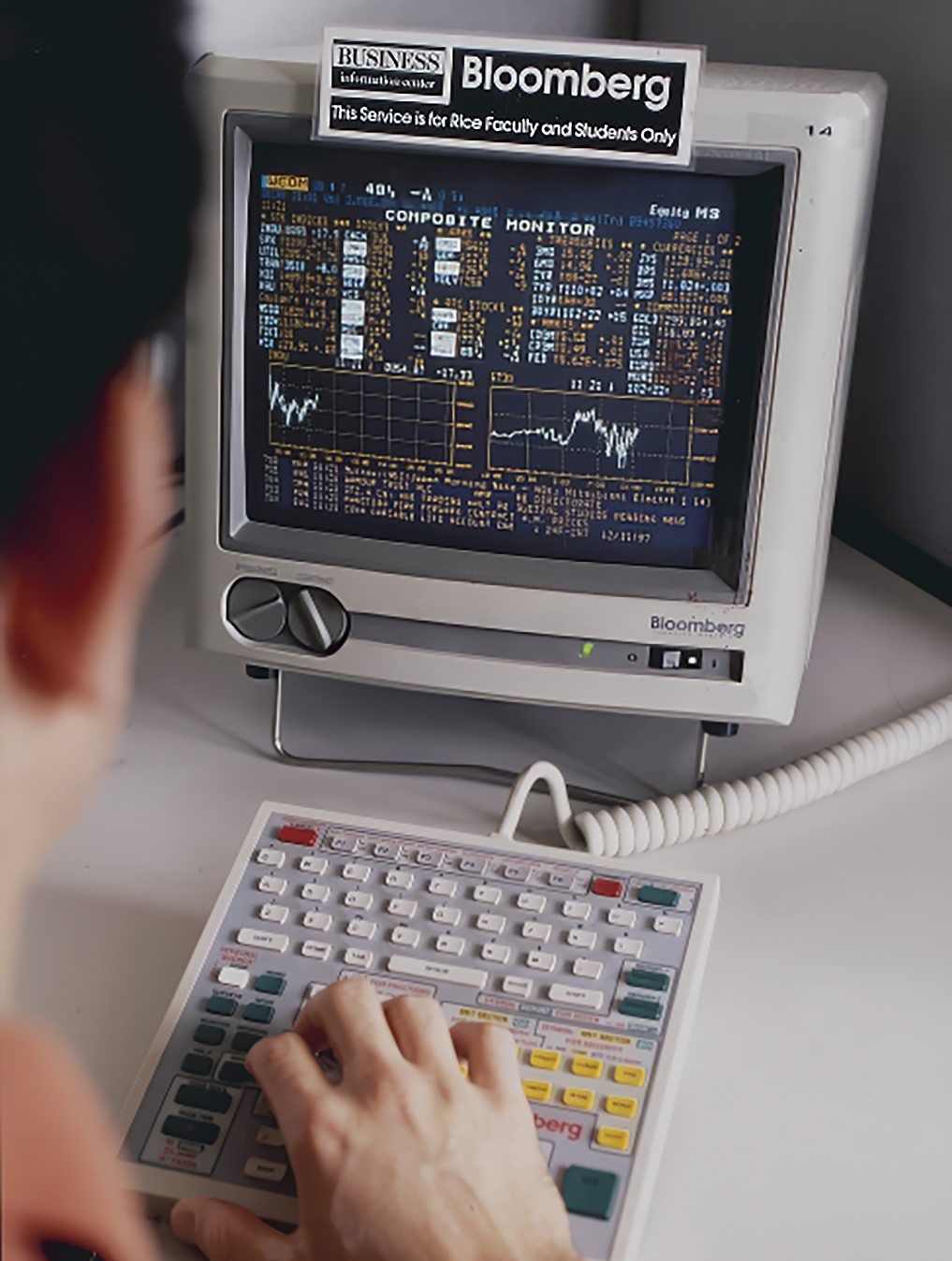
Terminal Velocity. Before smartphones delivered market updates instantly to your pocket, there was this: the Bloomberg Terminal, with its glowing amber display and rainbow-colored keyboard — a portal to Wall Street that few outside the financial world could access. In the mid-1980s, a Bloomberg Terminal cost upwards of $20,000 annually per station — roughly $60,000 in today’s dollars. Having one on campus meant Rice Business students were learning the markets the same way traders at Goldman Sachs and Morgan Stanley did: in real time, with live data streaming across the screen. The terminal’s specialized keyboard, with its yellow function keys and color-coded commands, required real training to master. Students who did could pull company financials, track bond yields, analyze currency movements and follow breaking news. It was as close to sitting on a trading floor as you could get without leaving campus.
That tension between access and mastery, between technology and the knowledge to use it, is one Rice Business has navigated across every era. Today, as AI reshapes how finance is taught and practiced, the question we wrestle with isn’t so different from the one facing professors in 1985: how do you prepare students to use a powerful new instrument they’ve never seen before? Each era of the school has carried the same ambition to bring students as close to the real thing as possible, and the next chapter is already under construction.
From the Woodson Research Center Collections

Wesley Sinor ’97 is employing a true cowboy ethic to make the world’s biggest rodeo even bigger.

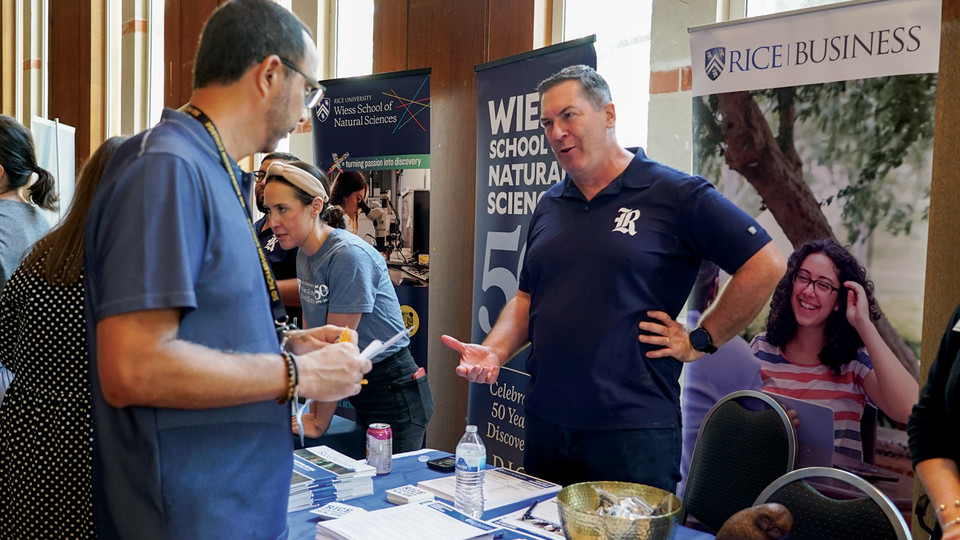
Associate Dean Bob Dittmar on risk, rationality, AI and building an undergraduate business program grounded in rigor — and humanity.