Image

Nov. 26, 2025
Research from Rice Business is adding nuance to long-standing debates about work and motivation. Assistant Professor Mijeong Kwon explores what happens when intrinsic motivation — loving work for its own sake — takes on moral weight.
“When a neutral preference becomes charged with moral meaning, social scientists call it ‘moralization,’” Kwon says. “Once intrinsic motivation becomes moralized, loving what you do is seen by coworkers and employers as not only enjoyable but virtuous.”
While “doing what you love” has real benefits, Kwon’s research suggests that treating it as a moral imperative may contribute to guilt, burnout and overlooking other legitimate needs, like financial stability.
Jan. 6, 2026
A new study co-authored by Jing Zhou, deputy dean of academic affairs and the Mary Gibbs Jones Professor of Management and Psychology – Organizational Behavior, finds that generative AI can enhance employee creativity — but not equally for everyone.
Published in the Journal of Applied Psychology, the research identifies metacognition — the ability to plan, monitor and evaluate one’s own thinking — as the key differentiator in who benefits from AI tools.
“Generative AI does not automatically make employees more creative,” the authors write. “What matters is whether employees have the metacognition to use AI in a reflective way.”
For leaders, the findings suggest that successful AI adoption requires more than new technology. Organizations must also invest in developing employees’ capacity for reflective, strategic thinking.

Jan. 16, 2026
As credit card debt surpasses $1 trillion nationwide and average interest rates hover around 22%, President Trump’s proposal to cap credit card rates at 10% has reignited debate over consumer lending.
The plan has drawn sharp opposition from major banks, who warn it would curtail access to credit — particularly for higher-risk borrowers. Benedict Guttman-Kenney, assistant professor of finance, echoes that concern, but adds a layer of complexity:
“It’s not clear that people are going to be better off,” he said. “They’re still paying similar amounts of money.”
Guttman-Kenney notes that banks might respond by raising fees or tightening lending to lower-credit-score customers — though he also points out that some bank expenses are bloated enough to absorb the impact.
The proposal has bipartisan support in Congress, but significant political and industry hurdles remain.

Feb. 6, 2026
When federal immigration enforcement operations swept through the Twin Cities in early January — detaining workers, raiding restaurants, and entering a Target store — corporate America’s response was telling.
More than 60 CEOs from Minnesota’s largest companies signed a public letter calling for peace and a “swift and durable solution,” while carefully avoiding any mention of specific policies, officials or victims by name. Alessandro Piazza, associate professor of strategic management, who studies corporate political engagement at Rice Business, argues the letter reflects a broader collapse in the conditions that once enabled corporate activism.
“Corporate activism might always have been more about positioning than principle,” he writes.
Companies that once staked out progressive stances with limited risk now face retaliation from both government and activists — what Piazza calls a “triple bind.” His research suggests that until the political landscape shifts, hedged language and cautious coalition letters are the new normal.

Feb. 20, 2026
More than a billion people worldwide lack access to credit because they have no formal borrowing history. New research from Jung Youn Lee, assistant professor of marketing, offers a promising solution.
By analyzing everyday retail purchases — at grocery, pharmacy and home improvement stores — Lee and her colleagues developed an algorithm that generates credit scores for people with no traditional credit history.
In a study conducted with a Peruvian company, the model raised approval rates for unbanked applicants from 15.5% to 47.8%, while also reducing default rates among first-time borrowers.
“The key takeaway is that we can create a new kind of credit score for people who lack traditional credit histories, using their retail shopping behavior to expand access to credit,” Lee says.
The research also raises important questions about transparency and consumer consent in the use of personal spending data.

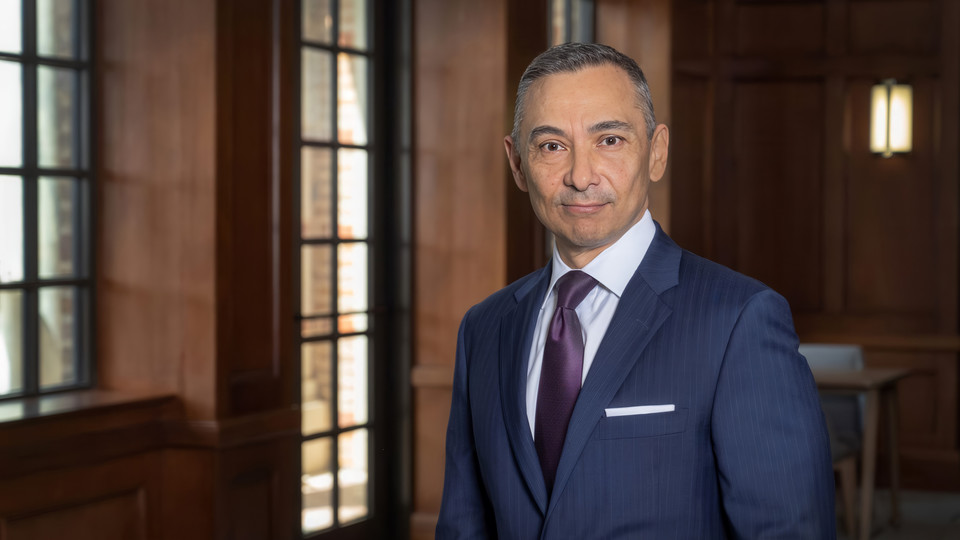
“The growth we’ve seen is not measured in square footage or enrollment alone. It is measured in the strength of the academic community we build.”