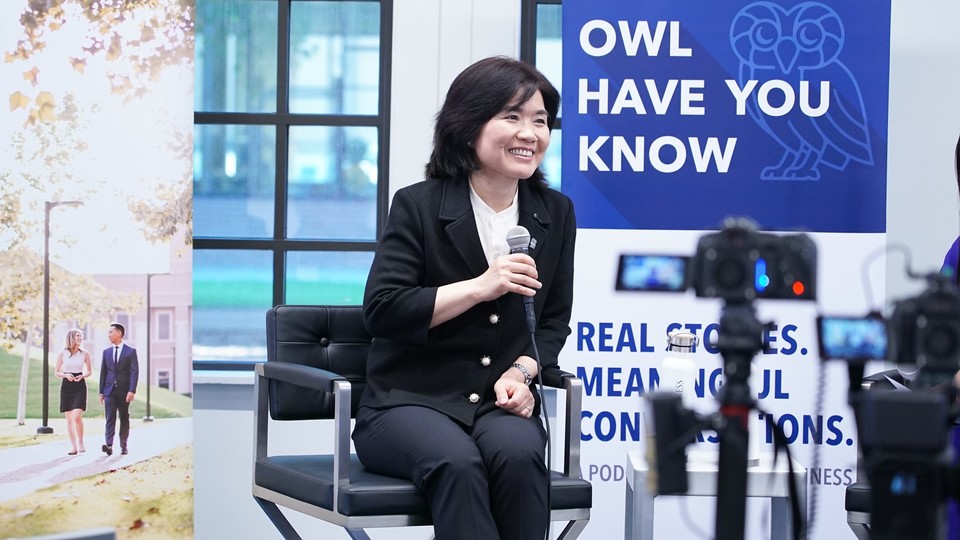
[00:00]Maya Pomroy: Welcome to Owl Have You Know, a podcast from Rice Business. This episode is part of our Up Next series, where faculty researchers and alumni weigh in on the trends currently shaping the world of business.
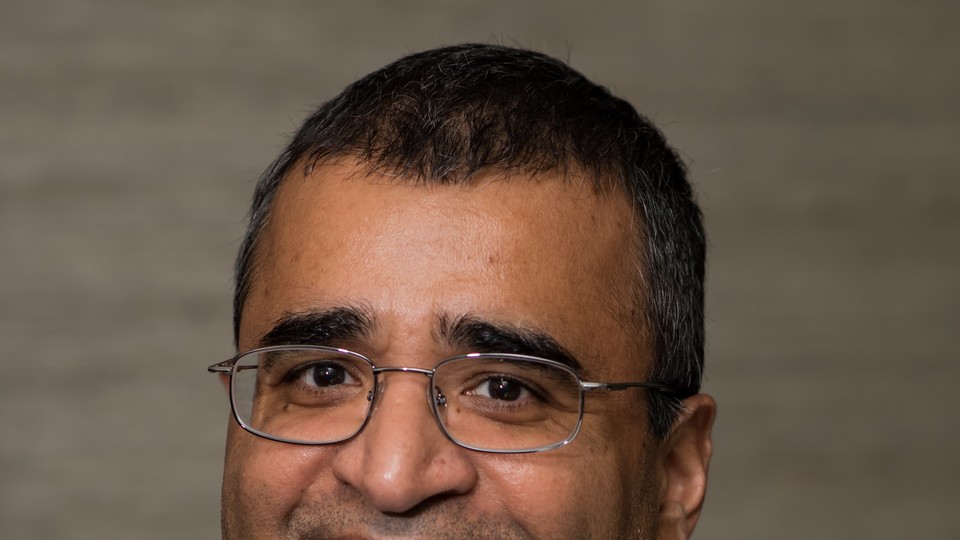
Our guest today on Owl Have You Know is associate dean of the Virani Undergraduate School of Business and Houston Endowment Professor of Finance, Bob Dittmar. We’ll explore his early influences and pathway into academia, what he learned during his nearly two decades at the University of Michigan, and what drew him to Rice.
We’ll discuss his fascinating research on risk, its misconceptions, and why those risk signals are so hard to spot in real time. He’ll also share his motivation on stepping into a leadership role at the undergraduate level and what he hopes to build at Rice Business.
Welcome, and congratulations on the new role!
[00:55]Bob Dittmar: Thanks so much. I really appreciate it. It's been a learning experience, a lot of fun, and we have lots of challenges ahead of us, but that's what makes jobs interesting. So, you know, I am looking forward to continuing on in this role.
[01:10]Maya Pomroy: So, you have had a very distinguished and robust career in academia. Is this something when you were a young child, you were like, "You know what, I want to be a professor"?
[01:21]Bob Dittmar: Well, when I was a kid, I wanted to be a scientist, so I didn't know that being a scientist maybe meant being a professor potentially at some point in time. But my earliest recollection is wanting to be an astrophysicist, which, obviously, I am not at this point.
[01:39]Maya Pomroy: Not yet. There's still time.
[01:42]Bob Dittmar: I'm running out the clock as far as that's concerned, I think, at this point. So, you know, I spent a lot of my young years wanting to do that sort of thing. I grew up in a town that had a national lab, and so I was surrounded by a lot of other kids whose parents were scientists.
[01:59]Maya Pomroy: Where did you grow up?
[02:00]Bob Dittmar: I grew up in the suburbs of Chicago in a town called Downers Grove. So, the Museum of Science and Industry in Chicago was my favorite place to go. Yeah, science was a big part of it, and I think a huge driver of why I thought eventually I might want to go into a career like this. I knew I wanted to do research. I just didn't know what kind of research I wanted to do.
[02:22]Maya Pomroy: So, when was finance and, you know, the markets and all the psychology, the building blocks of all of it, when did that start to begin to, sort of, pull you in that direction?
[02:34]Bob Dittmar: Yeah. So, what I really remember, in middle school, I want to say it was eighth grade, I got involved in some stock market competition, you know. So, we were supposed to pick stocks, follow these stocks, and, you know, whoever made the most money over the course of the competition on paper, of course, would wind up winning. And I wish I could say it was because of my own skill, but our team did wind up winning the competition, so, you know, we got a pizza party or something like that. But I remember…
[03:06]Maya Pomroy: What stocks did you pick?
[03:07]Bob Dittmar: I couldn't tell you to save my life.
[03:08]Maya Pomroy: Oh, that would be fascinating to know which stocks you picked.
[03:12]Bob Dittmar: But I mean, I remember, you know, at that time there was no internet or anything like that, but I would run, you know, when the paper came in the morning to check the, you know, sort of stock page from the newspaper and see how everything had gone. And I think from then on, that was just something that I really became interested in. So, at that time, I didn't even really know you could do research in finance. But the idea of the stock market and, sort of, trying to understand how those things work just really, kind of, hooked me when I was probably, you know, 12 years old or something like that.
[03:47]Maya Pomroy: Hmm. And now you can wake up at 3 a.m. when you can't sleep and look to see the pre-market prices of all of these stocks.
[03:54]Bob Dittmar: Well, the funny thing is, I look at the markets page much less now than I did at that particular point because I'm a little bit more of the belief that, "Well, the markets are going to do what the markets are going to do." And so, I spend a little bit less time agonizing about those questions.
[04:10]Maya Pomroy: Yes. So, when you decided to go to school as an undergraduate, why did you choose where you chose to go? Because that's something that, now being the associate dean of an undergraduate business school at Rice, the students that are going to cross your path are in that same situation of "Where do I go? What’s going to draw me here?" So, tell me about your journey.
[04:33]Bob Dittmar: Back in those days, you know, admission to college was a lot easier of a process than it is today. So, I have a ton of sympathy for all the kids who are out there applying for schools, going through all the pressure and the craziness that it takes to get admitted to a competitive program. At that particular point in time, you know, I was growing up in Chicago.
The University of Illinois was a very solid business school, and it had the virtue for me as a senior in high school of not requiring an essay and granted automatic admission if you had a certain combination of GPA and test scores, which I qualified for.
[05:13]Maya Pomroy: Because you were a scientist, and you wanted to go into science, not so much into, like, the liberal arts of writing, and yeah.
[05:20]Bob Dittmar: Well, it was, you know, I mean, actually, probably, my skills were stronger… You know, I always have done better on verbal sorts of sides of my test scores than my math side. And social science and English were actually probably my stronger kind of performance in high school. But I was interested in business. My parents were attracted by the fact that tuition at the University of Illinois at that time, I think, was $1,250 a semester.
But it was a situation where I knew it was a really good program. I thought I'd fit in. I'd had experience with the University of Illinois before. I came from a high school of, you know, 3,000 students, so I, kind of, was attracted to the, sort of, big college kind of experience. And so, I think all of those things, sort of, came together to, you know, make U of I be a really great choice for me.
[06:10]Maya Pomroy: And while you were there, were there any mentors or professors that stood out to you that helped guide you?
[06:18]Bob Dittmar: Yeah, I had a few in particular, one whose name I can't remember, unfortunately, but was the one who planted the seed for me to go back and get my Ph.D. And a couple others that were in finance that made me really interested in some of the things that I'm interested in today. So, I had one professor, Morgan Lynge, who actually wrote me a recommendation at some time, who was a banking professor. Through him, I learned a lot about banking and got interested in, you know, the possibility of banking as a career.
And another professor, George Pennacchi, who taught a class called, I think, Money, Credit and Banking, if I'm not mistaken. And it was really about the connection between finance and the macroeconomy. And I found that to be really fascinating to me, and that's driven a lot of my research that I've had to this day, has tried to have a link to some sort of economic explanation for what's going on in markets. The professor who I can't remember, unfortunately, his name was actually a strategy professor, I think, and he was, you know, just, kind of, sat down with me and asked me what I really wanted to do for a career.
And I told him, "Well, I'd really like a job where people just paid me to think about the questions that I want to think about." And he said, "You should really think about a career in academia." And that, sort of, stuck in the back of my head. I credit that for my eventual decision to go back to graduate school.
[07:45]Maya Pomroy: Yes. And you did. You went, and you have a Ph.D. in finance, and you went on to really learn more about the market specifically. And for me, whenever I look at it, I feel like there's a big psychological piece to the markets. And some of the research that you did was specifically about options. Can you talk me through that? It was published in the Journal of Finance. Tell me about that research and how that, sort of, ties in to everything really that's going on right now, because we're really in a unique time in the market as well.
[08:15]Bob Dittmar: Absolutely. So, you know, I'll try to make sure that I keep it at sort of a ground level. I mean, even the description of my research, when I hear somebody else reading it aloud, I'm, kind of, like, "What the heck does that actually…" Well, one of the things that's really cool about options is that they're basically inherently a view of how the market is at forecasting that prices will move.
[08:40]Maya Pomroy: A predictor.
[08:41]Bob Dittmar: Yeah, exactly. So, I mean, all stocks or all assets are forward-looking in the sense that what you're doing is trying to discount back future cash flows. But options in particular, because they, sort of, depend on what a stock's price is going to wind up being at the option expiration, really gives you a lot of information about investors' forecasts of what's going to happen in the future.
So, in that options research, what we're trying to get at is a concept that's called “skewness.” And “skewness” tells you a little bit about how much the sort of distribution of expected payoffs, so how much people are expecting, is tilted, kind of, below the mean, or above the mean. So, when we look at normal, kind of, bell curves that I think most people are familiar with, outcomes are what we call “symmetric around the mean.” So, there's just as much likelihood that something is going to happen below the mean as it's going to happen above the mean, or the expectation.
And when we have a negatively skewed distribution, what's, kind of, going on is a lot of the, what we call the “mass of the distribution,” a lot of the possible outcomes that investors are forecasting, are worse than average, and so, give us a sense then, basically, of, well, are investors forecasting bad outcomes, kind of, in some senses.
And I've evolved a lot in my thinking about these things over time. As a younger scholar, I guess I was a little bit more dogmatic and hardheaded. I called myself, sort of, a defender of the faith of, you know, efficient markets.
[10:27]Maya Pomroy: Yeah. The invisible hand.
[10:30]Bob Dittmar: Yeah. You know, I mean, how we're trained, kind of, as economists, is to believe that sort of thing. And one of the reasons that I like doing research is that, you know, some of those behavioral explanations sometimes sound too simple to me. I mean, they seem like they're just a really easy way to rationalize what, or not rationalize it, because it's not rational, to explain what's going on in markets. And so, especially early in my career, I worked really hard at, sort of, saying, "Well, we haven't thought about these problems correctly in, kind of, the rational way."
And so, incorporating measures of these things, like “skewness” are one way of, kind of, thinking about that because we could say either, "Okay, investors are just putting too high of a price on the negative," or "They really are afraid of the negative, and so they're demanding a higher price in order to sell you insurance against that bad outcome." So, throughout a lot of what I do, I wouldn't say I ignore investor psychology. That seems a little bit too trite. Especially after the Great Recession, it became harder and harder for me to completely say, "I didn't think that prices were driven by behavioral biases."
But in that work, we're, sort of, treating prices as if they're being formed by what we would call rational agents, people who actually, kind of, follow the rules of economics that we think they ought to.
[12:12]Maya Pomroy: That you teach.
[12:14]Bob Dittmar: Yeah, exactly. You know, I mean, it's convenient because it gives us a benchmark for thinking about what's going on. So, if everybody behaved exactly the way that we thought they ought to behave, we, kind of, can say, "Well, this is what prices should look like." And when we see a deviation from that, then we have to think to ourselves, well, what's driving that deviation?
And often the answer does seem to be investors make bad forecasts, or they believe something more that they want to believe than is actually maybe objectively true. But the truth of the matter is, we don't often know what objective truth is, and so it's often really hard to say whether something is irrational or rational because you have to measure that against some sort of objective truth of what's going on, and we just don't know what that is.
[13:07]Maya Pomroy: Hmm. So, since you know you are the associate dean at the Virani Undergraduate School of Business, and, you know, that is something that has been such a gem to Rice Business, to have an opportunity to have this undergraduate school, and to have, you know, the best of the best come to Houston, and to really be on the ground level, really, because, you know, the undergraduate business program started in 2021, and you just had your first graduate class, the first set of graduates in May.
And then it was the Virani’s gift that named it the Virani Undergraduate School of Business, which was incredibly generous of them to do. And so, in your classroom now, when you see undergraduates as opposed to, you know, people like me that were an Executive MBA, that, you know, are a bit in a different part of their lives where they really don't think they know anything anymore, whereas the undergraduates think that they do know everything, and so, how, as a professor, do you manage, or teach, or try to instill wisdom into this next generation that's going to be coming through this Rice undergraduate business school?
[14:14]Bob Dittmar: You know, that's a great question. I mean, I think I'm a little bit fortunate in that students who are interested of business undergraduate education and finance in particular, although they may be a little bit attracted to some of these bright, shiny objects that are out there, still have in the back of their mind that they want their career in investment banking and, kind of, know that they need to learn some fundamentals.
And so, I have the good fortune, I think, to some extent, of teaching students who are receptive to what I want to say, just because they know, maybe somewhat cynically, that their careers depend on it in some sense.
I mean, look, I mean, one of the things, so right now the only class, because I'm a dean, that I'm teaching is the core finance class for undergraduates, which is one of those classes that I think I wish that everybody in the world would take. It's so hugely beneficial to people to understand present value, sort of the idea of diversification, how to walk through evaluation, things like that. So, I really love getting to teach that, and just, you know, the students, I think, can really see that this is important material that they have to learn.
One of the things that I do in the class, so one of the stocks that's always, sort of, mystified me as to why it's worth as much as it is, is Tesla. Not trying to bash, you know, anyone here, or anything like that. Certainly, as a car company, it doesn't make any sense that Tesla's worth what it is. Even if they were able to sell an electric car to every person on the planet who can drive, it's not clear to me that the price you pay for Tesla necessarily is reasonable based on that. So, one of the things that I just try to do in class, and I actually use AI for this, is that I ask AI to try to rationalize Tesla's value.
So, first, you know, I'll have the AI tool walk through just a basic valuation exercise for Tesla. I think when I did it last fall, that it came up with a value of, like, $90 per share when it was trading at roughly $400 per share.
So, you know, so I was like, "Okay,” I told the AI, “Let's be a little more liberal with our assumptions and see if we can get a little closer to this price." And it, sort of, said, "Okay, well, if I really stretch, I can get a price of $200." And I'm like, "Okay, so that's still 50% overvalued." And so, then I asked it, "Well, let's make another set of assumptions and just really shoot for the moon." I mean, imagine that Tesla's robotics and, you know, really high-margin kind of businesses just grew at exponential rates and so on and so forth.
[17:11]Maya Pomroy: Like SpaceX and all those other tangents, yeah.
[17:12]Bob Dittmar: Yeah. All of that kind of stuff. And it got to $350. So, it still wasn't quite there. And I think the reason that I think this is illustrative is I want to ask students, when they're thinking about something, what it's worth, to say, "Well, what can really justify this valuation?" When I see an asset that's out there that's worth whatever it happens to be, at some level, something has to be fundamentally worth something to people for some reason.
And so, I just think to myself, let's come up with really concrete assumptions that we would have to have to justify this asset's value. And if you can't come up with those concrete reasons, then I would avoid that asset. That's just the way that I, kind of, think about it.
[18:06]Maya Pomroy: Like GameStop, these meme stocks.
[18:08]Bob Dittmar: Yeah. Well, you know, it's really funny because my students at Michigan, in the student-run fund, actually had invested in GameStop, but long before the meme stock thing happened, because they were actually investing at a time when GameStop was holding on to more cash than the market value of its equity actually was. You're, sort of, saying that the book value of just its cash is worth more than the stock. And so, okay, that's a reasonable thesis. And then they happened to sell out of it, I think, just before the meme stock thing happened.
[18:43]Maya Pomroy: It's painful. That's so painful.
[18:45]Bob Dittmar: One of those things that basically, you know, unfortunately, timing is everything, and timing is often not correct.
[18:52]Maya Pomroy: And luck.
[18:53]Bob Dittmar: Yeah, exactly. But if you can justify it, then fine. If you can't justify it, and, you know, Bitcoin is an example of this, I just don't know why it's worth what people are willing to pay for it right now.
[19:08]Maya Pomroy: Well, don't you think it's similar to, you know, Malcolm Gladwell's Tipping Point, where, like, Crocs… I'm sorry, Crocs are not, like, attractive shoes. But everybody started buying. It was one of the first books that I read in business school as an undergraduate, was The Tipping Point. And I was like, "Wow, Crocs." Like, "Why is that tipping? It doesn't make any sort of sense. People are paying $67," I recently did, for my daughter, for these Crocs that, like, it doesn't… And then you've got, like, the little things that you put inside of it.
And it, for me, whenever I see something like that, it's like a trend, right? Where it's like, well, if everybody's doing it, then I need it, too. And if everybody's wearing Crocs, then I…and everybody's buying Tesla. Like, you're stupid not to buy Tesla, and you're stupid not to do... It's that FOMO thing.
[19:50]Bob Dittmar: There certainly is some aspect of it. And, you know, if I was a fund manager and I didn't hold onto Tesla, and Tesla's price rocketed up, my shareholders would be incredibly mad at me and start withdrawing funds. I mean, the thing about Crocs, though, is I don't find them particularly attractive either, but they do provide some sort of utility in some ways. You know, you can wear them. People say they're comfortable.
But a Bitcoin doesn't deliver me any utility whatsoever. It's one of the reasons that I have a hard time figuring out what the price of gold should be. You know, gold isn't really that good for anything besides making pretty things.
[20:32]Maya Pomroy: Well, it's a hedge-
[20:33]Bob Dittmar: Yeah. But why? The question is, “why,” right?
[20:33]Maya Pomroy: … against inflation, and debt, and everything else.
[20:38]Bob Dittmar: I'm always like, when the zombie apocalypse comes, my gold is going to be worth nothing. I would much rather have invested in canned goods, basically. But, I mean, the point is, I feel like an asset ought to give you something, basically, in order for it to have value. I can't figure out what it's giving to you at all, and so I'm not sure how to assess the value of Bitcoin.
[21:02]Maya Pomroy: Isn't that similar to dot-com? Like, where it was like, you know, everybody was…
[21:05]Bob Dittmar: Well, dot-com at least, I was, kind of, like, in the dot-com era, we thought this was going to be useful for something. We just didn't know exactly what and what the best way to use it was going to be. So, not that I necessarily don't think that the dot-com era was a bubble, but a lot of that was being driven by, here, we have a new technology that's going to be a big deal, we think, and we just don't know what the right use case is for it. And we see other sort of asset bubbles, things like that happening, like around the, you know, railroads and stuff like that in the United States.
You got these big speculative bubbles that basically happened, and the railroads were a real productivity driver eventually. It's just people didn't really know necessarily how to assess the value of them. And so, that's, sort of, what I think about with the dot-com bubble. People suggest that with Bitcoin that might be the same thing, but with blockchain, blockchain's been around for a really long time now, and most of the use cases I've seen for it seem like you could do it much more simply and efficiently with something else.
And so, I guess I'm just, you know, again, sorry, all of the haters out there I'm just not a big believer in blockchain technology, so.
[22:27]Maya Pomroy: So, one of the other things, and we, sort of, touched on this a little bit, is about your research on risk. What do people usually get wrong about measuring risk?
[22:38]Bob Dittmar: Wow. That's a good question. People are very bad… I mean, this is just something psychological. This is not a critique of anyone by any means. But people are very bad at thinking probabilistically, just in general. People have a tendency to anchor on that expectation a lot without thinking about, sort of, the range of possible outcomes that potentially could happen.
[23:03]Maya Pomroy: So, they have their blinders on.
[23:05]Bob Dittmar: Yeah, to some extent. You know, I mean, you see it in like polling numbers where you have a candidate who's expected to win and then suddenly doesn't, and people are just like, "But wait, the polls said they were going to win." And no, the polls didn't say they were going to win. They said, "Our expectation is that they're going to win."
[23:25]Maya Pomroy: Probability, yeah.
[23:26]Bob Dittmar: Exactly. But there's risk around that. So, there's uncertainty. And I think uncertainty is something that's really tough to grasp in some senses. We know how to measure standard deviations, for example. We talked about that, I'm pretty sure, in our class, you know?
[23:45]Maya Pomroy: Regressions, all of those fun things.
[23:46]Bob Dittmar: Yeah. You can do all of those kinds of things. You use past data basically to come up with some measure of how much uncertainty there might be about things, but that's not really what I think of as uncertainty. It's a measure of how much, historically, something has, kind of, moved around, what its risk has been sort of historically.
But when we're thinking about what I call ex-ante, when we're thinking about looking forward, there's a lot of uncertainty potentially that hasn't been captured in that measure. And, you know, among the things are just, you know, were the last 10 years different than we expect the next 10 years to be for some reason.
[24:30]Maya Pomroy: 100%.
[24:32]Bob Dittmar: Well, yeah, but I mean, but all of our measures of risk are going to be based on, well, what happened over the last 10, or 15, or however many years you want it to be. People will say, "Well, should you include the Great Recession and the financial market crash when you're calculating risk? Because…
[24:49]Maya Pomroy: Or COVID.
[24:50]Bob Dittmar: Yeah. Because those were rare events, and you're, kind of, like, "Well, rare events seem to happen much more frequently than we actually think that they're going to, to some extent."
[24:59]Maya Pomroy: Like freezes in Houston.
[25:00]Bob Dittmar: Yeah, freezes in Houston, for example. It's kind of funny, you know, I remember Donald Rumsfeld talking about the unknown unknowns, and I think the unknown unknowns are a huge problem when it comes to risk. What I think is also, you know, that was… Not something that he brought up, but something that I think a lot about is the unknown knowns. So, things basically that you think you know about, but you don't actually know about, basically that there's more uncertainty about it than you have, you know, sort of…
[25:35]Maya Pomroy: Calculated into that equation.
[25:36]Bob Dittmar: Exactly.
[25:38]Maya Pomroy: So, we are in a really unique time. I think maybe everybody says that whenever they're, you know, whatever decade, or whatever moment that they're in. But this, sort of, feels a little bit different. We are a global society, but now we're deglobalizing, and all of these, you know, uncertainties and externalities are happening all at the same time. So, based on all of that, how hard is it to teach undergraduate students of how to enter…
Because, honestly, right now, even with my own children, I'm like, you know, you need to think about whatever industry you want to go into that is not going to be replaced by AI, right?
[26:16]Bob Dittmar: Yeah. No, it's a really challenging question, you know? And I, sort of, joke that I've never been happier to be in my mid to late 50s than, you know, I am in this current environment, because I'm like, "Okay, I think I can hold on for 10 more years before, you know, AI replaces me basically."
[26:33]Maya Pomroy: It'll never replace professors ever.
[26:37]Bob Dittmar: I think the big problem right now is that any job that requires just pure pattern recognition, in some senses, computers are better at recognizing patterns than we are. That's just the way it is, because we're all mushy. We get emotions and things like that really, kind of, mess around, basically, I think, with our ability to see patterns. So, if you're doing something that's pure, you know, pattern recognition, just can be automated, then it's a real problem. The way I characterize AI as it stands right now is as an incredibly capable and extremely dense research assistant. So, I use AI every day now in my work.
[27:25]Maya Pomroy: I think most people would think if you don't, you should, yeah.
[27:26]Bob Dittmar: Most people do, you know, and it is definitely a productivity enhancer. But it comes back with some really dumb answers.
[27:34]Maya Pomroy: Weird stuff.
[27:35]Bob Dittmar: Absolutely. And it's sycophantic. It's trying to tell you what you want to hear, basically, as well. So, you need to, sort of, think critically about these things. And I do think that there's a level, I don't know how long it'll last, but basically being a coach for your AI, kind of, in some senses, that people can still pursue careers in what they were interested in doing.
But they need to maybe learn how to be a better coach for AI. So, one of my colleagues here, Kerry Back, is teaching this class that's basically AI-assisted financial analysis. I'm actually going to audit it myself this spring because I'd like to bring something like that into the undergraduate program, because I think it would be very useful.
[28:22]Maya Pomroy: And that's also one of the best things about Rice is that if you are an alum, you can always go back and audit a class.
[28:27]Bob Dittmar: Yeah, absolutely. No question about that. So, but sort of prompt engineering, sort of, understanding the output of what the AI has given you is still really, really important at this point. Again, like for one of my exams, I had AI generate a valuation problem. And the number of things it just did wrong were just, sort of, amazing to me. But if I didn't have the fundamental knowledge of what was going on, I wouldn't have known that it made mistakes.
And so, I still think we're at a point, and hopefully we're at a point for a while, where look, simple regurgitation of facts is not going to help you basically at this point.
[29:11]Maya Pomroy: Not going to cut it.
[29:12]Bob Dittmar: But I think we're still in that era where AI and humans as a team are more powerful than either alone. And so, I think learning these tools and how to use them efficiently is actually what's going to be a huge advantage in the workforce going forward. That being said, if all you can do is, sort of, put together a spreadsheet without really understanding, kind of, what's going on with it, I think that you're going to be left behind at this point.
[29:43]Maya Pomroy: So, you have been at many phenomenal institutions, Michigan and UNC-Chapel Hill, and Indiana, and now you're at Rice. So, could you tell me what makes Rice Business and the undergraduate school really stand out from the rest?
[30:02]Bob Dittmar: It's kind of interesting to me, because I was doing a student focus group this last week with some of the undergraduates, and I mentioned the fact that, you know, I'll get prospective students who will ask to talk to me, and they'll say things like, "Well, I'm trying to decide between, you know, Ross at the University of Michigan and coming to Virani at Rice." And my response is usually, "Wow, you can't have chosen a more diametrically opposed set of schools in terms of just kind of culture and atmosphere and things like that."
And one of the students in my focus group said, "That was me, you know, three years ago. I was exactly trying to make this decision." And he said that despite any challenges that he can, kind of, mention, he's so glad that he made the decision to come to Rice as opposed to go to Michigan, which I'm not saying is meaning to be something against Michigan by any means. It was a great institution. I loved having my time there. But at the business school at Rice, you get a lot of what I think makes Rice as an institution special.
Which, you know, our students are a little quirkier maybe, but they're also a little nicer and less, you know, maybe not quite so cutthroat, I guess, maybe is what I would, some ways.
[31:24]Maya Pomroy: More collaborative.
[31:26]Bob Dittmar: Exactly. Much more collaborative. And so, I think that combined with the fact that Rice has this STEM focus that it always has, so it's grounded in a really rigorous way of, kind of, approaching things, really combines together to make this a very special place to get your business degree. You're going to be with a very different set of students, I think, basically, than you would've found at a Ross or you'd find at a Wharton, or a Stern, or something like that. And if that's your personality, that's what I think you should do.
You know, I mean, there's a part of me that says, when you go to an undergraduate institution, it's really important to think about what the personality of that overall institution is.
[32:14]Maya Pomroy: And the fit.
[32:14]Bob Dittmar: Yeah, you're going to be spending four years at this college, some of the most formative years of your life. You know, I became a professor. I loved it so much that I wanted to do it for the rest of my life. Basically, you know, this is an incredible opportunity. And if you go to a place just because you know it's the number one-ranked business school or something like that, I think you're missing out on a really important piece of your formative existence.
To me, what I always encourage students is think about Rice as an institution and think about if it's the place that you would like to learn about business at, and if it fits your personality in that kind of sense. Then I think it dominates…
[32:57]Maya Pomroy: All the others.
[32:58]Bob Dittmar: You know, I have nothing bad to say about UT, but a student who's going to like the atmosphere of UT is going to probably be a very different student than likes the atmosphere at Rice. That's okay. There's room for both of those people in the world. But I think that's one of the main things that should drive people's decisions.
[33:16]Maya Pomroy: So, tell me about your hope and your vision for the future of the Virani School.
[33:24]Bob Dittmar: Yeah, I think the biggest thing is, so look, I know that we have a set of incredibly talented students here who can compete with any students at any school across the country when it comes to applying for jobs and getting positions and things like that. My goal at Virani is really largely to try to expand Rice's national footprint to some extent. So, I think, you know, if you grew up in Houston, you know a lot about Rice, and you know Rice is a great institution.
[34:02]Maya Pomroy: And really hard to get into.
[34:03]Bob Dittmar: And really hard to get into. Yeah, absolutely. But I do think that Rice needs a little bit more visibility on the coasts, and that's especially important in business and finance in particular, where New York is so much the center of activity.
So, we have some initiatives. They're not quite ready for prime time at this point, so I can't be too specific about it. I'm hoping to, in particular be able to give some really co-curricular, extracurricular sort of training to help them compete a little bit better for those jobs in coastal institutions, to get them a little more access, basically, to the networking that you need to get involved with people at those kinds of banks and consulting firms and so on and so forth. So, that's what a lot of my effort has been towards. So, I think the two things that I've wanted to concentrate on the most and that we're building programs for are, sort of, that more national placement, that's one, and two, just creating a Virani identity, basically, as well.
I mean, Rice students, it's great. I mean, I think they already have a great identity and so forth, but we want them to feel an identity with the school as well. And so, I think there's a lot of social stuff that we're trying to do to build that identity that a finance guy like me usually would say, "Well, what's the point in doing that sort of thing?" But somebody with a better…
[35:32]Maya Pomroy: The marketing part of you.
[35:33]Bob Dittmar: A marketing/behavioral organization sort of person might recognize as, you know, being valuable of building that team, building that sense of belonging, and trying to create an identity.
[35:47]Maya Pomroy: Well, “You belong here.” That's the tagline.
[35:49]Bob Dittmar: Yeah, exactly. There you have it.
[35:52]Maya Pomroy: So, there you go. And one last question. If there's a student that's listening to this and they have a couple of choices, some of the top choices, and one of them is Rice undergraduate, the Virani Undergraduate School of Business, what would you tell them about why they should choose Rice?
[36:09]Bob Dittmar: This goes back to, a lot to, “Who are you and who do you want to be?” And if you're the kind of person who will do anything that it takes to get ahead and succeed, this may not be the right place for you. That's not the culture that I want here. It's not the culture that we've built. If you want to be at a place that's truly collaborative, that has a rigorous education and provides opportunity, and really cares about its students, then I think Rice is the right place for you.
Think about Rice as a whole institution and how you feel on campus, and compare that to how you feel on the campuses of these other universities. And again, this is a little weird to say, because I'm a finance guy. I'm supposed to be cold and rational about all these things. But how you feel about these kinds of things, I think, is usually a pretty good indication of what actually is right for you and what's going to suit you.
[37:12]Maya Pomroy: Well, I think everybody should go to Rice, so that's my plug.
[37:17]Bob Dittmar: Well, I have to be a little diplomatic, and, sort of, at least say that there's a lot of great institutions out there. I may be biased and think Rice is much better in some ways, but what I really am concerned about, and I mean this genuinely, is I want students to make the right choice for them.
[37:35]Maya Pomroy: And feel like they're at home.
[37:36]Bob Dittmar: Exactly. I mean, it takes a lot of introspection. This is a really important part of your life, so think hard about it. My feelings wouldn't be hurt if you chose to go someplace else, but we would be so sincerely glad if you decided to come here, and we will do everything in our power to make sure that you can achieve whatever goals it is that you've set for yourself.
[38:00]Maya Pomroy: And reach that potential.
[38:01]Bob Dittmar: Exactly.
[38:03]Maya Pomroy: Well, Professor Dittmar, it's been a pleasure. Thank you for joining us today. Really enjoyed our talk.
[38:08]Bob Dittmar: Thanks very much, Maya. I appreciate it, too.
[38:12]Maya Pomroy: Thanks for listening. This has been Owl Have You Know, a production of Rice Business. You can find more information about our guests, hosts, and announcements on our website, business.rice.edu. Please subscribe and leave a rating wherever you find your favorite podcasts. We'd love to hear what you think. The hosts of Owl Have You Know are myself, Maya Pomroy, and Brian Jackson.