Flight Path
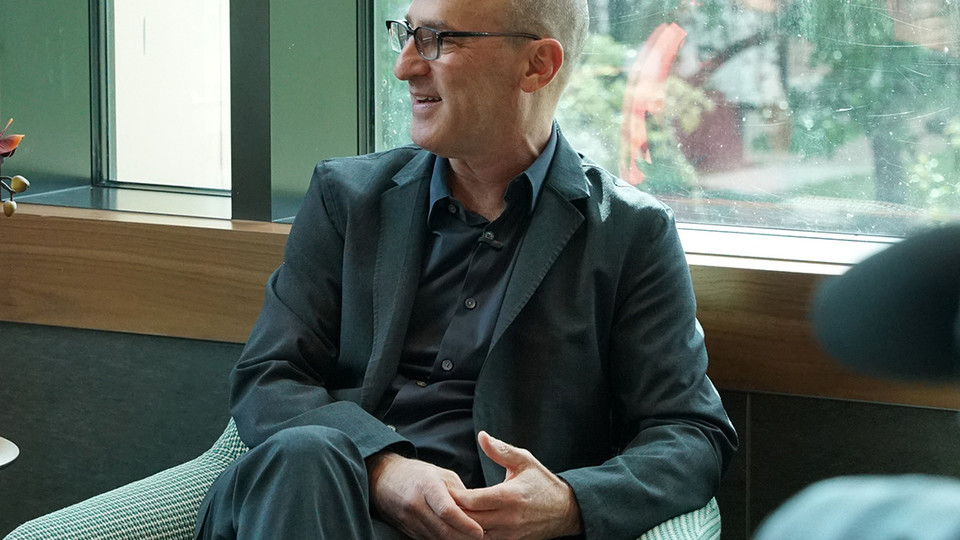
Stephen Cassell, principal at Architecture Research Office, shares a behind-the-scenes look at the making of Asha and Farid Virani Hall.
When Pablo Coello began his medical training, he noticed a persistent gap in healthcare: clinicians and administrators often weren’t speaking the same language, and the result was inefficiency that directly affected patient care. That realization ultimately led him to pursue a dual MD/MBA through Baylor College of Medicine and Rice Business.
Now an orthopedic surgery resident at UC Health, Pablo brings a dual perspective to medicine — one grounded in clinical practice and another shaped by business training. That combination allows him to think not only about individual patient outcomes, but also about system-wide decisions that affect hospitals and communities.
In this episode of Owl Have You Know, hosted by Maya Pomroy '22, Pablo shares why more physicians need business fluency, how teamwork at Rice reshaped the way he practices medicine and what it means to look beyond the exam room to the health of an entire community.
Subscribe to Owl Have You Know on Apple Podcasts, Spotify, YouTube or wherever you find your favorite podcasts.
[00:01]Maya Pomroy: Welcome to Owl Have You Know, a podcast from Rice Business. This episode is part of our Flight Path series, where guests share their career journeys and stories of the Rice connections that got them where they are. I'm your host, Maya Pomroy. Today's guest is Pablo Coello, MD, and Rice MBA from the Class of 2025. Welcome, Pablo.
[00:25]Pablo Coello: Thank you. Thank you very much for having me. Excited to be here.
[00:28]Maya Pomroy: Well, we're thrilled to have you. You're a graduate of the dual program degree that's offered at Rice Business in partnership with the Baylor College of Medicine, the MD/MBA program, but I’d rather call it the MBA/MD program, right? MBA should start first.
[00:41]Pablo Coello: That's very fair, yeah.
[00:44]Maya Pomroy: And you're currently an orthopaedic surgery resident at UC Health in Cincinnati. You earned your undergraduate degree in biochemistry at The University of Texas at Austin. I know people say University of Texas, but it's The University of Texas at Austin.
[00:57]Pablo Coello: Uh-huh, right.
[00:58]Maya Pomroy: Your background spans clinical medicine research, which you conducted at Harvard Medical School, and now business. And I'm sure that you probably have a unique perspective on the future of not only healthcare, but the business of healthcare.
[01:13]Pablo Coello: Yeah, maybe. So, the entire purpose of me getting the MBA, and it's a question I get asked all the time, because a lot of people wind up scratching their heads as to, you know, why you would possibly, A, delay graduating med school an extra year, and B, get an MBA in the first place. It's not something typically a physician will get as part of their training.
And I totally agree, it's unusual. But the thing is, at least in my medical school training, we did most of our training at Ben Taub Hospital, which is a major county hospital, downtown, as well as some other training at, like, St. Luke's and Children's, both of which are private and have access to a lot more resources and money, et cetera. But seeing, kind of, how those environments, you know, operate as like a business of healthcare side of things rather than just from a clinical perspective, realize there's, like, 1,001 inefficiencies that affect both the clinical and non-clinical side of the hospital.
The clinical, at least for me, obviously being the most important. And there's a lot of ways that physicians, at least my own mentors, you know, in my training, were frustrated and had solutions that they felt would be adequate for different problems that they saw day to day, but didn't have the means to communicate that in, like, a business language, if you will, or in a way that comes across in a useful and actionable way to like an actual administrator with the power to make, like, a big change.
So, I figured it was like, well, I’m going to be stuck in the same position, you know, 10, 20, 30 years from now if I don't get myself either the credibility, at least, with the correct, you know, right three letters after my name, and...
[02:41]Maya Pomroy: Five.
[02:42]Pablo Coello: Five, like, well, but look, I needed to add the MBA portion, so that people take me a little more seriously. But I also wanted to understand things more than just at a superficial level. And even, like, not necessarily, like, you know, general big concept things, but, like, if I were to see a problem, and were to be able to see the numbers behind that problem and see, kind of, why the hospital is stuck in whatever position it's stuck in.
I think as a clinician with business training, rather than a businessman, I'll have a unique perspective on how maybe we could come to a solution that is best for the hospital at the end of the day, which is what the administrators want, but also best for our patients and the community, overall.
[03:22]Maya Pomroy: But a lot of people figure this out much later, right? Like, not in the middle of getting their MD. Did you always want to be a doctor?
[03:30]Pablo Coello: Yeah. I mean, as long as I can remember anyway, figured it out, at least as far as my family and I are concerned, sometime around maybe 12 or 13 years old is when the idea started, kind of, really taking shape. I did, like, a career fair or something like that in sixth grade for it, and then in middle school I started volunteering and doing some other things, and that obviously snowballed into eventually getting into Baylor at, you know, downtown Houston, and, you know, now I'm a resident. So, as long as I can remember, it's always been the goal.
[03:59]Maya Pomroy: Medicine. Always wanted to do medicine. And that's what led you to biochem and then to Harvard and to do some research there. So, you did a lot of undergraduate research at Harvard Medical School. Can you tell me a little bit about that experience that you had?
[04:11]Pablo Coello: Yeah. I'd be happy to. So, part of the application process into medical school, which is hard, to put it simply. It's very, very comprehensive. You have to have grades, research, volunteering, clinical experience. You have to do a lot of things, and you know, college, at least looking at it now, was not as hard as I had thought about it then, but in the moment, you know, you just started out, you just left home. It can be very overwhelming.
So, as a freshman, I started looking for research opportunities, eventually found this one at Harvard, which required, like, an application process, et cetera. I was fortunate enough to get a spot. The whole point of that summer was to develop a... Not to get super nerdy here, but we, like, created, like, a genetic construct to test different genes. We could basically, like, take a gene that we want, insert it into this mechanism, activate it, and then, kind of, see what that gene does.
[05:04]Maya Pomroy: So, like gene therapy, sort of?
[05:06]Pablo Coello: Kind of. It's more so like gene understanding, if you will. Just, like, wanted to see the effects inside cells, like human cells, of what these genes do, and the entire purpose was to, like, characterize or understand the pathophysiologic background of atherosclerosis.
So, in other words, like, why do we get plaque in our arteries. And it's a very, very complicated, physical problem in terms of, like, fluid dynamics, et cetera, as well as actual genetic transcription stuff, so I was studying the genetic side of things. And I did that for two summers, and it was great. It was... It really opened my eyes, and I was convinced I was going to be a cardiologist.
[05:40]Maya Pomroy: You had some time at the Texas Heart Institute, at THI, didn't you?
[05:44]Pablo Coello: I did. I did spend some time over there while I was at Rice, which was great. But yeah, I mean, it was, it was really just more getting my feet wet and getting strong research experience. That was the entire purpose of getting the position in the first place. Once I got there and made the project my own, I really took a lot more pride in it, and it became very near and dear to me.
And it has to this day, like, informed how I approach, study design, and things like that. That's really the main purpose of that experience is, like, learning how to do research as, you know, an undergrad student, a medical student, and now as a resident, eventually as a full-time clinician, as an attending, because science is the foundation of medicine, that at the end of the day was the main purpose of that experience, and I think it absolutely achieved that.
[06:26]Maya Pomroy: Wow. So, you did that, and then you did decide to go to medical school and applied. You were saying that while you were in medical school, you had some great mentors that really, sort of, drove you to think about, you know, adding an MBA while you were getting an MD. Can you tell me about that?
[06:45]Pablo Coello: Yeah, sure. So, I won't say that any particular mentor, like, directly said, "Oh, I wish I had an MBA," or, "Oh, Pablo, you should get an MBA." Like, those words never came out of anyone's mouth. The thing is, I think most of my mentors... These were all orthopaedic surgeons, they're extremely talented surgeons, but they're surgeons. Generally, most of them don't have other interests in administrative things, as is the case for most clinicians, I would argue.
But they were still extremely frustrated about various problems, the most significant of which were all based out of inefficiencies in the OR. Like, how much stuff we waste, basically, because the systems in place to prepare the necessary supplies for the OR are not perfect. And they will never be perfect, but they were so imperfect to the point that we were throwing away thousands and thousands and thousands of dollars' worth of medical equipment because it was stuff that was single-use, opened, could not be recycled-
[07:42]Maya Pomroy: Used again. Yeah.
[07:43]Pablo Coello: ... or reprocessed or reused, right? And some of that is unavoidable. You know, medical equipment is extremely expensive. Like, you know, there's certain pieces of plastic that are key for certain joint surgeries that just those pieces are thousands of dollars, right?
[07:58]Maya Pomroy: Yes.
[07:58]Pablo Coello: And you would never guess that. Along with other things, right? And turnover time, et cetera, between cases. The list goes on. But the message was always the same, no matter which hospital I was in. It's like, "I can't believe we're throwing this away. Oh, my gosh, like, we're in the middle of the surgery, and we're not ready." We're like, "Now the case is going to be delayed," and every minute in the OR costs, like, 150 something dollars.
So, like, all these things eventually add up, and the echoes were the same, regardless of having a lot of resources or not, like, over at Ben Taub, or the VA, or St. Luke's, like, the problems were always the same. There was no effort made to make any change. It was just, "Ugh, I'm frustrated with this. I can't believe this. This is unacceptable, blah, blah, blah." And then the next day it was the same thing, and then the same thing, and the same thing.
And that's not their fault. Their biggest concern is in making sure that a patient has excellent healthcare. Like, you know, that we deliver the highest quality possible care, which is great. But at the same time, because the supportive structures around the OR and other clinical aspects are simply not where they should be, we are failing the patient.
And we are doing that over and over and over and over again. It's affecting, like, the overall health of the community. It's affecting the overall, like, opinion of the community on the healthcare system, and it's costing the hospital, whatever hospital, thousands of dollars a day, like, every day for eternity.
So, I'm not going to sit here and tell you that, you know, "I got this MBA because I wanted to be, like, this knight in shining armor, and I was going to solve all the problems," because I'm not. That's unrealistic, and I get it. But I want to be part of the solution, if you will. So, that's why. Like, my mentors didn't really tell me, like, "Oh, Pablo, I really think most clinicians should have an MBA."
[09:38]Maya Pomroy: Well, because I mean, getting your MD is, kind of, a time-consuming, you know, endeavor.
[09:44]Pablo Coello: Yeah. Totally, totally. But it's not just me. I graduated with 13 other MD/MBAs. We all came to the same conclusion eventually, and we all decided to delay graduation by an extra year and got this additional training, and I would bet all the money in the world, which I don't have much, but all of it, that not a single one of them regrets spending that year at Rice, and myself included. I don't regret it. I think it was 100% the right decision.
[10:10]Maya Pomroy: So, it was seeing the same problem over and over, and it, sort of, was banging you upside the head of, like, "This is ridiculous." Like, "We need to... This... We're better than this." And that was your drive to come to Rice. And so, you know, I had in my Executive MBA program, multiple orthopaedic surgeons.
[10:30]Pablo Coello: Did you really?
[10:31]Maya Pomroy: I did. I did. That, that I've kept in touch with. And so they saw the same problem and... But they chose to take the leap a little bit later, not while they were in med school, but once they were already, you know, practicing physicians and were like, "Okay, this is crazy." You know, the fact that you decided to take this on says a lot about the preparation that you knew that you needed in order to be a better doctor, all at the same time. That's something that is really unique about your story.
So, tell me about your time at Rice, and you said that there were a couple of you that decided to do this together. Is that right?
[11:06]Pablo Coello: Yeah. It was 14 MD/MBAs.
[11:08]Maya Pomroy: Wow.
[11:09]Pablo Coello: Which, from what I gather, is a very unusual number. Most of the time it's only a couple. But it's been growing steadily, and our goal was to, like, keep it that way, because like we alluded to earlier, clinicians should understand business. It's just part of our job and something we ignore often.
But anyway, as far... The first class was the strategy course that we all take on, like, basically just being able to understand how different corporations in different spaces, like, position themselves competitively, you know, for, like, long-term success, if you will. That transition into business, having finished all of my primary, like, core clinical rotations, was weird.
It, like, just to put it briefly, like I definitely felt like I was a fish out of water, if you will. But I...
[11:59]Maya Pomroy: I think we all do. We all do. It doesn't matter what your background is.
[12:01]Pablo Coello: Yeah, I've been told... Yeah, which is... Was an... It was reassuring in a way because I looked at... I remember looking around, and it's like everybody looked as clueless as I felt. So, I was like, "All right, we're all on the same page. It's great. We're all going to be fine." And it was exciting too. I remember thinking, like, "Okay, like, this is exactly what I signed up for." I wanted to learn something new and expand whatever skills, or just get new ones, because quite simply, I had no previous business coursework of any kind.
I did, again, like, a business minor in undergrad through McCombs at UT, but like I didn't remember any of that. It was all, like, my first three semesters, I think it was. So, jumping into that course was a rude awakening, but in, like, a very, very good way, I would say. Kind of really jolted me awake, if you will, and prepped me for the rest of the year, and challenged me to grow and think in different ways that I didn't really expect. But that was the whole goal, so, yeah.
[12:59]Maya Pomroy: None of us expect that, right? Like, that's what I'm saying. It's in those DNA that you were talking about. The... It's... You have one perception of the way that it's going to be, and then you show up, and you're like, "Oh no, that's not the way it's going to be." And it's like 100 times better, and then it does, it sort of seeps into who you are, and then you can't see... You can't unsee things anymore, right?
[13:19]Pablo Coello: Right.
[13:19]Maya Pomroy: Like, you're like, "That's inefficient," and "Wow, that's amazing," and "They figured that out." And so, like, your whole vision of the world changes, you know?
[13:28]Pablo Coello: Mm-hmm.
[13:28]Maya Pomroy: So, tell me about what are the most valuable lessons that you got from your MBA while you were at Rice?
[13:34]Pablo Coello: Well, honestly, the first one that comes to mind was the, I guess, forced teamwork that we were all, like, put into, right?
[13:41]Maya Pomroy: Yes, the teams.
[13:44]Pablo Coello: Yeah. And that's, I think, a defining aspect of Rice and the MBA that we all have. But that I think was the biggest lesson, if you will, was, kind of, learning how to navigate things in an environment filled with people that talk a different language than I do, almost.
Because, you know, medicine is a team sport. You hear that all the time because we interact with other teams all day, every day. You know, as an orthopaedic surgery resident, our field is very specialized. So, as a result, we get called by a lot of people, and we have to also call a lot of other people to help us manage things that we simply don't know how to manage.
And I think, having learned what I learned in the MBA helped a lot in terms of, like, managing a lot of different things at once, different voices, if you will, in, like, the clinical setting, which I didn't really expect, to tell you the truth. But it helped, because I learned, also, to not rely on myself as much. My team is excellent. They're extremely skilled at what they do, and I could just relax a little bit and focus on my own tasks and things. That's probably the biggest takeaway. Obviously, there's the coursework itself.
The conversations we had about finance and, like, looking at things long term, helped me, like, really understand the bottom line when looking through important financial information, which, at the end of the day, explains why big organizations, be them corporations or hospitals, make the decisions that they do.
And that was one of my main goals was to understand that and try to figure out why things are going in a certain direction, and maybe see if I can try and steer the ship in another direction, that I might think is better, or promote my own possible solutions using those numbers, right? And then there's marketing, etc.
[15:26]Maya Pomroy: Data. More of that data, right?
[15:27]Pablo Coello: Right. Exactly.
[15:27]Maya Pomroy: The more data you have, the better.
[15:28]Pablo Coello: Exactly. So, it absolutely, I think, expanded my... I keep going back to the word understanding, because, like, I guess at the end of the day that's really what it is, of just how things really work behind the scenes. Because I was so used to just, like, patient B, patient C, patient B, et cetera, and that was just rinse and repeat, right?
[15:47]Maya Pomroy: Yeah.
[15:48]Pablo Coello: Whereas these organizations don't function without this entire, you know, conglomerate functioning behind the scenes.
[15:55]Maya Pomroy: Well, and it's also, it's also very siloed, right? So, you've got like the folks that, you know, the CEOs of whatever hospital, and, you know, you've got like all of those people, and then you've got the doctors, and very rarely do you have someone that has the expertise in both, right? And like you said, it's broadening your understanding because healthcare, whichever way you want to slice it, is a business.
[16:17]Pablo Coello: Yeah.
[16:18]Maya Pomroy: You need to be able to be efficient and successful and all of those things in terms of the financial data, in order to be a top hospital and provide quality of care, all at the same time. And so, like the quality of care should be the very, very top, but in a lot of places, it's what kind of turnover do you have, you know, in terms of, what are those financial statements? What... How much money are you really generating, right? And then the more you generate, the higher quality of doctors can you hire and retain.
[16:49]Pablo Coello: Right. Yeah. It's a positive feedback loop at the end of the day, which is obvious now, but it wasn't then. It just wasn't. So, it's one of the big, I guess, learning points recently.
[17:00]Maya Pomroy: What would you tell a current, you know, med student of, like, why they should go to Rice and get this MBA and go and do this?
[17:10]Pablo Coello: Yeah, absolutely. I think that's a great question, and it's a question I've been asked by med students before. Like, "I'm thinking about doing this. What... Do you think it's worth it?" And the answer is absolutely. The thing is, it's hard for me to tell someone, "Here's why you should do it," unless they've, kind of, seen these same issues play out. Like, if you had told me when I was a first-year med student, "Hey, would you consider an MBA?"
[17:34]Maya Pomroy: You'd be like, "No."
[17:36]Pablo Coello: I would look at you like you had four eyes. Like, there's just no way. Why would I possibly delay graduating med school an extra year, delay having a real job for a year, when all I really want to do is be a doctor? And what I would tell myself back then is, medicine is so much more than just what you do in a clinic, in the OR, in the hospital in general. A hospital is an entity in a community. It's not just a place you go. Like, I've noticed this even especially now that I'm actively practicing and training, there are people that, like, actively need your help.
And if you broaden your skills, eventually your level of impact is not just going to be on a patient-to-patient basis. It's on a community as a whole. That's why I got my MBA, and that's why I would argue as any med student in the Houston area, any med student in general that has access to a business school, especially one as good as Rice, in their backyard or anywhere close, should ideally, if it's financially possible and the timeline works out, get an MBA, so that they can have that impact in their community eventually.
A lot of people are going to think, "Oh, I don't really need that," and it's true. I mean, you don't need it. You don't need it.
[18:48]Maya Pomroy: No, but it's a competitive advantage, and it makes you a better doctor.
[18:51]Pablo Coello: But absolutely. Absolutely. And I will tell you now, like that was the single most asked question I got when I was applying to residency. It's like, "Why did you do this?" And I answered the exact same way I just answered you, and it worked. Like, everybody was like, "Yeah, I see the value in that. It makes total sense why you would do that," and then oftentimes it's like, "I actually think, I'm thinking about getting an MBA myself." But it's like, "Well, great." And then we talk about that, and then, you know...
There is so much opportunity for you to do good that I myself haven't even really been able to utilize. Like there... I haven't been able to take advantage of all these opportunities because I'm so early on. Like I have with the chairman of my department, who I, like, look up to and admire, like, a lot. I can't even describe how much. This guy is, like, extremely professional and well put together both physician and also administrator. He is an MD/MBA. He's the chairman of the department, also the CEO of the physicians group at University of Cincinnati Hospital.
And that guy drives the ship like I've never seen anyone else do. The level of respect he commands and, like, the change he can enact is like he, like, snaps his fingers and things change, but I think, at least in my case, a good first step in order to have that level of impact eventually was to get the MBA early so that I'm poised to take advantage of opportunities later when they show up rather than having to backtrack and get my MBA when it's a less opportune time.
And on top of that, Rice was very generous with, like, a good scholarship, which helped a lot too. Because, at least in my case, I pay for everything myself, so that also was a very important factor.
[20:32]Maya Pomroy: Well, and I mean, Rice is in the medical center, right?
[20:35]Pablo Coello: Right.
[20:35]Maya Pomroy: I mean, it's the med center, like you said, it's a... That's in your backyard. So, you have this opportunity to really take advantage of both at the same time, which is, you know, why I think that Rice Business is such a phenomenal place for physicians, specifically.
Because it really does strengthen the industry and the profession, and the whole point is to take care of people as best you can. And if you have all of that knowledge and perspective and understanding and everything else, then it makes you the best doctor that you can possibly be and to run the best hospital that you can possibly run, right?
[21:10]Pablo Coello: Yeah, I think so. Now I'm not saying I'm going to be the CEO of a hospital one day. I'm not even-
[21:14]Maya Pomroy: No?
[21:15]Pablo Coello: ... I'm not even sure that's a goal of mine. Genuinely...
[21:16]Maya Pomroy: Why not? It should be.
[21:19]Pablo Coello: Maybe it is. Maybe that's an opportunity that will come my way one day. But right now, I can't see more than a month ahead of me. My number one goal since the age of 12 was to become the best possible physician that I could be. Anything administrative will come hopefully many years down the line after I've developed my craft, if you will, as much as I can.
I'd never intend on stepping away from practice, because it's what I love. I love this. I would hope that maybe the administrative things will be, like, another aspect of what I do in any day life. I think if I were to become a head hospital administrator at the level of, like, C-suite, it would probably mean stepping away from practice, and that maybe that's a decision I make eventually.
I'm not sure. We'll see where God takes me, where life takes me, and I'll decide eventually. But for now, I'm not even going to think about that because my number one goal is just becoming a good doctor.
[22:15]Maya Pomroy: Well, so I guess I should ask you this question because I... You just said, "I don't know," but I'm going to ask it anyway. And then, and so what does success look like for you in, like, 10 years?
[22:24]Pablo Coello: Sure, yeah. Well, so I guess 10 years is maybe too short of a timeframe, because residency for orthopaedic surgery is five years.
[22:31]Maya Pomroy: It's true. Sorry. So, 20 years from now.
[22:34]Pablo Coello: Yeah. 20 is maybe better, yeah. So, I'll finish residency, I guess in 2031, because that'll include five years of residency plus one year of fellowship, which I don't technically have to get. Fellowship is just like a subspecialty. So, like sports or pediatrics, trauma, hand, spine, et cetera. Regardless of what I end up doing with that, that leaves, I guess, 14 more years of actual practice. At that point, I don't know. I mean, obviously, I'll be an attending. I would hope to be at a major academic center, as opposed to, like, private practice. You know, if I decided...
[23:07]Maya Pomroy: In Houston, right? Back in Houston?
[23:09]Pablo Coello: That would be awesome. Yeah. There is a major hospital being built in Austin, that I think the Dell family just donated, like, I don't even know how many hundreds of millions of dollars. I think it was maybe 600 or 700 to help kickstart. My fiancée's a pediatrician, so we're both maybe hoping to make our way back to Austin eventually. She also graduated from The University of Texas.
[23:31]Maya Pomroy: The University of Texas. Okay. But she did not get the MBA from Rice Business, just saying.
[23:37]Pablo Coello: No, she did not. Yeah. So, I will always...
[23:39]Maya Pomroy: Maybe she should consider that, too.
[23:40]Pablo Coello: Maybe she should. Maybe she should. I'll... I don't know. I'm working on it. But as far as, like, success goes, ideally an established attending, at that point, I won't be a senior attending by any means. I'll still be relatively young. But established for sure. And I'd like to be involved as much as possible in the actual administrative side of, like, the running the hospital, whether that be in subcommittees, committees, or chairing something else, or maybe holding an actual position on top of my clinical duty. My chairman is currently, like, an active surgeon but is also the CEO, right?
So, I'm not sure I have the bandwidth to do what he does, maybe eventually. So, if I can somehow model my career to look a little bit like his, I think that would be, you know, an absolute slam dunk. Because on top of doing all these things, both clinically and administratively, he's a very family-centered guy as well, spends a lot of time with his family.
So, I don't know how he finds time to do all this. I truly don't. But if I can manage to do that and stay balanced and happy with my life, that being, I guess, the key aspect is, like, "Do I enjoy what's going on day to day?" That would be success, I think. But who knows? You'd asked me that same question 10 years ago, I would've said that, "Oh, well, I'll be an orthopaedic surgery resident somewhere."
[24:56]Maya Pomroy: Well, that's, that's the beauty of life, you know?
[24:59]Pablo Coello: Yeah.
[25:00]Maya Pomroy: It's... What I tell my children is, you know, the only thing that is constant in life is change, and that the person that you are, you know, five years ago is going to be a completely different person five years from now.
[25:12]Pablo Coello: Yeah, 100%. I mean, I just think about the, like, who, who I was, like, before, as med school was starting, which was, I guess, six years ago now, I was a totally different person back then than I am now, so...
[25:24]Maya Pomroy: Well, yeah, because you went to Rice.
[25:26]Pablo Coello: That's true. Yeah, I had... Exactly, yeah. That was the big factor there. And nothing changed until I stepped foot on campus, and then everything changed.
[25:33]Maya Pomroy: I mean, same with me. That's the beauty of Rice, and we are, we're so grateful that someone like you and your cohort that were also MDs, decided to go and pursue this because it really will make, you know, as cliché as it sounds, it's going to make the world a better place for all, and a healthier world.
[25:51]Pablo Coello: Yeah. I think that's what all of our goals would be. Like, I still keep in touch with most of these guys, and they're all in their training. And that's the goal I think that everybody shares is to, you know, have a positive impact on their community. It's the foundation of medicine in general. I think we're heading in the right direction for all. [inaudible 00:26:08].
[26:08]Maya Pomroy: You're heading in the right direction.
[26:10]Pablo Coello: place. Yeah.
[26:10]Maya Pomroy: And yes, making the world a better place and a healthier place and, you know, taking those risks, because getting a dual degree like this, that's a risk and that you were willing to take. So, that's the definition of a Rice Business and Baylor College of Medicine student, is that these are... You know, you're... It's people that are willing to take the risks, to dive in, and to try.
[26:36]Pablo Coello: Yeah, absolutely. I couldn't agree more.
[26:39]Maya Pomroy: Well, Pablo, it's been a pleasure talking with you, and I'm really looking forward to seeing what your future holds. And we will definitely keep in touch.
[26:47]Pablo Coello: Absolutely. Thank you so much for having me.
[26:54]Maya Pomroy: Thanks for listening. This has been Owl Have You Know, a production of Rice Business. You can find more information about our guests, hosts, and announcements on our website, business.rice.edu. Please subscribe and leave a rating wherever you find your favorite podcast. We'd love to hear what you think. The hosts of Owl Have You Know are myself, Maya Pomroy and Brian Jackson.
Stephen Cassell, principal at Architecture Research Office, shares a behind-the-scenes look at the making of Asha and Farid Virani Hall.
Stuart, senior manager of sustainability at Chevron Phillips Chemical, shares why, a decade into his career, he decided to enroll in an MBA program and how Rice Business has helped shape the way he leads and sees the world.
Javier chats about his path from club promoter to entrepreneur and what it really takes to build an artist's career from the ground up.