
Assistant Professor of Strategic Management
In nascent markets, breakthrough products like clean cookstoves can save lives. But lasting impact does not come from donations. It comes from the “knowledge intermediaries” that build a market infrastructure to get these products into homes.
Based on research by Diana Jue-Rajasingh (Rice Business)
Key findings:
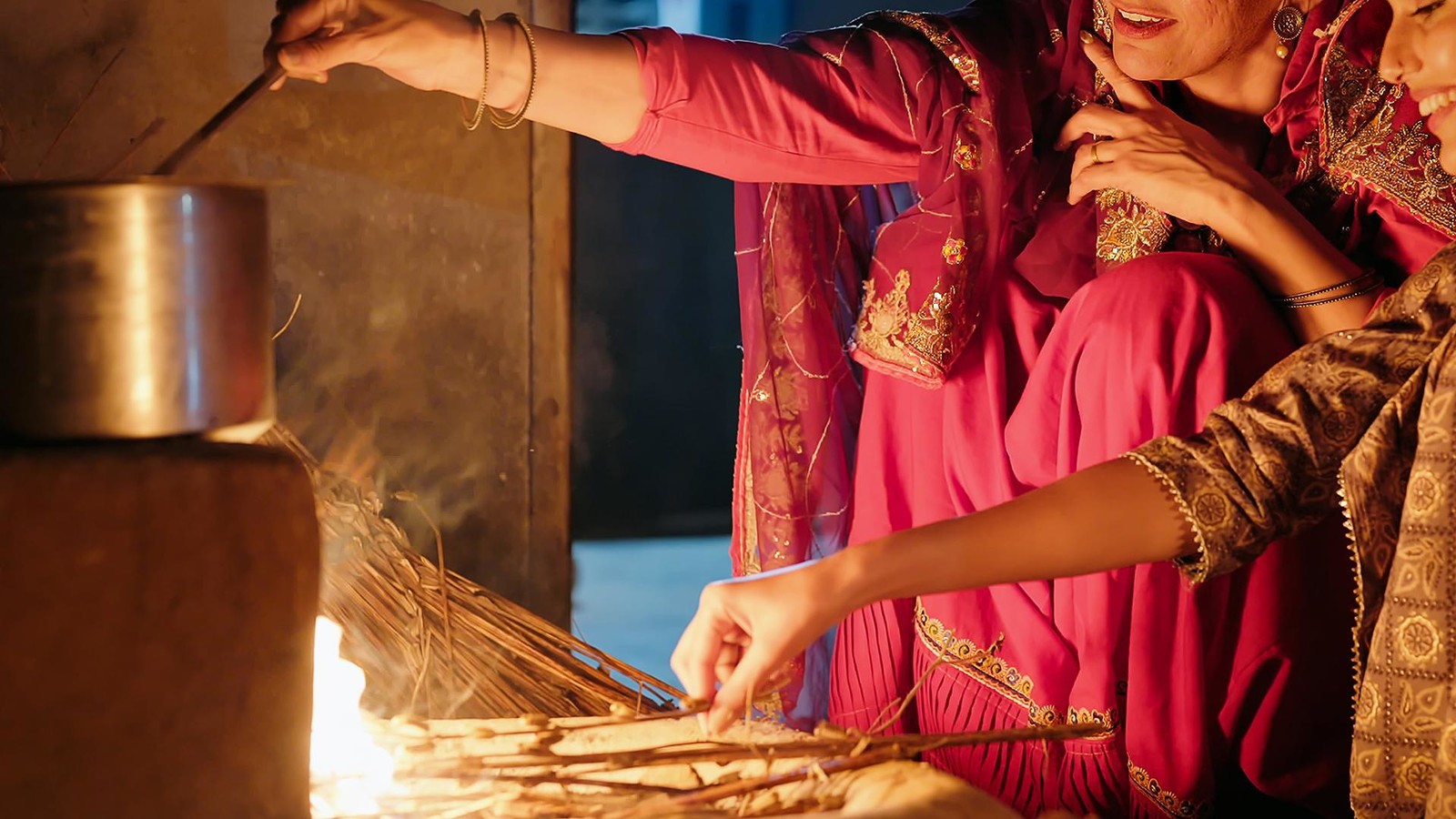
Many of these deaths are preventable. For decades, cleaner alternatives have existed that dramatically reduce harmful emissions while meeting the everyday demands of cooking. Among them are clean cookstoves — technologies designed to burn fuel more efficiently and with far fewer health risks.
Yet clean cookstoves remain far from universal. Like many proven technologies aimed at improving public health, they face obstacles that go beyond engineering. How do you introduce a life-saving tool in ways that respect local cooking practices? How do you scale adoption without relying indefinitely on donor funding?
In theory, markets are meant to solve problems like this by connecting supply and demand. In practice, they often break down when the benefits are long-term, diffuse, or hardest to capture by the people who bear the upfront costs. So what happens when the need for clean cookstoves is clear, but the market to deliver them barely exists?
Who creates such markets, and how? In a new paper published in Organization Science, Rice Business assistant professor of management Diana Jue-Rajasingh looks beyond the usual suspects — governments and multinational corporations — to study a critical market-building role: the underappreciated, multifaceted actor she calls the “knowledge intermediary.”
“There are critical players doing work in this space that are not companies or governments,” Jue-Rajasingh says. “This opens the door to a third sector.”
In the clean cookstoves space, for example, the main knowledge intermediary is the Clean Cooking Alliance (CCA). (Coincidentally, the CEO of CCA is a Rice Business alum.) The CCA is housed within the United Nations but represents a broad coalition of public and private collaborators, including U.S. government agencies, nonprofits like the Shell Foundation and private companies.
Although building knowledge for a new market is costly and complex, Jue-Rajasingh’s findings show why investing in it is essential.
She contrasts the “knowledge-push” model of market-building with the more common “charity-push” approach, where products are simply given away in low-income communities. She argues that the knowledge-based strategy is more likely to produce scalable, sustainable results over the long term.
“The charity-push ignores what people actually want,” Jue-Rajasingh said. “It overlooks the need to build local capacity — whether through businesses, entrepreneurs or supportive policies and norms. You can hand out products, but if nothing is changing on the ground, the impact may be minimal.”
“If a country has only nonprofits and no companies, it won’t generate the full range of activity and momentum the industry needs — and the same is true in reverse.”
Making a market, especially in poor and remote communities, is a complicated and expensive process with complementary components for both supply and demand.
On the demand side, education is key: Potential customers need to know that an improved product exists and that it’s relevant to them. They also need to know how to correctly use and maintain it. Sometimes financing tools are also part of the equation, to ensure new products are affordable for their target audiences.
On the supply side, distribution networks need to operate dependably to get the products to people who need them. Often, building a new market also calls for government actors to step in, either by taxing certain products differently, helping to promote specific solutions or exempting key product parts from tariffs.
All of this collaborative, educational, market-making work falls under the purview of the knowledge intermediary.
Jue-Rajasingh explains that the effort unfolds in two stages. The first involves a first-order knowledge intermediary — in this case, the CCA — helping launch high-level industry development in a small group of countries (for the CCA, these include Bangladesh, China, Ghana, Guatemala, India, Kenya, Nigeria and Uganda). At this stage, the intermediary acts as a central hub: gathering and sharing information, brokering partnerships for pilot projects and learning opportunities, and providing resources such as technical assistance, business training, financing and more.
In the second stage, a different set of organizations move to the fore: those that have worked with the main knowledge intermediary in its countries of focus during stage one. Now, those many organizations become second-order knowledge intermediaries, bringing their new market-building knowledge further afield. These second-order knowledge intermediaries are typically existing companies and nonprofits.
If a first-order knowledge intermediary like the Clean Cooking Alliance represents the hub of a wheel, second-order knowledge intermediaries are the spokes — transmitting knowledge and market capacity into new places.
To trace the ripple effects of the efforts made by first- and second-order knowledge intermediaries, Jue-Rajasingh conducted interviews and drew archival data from the various second-order organizations that were active in the CCA’s primary countries and beyond. She also leveraged a dataset derived from a CCA partner directory, which comprised 2,371 organizations operating across 113 countries between 2013 and 2019.
The data revealed that, indeed, second-order knowledge intermediaries that connected to the central hub of the CCA did appear to spur more entrepreneurial activity in the countries where they operated, outside of CCA’s geographical focus.
While she had suspected that second-order knowledge intermediary organizations were helping to spread market-building knowledge, she says she was struck by the level of activity she observed: “In the secondary countries, these organizations weren't just trying to sell products — they were working with other organizations to build a market infrastructure,” she says.
Of course, focusing only on market mechanisms to disseminate social solutions can be taken to an extreme, Jue-Rajasingh notes. The approach can overlook people who have very constrained financial resources, for example. Also: Countries with a healthy mix of companies and nonprofits were more likely to build strong markets for clean cookstoves.
“There were some kinds of knowledge and capabilities that companies could take up, and others that nonprofits could,” Jue-Rajasingh explains. “If a country has only nonprofits and no companies, it won’t generate the full range of activity and momentum the industry needs — and the same is true in reverse.”
Written by Katie Gilbert
Jue-Rajasingh (2025). “Second-Order Knowledge Intermediaries and Multi-Country Entrepreneurial Entry into a Nascent Industry,” Organization Science.