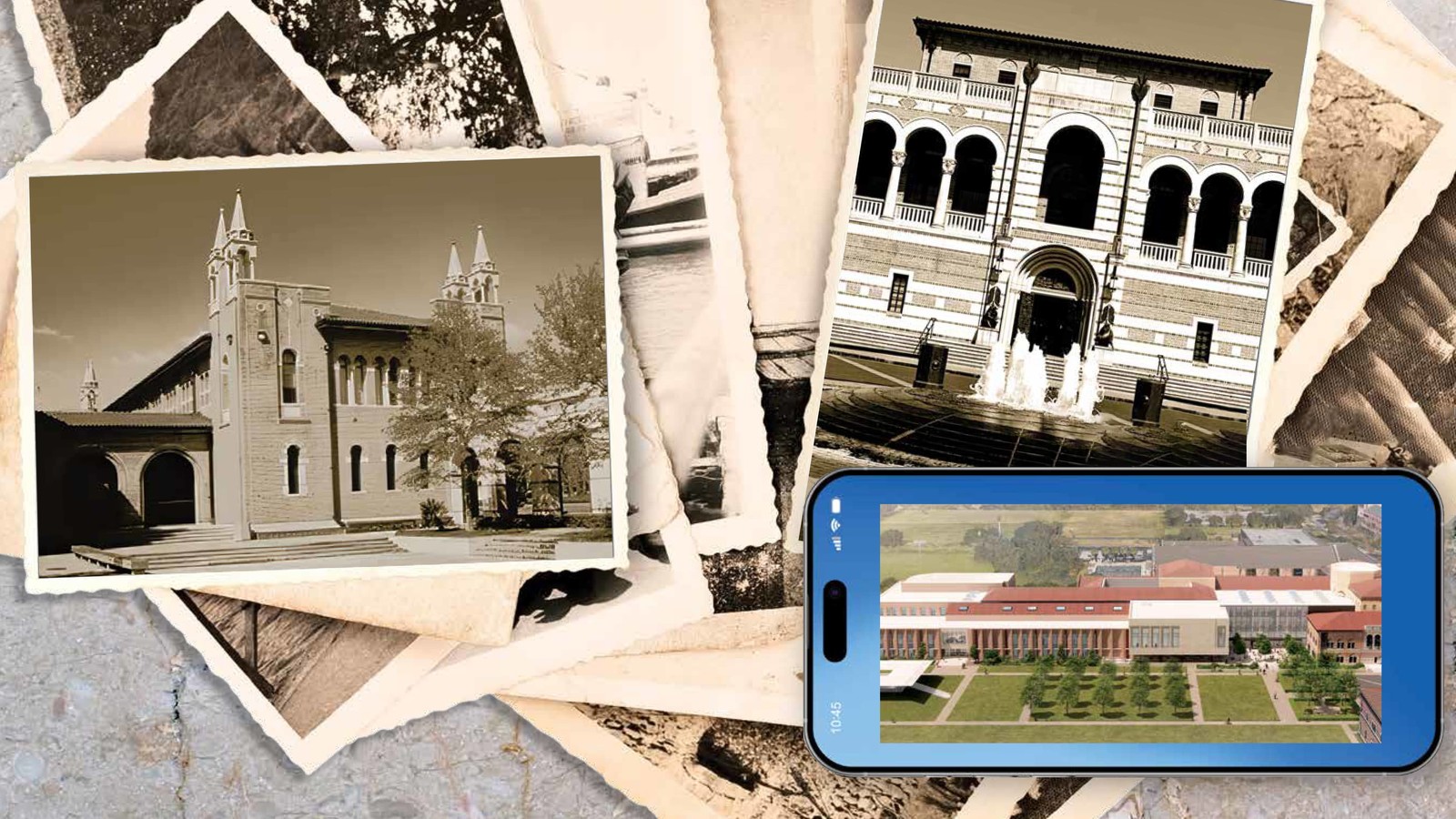
Image
How the school's spaces changed as its ambitions grew
This year, Rice Business will open the doors to a new building next to McNair Hall, adding another landmark to a story that has never been just about square footage.
For more than five decades, the school has grown from a young graduate program with borrowed classrooms into a business school with expanded graduate offerings, a fast-growing undergraduate presence and a broader national profile. Along the way, its physical homes changed, too. Each one marked a different stage in the school’s history — from early experimentation to institutional confidence to the scale the school now requires.
As Rice Business prepares to open the doors of its newest building, join us for a tour of the homes that shaped the school along the way.
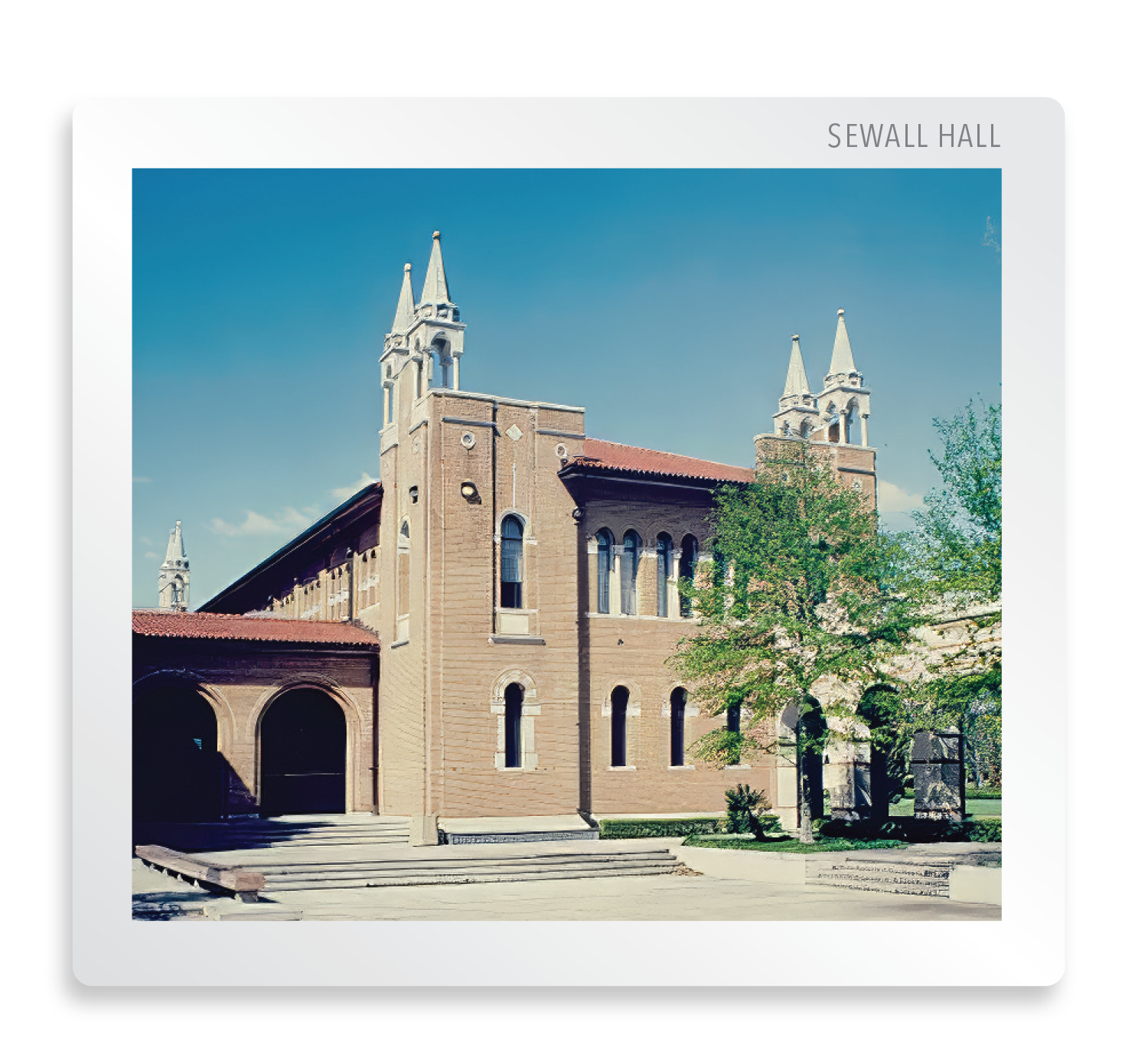
Before Rice Business had a building of its own, it had borrowed rooms and a new idea.
In its earliest years, the graduate business program operated out of Sewall Hall, where it shared space with the then-new Shepherd School of Music. Today the building houses the university’s Welcome Center and a number of academic departments, including anthropology, psychology and sociology. Even without a dedicated home, the program was beginning to define itself through its curriculum and its ties to Houston’s business community.
Some of the school’s earliest traditions began there. The first investiture ceremony, for example, took place in Sewall 301. Degrees were conferred, hoods were placed and a sense of community began to take shape — even before the school had a front door of its own.
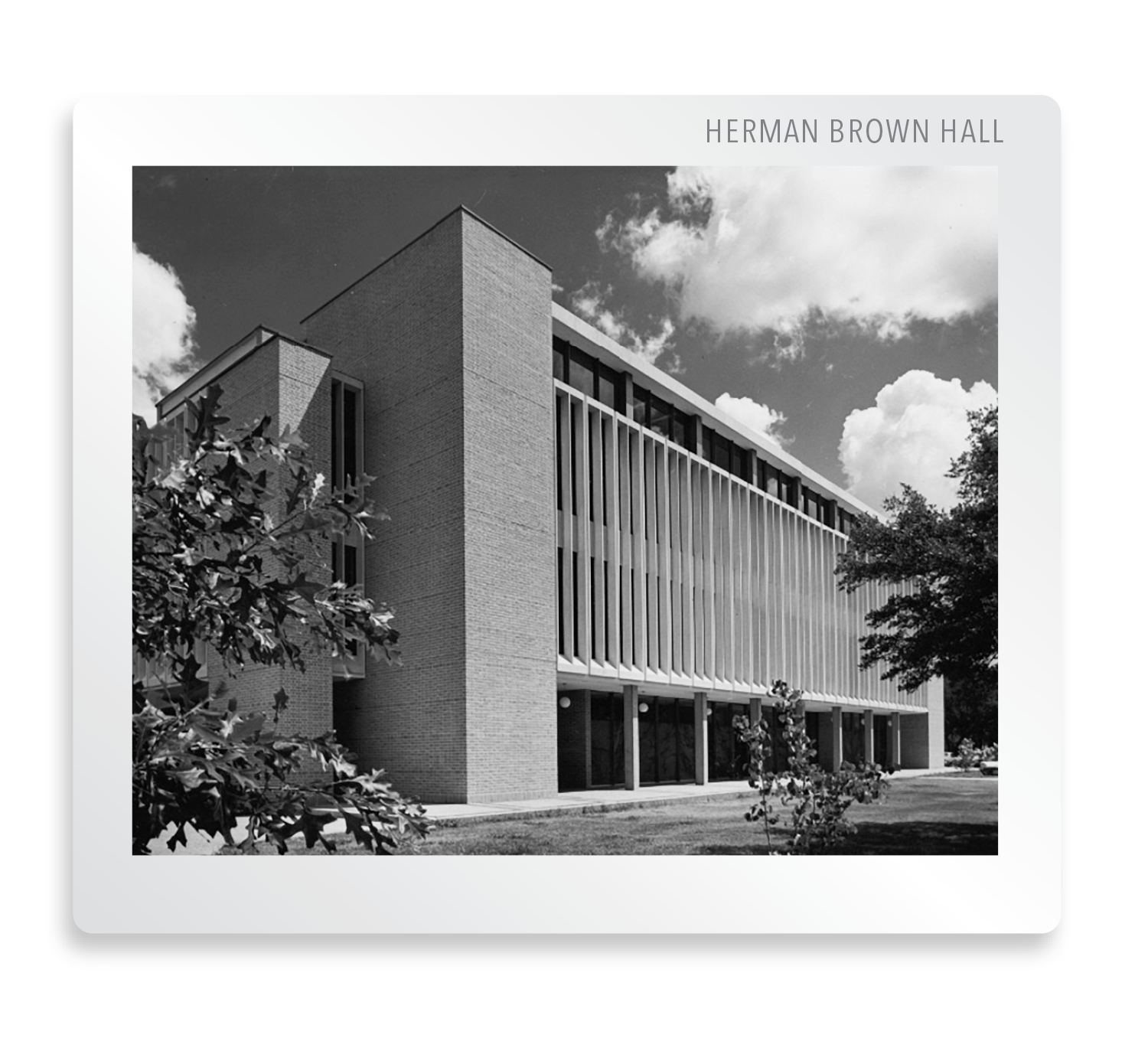
In 1977, the school welcomed its first full class: 55 students taught by a faculty of 10, working out of offices and classrooms in Herman Brown Hall.
These were formative years. The school launched with programs in management and accounting — and soon finance — and set an ambitious goal for itself: to become one of the leading schools of administration in the country. During this period, a major gift from Houston Endowment endowed the school and led to its renaming as the Jesse H. Jones Graduate School of Administration.
The scale was intimate. Classes were small, faculty offices were close together, and students and professors were building the culture of the school in real time. Herman Brown Hall housed a young program that was still defining what it would become. Over time, it became clear that the school needed a home designed specifically for its teaching, research and community life. That need helped push conversations about a permanent building from aspiration to priority.
It was also during the Herman Brown years that Rice Business began building what would become one of its defining strengths: entrepreneurship education. Professors Ed Williams and Al Napier introduced hands-on entrepreneurship teaching long before most universities offered it.
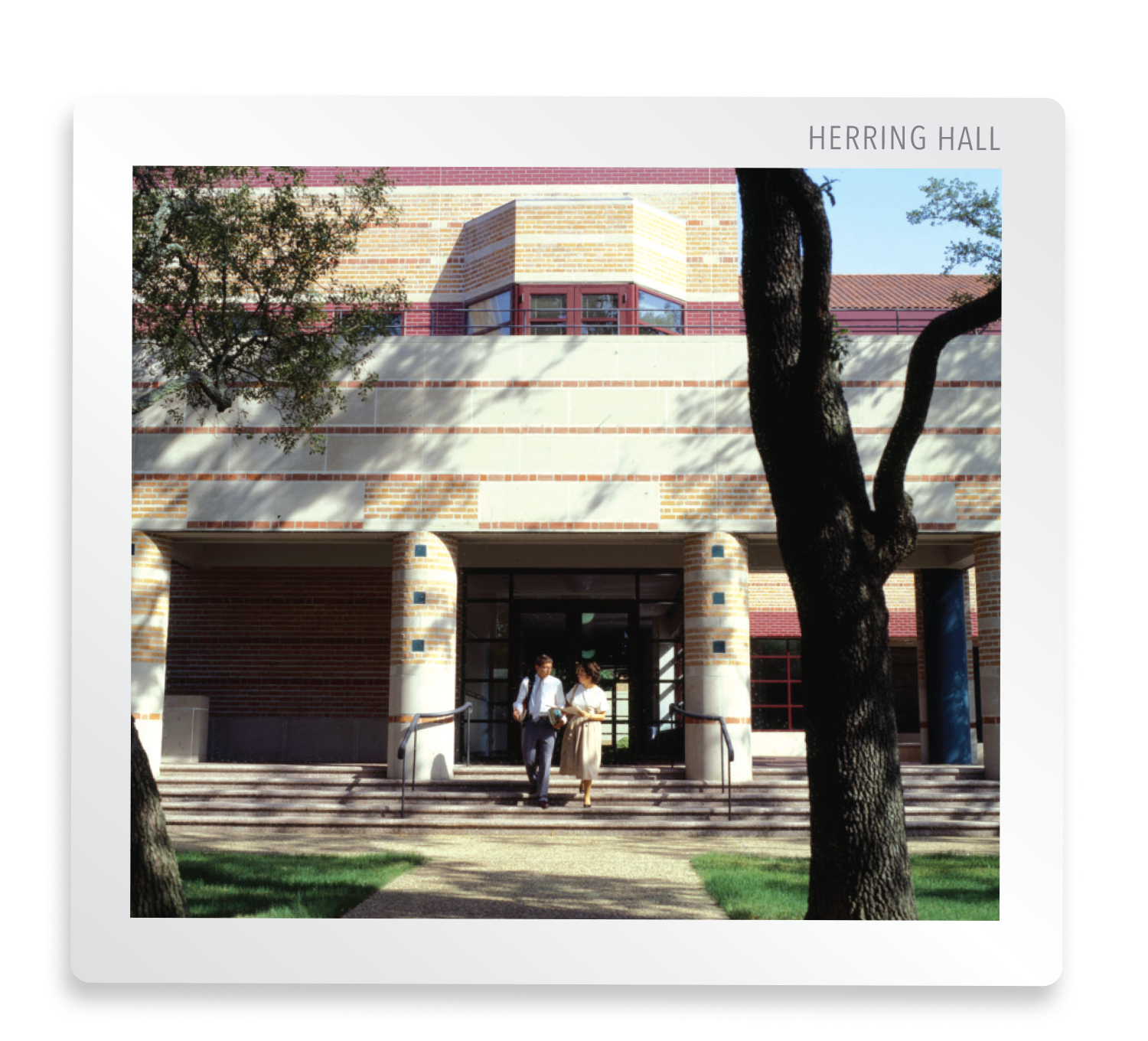
When Herring Hall opened in 1984, the school entered a new phase. Funded through a $10 million campaign and additional endowment support, the 50,000-square-foot building was designed by architect César Pelli and gave the school something it had never had before: a facility created specifically for its needs.
For the first time, the school’s classrooms, faculty offices and specialized resources were gathered in one place. Herring included tiered classrooms, a 230-seat auditorium and the Business Information Center, a library devoted to management and accounting.
Important academic changes also took shape during these years. The faculty approved the shift from the Master of Business and Public Management to the MBA, and the school later introduced a joint MBA/Master of Engineering degree in partnership with the School of Engineering.
Herring Hall also became central to the school’s ceremonial life. By the early 1990s, investiture had moved into larger nearby spaces and eventually into Herring’s courtyard, which became a recognizable gathering place for the school community.
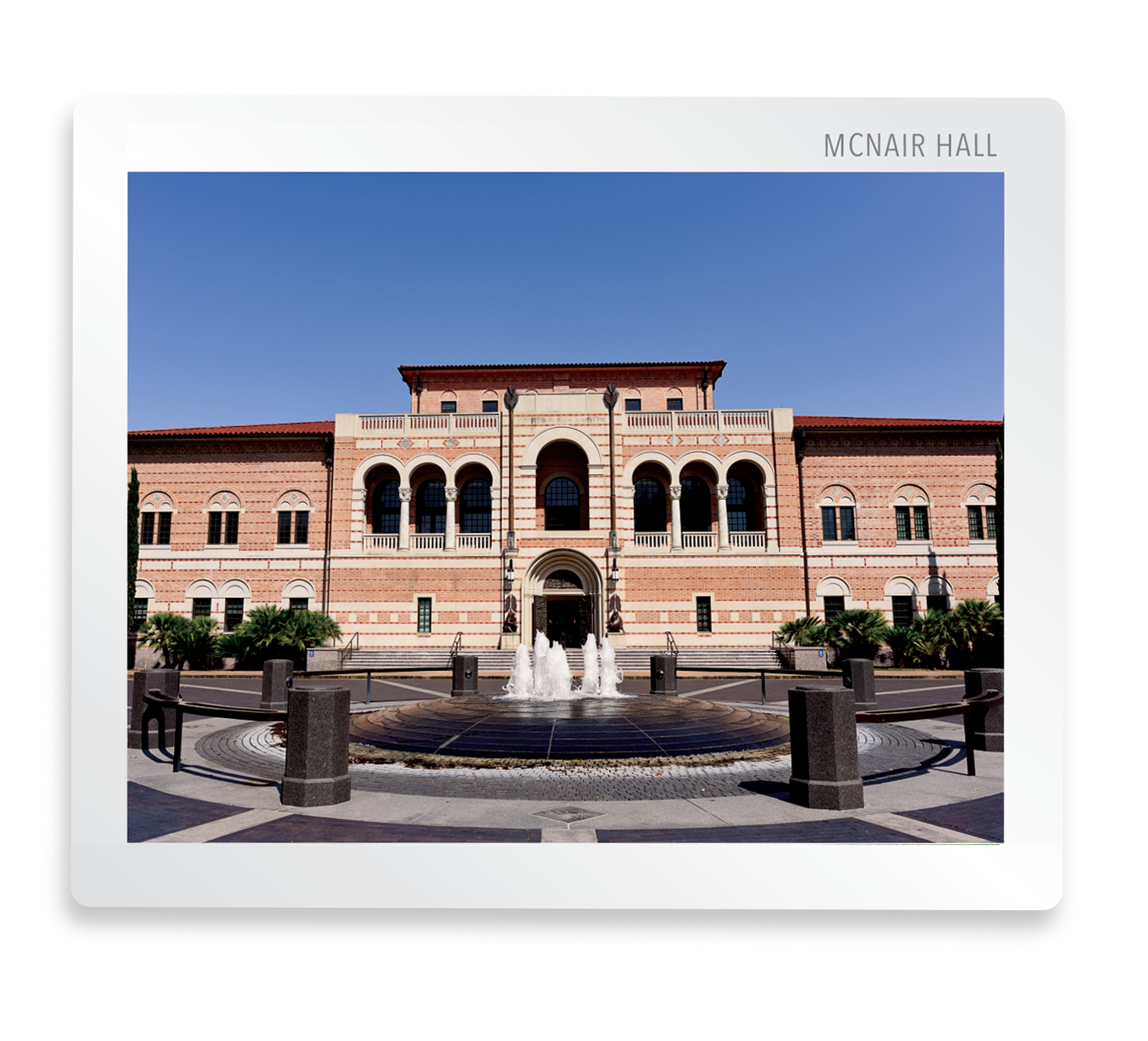
The school’s next major leap came in 2002 with the opening of the building that would later be named for Houston entrepreneur and philanthropist Robert L. McNair and his wife, Janice.
At 167,000 square feet, McNair Hall represented far more than an increase in size. It signaled a larger vision for the school’s future, rooted in stronger research capacity, more sophisticated teaching spaces, expanded programs and deeper connections to industry.
The building arrived at a pivotal moment for the school and helped create the conditions for significant growth in the years that followed. With more space came greater ability to recruit faculty, attract students from across the United States and around the world, and broaden the school’s academic portfolio. MBA formats expanded to include the Executive MBA and Professional MBA, while doctoral programs grew alongside the Full-Time MBA.
During this period, Rice Business also strengthened its reputation in entrepreneurship. The Rice Business Plan Competition, launched in 2001 by Rice Alliance, grew into the world’s largest and richest student startup competition. New initiatives followed, including the Veterans Business Battle, launched in 2015, and the H. Albert Napier Rice Launch Challenge, launched in 2018. Rice also opened the Liu Idea Lab for Innovation and Entrepreneurship (Lilie), a campus hub supporting student startups.
Later, under Dean Peter Rodriguez, who joined Rice Business in 2016, the school expanded rapidly. Under the Rice Business name, the school doubled its MBA enrollment, added faculty and launched new programs, including an online MBA, a hybrid MBA and expanded professional and executive MBA formats. It also introduced an undergraduate business major that quickly became one of the university’s most popular programs and eventually evolved into its own academic unit: the Virani Undergraduate School of Business.
McNair Hall gave Rice Business the scale to think bigger. Over time, that success created the conditions for the next step.
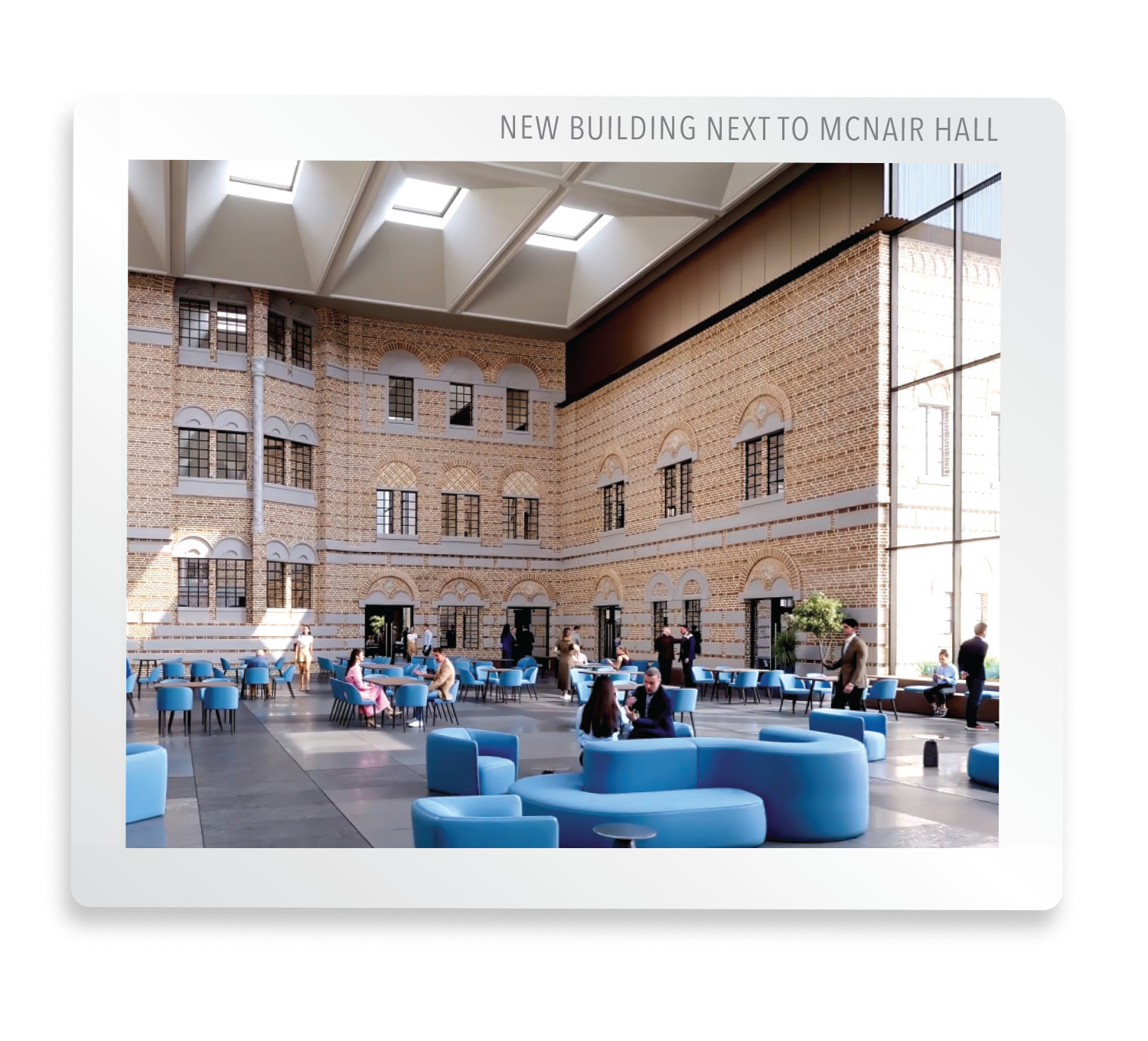
Each move in the school’s history has come at a moment when its ambitions required a different kind of space.
Sewall Hall housed the earliest vision. Herman Brown Hall helped launch the program. Herring Hall gave the school a home designed for itself. McNair Hall supported a broader national and global presence.
Now Rice Business is preparing to open another building beside McNair — one designed for the school it has become.
What makes this moment different is the scale of the school’s life today. Rice Business now serves more students across more programs than ever before, from undergraduates just beginning to imagine careers in business to MBA and doctoral students preparing to lead in complex industries.
In that sense, the new building represents both a continuation and a change. Like the school’s earlier homes, it answers a practical need for space. But it also marks something larger: Rice Business is entering a new chapter with greater reach, greater visibility and a broader community than ever before.
Soon enough, the next generation of students will make the building their own. For now, it joins the story of the places that brought the school to where it is today.
Stay tuned for our next issue, which will include a full photo tour of the new building.
Based on "A Short History of the Jesse H. Jones Graduate School of Management, Rice University," by Melissa Kean
A career that began in corporate America became a decades-long bet on founders, ideas and the power of building something that lasts.