Image
As Western style increasingly permeates American pop culture, Wesley Sinor ’97 is employing a true cowboy ethic to make the world’s biggest rodeo even bigger.
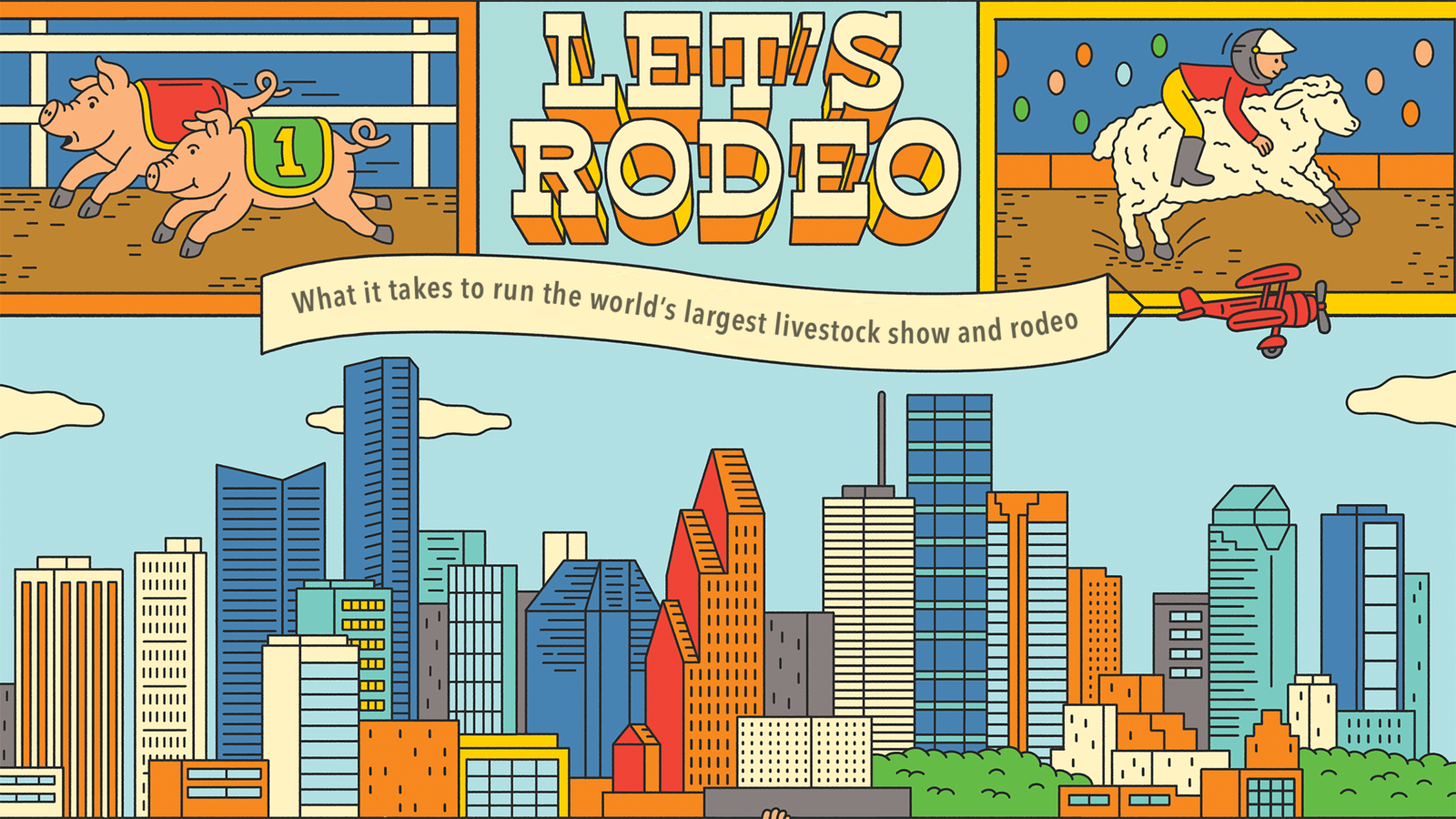
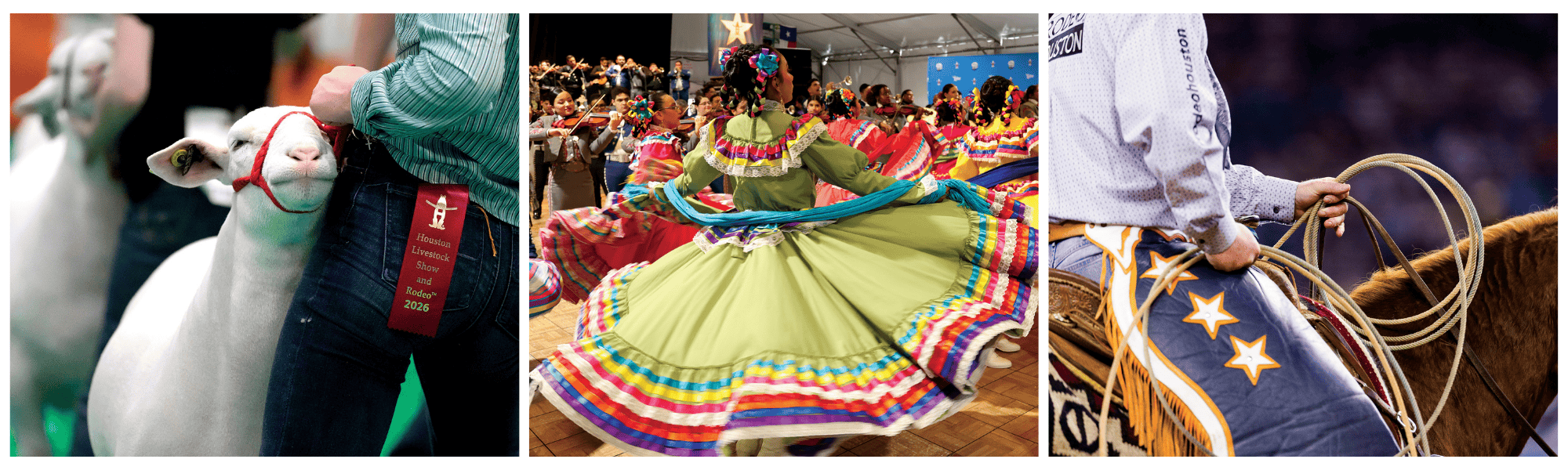
The annual Houston Livestock Show and Rodeo is the largest event of its kind in the world, and its scale is quickly apparent. Approaching the parking lots surrounding NRG Park, attendees to the nearly monthlong event see the tall Ferris wheels and amusement rides of a massive carnival. Inside the grounds, they’re immediately hit with smells of barbecue and fried delicacies. After climbing the winding entrance ramps, they can settle in to watch a full slate of boisterous competitions and vibrant concerts set on a football field-length dirt floor.
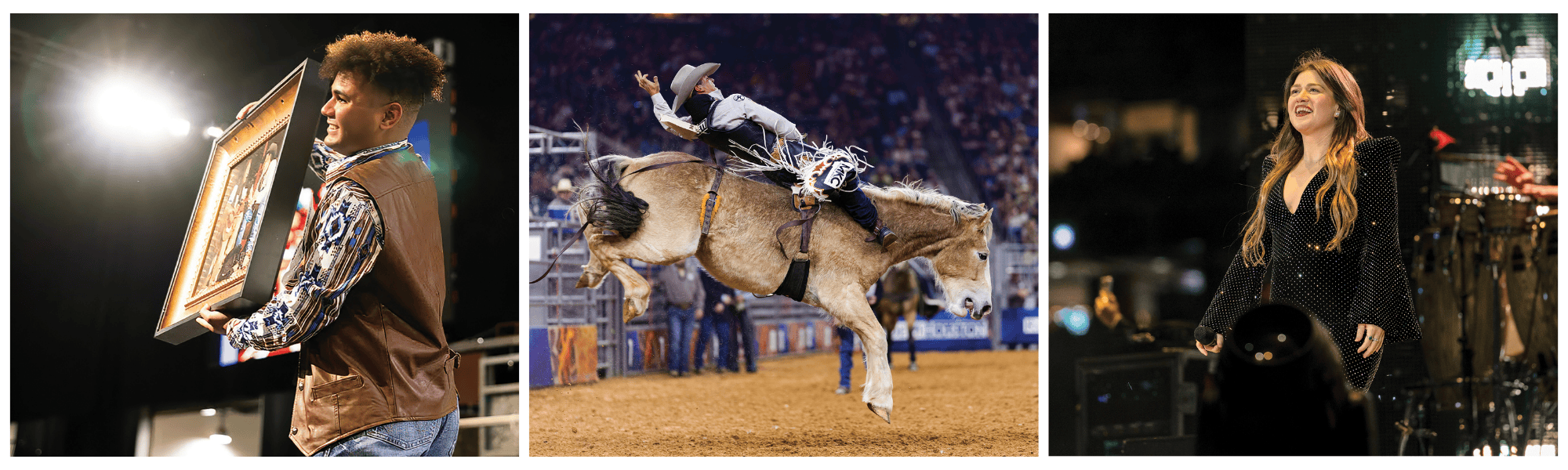
Next door, a 700,000-square-foot convention center features a full livestock show, where the finest of farm animals (ranging from longhorns to llamas) are shown off by their proud young handlers in competitions tied to the Rodeo’s larger mission: raising scholarship support for Texas youth and education. The Rodeo itself, officially called RODEOHOUSTON, features eight daily events, including, roping, barrel racing and bull riding. Afterward, a star-shaped stage unfolds at the 50-yard line, hosting the likes of Kelly Clarkson, Cardi B and Tim McGraw.
There are petting zoos, history exhibits, a world champion BBQ contest, a calf scramble, the Annual Go Tejano Mariachi Invitational and a professional horse show. “It’s really a giant state fair, if you will,” says Wesley Sinor ’97, the Chairman-Elect of the Board and a longtime volunteer. “There’s something for everyone.”
And not just for everyone from Texas. Cowboy culture is taking over the country: Travel experience marketplace Tripaneer saw interest in U.S. ranch stays rise 94% in 2024. Post Malone released a country album (“F-1 Trillion”) last year. Ed Sheeran has made two appearances on the Billboard Hot Country Songs charts in recent years and has claimed that making country music is his “end goal.” And the hit TV series “Yellowstone” is attempting to meet consumer demand with its multiple spin-offs.
It helps explain why, in 2026, the Houston Livestock Show and Rodeo welcomed 2.6 million people. Its direct economic impact on the Houston region is nearly $330 million.
“That’s on the level of a Houston Super Bowl,” Sinor says with a smile. “And we do it every year.”
Sinor grew up in Pasadena, Texas, which is known for its proximity to an icon of a previous American cowboy renaissance. “Our claim to fame,” he says of his hometown, “is that we grew up a mile from Gilley’s,” the honky-tonk made famous by John Travolta’s 1980 film “Urban Cowboy.”
Sinor was a child during that previous wave of cowboy-culture mainstreaming, and on weekends and holidays, his family drove an hour-and-a-half north to his grandfather’s Santa Gertrudis ranch. He studied mechanical engineering at Texas A&M University before joining his family’s manufacturing business, Sinor Engine Company, an industrial engine rebuilder and service provider, where his father, two brothers, mother and even a cousin all worked. Each managed a specific domain; Sinor focused on engineering, design, manufacturing and operations. “We each had our separate areas of expertise,” he says.
Three years into his post-college role, though, Sinor saw a gap. He knew the technical side of things but wanted to better understand the business side — finance, strategy, even human resources. He enrolled in Rice University’s Professional MBA program, then a three-year track for working professionals, heading to classes after morning shifts at the company. He says the experience was invaluable in helping him navigate technical business discussions. “You start realizing, as you’re sitting in a meeting and they are discussing some finance topic, that, yes, I understand what they’re talking about,” says Sinor. “And I can make good comments on it.”
The family business eventually sold in 2019, giving Sinor more time to pursue a passion he’d been stoking for years. He had started volunteering at the Houston Livestock Show and Rodeo in 2002, at the suggestion of a friend, eventually joining the Gatekeepers Committee, which helps manage admissions and access to the grounds. “I got on that committee in 2003,” he says, “and then worked my way up.” In his 22 years at the Rodeo, Sinor has served on every one of the organization’s standing committees, including investment, audit and budget. He was chairman of two of those committees and has worked alongside three Chairmen of the Board on the Executive Committee.
“Having that broad experience of all the different standing committees makes decision-making so much easier,” he says. “You’re not trying to learn something on the fly. You already have a deep understanding.”
His work ranges from approving budgets to green-lighting new technology initiatives to coordinating with the county on security and traffic management. “You’re also the face of the show, so there are lot of public-facing engagements,” says Sinor. “It could be minute by minute that you’re going to different events and either speaking or showing up. You’re working hand-in-hand with the CEO every day. It’s the same as running any large company.”
For his three-year term as Chairman of the Board beginning in 2027, Sinor has a concrete agenda. He wants to secure a long-term lease at NRG Park to protect the Rodeo’s home for future generations, and he is overseeing the growth of the organization’s vocational education program — an initiative that awards half a million dollars annually to trade schools and junior colleges — part of a broader educational mission that this year topped $30 million. The program aims to fill a skills gap that Sinor watched widen over his decades in manufacturing. “I worked with a lot of machinists and mechanics,” he says. “To see that grow would be a great success.”
Ultimately, his goal is straightforward: small improvements, steadily compounded over the long run. “Everything just needs to be a little bit better, every year,” Sinor says.
Sinor’s goals for RODEOHOUSTON aren’t limited to growth. He also wants to win.
A regular competitor in the cutting horse show, the discipline where horses and riders separate a single cow from the herd, he trains once or twice a week at a facility 45 minutes north of Houston, traveling to shows most weekends. In 2013, he won the amateur class championship at the RODEOHOUSTON’s cutting horse competition and is chasing another one. “Houston is kind of our home show,” he says. “Our team loves competing in it. We’re so proud we can do well.” This year, he will ride at least once each day, even as he moves through the packed slate of meetings, public appearances and behind-the-scenes obligations of being chair-elect.
Sinor describes the rides as the culmination of exhaustive effort: With proper instruction, he can put his reining hand down on the neck of his horse and feel it follow its training.
“It is an amazing feeling to have that horse trained to keep that cow separated from the herd,” he says.
Sinor has seen the culture around the sport spread well beyond the region, noting that RODEOHOUSTON even mounted a Western-themed pop-up in New York’s Times Square ahead of the event. “I don’t know if it’s the ‘Yellowstone’ effect, or what,” Sinor says, “but we also saw this with ‘Urban Cowboy’ when it was big. So we’re enjoying it right now.”
To him, though, cowboy culture runs deeper than stylish boots and riding tricks. “It’s about being self-sufficient,” he says. “Overcoming adversity. When you’re out by yourself on a ranch and you’ve got to do everything on your own — that’s pretty much what it means.”
In the days leading up to the 21-day event, Sinor was tracking the schedule of the current Chair of the Board, whom he’ll be shadowing in preparation for his new role, and mapping out his obligations. “It could be multiple engagements a day, especially during the show itself,” he says. Which of the show’s 21 days will be the hardest? Sinor pauses, then cracks a small smile. “I’m pretty sure they’re all the same. They’re all full.”
Not that Sinor is rattled. “I love to get things done,” he says. “But I am also measured and even-keeled.”
Which means that when the event kicks off, and those tens of thousands of fans come streaming into the park, he will be ready to drop the reins and let the training take over.