If you’re considering a Full-Time MBA, you already know the degree is far more than an academic credential. It can be a major career accelerator. But how does the actual hiring machine work once you step foot on campus?
For top-tier programs, MBA recruitment is not a passive job-board scroll. It is a highly structured ecosystem designed to connect ambitious professionals directly with hiring managers and corporate leaders.
Here’s how Full-Time MBA recruitment works — and how top business schools like Rice Business prepare candidates to land competitive roles and maximize their return on investment (ROI).
At top business schools, career preparation starts months before formal interviews begin. A program’s Career Development Office (CDO) acts as a strategic launchpad, offering specialized programming to convert your raw ambitions into interview-ready confidence.
For some industries, early preparation is critical since recruitment may begin before classes do. If you are interested in fields such as consulting or investment banking, it’s best to know that before you join the program.
Stay Ahead of the Curve With CDO Initiatives
The Rice career team offers nonstop support through initiatives like bootcamps, career treks, coffee chats and alumni panels. From the minute you step foot on campus, the CDO helps you prepare for recruitment — and offers support for both industries with rigorous recruitment timelines and those with less structured processes.
Image
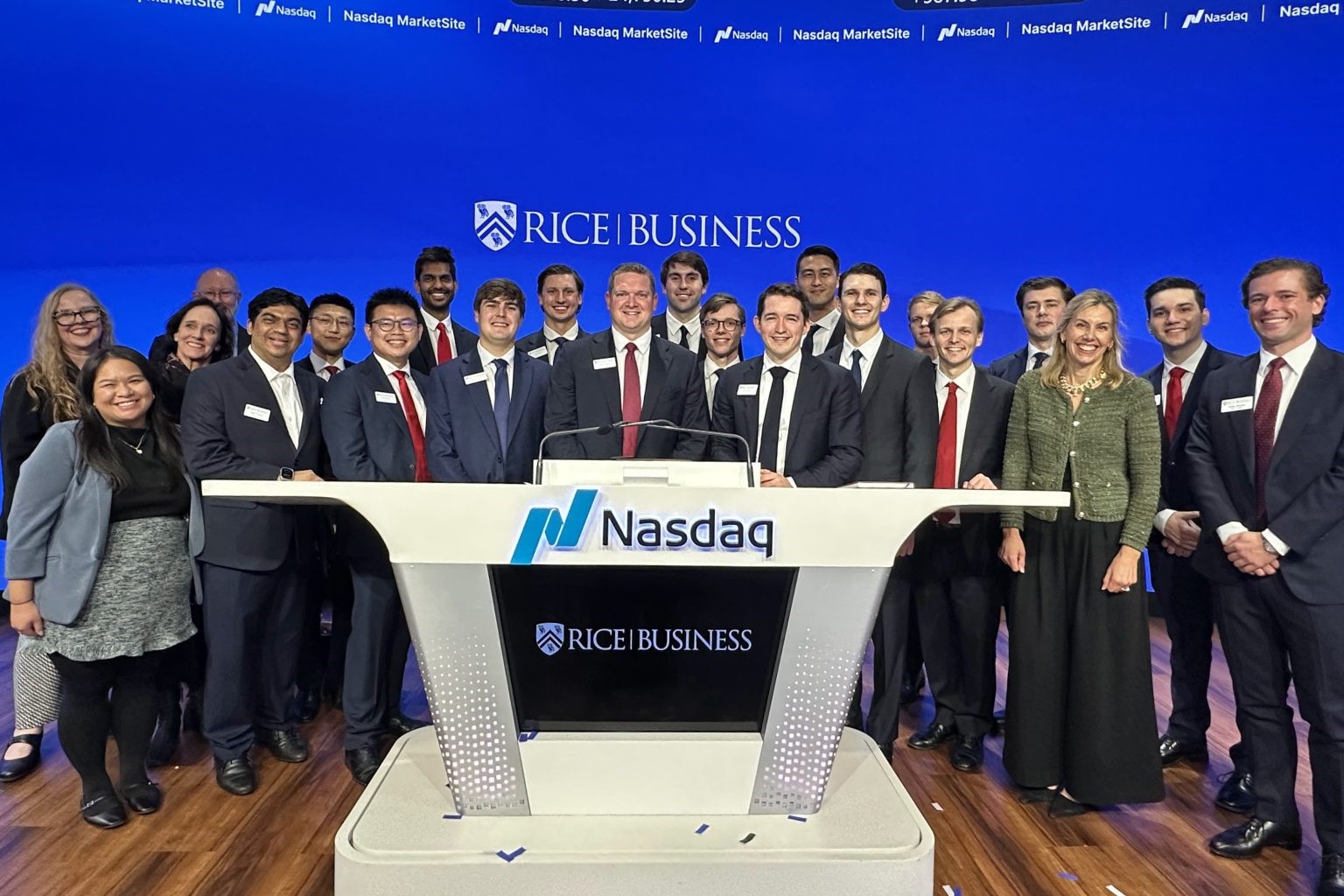
Full-Time MBA students on the Week on Wall Street career trek.
Industry-Specific Bootcamps are particularly beneficial for high-intensity recruiting tracks; for example, the Investment Banking Bootcamp trains students on financial modeling, pitch-deck analysis and technical interview questions well before recruiters visit campus.
Career Treks bring Rice MBA students directly to major business hubs — from New York financial districts to Silicon Valley tech campuses — giving them behind-the-scenes exposure to company cultures and direct access to alumni hiring teams.
Coffee Chats are one of the most critical networking mechanics in MBA recruiting. These small-group or one-on-one sessions allow candidates to build authentic relationships with employers outside the pressure of a formal interview.
In addition to structured events and sessions, our CDO team jumps in with pre-matriculation career guidance, like offering resume polishing. Initiatives like the Alumni in Residence program bring in experienced grads for candid one-on-one mentorship, early industry insights and recruiting guidance before you ever set foot in an interview room.
I did investment banking recruiting my first semester. The Finance Association at Rice Business did a fantastic job training, prepping and mentoring me to get a banking job. When I started as an intern in New York, I realized, ‘Wow, we’re actually far ahead of a lot of these other schools and people.’
Chris Stillwell ’24
Rice MBA
You’ll Have Access to Houston’s Top Employers
While top national firms recruit across all major business schools, a program’s physical location dictates its immediate access to executive leaders and high-growth job markets.
Take a major economic engine like Houston, Texas. As the fourth-largest U.S. city and home to the second highest concentration of Fortune 500 headquarters, studying in Houston puts MBA students directly adjacent to major global industries, like energy, cleantech, healthcare, consulting and financial services.
In recent years, top employers of Rice Full-Time MBAs have included McKinsey & Company, Dell Technologies, Infosys, Bain & Company, BCG and Amazon. Because Rice Business is embedded in a booming corporate hub, employers regularly drop by campus for evening receptions, student club panels and informal networking — giving candidates year-round access to job opportunities.
You’ll See High ROI and Strong Outcomes
An MBA requires a significant commitment of time and tuition, making ROI a top decision metric. Top-ranked programs like Rice Business consistently prove their value through strong post-graduation compensation, rapid career trajectory and high job placement rates.
Competitive Salaries: Our graduates receive top-tier base salaries, with post-MBA starting pay often meeting or exceeding $146,000.
Signing Bonuses: 67% of Full-Time MBAs received signing bonuses (averaging $32,000).
Substantial Pay Leaps: The Full-Time Class of 2025 experienced a 134% salary increase over their pre-MBA compensation upon graduation (on average).
A successful recruitment season will lead to a summer internship, and often a full-time offer after graduation. Keep this in mind during recruitment, as this path will guarantee you the strongest immediate ROI and smoothest post-grad transition.
MBA Recruitment Tips from the CDO Team
MBA recruitment moves quickly, and balancing academic coursework with corporate networking can quickly become overwhelming. Here is how successful candidates manage the process:
1. Explore Widely Early, Then Refine
Early in your first semester, attend diverse industry panels and student club events to learn what’s out there. Once primary recruiting season arrives, narrow your focus to one to two target functions or sectors.
Knowing what you want to accomplish coming in is helpful — that way you can take the right courses, get connected and plug into the right groups and communities.
Tiffany Stott
Director of Career Education and Advising (CDO)
2. Clarify Your Narrative
Recruiters evaluate intent. You need a clear, concise pitch that connects your past professional experience, why you chose an MBA, and why their company in particular aligns with your career trajectory and values.
3. Keep an Open Mind
Many candidates enter business school with a rigid career plan, only to discover compelling opportunities in emerging sectors like healthcare venture capital or energy transition finance. Remain as open as possible to non-traditional paths.
4. Master the Follow-Up
After coffee chats, panel events or treks, send personalized notes mentioning specific takeaways from your discussion. Thoughtful follow-ups build long-term relationships that pay off when interview invitations are extended.
Hear more from Tiffany Stott, director of career education and advising:
The Power of the Rice MBA Network
While online job portals exist, the vast majority of high-tier MBA roles are secured through relational hiring rather than cold applications. At Rice Business, over 70% of accepted job roles are secured directly through the MBA community — spanning alumni referrals, CDO campus connections, faculty networks and student club partnerships.
Recruitment matters, but the community you join matters, too. Keep in mind that alumni are uniquely supportive in tight-knit MBA communities like Rice Business.
By leaning into your school’s career development resources, leveraging local market advantages like Houston’s thriving economy, and building authentic connections across the alumni network, you can position yourself for a high-ROI career transition.
Curious about how an online MBA helps your career? Explore the career impact of an online MBA, from salary growth and long-term ROI to hands-on skills, global experiences and career advancement.
Wondering how to build a career in investment banking? Explore how an MBA, especially from Rice Business, can help you develop the finance skills, network and recruiting experience to launch a career in IB and advance from associate to VP and beyond.