Image
Artificial intelligence is changing how businesses operate, how people work and how leaders make decisions. As technology changes the world around us, an MBA becomes more valuable for developing something AI cannot replace: the judgment to make decisions when traditional business models and strategies no longer apply.
Imagine you’re leading a finance team that has just tested a new AI forecasting tool. In minutes, it produces projections that once took analysts days. Your team is impressed. The question now lands on your desk: Should the company adopt it?
To answer, you’ll need to know more than whether the model works. Are the forecasts reliable when market conditions change? Will the tool improve the quality of decisions or simply help your team make more of them? What happens to the people whose jobs and responsibilities will change?
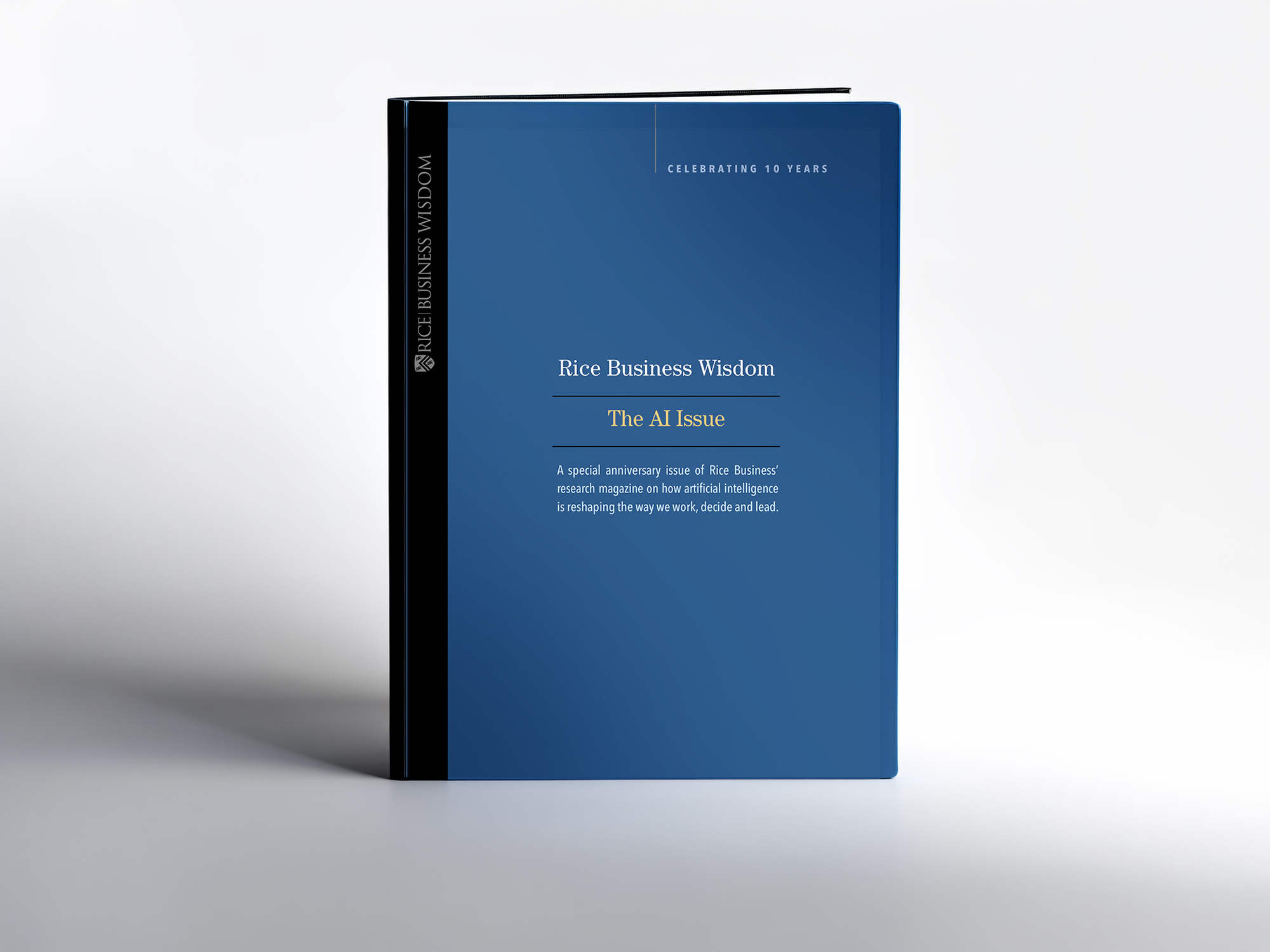
Those are questions of strategy, finance, organizational behavior and leadership. They are also the kinds of questions an MBA is designed to prepare people to work through — especially at Rice Business, where our faculty are leading the research behind it. Continue reading AI insights from Rice Business faculty in Rice Business Wisdom: The AI Issue.
For years, the case for digital tools was straightforward: Automate a task, save time, reduce cost. Now, AI can both do those things and surface possibilities a team may never have considered on its own.
But more information and faster analysis don’t automatically lead to better decision-making. A company can generate a hundred scenarios and still choose the wrong investment. It can introduce an impressive system without resolving who is accountable for its recommendations, how employees will use it or which measures will determine success.
The World Economic Forum’s Future of Jobs Report 2025, which surveyed more than 1,000 employers, found that 63% cited skills gaps as a major barrier to business transformation. It also identified analytical thinking as a core skill for roughly 7 in 10 employers, even as AI and big data were among the fastest-growing areas of skills demand.
An MBA builds judgment skills that hold up, even when technology and business playbooks change. You learn to tackle unfamiliar problems, test assumptions, weigh trade-offs and make decisions with a clearer understanding of how they’ll impact an organization.
Curious how top-ranked MBA programs are teaching students to use AI? Read about the generative tools and AI courses available at Rice Business.
Will AI make your leadership role obsolete? The short answer is no. Used responsibly, AI acts as a strategic amplifier, accelerating workflows so leaders can focus on continuous improvement and decision-making.
Corporate spending offers another signal. In its 2025 survey, Training magazine estimated that organizations spent $102.8 billion on training. Among respondents, 30% of companies said management and supervisory training would receive increased funding or resources, while 25% said the same about AI training. The figure is total corporate training expenditure — not spending exclusively on AI or executives — but the funding priorities show that companies are still investing in both areas.
A separate 2025 Harvard Business Impact study also found that 55% of organizations were prioritizing AI and machine learning — meaning they were investing in the people who would lead those management practices to use those tools effectively.
What does that employee development look like in practice? For example, professional development programs like Winning With AI help bridge the gap between technical potential and daily business execution.
For someone deciding whether to pursue an MBA in this environment, the lesson is not that a single degree can substitute for every future training course. Learning is ongoing, and a broad foundation in business can put each new technical capability into context.
If your next assignment involves implementing a new platform, a certification may be the fastest and least expensive route to competence. If your ambition is to build machine learning systems, a specialized technical degree may be the more appropriate investment. An MBA serves a different purpose.
Finance teaches you to understand capital, risk and returns. Operations explores how organizations actually deliver value. Strategy asks where a company should compete and what it should do differently. Taken together, these disciplines teach you to connect the dots between how a decision made in one corner of the business changes the possibilities elsewhere. On top of that, Rice MBAs learn to lead ethically and with empathy.
That rich, human-oriented perspective can’t be outsourced — and it only becomes more useful when new technologies arrive. AI may change how forecasts are built, but it does not eliminate the need to decide which projects are worth investing in, nor the responsibility to make fair, workable decisions about people.
At Rice Business, that foundation is paired with opportunities to work directly with emerging technologies. In addition to business fundamentals, the school’s STEM-designated MBA program includes courses such as AI Tools for Business Decision Making.
For Full-Time MBA Taran Jain ’27, that connection became tangible during an internship with Visa’s Global Finance AI Acceleration Office.
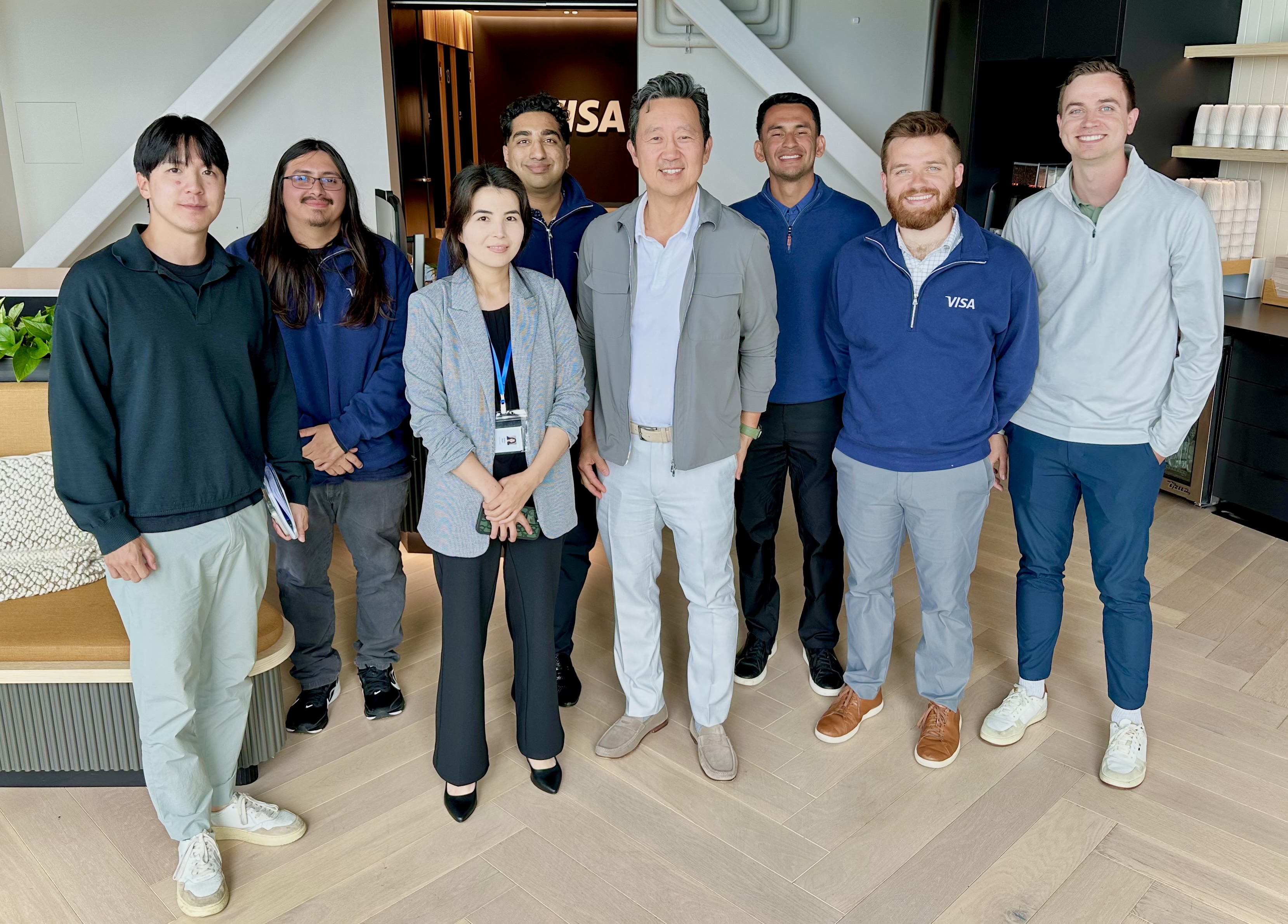
His projects included developing a dashboard prototype for financial planning and analysis and evaluating how teams could improve their use of AI workflows. Jain credits Rice coursework in generative AI for providing practical preparation and the Strategic Business Communications course for helping him communicate with senior leaders. His experience illustrates how technical learning and business communication can come together in the same role.
Today, AI is transforming business. But the next role, the next technology shift and the next organizational challenge may demand different knowledge. The habit of connecting financial, strategic and human consequences will keep paying off long after graduation — as will the relationships you build throughout your MBA.
The tools will evolve. The decisions will become more complex. What endures is the need for leaders who will ask better questions, understand what is at stake and turn new possibilities into meaningful business outcomes.
At Rice Business, learn how an MBA connects your experience with the work you want to do next.
While neither is universally better, compare each degree with the type of work you want to pursue post-grad. An MBA emphasizes business breadth, while a specialized degree in AI or machine learning may offer greater technical depth. You can learn more about Rice’s MBA curriculum here to see if it aligns with your interests and goals
While AI is unlikely to replace every job held by an MBA graduate, it is already changing what makes business professionals valuable. As employers delegate more analytical and routine tasks to AI, the advantage shifts toward MBA graduates who can interpret results, make strategic decisions and lead organizations through change. Review the elective courses that Rice Business offers to sharpen your AI skill set.
Whether or not you’ll need technical programming or AI skills depends entirely on your role post-graduation. All Rice MBA graduates will have the opportunity to better understand how to use AI appropriately, question its outputs and lead others through similar skill development. Learn more about the AI electives offered at Rice Business.
A focused credential may meet your needs if you want to develop a specific skill, but an MBA offers much more breadth across strategy, operations, finance, marketing and more, in addition to structured networking and recruiting opportunities, depending on your program. Continue reading about the long-term outcomes of an MBA.
AI is rapidly changing business today. A strong MBA curriculum in AI won’t just reflect what companies are already doing, it will be ahead of the curve — implementing AI in everyday business fundamentals, designing courses to introduce new tools and drawing from its own faculty research. Research a school’s curriculum and consider faculty expertise in artificial intelligence. Continue reading cutting-edge findings from Rice Business faculty in Rice Business Wisdom: The AI Issue.
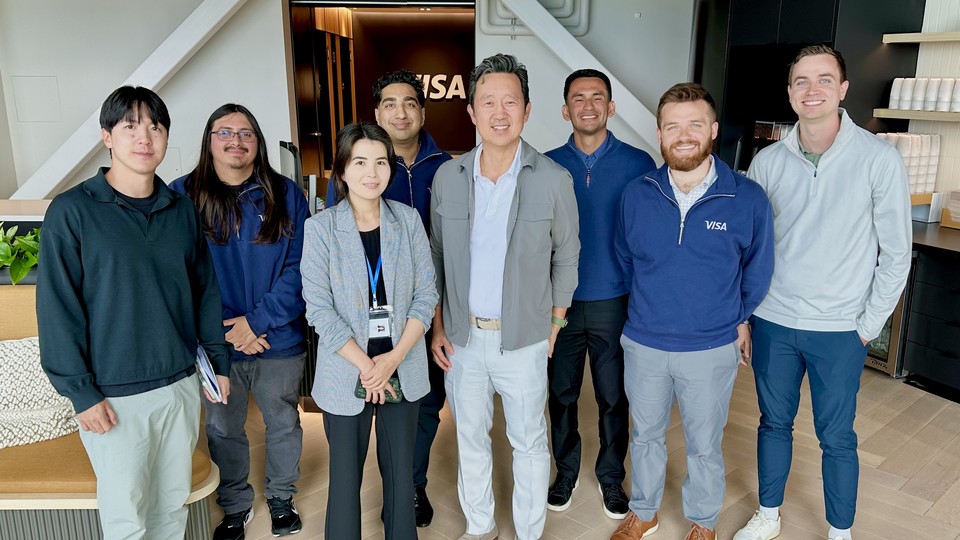
Rice Business is deeply connected across industries. Explore six internship paths Rice MBA students held across tech, finance, energy, healthcare and more.

Curious about how an online MBA helps your career? Explore the career impact of an online MBA, from salary growth and long-term ROI to hands-on skills, global experiences and career advancement.

Wondering how to build a career in investment banking? Explore how an MBA, especially from Rice Business, can help you develop the finance skills, network and recruiting experience to launch a career in IB and advance from associate to VP and beyond.