Image
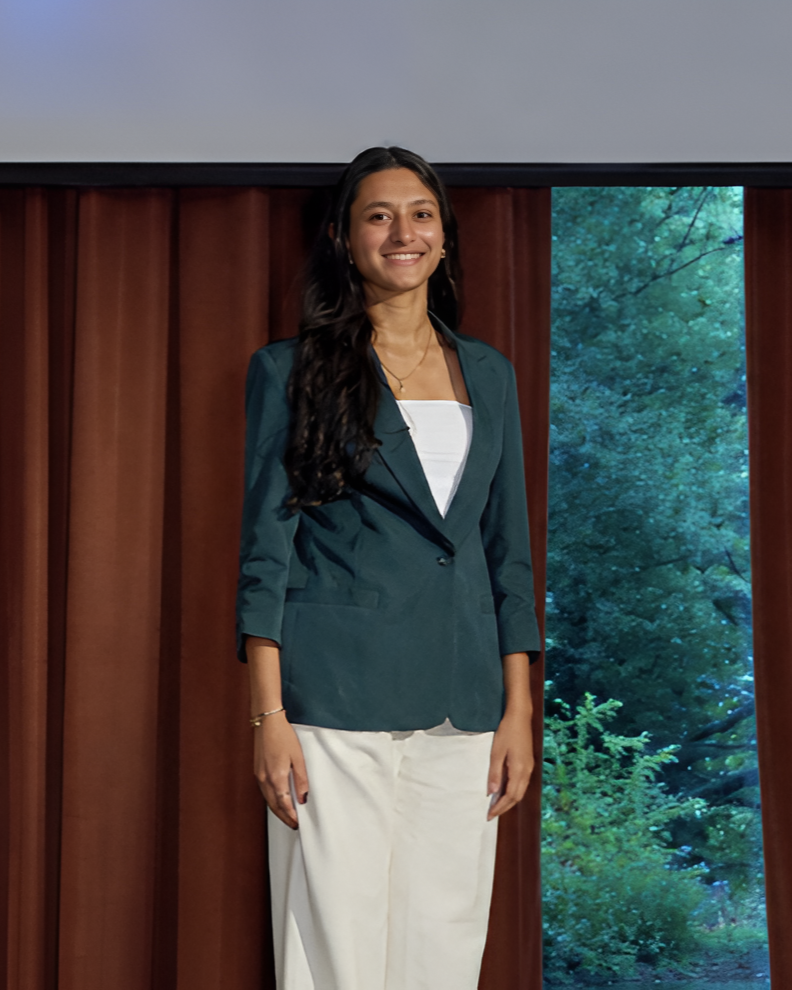
Co-founder Adhira Tippur witnessed the administrative overload and patient access challenges at her mom's dental office in a medically underserved region. This experience led her to create Kairos Health, an end-to-end patient intake platform that uses automation to effectively "double staff" and free front desk teams from burnout.
We caught up with Adhira to hear how she launched this national-award-winning healthcare startup, and how the resources at Rice helped her scale it.
Kairos Health is an end-to-end patient intake platform for dental clinics. We help practices automate inbound calls, scheduling, insurance intake and patient communication so front desk teams can spend less time buried in administrative work and more time supporting patients.
Kairos began with something I watched for most of my childhood. I grew up in the Rio Grande Valley, a medically underserved region where getting care is hard enough before you even reach a clinic. Every day after school, I went to my mom’s dental office and helped wherever I could, whether that meant answering phones, checking patients in, translating for Spanish-speaking families, or just stepping in wherever things felt busiest. What I remember most is that everyone was always doing ten things at once, and the front desk carried the heaviest load of all.
Back then I thought that was just how a busy clinic worked. As I got older and spent more time in healthcare, technology and operations-focused roles, I started to see it differently. The same breakdowns I had watched at my mom’s front desk were happening everywhere, which told me this was a widespread systems problem across healthcare, and one that drives both provider burnout and lost patient access.
To date, we’ve secured roughly $70,000 in non-dilutive funding in the past few months alone, which has been incredibly meaningful as student founders because it’s allowed us to keep building quickly without immediately needing outside equity financing.
Our milestones so far include:
For us, these milestones have certainly been validating, but even more valuable has been the access they’ve created to mentors, investors and healthcare leaders who have helped us think more strategically about growth, product development and long-term execution.
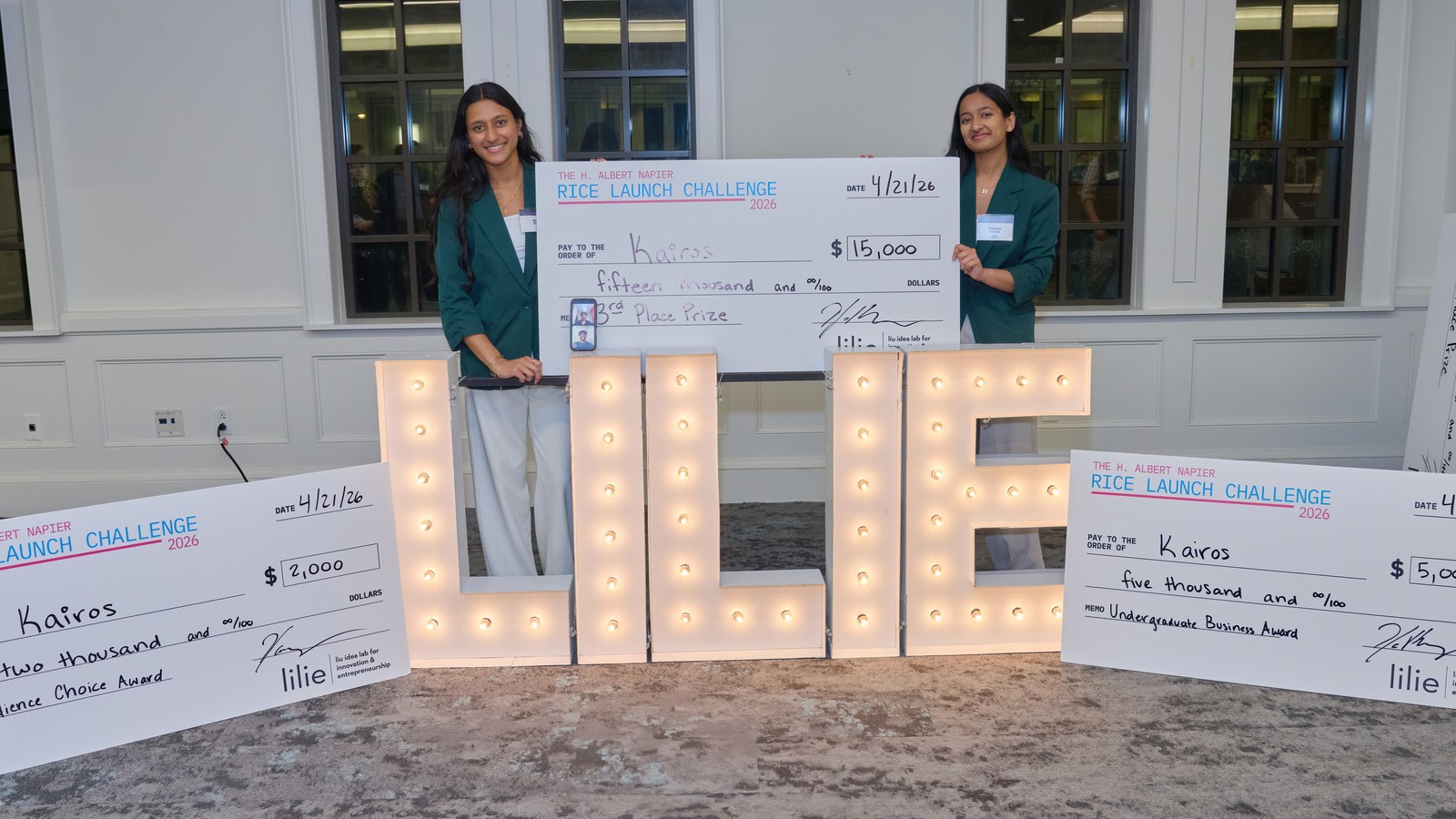
NRLC felt like a full-circle moment. Rice played a huge role in getting Kairos off the ground, so presenting a company that started in my mom’s clinic and watching it connect with the Rice community was deeply rewarding. The Audience Choice Award stood out the most, because those votes came from people who genuinely understood the problem we were solving. Taking home the Undergraduate Business Award as a student founder reminded me that the work was resonating. Startups feel uncertain most of the time, and moments like that carry you through the harder stretches. The momentum we left with mattered more than the prize money.
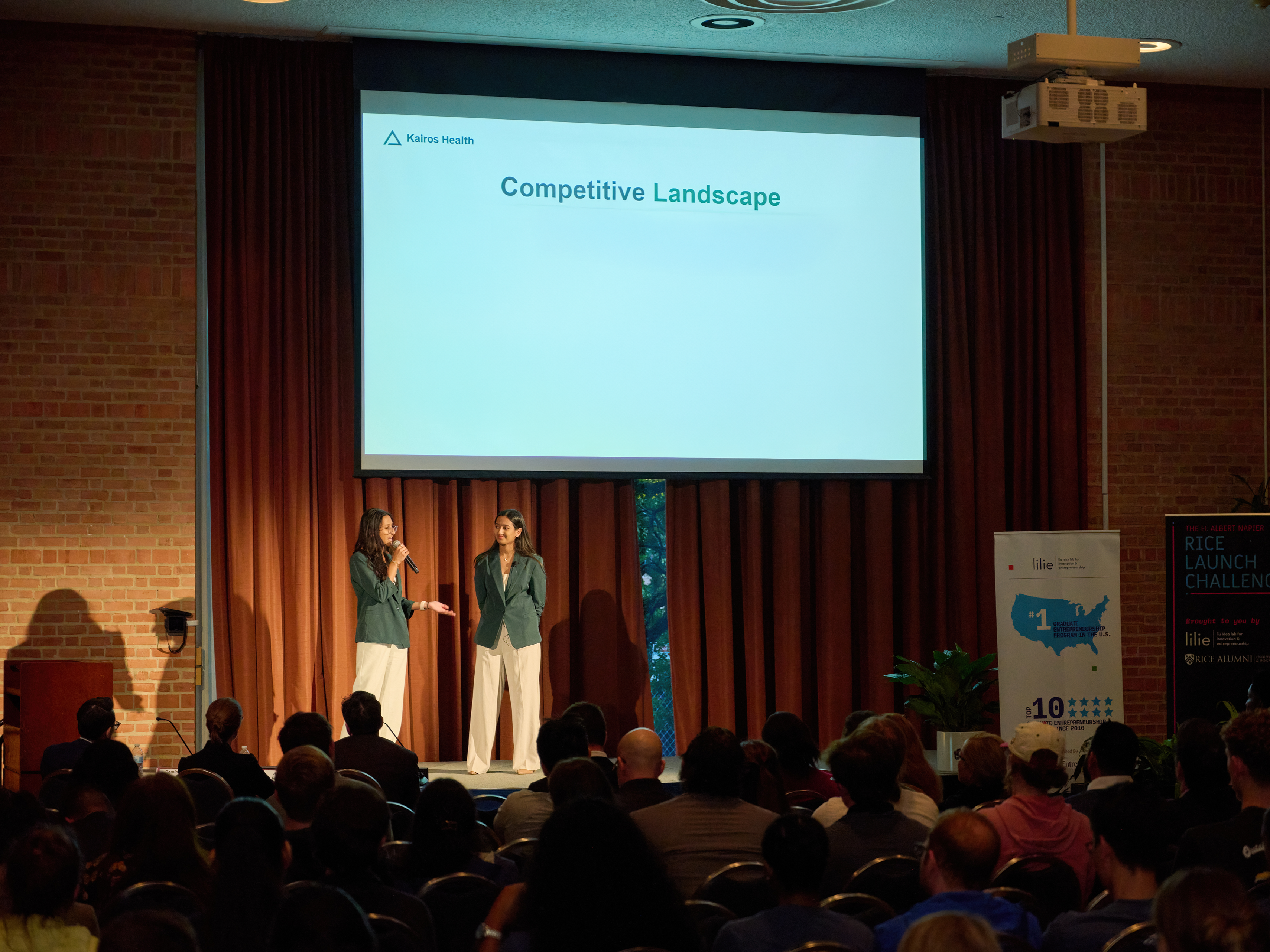
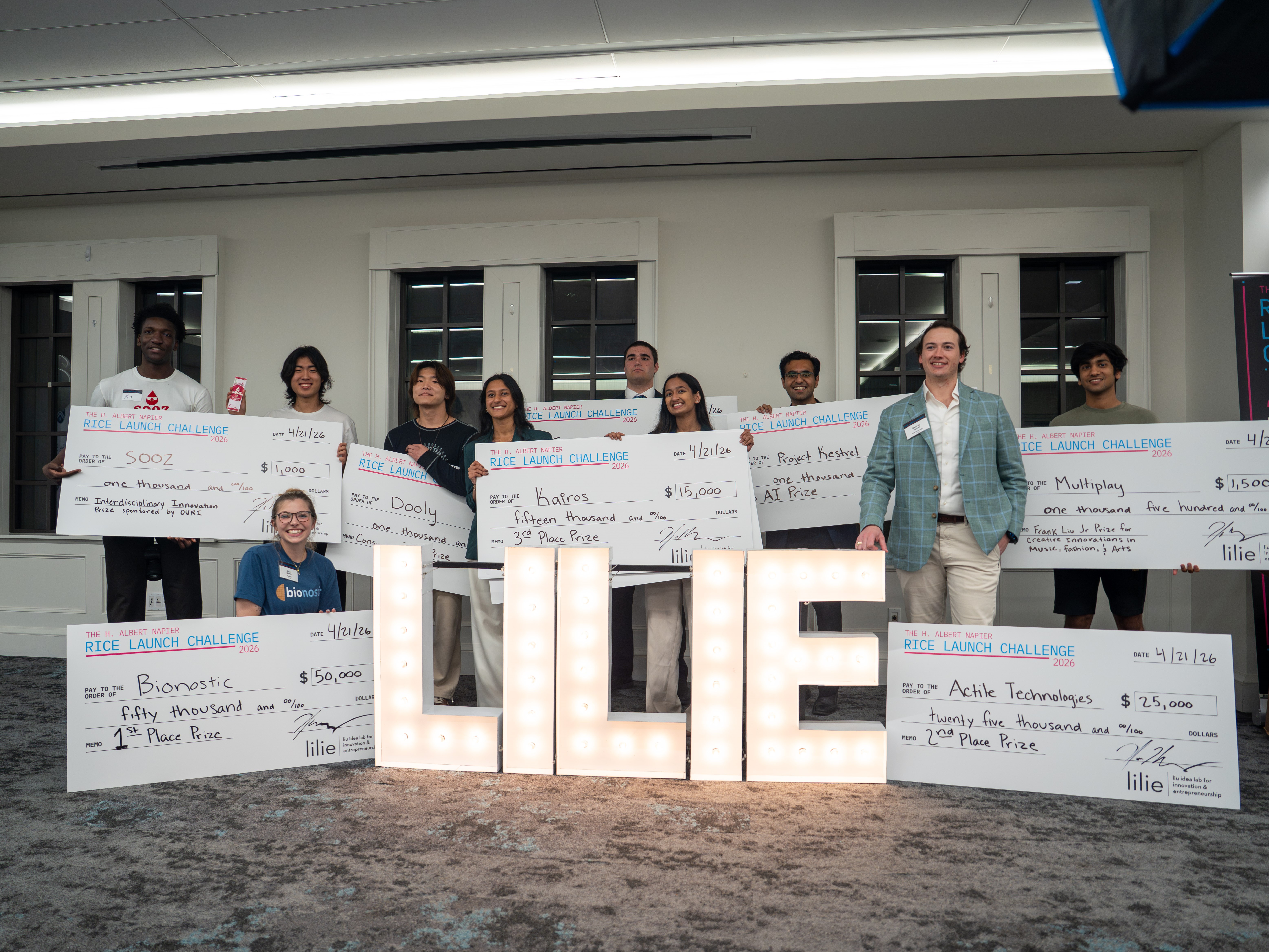
America’s Startup was probably one of the most intense and exciting experiences we’ve had so far. It was a highly competitive national startup competition, and what made it especially surreal was pitching in front of people such as Rosie Rios (former U.S. Treasurer), Sarah Friar (CFO of OpenAI), Chris Larsen (co-founder of Ripple), and other major investors and operators. It was incredibly energizing.
What stood out most was seeing that a company born from a very local healthcare operations problem in South Texas could resonate on a national stage. Winning was obviously exciting, but the bigger takeaway was validation that the problem we’re solving is real, scalable and worth building toward aggressively.
I later shared more of that story in the Washington Examiner, where I talked about how much the broader American startup ecosystem makes it possible for student founders to turn a personal problem into a real company.
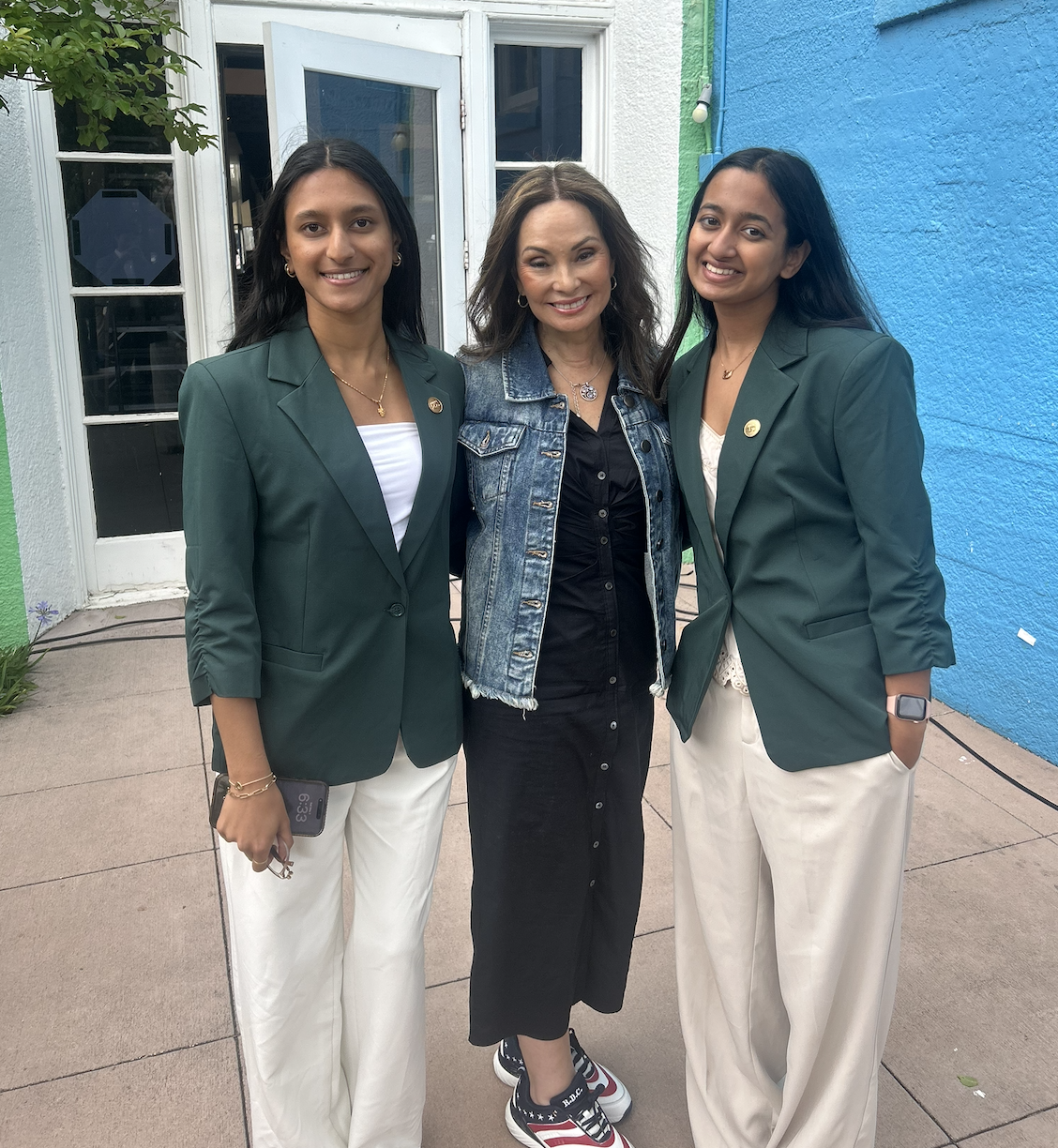
I think my biggest accomplishment so far has been turning lived experience into something tangible that’s actually helping real clinics. Competitions are exciting, but the moments that matter most to me are hearing a practice manager say something like, “It feels like we doubled our staff.”
As someone interested in both medicine and healthcare systems, that’s been especially meaningful. It’s one thing to study healthcare problems academically, but it’s another to build something that actually reduces friction for providers and improves access for patients.
Studying biosciences and finance gave me two different ways of seeing the same problem, and Kairos lives at the intersection of them.
The biosciences side shapes how I think about healthcare delivery, clinical workflows, compliance and what actually holds up inside a real practice. My interest in computational drug discovery taught me to look for patterns inside biological systems, and that same instinct helps me map out where a clinic’s intake process tends to fail. The finance and strategy side taught me to translate all of that into a business. It pushed me to ask the questions that decide whether a company survives. Is this problem painful enough to pay for? How do we price it? How do we scale responsibly without breaking the trust a clinic places in us?
One lesson from the Rice Business side has stayed with me above the rest: A great idea is only the starting point, and execution and market understanding decide everything after that.
Rice is one of the biggest reasons Kairos grew as fast as it did. The Liu Idea Lab for Innovation and Entrepreneurship has been a true support system, especially mentors like Kyle Judah and Tony Cordova, who have been generous with their time, their advice and their networks. As student founders, access is everything, and Rice made experienced operators, investors and mentors feel reachable
More broadly, Rice builds an environment where moving across disciplines is encouraged. Kairos exists because I was able to work between healthcare, technology and business without feeling boxed into one lane, and the people at Rice kept opening the next door right when I needed it.
Our long-term vision is to become the operating layer that dental practices run on. Today we are focused on intake, scheduling, communication and administrative automation, but the larger opportunity is much bigger. Dental practices still depend on fragmented, outdated tools that create friction for staff and patients alike. We want to build the infrastructure that makes a practice dramatically more efficient while making the patient experience feel effortless.
In the coming year, what excites me most is scaling from early pilots into broader adoption, refining the product with real clinic feedback, and proving that this can become foundational infrastructure rather than just another point solution.
Start closer to a real problem than to an idea. A lot of student founders fall in love with building something clever before confirming that the problem actually hurts enough for anyone to pay for a fix. Kairos started because I had years of exposure to a problem I could not ignore.
The biggest advantage students have is proximity. You are surrounded by research labs, clinics, campus operations, communities and professors, and every one of those is a window into a recurring frustration worth solving. Pay attention to the things that keep going wrong around you. Then start before you feel ready, because you will learn more from ten honest conversations with real users than from months spent perfecting an idea alone.
Adhira Tippur is an undergraduate student in the Class of 2028.
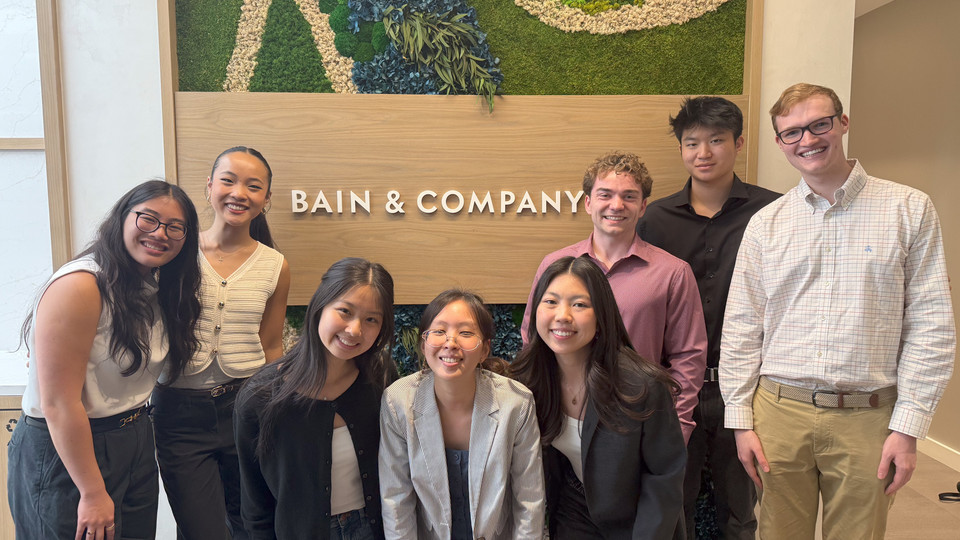
Hosted by the Analytics, Consulting and Technology (ACT) club, the competition united undergraduate students for a week-long, high-stakes business challenge in partnership with Bain & Company.
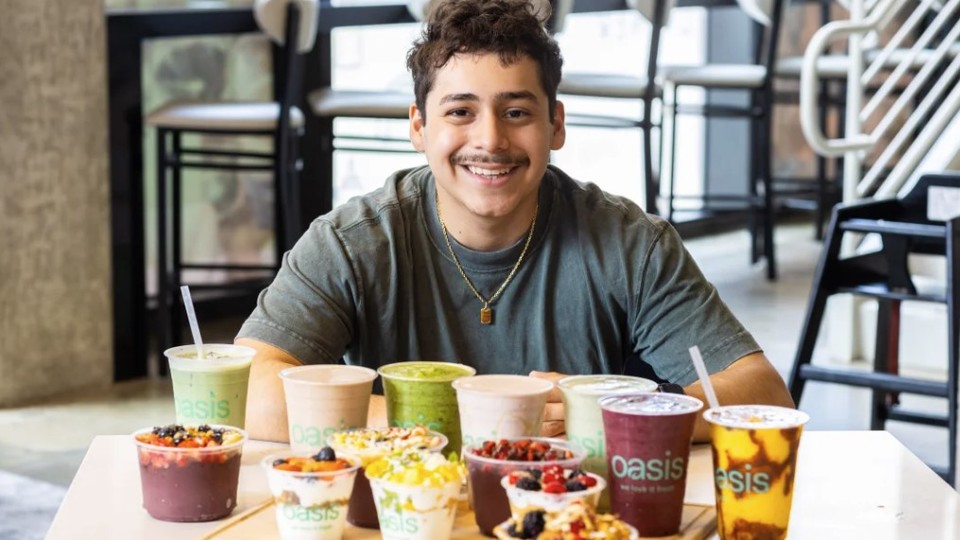
Ivan Diaz is a full time student studying business at Rice University and the owner of Oasis, a concept that offers acai bowls and smoothies in the Lyrics market. “I don’t think age really defines what you can and cannot do,” he says.
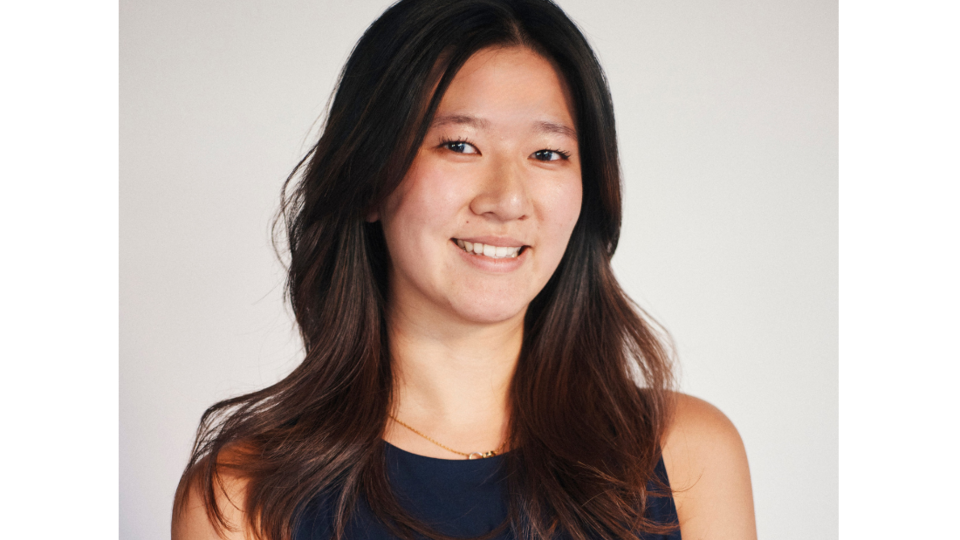
Meet Vivian Lin, an ambitious business major who spent her summer internship in New York City as a marketing intern at Kate Spade New York.