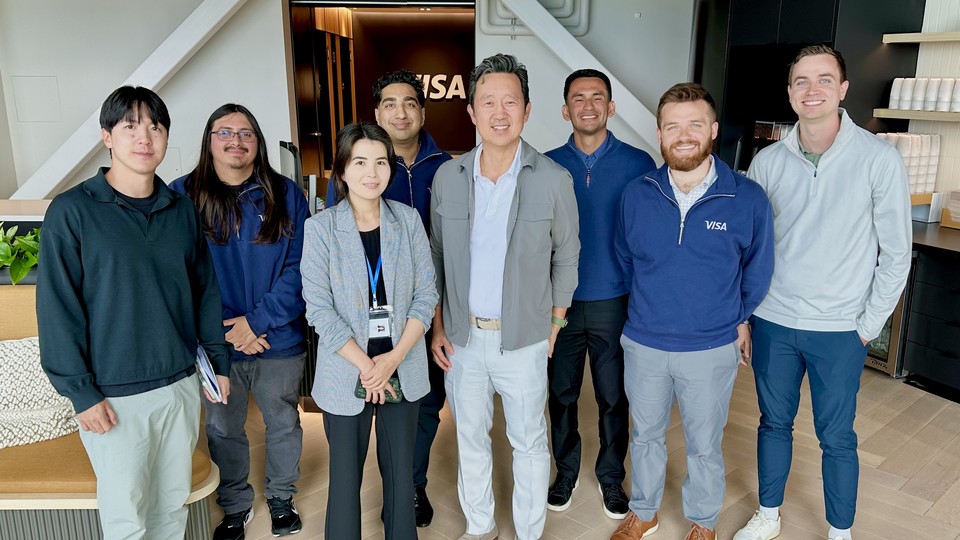
The connections you make outside the classroom are a key part of your MBA.
If you’re researching MBA programs in 2026, you’ll find plenty of options: full-time, in-person programs; part-time formats designed for working professionals; and fully online degrees. Each offers a different approach to balancing graduate education with your personal and professional commitments.
You might also come across satellite programs housed in offices around the city, or you might be considering a remote education due to the fact that employers have become increasingly accepting of online MBA programs. But these formats, while beneficial for some, can pose a significant disadvantage to your MBA experience. Being on a real campus creates opportunities for face-to-face learning, professional connections and community involvement that can be harder to develop remotely.
Recognizing the value of forming in-person connections with faculty and other students, even Rice Business’ Online MBA program requires at least one on-campus immersion. So what does studying on campus add to your MBA experience? Here are five benefits to consider:
Hands-on Learning From Top Faculty With Deep Ties to Houston
Image
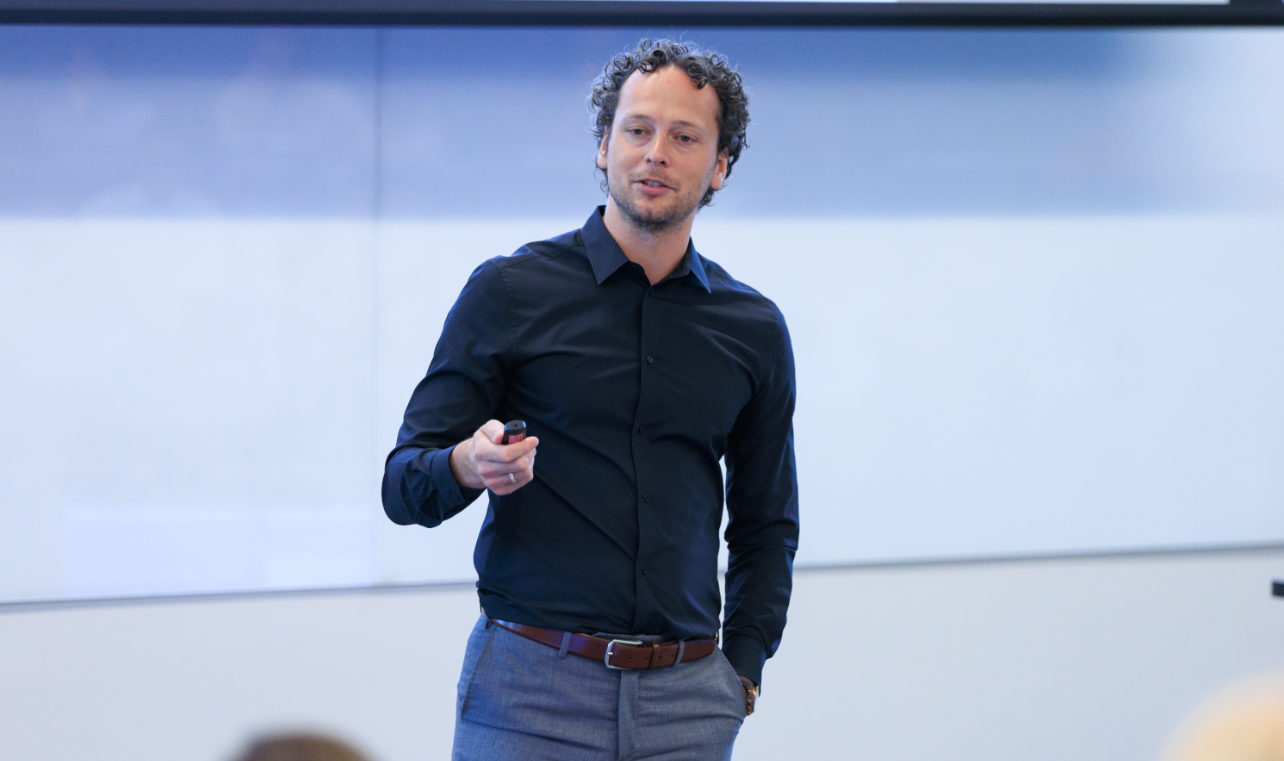
Marlon Mooijman, the Jones School Distinguished Assistant Professor of Management – Organizational Behavior
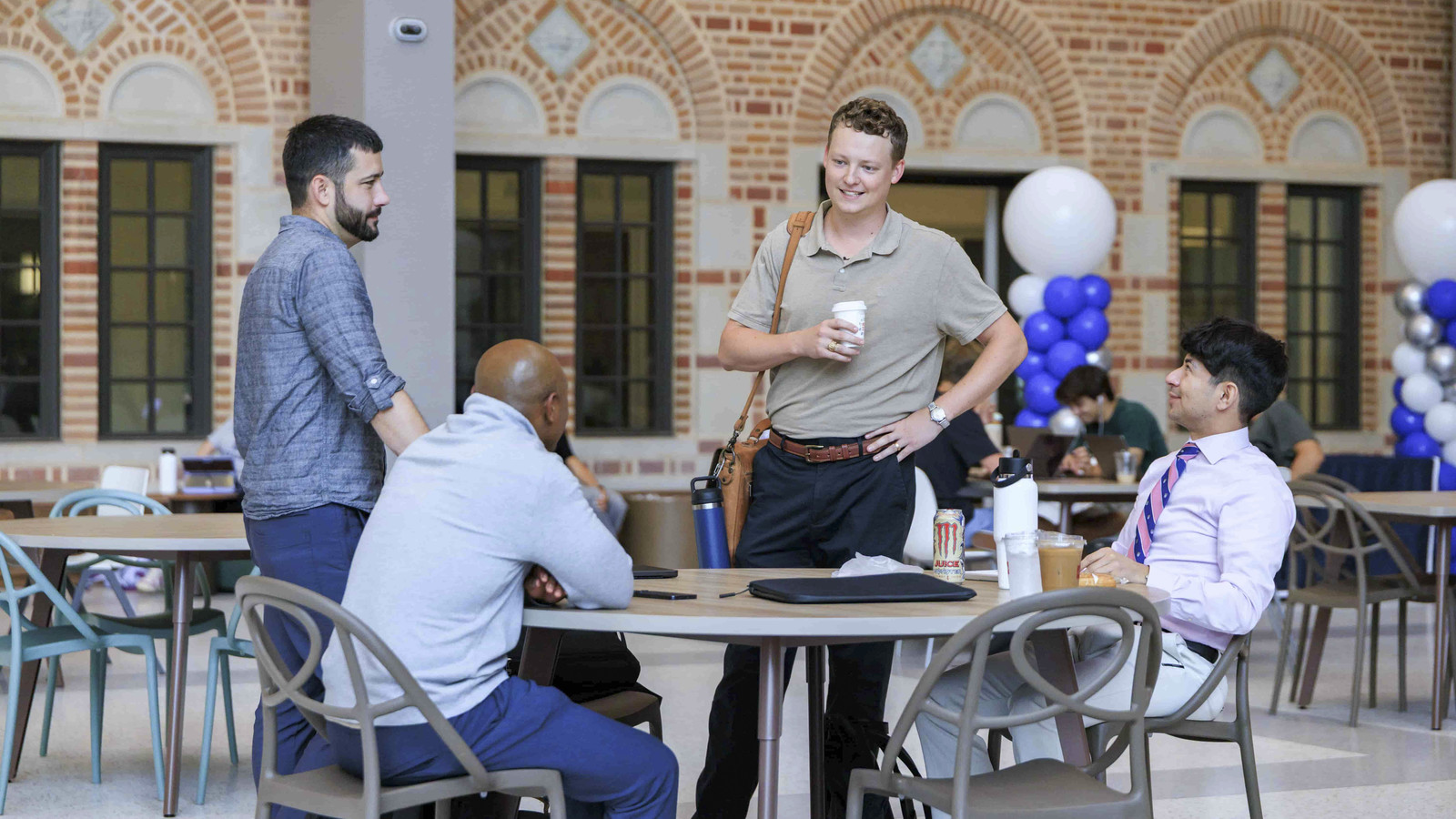
An MBA is an inherently collaborative degree. Students learn from faculty, but they also learn from one another, bringing different professional experiences and perspectives to discussions of complex business challenges.
In-person classes allow students to ask immediate questions, challenge arguments and learn to communicate ideas in real time. At Rice Business, you’ll study with faculty who are embedded in the community and bring both deep research expertise and real-world experience to the classroom. Our faculty have deep ties to our city, its businesses and our community — they’re not just visiting to lecture over the weekend.
That collaboration continues outside the classroom. Working face-to-face with your cohort deepens group projects, presentations and case competitions, and it gives you opportunities to practice communicating, negotiation and leading teams. Informal conversations between classes or over coffee with a professor can be just as valuable as scheduled instruction.
These interactions also help develop interpersonal skills that are difficult to practice in isolation, from reading body language and navigating disagreements to presenting ideas persuasively and building your professional presence.
Whether you pursue the Full-Time MBA or one of Rice Business’ Professional MBA formats, the opportunity to learn alongside other professionals adds an important dimension to the academic experience.
Personalized Career Support and Employer Access
An MBA can open new career opportunities, but navigating a career transition or advancing into leadership takes more than classroom knowledge. It also requires guidance, preparation and access to employers.
Image
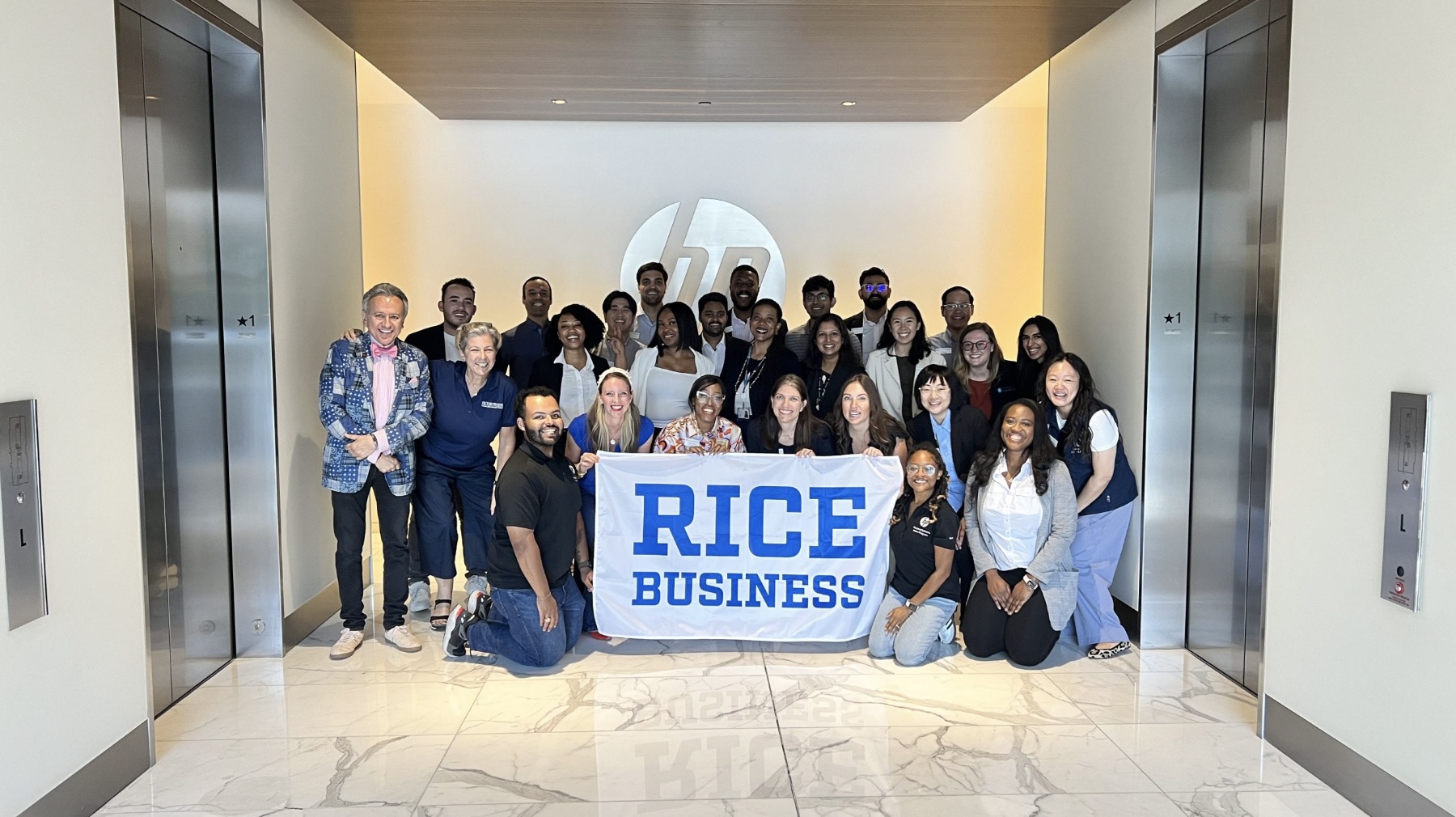
Rice MBA students on the Industry Week Tech Trek.
At Rice Business, students have direct access to the Career Development Office (CDO), which provides career coaching and resources across programs. Being on campus makes it easier to build relationships with dedicated career advisers, whether you’re looking for help with your resume, preparing for an interview or thinking through your next career move.
Rice MBA students also have opportunities to connect directly with recruiters and hiring organizations. More than 300 employers engage with Rice Business annually through networking events, mock interviews, career fairs and other activities. The CDO also brings successful Rice Business alumni and industry professionals to campus to share their experiences and connect with students exploring different career paths. The fall Industry Weeks series, for example, gives students opportunities to hear from employers across energy, healthcare, technology and real estate.
For students considering a career change, these conversations can provide a clearer picture of an industry and connections that may prove valuable during a job search.
Professional Networking That Lasts Beyond Graduation
Some of the most valuable professional relationships develop gradually and organically, through repeated interactions and shared experiences. Between classes, student events, panel discussions, conferences and competitions, you’ll regularly encounter classmates, alumni, faculty and business leaders.
Image
Class of 2006 alumni at the 2026 Alumni Reunion.
Your classmates, in particular, become an important part of your professional network. They bring experience from different industries and functions, and many will go on to leadership positions across the business world. At Rice Business, that network can also translate into tangible career moves: More than 70% of Full-Time MBA students accept positions through the Rice Business community.
And the relationships don’t end at graduation. As a Rice Business alum, you’ll join a network of more than 10,000 Rice Business alumni who can offer professional connections, industry knowledge and support throughout your career.
For working professionals pursuing a part-time MBA, the opportunity to connect with peers from different programs, backgrounds and experience levels can be especially valuable — which is something you won’t find at most satellite schools. Those relationships can broaden your perspective and introduce you to people working across industries.
The cohort experience fosters camaraderie, collaboration and a sense of community that extends far beyond the classroom. These friendships enrich the MBA experience and serve as a valuable support network throughout your career journey.
Jessica Chavez '24
Professional MBA Alumnus
Education Beyond the Classroom
An in-person MBA experience extends beyond classes and career preparation. Student organizations, campus events and shared traditions give you opportunities to develop leadership skills, explore interests and become part of a community.
Image
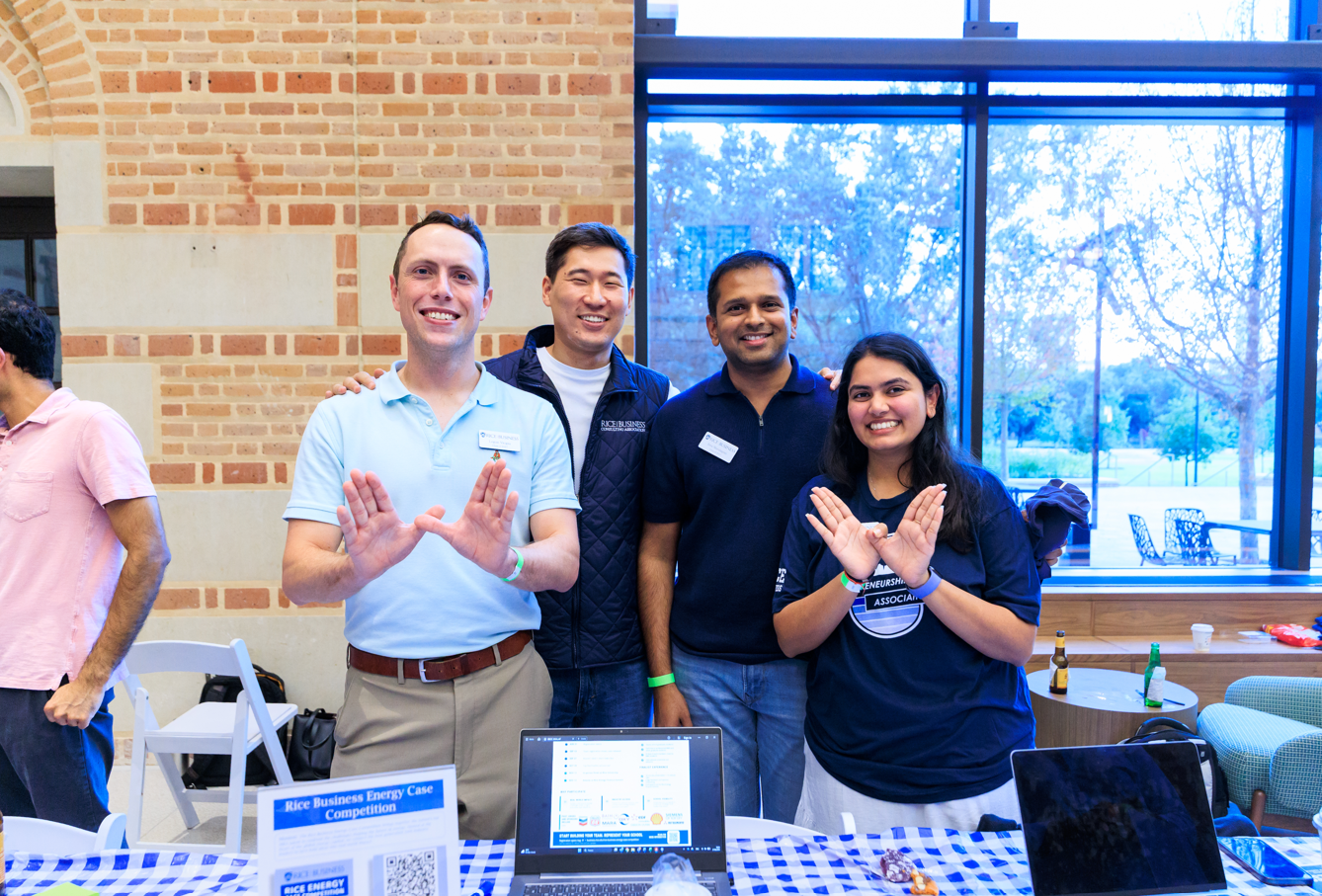
Rice Business Energy Case Competition members at a 2026 partio.
At Rice Business, students can join a variety of clubs, including professional associations, student government organizations, affinity groups and social clubs such as the Rice Business Women’s Organization and the Cork & Cask Club.
These organizations give students opportunities to put classroom concepts into practice. Members take on leadership roles, organize programming, manage budgets, coordinate events and work with classmates to bring projects to life. Some activities, including student-led conferences and networking events, also connect students with business leaders and professionals outside the school.
Participating in campus life also gives you a chance to interact with students beyond your immediate cohort. Those relationships can broaden your perspective, strengthen your sense of community and make the MBA experience more rewarding.
Access to University Resources
One advantage of pursuing an MBA at Rice Business is becoming part of a larger, vibrant university community. Stepping out of a corporate office environment and onto a university campus, especially one like Rice University’s beautiful, tree-lined campus, brings a distinct kind of transformation — one that enables you to step back, shift your perspective, and think differently.
Rice University brings together researchers, students and professionals across disciplines, creating opportunities to encounter new ideas and engage with industries that are particularly important to Houston, including energy, technology and healthcare. Students can take full advantage of university resources beyond the business school, including state-of-the-art research libraries, campus dining and a full calendar of lectures, cultural events and other activities.
Image
Rice University is minutes from the Texas Medical Center.
Image
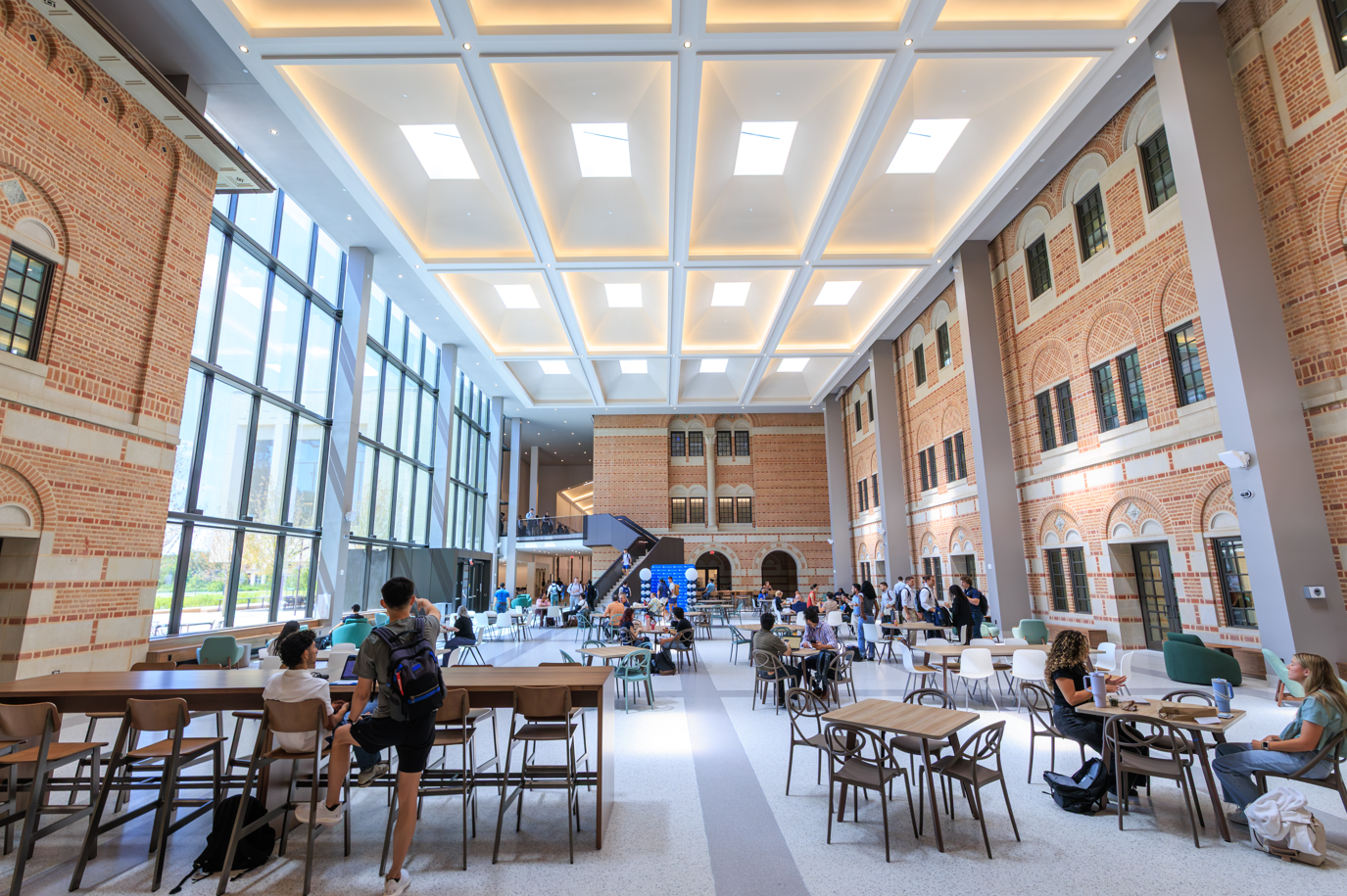
The O'Connor Atrium in Virani Hall is perfect for studying and networking.
Image
Rice's 300-acre campus is lined with Southern live oaks.
Image
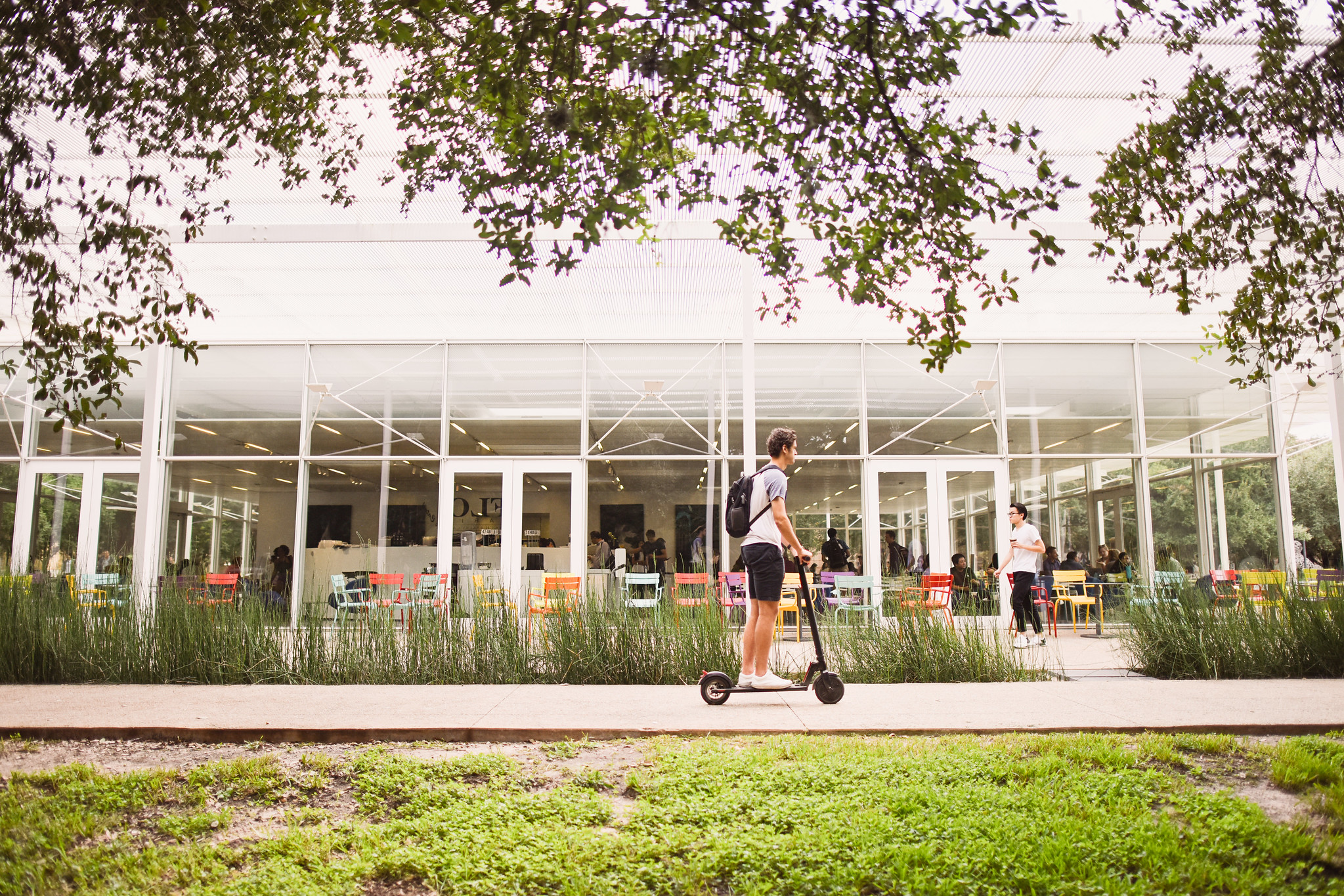
Brochstein Pavilion offers a central dining option.
Image
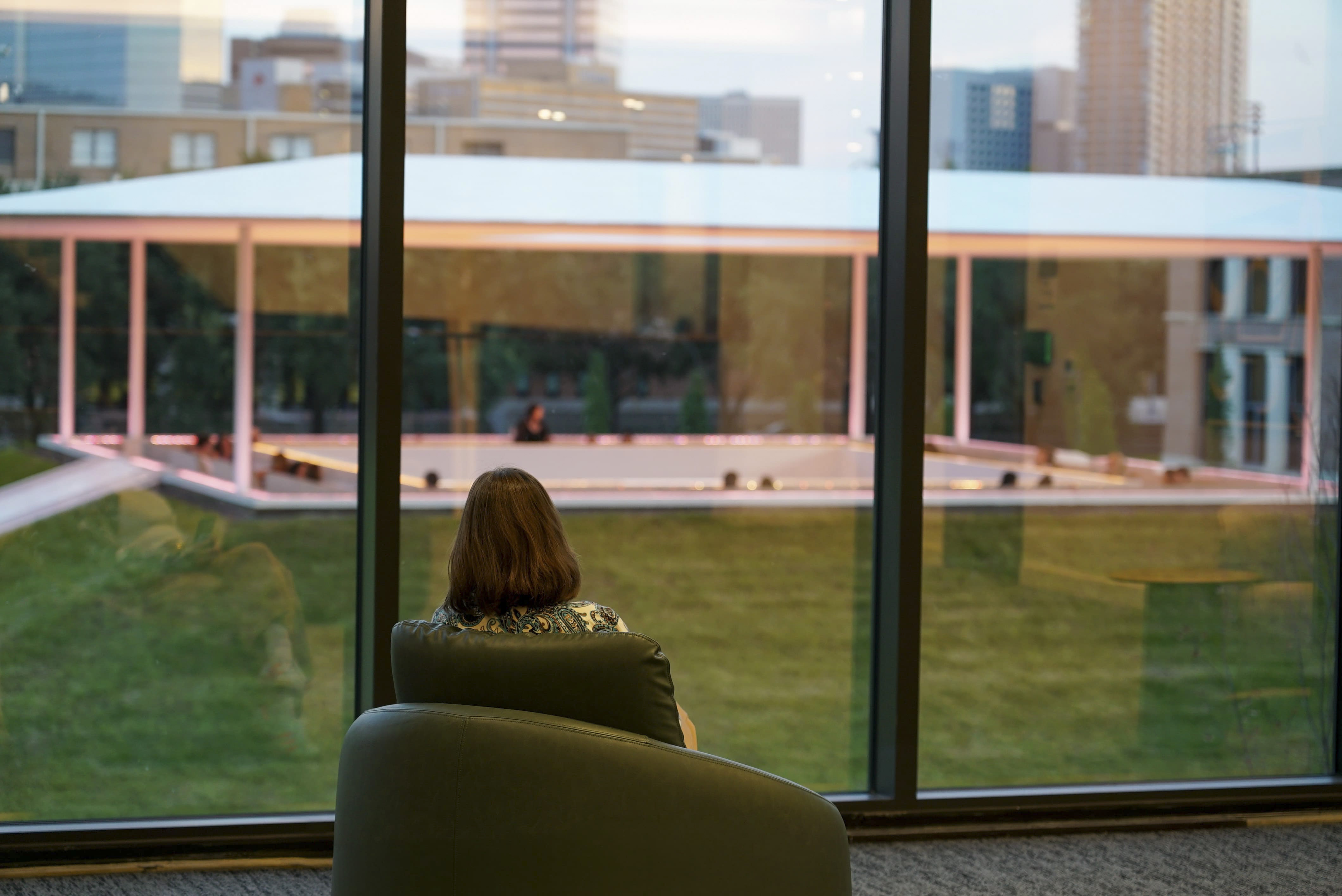
Study with a view of the Turrell Skyspace.
Image
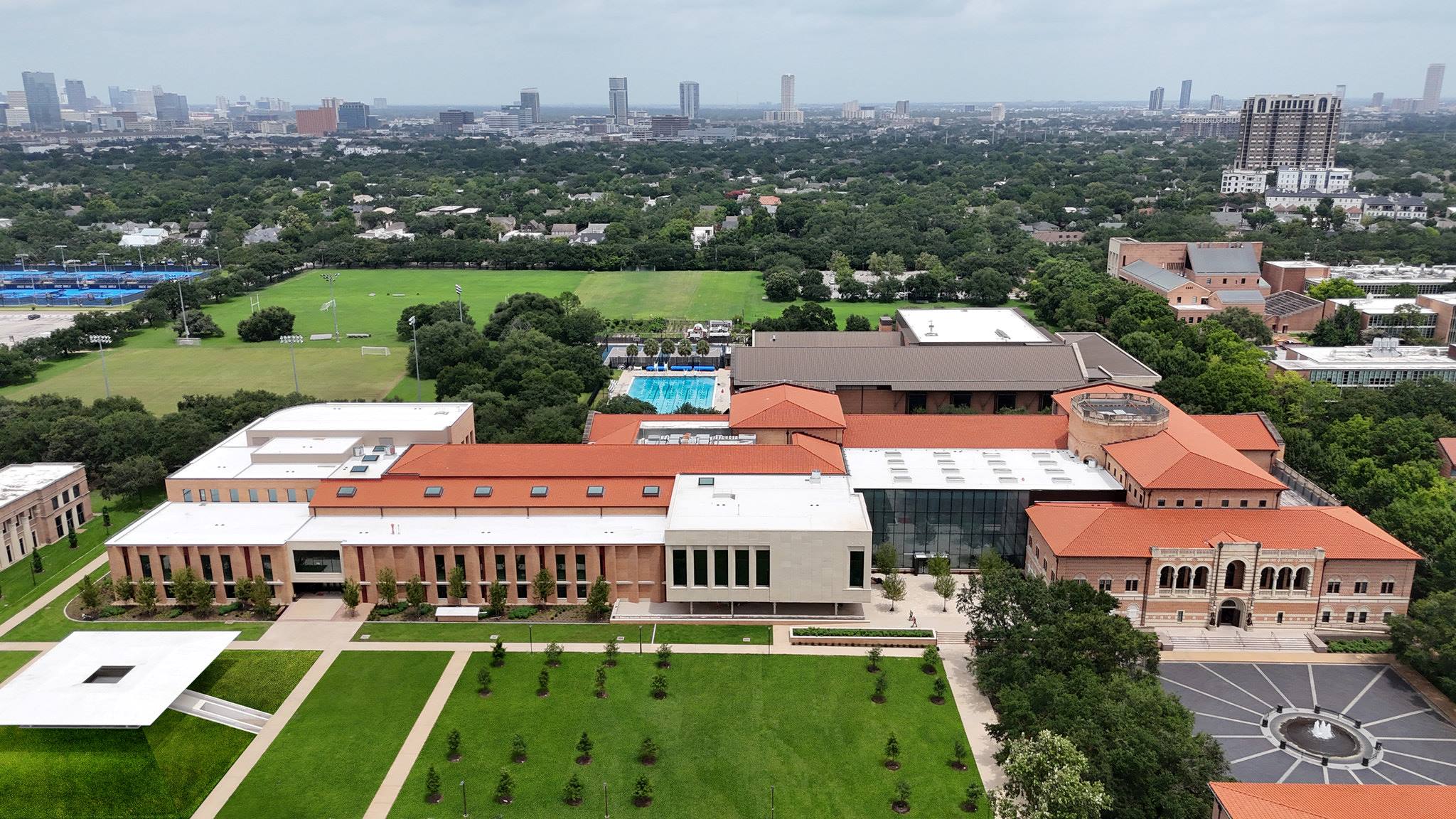
Rice Business' homes, McNair Hall and Virani Hall.
At Rice Business, the addition of Virani Hall has further expanded the spaces available for students to study, collaborate and connect. The building includes Audrey’s Cafe and a dining hall, making it easier to meet classmates over coffee, grab a meal between classes or find a place to work on a group project. (Explore Virani Hall in person or continue reading about how it enhances student life.)
Having these resources at hand makes campus life more convenient while giving students meaningful ways to step away from the daily grind and engage with the broader university community.
Experience Rice Business for Yourself
Choosing an MBA format is ultimately a decision about how you want to learn, work and build relationships during graduate school. Online programs offer flexibility, particularly for students balancing demanding professional and personal commitments. An on-campus experience, meanwhile, gives you regular opportunities for face-to-face collaboration, direct career support and deeper involvement in a professional community.
The best way to understand what that experience looks like is to see it for yourself. Join us for an upcoming admissions event to explore the Rice Business campus, meet members of the community and learn more about our MBA programs. You can also connect with a Rice Business recruiter to discuss which format is right for you.
Is an MBA worth it as AI transforms business? Explore the long-term value of MBA skills, leadership development, career outcomes and strategic thinking.
Rice Business is deeply connected across industries. Explore six internship paths Rice MBA students held across tech, finance, energy, healthcare and more.
Curious about how an online MBA helps your career? Explore the career impact of an online MBA, from salary growth and long-term ROI to hands-on skills, global experiences and career advancement.