Image

Today, MBA applicants need to be savvy about how business schools are embracing AI. They want to know if the program they’re applying to is:
There’s no doubt AI is impacting MBA programs. The question is how: How are programs adapting? How do they help students learn amid constantly evolving technology? And, if AI is reshaping the way we work, decide and lead, how does business education continue to make itself relevant?
If you’re applying to MBA programs this year, here are a few ways to gauge how business schools are incorporating AI — and why it may matter for your career.
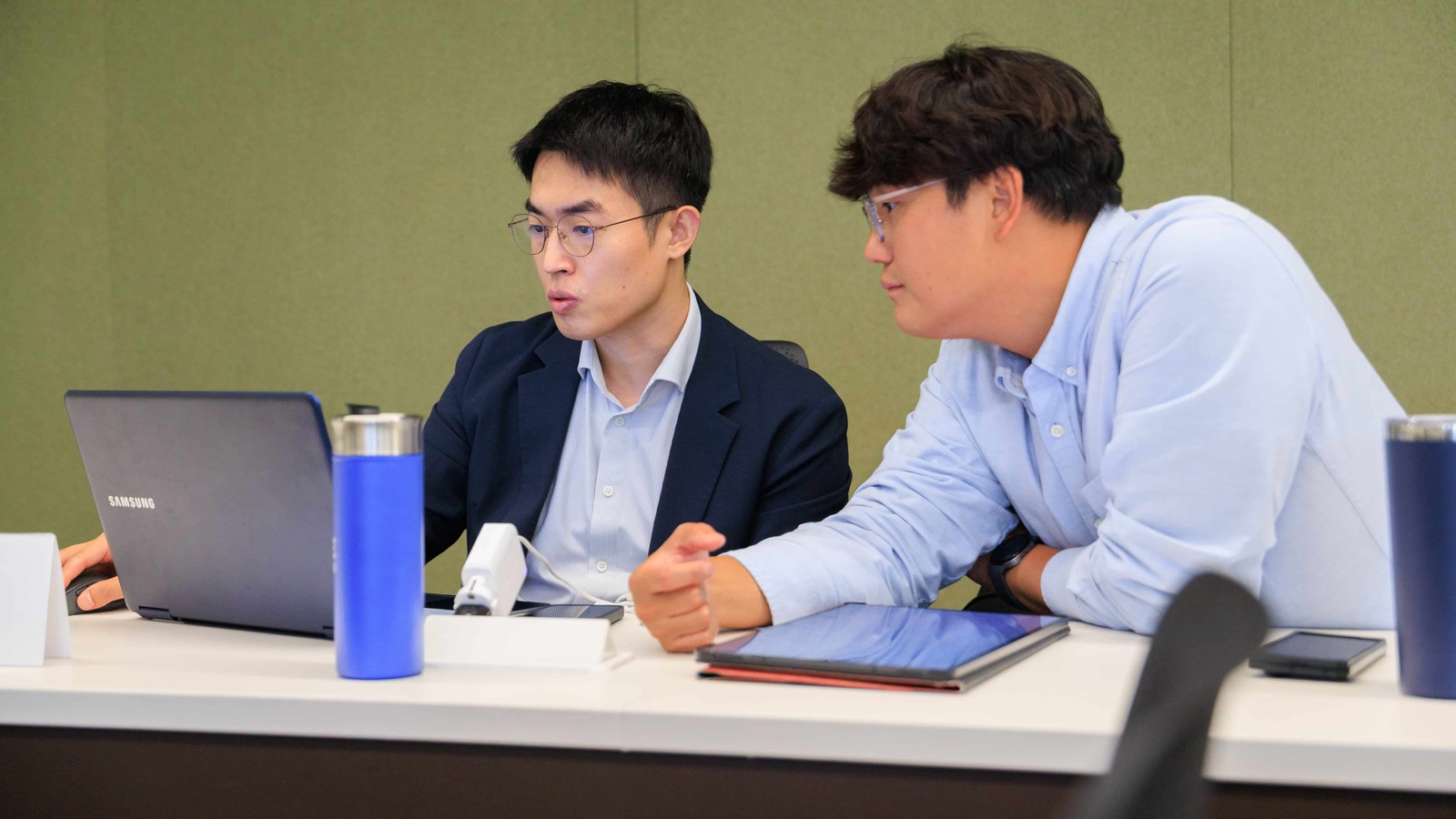
MBA students have a unique opportunity to gain hands-on experience with generative AI tools in the classroom and as part of their coursework in a safe, learning environment — guaranteeing they’re prepared for whatever challenges come their way.
Generative AI platforms frequently used in the MBA classroom include:
At a business school like Rice Business, you may also gain experience working with AI through other platforms and media.
Continue reading about how using AI tools strategically can assist with creativity in the workplace, according to research from Jing Zhou, Rice Business’ Mary Gibbs Jones Professor of Management and Psychology – Organizational Behavior.
As AI continues to change the way businesses work, more MBA programs are finding ways to bring artificial intelligence into the classroom. From dedicated AI courses and electives to integrating AI tools and concepts into existing business classes, schools are giving students more opportunities to understand how these technologies can be applied in the real world.
Rice Business MBA faculty are top researchers in their fields who apply peer-reviewed findings to real business problems. Their courses pair that research with case studies and hands-on practice.. Led by expert faculty across disciplines, the Rice MBA curriculum infuses business fundamentals with data analytics, AI and emerging technologies — evident through cutting-edge courses such as:
For example, students in Professor Kerry Back’s course run financial analysis by chatting with an AI mode, asking it to pull data, sort stocks or run regressions — and the model writes and executes the code, no programming background required. On the question of whether the finance classroom is keeping up with industry demands for AI knowledge, Back says, “In some ways, the classroom is actually ahead of the curve.”
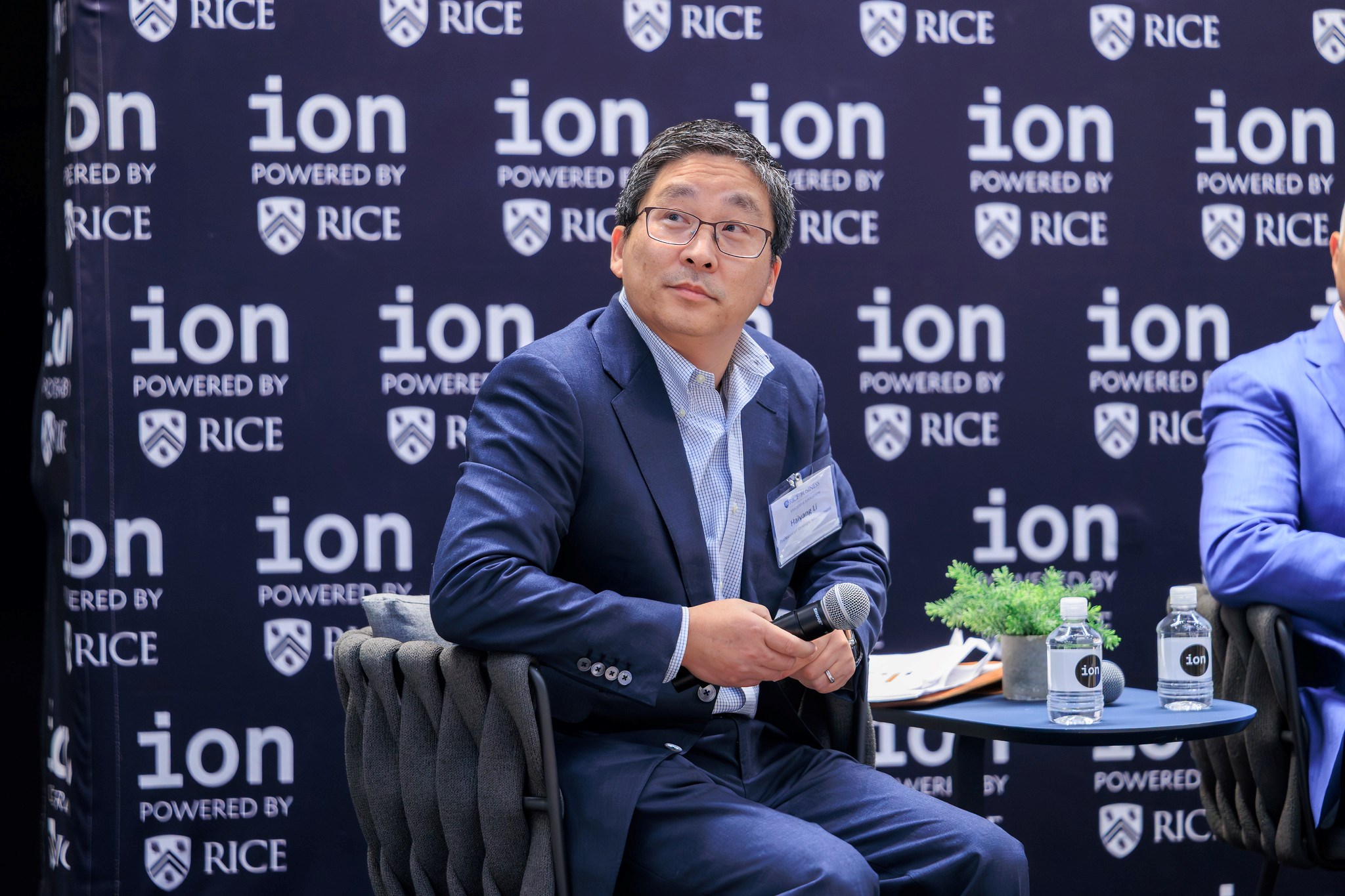
How do MBA candidates balance the disruption-and-anxiety narrative around both AI and the MBA? One answer lies with its people — the very faculty and scholars who are delivering cutting-edge research findings. Faculty expertise, across fields, is a strong indicator of the quality of education, rigor and exposure a business school will provide.
Rice Business is home to world-class faculty — many of whom have contributed AI research to esteemed journals like Journal of Applied Psychology, Foundations and Trends in Machine Learning and Information Systems Research.
In the Rice MBA classroom, students work directly alongside scholars like Kerry Back, who recently received an Innovation in Teaching Award for his course on Generative AI in Finance; Jing Zhou, co-author of “Why AI boosts creativity for some employees but not others;” and Tommy Pan Fang, who recently published an article in the journal Strategy Science on what drives data center location decisions in the U.S.
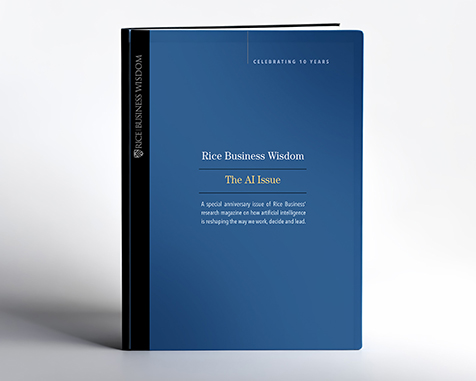
Rice Business faculty members are answering some of the most critical questions relating to AI and how we work, live and lead with it. Read more about their research findings in a special 10-year anniversary issue of Rice Business Wisdom: The AI Issue.
Today’s job market expects MBAs to come to work with expertise in AI to improve efficiency, strategies and outcomes in the real world.
But the time saved isn’t the point — it’s what students do with it. Freed from the mechanics, they spend their energy on the part AI can’t do: interpreting the results, stress-testing the assumptions behind them, and deciding what to do next. Using AI gets them straight to the complex part — the part that defines real leaders.
Similar skills employers may be looking for include:
With many professionals already using AI tools, it’s up to MBA programs to take students to the next level: teaching them to use AI critically and responsibly, and to lead with the judgment and emotional intelligence no model can replicate.
The job market expects MBAs to come to work with expertise in AI to improve efficiency, strategies and outcomes in the real world. Technology will change, but the need for thoughtful, adaptable leaders will not. That, more than anything, may be one of the most durable things the Rice MBA can teach.
AI is being integrated into the MBA experience at schools across the country — not as a replacement for business fundamentals, but as a tool for applying them. At Rice Business, students can explore AI through courses focused on generative AI, customer analytics, business decision-making and data-driven organizations, while continuing to build core skills in strategy, finance, marketing, leadership and operations. Read more about the 100+ electives available at Rice Business.
You don’t need to be an AI engineer to succeed in an AI-enabled business environment — and even less so if you’re considering applying to business school. However, it may be beneficial for you to build AI literacy, critical thinking skills, and prompt and tool evaluation. Applicants should also know how to evaluate AI outputs and apply human judgment. Before applying to the Rice MBA, learn more about how to craft a strong business school application.
AI is changing work across roles and industries, making the ability to work alongside AI increasingly relevant to business careers. For MBA graduates, that means understanding not only how to use AI tools, but also how to identify business opportunities, evaluate risks and lead organizational change — skills that employers are now expecting graduates to have. As roles continue to adapt, the Rice MBA curriculum and Career Development Office help students translate their skills and succeed in their next role.
While higher education continues to evolve alongside new technologies, an MBA offers critical skills, leadership opportunities and hands-on experience that remain relevant — now with additional support for students to learn tools like AI. Businesses still need leaders who can define problems, make strategic decisions, lead through change and turn technology into measurable business value. Rice Business combines those enduring leadership and business fundamentals with opportunities to learn and apply emerging technologies, including AI. Learn more about the curriculum and electives offered at Rice Business.
Rice Business is integrating AI into the MBA experience through both the curriculum and hands-on learning. Students can choose from AI-focused electives covering generative AI, machine learning, customer analytics, AI-assisted financial analysis and AI-driven business decision-making. Rice Business also offers hands-on AI learning through Executive Education, including programs focused on agentic AI and data-driven decision-making. Each of our courses are taught by world-class faculty who are leading AI research themselves — answering questions that affect both business and day-to-day life. Read faculty research findings on AI in the 10-year anniversary edition of Rice Business Wisdom: The AI Issue.
Curious about how an online MBA helps your career? Explore the career impact of an online MBA, from salary growth and long-term ROI to hands-on skills, global experiences and career advancement.

Wondering how to build a career in investment banking? Explore how an MBA, especially from Rice Business, can help you develop the finance skills, network and recruiting experience to launch a career in IB and advance from associate to VP and beyond.

Sydney Harrison '27, Rice Full-Time MBA, shares what she learned along the way while moving from construction to the classroom.