Rice Business Wisdom, A Special 10-Year Anniversary Edition
Since 2016, Rice Business Wisdom has brought faculty research beyond academic journals and into conversations about the issues shaping business and society. In this special anniversary issue, Rice Business faculty explore how artificial intelligence is changing the way we work, decide and lead.
Updates from Rice Business Ph.D. alumni and their work around the world.
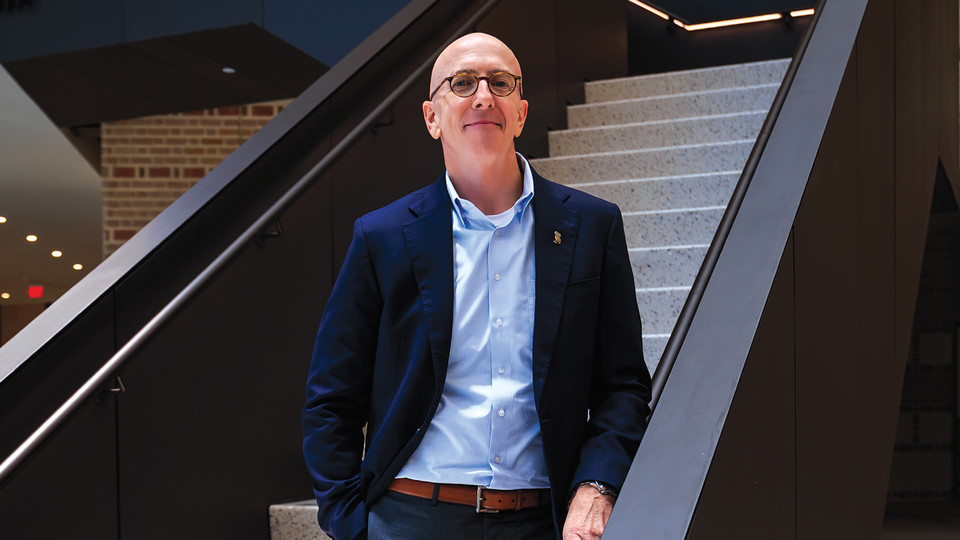
Rice Business Wisdom was founded 10 years ago with a conviction that rigorous research should not remain exclusive to seminar halls and academic journals. The work of discovery is too consequential to reach only those already trained to read it.
Jeff Fleming, Ph.D.
Interim Dean, Rice Business Fayez Sarofim Vanguard Professor of Finance
Lines of Inquiry
Rice Business faculty are exploring big questions about artificial intelligence and how it’s reshaping business, technology and the classroom.
A new study shows a divided geography: Some facilities cluster in cities for speed and access, while others move to rural regions in search of scale and lower costs.
Generative AI may give users an early boost in creativity, but lasting gains require effective augmented learning through a more active form of human-AI collaboration called “idea co-development.”
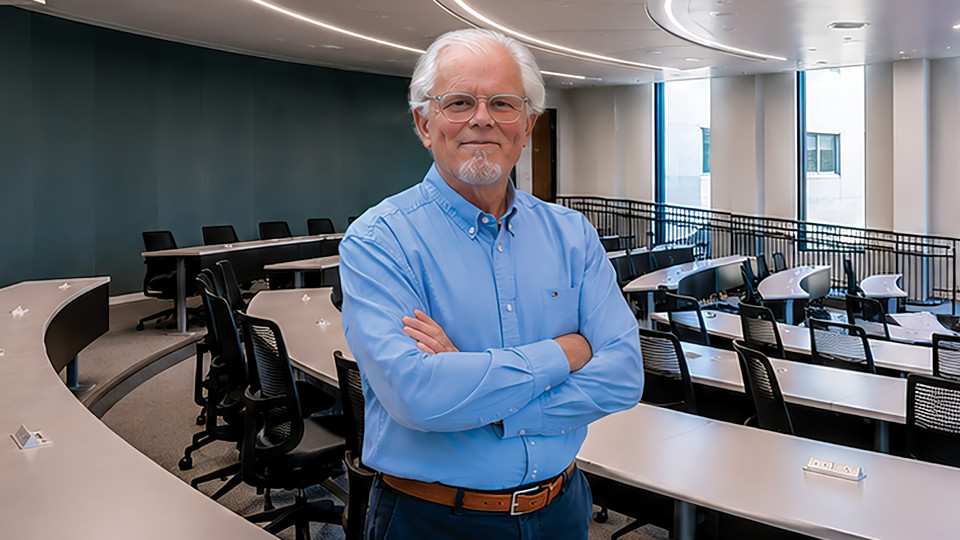
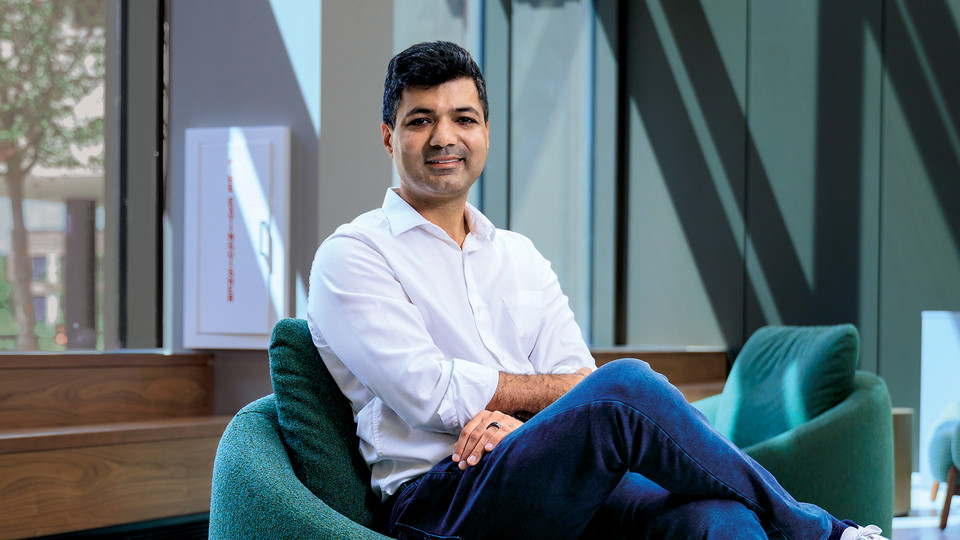
When I first began thinking about what became Rice Business Wisdom, the idea was simple: the intellectual capital of Rice Business should not be one of our best-kept secrets.
K. Ramesh, Ph.D.
Herbert S. Autrey Professor of Accounting
Features
Three in-depth examinations of how AI is changing the way people create, make decisions and manage their financial lives.
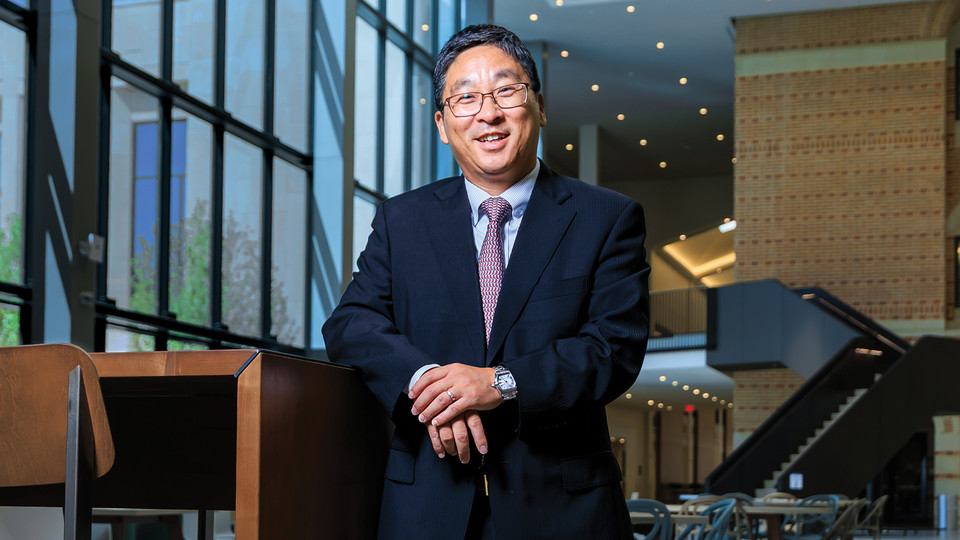
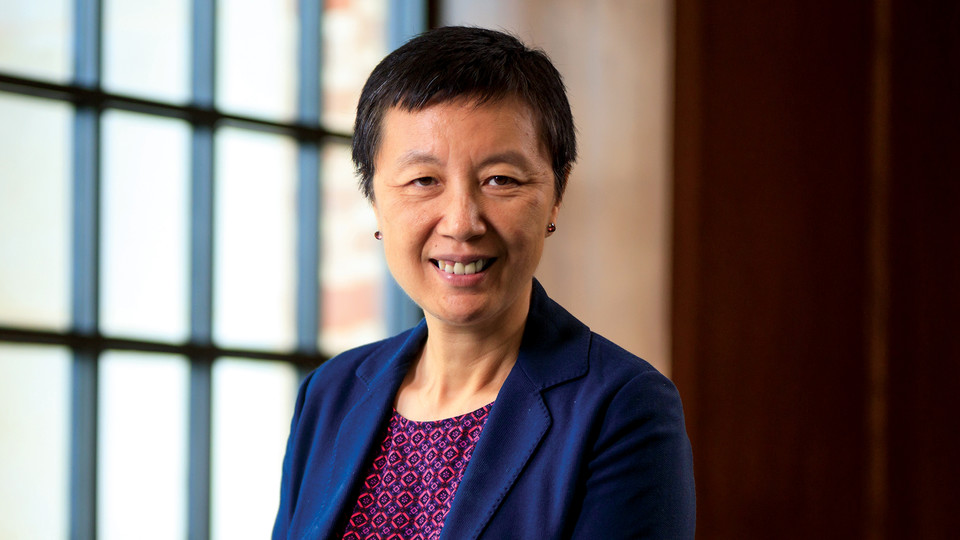
How do we ensure humans benefit from the AI revolution? For Jing Zhou, the answer lies in abandoning our discipline-focused silos and pursuing the problem focused research that businesses desperately need.
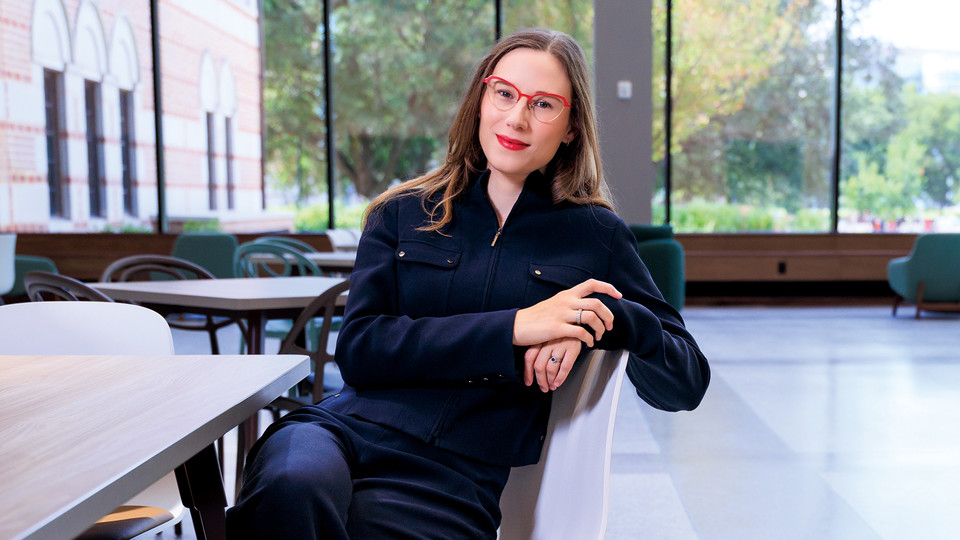
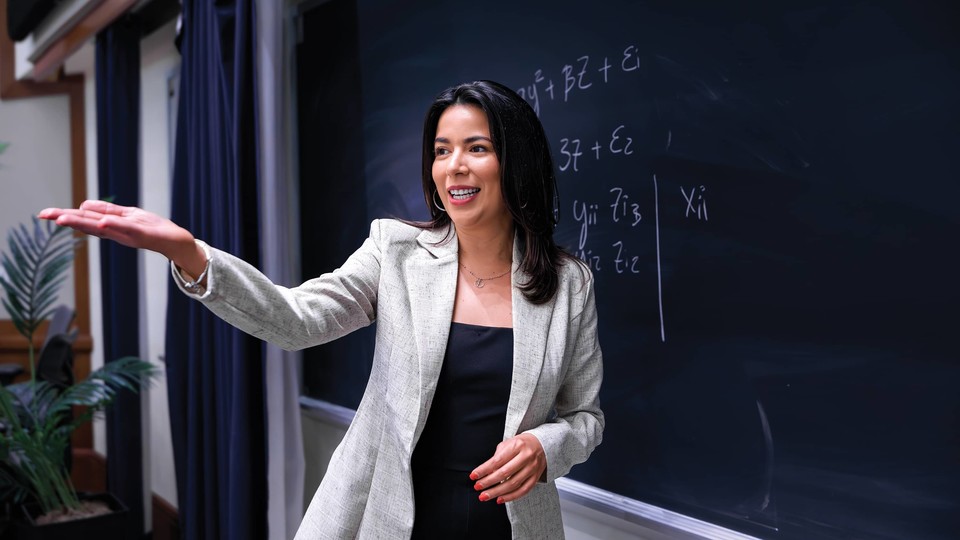
During her Rice Business Ph.D., Marcela Aguilar built a generative AI mentor that gives microentrepreneurs what big companies take for granted: a thinking partner for every business decision.
Financial technology is increasingly making the decisions households once made on their own. New Rice Business research tests three of these tools and finds that better automation does not reliably produce better outcomes.
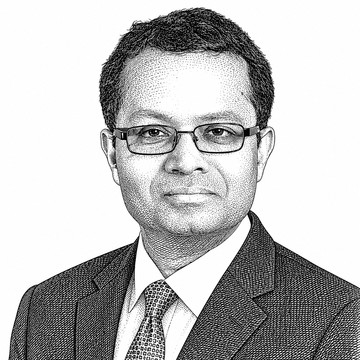
Many of our alumni are doing research on technologies that did not exist when they were sitting in seminar rooms at McNair Hall.... We could not have taught them any of it, because none of it had been invented yet. And that, I’d argue, is precisely the point of doctoral training. We teach Ph.D. students how to ask questions about the future.
James Weston, Ph.D.
Deputy Dean of Academic Affairs Harmon Whittington Professor of Finance
Ph.D. Class Notes
Updates from Rice Business Ph.D. alumni and their work around the world.
Class of 2014
Alexander Chaudhry (Marketing) is associate dean and associate professor of business analytics at Southern Utah University’s Dixie L. Leavitt School of Business, where his research applies machine learning, causal inference, and natural-language, speech and video analytics to large-scale behavioral data on consumer engagement, social influence, pricing and advertising. His 2025 Journal of Interactive Marketing paper, “Community Gifting and Recipients’ Engagement with Peers and Influencers: Evidence from Natural Experiments on Twitch,” was selected as an AMA Research Insight. As associate dean, he authored the Leavitt School’s Quality Education strategic initiative on AI preparedness and designed ANLY 6510, a project-based graduate course on generative AI systems.
Class of 2016
Elizabeth (Lizzy) Berger (Finance) is an assistant professor of finance at the Bauer College of Business at the University of Houston, where she studies banking, economic growth and corporate finance. Recent work includes “Half Banked: The Economic Impact of Cash Management in the Marijuana Industry,” in the Journal of Finance.
Edwin Hu (Finance) is an associate professor of law at the University of Virginia School of Law, where his work brings empirical analysis to corporate and securities law, market structure and financial regulation. His current AI-related project uses large language models to study private placement memoranda, examining how disclosure and risk language varies across issuers in exempt offerings. Recent work includes “Regulatory Leakage Among Financial Advisors: Evidence from FINRA Regulation of ‘Bad’ Brokers” in the Journal of Financial Economics (2025). He received the John L. Weinberg/IRRCi Research Paper Award in 2025 and co-authored an amicus brief of securities-law scholars and former senior SEC officials before the U.S. Supreme Court.
Wei Shi (Strategy) is a professor of management and Cesarano Faculty Scholar at Miami Herbert Business School, University of Miami, where he studies how shareholders influence firms’ strategic decisions — work he is now distilling into a book on shareholder strategy, currently under contract. His recent research speaks directly to the AI moment: A study in Information Systems Research finds that media exposure of labor issues creates reputational pressure that pushes firms to invest in AI — primarily to automate high-skilled work rather than augment it, ultimately reducing future labor use.
Alberto Mokak Teguia (Finance) is an assistant professor of finance at the University of British Columbia’s Sauder School of Business. His research brings understudied features of markets and human psychology — the market power of large institutional investors, the way investors revise their beliefs, the design of trading protocols — into otherwise standard asset pricing models, and traces the consequences for liquidity, prices and welfare. His paper “Granularity in Asset Markets” was conditionally accepted at the Journal of Finance this year. He is an elected member of the Finance Theory Group. He credits his time at Rice, and Kerry Back’s mentorship in particular, with shaping his path. His most recent milestone, he notes, is a personal one: He and his family welcomed twins in 2024.
Yang Wang (Marketing) is a principal economist at Amazon Ads Economics, promoted to that rank in 2025 after joining the company in 2022 following six years in academia (Temple 2019–2022, UTEP 2016–2019). His industry work sits close to the AI moment: He studies the economics of sales — territory assignment, segmentation, compensation, incrementality measurement — and is building AI-enabled digital twins to estimate B2B customer preferences. His academic research on how agency mergers reshape ad creative styles continues alongside the industry work. Recent publications include studies in Marketing Science (2022), Production and Operations Management (2023), the Journal of Interactive Marketing (2025) and Strategic Management Journal (2025).
Morad Zekhnini (Finance) is an assistant professor of finance at Michigan State University’s Eli Broad College of Business, where his research examines networks in finance. His paper “Publication Effect: Accelerating Anomalies” was recently accepted at the Journal of Financial Economics.
Class of 2017
Jonathan Bonham (Accounting) is an assistant professor of accounting at the University of Illinois Chicago. His research examines agency theory, executive compensation, corporate governance and contracting theory — much of it rooted in projects that began during his doctoral work at Rice.
Ioannis Spyridopoulos (Finance) was promoted this spring to associate professor of finance, with tenure, at American University’s Kogod School of Business in Washington, D.C. His research sits at the intersection of empirical banking, capital markets and financial networks, examining how lending relationships and market intermediation affect households, firms and the broader economy. Lately he has turned to AI: A grant from the Kroner and Koenigsberger Center for Financial Research at UC San Diego supports his project on AI-augmented strategic asset allocation using macro-financial narratives. Recent publications include studies in the Journal of Financial and Quantitative Analysis and Management Science.
Daniel Zyung (Strategy) is an associate professor of management and leadership at the University of Houston’s Bauer College of Business. His research examines CEOs from nearly every angle — their cognitive styles and firms’ AI adoption, boomerang CEOs and organizational turnarounds, and how boards respond when CEOs breach stakeholder rights, the subject of his solo-authored 2025 study in Organization Science. Another 2025 paper in the Journal of Management examines competition and constituents’ polarization online. In May, he appeared as a panelist at a Bauer symposium on AI, “Being Human in the Age of AI: Thriving in the Modern Workplace.”
Class of 2018
Colby D. Green (Strategy) became MBA director at Southern Utah University’s Dixie L. Leavitt School of Business on July 1, moving over from his role as associate dean; he is also an associate professor of strategic management. He is helping launch a new AI emphasis in SUU’s MBA program, where he will teach a new course, Strategy & Innovation with AI. Outside the classroom, he co-founded backincharge.com with his wife, board-certified child psychologist Dr. Kat Green, to expand access to evidence-based psychological care for children and teens.
Erik Mayer (Finance) is an assistant professor of finance and the John and Anne Oros Term Professor at University of Wisconsin–Madison’s Wisconsin School of Business, where his research spans household finance, financial intermediation and the intersection of finance and labor economics. His recent work studies how financial institutions shape economic mobility and opportunity in the U.S., often in collaboration with Rice colleagues. Publications include “Racial Disparities in the Auto Loan Market,” with Rice professors Alex Butler and James Weston, in Review of Financial Studies (2023); “The Impact of Minority Representation at Mortgage Lenders” in the Journal of Finance (2025); and “Government Litigation Risk and the Decline in Low-Income Mortgage Lending,” with fellow Rice Ph.D. alumni Billy Xu (’23) and Lawrence Zhao (’23), in the Journal of Financial Economics.
Class of 2019
Justin Balthrop (Finance) is an assistant professor of finance at the University of Nebraska-Lincoln, where his research focuses on sports betting. His paper “Gambling Away Stability: Sports Betting’s Impact on Vulnerable Households” is forthcoming in the Journal of Financial Economics, and he holds a grant from Arnold Ventures.
Conor Callahan (Strategy) is an assistant professor at the University of Illinois Chicago’s Managerial Studies department. His work sits at the intersection of strategic leadership and the social evaluations of organizations, and includes three projects with Rice faculty currently under review at top management journals. He was recently invited to present at the Strategic Leadership Idea Development Event (SLIDE), where his research drew on generative AI to explore how AI deepfakes may shape stakeholder views of organizations.
Rafael Copat (Accounting) is an assistant professor at the University of Texas at Dallas’ Naveen Jindal School of Management. He studies corporate governance, with an emphasis on proxy advisers, shareholder voting, executive compensation and boards of directors. His study “Racial Diversity Exposure and Firm Responses Following the Murder of George Floyd” — co-authored with K. Ramesh, among others at Rice Business — appeared in the Journal of Accounting Research in 2023.
Toby Li (Strategy) is an assistant professor of strategy at Texas A&M University’s Mays Business School, where his research examines interorganizational governance — how firms structure contracts, incentives, monitoring and relational safeguards with suppliers and partners — and the unintended consequences those arrangements can produce, from environmental accidents to investment hazards and capability erosion. Much of his empirical work is set in the oil and gas drilling industry. His recent publications include a paper on resource idling and capability erosion in the Academy of Management Journal, and a second AMJ paper on how the pursuit of speed contributes to environmental accidents, now in press, which received a Best Paper Award from the Academy of Management.
Gary Lind (Accounting) received tenure in May at the University of Pittsburgh, where he is an associate professor of accounting. His research connects accounting and macroeconomics, with recent publications in Contemporary Accounting Research (2025), the Journal of Accounting Research (2026) and the Journal of Accounting and Economics (2026), the latter co-written with K. Ramesh and Marcela Aguilar (’26).
Class of 2020
Jonathan Bitting (Finance) is an assistant professor of finance at Appalachian State University’s Walker College of Business, in the department of finance, banking and insurance. His research focuses on agency issues, incentives, product markets and governance; he recently published “CEO Short-Term Incentives and the Agency Cost of Debt” in Contemporary Accounting Research (2025). This year brought a double distinction at Walker: first place in the Dean’s Club Research Prize and the Sywassink Award for Excellence in Teaching.
Zhuo (Emma) Chen (Strategy) is an assistant professor of strategy and entrepreneurship at the China Europe International Business School (CEIBS). Her research examines technology innovation and entrepreneurship — including corporate venture capital, mergers and acquisitions, entrepreneurial finance, patent strategy and the strategic implications of artificial intelligence — with particular attention to how firms make innovation and investment decisions under uncertainty. Since joining CEIBS, she has published two papers in the Strategic Management Journal and presented at leading conferences, including the Academy of Management, Strategic Management Society and Strategy Science. She serves on the editorial review board of the Journal of Management.
Michael Dong (Finance) is an assistant professor of finance in Missouri State University’s Department of Finance, Economics, and Risk Management, and a Federal Reserve Bank of St. Louis research fellow. His research spans litigation finance, financial markets, corporate finance, family office investments, and AI and big data, including a recent published paper on ChatGPT in finance and accounting.
Emmanuel Yimfor (Finance) is an assistant professor of finance at Columbia Business School, where he studies entrepreneurial finance, venture capital and private equity with a focus on discrimination and access in capital markets. Two recent papers are squarely on AI, including “Funding Black High-Growth Startups” in the Journal of Finance (2026), which uses image- and name-processing algorithms to determine that of the founders seeking VC funding represented in the researchers’ PitchBook sample, only 3.47% were Black. This year he took home the Yihong Xia Best Paper Award at the China International Conference in Finance and the Bradford-Osborne Research Award at the University of Washington Foster School of Business.
Rustam Zufarov (Accounting) is an assistant professor in the department of accounting at the University of Illinois Chicago College of Business Administration. His research examines innovation, government procurement and corporate financing, and he is a recent recipient of the prestigious American Accounting Association (AAA) Competitive Manuscript Award.
Class of 2021
Daniela De la Parra (Accounting) is an assistant professor of accounting at the University of North Carolina at Chapel Hill’s Kenan-Flagler Business School, where her research examines corporate disclosure and accounting information. Her most recent paper was conditionally accepted at the Journal of Accounting and Economics this year.
Yessenia Tellez (Finance) is an assistant professor of finance at Virginia Tech’s Pamplin College of Business, where her research focuses on household finance, banking, corporate finance and financial intermediation — studying how financial institutions and local economic conditions shape household outcomes and firm behavior, using large administrative and proprietary datasets. Her paper “Consumption Smoothing via Product Markets” is forthcoming in the Review of Corporate Finance Studies.
Hanyi Livia Yi (Finance) is an assistant professor of finance in the Seidner Department of Finance at Boston College Carroll School of Management, where she studies public finance, entrepreneurship and household finance. Her paper “Algorithmic Underwriting in High Risk Mortgage Markets,” co-authored with Rice Business professor David Zhang, is forthcoming in the Journal of Finance. Earlier work has appeared in the Journal of Financial Economics — on deputizing financial institutions to fight elder abuse (2023) and on the gig economy and new business formation (2022) — among other outlets. A two-time winner of the Carroll School’s Teaching Stars Award (2023, 2025), she also took home the best paper award at the 2024 Fintech & Financial Institutions Research Conference.
Class of 2022
Taehoon Im (Marketing) is an assistant professor of marketing at California State University, Northridge’s David Nazarian College of Business and Economics, where his research focuses on AI and sustainable marketing. He recently received a Research, Scholarship and Creative Activity Award from CSUN’s Division of Academic Affairs and was elected a faculty senator.
Yajing Li (Strategy) is an assistant professor in the management department at Lehigh University’s College of Business, where she studies entrepreneurship and innovation. Her study of independent directors on venture boards, co-authored with Sam Garg, appeared in the Journal of Business Venturing in 2025, and she is co-principal investigator on a UoM–CUHK joint research seed fund grant.
Class of 2023
Seyed Kazempour (Finance) is an assistant professor of finance at Louisiana State University’s E.J. Ourso College of Business. His research studies how information is produced, communicated and processed to form prices in financial markets; he uses various forms of AI — machine learning, textual analysis and large language models — to analyze financial data, most prominently social media. His work is published or forthcoming in the Journal of Finance and Journal of Financial Economics.
Jenny (Yoon Jung) Kwon (Strategy) joined Temple University’s Fox School of Business as an assistant professor of management in July 2026. Her research examines innovation, corporate venture capital, incumbent- venture ties, the market for technology and the energy industry. A recent paper of hers is forthcoming in the Academy of Management Journal.
Xiao Liu (Accounting) is an assistant professor of accounting at Southern Methodist University’s Cox School of Business, where she studies banking, financial reporting, and the real effects of accounting standards and financial regulation. Recent work has extended into bank lending and loan loss provisioning, and she is currently examining how generative AI has affected the readability of corporate financial disclosures.
Billy Xu (Finance) is an assistant professor of finance at University of Rochester’s Simon Business School, working on consumer finance, mortgage lending and regulation. He recently placed two papers in the Journal of Financial Economics: “Government Litigation Risk and the Decline in Low-Income Mortgage Lending” and “Defunding Controversial Industries: Can Targeted Rationing Choke Firms?”
Lawrence Zhao (Finance) is an assistant professor of finance at Texas Tech University’s Rawls College of Business, with research interests in empirical corporate finance, household finance and financial intermediation. His most recent paper, “Government Litigation Risk and the Decline in Low-Income Mortgage Lending,” was published in the Journal of Financial Economics.
Yiying Zhu (Strategy) is an assistant professor of management at Montclair State University’s Feliciano School of Business, where she studies innovation, entrepreneurship, sustainability and social impact. Recent publications include “How Social Movements Catalyze Firm Innovation” in Organization Science (2025) and “Gender and Social Entrepreneurship Fundraising: A Mission Drift Perspective” in Organizational Behavior and Human Decision Processes (2025).
Class of 2024
Patrick Blonien (Finance) is an assistant professor of finance at Carnegie Mellon University’s Tepper School of Business. His research explores market microstructure and market design — especially how trading mechanisms, trading hours, fragmentation and liquidity provision shape price discovery and allocative efficiency.
Sung Hun (Brian) Chung (Strategy) is an assistant professor of management at Texas A&M University’s Mays Business School, where his research focuses on strategic leadership, corporate governance, corporate activism, corporate scandal, and how firms and executives respond to social and institutional pressures. His article “Threading the Needle of Corporate Activism: How Firms Frame Their Stances on Polarizing Social Issues” was published in the Academy of Management Journal in 2025.
Geoffrey Pears (Accounting) is an assistant professor (lecturer) at University of Utah’s Eccles School of Business, where his research examines discrimination in mortgage lending, the enforcement of laws and corporate commitments to DEI.
Class of 2025
Zijun Liu (Accounting) is a visiting assistant professor of accounting at Texas Christian University’s Neeley School of Business, where his research examines managerial overconfidence in decision-making, financial reporting, voluntary disclosure, corporate governance and debt contracting. In January 2027 he will join the University of New South Wales’ School of Accounting, Auditing and Taxation as a lecturer in accounting.
Jose Torres (Accounting) is an assistant professor of accounting at INCAE Business School, teaching across the MBA, Executive MBA and executive education programs. His research focuses on banking and financial reporting — particularly how bank stakeholders acquire and use information — by examining the active monitoring role of depositors, information acquisition through regulatory disclosures, and how banks fold private forward-looking information into loan loss provisions under CECL.
David Nathaniel Wilson (Accounting) worked at Rice for a year as an instructor of accounting and acting director of the Rice Business Finance Center. This fall he begins as an assistant professor of instruction at Northwestern University’s Harvey Kapnick Center for Business Institutions. His research explores how information affects intraday trading dynamics, with a focus on institutional investors, market intermediation and market quality.
Anthony Zdrojewski (Finance) is an assistant professor of finance at Texas Christian University’s Neeley School of Business. In 2025 he received the Brattle Group Ph.D. Candidate Award for Outstanding Research at the WFA conference for his job market paper, which he also presented at the Lone Star Finance Conference and the Dallas Federal Reserve.
Class of 2026
Marcela Aguilar (Accounting) has joined the University of Chicago Booth School of Business as an assistant professor of accounting and James S. Kemper Faculty Scholar. Her paper “What Role Does Accounting Play in the Informal Economy?” co-authored with K. Ramesh and Gary Lind (’19), is forthcoming in the Journal of Accounting and Economics.
William Gonzalez (Accounting) has accepted a position as assistant professor in the James Benjamin Department of Accounting at Texas A&M University’s Mays Business School, beginning fall 2026. His research focuses on financial reporting, disclosure regulation and accounting standard setting.
Alexander Ober (Finance) was recently hired by Northwestern University’s Kellogg School of Management as a Donald P. Jacobs Scholar and assistant professor of finance. His research spans asset pricing, market microstructure and applications of AI to financial problems.
Xi Wang (Strategy) is an assistant professor of strategic management at the University of Texas at El Paso, where her research focuses on technology and innovation, platforms and ecosystems, and entrepreneurship. Her recent work is published in Academy of Management Proceedings and was presented at the 2026 Academy of Management Annual Meeting in Philadelphia.
Yifan Zhang (Finance) joins the University of Missouri’s Trulaske College of Business this fall as an assistant professor of finance, where he will teach international finance. His research focuses on market microstructure, asset pricing and empirical finance, with recent work on intraday return dynamics, market liquidity and investor expectations.
Contributors
Chief Marketing Officer and Assistant Dean of Marketing and Communications:Kathleen Harrington Clark
Editor-in-Chief of Rice Business Publications:Maureen Harmon