Image
Creative innovation has always been at the core of successful organizations’ competitive advantage. But surprisingly, very few companies have done it consistently well. That puzzle has stayed with me.

My way of working has been to identify a big puzzle and stay with it. When I choose research questions, I try to identify problems that matter. That is the most consequential thing a researcher can do. And being part of a business school, the questions we study should ideally have implications for organizations, employees and society.
To use an imperfect Texas analogy, when I identify a research topic, I try to find a rich oil reserve — a promising research stream that allows me to answer not just one question, but a series of questions rich enough that you can keep working on them for a long time.
“To use AI constructively, we first need to learn to be creative by understanding and optimizing each stage of the creative process.”
In daily usage, “creativity” refers mainly to art and other kinds of cultural work. But that is not fully what we mean when we use the term “creativity” in organizational behavior research.
In organizational behavior, we study management, behavior in the workplace and what leaders can do to maximize people’s potential. So, for me, creativity is not limited to R&D, marketing or product development. It’s also about innovating our processes, services, work methods and business models. Anything we do in business, there is always a newer and better way to do it. That is creativity.

Many business leaders have not embraced creativity in this broader sense. But to be fair, most people have never systematically learned how to be creative. At Rice, we teach creativity from a management perspective, but it’s still rare for universities to do this. I designed my course from scratch. I am so proud that this course offers unique benefits to our students; we share with them cutting-edge research findings on how to address one of the most important challenges managers face. If people have never learned how to work effectively through each stage of the creative process — identifying problems, generating and selecting ideas, communicating them, seeking feedback, and refining their work within constraints — then, when AI suddenly becomes available as a tool, it is easy to rely on it without thinking deeply and fail to benefit fully from its use. To use AI constructively, we first need to learn to be creative by understanding and optimizing each stage of the creative process.
People may think AI is all about technology and infrastructure like neural networks, LLMs, GPUs and data centers. But business schools have something important to contribute because AI should also be about augmenting human skills and capabilities, not just technology.
I like to talk with people. I talk with managers a lot, often with no specific purpose other than learning and understanding their challenges. I just like to learn something, and you always learn something. I also like to talk with people who are far away from my immediate social network, because if you only talk with people who are close to you, you gradually start to think alike. You lose new information. Over and over again, they mention the challenges of promoting creativity and innovation in organizations. So, how to enhance creativity is front and center in my research program.
“As researchers, and as universities, we need to help shape how we develop and use AI for human flourishing. That is the ultimate thing.”
The University of Cambridge had a program that invites prominent scholars to serve as visiting research fellows. I was honored to be invited. They basically said, whenever you have time, come talk with our faculty and see what happens. So I went there, and that is where we started to develop this big idea of doing research on AI and creativity. This was before the public release of ChatGPT.

At that time, in organizational behavior, I did not know anyone who was doing AI research.
We realized AI was a technological advancement, but it was much bigger than technology. It could already do many things humans can do, and do them better and faster. As AI continues to evolve, it may be able to reason, think and do many more things than earlier technologies. That is clearly something we have never had in human history.
A lot of people talk about automation versus augmentation. The automation argument asks, “Which jobs is AI going to replace?” But for me, the question is how AI can augment human capabilities to create something positive, whether that is economic well-being, organizational success or individual fulfillment.
In other words, we need to shape how humans can benefit from AI. That matters because otherwise you are going to have greater economic disparity. You are going to have people who really benefit from AI and people who are left behind. Those are real concerns. AI has considerable promise, and it is exciting, but it also has safety issues and a lot of potential risks.
As researchers, and as universities, we need to help shape how we develop and use AI for human flourishing. That is the ultimate thing. That is why I love organizational behavior research. It’s about how to achieve a state of human flourishing and thriving.
“It is not going to be enough to say, ‘Let’s train everybody on how to use AI,’ and then be done with it. Organizations need to reimagine their training strategy.”
The good news is that managers have moved past the question of whether they should use AI. They are already asking where AI can create value, and how to hire talent that is good with AI. Those are all good questions.
But the questions they have not asked are even more important. How can AI help form a strategy for competitive advantage? How do we use AI responsibly beyond data privacy and security? How do we facilitate augmentation and human-AI collaboration? And what is the purpose of using AI beyond economic gains? As I mentioned earlier, human flourishing should be part of the equation.

Hence, they need to ask how to reskill employees in a continuous way. AI is developing very fast. It is not going to be enough to say, “Let’s train everybody on how to use AI,” and then be done with it. Organizations need to reimagine their training strategy so people can keep up with the pace of AI development.
In the medical field, healthcare professionals have to engage in continuous learning. New scientific discoveries and new treatment options come out, and they need to keep up. The same thing is true for the other industries in the AI era. Organizations also need to ask which workflows or tasks should be restructured to facilitate augmented learning and co-creation. They need to think about culture, too. If employees wonder, “Am I next to be replaced?” — if you’re going to use AI to do what your workers do — then why would they give you 100%? If leaders don’t manage that culture, there will be mistrust. People will not be motivated.
And finally, top management needs to ask about its own AI literacy. Just because you are already in the C-suite does not mean you know everything. The organizations that succeed over long periods of time have leaders who have a healthy dose of humility and engage in continuous learning.
“If employees wonder, ‘Am I next to be replaced?’ — if you’re going to use AI to do what your workers do — then why would they give you 100%?”
I think universities need to do more to promote problem-focused research rather than discipline-focused research. For business school researchers, it may be organizational behavior or information systems or marketing or operations. But managers and employees do not compartmentalize problems that way. They have a problem. They have to integrate. In real organizations, everything is interconnected.
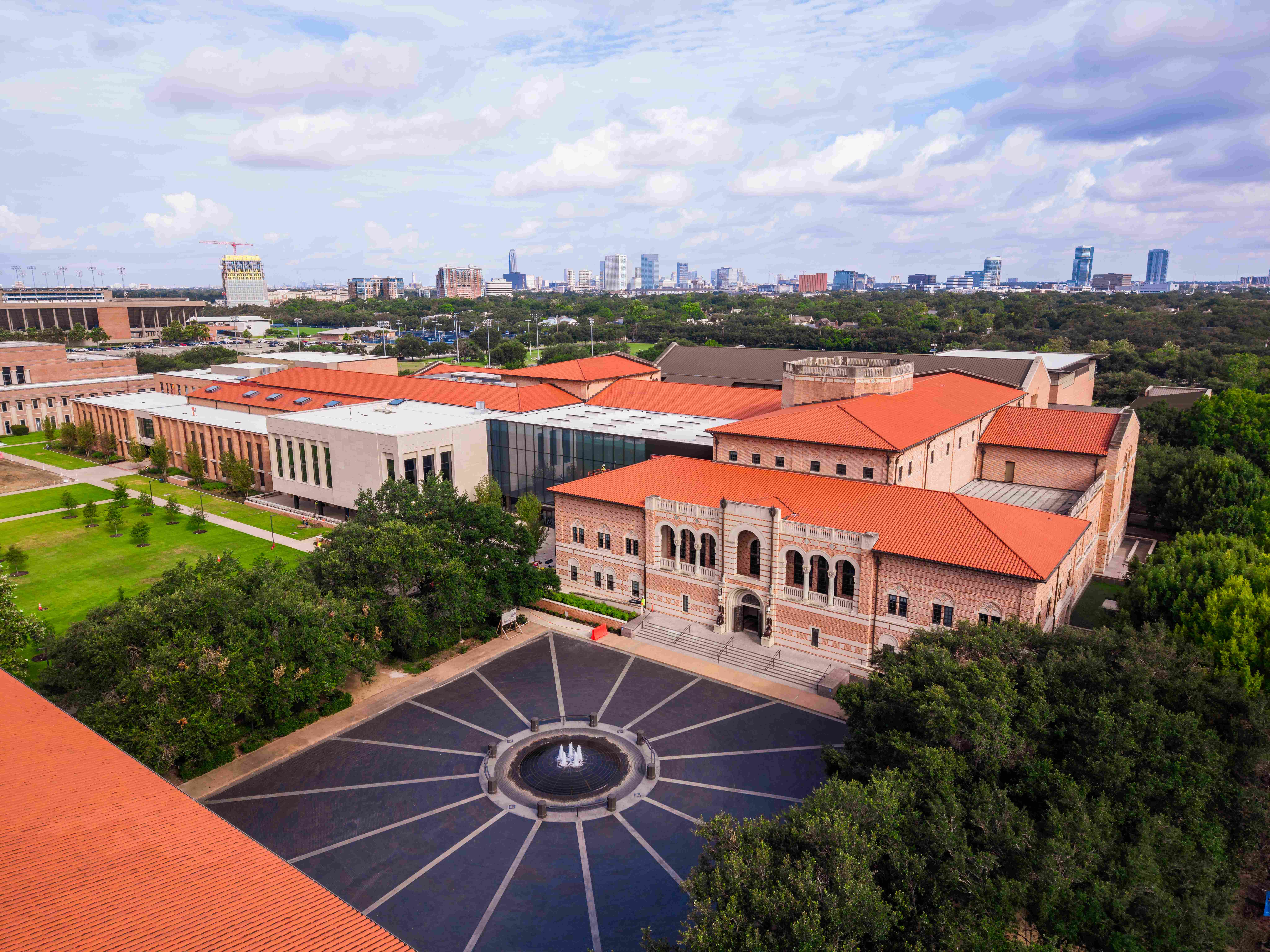
That is also where universities and organizations can collaborate. If we say a management intervention works, we should have data that demonstrates causality. Field experiments are important because you study real employees doing their real jobs in real organizations. But to do that, companies have to open up and collaborate with researchers. Doing so benefits managers. It benefits researchers. It benefits science.
Business schools also have to teach in a way that helps people use this knowledge. We can help them figure out what they need and provide it in an efficient way, whether it’s through degree or nondegree programs.
Researchers need to lead on the many questions around AI. Ultimately, the question that matters is how we can help shape how it is developed and used for human flourishing.
Interview by Scott Pett