Flight Path
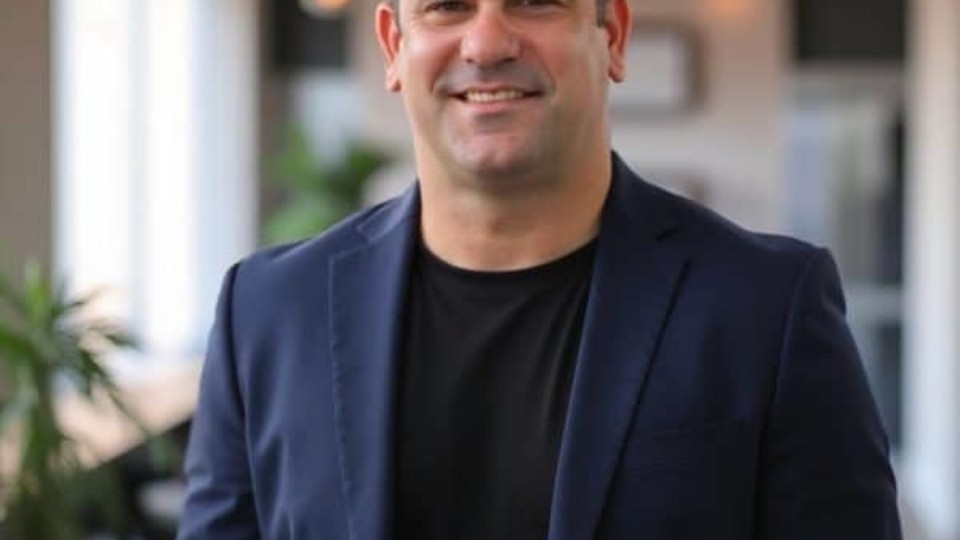
Michael went from banking to renewable energy. Now he's helping Oracle power the AI boom.
Samantha Kast ’13 came to Rice Business with a clear plan: pivot out of maritime shipping and land a consulting job. She got the pivot, but the lessons that have lingered actually didn’t come from the curriculum, they came from the people.
Samantha is now a senior director of global corporate account management for Alvarez & Marsal, where she’s spent the last 11 years of her career. On this episode, she chats with co-host Maya Pomroy ’22 about the unexpected lessons she gained from her Rice MBA.
They discuss Samantha’s view on the importance of building not just a network, but deep relationships, why the MBA taught her that she can do hard things, and how the friendships she forged at Rice Business have led to fulfillment she never expected.
Subscribe to Owl Have You Know on Apple Podcasts, Spotify, YouTube or wherever you find your favorite podcasts.
[00:00]Maya Pomroy:Welcome to Owl Have You Know, a podcast from Rice Business. This episode is part of our Flight Path series, where guests share their career journeys and the stories of the Rice connections that got them where they are.
What happens when a career takes an unexpected turn and the relationships you build along the way becomes just as meaningful as the work itself? Well, today, we’re joined by Samantha Kast, senior director at Alvarez & Marsal, to trace her career journey and to explore how her Rice MBA became a pivotal chapter in her professional and personal growth. We’ll discuss the experiences, connections, and lessons that continue to shape her path within a decade after graduation.
Welcome, Samantha.
[00:49]Samantha Kast: Thank you so much. I'm so excited to be here.
[00:52]Maya Pomroy:We're so happy to have you. You know, it's 2013. It's been a little bit of time since you did your MBA. You work in corporate performance consulting and have spent the last 11 years at the firm Alvarez & Marsal. You went to Elon University and majored in French and also international studies. And your career transitioned into this new space. And I'd love to get into talking about that.
But let's start from Elon, right? So, you went to Elon University and studied French and international relations, or international studies. What drew you to that?
[01:27]Samantha Kast: So, my dream post-college was to live internationally and to be an expat. And that, I figured, was, you know, the way to go. International studies, learn about the world, study abroad. And then French, randomly picked it in high school because I think I just wanted to go to Paris for our senior trip. And then, you know...
[01:52]Maya Pomroy:Did you?
[01:52]Samantha Kast: I did.
[01:52]Maya Pomroy:Did you go to Paris for your... See, it all lined up the way that you wanted it to.
[01:56]Samantha Kast: It did. Yeah. And a super nerdy fact is that I had a French pen pal from high school, and we still keep in touch.
[02:04]Maya Pomroy:Today?
[02:05]Samantha Kast: Yes.
[02:05]Maya Pomroy:That's amazing.
[02:06]Samantha Kast: Yes. So, 25 years. And I still visit her, so.
[02:11]Maya Pomroy:Yeah, that's a good place to have a friend. A good pen pal.
[02:15]Samantha Kast: Yes. So, when I went to Elon, trying to get out into the world and then be an expat. So, after graduation, I had joined a container freight shipping company and lived in Charlotte, North Carolina.
[02:29]Maya Pomroy:It was the maritime industry that you were in.
[02:31]Samantha Kast: Yes. And with that company, it was easy to go be an expat. They actually wanted people to go out into the world. And unfortunately, in 2008, that was the financial crisis. So, I had to pivot within the current industry. I said, "Okay, well, then let's just work on growing this role." And I took a client services role. And that's what brought me to Houston. And obviously Rice is in Houston.
And getting an MBA was pretty much always in my plan. I think ever since high school, you know, my mom had said, "We're not just stopping at a bachelor's degree. You're going on. You're getting a secondary something."
[03:15]Maya Pomroy:I like your mom.
[03:16]Samantha Kast: Well, and her best advice, she was like, "Do it before you have kids." And I was like, "All right, so now I've got a timeline." So, when I was in Houston, started looking around at the other schools, I was like, "Should I leave Texas and go do full-time somewhere?" And I went to go to an information session at Rice, and I fell in love with the place.
[03:40]Maya Pomroy:I mean, how can you not?
[03:41]Samantha Kast: I know. It's the weirdest thing when you go somewhere and you, kind of, feel like, "Oh, I'm super comfortable." I mean, like, is this home? [crosstalk 03:51].
[03:51]Maya Pomroy:You know, it's like, you know, when you know, you know. And also when you step on, you know, you go somewhere, and you're like, "Yeah, no, this doesn't fit quite right." But you felt like it was home, which is the most important piece of that puzzle of trying to find where you belong.
[04:08]Samantha Kast: Mm-hmm. Yeah. And it's not just, I mean, you know, at that time, there were still beautiful buildings. It was the people that were there. It was the, you know, admissions counselors. It was very welcoming. And so, I set my sights on, I'm going to Rice. And I knew what I wanted to do with my MBA was pivot out of maritime and go into consulting. And I wanted to.
[04:34]Maya Pomroy:Why did you want to do that? What was it about consulting that led you to that? Was it somebody that you knew? Was it an experience that you had?
[04:42]Samantha Kast: Well, you know, it, kind of, ties back to growing up, and that, you know, my mom was like, "Okay, you're going to get a secondary degree." And my dad, who is a physician, was like, "Don't go into medicine." So, you know, it, kind of, like, scratched the itch of things I was interested in and where, you know, there was a bunch of travel. I wanted to travel. It was, you know, learning constantly, learning in consulting.
And so, I wanted to be able to figure out how to pivot out of maritime and get into that. And I knew people had done that journey. And so, that's really what I wanted to do with my degree at Rice.
[05:20]Maya Pomroy:And so, that's another, you know, really important part, is that when you know that you do want to have a change and do want to make a change, and you recognize that you need to be in that environment, in that network, with those people, with those, you know, to constantly learn and to have mentors that can help guide you through that.
And, you know, I think that before you start an MBA or any sort of advanced degree anywhere, you, sort of, have this perception that it's going to be one way, and it's never that way. So, tell me about the composition of your cohort.
[05:55]Samantha Kast: So, the Class of 2013, the evening program, I do know that the majority of the class was male, a smaller group of females, maybe 140, 130? Or was that the number that I had at my wedding that year? I don't know.
[06:11]Maya Pomroy:Wait. So, you got married that year, too?
[06:14]Samantha Kast: Yes. You know, what's funny is when I thought about getting my degree at Rice, I was like, "I'm going to take all these classes that I've never taken before. I'm going to come out and be like this super ninja of accounting or something." But that's not the lesson learned. Right? It was really two things for me. It was one, I can do really hard things. And that's working full-time. That's getting your master's. But I was also planning for my wedding out of state. So, you know, I was like, "Wow, okay, yay me."
[06:52]Maya Pomroy:And now you look back and you're like, "How in the world did I do all of that all at the same time?"
[06:57]Samantha Kast: I know. I know.
[06:59]Maya Pomroy:But you did.
[07:01]Samantha Kast: And then, second, it was really a nice study in understanding different people and understanding relationships. And, you know, it was so nice to be face-to-face and talk with high-caliber, high-IQ people with a lot of potential to do something great in their lives, and have these robust conversations, whether it be about can dance or whether it be about, you know, something going on in the news.
So, that was really a big growth, I think, that I had, you know, because in my job in the maritime industry, I was in front of the computer talking on the phone. This is before Zoom and WebEx.
[07:46]Maya Pomroy:Zoom.
[07:47]Samantha Kast: So, yeah, it was all the teleconference. And so, it really just filled my bucket and gave me a skill that I've now carried on into my career, which was great.
[08:01]Maya Pomroy:So, you also chose, and deliberately chose, to cultivate and maintain those friendships and those relationships that you had by having happy hours and staying connected. And if you are still connected to somebody that you wrote to in France, that's something that's, you know, a part of who you are, right? Like those sorts of strong connections are really, really important for you.
[08:23]Samantha Kast: Yeah. And I think that's maybe something people don't always grasp, is it takes intention to have these relationships. It's not something you can just, kind of, hope it happens. So, I mean, specifically, there's a group of girls from our class, and we are super close to this day. And the way we got there is during the program, we committed, like we were like, "No, we are going to meet for dinner once a month." And it was a little bit easier then.
And then as the years carried on, you really had to be intentional and commit and say, "Okay, well, let's mark our calendars for our next meeting." And what was so nice about this group of women is if we didn't have the Rice program, we probably would have never come together. I mean, we are living in different parts of Houston, different social circles, different walks of life. And the common denominator beyond Rice that brought us together is these intellectually curious, super articulate.
[09:40]Maya Pomroy:It's a certain kind of personality that you realize that you thirst for that, you know, to constantly be learning and to be open to new ideas and new challenges, and to be challenged about your own ideas.
[09:54]Samantha Kast: Yeah.
[09:55]Maya Pomroy:You know, time after time, when I speak to people from Rice Business, that's what it is, they want to be challenged in the way that they think, and they want to grow and to see the world through a different lens.
[10:08]Samantha Kast: Yes. And I am so appreciative of that opportunity through the program to make these connections. So, even with, you know, this core group of women, everyone's gone on to grow their careers, start families, I think that common denominator of, we're all intellectually curious, we all want to talk about challenging things. It was beautiful.
You know, having these relationships later in life, it's a lot different than, you know, when you're in college, and you have a sorority sister. Like, it's not the same. These things are not the same. You know, you're coming to Rice, and you have these attributes that really, kind of, help foster these really deep friendships.
[10:54]Maya Pomroy:So, looking at your professional career, it seems like you've had touchpoints in literally everything, you know, change management, strategy, process improvement, planning and analysis, ops, you know, all of the things. And so, coming from international studies in French to literally touching every single part of business, how did you then transition into consulting work, which is what you wanted to do? And then also, I would love to talk with you about some professors and some mentors that you found at Rice that helped guide you to where you are today.
[11:31]Samantha Kast: The goal for my MBA was to pivot out of my previous industry and get into consulting. So, when I graduated Rice, I started at a small consulting firm in Houston. And about two years into that job, I was pregnant with my first child. And so, I realized I couldn't be a road warrior. I needed to be able to have a little bit more control of my travel schedule. So, through Rice, I had made a connection with someone at Alvarez & Marsal.
And, you know, getting to this point where I realized my family's changing, what I might need is changing, it was like, "Hey, I'm exploring what else I can do." And as luck would have it, this person was hiring on their operations team for Alvarez & Marsal. And, you know, I did the interviews, and it worked out, and it was just a blessing that I was able to join this team.
[12:30]Maya Pomroy:It fit, very much like you felt when you came to Rice the first time. It fit.
[12:36]Samantha Kast: It fit. So, a funny story about Alvarez & Marsal, so I remember going to their on-campus information session, and I knew a lot of the Rice alums had matriculated to Alvarez & Marsal. And they had printed this brochure that was like "A Day in the Life of a Consultant." And for some reason, and I am not a hoarder, I kept that thing for like three years. And it was like, "Why did I keep that?" But I just loved it. It was simple. It looked nice. It told a good story. And it was, you know, it, kind of, inspired me.
And then, you know, here I am two, three years later now working at Alvarez & Marsal. And it was just, kind of, funny how that, kind of, happens. Right?
[13:20]Maya Pomroy:So, you've been there for 11 years.
[13:22]Samantha Kast: Yes. And I think, you know, I absolutely love my job. I love being at Alvarez & Marsal. And the position I'm in right now, I think, is a summation of all the work I've done in the past 10 years. So, when I joined Alvarez, I was working in FP&A.
[13:46]Maya Pomroy:Could you explain what that is?
[13:47]Samantha Kast: Yeah. Financial Planning and Analysis. So, really, it's a study of the P&L. How do we make money? So, anyway, starting off in FP&A, you know, it's, kind of, like learning the bones of the company. And then as you get more experienced, you take on more responsibilities. You take things off of your boss's plate. And I, kind of, just slowly grew and did more things until I pivoted the role into the Chief of Staff for our CEO at the time.
And what's interesting about that role is, I think historically, I was a little bit cynical with decision-making for people. Like, people are going to make a decision that maximizes their utility. That's all they care about. They don't really care about you, don't care about anything. I think what I learned, though, it's more than that, right? So, when people make a decision, it's not just, "Hey, what am I going to get out of it?" It's like, especially with the people I was working with, it was, you know, they're making a decision based on the best information they have, right? So, that's like one layer.
And then the second layer was, they're doing this because they're coming from a good place. Like they want to make this better. So, that's their decision. And then the third thing that I learned was, and I knew this, but I never really, kind of, tied it in, but it was, you never know what's going on in somebody's personal life. So, as much as we want to be robots and unemotional and stoic, you don't know what's going on in their personal life.
So, you know, these things pop up or decisions happen, it's just you just have to be empathetic. And I think, you know, seeing at the top leadership role that that's, you know, the way to lead, it was just, kind of, like mind-blowing. And these aren't things that you can learn from a book or a seminar. It's like you have to experience it. You get to watch it, you get to, you know, see the start through the end. So, that has been really a highlight of my career.
So, after I had my third child, I came back into a different role where the needs of the business were, there was a new business unit that needed to be stood up. So, it was helping figure out, and working with the leader on, how are we going to run our staffing? How are we going to price our projects? You know, what does our compensation model look like? So, it was really like groundwork, like almost putting up the scaffolding.
[16:26]Maya Pomroy:Yeah. Scaffolding for it.
[16:28]Samantha Kast: And it was so fun. And amazing leader, super smart. So, just even being around smart people, I feel like you become smarter by osmosis.
[16:37]Maya Pomroy:By osmosis.
[16:39]Samantha Kast: Did I sleep with my accounting book under my pillow? Me?
[16:43]Maya Pomroy:I did. My grandmother always told me to do that. But I still, I'm not doing that to my children because they already think that I've got these weird superstitions. But yeah, I would sleep with my books underneath my, it wasn't the most comfortable evening, but I would sleep with those books underneath my pillow. And yes, there's actually evidence, scientific evidence, that shows that who you surround yourself with makes such a tremendous impact. You know, like those core five people that you're around all the time.
And that's what, you know, I also, you probably tell your kids as well, is just be very, very aware of who you surround yourself with, because those five people are going to have the most influence and impact on you more than anybody else. So, choose wisely.
[17:30]Samantha Kast: Yeah, it's great, I think, to be able to work with people who, you know, like Rice, intellectually curious people. It's people who are not self-serving, who want to take care of the client first. It's people who are upright and honest. It's people who make decisions with a fact base, right? This is not a place where we just build pretty PowerPoints and, hey, then, like, walk away. No, we're a place where we partner with the client to solve their toughest problems. You know, we get in there, we implement things.
And one thing that I've always liked is our job is to add value to you. And if we're not going to add value, then we're going to fire ourselves. And I think that speaks to a lot. Like, okay, we're done here, right? Like, don't just, you know, milk it. We can help you with the next problem, or let's pause and I think...
[18:26]Maya Pomroy:Move on.
[18:27]Samantha Kast: Yeah, it's like a very mature, very like, you would want someone to treat you that way, kind of thing. So, having the opportunity then to work with leaders standing that up, and then came another opportunity, I guess, when his boss was like, "Hey, want to put arms and legs on a global COVID key account program? Do you have any bandwidth?" And I was like, "Well, I think I'm doing three jobs at once."
[18:52]Maya Pomroy:And raising three children at once as well.
[18:54]Samantha Kast: Narrow it down to two. I was like, "Oh, no problem." I think within the program, that was a lesson, right? You have the opportunity to learn so many things, but you don't have the time. You have that constraint. And so, that lesson learned was you really have to focus on what's meaningful to you or what's important to you. Don't try to do everything. It's not going to work. You're going to be mediocre. But focus in on where you think you're going to get the most value out of it.
And I think, you know, that was a lesson in an extreme, where you're pushed to the boundary of, you just worked a full day. You know, you're tired, and you don't even have kids yet. And then, you know, after your job and then going to school, you've got to pick and choose what you can do. And I think that lesson, you know, then carries on into your professional life and your world from then on. It's really, you have to tend to your own garden.
And that was something I used to actually, like, keep on my computer, was invest and tend to the things that are important to you. Tend to the people where you see there's going to be a lot of potential, a lot of impact. And just, kind of, keep that focus, you know, because then those fruits come out, and you're not getting distracted by-
[20:25]Maya Pomroy:Noise.
[20:25]Samantha Kast: ... to noise. Or, you know, I think a lot of times if you see a problem and you're like, "Oh, I know I can fix that, like I see the path," but if it's not, you know, within your realm, and you have to keep going, you know, it's like you need to focus. You know, you tell somebody, you know, but you've got to keep the focus, or you just drown in life, you drown in your work. And I think that was a valuable lesson, again, not in the curriculum, but here, like, just to be successful at this program, you need to focus.
[21:02]Maya Pomroy:Well, and there are so many things that are not in the curriculum. And I think that you do learn so much and see the world completely differently. But those intangible lessons, of those people that are next to you, or you're turning around, and you're like, "Wow, like you're a genius, and you're a genius. I'm doing here, but okay, I'm going to try to get as much as I can out of sitting in between you guys." But it is, it's those intangible lessons and those opportunities. Like I said, you know, you go in thinking that you're going to learn about accounting, and you're going to learn about, you know, marketing, and you're going to learn about, you know, all of these other things.
And then it's just a completely different experience, and so much more robust, and so much more beautiful, than you had ever imagined. Well, looking at your career today, and looking at the arc of where you were and where you are, what are some of the things that you're, you know, we've touched a little bit on this. But what are the things that you're the most grateful for that Rice has opened the door for you?
[22:05]Samantha Kast: Honestly, I'd say that going to Rice and getting my MBA completely changed the trajectory of my life. I was able to pivot into an industry and find a job that I absolutely love, able to provide for my family, you know, brought me a core group of friends. And even the men and the women who aren't in the circle, I still keep contact with them. And, you know, it's great. It's brought me a sense of community, regardless of where I am.
I was in Houston forever, and just moved to Denver last year. And so, coming here, and now trying to, like, get the alumni active. And so, you know, we're trying to do lunches every other month.
[22:56]Maya Pomroy:Just like you did after you graduated.
[23:00]Samantha Kast: Yeah. So, I mean, it's fun. It's fun. So, I'm just so appreciative of the program and the gifts that I've gotten from it. But I mean, it's not something like, you go to Rice, and magically all these things happen. No, like I had to work on it. Like I had to work, you know, I had to build the relationship with the person at Alvarez & Marsal to get to the opportunity to work at Alvarez & Marsal, right? It required effort.
And so, I mean, to our earlier point about applying effort everywhere, no, you have to be really specific about where you're spending your time. So, look at what's important to you. Look at things that are going to make the biggest impact, and do that, right? And then you can get so much out of this degree. I mean, it far exceeded any expectations that I had of what it was going to be like after this program.
[23:54]Maya Pomroy:See? Your mother was right.
[23:57]Samantha Kast: I'm not going to admit that.
[24:01]Maya Pomroy:So, you talk a lot about the relationships that you've built at Rice. Is there anyone in particular that has really made an impact on you all of these years later?
[24:11]Samantha Kast: Yeah, there's a woman from our class. So, right when we graduated, she was the executive director of a program helping first-generation kids get to college. And it reached a point where it's like, "Okay, these kids are in college now. Now what?" Right? Where are they going? What do they do? And so, I was at Alvarez & Marsal at the time, and we were formalizing our internship program.
And so, I had talked to my boss, I said, "Hey, can we hold a couple of interview spots for this-"
[24:44]Maya Pomroy:This program.
[24:44]Samantha Kast: "... college kids, yeah, because, you know, consulting is not probably something that, you know, high school kids know about. It's really if your parents do it, it makes sense. But maybe they don't know about this industry. And these are just super talented students."
So, what has really impacted me is, you know, that first round of interns, they proved themselves. They got job offers. But one of the interns, now a full-time employee, had wrote me a thank-you note. And the thank-you note...
[25:17]Maya Pomroy:That's so kind. The art of the thank-you note, it was so beautiful.
[25:21]Samantha Kast: And so, you know, I keep that thank-you note in my desk, and not going into the details of, you know, how impactful this was for him, but it was. He was like, "This opportunity changed the trajectory of my life and my family's life," because now he's providing in a way like he never has before. And it was so easy to... And it was just helping a friend, right? It was helping a friend with their problem, knowing that I had the ability, or at least tried to help them.
And then the effect of it, or the aftermath of it, is, you know, this positive event for this kid.
[25:56]Maya Pomroy:Wonderful kid.
[25:57]Samantha Kast: Early career. [crosstalk 26:00].
[26:00]Maya Pomroy:That just comes back full circle for how Rice was impactful for you, and then you were able to pay it forward.
[26:08]Samantha Kast: Yeah. Paying it forward. That's exactly right. And it's just Rice that brings that special community together, with that underlying, highly intelligent, motivated, intellectually curious, upright, honest, I mean, those are the characteristics of, you know, my class. And so, it's just easy to pay it forward.
[26:26]Maya Pomroy:So, as you look forward to the next chapter, what are you the most excited about, personally, professionally, going forward?
[26:33]Samantha Kast: Yeah, I think I say, professionally, I want to continue to grow in my role. I want to continue to learn more, and just develop, and take on more opportunities and responsibilities. And so, I never want to stop doing that. Like, that's where I find it's fun. Like, in the role of this air traffic control, where it's like connecting capabilities and experience, you have to know what's going on globally.
So, it actually, kind of, speaks back to, you know, my bachelor's degree in international studies, where it was a study of the world. And so, I think that's what's really filling my bucket right now with this job, and having the opportunity to work with executives and understand decision-making. And it's just, you can't find that anywhere. So, my job makes me very happy.
And, I think, personally, with my three kids, it's so neat to watch your little babies turn into little talking toddlers, and then watching them grow to, you know, right now, my oldest is in middle school, and our conversations. It's like talking to a real human. Like, we have thoughts and feelings, and it's so nice. I'm looking forward, I think, to really just watching the family grow, and taking the time to be that core family, because when the kids are little, it's just chaos, right? You're emotionally taxed. You're physically taxed-
[28:09]Maya Pomroy:If you're not sleeping.
[28:09]Samantha Kast: ... if you're not sleeping. And so, you know, now that I can sleep, it's nice. And so, I'm looking forward to that, and having the little humans in my house now being able to carry thoughts. So, that's fun. And being able to teach them. And that's really fun.
[28:25]Maya Pomroy:And to teach them that they're going to have upper-level degrees as well.
[28:30]Samantha Kast: Oh, you got to watch out. My son is like, "Well, I'm moving back to Texas, and I'm going to Rice." And I was like...
[28:36]Maya Pomroy:Yes, he is. There's a great undergraduate business program that we just started, the Virani School. So, you know, there's, yeah, I mean, I don't know if you had a chance to see that before you moved, but the Virani Undergraduate School of Business is really spectacular. And there's been a lot of growth, and there's a new building that is beautiful. So, yeah, you should tell your son there's a business school, and he's interested.
But it is, just watching your story and learning more about you, and the fulfillment piece, you know, to consistently feel fulfilled is something that I think every person wants, right? And so, to just continue to feel that fulfillment, which you have since you really started your educational journey, and you never stop learning.
[29:19]Samantha Kast: You never stop learning. And it's so important that if you want to get something out of it, you have to put your time in. And, you know, building those relationships with my cohort, was it going to Valhalla after class? Yes, it was.
[29:36]Maya Pomroy:Yes, it's still there.
[29:39]Samantha Kast: It's still there. And so, you have to put your time in, the more time you put in, the more you're going to get out of it. And with all of the soft skills that I learned, and surrounding myself with these super intelligent, you know, career-driven people, it's just been amazing for my life.
[29:58]Maya Pomroy:I mean, that's what Rice is all about. It's about giving you that opportunity, and it's true, you're going to get out whatever it is that you put in.
[30:06]Samantha Kast: Well, and it's, kind of, like people, too, right? I moved to Denver, it's all about, you know, building new friendships and relationships. And it's hard because everyone's older now, and you're, kind of, stuck in your ways. But you move into a new community, and you have to be intentional about, like, reaching out to people. And it's like a restart, trying to build these networks again.
And I mean, it's just, those are life skills that carry on, you know, forever. And so, I don't know about the interpersonal communications of the upcoming generations, I've heard things, but, you know, I hope that this skill is also taught to them, and they have this going forward. Because I mean, we're not a world that's disconnected, we're super connected. And so, it's just how to navigate it, how to build your own community.
[31:04]Maya Pomroy:Yeah, I don't think those skills are going away anywhere. Because I know that, you know, with my own kids, and kids that I know, they're sort of "what's old is new again" is what I'm hearing. Where it's like, "We're going to go, we're going to leave our phones at home, and we're going to go, like take a walk, and we're going to go on a bike ride, or we're going to go to the mall" and all of these different things. So, what's old is new again.
So, there's a lot of that that I see and I feel, that this new generation also recognizes that the way that things used to be, you know, all the other social media stuff, is just getting really old, and they're getting tired of it. So, you know, there's definitely hope for the future.
[31:42]Samantha Kast: There is. And, you know, one thing I'm also thinking about is, like, what else I learned, all these things seem to pop up as I talk, but one thing I learned was, and with the mention of social media, is you can't compare yourself to others. Like, you're going to come into the program, you're going to be in a group with someone who majored in accounting, and now you're in the same accounting class doing an accounting project, and you feel like the lame one.
[32:13]Maya Pomroy:Well, you're just, kind of, like, "You take this part, I'm not going to try."
[32:17]Samantha Kast: Right. But like, you know, if you're sitting there, "Why can't I grasp this, like, as soon as they are?" And so, you know, you can really do a number on yourself and beat yourself up by comparing yourself to others. And so, I think that's, kind of, important to remember, too.
[32:32]Maya Pomroy:And, you know, I think that nothing can ever be replaced for in-person, in-class type of opportunities that, you know, higher education and education in general provides.
Well, Samantha, it has been a pleasure to talk with you, and we're so grateful for your time. And when you come back to Houston, take a peek at that new building, and for your son who might be interested in coming to Rice Business, because it is really a unique and beautiful place.
[33:01]Samantha Kast: Well, thank you so much for having me. This is such a fun experience, and nice to get to know you.
[33:10]Maya Pomroy:Thanks for listening. This has been Owl Have You Know, a production of Rice Business. You can find more information about our guests, hosts, and announcements on our website, business.rice.edu. Please subscribe and leave a rating wherever you find your favorite podcasts. We'd love to hear what you think. The hosts of Owl Have You Know are myself, Maya Pomroy, and Brian Jackson.
Michael went from banking to renewable energy. Now he's helping Oracle power the AI boom.
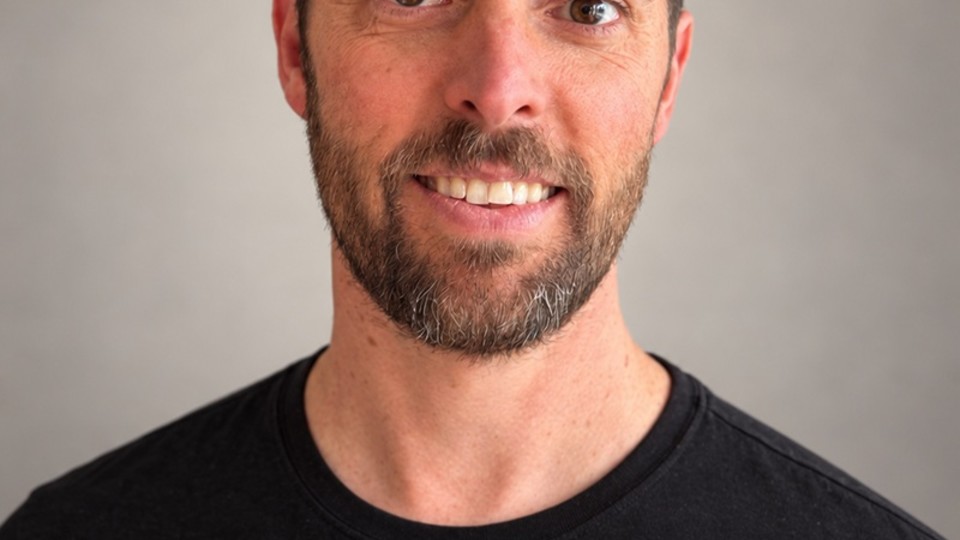
Michael went from banking to renewable energy. Now he's helping Oracle power the AI boom.
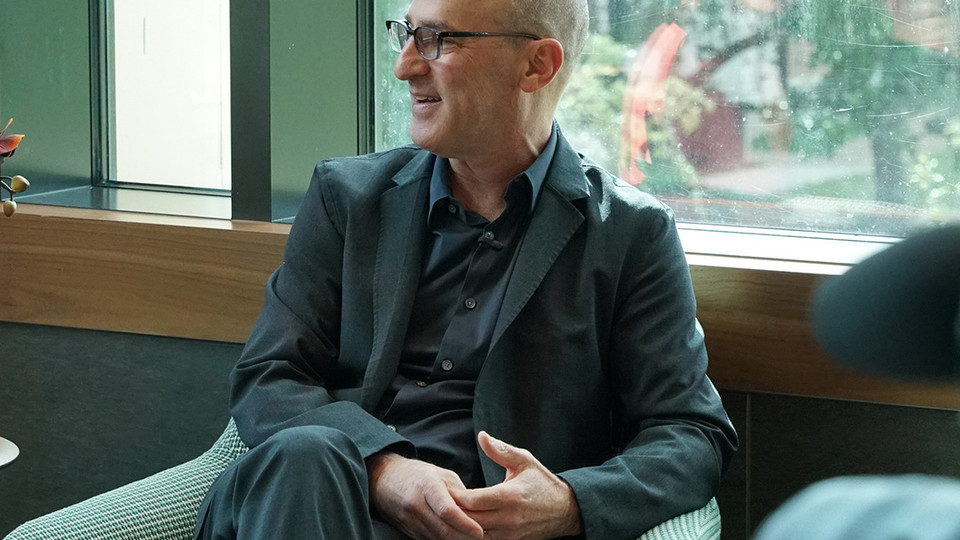
Stephen Cassell, principal at Architecture Research Office, shares a behind-the-scenes look at the making of Asha and Farid Virani Hall.