Flight Path
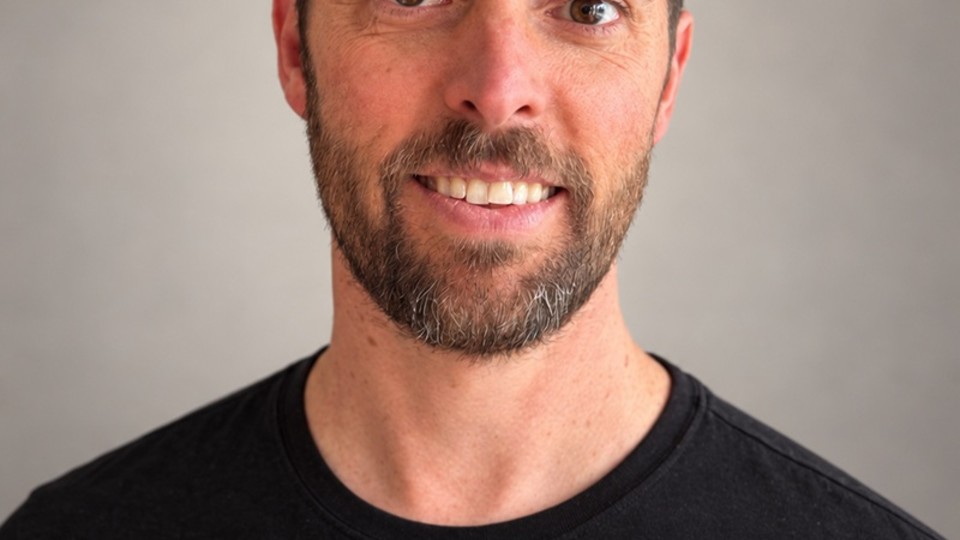
Michael went from banking to renewable energy. Now he's helping Oracle power the AI boom.
With over 15 years of experience at Chevron Phillips Chemical Company, Stuart Bell ’23 is leaving his mark on the sustainability world through his mission-driven and service-oriented mindset – a mindset that, he says, Rice Business helped him unlock.
Beginning as a process engineer, Stuart has held a multitude of positions across the Chevron Phillips ecosystem and is now the senior manager of sustainability. Stuart joins co-host Maya Pomroy ’22 to discuss why, a decade into his career, he decided to enroll in an MBA program and how Rice Business has helped shape the way he leads and sees the world.
They also chat about his experience participating in Rice Board Fellows, why he started a wine club for Rice Business alumni, and his ultimate “ROI” from his time at Rice: a fiancee!
Subscribe to Owl Have You Know on Apple Podcasts, Spotify, YouTube or wherever you find your favorite podcasts.
[00:00]Maya Pomroy: Welcome to Owl Have You Know, a podcast from Rice Business. This episode is part of our Flight Path series, where guests share their career journeys and stories of the Rice connections that got them where they are.
What do you get when you combine a chemical engineer, 15 years at Chevron Phillips, an MBA from Rice, and a serious passion for wine? Well, you get Stuart Bell. In this episode, we dive into Stuart's evolution from engineer to business leader, why he pursued an MBA, and how Rice Business helped shape the way he leads and sees the world.
We'll also talk wine, Houston, college sports, and the people and experiences that have made the Rice Business community such a meaningful part of Stuart's life.
Welcome to Owl Have You Know. I'm your host, Maya Pomroy. Our guest today is Stuart Bell, Professional MBA from the Class of 2023. Welcome, Stuart.
[01:03]Stuart Bell: Thank you. Great to be here.
[01:05]Maya Pomroy: We are thrilled to have you on the program. You are a somewhat recent graduate from the Rice School of Business. I mean, I guess it's been already three years. It seems like yesterday, doesn't it?
[01:17]Stuart Bell: It certainly does. I would say that's my reaction whenever I think, "Wow, it's been three years since I graduated. It's been four years since I moved to Houston." It still feels like it was just yesterday, still getting to know the city in so many new and different ways all the time, barely scratching the surface.
[01:32]Maya Pomroy: Yes, you are a transplant to Houston. You've been with Chevron Phillips for the past 15 years, and you started off with a BS in chemical engineering from the University of Kansas, graduated in 2011, and then moved to Houston five years ago, to come to Rice Business. So, did you grow up in Kansas?
[01:51]Stuart Bell: I actually grew up in Alabama, so Roll Tide. And then we moved to Kansas.
[01:56]Maya Pomroy: Roll Tide.
[01:57]Stuart Bell: Roll Tide. You know, I've got a deep love for college athletics, football, basketball, baseball, you name it.
[02:03]Maya Pomroy: You're in the right place then.
[02:05]Stuart Bell: But it's a great spot to be, for sure. And when I was 12 years old, I lived in Tuscaloosa, Alabama, and what you love when you're 12 years old, you love the rest of your life, and that was Alabama football for me. But eventually we moved to Kansas in high school, and then I went to University of Kansas, which worked out really well, transitioning from football season to basketball season, because KU's pretty historic and successful during basketball season.
[02:28]Maya Pomroy: So, your dad is a university president, I read. So, is that what brought you to Kansas?
[02:34]Stuart Bell: Yeah. So, he started out at the University of Alabama, and then his next opportunity took him to Kansas. And so, we lived in Lawrence for 10 years. I went to high school there and then went to KU, which was... You know, it was great on many days. We were able to get breakfast on Wednesday mornings while I was in school, but he always quizzed me on what I was learning.
So, that was certainly a sword that cut both ways. But yeah, that's what brought us to Kansas. And then eventually, after I graduated, I moved down to Texas, lived in a small town here out on my own, and before moving to Houston a handful of years ago.
[03:06]Maya Pomroy: So, you have sports in your veins, in the blood that's running through your veins, and you also have academia, because you grew up in a household with a dad that was in academia. So, do you think that that had a big influence and impact on you?
[03:21]Stuart Bell: Oh, without a doubt. There's just something about college towns. They feel a little bit different, and any time I walk into one, it feels like home. That's where I grew up, in those types of environments, in those types of communities. And so, for me, whenever I was looking to make a change, school was a natural way to go back and figure out how to take that next step for my life. So, it's definitely a big part of who I am. I love to learn.
[03:44]Maya Pomroy: Yeah. So, let's start from your childhood. So, chemical engineering, is that something that was in your history, your parents, your grandparents? Did you grow up in an engineering household? What does your mom do as well? Is she an engineer?
[03:57]Stuart Bell: She's not an engineer. She got her degree in marketing from... My both my parents are Aggies, so I like to say that I escaped...
[04:03]Maya Pomroy: Oh, man, I went to UT before I came to Rice. We're going to have to have some words. I'm just kidding.
[04:09]Stuart Bell: My grandmother's a UT grad, but both of her kids ended up at A&M. So, we've got a whole lot of interesting conversations around family reunion time when it comes to our college loyalties, without a doubt.
[04:24]Maya Pomroy: So, your mom was in marketing, your dad was an engineer. Tell me about how you grew up.
[04:27]Stuart Bell: You know, I think it's maybe something that I didn't really appreciate at the time, what it's like to grow up in college towns surrounded in that academic environment. It's such a small microcosm that you don't really recognize until you move out. But yeah, so my dad is an engineer through and through, and it certainly is in our family tree, without a doubt.
My dad was an engineer, then I got my degree in engineering, somewhat surprisingly. My brother also got his degree in engineering. My brother-in-law married into our family, he's an engineer as well. So, there's a family tradition of going into engineering for sure.
[05:05]Maya Pomroy: So, you said surprisingly, I caught that. So, let's go back. What was surprising about the fact that you decided to go down the engineering path?
[05:13]Stuart Bell: Well, whenever I originally applied to undergrad, I applied as a political science and religion major. And that's where I started out thinking what I was going to do was go to law school or something in that vein. And through a series of conversations that I was reflecting on, somewhat recently, I'm like, "Wow, I made a pretty hard pivot that first year and ended up in engineering." But it's worked out for me now because I really love what I do and getting to make the impact that I wanted to even when I was going into college.
[05:42]Maya Pomroy: Life is interesting, isn't it? You always end up exactly where you're just supposed to be.
[05:48]Stuart Bell: I've had that thought so many times recently that it's funny how life works out. If you are open to it, if you say yes to opportunities, life finds a way of helping you end up in the right spot.
[06:00]Maya Pomroy: That's right. So, you went to University of Kansas, you majored in chemical engineering, and then you have been with Chevron Phillips for the last 15 years of your life. So, was that your first job out of school?
[06:12]Stuart Bell: It was indeed. I interned with CPChem while I was still in school, and then ended up accepting a full-time offer to go work at our Port Arthur facility, which is about two hours east of Houston.
[06:22]Maya Pomroy: Oh, that's how you got to Houston was Port Arthur, Port A.
[06:27]Stuart Bell: Port A indeed. I lived out there for 10 years, so from the age of 22 to the age of 32.
[06:34] Maya Pomroy: Wow.
[06:34]Stuart Bell: Yeah, all of my early opportunities in my career, I just happened to be out there in Port Arthur, Texas.
[06:40]Maya Pomroy: So, you lived there for 10 years. Was it, you know, like entry level and then you worked your way up?
[06:46]Stuart Bell: Oh, absolutely. I started, like I said, started out as an intern, then did process engineering, which is, you know, a lot of project work, really getting to sink your teeth into what it means to be a chemical engineer or any other type in a manufacturing setting. Put the textbooks to the test and figure out how to really do field engineering, build something. It's not just pencil to paper anymore, it's putting steel in the ground.
So, did that for a long time. Then I spent probably about four or five years of my early career in operations. So, for us, CPChem operates facilities all around the globe and especially here on the Texas Gulf Coast. And I had an opportunity to work out on the front lines with our team to keep those plants operating safely and reliably day in and day out, and that was very formative for me. It was certainly action-packed day to day. You never knew what the day would bring you, and so it was invigorating, energizing, and I really loved doing that for a long time.
But eventually I decided I wanted to take on a new challenge. Ended up moving into an optimization and energy role, and so got to dabble a little bit with broader plant economics, but also taking a larger perspective of our facilities and how do these individual units fit into a larger system and how do we make decisions on what the right way to operate any of our facilities are on any given day. So, really appreciated that transition and perspective, frankly, I think was part of the genesis for me eventually making my way to Rice some years later.
[08:21]Maya Pomroy: So, yeah, organizational management, taking that wide view and realizing that everything isn't siloed and recognizing what the efficiencies need to be in order to, you know, prevent bottlenecks and all that. That's one of the things that I learned during my time at Rice, you know, you see these things, but then when you kind of zoom out, you're like, "Wait a second, now I get it."
[08:42]Stuart Bell: I was like, "I can think of a lot of use cases where this is very, very applicable."
[08:46]Maya Pomroy: Yeah. So, what was that day when you're like, "You know what? I think I need to sort of polish up my education and cut my teeth on something a little bit that'll bring me to the next step of where I should be going." Was there a moment when you decided, like, "I need to go back to school," or did it just sort of build on itself? What was it?
[09:07]Stuart Bell: Well, it's certainly been building for a long time, but there was certainly a moment. So, I graduated in 2023, which means I started in 2021. And I imagine, like a lot of the folks who graduated in those years right around when I did, COVID provided a long period of introspection.
[09:23]Maya Pomroy: To say the least.
[09:25]Stuart Bell: Yeah, that's to say the least. I'd been out in Port Arthur for 10 years at that point in time. And I was like, "You know, I think it's time to really think about what my next step wants to be." And it goes back, and my mind went back to where you opened the conversation is, "Where did I feel at home? Where's the communities that I've been a part of and helped me make decisions in the past?" And academia, going back to school was such an easy answer for me.
The particular moment, though, was during Winter Storm Uri, which hit Houston and Southeast Texas in February of 2021. I was still working at the plant back then, and it walloped all of us pretty hard. And so, we were in active recovery at the sites, trying to get everything back up and running like normal. And I remember thinking, like, "I really love this and I find it very fulfilling, but I also wonder what else is out there." And that really was the spark.
And so, I had that thought in February 2021 and basically speed ran MBA application processes between February and May of 2021-
[10:35]Maya Pomroy: Wow.
[10:36]Stuart Bell: ... and ended up deciding to join Rice in July of 2021, a couple of months later. So, for me, it was I found that moment that drove me to make a decision and I was off to the races.
[10:47]Maya Pomroy: Why Rice? You know, I mean, there are so many okay business schools. Sorry, I'm biased, but there's a lot here in Texas, and so what was it about Rice that really was the place that you decided, "You know what? This is where I need to be"? I mean, obviously Houston based on the industry that you're in, but what was it also about Rice that drew you to it?
[11:09]Stuart Bell: You know, I would say the industry was certainly secondary. I really reflect back on why I was going to the MBA. And a lot of it was for personal growth and personal reasons. Like I said, coming out of COVID, I'd been in Port Arthur on my own for about 10 years. And so, as much as I was looking for professional growth, I was also looking for personal growth.
And so, for me, I was looking for a community where I could plug in, build relationships, and be an engaged member of whatever the school had going on. And so, whenever I was comparing all of the different options out there, being able to be on campus, in person, connected to a world-class institution, but also one where there was resources available, there was plenty of extracurricular activities that could help me connect with some of my fellow classmates and frankly get to know a big city like Houston again for the first time. Those were the things that really pulled me to Rice, the access to community, and building that personal growth trajectory, more than anything else.
[12:23]Maya Pomroy: It is a gem in a really, really big city. And they're very deliberate in the class structure of who they bring together is what I've learned about Rice. And so, I remember when I was there during COVID, and you look to your left and you look to your right, and you're like, "These people are amazing, and I'm not quite sure what I'm doing here with all of these people that are, you know, trying to figure out a cure for brain cancer," and like all of these things that at the beginning, you've got this like imposter syndrome a little bit, but then after a couple of weeks, you're like, "Wow, like these are incredible human beings, and I guess I belong," right?
[13:00]Stuart Bell: Oh, without a doubt. That was so much of what I wanted was I was like, you are a product of the people you surround yourself with.
[13:06]Maya Pomroy: Yes.
[13:06] Stuart Bell: And so, I want to surround myself with the very best, and I want to be a part of that community. I want to find it. I want to foster it. And I certainly found that at Rice. Today, I still, most of my best friends in the city are folks that I met while I was at Rice, and I continue to be amazed at what they're out there doing day in and day out. Listening to the Owl Have You Know podcast and hearing stories from other folks from the alumni that are doing really incredible things. I feel fortunate to be a part of it.
[13:33]Maya Pomroy: As do I. And I was looking at some of the extracurriculars that you are a part of, which I was a part of, too. I was like, "Yes, this is awesome." So, you're a part of the Rice Business Student Association, Rice Board Fellows, and the Wine Club. I wasn't part of the Wine Club. Can't drink wine. But I mean, you really, really took advantage of every opportunity that Rice granted.
So, tell me about Rice Board Fellows, and tell those that don't know what Rice Board Fellows is about that program and that opportunity. It really is, I believe, really unique to Rice in comparison to other business schools.
[14:05]Stuart Bell: I think it is. I don't know that I've ever talked to anyone else who went to different schools that have had an opportunity quite like Board Fellows. And it was one of the principal reasons that Rice initially stood out to me was because of Board Fellows, and I knew it was something I wanted to do if I was lucky enough to join the cohort.
So, Board Fellows is a program that Rice puts together that pairs MBA candidates with various nonprofit organizations around the city. For me, that was something that I was very interested in. Obviously, my father being in education, the nonprofit sector is very close and adjacent. This mindset of service back to the community and society, is something that was important to me and something I was... It was an itch I wanted to scratch.
So, Board Fellows gave me a very structured way to go about doing that. And it worked out even better because, you know, when I'm not watching college football or basketball, I spend a lot of time outside. And there are several fantastic nonprofits that Rice is connected with that are focused on conservation, creating wild green spaces in and around Houston that folks in the community can have access to.
And so, I was fortunate enough to get to work with the Cullinan Park Conservancy down in Sugar Land. I was actually out there just not that long ago, walking some of the trails that we were planning to put in three and four years ago. That was crazy to think about.
[15:25]Maya Pomroy: It is crazy to think about what you were a part of that you watched, you know, cultivate and grow. That is something that I think is unique also about Rice is that this desire to give back to our community in very tangible ways that, you know, it's not just a show up one day. It's literally be a part of something special from day one if you want to be. So, how many people were in your cohort? Because it was a COVID cohort, right?
[15:50]Stuart Bell: It was. So, I did professional weekends, which I loved. That was definitely right for me, because whenever I started the program, I didn't live in Houston. I was still commuting over on Fridays and Saturdays from Port Arthur. And we had 65 people in our cohort, so 13 groups of five.
[16:07]Maya Pomroy: Small.
[16:08]Stuart Bell: Yeah. You know, much like you were saying, they're very thoughtful about who they put in the cohort together. They're very thoughtful on who they put on the teams together. Hopefully, identify complementary skill sets so that your strengths are augmented by the strengths of your fellow team members.
And for us, I think it was a big help in that first year. A lot of folks talked about the shock of going back to school for the first time. And I think that's true for me. I don't think I had quite as much a reaction to it as some people have reported, and maybe some of that was due to just how connected I was with some of my teammates. You know, I just recently got engaged to someone that I met while I was at Rice and was...
[16:49]Maya Pomroy: Yes. We were obviously going to talk about that. Congratulations.
[16:52]Stuart Bell: Thank you very much.
[16:53]Maya Pomroy: Congratulations.
[16:54]Stuart Bell: Thank you. But I mean, the first group of folks that sent the note out to were team members and other folks that I met while I was at Rice and spent a lot of hours working on Rice, but also a lot of hours at Valhalla and Wine Club and whatnot too while I was there.
[17:09]Maya Pomroy: Valhalla's amazing. It's right there, you know? So, the Wine Club at Rice. So, I know a couple of people that are really, really engaged in that. So, you ended up starting an Alumni Wine Club after graduation. So, tell me, were there a couple of you that started that, or was it just sort of your own idea to do something like that to keep people together and...
[17:30]Stuart Bell: Yeah, no, it takes a group of folks to get anything done, I think. And so, yeah, it was a group of us that were in the Wine Club as students that decided we wanted to put it together. And, you know, I take a step back. Of all the organizations I was a part of, Wine Club was maybe the most meaningful personally.
[17:46]Maya Pomroy: Really?
[17:46]Stuart Bell: Like I said, I was... I didn't live in Houston at the time, and so I was new to Rice, getting to know all these people, but also getting to know the city. And Wine Club provided a vehicle by which I could get to know the city of Houston in a really intentional way. So, it was going out to great restaurants and-
[18:07]Maya Pomroy: What's your favorite?
[18:08]Stuart Bell: ... patios. Favorite restaurant in Houston right now?
[18:11]Maya Pomroy: I know it's a hard question.
[18:13]Stuart Bell: It certainly is. I would say an old favorite that we go to time and again is Rainbow Lodge in the Northwest Heights.
[18:23]Maya Pomroy: Yeah. It has great vibes.
[18:23]Stuart Bell: Great atmosphere, great vibe. Been there a long time. We find ourself back at Rainbow Lodge fairly regularly. Great wine program too. So, it's a favorite for sure.
[18:34]Maya Pomroy: So, your fiancé, was she part of your team?
[18:37]Stuart Bell: She actually worked at Rice.
[18:40]Maya Pomroy: Oh, that's amazing.
[18:40]Stuart Bell: So, she's... Yeah, and she still works at Rice. So, it's like you said, whenever I wanted to be part of the community, I wanted to be on campus and get to know the whole university. And so, she worked at the business school while I was there. We connected fairly early on while I started going to school and we eventually made it official here a few months ago.
[19:01]Maya Pomroy: I love that. What a beautiful love story.
[19:04]Stuart Bell: People frequently ask me, "Was it worth it to go to Rice and get your MBA?"
[19:08]Maya Pomroy: Yeah.
[19:09]Stuart Bell: And I'm like, "Well, I got my ROI."
[19:11]Maya Pomroy: I found... Yeah, exactly. I found the love of my life and, you know-
[19:15]Stuart Bell: That's right.
[19:16]Maya Pomroy: ... that's incredible. I love stories like that. You know, there's a couple of husband-and-wife teams, professors at Rice that I've had the pleasure of interviewing and it's always, you know, Rice brings people together from all walks of life and, you know, like I said at the beginning, you end up being exactly where you're meant to be, and then clearly both of you were.
So, that's really kind of magical. But yeah, you definitely got your ROI on that front. And then, let's talk about your ROI for the professional front. Were you able to really take what you learned right back to work or was it later where you sort of started putting those pieces together? Or how did that transpire?
[19:55]Stuart Bell: Well, I would say it was immediate and it's continual. I mentioned that I'd been out in Port Arthur working in largely technical roles for 10 years when I decided to start the program. And within a few months of starting the program, just by dint of the commitment that I had made to go pursue the MBA, I was able to make a transition into the business side of CPChem.
So, I moved from an engineering role into a commercial role, trying to make sure to find good homes for a lot of the products that CPChem makes. And I'll tell you, I needed my financial accounting class early on as I was making that transition.
[20:32]Maya Pomroy: Those are the hardest. Those are some of the hardest classes.
[20:35]Stuart Bell: I'm grateful for them, I'll tell you that. It would've been harder if I hadn't been going through them and just trying to, you know, learn off YouTube or something like that, I think. So, for me, it was perfect. But yeah, I was able to immediately apply a lot of the lessons that we were learning in the new job. It was very beneficial both in accelerating and maybe helping launch that pivot from the technical into the commercial role for me, and then helping me be successful for several years while I was still in it.
And then I would also say, though, I made another change about two and a half years ago where I left our commercial organization and moved into our corporate planning, research and technology and sustainability group. And now, I work in the sustainability organization for CPChem, and that was really a reflection of what I learned about myself while I was at Rice.
There are too many great classes that I took while I was there that was very meaningful, but a lot of the courses on organizational behavior have really stuck with me and resonated. And in particular, one of my friends, one of my teammates, Rodrigo, he recommended a book to me that has stuck with me for quite a while on how to chart your path for your own career. And it's how an MBA would approach finding out what it is that you want to do, where your passion is, where you're going to be successful. It's taking these sometimes soft and hard-to-define goals and putting a framework around them to give you confident decision-making.
[22:05]Maya Pomroy: What's the book called?
[22:07]Stuart Bell: The book is called The Strategic Career. It ultimately guided me to some realizations about myself that, you know, I'm a very mission-driven person. You know, the way you opened the dialogue around community really sticks with me, that I want to be service-oriented.
And so, within our business, I saw sustainability as a way to merge so many of my passions, passions for the outdoors, passions for the communities that we serve, and leverage a lot of the both experience I'd had at CPChem, but also the lessons I'd learned while at Rice, and hopefully help advance the organization and that mission.
And so, for me, I would say pivoting then again a second time out of the commercial space into the sustainability one is a direct result of my time at Rice.
[22:55]Maya Pomroy: So, what are your plans for the future? I mean, obviously you're going to get married. You have a date yet?
[23:01]Stuart Bell: You know that I have not found an MBA framework that helps you plan a wedding yet.
[23:08]Maya Pomroy: Organizational behavior? Come on.
[23:10]Stuart Bell: Yeah, it's funny how I have certainly tried to apply, "Okay, now what are my goals? What's my vision? How do I reduce that to a strategy?" So, we're still working on the date and the venue and getting all of that nailed down right now. But I understand where... What success looks like, so, you know, the hard part's done.
But yeah, certainly that is high on the priority list for the next year is to have the wedding and get married and start our life together. Beyond that, it's continuing to find out more about myself and figure out where I can make the most impact, you know? Like I said, being a mission-driven person, I think whenever I realized that's really what helped me get up in the morning, is what gives me energy and what gives me drive to go out there and succeed.
Making sure that I stay connected to what my vision for success is and helping advance it is certainly what's next. I love being in the sustainability space. You know, very practically, it's a new and emerging space for many industries, and so you don't have as many incumbents, and so you can grow really, really fast. And so, there's a ton of opportunity out there, even if there are some headwinds in this moment right now.
[24:21]Maya Pomroy: Yeah, I was going to talk about the headwinds. It's a little... It was, yeah, there was... I mean, yeah, there's definitely been a pivot with sustainability as well.
[24:30]Stuart Bell: I think about it often that, you know, as soon as I got in, I think there was a change in the pace for sustainability these last two years. And I think it's true. I think the world's learned that it's complicated. These are complex problems that involve a ton of different people and have a ton of different impacts.
And so, let's not run away from that truth. Let's engage it, because that's how we're actually going to advance. That's how we're going to make the next step in the narrative. That's how we're going to make the change happen that so many people think does. So, I think a lot of it is very healthy in that we're having to find out what really matters and make disciplined decisions. But yeah, it's certainly facing more headwinds today than it was a handful of years ago.
[25:12]Maya Pomroy: Well, and it also requires leadership, which is also something that Rice Business is really acutely focused on instilling in every single person that goes through the program. You know, it's about asking those hard questions. And so, I think that by, you know, standing by your morals and your values and your northern star and saying, you know, like, "I understand that that may not be popular right now, but it's still the right thing to do," that's a hard thing to do.
[25:36]Stuart Bell: Oh, yeah, it certainly can be. I do think now is the moment where leadership is more crucial than ever to stay resolved, to stay firm on that north star, the direction that we need to go.
[25:47]Maya Pomroy: You know, that's what I learned in Brent Smith's class and in Jon Miles' class and in so many different classes that you really do have to understand that you're going to be challenged for the rest of your life. There's ethics and morals and values and psychology and all of these other things that are a part of business that I don't think a lot of people realize. You know?
Like you go to business school and you go, "Okay, so I'm going to, you know, be better at reading financial statements, and I'm going to be better at, you know, understanding how finance works and CAPM and all these other things." But it's all based on humanity, right?
[26:25]Stuart Bell: Without a doubt. I would say that to your point, that's not something you expect whenever you start the MBA program. You may think that, "Oh, I got to figure out how to calculate my weighted average cost of capital." But unpacking what it is that motivates people and organizations to help them be successful, to stay aligned, to achieve some of those goals, that for me, that resonated more than many, many, many of the other courses.
And I had written down both Brent Smith and Professor Miles' names today just to make sure I had them top of mind in case it came up, because so many of the lessons learned. I'll tell you, I recently was working with our team and they were like, "Stu, what's one of the things that you really, like, fundamentally changed your perspective on about the world, going through school and whatnot more recently?"
And it was one of the books that Brent Smith assigned us to read, and it was Thinking, Fast and Slow. And bringing in that individual cognitive lens to decision-making and how that affects economics and the decisions people make day in and day out, I find endlessly fascinating and fairly fundamental to how I approach both professional life, but also trying to advance some of those larger missions that are important to me.
[27:38]Maya Pomroy: So, what's next? What do you want to do five, 10 years from now? Where do you see yourself?
[27:44]Stuart Bell: Well, probably, hopefully, still part of the Alumni Wine Club. That looms very large in my imagination at the moment. You know, traveling the world, drinking wine, just exploring what the world has to offer. You know, I think for me, sustainability and this broader space has got so much opportunity and so many new problems and challenges to solve that I'm excited to keep working on that.
I think there are definitely some key skill sets I would love to strengthen, and I think Rice has helped position me to know what those are and hopefully go get them. But I would like to stay working on these types of topics. So, for me, another one of the things that I've learned is being a member of a team is really important, and that's part of why I've been at CPChem for so long, is, really love the team and everyone that I work with.
[28:33]Maya Pomroy: Makes a difference, that kind of loyalty. I mean, people, you know... When I talk to people that have stayed at the same company for 10, 15, 20 years, you know, it's like, what's that secret sauce that keeps you there, right? It's about the community, right? It's about the community, and it's about the loyalty, and it's about really, really feeling like you're a part of something that makes a difference.
[28:53]Stuart Bell: Without a doubt. And so much of the time for me at least, it's easy to work a little bit harder to help out the person next to me and say, "You know what? You're struggling with that, let me jump in and lend you a hand." That is motivating. There's a lot of relationships.
[29:07]Maya Pomroy: That's leadership. But that's leadership.
[29:10]Stuart Bell: Yeah. And maybe we've just got a lot of great leaders that I've been able to work with over my time here, professionally. I certainly have appreciated all the investment they've made in me over the years, without a doubt. It makes a big difference when so many of my strongest relationships, both at work but also in MBA, are just forged through really, really challenging moments where you had to put your nose to the grindstone and push through and knowing that you've got a team around you, folks who have your back to push through it with you. There's nothing you can't solve.
[29:42]Maya Pomroy: That's true. So, if somebody's thinking about going to Rice, they're kind of in your shoes from, you know, a couple years ago and they're just kind of like, "Ah, I don't know. Thinking about it, but I'm sort of on the fence," what would you tell them?
[29:55]Stuart Bell: Know what you're looking for. Know why you're going. Rice is going to teach you how to think in a new and different way, and it's going to lead you somewhere you might not have even considered because it's going to open your eyes. But it's also going to give you a network and a community that will make you stronger, more fulfilled, while it does that.
So, for me, like I said, you know, we joked, you know, did I get my ROI out at Rice? And even if I hadn't been successful in making the career changes that I wanted to and growing before I went into the program, the relationships I made, one in particular, would've made all the difference in the world for me, and that would've been enough.
And so, think about what it is that you really want, and don't think too small. Rice can deliver on big dreams. And if it is something that you're looking for community, if you're looking for introspection, if you're looking for life change, Rice is the answer.
[30:56]Maya Pomroy: That's the place to be. One final question. Favorite bottle of wine?
[31:02]Stuart Bell: I will tell you, I am certainly more of an enthusiast than an expert when it comes to wine. But living in Houston, dry white wine is hard to beat. And we actually were just doing a tasting a couple of days ago, and I got introduced to a new wine that I'd never heard of before called Muscadet. And it's from the Loire Valley in France, and I tell you, it was a great bottle. I'd have had another one if I could have. So, maybe for today, that would be my pick. Muscadet.
[31:31]Maya Pomroy: Well, I have a feeling I know what you and your fiancé are going to be doing for your honeymoon. You're going to be traveling the world and tasting all sorts of wine. Might be in the Loire Valley. You never know. That'll be a...
[31:42]Stuart Bell: Wedding first. Wedding first. Staying focused on the mission. But yeah, I'm excited to start planning that [inaudible 31:49].
[31:50]Maya Pomroy: Well, Stuart, it's been a pleasure chatting with you. Thank you for taking the time. Congratulations again, and hope to keep up with you and see where you are maybe five, 10 years down the road. I have a feeling that your life is going to get busier.
[32:03]Stuart Bell: It certainly will. And thank you again, Maya. Thank you so much for having me on. Really enjoyed today's conversation and look forward to catching up soon.
[32:12]Maya Pomroy: Thanks for listening. This has been Owl Have You Know, a production of Rice Business. You can find more information about our guests, hosts, and announcements on our website, business.rice.edu. Please subscribe and leave a rating wherever you find your favorite podcast. We'd love to hear what you think. The hosts of Owl Have You Know are myself, Maya Pomroy and Brian Jackson.
Michael went from banking to renewable energy. Now he's helping Oracle power the AI boom.
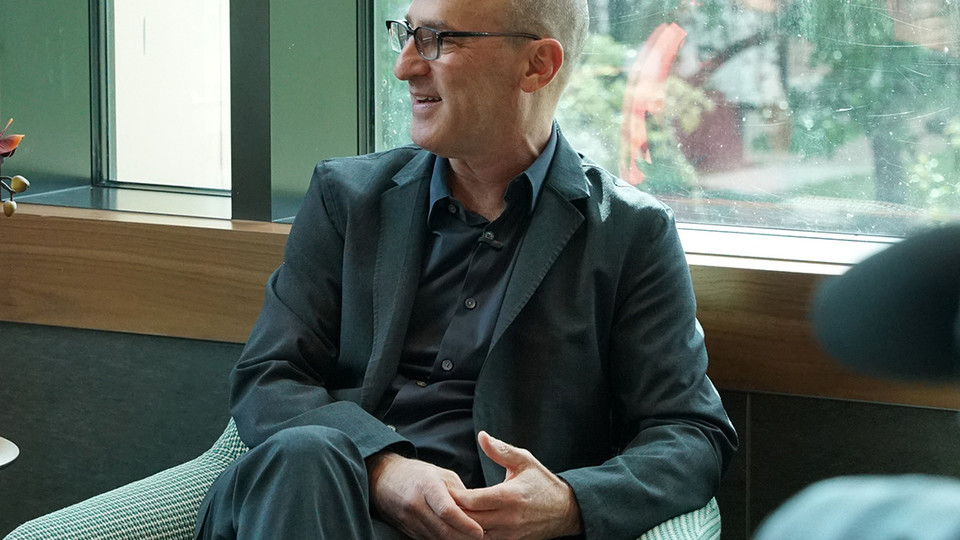
Stephen Cassell, principal at Architecture Research Office, shares a behind-the-scenes look at the making of Asha and Farid Virani Hall.
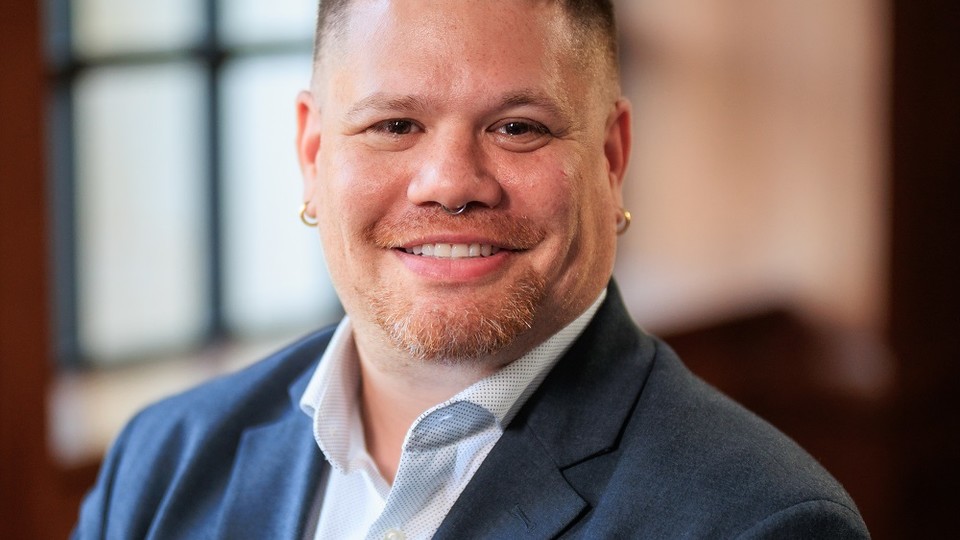
Javier chats about his path from club promoter to entrepreneur and what it really takes to build an artist's career from the ground up.