
Pivot
Alecia discusses leading fundraising and development for the Rothko Chapel, one of Houston's most iconic cultural institutions.
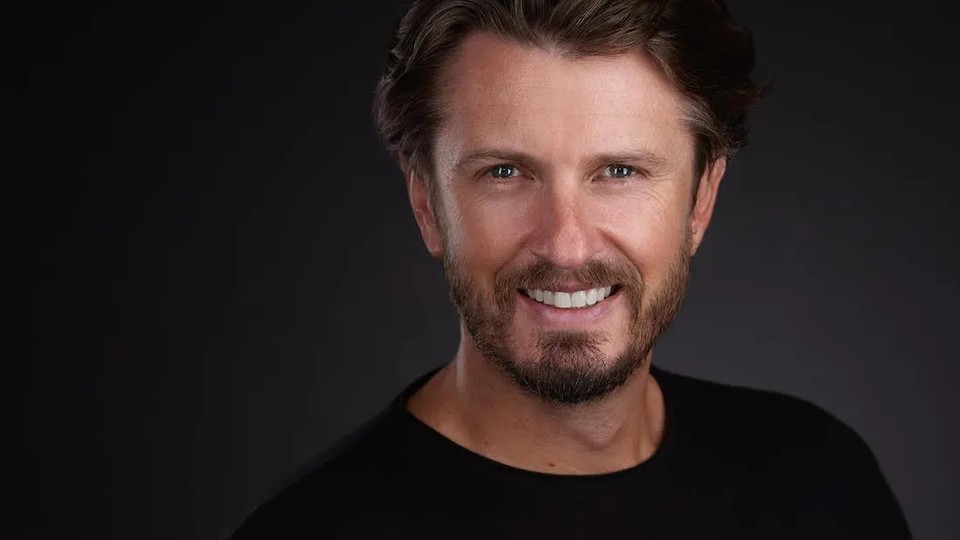
Henry Richardson, a former national champion diver, has built a career centered around health, wellbeing, and community. After earning his MBA at Rice Business, Henry founded the fitness studio chain, DEFINE body & mind, a nod to a professor’s words about defining your role in this world. Henry’s work with DEFINE has since evolved into Define Living, apartment communities with health and wellbeing at their core.
In this episode of Owl Have You Know, hosted by Brian Jackson ’21, Henry shares his journey from all-star athlete to entrepreneur, how he’s creating environments that shape behavior and improve wellbeing, and why he believes business, at its best, is a spiritual practice.
Subscribe to Owl Have You Know on Apple Podcasts, Spotify, YouTube or wherever you find your favorite podcasts.
[00:00]Brian Jackson: Welcome to Owl Have You Know, a podcast from Rice Business. This episode is part of our Pivot Series, where guests share stories of transformation in their lives and careers.
Today I'm joined by Henry Richardson, Professional MBA Class of 2009, founder and CEO of DEFINE, Define Living, and Feronia. From his days as a national champion diver to building a portfolio of wellness businesses, Henry has dedicated his career to helping people live healthier, more intentional lives.
In this conversation, we'll discuss his entrepreneurial journey, the philosophy that environment shapes behavior, what he's learned about leadership and positive psychology, and how a defining moment at Rice Business shaped the philosophy that's guided his career ever since.
Hey, good morning, Henry. Thank you so much for joining me on Owl Have You Know.
[00:52]Henry Richardson: Hey, Brian. It's great to be here.
[00:54]Brian Jackson: Where are you calling from?
[00:55]Henry Richardson: Well, right now I'm located in Mexico, just a small little town called Tepoztlán. It's about an hour and a half south of Mexico City.
[01:04]Brian Jackson: Tepoztlán?
[01:05]Henry Richardson: That's right. Good job.
[01:06]Brian Jackson: Okay. I'm trying.
[01:07]Henry Richardson: Actually, the way I was introduced to Tepotzotlán in general, I was leading a retreat to Mexico City, and it was with a group that organizes a variety of different types of events. And they had called me because their instructor had actually dropped out. I used to own and run a business called DEFINE Body & Mind, which was fitness, health, and wellness, and so health and wellness retreats were part of our annual activities.
So, they asked me if I could jump in to fill in for this instructor, and I saw Mexico City. This was in 2017. I'm from Houston, Texas, born and raised, but had never, ever been to Mexico City and had always wanted to go. And so, I signed up, like, instantly. I was like, "Yes, count me in." And I didn't even pay attention, but there was this extra little stop right afterwards at this place called Tepotzotlán. And I was looking it up, and I was like, "Oh, that looks interesting," but, you know, I didn't give it too much attention. But when I actually got there, I was blown away. It was almost like I had felt like I'd discovered, like, this uncharted territory, which is very selfish to think of because it's, you know, been in existence for thousands of years and actually has a lot of history to it. But over about five years of leading retreats here, I actually have a place down here now. I love it so much.
[02:17]Brian Jackson: Well, it's incredible, and there's no shortage of interest in your story. I was looking, kind of, at your background starting at the beginning. You know, being a national champion diver to then going to teaching sixth graders in the South Bronx, not a path that I think a lot of people expect, probably even surprised yourself. So, how did you first get into diving, and then how did that lead you ultimately to Teach For America?
[02:40]Henry Richardson: Yeah, it's fun to think about those various, I guess, decision points that created that path. You know, because I, like most kids, was very active, loved all sorts of different sports and activities. But I somehow just gravitated towards all water sports. I was a swimmer growing up, and, you know, I remember I did well with it. I was actually a gymnast and a swimmer and all these different activities, but swimming really stuck.
One day I remember just, kind of, swimming, and I actually saw at the other end of the pool these divers diving. And it just looked like it was a lot of fun, perhaps more fun than just looking at the lane line going back and forth and back and forth. And since I had some gymnastics background, I actually spoke to the diving coach, and he said, "Yeah, get on the board. Show me what you got." And I could do a couple little things, you know. But he was like, "Yeah, come by. I'd love to have you on the team."
So, fast-forward, I did that competitively from the time I was about 11 or 12 until I was 22, right out of college. It was an amazing experience for me. You know, individual sports create something that is very powerful because it's intrinsic motivation, right? And you have to learn how to manage and deal with stress. You have to manage and deal with competition. But I actually had a lower back injury in my senior year of college. And although it was, in my opinion, somewhat a huge detriment and travesty at the time, it turned out to be one of the biggest blessings because it forced me in my senior year of college to be like, "Okay, I'm not going to be a diver for the rest of my life." And I knew that, but it forced me to take a full different vantage.
I have to admit, I wasn't super confident with what I was going to do next because I had been studying finance. But Teach For America, there was something about education that, kind of, called me and grabbed my attention, and I followed that and decided to apply, and I was luckily accepted, so moved to New York and taught sixth graders in the South Bronx.
[04:32]Brian Jackson: I mean, the juxtaposition between diving, the solo sport where success is measured, I think, in fractions and seconds, and then all of a sudden to something that's performance-based on the performance of other people. I feel like between the two, it must have just taught you so much in this period of life.
[04:50]Henry Richardson: You know, it's so interesting because that, I would say, was the time in my life where I grew up the most, was when I became a schoolteacher. I was a 22-year-old standing in front of a group of 35 11-to-14-year-old kids. It was a big age group. And I remember thinking to myself, "I'm the adult in this room." And it forced me to really take this jump and leap forward into becoming an adult and actually reminding myself, being thankful to my parents, for teaching me how to manage and operate not only a classroom, but thinking through about how I could actually be a potential role model for some of my students.
[05:32]Brian Jackson: Yeah. So, I mean, you had, kind of, hinted to your lower back injury, and I think that's what brought you into yoga?
[05:39]Henry Richardson: That's right.
[05:40]Brian Jackson: I'm just curious, like, was there an aha moment, the first one where you went, "Okay, yes, this is a part of my story. You know, there's something here"?
[05:49]Henry Richardson: Yeah, this is a fun story because I remember this is back in the late '90s, early 2000s, that I took a yoga class because I was having some back pain, and the only thing I knew about yoga at the time was Madonna. If you remember, she got really into yoga during the late '90s, and she was talking about it, and she had these amazing arms. So, I was like, "All right, can't be that bad, right?" But I went to my first yoga class, and I absolutely hated it. I'm not kidding.
In the class, I was sweating, I thought, more than anyone. I was shaking more than anyone, and I was an athlete. I was literally a college Division I athlete, and the only thing I could do better than anyone else in the room was a handstand. This, kind of, is an echoing theme in my life. I was very competitive, and I just remember being like, "This is not for me. This is not for me." However, I remember I woke up the next morning. I had slept so well, and I woke up feeling really, really good.
And so, guess what? I went back the next day, and honestly, it was probably my third class, but something clicked in the third class, and it felt very freeing to get away from that uber-competitiveness and to think through that, "Actually, this is something that could be for me, that's really good for me, and I, kind of, want to feel that." So, I was doing it daily and moved to New York City, as I said. I was teaching, and it became something I did after school. It became something I did on the weekends, and then I really dove into it on the summer breaks that I had as a schoolteacher, and I, kind of, haven't stopped since.
[07:22]Brian Jackson: And then you got connected to Exhale Spa Studios.
[07:26]Henry Richardson: That's right.
[07:27]Brian Jackson: Tell me a bit about that role, and I know you went to basically grow it across five different cities.
[07:32]Henry Richardson: That's right. So, it was really funny and, kind of, serendipitous as well because my roommate happened to work at this place called Exhale, and they were a spa. They were located in New York City. They had one location on the Upper East Side, and they were opening up a new location under Central Park South. And then they happened to also be going through this, kind of, rather large expansion at the time. They were opening up in the Hamptons, in Boston, and they had talked about a Chicago location and a Los Angeles and even a San Francisco.
And so, I happened to be there, and when I first started taking classes consistently, the owner was like, "Why don't you become an instructor? We're looking for more guy instructors, and you have a clue of what you're doing, so go through the teacher training and see." And it was perfect timing because I had my summer break. I really dove into it. And I'd been teaching for the two years with Teach For America, and it was one of the hardest decisions I'd ever made because I was just finding my groove as a schoolteacher.
But those skills carried with me into this next step. And when they asked me if I'd be interested in helping them open in Boston and Chicago, I said, "Yeah, this is the adventure I've been looking for." So, the people at Exhale were so wonderful. It was such a fun time for me during my, like, early, mid-20s. Then they ended up signing on to Los Angeles. I moved to LA, and then I moved to San Francisco to help them, but the deal, the contract that they had was actually with Bloomingdale's, and it fell through. And I was living there, and I was like, "This is such a great city. I, kind of, don't want to leave yet." But I worked with this other group called The Dailey Method, and those were also some of just the kindest, nicest people.
But I was feeling this urge to grow up and make my, kind of, path, not to just simply teach fitness but to do something more, but I wasn't 100% sure what that was. But that's where Rice fit into the entire equation.
[09:23]Brian Jackson: Well, and that's exactly where I'm trying to lead us. So, I guess this is that moment where you decided an MBA or Rice was the right fit.
[09:31]Henry Richardson: That's right. I studied finance undergrad, and I had always thought about business school. And the jaunt of becoming a fitness instructor was really never a part of the plan, but I couldn't deny the fact that there was something with it, the community, the connection. But I knew it wasn't necessarily my long-term path of teaching fitness.
So, I decided to start looking at business schools, started studying for the GMAT and doing all the things you've got to do, and I did pretty decently, and I was like, "Okay, let's see." And Rice just was the perfect fit for me. Being from Houston, it was always the prestige of Rice University that attracted me. It was the program, it was the entrepreneur path at Rice. It was looking deeper into some of the different professors, and Al Napier being one of them, and just there were a lot of fun coinciding events that I said, "This is great." And I also thought maybe I could even live at home and save some money. And so, I applied to Rice, I got accepted, and I lived at home for approximately three weeks and decided, "No, that's not going to work." But it was a great time of life. It really was.
[10:39]Brian Jackson: So, I mean, during your time at Rice, you know, one of your professors, and I believe I was asked the same thing, was "define your role in the world," right? You know, what did that mean to you, and what did you think in that moment in trying to answer that question at this age? I mean, it feels like it's still young, right?
[10:58]Henry Richardson: So, my first year of, you know, the two years of business school, I'd say the first year wasn't the smoothest for me because it seemed like a lot of my classmates, you know, they knew which path they were taking from an oil and gas perspective or engineers or... There was a lot of clarity, and I was perhaps intimidated by that, right? Because I still was trying to figure out what was this next step. I knew real estate was something I enjoyed, and it's something that my family is involved in, and I had exposure to it, therefore seemed like a likely next step. But if you recall, so, I was in business school 2007 through 2009, and that was literally the time of the Great Recession.
And so, my first semester of my second year was when everything just essentially was bleak. I remember one of my professors, he said, "Look, last year 75% of students at this point had job offers, and this year only 25%. So, it's a complete flip, right? And so, things aren't as hopeful as they perhaps were over a year ago." And he said the phrase you just mentioned. He said, "Listen, don't take a job just because it's available. Take something that's going to define your role in this world." And I just, like, stopped in my foot track, like, this may not be exactly what I do, but if I do, if I open up a studio, a fitness studio, I'm calling it DEFINE. That's exactly the thing I needed.
And I actually have to admit, I cut my next class, which I am not one prone to do. I feel like I'm a good student, right? But I cut my next class, and I filed my DBA for DEFINE in Harris County. That, kind of, just gave me this momentum, and I decided to work with Al Napier. I did my sweat equity case study for this particular business, which was DEFINE. And I ended up doing an independent study in my second semester of my second year, so my last semester, with him as well. And it really, kind of, solidified my goals and my direction.
[13:03]Brian Jackson: And that gave you... I mean, having him help you gave you the foundation to go, right? And like, without that, it feels so daunting to approach, "How do I start something?"
[13:13]Henry Richardson: Yeah, I carry this theme, it seems like, in most of the areas of my life. I'm creative, and I'm adventurous for sure. I mean, I used to dive from a 10-meter platform. But I'm not just, like, blindly foolish in anything I do. I'm pretty calculated in terms of the approach that I take to most things. Like in diving, you start on the one meter, and then you go to the three, and then you go to the five, and then you go to the seven, and then you go to the 10.
And so, there's these steps that take you along this path, and the exact same thing happened with me at business school. And it was so powerful because Rice was the quote-unquote "platform" for me to dive and jump into my business, and it gave me the path and the training to feel confident. And I tell people that my first month of business, I literally hit the different benchmarks that we had set in that independent study for goals based on just the fact that I was able to sit with it for months and really think through the process. And I sadly did not hit the second month and the third month and all those things, but the first month, just because I was so focused on that first month to make sure we were hitting certain levels, we literally were, like, exact on our costs and exact on our revenue goals. So, it was fun.
[14:29]Brian Jackson: So, then building DEFINE, I feel like the thought of "environment shapes behavior" really comes into play, and it's a common thread in your story and in everything that I think that you've ultimately built. When did you first realize the concept and then also decide that, "Oh, this has such a profound impact on who we become"?
[14:49]Henry Richardson: That's insightful. That is something that has always been a part of the DEFINE message. So, the full story of DEFINE was in 2009 we opened our first location, and then in 2010 we actually opened up a second location in Houston. And around that same time, 2012, we were opening up our third, plus also we had some interest in people franchising or expanding. We first opened in The Woodlands and Sugar Land, but then we opened up in Ohio.
So, we really solidified our franchising program at that point, and so I tried to invest a lot into our teacher training and our programming and everything. But what stood out was, you know, the franchises that created these environments that were a part of the best hour of your day, they literally welcomed you, not only just like cheerleading. That's not what, like, I'm advocating for, but there was this authentic sense of well-being being around this person. Like, they knew something. They wanted to share, they wanted to love on you, they wanted to take care of you, they wanted to push you, they wanted to challenge you. That environment is what made our franchises successful, and not all of them could create that.
And so, that was when I was like, "Okay, how can we train our franchises to create these powerful environments?" Well, fast-forward, 2020 comes around, right? And so, the pandemic changes the entire environment and makes everything very difficult. But I just so happened to sell all of my Houston area locations to franchisees. Things evolved, and things shifted and changed, and that's when I started to get involved in real estate with health and well-being, and that's the phase and chapter I've been in for the past three years now.
[16:34]Brian Jackson: Yeah, so that phase, what does it look like to talk about environment beyond just an apartment lease? Like, what's the expansion there?
[16:44]Henry Richardson: That's a great question because when you think about it, if I were to tell you, "Oh, we're building well-being multifamily apartment communities," it's like, okay, that sounds interesting. There are amenities that you're adding to make well-being a service for the residents. That's probably what most people take away, and that's true. But it's so much more than well-being amenities because we do offer infrared saunas, we have cold plunges, we have our boutique fitness classes, we offer cooking and meditation. So, those could be replicated by other groups. But what is much more difficult to be replicated is a community and an atmosphere that creates its core central message around well-being.
And so, from our leasing, from our touring, from our introduction to residents to all the different programming that we offer, we incorporate this entire directional position called a Community Wellbeing Director, and they're very hands-on with each of the residents, and it literally creates this beautiful sense of connection. And then their job is training to help that individual to build community. And so, we go through an actual 30-minute consultation with each and every one of our residents when they're moving in. We ask about goals. We ask about, you know, health and wellness and fitness. We ask about where are the areas they want to grow? What are some of the things that are preventing them from growing?
And so, we have one of our Community Wellbeing Directors at Define Living, which is in Houston. She's worked for me for over 13 years, and so she really gets the message and the mission, and it's been really fun.
[18:26]Brian Jackson: It's got to be fulfilling. Like, you're doing more than just the place to live. You're actually building that community and life, and you're impacting people in a more profound way. Does that drive you, too, to have that type of impact?
[18:43]Henry Richardson: Yeah. The thing that drove me to even start DEFINE is community. And, you know, I've asked myself this question a lot, like, "Why are you so wanting to drive community?" And it's because, you know, I have found in some of the most challenging moments of my life that those have been the most profound and uplifting things in my life, is the people around me. And I am very close with my family, so that is a huge part of my community.
But I would say that my diving community, when I was in diving, they got me through some of those challenging moments. Like my back injury, personal things that were going on, making those transitions are big for 20-something-year-olds. But it was my diving friends and the closeness that we had. And I remember the same exact thing with my Exhale groups. We went through our instructor trainings together. We really bonded over something that was really powerful.
And so, you just can't replicate that inauthentically, right? You have to have those things in life. And it seems like we're moving away from those senses of connection and community. And I'm not advocating for only Define Living, but I think we're doing a good job of building community. I think there's a lot of ways to build community, but it just so happens that it makes it really easy when you have a place that you actually live and you can go and take a class at no extra charge, and you also happen to see people that you connect with and have fun with, and then you happen to see them in an elevator and you can have a conversation with versus that awkwardness that is often the case in most apartment communities. So, yeah, community is what creates that drive.
[20:24]Brian Jackson: No, it does. I think, like, you're right. This world is changing. I think of remote work. Like, you don't have that sense of community at work that you used to have because you're not huddled around a table together. You're in your house, like I am right now. I lived in an apartment in Boston, same thing. The only community we could really find were the other folks who owned dogs.
[20:45]Henry Richardson: Yes. Right.
[20:45]Brian Jackson: And then we all get to know each other because we're in the same space, and I know they like dogs, and they know I like dogs.
[20:52]Henry Richardson: It's so true. Yeah, and it is, it's those shared interests that create some of the stronger communities no matter what setting it's in. And I know that there's a lot of people that are doing a great job of incorporating technology and incorporating different programming to build that sense of community.
And so, now it's centered around something that hopefully, you know, when you think about health and well-being, and I'm very intentional not to use the term "wellness" as much as "well-being," and the reason is because I feel like wellness has turned into something that you have to chase. Like, you have to buy wellness. Like, you have to take a supplement to achieve wellness, or you have to inject wellness into you. You know? There's all these ways that “wellness” is being utilized.
And so, to me, it's really about well-being isn't something you chase, it's something that you develop. You grow it. It's already intrinsic. You just have to put a little effort towards it to make sure that it's there. And the same thing is true with creating community. We all have that ability to create connection. We just have to give ourselves the opportunities to be able to actually do it instead of sometimes the easier route, which is just to go home, watch Netflix, or get on social media, you know? And it's a masquerade because that sense of connection is slightly tapped into on social media, but it doesn't create that soul-fulfilling element of it.
[22:09]Brian Jackson: Yeah. So, as a leader, you've had to have evolved because what you're trying to do now is a totally different definition of building than I feel like when you were in diving or as a teacher in Teach For America. What does that look like today as being a leader?
[22:26]Henry Richardson: Yeah. I hinted at it earlier that I'm a lifelong student, and I feel like the most important thing for me is to be able to, first, be able to speak the vernacular in whatever industry I'm working in, right? And so, since I've really moved over towards real estate and the development side, as well as also property management, I've done some certifications, right? I've made sure that I'm there and able to communicate and speak and think in terms of that entire industry.
But overall, aside from just being a student, I think being a leader, there's two things that come to mind for me. The first is the most important, which is, like, not to try to pretend like I know something that I don't, right? For me, when I first stepped into some of these things, I had to really rely on the people that were already great property managers, the people that were already really involved in understanding the budgets and the financial aspects of how our properties run. And I didn't want to step in and be like, "This is going to do so well if we do this," you know?
I wanted to sit with them and learn and be a part of understanding the conversations and the concerns, because the concept of a strength and a weakness is also very relevant for me. Because a strength represents our ability to rely almost instinctually on what we feel and know is going to happen. Whereas a weakness, there's a lot of blind spots within that. And so, I wanted to be exposed to as many of the potential weaknesses because we're not talking about, like, a 1,500, 2,000 square foot studio anymore, right? We're talking about, like, a 260-unit apartment community, and we're about to start developing our 388-unit apartment community.
And so, I have to make sure that there's no hubris involved in this process, and it really is a focus of intentional, directed work. But the second thing about being a leader, it also echoes this concept of how can you inspire and help people to see things somewhat differently based on just a little shifting of our head, saying we could be almost an industry disruptor in this entire way without having to shift at all except for just looking at it slightly differently. And we already have the homes. We already have the beautiful floor plans. We already have the beautiful facilities. But let's bring a new culture, a new environment, so that we can actually really not just say that we're a well-being community marketing-wise, but actually make our residents improve their well-being.
[24:53]Brian Jackson: I feel like making this pitch to someone has got to be challenging, right? Because a lot of it... I mean, these are big words that have a lot of meaning to it, and they don't know if it's a gimmick or, you know, like, how do you broach that and actually get to the point of like, "Here's the proof of concept. This is worthwhile"?
[25:14]Henry Richardson: 100%. And that from day one was always my biggest concern. I don't want this to be gimmicky. I want this to be focused on how can we literally take a resident, measure their well-being from when they first move in, and then see how it develops and grows. And so, the other part of this equation is I actually went back to school right before the pandemic to study and focus on well-being. So, University of Pennsylvania has this positive psychology master's program, and I got really involved and invested into it.
In fact, I teach at that program as an assistant instructor right now, and I have been for the past five years, because it's not something, again, that's a gimmick to me. It's how can we truly create an environment through research, measure our impact, and see it create a positive change in whatever environment we're in. And the funny thing about positive psychology is it was super embraced by education, so private schools, public schools, as well as also in the military. Positive psychology focuses and studies on resiliency, on grit, because that's the most important aspect of having that sense of positive. And when I say "positive," it's not positive thinking. It's not being happy all the time. It's literally thinking about what in this situation can help me to thrive to get to where I want to go. So, there's a lot of goal setting. There's a lot of motivation, and then focused on that.
And so, I feel like for me, when I think about how to ensure this is no gimmick, I rely a lot on those research components, but more importantly, we incorporate an assessment tool with our residents so that we can look and see how we're performing. We have actively put in an app that our residents can literally just pull up and say, "You know what? I want to do meditation," or "I want to do one of the cooking classes," or "I want to take an online fitness class." And having all those many, many, many years, over a decade, of having content that we've recorded, we have a lot of different opportunities for our residents to tap into. So, it is much more than just a gimmick. It's something really fun for us to be able to apply and see it be effective.
[27:26]Brian Jackson: So, you're expanding Define Living. You've also developed the new facility called Feronia, which is where you are now. Tell me about Feronia. If I were to show up on a Friday and I'm exhausted from my, you know, day job here, what would you hope I feel when I leave on Sunday?
[27:45]Henry Richardson: Absolutely. I don't have to do anything because this space does it on its own. Honestly, there's something magical about Tepotzotlán. Like I said, I visited, and it captured my attention, and it's literally just because, A, the nature. The mountains and the rocks here, it's like Avatar in the sense that there are these, like, floating cliffs and the clouds and everything. It's quite spectacular. The other thing that's so great is in the summertime, the highs are in the 70s, and it gets into the low 60s, and it kind of is consistent to that year-round. But it's extra special in the summer just because, as we all know, in Houston, Rice area, it's pretty hot.
But you're going to come to Tepotzotlán, this is like authentic small-town Mexico that feels very untouched. In fact, there's no Starbucks. There's no chain hotels or chain restaurants of any sort here. It's all locally owned by ordinance. And behind each and every gate that opens up, you can't help but look and just see these incredibly lush, beautiful gardens and homes. And so, one day we were looking, and it was a house that was for sale. And then the realtor, she told us that there was a house right next door that happened to also just be for sale. And sure enough, we walked in, and we started to look around. We're like, "Yep, this is it. This is the one." Because you could see that it needed a little extra love, but it was also a space.
And so, I had just recently sold my studio businesses in Houston, and I knew I wanted to incorporate still something to do with health and well-being, but because this was prior to Define Living. And I thought, "You know what? This could be a really powerful retreat space." And it'd be an intimate, powerful retreat space, and that's been the vision. And we've slowly evolved it into becoming that. And I'm excited because if you were to come on a Friday, by the time you leave on Sunday, you will have had some of the most delicious meals of your life. You will have had some of the most incredible views and experiences from a hike that we took to visit a pyramid that's here locally. On an ideal day, you might see a UFO or something.
No, I'm just, kind of, kidding. But you would get all sorts of just open-hearted relaxation built into this entire process because it really truly is a special, magical, in fact, they call it an energetic place. The history of it has a lot from the Aztec culture. One of the main gods, Quetzalcoatl, the Feathered Serpent, is said to have been born here, and so it has a rich history. Just learning more about the indigenous culture really has been fun and powerful. And historically, it is a place for health and healing, and so they do all sorts of different yoga retreats here. They do all sorts of different massage therapies and other therapies that are geared towards well-being, and so of course it captures my interest.
[30:46]Brian Jackson: And then translating your vision of DEFINE, you know, across the border, cross-culturally, what was that experience like?
[30:54]Henry Richardson: Yeah, so creating retreats, it's fun. It's just a lot of fun because without fail, every retreat has one or two people, sometimes more, that they're just high-strung, right? Whether it's traveling to a foreign country, whether it's low blood sugar, whether it's just general being slightly uncomfortable, therefore the stress comes out. And it is so powerful to watch people instantaneously get out of that van and just take a big sigh and exhale.
And so, for me, DEFINE has been a process of, okay, how can we help people tap into something that's going to serve them to be their best in their daily lives, to be better parents, to be better at their jobs, to see more meaning in their lives? You know, we all feel that when we are finished with an exercise class or a good workout, like we can conquer the world. But then how can we, kind of, sustain that and create that feeling throughout our day, throughout our lives? And doing a retreat is an extension of that from a bit more of an extended amount of time.
[31:56]Brian Jackson: I think of this as like the intersection of business, positive psychology, and a bit of spirituality. You know, how do you find those three ideas end up complementing each other?
[32:07]Henry Richardson: Yeah. In fact, that's what I focused on in positive psychology. I talked about how business is actually a very spiritual process. It is discipline, it's devotion, it is connecting to something that's bigger than yourself so that you can be better than just the individual self that you are. And I think business is very much like that. I feel like if you are working in an industry that you're passionate about, that you want to contribute to, it can be something that can be utilized for the good of humanity. You know, doing well by doing good, that whole mindset. And it sounds, kind of, like conscious capitalism, right? Because there are a lot of overlaps to it.
But the notion that spirituality can be a really grounding, practical force for us, not just as an individual, but you know, even like as a team, if we were all to go take a yoga class and, kind of, really get into that synchronistic mindset, we can then go and do bigger, better stuff together as well. And the same thing could be true for an exercise class or a cooking class or a meditation class, all the above.
So, yeah, think of it as the body, the mind, the spirit of business. The body being the people that work at the business. The mind being the entire mindset and making sure that we aren't overworking to the point of burnout and stress, but also learning how to manage those times when we do have to work really hard and put in those long hours. And then the spirit of business. So, "spirit," the word itself actually means to breathe, to be in spirito, to be in breath. To be filled with life is essentially what the word "spirit" means from a Latin sense. And so, if we can fill our entire organization up with just breath and life, we can be better at our business, that's the goal.
[33:51]Brian Jackson: So, I mean, you're applying all these things into business. You're learning them on your own, applying it to your own life. Is there something that you've brought in that's had the biggest impact?
[34:01]Henry Richardson: You know, the pandemic challenged me hugely, hugely because I had to pivot rapidly. Luckily, we were in a point where we were already starting to offer online fitness classes. We were just getting freshly into this. And that phase was really focused on how can I make sure that each and every one of our studios was going to thrive and do well and try to survive this entire experience. And it was really, really tough because I took a lot of it personally when a studio was having to close, or, you know, we had a couple studios that were up for their lease renewals, et cetera, and you're not going to want to renew your lease in the middle of a pandemic, which was unfortunate but understood.
So, for me, that timeframe, that shift was the challenge for me to say, "You are prepared physically. You are now prepared mentally, emotionally because of your studying of positive psychology, the study of grit, the study of resilience that this is your test," right? This is your test to take it to the next step.
And I will say, you know, it's fun to think about how things evolve and bloom and change because I wouldn't have expected to develop Define Living, but it is because of the pandemic. And you said it earlier, working from home created a sense of disconnection. The COVID pandemic created a sense of disconnection. And I saw even with my own son, like, just like a bit of a hyper-paranoia of, like, being around other people. And we were already doing the business of like starting to build an apartment community, and that's when I said, "Let's do this. Let's incorporate a Define Living mindset that really is focused on health and well-being services."
[35:43]Brian Jackson: Well, the timing of it all, it was needed. So, if someone were listening today and they feel stuck or disconnected, which I think in this new world that we live in is so probable, what's the first change that they could make that would help to create an environment where they're more likely to thrive?
[36:01]Henry Richardson: You know, there's this researcher, her name is Barbara Fredrickson from the University of North Carolina, and she talks about the broaden-and-build theory. And it's so simple, but it is so, so powerful. And the concept is, one little thing of positive broadens, and that little broadening of your perspective, of your emotional well-being, of your thinking process, that little opening can help you to start to build a new pathway. You just have to make sure you consistently create those new paths, right?
And so, how do you do that? Well, that's where life becomes really fun. What's one thing that you can look forward to? What's a song you can push play on right now that makes you feel a little bit better, that you can do while you're doing something else? That then just creates a new regimen. So, the concept of positive psychology is really centered around awareness, which is to say, when you find yourself constricted or "below the line" is a term that I like to use. When you're below the line in fear and stress and anxiety or whatever it might be, what's that one little thing that you know you can go to, even if it feels a little superficial, that helps you to just get back to either the line or will help you to open up your viewpoint just a little bit?
And I'm not going to lie, sometimes it's like a bite of ice cream. I'm not saying it's like a whole big bowl of ice cream, but sometimes it's a little sweet, fun, hedonic, pleasurable type thing that can help us to find it. But I would say the real powerful impact with the things that really create long-lasting well-being, and I know for me, music is a huge thing that I can use. All right, put on a song to make me get into a slightly different vantage, and before you know it, you're, kind of, moving in a little bit of a different energetic path. And so, how can you think through that and then give yourself perhaps more longer-term goals to look forward to that create positive change?
[37:55]Brian Jackson: That's great advice. So, our listeners, after this episode, maybe click on the one song that gets you started.
[38:03]Henry Richardson: It's true. And it sounds so simple, but it's the simplistic things that make it so powerful, too.
[38:09]Brian Jackson: Yeah. So, back to the question "define your role in the world," nearly what, 10, 15 years later, how would you define it today?
[38:19]Henry Richardson: I pause on that because I don't want to just sound like a broken record referencing community. But I'm going to incorporate a little bit of a few things that we've talked about because I have to think through this from an almost a spiritual perspective in the sense that I think all of us are given some innate strengths, and then over time we develop a variety of strengths. I know my strength is I appreciate excellence, I appreciate beautiful things, that's one of my strengths. I know I have a strength of creativity and caring, but at the core of it all is the strength of just love. And that sense of love for me is, like, the most important thing because we live in a day and a time where there's a lot of agitation and quick to bite.
But I do think that if we can find something that is at the core of who we are, want to be, and our strengths, we're just better versions of ourselves. And so, my role is to use my business as a vessel to create positive change from a loving place. And I have to make sure that we are very focused and strict about the way that we incorporate it because I don't want it to be perceived as willy-nilly. I don't know any other way to describe it right now. But I want it to be focused on something that is serious, but at the same time that the residents that are there, they feel that sense of uplift and joy. So, that is my role. My role is to continue to build communities and to ensure that we are making positive impacts in a very measurable, practical way.
[39:53]Brian Jackson: So, I have one selfish question. I'm recently engaged to my partner.
[39:57]Henry Richardson: Congratulations!
[39:59]Brian Jackson: Thank you. We've been looking at different places for a wedding. I know you were married at Feronia.
[40:04]Henry Richardson: That's right.
[40:05]Brian Jackson: I'm sitting here thinking, like, how special to get married at a place that you built together and that you're utilizing to impact people in a positive way. I would love to hear a bit about that story.
[40:18]Henry Richardson: I'd love to tell you it because it really, truly was. We'd discussed getting married off and on a little bit, but never really fully had this huge push to do so. But once Feronia came into our lives, it became very clear that this was not only a special place, but we wanted to share, but truly it was something that was going to be a part of our story with our son for the rest of our lives. And so, we couldn't think of a better way to just create a really powerful moment.
And so, our son, who is now 15, so we got married three years ago, so he was a little bit younger at the time, obviously, he was very integrated into the entire process, into the wedding. It was really fun. He stood up there, and my partner is Persian, and so he speaks Farsi, and so our son speaks Farsi and reads it and writes it, and he speaks Spanish because we had lived in Mexico for a while and he'd studied it in school. And so, he was able to be integrated into the whole process and say a few words, and it was the best version of us is all I can say.
[41:23]Brian Jackson: Wow. Well, Henry, it has been a sincere pleasure talking with you. Thank you so much for joining me on Owl Have You Know.
[41:30]Henry Richardson: Thank you, Brian. Honestly, being a part of the Rice community is such a huge gift in my life, so thank you for including me.
[41:41]Brian Jackson: Thanks for listening. This has been Owl Have You Know, a production of Rice Business. You can find more information about our guests, hosts, and announcements on our website, business.rice.edu. Please subscribe and leave a rating wherever you find your favorite podcast. We'd love to hear what you think. The hosts of Owl Have You Know are myself, Brian Jackson, and Maya Pomroy.
Alecia discusses leading fundraising and development for the Rothko Chapel, one of Houston's most iconic cultural institutions.

Kenzel chats about the inception of Three Keys Coffee, why entrepreneurship was a surprising path for her, and how Rice Business provided the right launchpad.
Scott chats about BeONE Sports, his startup combining AI and motion-capture technology to help athletes elevate their performance and prevent injuries.