Field Notes
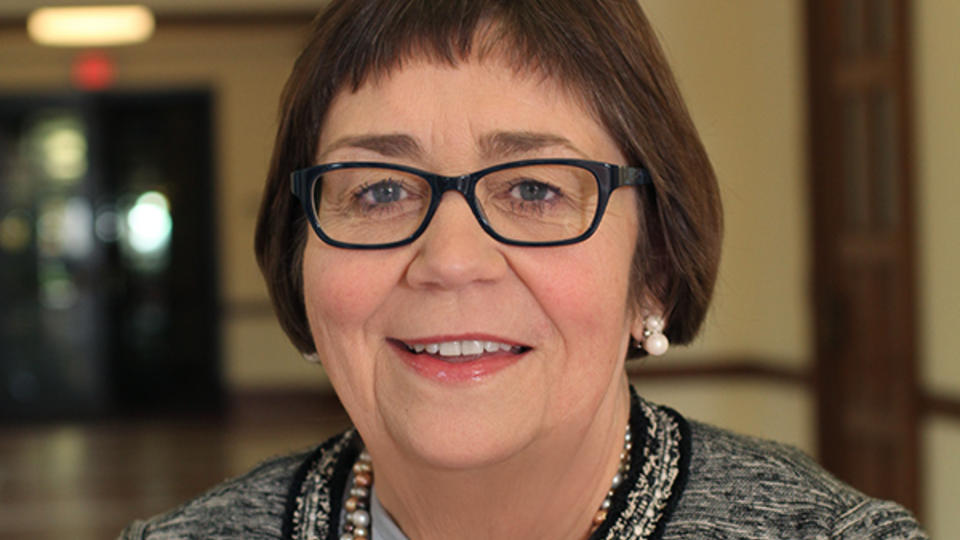
Marie shares her top tips for landing a new job.
What does it actually take to bring a company public and how do founders know when it’s time?
Jan Goetgeluk ’10 is the founder and CEO of Virtuix, a virtual reality technology company that went public on the NASDAQ earlier this year. Jan’s career has taken him from investment banking at JPMorgan to building a technology company from the ground up, raising more than 50 million dollars in private capital, and ultimately navigating the transition to the public markets.
On this episode of Field Notes, co-host Brian Jackson ’21 chats with Jan about his experience leading Virtuix, how founders can determine whether an IPO or listing directly is the right move, the financial and operational realities of the process, and what changes once you’re running a publicly traded company.
Subscribe to Owl Have You Know on Apple Podcasts, Spotify, YouTube or wherever you find your favorite podcasts.
[00:00]Brian Jackson: Welcome to Owl Have You Know, a podcast from Rice Business. This episode is part of our Field Notes series, where experts from the Rice Business community share practical insights you can apply in your own work and life.
Today we're welcoming back Jan Goetgeluk, a 2010 graduate of the Rice Business full-time MBA program and the founder and CEO of Virtuix, a virtual reality technology company that went public on the Nasdaq earlier this year. Jan's journey has taken him from investment banking at J.P. Morgan to building a technology company from the ground up, raising more than $50 million in private capital, and ultimately navigating the transition to the public markets.
In today's Field Notes episode, we're taking a closer look at what it actually takes to bring a company public. We'll discuss how founders can determine whether an IPO is the right move, the financial and operational realities of the process, and what changes once you're running a publicly traded company. Hi, Jan. Welcome back to Owl Have You Know.
[01:00]Jan Goetgeluk: Hey, Brian, thanks for having me.
[01:02]Brian Jackson: It's a pleasure. I really appreciate you taking the time. You've got such an interesting story. You're the founder and CEO of Virtuix, and so our listeners get a little bit of background, it's best known for the Omni treadmill, right? Which allows users to physically walk and run through virtual environments, which are becoming, I think, more prevalent now with technological changes.
But I wanted to know what inspired you at the start to leave a career at J.P. Morgan and then pursue Virtuix full-time?
[01:34]Jan Goetgeluk: Yeah, it's a good question. You know, I joined after business school at Rice, I joined J.P. Morgan as an investment banker. But I had promised myself I would quit that job within four years. I think I gave myself four years to quit that job and do something entrepreneurial. I even wrote a, funnily enough, I wrote a short contract to myself. I'm going to, you know, quit my job. Because, you know, at Rice, I did all the entrepreneurship classes, and that was really my focus, even though I ended up being in finance. But my goal was always to start a business or buy a business.
And so, the risk is that you're at a big career somewhere making a lot of money, and then you get stuck. You get used to the cash flow, and then you, kind of, give up on your dream. So, I promised not to do that. I was at J.P. Morgan, you know, working 80, 100 hours a week, seven days a week.
But I was looking at different opportunities, and, you know, was fairly involved in the early days of virtual reality at that time, or the renaissance of virtual reality, and I thought it was going to be the next big thing. I was in online chats with, you know, Palmer Luckey, who then founded Oculus, and is now having a lot of success with Anduril, so we go way back there.
But I thought the biggest problem that hadn't been solved yet was how to walk around inside that virtual world. Instead of just sitting down, pushing buttons on a controller or a keyboard, I wanted to physically move around inside the virtual environment. So, I thought you need something like a treadmill, but in 360 degrees, an omnidirectional treadmill. And then, you know, nothing existed. I Googled that, and there was nothing out there.
And I actually have a mechanical engineering background prior to my business school studies. I have a master's in mechanical engineering. This is a bit of a mechanical problem, right? It's a mechanical treadmill. So, I started working on that while at J.P. Morgan. You know, I started working with a design house and then a prototype shop at an airfield somewhere down in Pearland.
And so, I would, yeah, I would sneak out of the J.P. Morgan office at 2:00 p.m. sometimes, drive down to Pearland, check on this prototype we were building, or I was building, then come back to the office and work some more until 2:00, 3:00 a.m. in the morning. So, it was a pretty hectic time there for a while. But I thought it was going to be the next big thing, and that's how it started.
[03:54]Brian Jackson: That's incredible. So, thinking back on those early days and, you know, seeing how far you've come, give me one of, like, the biggest milestones or moments where you're like, "Aha, this is it. You know, I was right. From chat room to reality, it's coming together."
[04:09]Jan Goetgeluk: Yeah, I was wrong at first a couple of times. I remember being at the prototype shop in December. I think it was my birthday, December 8th, middle of the winter, dark outside. I'm testing out this first prototype, big wooden dish, and it just didn't work. And I thought, "Okay, wow, been working on this now for 12 months and shoot, yeah, bad idea," you know. But then over the holidays, I thought, "You know what? We can probably make a few changes and improvements, and what if we do X, Y, and Z?" And then didn't give up. Went back to the drawing board, kept working at it.
And then two, three months later, we had a new prototype. It actually worked. And then I made this video of me playing a famous game called Skyrim on the Omni, that first wooden prototype of the Omni, with these old VR goggles on. And that video I put online on YouTube, and it went viral. You know, hundreds of thousands of views, big press cycle, "Check out this guy playing Skyrim in VR on his contraption."
And that's when I thought, yeah, I was still at J.P. Morgan at the time, you know. But that's when I thought, "Okay, I think I'm onto something here. I think this is going to work." And that's when I decided to quit my well-paying banking job. I was a third associate at that time, and quit that to start this crazy venture.
[05:28]Brian Jackson: You go all in. And I feel like with R&D, it's like burn and churn of money. So, you're going out to market, you're trying to get private capital, how difficult is that pitch, and what is that relationship like in those early days when you're building this product, and there's phases to it and improvements and, "Hey, we made a mistake, but we're going back and we need a little more"?
[05:49]Jan Goetgeluk: It's very hard. Raising money is the hardest part. Yeah, up until I left J.P. Morgan and then the first few months after that, I was self-funding everything with my savings. And I saved every penny I could, kept driving my old car, didn't spend money on luxuries. Still don't, but especially then. I, you know, used every penny I could to just build on this prototype.
But then the first thing we did was a Kickstarter campaign, which went well. We raised $1.1 million on Kickstarter, which is basically a disguised presale platform. Back then it was fairly new, and we were in the top 10 of most successful campaigns at that time for hardware. And we raised $1.1 million, but that was not nearly enough. Soon after, I realized that was not nearly enough to build our product and bring it to market.
So, then we did our first seed round. Very hard, very difficult pitch. Big piece of hardware. VCs hate hardware, for good reason, by the way. Hardware is, they say hardware is hard. It's a cliché, but it's so true. Yeah, go start a software company. Don't start a hardware company.
And then we were on Shark Tank, by the way, in those early days. Pitched on Shark Tank. Didn't do a deal on the show. But then a few months later, I ran into Mark Cuban, and we were doing our first seed round, and he actually invested at that time and invested several times over various rounds. We got a little bit lucky there because Meta bought Oculus, Palmer Luckey's company, for I think $2.4 billion in I think the spring of 2014, and suddenly everybody started to be aware of virtual reality, and it was going to be the next big thing.
And then suddenly we got a little boost from that, and we were able to close our first seed round. Mark Cuban came in, a couple of venture funds, small funds, and then we closed our first round, got oversubscribed, and that's how it started. But man, those first six months of fundraising, there were a few moments where I thought we weren't going to make it.
[07:53]Brian Jackson: So, you go through all of that, you start to have more success, and then there's a moment where you go, "Okay, let's take it public." Like, how do you get to that, and all of a sudden it's like this is the right time? And I guess weighing the benefits of do I continue to fight and keep this thing private, or do I open it up?
[08:11]Jan Goetgeluk: Yeah, it's a good question. You know, we raised, ultimately, over various rounds in the private markets, we raised $50 million, five zero, from funds, family offices, a couple of equity crowdfunding rounds, which always worked really well for us. So, we had a lot of retail investors.
And then we were starting to get pitched by investment banks about taking the company public. And, you know, not a traditional IPO. We didn't do a billion-dollar IPO. It was actually through a direct listing, which is a nice process that we did. It's a fairly straightforward process, and it gave us access to the public capital markets to keep scaling the company.
So, for a variety of reasons, it was the right choice for us. Access to public capital, some liquidity for our longstanding investors, having public stock as a currency potentially to do M&A. So, it was the right move for us after, gosh, 12, 13 years as a private company to go to Nasdaq, and that's what we did early this year.
[09:09]Brian Jackson: Yeah, so the conversations with the banks, I mean, I guess you shop around, right? And you go to each one, and they give you their pitch on how they would manage it and take it to market. Like, what does that look like?
[09:19]Jan Goetgeluk: Yeah, you typically talk to a few different banks. In our case, again, it wasn't a traditional IPO where the big bulge brackets come to what they call a bake-off. It was more on the mid-cap, small-cap sides, around the story of a direct listing. We had a couple of different options there, but we decided to go with Maxim, Maxim Group out of New York, who is one of the leaders in direct listings in the small-cap space.
Investment banks, ultimately, they all make too many fees for the work they do. All the work is ultimately done by the lawyers, so don't pay your bank too much. You know, keep the money for the lawyers who do the actual work. But look, there's a lot of criteria, right? It's not that you can just go public because you want to. I mean, the Nasdaq has some very strict listing requirements that have actually gotten more difficult to attain. But we met all that, so we were able to do it, but it's not that just anybody can do that.
[10:09]Brian Jackson: Yeah, understood. So, if a founder, you know, and we at Rice, we're fortunate to have a lot of business owners and startups, but if someone were to come to you tomorrow and say, "Hey, I want to take my company public in the next two years," what would you look at to determine whether they're actually ready?
[10:25]Jan Goetgeluk: Yeah, you want to start planning. I mean, the whole process of deciding to go public and actually going public, I mean, it's going to be at least nine months. That's pretty quick. That's in a direct listing scenario. An actual underwritten IPO is probably longer than that, because then you have to deal with the right windows opening up for your IPO. With a direct listing, the benefit is you have a lot more flexibility insofar as timing. You don't necessarily need to wait on the right market window. You just, kind of, go, and it's okay.
There's a couple of key criteria around valuation, market cap, shareholders outstanding, float. So, we were ready because we've done a lot of equity crowdfundings. We were already partially public, in a sense. We had some filing requirements with the SEC. We had a lot of the requirements to actually take it to Nasdaq. But it's a fairly involved process. The most difficult part of it is the audit, because it's not just an independent audit, it's an audit by what is called a PCAOB audit, which is for public companies, which is very taxing.
I mean, that process is probably the longest pole in the tent to pass. You need to have all your books in order, and not just the books, but have a team in place that can handle all the requests that a process will produce. The key is to get through your filings with the SEC. And so, you file an S-1 registration statement, which first you do confidentially, then you flip it public at some point.
But you go through different, several rounds of comments with the SEC, and that's the longest process. And before you get to that point, you need to have your financials ready. The problem is, you have your financials ready and audited, and then you file with the SEC, and then you go through your commenting process. But if it takes too long, at some point your financials go stale. And then you have to have your next financials ready, and then you have to get those audited.
And so, if there's hiccups and you miss, you're stale on your financials, you suddenly have a much more process to go through because you have to do it all over again for the next financials. So, that's a bit of the key challenge around that. But it's, you know, getting the S-1 ready, getting through the SEC review process, getting through the Nasdaq review process, and then waiting on the right moment to go to market.
[12:40]Brian Jackson: Okay. And you said, I mean, you've done a direct listing. I'm sure you're evaluating what the traditional IPO, reverse merger. There's other options, right? How did you know that this was the right way?
[12:52]Jan Goetgeluk: I think there's three main options. You have the more conventional underwritten IPO, where several banks will underwrite your offering. You have a direct listing, which is what we did, which is basically you're just going to directly list your shares on the exchange. You can still raise money with that as well. We raised, all in all, about $20 million in conjunction with our listing, with a PIPE, private investment in a public entity, and then warrants thereafter.
But you're not waiting on market conditions, and there's no bank taking ownership of your shares. You just list them directly on the exchange. And then you have the SPAC process. That's a third option where you find a SPAC, a public company shell that you merge into, and then you de-SPAC, what they call a de-SPAC process. So, that's another method. We didn't do that one. That's a bit more complex, I'd say. There's some more nuances to that. But those are your three main options.
[13:47]Brian Jackson: I feel like you've already hinted at this sounds like a terribly expensive process, and I won't ask you to tell me what it costs, but were there expenses involved that you just didn't anticipate?
[13:58]Jan Goetgeluk: Well, you know, it's not too bad. I mean, if you think about it, PCAOB audit, two years of audit, call it 100 grand to 200 grand. Then your legal fees, which you can negotiate and cap them. You could probably find a good law firm that's willing to cap them for you at a couple hundred grand. That's probably the biggest cost.
And then the banking fees are all contingent on the financing. The banks make their money on any money you raise, so that's not really any cash out of your pocket. So, you know, all in all, you could probably do it for half a million dollars or so, I'd say. Could be more, certainly if your financials are a mess or your audit takes a long time, and it could certainly be more.
The biggest expense is also, this is something most people don't think about, but you have to also promote your stock. So, there's a whole business around IR, investor relations. That's a huge business in the small-cap and microcap, and even the mid-cap space. All kinds of companies that will offer their IR services to help promote your story to investors, because ultimately, as a public company, there's two key metrics that count.
One is your share price, which is obvious, but second is liquidity of your share price, meaning how many shares do you trade a day, which is critical, because if you want to raise money in the public markets, in whatever way, it's share price and liquidity that matters. And for a lot of investors, liquidity is the most important. Even the share price, okay, may be what it is, but they need to be able to trade in and out of your stock quickly, or if you have an after-market facility, whatever it may be. The trading volume of your share is critical.
And so, there's dozens and dozens of companies that will, you know, help you, you know, promote your story, get traders into your stock, and create liquidity in your stock. That's ultimately what it's about.
[15:53]Brian Jackson: So, I mean, in that investor relations side, I'm sure you've learned things that were outside of your realm from before. But were there also parts of raising private capital that you feel like, okay, I can lean on these, these are my hard skills? Like, I know the pitch, I'm able to do this?
[16:09]Jan Goetgeluk: I think it's quite different. Because even people sometimes ask me when we were private, "Oh, yeah, with your career at J.P. Morgan, you know, that must have helped you raise money." Private market. And no, it's completely different. Raising money from VCs or private startup investors is completely different than being an investment banker at J.P. Morgan.
However, what I do now, running a public company, actually I feel quite in my element given my investment banking background. It's more akin to that. Those are two very different worlds, I'd say. But yeah, lessons learned, especially on the investor relations side. There's a lot of companies that will take your money and light it on fire, if you will.
So, I mean, I will tell you this, the small-cap and the microcap worlds of public companies, it's the Far West, man. It's a wild arena that we play in, and nothing prepares you for it. It's wild.
[17:04]Brian Jackson: Well, tell me about it. Like, how has your role changed as CEO since going public?
[17:09]Jan Goetgeluk: Yeah, I mean, I still, right now since we're a fairly new public company, I spend a lot of my time on investor relations, since I need to learn this crazy arena. And ultimately also, look, there's no one in the company who's going to pitch it better or tell the story better than the founder and the CEO, right? I mean, the big investors, they want to talk to the CEO. So, it's hard to outsource, even though when you get a bit bigger, you get a VP of IR in place.
But right now I'm doing a lot of that myself, just talking to public company investors, funds, mutual funds, family offices, attending investor conferences. I could go to an investor conference every week if I wanted to. So, that's taking a lot of my time, managing our investor relations, our capital markets strategy, because it's very important, you know, that our stock price, it's not just a vanity metric. It's really critical to our execution, because we want to raise capital, for example, so the stock price is very important. But also we want to do M&A. Again, stock price is important, liquidity is important, so it's critical to our execution.
And so, I spend a lot of my time on that part of our business right now, and a little bit less so on what I spent most of my time on before was, you know, product, sales, and marketing. I'm still very much involved. I'd say I'm a very hands-on CEO, so I'm pretty much aware of everything going on in the company at any given time, and I'm involved in product, marketing, you name it. But the IR piece and the capital markets piece is something that right now I carry personally.
[18:40]Brian Jackson: Yeah. So, then this change in communication, I feel like because of going public, have you found that it's also changed the way you're communicating with your employees and other stakeholders in the company?
[18:54]Jan Goetgeluk: Has to, yeah. You have to because of Regulation FD, which, kind of, says that, look, you can't just say one piece of information to some people but not to everybody. And so, everything we talk about publicly needs to be publicly disclosed in the proper way, through press releases or earnings calls or... And if you haven't done that, then you can't really talk about it.
And so, that covers a lot of our communication right now, including internally. Look, you can no longer just share everything internally because then the employees have potentially material non-public information, which is a burden on them. And then you've got to be careful then that that doesn't get leaked accidentally because then that causes issues. So, yes, communication certainly is much more controlled as a public company.
[19:45]Brian Jackson: And I guess, like, okay, managing the communication, I think of, your price volatility is always at play, right? How are you managing when you believe the market's not fully recognizing the company's value?
[19:58]Jan Goetgeluk: It is. I mean, look, our stock price has come down a lot. It's been extremely painful. Certainly, I'd say there's been some recalibration between our private company valuation and public company valuation, so that was somewhat to be expected. And then another thing is when you go public, you know, most of your existing shareholders, we had 10,000, get locked up, or a portion of their shares get locked up for six months.
So, after six months, our lockups came off, so suddenly 15 million shares got added to our public float. So, that's a lot of pressure on the stock price. Our stock price has come down a lot, and then just the last couple of weeks, it's been a horrible market for small-caps.
So, that's tough to see the stock price come down, especially if business is doing well, we have great news flow, we're working on exciting things. And so, there's nothing much you can do about that, and it's painful at times. And you want to, you know, scream off the rooftop, "Hey, guess what we're working on. If you only knew, you know, what we were working on." But then, of course, you can't because you're restricted in what you can say publicly, and you don't want to make too many forward-looking statements.
So, even though you'd like to shout as loud as you can to everybody like, "Hey, man, you guys don't know that we're doing X, Y, and Z..." But you can't, and then the stock price doesn't really reflect what you believe, or I believe, is the real potential of the company and what we have in the pipeline. So, then the hope is that ultimately the stock price will catch up to what we believe is the actual real value, but that chasm is certainly a bit painful at times.
[21:33]Brian Jackson: Well, that chasm, I feel like it's trying to balance the pressure of how do I deliver short-term results, but then, also, that need to invest long-term and get folks bought into the long-term vision. How are you managing that balance?
[21:47]Jan Goetgeluk: Yeah, it's a tough balance because, you know, if you want to keep growing a company and go to a certain scale, that means that you may want to raise some more money, but then to short-term investors, that's like kryptonite. Even the idea of just a little bit of dilution, you know, people react very badly.
And so, you have investors that are bought in for the long term, and they believe in the story, they believe in the journey, and they're behind you all the way. But then you have, you know, short-term investors that trade in and out of it or have a short-term view because that's how they invest. And then, you know, that creates a lot of volatility. So, it's a tough balance there sometimes.
[22:24]Brian Jackson: And so, when you're thinking about growth, I think you've discussed talking about growing through acquiring defense businesses, right? How do you think about buying a company instead of building those capabilities internally, and what makes an acquisition truly worth pursuing?
[22:44]Jan Goetgeluk: Yeah, especially in the defense space, there are many things that take a long time to build organically. For example, getting on contract vehicles to sell goods and services to the government, GSA Schedule, OASIS Plus, some of these, what they call IDIQs. It could take a long time to get on those, but if you acquire a company, you acquire that contract vehicle.
Another one is clearances. You know, security clearance, secret clearance, facility clearance, CMMC Level One, Two, Three. It takes a long time to obtain all those. You can acquire those through acquisitions. Another important one is past performance in the defense space. If you want to get a $50 million contract, well, they want to make sure you've done a $30 million contract or a $20 million.
So, you need past performance, which you can also acquire. So, specifically in the defense space, there's a lot of things that you can obtain through acquisition that will really speed up your momentum. Because doing it organically, building it yourself, will just take quite a while.
[23:47]Brian Jackson: Yeah, but I feel like finding a company that's the size that fits and has a history, a track record, and enablement to contract, it feels like a unicorn.
[23:56]Jan Goetgeluk: No, on the contrary, there's a lot of companies in the defense space, specifically in our space, the training and services space, that are a lot of businesses that are mom-and-pop shops, family-owned. They've done well, $20 to $30 million in revenues. They don't quite have an exit. They're too small to get acquired by Lockheed Martin.
Sometimes the owner has done it for 20, 30 years and is ready to retire. So, it's an industry that there's quite a bit of opportunity to acquire companies and roll them up or… So, no, I think in the defense space, it's a vast space. You know, there's many different subsegments of that. But I think there are quite a few opportunities.
[24:34]Brian Jackson: Oh, interesting. So, I know we've talked a lot about the benefits of going public and some of the challenges, but what types of companies or founders would you actually discourage from pursuing an IPO?
[24:46]Jan Goetgeluk: Yeah, I mean, I think you got to be able to paint an exciting growth story. You know, I've seen companies, small-cap companies, go public that have, you know, a beverage brand or something that, or some, you know, more complex story around crypto or… And it gets harder. We have the advantage that our story and our product is very easy to understand. It speaks to the imagination. People get the strategy. They get the potential, and that helps.
[25:18]Brian Jackson: Yeah. So, for founders considering the path that you've taken, are there any resources, advisors, or relationships you'd recommend they seek out early?
[25:27]Jan Goetgeluk: Well, I think, and this is another requirement for being a public company. You need to have a board in place, not just your typical private company board, but you need independent directors. And we need an audit committee chairman who has to be a financial expert per SEC requirements.
And so, you've got to put the right board in place, and I have a lot of benefits from the board we put in place and some of the senior members of our board who have done it before. Our audit committee chairman, he's done a lot of work with Carl Icahn. He's on a lot of different public company boards.
Because again, there's no business school class that's going to teach you how to run a board meeting or what you need to do. And so, I learn a lot from our audit committee chairman, which I'm grateful for. So, finding a senior advisor who knows the ropes, I think, is quite important.
[26:19]Brian Jackson: How did you find your board members? And I'm curious, like, how many do you have on your board?
[26:25]Jan Goetgeluk: Yeah, we have a seven-person board right now, and a good source of that are our legal firm. Winston Taylor's our legal firm. They know, you know, they obviously advise a lot of public company boards, so they know a lot of directors that may be a fit. Same with the investment banks, you know, they will know a lot of potentially suitable candidates.
So, that's a good source if you don't have the access through your own network, yeah. And I have a former Rice MBA classmate on our board as well, so.
[26:54]Brian Jackson: Oh, really?
[26:55]Jan Goetgeluk: Yeah, yeah.
[26:56]Brian Jackson: Oh, very nice. Do you go back and, like, utilize any of the professors or resources at Rice? Do you find yourself going back?
[27:04]Jan Goetgeluk: The Rice network. I mean, certainly among our investor base, there's a lot of Rice MBA connection that have invested in our company. Still, to this date, some of our bigger investors are former Rice MBA colleagues or friends. So, yeah, the Rice network has helped out a lot, I'd say.
[27:23]Brian Jackson: Wow. So, knowing everything you know now based on this huge journey, would you take Virtuix public again? Would you do it all over?
[27:33]Jan Goetgeluk: Yes, I would. I would, yes. It was the right step for us. Of course, at times it's painful, and then when the stock price goes down, and it just feels like you're getting a thousand knives planted in your chest, you know? So, it's not always, I've got to say, man, it's not always pleasant. But in general, I love what I do, and I love being a public company.
I think it brings a lot of benefits that you don't get as being a private company. So, for us, at least, I'm still, yeah, still positive about that decision.
[28:03]Brian Jackson: You said when you were at J.P. Morgan, you put a contract with yourself that in four years you would, you know, start a business, acquire a business, something. What's in your four-year contract right now?
[28:15]Jan Goetgeluk: That's a good question. Gosh, I don't have a contract with myself anymore at this point, so I'm contract-free, if you will. But look, we have clear ambitions and aspirations as to where we think we can take the company, and yeah, working on that every day.
[28:34]Brian Jackson: Wonderful. Well, Jan, it's been a sincere pleasure having you on the Owl Have You Know podcast today. Thank you so much for joining me.
[28:42]Jan Goetgeluk: Thanks, Brian. Thank you. If any of the listeners want to learn more about us or our products, go to virtuix.com, or if you'd like to follow our journey as an investor, you can go to invest.virtuix.com, and we are on Nasdaq, ticker symbol VTIX. So, yeah, thank you for having me, and I hope this was helpful to the listeners.
[29:06]Brian Jackson: Thanks for listening. This has been Owl Have You Know, a production of Rice Business. You can find more information about our guests, hosts, and announcements on our website, business.rice.edu. Please subscribe and leave a rating wherever you find your favorite podcast. We'd love to hear what you think. The hosts of Owl Have You Know are myself, Brian Jackson, and Maya Pomroy.
Marie shares her top tips for landing a new job.